Yes, you can grow a cherry tree from a cherry pit at home. The dependable method is to clean several pits, hydrate them, give them a period of moist cold stratification in the refrigerator, and then sow them in deep, well-drained containers. You can also sow the cleaned pits outdoors in fall and let winter provide the chilling naturally.
The important qualification is that growing a seedling and producing a worthwhile fruit tree are two different successes. A seed-grown cherry will not reliably produce the same fruit as its parent, may need a pollinating partner, may become a large tree, and can take five years or more to fruit. If you want a predictable tree such as ‘Bing’, ‘Rainier’, ‘Montmorency’, or ‘Lapins’, buy a grafted tree. If you want an inexpensive gardening experiment, breeding material, wildlife planting, or a possible future rootstock, growing from seed is worthwhile.
First, decide what kind of cherry you have
The word cherry covers several different plants, and their behavior is not identical:
As an Amazon Associate I earn from qualifying purchases.
- Sweet cherry (Prunus avium) is usually eaten fresh. Many traditional sweet-cherry cultivars require pollen from a compatible second sweet cherry.
- Sour or tart cherry (Prunus cerasus) is commonly used for cooking, pies, and preserves. Commercial tart-cherry cultivars are generally self-fruitful.
- Nanking or bush cherry (Prunus tomentosa) is a separate, shrubby species often grown from seed. Seedlings vary in fruit and plant characteristics, and cross-pollination is commonly needed.
- Ornamental cherries may have been selected mainly for flowers. Their fruit, if produced, may not be useful as food.
- Chokecherry and black cherry are native Prunus species with different growth habits and fruit qualities from the sweet cherries sold in supermarkets.
For general propagation instructions, the type and source of the fruit matter. If you know the species or cultivar, follow guidance for that plant. If you do not, use the method below as a practical starting point, but expect more variation.
Before beginning, also check whether cherries are suited to your climate. A tree can grow leaves yet fail to flower or fruit because it did not receive enough winter chill. Cherries generally perform poorly in regions with long, hot summers and winters that are too warm; the exact requirement depends on species and cultivar. Georgia Extension’s fruit guidance and the University of Arizona’s chilling-requirement guide explain why fruit trees must be matched to local conditions. Do not assume that a supermarket cherry is suitable for a tropical, subtropical, or low-chill location.
#1 Best Overall

- LIVE BLACK CHERRY TREE SEEDLINGS: Grow the beautiful native Black Cherry (Prunus serotina), a vigorous deciduous tree valued for its attractive foliage, wildlife benefits, flowers, dark fruit, and long-term landscape potential.
- NATIVE TREE FOR WILDLIFE: Black Cherry trees provide valuable habitat and seasonal food for birds and other wildlife. Their small flowers also attract visiting pollinators, making these trees an excellent addition to wildlife and naturalized plantings.
- BEAUTIFUL DARK CHERRIES: Mature Black Cherry trees can produce clusters of small cherries that ripen from reddish-purple to nearly black. These are Black Cherry seedlings, not sweet or tart orchard cherry cultivars.
- VERSATILE LANDSCAPE TREE: Excellent for farms, larger properties, woodland restoration, wildlife areas, windbreak projects, naturalized landscapes, and native tree plantings.
- HEALTHY YOUNG TREES FOR PLANTING: Live seedlings naturally vary in height, branching, root development, and seasonal appearance. Dormant trees may arrive without leaves depending on the time of year.
What a cherry pit actually is
The hard object commonly called a cherry pit is technically the stone or endocarp. The true seed is inside it. In everyday gardening language, pit and seed are often used interchangeably.
You must remove the fruit flesh, but you do not normally need to crack the hard stone for a home propagation attempt. University propagation instructions commonly clean the stone, soak it, and chill it in a moist medium. Cracking the stone can expose the embryo to mechanical damage, drying, and rot. Specialized protocols sometimes remove the endocarp to speed germination, but that is an advanced technique rather than a requirement for beginners. If you do open one, never cut, crush, or scrape the embryo.
Free tools Windows power users keep installed
One-click scans. No signup required.
Can a grocery-store cherry pit grow?
It may. A pit from a grocery-store cherry can germinate, but neither germination nor the eventual tree is predictable. The fruit may have been harvested before ideal seed maturity, the cultivar may require more winter chill than your region provides, and the seedling will not reproduce the supermarket variety exactly. A sweet-cherry seedling may also need a compatible pollinizer years later.
Your best odds come from several fully ripe cherries collected from a healthy tree that reliably fruits in your own region. Local adaptation improves the chance that the parent tree can cope with your climate, but it does not make the offspring genetically identical. Iowa State University’s tree-seed guidance discusses both seed maturity and the benefits of collecting mature seed.
What you need
- Five to ten fresh, healthy cherry pits
- A small bowl of room-temperature water
- Coarse sand, vermiculite, coir, peat-based medium, perlite, or a well-aerated blend
- A resealable plastic bag or lidded container
- A refrigerator that stays approximately 33–41°F (1–5°C)
- A label and permanent marker
- Deep pots with drainage holes
- Clean seed-starting mix or loose, well-drained potting mix
- A bright window or grow light
- Outdoor mulch and a guard against rabbits, voles, deer, and lawn equipment
Start with several pits rather than one. A stone may be empty, damaged, immature, moldy, or still dormant. Germination varies with cherry species, cultivar, fruit maturity, seed age, moisture, and treatment, so a single-pit experiment gives you very little information.
Method 1: Grow cherry trees from pits in the refrigerator
Moist cold stratification imitates winter. Cherry seeds have physiological dormancy: they are adapted to remain in cool, moist soil through winter before germinating in spring. Refrigeration works only when the seed is both cool and moist.
1. Select and clean the pits
- Choose fully ripe fruit from a healthy tree if possible.
- Remove every trace of flesh. Fermenting fruit left on the stone encourages mold and decay.
- Rinse the stones thoroughly under clean water.
- Discard stones that are cracked, soft, foul-smelling, heavily moldy, insect-damaged, or obviously immature.
Begin soaking and chilling soon after cleaning if possible. If you need to store the seed, do not assume that all cherry seeds should be dried in the same way. Prolonged drying can reduce viability in some cherry seed-handling protocols, so storage requirements should be checked for the identified species. Immediate propagation avoids that uncertainty.
2. Soak for 12–24 hours
Put the cleaned pits in room-temperature water for approximately 12–24 hours, then drain them. This hydrates the seed before chilling. Do not leave the pits submerged for several days: the objective is to absorb water, not to ferment the seed in stagnant conditions. The University of Georgia’s deciduous-fruit propagation method uses a roughly 24-hour soak.
3. Prepare a barely moist medium
Mix the drained pits with a small amount of clean, aerated medium. Suitable choices include coarse sand, vermiculite, coir, peat-based mix, perlite, or a sand-and-peat blend. One small-scale University of Georgia recipe uses approximately one-third peat moss and two-thirds sand.
The medium should be moist but not wet. When squeezed, it should feel damp and hold together briefly without releasing water. Waterlogged medium drives out oxygen and encourages mold and rot. Put the pits and medium in a labeled bag or container. A sealed bag retains moisture, but inspect it periodically and allow limited air exchange if condensation is excessive.
Do these 3 things before closing this tab:
1Clear out junk files and repair common Windows errors2Fix the driver behind crashes, sound loss and screen glitches3Repair Windows errors before they cause bigger problemsWrite down:
- the date chilling began;
- the cherry type, cultivar, or source if known; and
- the date you plan to begin regular inspections.
4. Refrigerate at the correct temperature
Keep the container at approximately 33–41°F (1–5°C). Use the refrigerator, not the freezer. Cold-moist stratification is not the same as dry refrigeration, freezing, soaking in water alone, or leaving a dry pit on a windowsill. Keep the bag away from fresh produce if possible, and do not let the medium dry out.
There is no universal number of chilling weeks for every cherry. Published guidance shows the following variation:
| Plant or guidance | Approximate moist-cold treatment |
|---|---|
| Sour cherry, Prunus cerasus | About 90–150 days at 33–41°F |
| Cherries generally | Roughly four weeks to 14 weeks or more, depending on species and seed lot |
| Iowa State general table | About 120 days for cherries |
| Royal Horticultural Society general woody-seed guidance | Below 40°F for approximately four to 20 weeks, depending on species |
These are ranges, not promises. For an unidentified edible cherry, begin checking after about eight to ten weeks, pay especially close attention around 10–12 weeks, and continue monitoring rather than discarding healthy-looking seeds at an arbitrary deadline. Oklahoma State University and Iowa State University both document substantial variation among cherry species and seed lots.
Rank #2
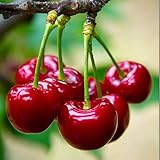
- Basic Seed Attributes & Planting Scenarios: 20 Pcs Cherry Tree Seeds, non-GMO heirloom variety, with sweet and tender juicy fruits, suitable for home garden cultivation, and can be planted both indoors and outdoors.
- Growth Environment Requirements: Plantable cherry seeds, prefer sufficient light during growth, suitable for cultivation in high-temperature and high-humidity environments, and require soft and fertile soil.
- Tree Characteristics, Fruit Uses & Health Benefits: Black cherry trees grow relatively fast, have a long lifespan, and also have good ornamental value; the fruits are edible and suitable for making jams, pies, wines and other foods; they also have a certain auxiliary effect on relieving body pain and inflammation.
- Planting Scenarios & Sowing Operation Suggestions: Suitable for home garden planting; if sown in autumn, the seeds can overwinter naturally and germinate in the next spring, or simulate the winter environment through 4 months of cold stratification; before sowing, snip the end of the seeds to create an opening, and sow the seeds in 1/2-inch deep soil in a moderately warm environment.
- Fruit Characteristics & Light Preference: It can grow into fruit trees that bear sweet black cherries with high sweetness; the fruit trees prefer full sun to partial shade lighting conditions, and outdoor planting can better meet the growth needs.
5. Inspect the pits regularly
Check the container every week or two. Look for a swollen stone, a crack, or a small white root. Some seeds may begin germinating before the nominal chilling period is complete. Oklahoma State specifically recommends checking cherry seed during stratification because a prematurely cracked seed can be damaged if planting is delayed.
If a root emerges, do not pull on it or handle it by the root. Pick up the stone, plant the root downward in a deep container, and cover it promptly. If outdoor conditions are still unsuitable, keep the seed cool and moist for a short period rather than moving it into a warm, dry environment.
Method 2: Sow cherry pits outdoors in fall
Fall sowing is often simpler. Clean and soak the pits, then sow them outdoors so natural winter temperatures provide the cold-moist treatment.
- Choose a protected nursery bed or a deep outdoor container with drainage.
- Sow several cleaned pits rather than scattering a single seed in an exposed garden bed.
- Cover them approximately ½ inch deep for sour cherry, or about twice the seed’s thickness when the species is unknown.
- Keep the soil slightly moist until winter and again as spring approaches.
- Protect the area with hardware cloth or another suitable barrier against squirrels, mice, and other rodents.
Natural stratification has disadvantages. Pits may be eaten, the soil may become excessively wet, freeze-thaw cycles may heave them out of the ground, and a seedling may emerge during an inconvenient late frost. A container or protected nursery bed is easier to monitor than an exposed planting site. Oklahoma State’s propagation guidance and Utah State’s Nanking-cherry guidance describe outdoor seed handling and its risks.
Planting a chilled or sprouted pit
Use a clean, deep container with drainage holes and a loose seed-starting or potting mix. A deep pot matters because cherry seedlings develop a substantial young root and can become root-bound quickly.
Recommended Free Tools
- Fill the pot with damp but not saturated mix.
- Make a hole about ½ inch deep for sour cherry, or roughly twice the stone’s thickness for an unidentified cherry.
- Place the pit or newly sprouted seed with the emerging root pointing down.
- Cover it gently and water enough to settle the mix.
- Label the pot with the source and planting date.
Use one seed per container where possible. Separate pots prevent roots from becoming tangled and reduce transplant damage. If a root has already emerged, do not bend it sharply to fit a shallow pot. University of Minnesota seed-starting guidance supports individual containers for seedlings that will later be transplanted.
Care during the first growing season
Light
Once the shoot emerges, provide bright light immediately. A sunny window may work temporarily, but a grow light is often more reliable indoors. Keep the light close enough to prevent a weak, stretched stem while following the light’s safety and distance instructions.
Water and airflow
- Keep the mix evenly moist, never saturated.
- Do not leave the pot standing in a saucer of water.
- Use a clean container and clean mix to reduce damping-off problems.
- Provide airflow, especially after emergence.
- Remove or vent a humidity dome once the shoot appears; stagnant, wet air favors fungal problems.
A little surface mold does not automatically mean the embryo is dead, but persistent wetness, a soft stone, or a foul smell is a warning that decay is advancing. The Royal Horticultural Society’s tree-seed guidance emphasizes that excessive wetness is a common cause of seed and seedling failure.
Pot up before the roots become crowded
Move the seedling to a larger, deeper pot when roots begin filling the original container or the leaves begin crowding neighboring seedlings. Water the plant beforehand, slide out the root ball with as little disturbance as possible, and keep the roots intact.
Quick wins for a faster PC:
Fix the driver behind crashes, sound loss and screen glitchesFind Drivers →Repair Windows errors before they cause bigger problemsFix Now →Handle the seedling by its leaves rather than squeezing its fragile stem. Replant it at the same depth at which it was growing, firm the mix lightly, and water it in. Do not bury the root collar or compensate for a long, weak stem by planting it deeply.
Harden off before moving it outdoors
An indoor seedling is not ready for sudden full sun, wind, and temperature changes. Harden it over approximately one to two weeks:
- Put it outdoors for a few hours in bright shade on a mild day.
- Increase the time outside gradually.
- Introduce gentle morning sun before exposing it to stronger afternoon sun.
- Protect it from strong wind, freezing temperatures, and severe weather during the transition.
- Transplant on a cloudy day or in late afternoon, then water thoroughly.
If leaves scorch after the first outdoor exposure, return the plant to bright shade and repeat the process more slowly. Utah State University’s transplanting guidance provides a similar gradual-acclimation approach.
Choosing the permanent planting site
Plant the young tree where it can remain for years, not where it will need to be moved once it becomes vigorous. A suitable site has:
Rank #3

- [Lush Double Blooms in Mixed Shades] Produces clusters of fully double flowers with 10-30 petals per bloom. Flowers appear in a range of shades from soft pink to rich rose. Each branch becomes covered in cascading floral clusters.
- [Ornamental Flowering Tree] Grows 15-25 feet tall with spreading, rounded crown. Dark green leaves emerge bronze in spring, turning yellow to orange-red in fall. Smooth gray bark adds winter interest.
- [Long-Lastin Color] Blooms from mid-spring to early summer. Flowers last 10-15 days under favorable conditions. Some varieties may produce a second flush of blooms in autumn. Attracts bees, butterflies, and other pollinators.
- [Sun and Seed Needs] Requires full sun with well-drained, fertile soil. Seeds need cold stratification—mix with moist sand and refrigerate for 60-90 days before sowing. Space trees 15-20 feet apart. Hardy in zones 5-8. Does not tolerate waterlogged soil.
- [For Landscape Gardeners] Suitable for gardeners seeking an elegant spring-flowering tree. Ideal as a specimen, for group plantings, or in Asian-inspired and cottage gardens.
- Full sun: cherries need strong light for healthy growth and fruit production.
- Excellent drainage: cherries are highly intolerant of waterlogged soil.
- Deep, usable soil: orchard guidance from Oregon State specifies at least three feet of active rooting depth in suitable Pacific Northwest conditions, although exact needs vary with soil and rootstock.
- Room for a potentially large tree: a seedling is not automatically dwarf.
- Protection from severe wind: but not a low pocket where cold air and water collect.
- Appropriate winter chill and summer climate: match the source and likely species to local conditions.
Avoid low wet spots, heavy poorly drained clay, compacted fill, construction debris, hardpan, and areas irrigated like a lawn. Replanting directly where another fruit tree was recently removed may also create establishment problems. Oregon State’s orchard-establishment guidance covers drainage, soil depth, frost drainage, and replant concerns.
Planting the seedling outdoors
- Dig a hole wide enough for the roots without bending or circling them. It should not be needlessly deeper than the root system.
- Set the seedling so the root collar is at the soil surface. Do not bury the trunk.
- Backfill with the native soil. Avoid creating a small pocket of heavily amended soil that holds water differently from the surrounding ground.
- Water deeply to settle the soil around the roots.
- Apply a moderate layer of mulch over the root zone, keeping it several inches away from the trunk.
- Install a guard against rabbits, voles, deer, and damage from string trimmers or lawn mowers.
A seedling has no graft union. If you later buy a grafted tree, its graft union must remain clearly above the soil line; burying that union can cause the scion to root or the tree to fail. A Utah State seedling-planting guide provides additional advice on root protection, planting depth, and watering.
Water, mulch, fertilizer, and pruning
Water
Water deeply during establishment and during prolonged dry weather. Frequent shallow sprinkling encourages a shallow root system, while constantly saturated soil deprives roots of oxygen. The exact interval depends on soil, weather, container size, and rainfall; check the soil rather than following a fixed calendar.
Mulch and weeds
Keep a weed-free circle around the tree. Grass and weeds compete strongly with a young cherry for water. Mulch conserves moisture and moderates soil temperature, but mulch touching the trunk creates a damp hiding place for rodents and can encourage decay.
PC Slower Than It Used to Be?
A free scan shows the junk files, broken settings and background clutter dragging Windows down - then fixes them in one click.Free scan · Windows 10 & 11Outdated Drivers Are Slowing You Down
One free scan finds every outdated or missing driver and matches the right update for your exact hardware.Free scan · exact hardware matchFertilizer
Do not try to force a seedling with heavy nitrogen. Excess nitrogen produces soft, vigorous shoots and can delay balanced root development and flowering. Utah State’s seedling guide generally does not recommend fertilizer during the first year. Once the tree is established, use a soil test and local fruit-tree recommendations rather than applying fertilizer automatically.
Pruning and training
Young sweet cherries can grow vigorously and form narrow branch angles. Begin light formative training after establishment so the tree develops a strong structure and remains manageable. A central-leader framework is a reasonable general starting point for a vigorous sweet-cherry seedling, but the best system depends on species, vigor, climate, available space, and whether the tree is eventually grafted. Avoid aggressive pruning immediately after transplanting. Oregon State’s cherry-training guide explains how vigor, architecture, rootstock, and training interact.
Protecting the young tree from pests and disease
Germination is only the beginning. Cherry trees can encounter cherry leaf spot, brown rot, powdery mildew, bacterial canker, black cherry aphid, cherry fruit flies, and spotted-wing drosophila in some regions. Birds can remove an entire crop quickly, while rabbits, voles, deer, and other rodents can girdle a young trunk over winter. Some sweet-cherry cultivars are also susceptible to rain cracking.
Good basic prevention includes:
- Remove fallen leaves and mummified fruit, particularly when disease has been present.
- Keep weeds and dense vegetation away from the trunk.
- Water the soil rather than repeatedly wetting the foliage.
- Inspect new growth and the underside of leaves regularly.
- Use a physical trunk guard against rodents and deer.
- Use bird netting when fruit begins to color. Install it securely so birds cannot get underneath or become trapped.
Cherry leaf spot can cause premature defoliation, weaken the tree, reduce the following year’s crop, and increase winter injury. University of Minnesota’s disease information explains symptoms and sanitation measures.
The Tool Desk
Outbyte PC Repair FREERepair Windows errors before they cause bigger problemsFix Now →Outbyte Driver Updater FREEScan for outdated or missing drivers - takes under a minuteDriver Scan →Do not copy a generic online spray calendar. Permitted products, active ingredients, pollinator precautions, preharvest intervals, and regulations differ by region. Consult your state or county Extension service and follow the current product label if chemical control becomes necessary. Oregon State’s home-orchard IPM guide is a useful example of why timing and geography matter.
Will a seed-grown cherry produce the same cherries?
Usually, no. A pit contains the result of sexual reproduction, so the seedling receives genetic material from both parents. It may differ from the fruiting tree in fruit size, flavor, color, texture, harvest date, tree size, disease resistance, cold tolerance, bloom time, and pollination behavior.
A pit from a named ‘Bing’ cherry does not reliably produce a ‘Bing’ tree. Commercial cultivars are normally reproduced by budding or grafting because those methods preserve the desired scion’s genetics. If the goal is an identical replacement tree, purchase a grafted tree or graft the desired variety onto a suitable rootstock. Oklahoma State University’s seed-propagation guidance explains why fruit trees generally do not come true from seed.
Do you need two cherry trees?
It depends on the type—and an unidentified seedling makes the answer uncertain.
What’s actually slowing this PC down?
Pick the symptom - the matching free tool is one click away.
- Tart cherries: commercial tart cultivars are generally self-fruitful, so one tree can often produce fruit by itself. A second compatible tree may still improve pollination and yield.
- Sweet cherries: many traditional cultivars are self-unfruitful and need pollen from a compatible sweet-cherry cultivar. Some newer cultivars are self-fruitful, but you cannot determine the seedling’s pollination group reliably from the pit.
- Nanking cherries: cross-pollination is commonly needed, so planting more than one compatible plant is usually sensible.
Sweet and tart cherries should not be treated as interchangeable pollinizers. If your seedling eventually flowers but does not set fruit, the explanation may be lack of a compatible pollinizer, not a failure of the tree. Penn State’s cherry guidance covers the distinction between sweet and tart cherries and their pollination needs.
Rank #4

- 🌳 Compact Growth: Reaches a mature height of approximately 12 feet, suitable for small gardens or container planting.
- 🍒 Prolific Fruiting: Produces an abundance of bright red cherries, rich in vitamin C, from spring to fall.
- 🌸 Attractive Blooms: Features small, pinkish-lavender flowers that enhance the aesthetic appeal of your garden.
- 🌞 Sun-Loving: Thrives in full sun and well-drained soil, making it easy to grow in various climates.
- 🦋 Wildlife Friendly: Attracts pollinators such as bees and butterflies, supporting local ecosystems.
For an unidentified seedling, grow more than one if you have space, but do not assume that two random sweet-cherry seedlings will be compatible. If one proves healthy and worthwhile, add a known compatible grafted pollinizer or graft a desired variety onto the seedling.
Independent reader supportYour contribution helps us test, update, and keep practical guides available for everyone.How long before a seed-grown cherry produces fruit?
Expect a multi-year project:
| Stage | Realistic expectation |
|---|---|
| Cleaning and soaking | One day |
| Cold stratification | Approximately four to 20 weeks, depending on species and seed lot |
| First growing season | Root and shoot establishment; normally little or no fruit |
| Outdoor planting | After hardening and when local soil and weather are suitable |
| First possible fruit | Several years; an own-root sweet cherry may take five or six years or more |
| Reliable crop | Later and highly variable, depending on genetics, climate, pollination, pruning, and health |
Penn State gives broad nursery-tree estimates of approximately three to five years for tart cherries and four to seven years for sweet cherries, but those figures should not be transferred directly to an unknown seedling. Oregon State notes that sweet cherries on their own roots can take five to six years or more to produce fruit. A seedling may take longer, produce poor fruit, or never become a productive tree worth retaining.
Seedling cherry versus a grafted nursery tree
| Your goal | Usually the better choice | Reason |
|---|---|---|
| Reproduce ‘Bing’ or another named cultivar | Grafted tree | The scion preserves the cultivar’s fruit characteristics. |
| Harvest as soon as reasonably possible | Grafted tree | Selected rootstocks and scions can fruit earlier than vigorous seedlings. |
| Keep the tree small | Grafted tree on suitable dwarfing rootstock | A seedling is usually vigorous and unpredictable in size. |
| Run an inexpensive experiment | Seed | Pits cost little and the process is educational. |
| Select new genetics or breed cherries | Seed | Each seedling is genetically distinct. |
| Produce possible rootstock | Seed | Seedling rootstocks are used in fruit production. |
| Grow a Nanking-cherry hedge | Seed can be appropriate | Nanking cherries are commonly grown from seed, although seedlings vary. |
| Keep a fruit cherry indoors permanently | Neither is suitable | Fruit cherries need outdoor light, space, seasonal dormancy, and the right climate. |
Seedling rootstocks such as Mazzard are vigorous. Dwarfing rootstocks, including Gisela types, are selected when a smaller tree and earlier fruiting are important. Washington State University’s home-orchard guidance and Oregon State’s rootstock information explain why a grafted tree is often more practical in a small garden.
Do these 3 things before closing this tab:
1Fix the driver behind crashes, sound loss and screen glitches2Repair Windows errors before they cause bigger problems3Scan for outdated or missing drivers - takes under a minuteCan you keep a seed-grown cherry in a pot?
You can grow a seedling in a container temporarily, but an unknown seed-grown sweet cherry may become too vigorous for long-term pot culture. Container-grown cherries are much easier to manage when they are grafted onto an appropriate dwarfing rootstock and planted in a large container. The Royal Horticultural Society’s container advice is therefore more applicable to a selected grafted tree than to an unidentified full-size seedling.
In cold climates, a small potted seedling may need protection from severe winter exposure. It still needs dormancy, so do not keep it growing continuously in a warm house. A cold frame, unheated garage, or sheltered outdoor location may be appropriate, depending on local conditions. Protect the container from waterlogging and repeated freeze-thaw cycles. The recent Michigan Extension response on potted cherry seedlings is a location-specific example, not a universal temperature prescription.
Troubleshooting cherry pits and seedlings
The pit has mold
Remove it from the bag. Discard it if it is soft, collapsing, or foul-smelling. If the stone is still firm, rinse it, improve airflow, and place it in fresh, barely moist medium. Do not return visibly decayed material to the old medium. A small amount of surface mold does not by itself prove that the embryo is dead, but excessive moisture is the usual condition to correct.
Nothing germinated after the expected period
Possible causes include immature seed, fruit flesh left on the stone, excessive drying, insufficient chilling, a refrigerator that was too warm, dried-out medium, waterlogging and rot, secondary dormancy, or a species requiring a different warm-cold sequence. Leave healthy-looking ungerminated seed for longer rather than discarding it immediately; tree and shrub seed can be slow or erratic and may germinate in a later season. At the same time, start a second batch with fresh, fully ripe pits.
The root emerged in the refrigerator
Plant it promptly in a deep container with the root pointing downward. Handle the stone, not the root. Do not wait for a long shoot to grow inside the bag or bend the root to fit a shallow pot.
The seedling is tall and floppy
Insufficient light, excessive warmth, crowding, or excess nitrogen is likely. Move it closer to a strong light source, provide airflow, separate crowded plants, and avoid heavy fertilization. Do not bury a weak stem deeply to compensate.
The leaves scorched after moving outside
The seedling was probably not hardened off gradually. Return it to bright shade, keep it watered but not saturated, and repeat the outdoor acclimation process more slowly.
The young tree suffered winter damage
Check whether the container roots froze, whether rodents girdled the trunk, and whether the tree was exposed before it had hardened. Protect the trunk with a guard, improve the sheltered placement, and use an unheated protected space for potted plants where local guidance recommends it. Wait until spring growth begins before deciding that minor twig damage has killed the tree.
Crashes, No Sound, or Screen Glitches?
Random freezes, missing sound and display glitches usually trace back to one bad driver. Find and replace yours safely.Free scan · under a minuteWindows Errors? Fix Them Before They Spread
Repair common Windows errors and clear accumulated junk for a smoother, more stable PC - no reinstall needed.Free scan · no reinstallThe tree grows leaves but never fruits
A young seedling may simply still be juvenile. Other possibilities include inadequate winter chill, a warm climate that prevents normal flowering, lack of a compatible sweet-cherry pollinizer, spring frost damage, excessive vegetative vigor, disease, poor nutrition, or genetics that produce disappointing fruit. Healthy foliage alone does not guarantee edible cherries.
The fruit is eaten by birds or damaged by insects
Use physical protection first: trunk guards for mammals and properly installed bird netting once fruit develops. Cherry fruit flies and spotted-wing drosophila are regional problems. For any pesticide, use current local Extension recommendations and the product label, including pollinator restrictions and harvest intervals.
Best Value

- Complete backyard orchard starter collection: Includes 2 Apple, 2 Blackberry, and 2 Black Cherry bare root fruit trees, providing a diverse assortment of delicious fruit while creating a beautiful edible landscape that produces harvests throughout the growing season.
- Beautiful landscape that becomes more productive every year: Enjoy attractive spring blossoms, lush green foliage, colorful fall leaves, and fresh homegrown fruit as these long-lived trees mature into productive additions to your landscape.
- Plant once and harvest for decades: Fruit trees become increasingly productive as they mature, making this collection an excellent long-term investment for home gardens, hobby farms, homesteads, food forests, and sustainable landscapes.
- Thrives in full sun for maximum fruit production: Plant where trees receive 6–8 or more hours of direct sunlight each day in well-drained soil to encourage vigorous growth, abundant flowering, and reliable fruit development.
- Easy to establish dormant bare root trees: Dormant trees quickly focus energy on root development after planting, helping establish healthier root systems that support vigorous spring growth and long-term success.
Can a better cherry variety be grafted onto the seedling?
Yes. A healthy seedling can potentially become a rootstock or receive a graft of a known variety later. Grafting changes the top of the tree while retaining the root system. This can be a useful way to turn an experimental seedling into a productive tree, although compatibility, timing, technique, and rootstock size matter. Oregon State University’s cherry-grafting guidance describes the basic decision.
Grafting is also the practical answer if the seedling grows vigorously but produces poor fruit. Instead of waiting for an unknown tree to improve, you can eventually replace its top with a desired cultivar—provided the seedling is healthy and suitable for the graft.
Recommended Free Tools
Practical decision: should you grow from seed?
Choose seed propagation if you enjoy experimentation, want several genetically different plants, are interested in breeding, need possible rootstock, or are growing Nanking cherries as a hedge or wildlife planting.
Buy a grafted tree if you need a known fruit flavor, predictable harvest time, a compact tree, reliable pollination information, or fruit in the shortest reasonable time. A grafted tree costs more initially, but it avoids years of waiting for an unknown seedling to reveal whether it is suitable.
Frequently Asked Questions
Do I need to crack a cherry pit before planting it?
No. Remove the flesh, wash the stone, and use it intact for the beginner method. Cracking can damage the embryo and is not essential for home propagation.
Can I plant a cherry pit directly in soil?
Yes, sow cleaned pits outdoors in fall so winter provides natural moist cold stratification. Use a protected bed or deep container and protect the seeds from rodents, excessive moisture, and freeze-thaw heaving.
Free tools Windows power users keep installed
One-click scans. No signup required.
How many cherry pits should I plant?
Use at least five to ten. Seed quality, maturity, dormancy, and germination vary, so relying on one pit gives you a poor chance of success.
Will one cherry seedling produce fruit by itself?
It depends on the type. Tart cherries are generally self-fruitful, while many sweet cherries need pollen from a compatible sweet-cherry cultivar. An unidentified seedling’s pollination behavior cannot be predicted reliably.
Can cherry trees grow in warm climates?
Some low-chill types can, but many cherries need substantial winter chill and perform poorly where winters are too warm. Consult local Extension guidance before investing several years in a seedling.
Why did my cherry pit germinate in the refrigerator?
Some seeds begin germinating before the nominal chilling period is complete. Plant the pit promptly in a deep container, with the root pointing down, and avoid touching or bending the root.
The Tool Desk
Outbyte PC Repair FREEClear out junk files and repair common Windows errorsFree Scan →Outbyte Driver Updater FREEFix the driver behind crashes, sound loss and screen glitchesFind Drivers →The Bottom Line
To grow a cherry tree from seed, clean several ripe pits, soak them for 12–24 hours, chill them in barely moist medium at 33–41°F, and begin checking after roughly 8–10 weeks. Plant any emerging root promptly in a deep, well-drained pot, provide strong light and even moisture, harden the seedling off gradually, and move it to a sunny site with excellent drainage.
Think of the project as growing a genetically new cherry tree, not reproducing the fruit you ate. The seedling may need a pollinizer, may grow large, and may take five years or more to fruit. For a dependable named variety or a small, early-bearing tree, a grafted nursery tree is the better choice.
Quick Recap
Product prices and availability are accurate as of the date/time indicated and are subject to change. Any price and availability information displayed on Amazon at the time of purchase will apply.




