The Tool Desk
Outbyte Driver Updater FREEFix the driver behind crashes, sound loss and screen glitchesFind Drivers →Outbyte PC Repair FREEClear out junk files and repair common Windows errorsFree Scan →For a small amount of visible mold on a washable shower surface, the safest routine is simple: stop the moisture source, ventilate to the outdoors, wear gloves, eye protection, and a properly fitted NIOSH-approved N95, then scrub the surface with detergent and water, rinse it, and dry it completely. Replace moldy or peeling caulk rather than cleaning and sealing over it.
Do not mix cleaners. Bleach is optional and label-dependent—not the automatic first choice. Call a professional when the growth covers more than about 10 square feet, follows a leak or contaminated-water event, appears behind tile or inside drywall, involves HVAC equipment, keeps returning, or affects a home occupied by someone at elevated health risk.
As an Amazon Associate I earn from qualifying purchases.
Important: an N95 filters particles, not bleach vapors or other chemical gases. Ventilation and the product label—not a stronger respirator—control chemical-fume exposure.
What’s actually slowing this PC down?
Pick the symptom - the matching free tool is one click away.
First, decide whether this is a DIY cleanup
The amount of growth is only one part of the decision. The location and the reason it is growing matter just as much. The U.S. Environmental Protection Agency generally considers visible mold covering less than about 10 square feet—roughly a 3-foot-by-3-foot area—manageable by a homeowner. That is a guideline, not a guarantee of safety. A small patch on tile is usually less concerning than a small patch caused by water trapped behind the shower wall.
#1 Best Overall
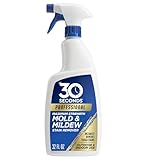
- BRIGHTER RESULTS INSTANTLY: Noticeably brightens indoor and outdoor surfaces, removing black mold and mildew stains as you watch, with no scrubbing or pressure washing required for fast, visible results
- NO SCRUBBING REQUIRED: Avoid the hassle and backbreaking work of scrubbing tough stains; the PRO formula lifts mold and mildew stains on contact so you simply apply, watch and rinse where needed
- 2X STRONGER FORMULA: The PRO formula is 2X stronger than the standard 30 SECONDS Outdoor Cleaner, made for your toughest black mold and mildew stains and messes on both indoor and outdoor surfaces
- OUTDOOR AND INDOOR USE: Use on siding, fences, decks, concrete floors, brick walls, drywall, wood, kitchen surfaces, bathroom tile and grout, bathtub soap scum and showers where mold and mildew can grow
- REMOVES BLACK MOLD STAINS & MORE: Targets stubborn black mold and mildew stains on a wide range of surfaces, giving a brighter, cleaner result indoors and outdoors without scrubbing or pressure washing
DIY cleaning is generally reasonable only when all of these conditions apply:
- The growth is limited, visible, and accessible.
- The affected area is approximately under 10 square feet.
- The surface is hard and washable, such as glazed tile, glass, porcelain, or an approved fiberglass surface.
- There has been no sewage backup, floodwater, or other contaminated-water exposure.
- There is no evidence of mold inside the wall, ceiling, floor, shower pan, or HVAC system.
- No one with asthma, COPD, significant allergies, chronic lung disease, immune suppression, or another condition that increases mold-related risk needs to be in the area during cleanup.
Do not use the 10-square-foot rule to justify cleaning a shower that has a serious moisture defect. Loose tiles, a soft wall, a leaking shower pan, recurring growth, or a musty odor that persists after surface cleaning can indicate a construction or plumbing problem that surface chemicals will not solve.
Do you need to identify the type of mold?
Usually, no. Black, green, brown, and pinkish growth cannot be reliably identified by color alone. A dark mark may be mold, but it may also be soap residue, mineral staining, rust, degraded caulk, or another bathroom contaminant. Pink or orange growth should not automatically be labeled mold either.
Recommended Free Tools
The practical response is to remove visible contamination safely and investigate moisture, rather than trying to name a species. The CDC says people do not need to know the type of mold before removing visible growth, and the EPA says routine home mold testing is generally unnecessary when mold is already visible. There is no federal indoor mold limit that makes a routine home sample prove that a bathroom is safe.
Who should stay out of the bathroom?
People with allergies, asthma, COPD, chronic lung disease, or weakened immune systems may have a stronger reaction to mold exposure. The CDC recommends that people at higher risk not participate in mold cleanup. Someone who is severely immunocompromised should avoid being in the area while mold is being removed whenever possible.
This does not mean that ordinary shower mold will cause a serious infection in a healthy person. Mold exposure can aggravate allergies and asthma, while serious invasive fungal infections are rare and concentrated among certain high-risk groups. Anyone who develops wheezing, chest tightness, shortness of breath, severe eye irritation, or an asthma attack should leave the area and seek appropriate medical help.
Protect yourself before cleaning
For a small cleanup, gather:
- A properly fitted, NIOSH-approved N95 respirator.
- Nonporous gloves, such as nitrile, vinyl, or rubber gloves.
- Goggles that protect the eyes from splashes and airborne particles. Goggles that seal around the eyes provide more protection than ordinary vented safety glasses.
- Long sleeves, washable clothing, and closed shoes.
- A mild detergent, clean water, a soft cloth or sponge, and a nylon brush for grout.
- Plastic bags for disposable cleaning materials.
Check the N95 seal every time you put it on. Facial hair, glasses, jewelry, a poor size, or incorrect placement can create gaps. NIOSH explains how to place the respirator and check for leaks. If you cannot obtain a seal, do not treat the respirator as fully protective.
An N95 protects against particles; it does not protect against bleach vapors, chlorine gas, or other chemical gases. The NIOSH respirator guidance explains this limitation. If you use a chemical product, the product label, outdoor ventilation, and avoiding chemical combinations are essential.
Prepare the shower without spreading contamination
- Remove toiletries, towels, bath mats, shower curtains, and other movable items. Keep children, pets, and people with respiratory conditions away.
- Stop an active leak before cleaning. If water is entering the wall or floor, cleaning the visible face of the tile is not remediation.
- Open a window if conditions permit.
- Turn on the bathroom exhaust fan only if it vents outdoors. A fan that merely makes noise, or one that exhausts into an attic or wall cavity, is not solving the moisture problem.
- Do not point a portable fan at dry, untreated mold. Airflow can spread particles to other parts of the bathroom or home.
- Do not dry-brush, sand, aggressively scrape, or create dust before the growth is wet and controlled.
- Keep electrical equipment away from standing water.
After the visible mold has been cleaned, airflow and a dehumidifier can help dry the area. The EPA cautions that fans can spread mold when used before visible contamination is cleaned. The CDC recommends directing a portable fan toward an open window or door and blowing outdoors, not toward a moldy surface.
The safest basic method for tile, glass, and washable shower surfaces
For glazed ceramic tile, porcelain, glass, and other hard surfaces whose manufacturer permits detergent cleaning, use this method:
Rank #2

- GET RID OF STUBBORN MOLD AND MILDEW STAINS: Our instant spray cleaner removes the stains left behind from black mold and mildew. They tend to leave behind ugly staining that can go deep below the surface; Our professional-strength spray is specifically formulated to eliminate discoloration caused by mold and mildew
- USING RMR-86: To safely and conveniently eliminate indoor mold and mildew stains and odors using RMR-86, proper ventilation and PPE should be used for each application
- SAFE TO USE ON MULTIPLE SURFACES: Easily remove stubborn stains from decks, wood, vinyl siding, drywall, concrete floors, brick walls, kitchen surfaces, and other areas where mold and mildew tend to grow
- FAST-ACTING SPRAY: Our powerful, fast-acting mold stain remover spray begins working instantly to target deeply embedded stains that linger on surfaces and hard-to-reach areas
- NO SCRUBBING NEEDED: Simply spray our ready-to-use formula on the affected area and watch the stains disappear right before your eyes!
- Put on your PPE. Wear the N95, gloves, eye protection, long sleeves, and closed shoes before disturbing the growth.
- Use detergent and water. Mix a mild detergent solution according to the detergent label. Apply it without creating unnecessary spray or mist.
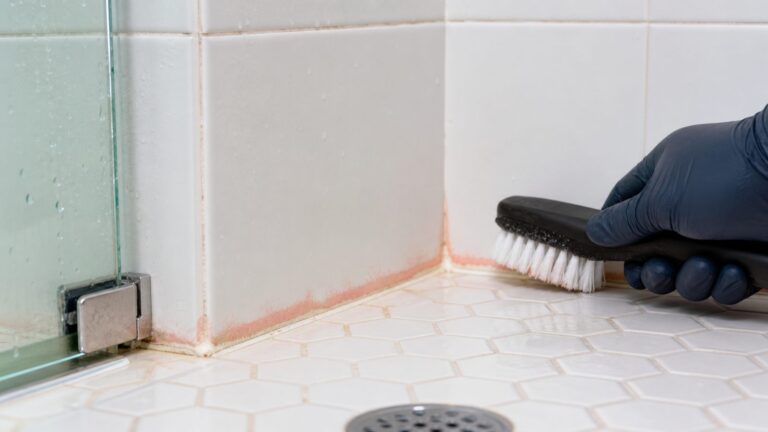
- Scrub the surface. Use a soft cloth, sponge, or nylon brush. Work from cleaner areas toward dirtier areas so you do not spread contamination unnecessarily. Use a nylon grout brush on joints, not a metal brush.
- Remove the residue. Rinse with clean water. Scrubbing and physically removing mold and residue matter more than merely changing its color or killing it.
- Dry completely. Wipe away standing water, then dry corners, grout lines, ledges, and caulk joints. Do not leave the cleaned area damp.
- Handle the materials safely. Bag disposable cloths or other contaminated materials. Wash reusable tools according to their material and the product instructions. Remove PPE carefully and wash your hands.
The EPA’s basic hard-surface guidance is detergent, water, scrubbing, and complete drying. Killing mold is not the same as removing it: dead mold and remaining residue can still trigger allergic reactions.
Do these 3 things before closing this tab:
1Clear out junk files and repair common Windows errors2Scan for outdated or missing drivers - takes under a minute3Repair Windows errors before they cause bigger problemsChoose the method for the shower surface
| Surface | Default approach | Avoid or check first |
|---|---|---|
| Glazed ceramic or porcelain tile | Detergent and water, followed by a soft cloth or nylon grout brush, thorough rinsing, and drying. | Abrasive pads and harsh chemicals that may scratch or damage a glaze or special coating. |
| Cement grout | Clean with detergent and water, scrub gently with a nylon brush, rinse, and allow it to dry fully. | Repeated acid, vinegar, bleach, or aggressive chemical use. Check the grout manufacturer’s instructions. |
| Marble, limestone, travertine, and other natural stone | Use a pH-neutral stone cleaner, stone soap, or mild detergent approved for the stone. Test in an inconspicuous area. | Vinegar, lemon juice, and other acids, plus abrasive cleaners. They can etch or dull calcareous stone. |
| Fiberglass, acrylic, or coated panels | Use mild detergent, a soft cloth or nonabrasive sponge, thorough rinsing, and complete drying. | Bleach, ammonia, abrasive powders, solvents, or stiff tools unless the panel manufacturer specifically permits them. |
| Silicone caulk | Replace the bead when growth is embedded, behind it, or under a peeling edge. | Painting or applying new caulk over mold, failed caulk, or a wet joint. |
| Drywall, wood, insulation, or the wall behind tile | Stop the water source and obtain an evaluation; moldy porous material may need removal and replacement. | Saturating the material and scrubbing indefinitely. |
Glazed tile and porcelain
These are usually the most straightforward surfaces. Start with detergent and water, use a nylon brush in grout joints, rinse thoroughly, and dry. Avoid abrasive pads that can scratch the glaze or a factory-applied finish. If the tile has a specialty coating, follow its care instructions instead of assuming that every bathroom cleaner is compatible.
Cement grout: clean first, seal only afterward
Cementitious grout is porous, so a dark shadow may remain even after surface growth has been removed. That remaining discoloration does not, by itself, prove that active mold is still growing. Look for continuing moisture, soft or crumbling grout, cracks, and rapid recurrence.
Cement grout is porous, and a compatible sealer can help keep grout joints cleaner, but sealing is not a mold treatment. Repair or replace cracked, missing, or crumbling grout. Apply sealer only after the joint has been cleaned and dried completely, and only when both the grout and sealer manufacturers permit it. Never seal over active mold or unresolved moisture.
Moldy silicone caulk usually needs replacement
If the black growth is inside the caulk bead, behind it, or beneath a peeling edge, surface scrubbing generally cannot reach the problem. A clean-looking surface can therefore become stained again quickly.
Replace the caulk when it is mold-stained through the bead, cracked, peeling, separated, or repeatedly reinfected:
- Cut out the old caulk with a caulk-removal tool or utility knife.
- Remove remaining residue carefully without damaging the shower’s waterproofing system.
- Clean the joint and the surrounding surfaces.
- Rinse if the cleaner’s instructions require rinsing.
- Allow the joint to dry completely. Trapped moisture under a new bead defeats the repair.
- Apply bathroom-rated silicone or the sealant specified by the shower manufacturer.
- Keep the shower unused for the product’s stated cure time. There is no universal cure time; follow that product’s instructions.
The EPA and CDC advise against painting or caulking over mold. The basic caulking sequence also requires removing the old bead and preparing a clean, dry surface.
If removing caulk or tile could damage a waterproofing membrane that you cannot reliably restore, stop and call a qualified professional. For renters, photograph the condition and notify the landlord or property manager before opening the wall, removing tile, or undertaking a repair; rental duties and building requirements vary by location.
Natural stone: do not default to vinegar
Marble, limestone, travertine, and other calcareous stones are especially vulnerable to acids. Vinegar, lemon juice, and acidic bathroom products can etch or dull the finish. The Natural Stone Institute recommends mild detergent, stone soap, or a neutral stone cleaner and cautions against acidic and abrasive products.
PC Slower Than It Used to Be?
A free scan shows the junk files, broken settings and background clutter dragging Windows down - then fixes them in one click.Free scan · Windows 10 & 11Crashes, No Sound, or Screen Glitches?
Random freezes, missing sound and display glitches usually trace back to one bad driver. Find and replace yours safely.Free scan · under a minuteUse a product approved for the specific stone, test it in an inconspicuous location, and follow the installer’s or manufacturer’s care guide. A cleaner safe for ceramic tile is not automatically safe for a marble shower. Use bleach only if both the stone-care instructions and the bleach product label allow it.
Rank #3

- Eliminates & Helps Prevent Mold: Targets existing mold at the source and leaves behind an invisible barrier that helps prevent future growth.
- EPA-Registered Solution: Registered with the U.S. Environmental Protection Agency for mold control when used as directed.
- Bleach-Free, Odorless, VOC-Free: Contains no bleach, ammonia, or volatile organic compounds, helping maintain healthy indoor air quality.
- Safe on Most Surfaces: Works on drywall, wood, tile, grout, concrete, fabric, and other common building materials.
- Versatile Use: Ideal for bathrooms, kitchens, basements, attics, laundry rooms, vehicles, and outdoor surfaces such as decks and patios.
Fiberglass, acrylic, and coated shower panels
Use mild detergent, a soft cloth, or a nonabrasive sponge. Rinse thoroughly and dry. Acrylic and coated panels can be permanently dulled or scratched by abrasive powders, rough scrubbers, solvents, or unapproved chemicals. Some manufacturers prohibit bleach or ammonia altogether. Check the shower-surround or panel care guide before using bleach, a commercial mold product, or anything stronger than mild detergent. For example, manufacturer care instructions for coated shower surfaces can restrict bleach, ammonia, and abrasive cleaners.
Shower curtains, bath mats, and other porous accessories
Wash fabric curtains, liners, towels, and bath mats according to their care labels, then dry them completely. Replace anything that remains moldy, deteriorated, or impossible to clean and dry fully. The EPA warns that mold in absorbent or porous materials can be difficult or impossible to remove completely.
Drywall, wood, insulation, and the area behind tile
Do not saturate drywall, wood, insulation, or the wall cavity in an attempt to clean it. Moldy porous building materials may need to be removed and replaced. Warning signs include soft drywall, bubbling paint, cracked or missing grout, loose or buckled tiles, staining outside the shower, a persistent musty smell, or mold that returns soon after cleaning.
Quick wins for a faster PC:
Fix the driver behind crashes, sound loss and screen glitchesFind Drivers →Repair Windows errors before they cause bigger problemsFix Now →Those signs can indicate a failed shower seal, leaking plumbing, a damaged shower pan, condensation, or water trapped behind the tile. The EPA’s guidance on hidden mold explains why visible surface sampling is not a substitute for investigating concealed moisture.
Should you use bleach?
Bleach is optional, not the routine first-line treatment. The EPA does not recommend biocides such as chlorine bleach as a routine mold-cleanup practice because killing mold is insufficient when the mold and residue have not been physically removed. Detergent, scrubbing, rinsing, drying, and fixing the moisture source are the foundation.
Bleach may be appropriate as a carefully controlled disinfectant on some compatible, washable surfaces when the product label permits that use. It is not automatically safe for natural stone, acrylic, coated panels, grout, metals, fabrics, or every shower finish. A bleach product that is appropriate for one surface may damage another.
If you choose bleach:
- Use only a product whose label permits the intended surface and use.
- Follow the bottle’s dilution, application, ventilation, and contact-time instructions exactly.
- Clean visible dirt and mold first. Disinfectants work less effectively on dirty surfaces.
- Keep the surface visibly wet for the label’s stated contact time.
- Rinse afterward wherever the label requires rinsing.
- Prepare fresh diluted solution as directed and do not store homemade diluted bleach.
- Never use bleach in a closed, poorly ventilated bathroom.
- Never mix bleach with vinegar, toilet-bowl cleaner, rust remover, ammonia, hydrogen peroxide, or any other cleaner.
There is no single homemade bleach recipe that applies to every product and situation. The CDC mold-cleanup page says to use no more than 1 cup of bleach per gallon of water, while its general bleach-disinfection guidance gives 5 tablespoons, or one-third cup, per gallon for a 5%–9% product when no label directions are available. Those recommendations address different contexts and must not be merged into one universal formula. The safest approach is to follow the product label, avoid improvising a stronger mixture, and use detergent and water as the default for ordinary shower mold.
What about vinegar, baking soda, hydrogen peroxide, and commercial mold products?
Vinegar
Do not treat vinegar as universally safe or as a default shower-mold solution. It is acidic and can damage marble, limestone, travertine, and other acid-sensitive stone. It must never contact bleach or bleach residue: acids can react with bleach and release chlorine gas. If a bleach product has been used, do not apply vinegar afterward unless the surface has been thoroughly rinsed and is fully free of residue; using one cleaner at a time is safer.
The CDC explains the hazard of chlorine exposure from incompatible chemical mixtures.
Baking soda
Baking soda may assist with light scrubbing or odor, but it is not a substitute for physical removal, moisture correction, or replacing caulk in which mold has penetrated. Avoid turning it into an elaborate multi-product mixture.
Rank #4

- KILLS MOLD: EPA-registered formula kills mold and helps control mold and mildew on hard, nonporous surfaces when used as directed
- CLEANS AND DISINFECTS: Ready-to-use disinfectant cleaner provides non-acid cleaning performance while disinfecting treated hard, nonporous surfaces
- INHIBITS MILDEW GROWTH: Helps inhibit the growth of mold and mildew and the odors they cause when applied according to label directions.
- BLEACH-FREE FORMULA: Bleach-free cleaner deodorizes treated surfaces and leaves behind a fresh scent
- READY-TO-USE SPRAY: 32 fl oz trigger bottle is designed for household, commercial and industrial cleaning applications
Hydrogen peroxide
Hydrogen peroxide is not necessary for the primary cleaning method. If a product containing it is used, follow its label and surface-compatibility instructions. Never combine it with bleach or another cleaner.
Free tools Windows power users keep installed
One-click scans. No signup required.
Commercial mold and mildew cleaners
A commercial product is acceptable only when its label lists the shower surface and gives clear directions for application, ventilation, contact time, rinsing, and protective equipment. Do not assume that a product labeled for tile is safe for marble, acrylic, coated panels, caulk, or metal fixtures. Never combine a commercial mold cleaner with another product.
Dry the shower and stop the mold from returning
Cleaning removes the visible problem; moisture control prevents the next one. After cleaning:
- Rinse away cleaner residue.
- Squeegee or wipe standing water from tile, glass, ledges, corners, grout, and caulk.
- Dry the shower curtain, bath mat, and other accessories instead of leaving them bunched or wet.
- Run the bathroom exhaust fan during the shower and for 15 minutes afterward as a practical baseline. ENERGY STAR recommends this operating period.
- Confirm that the exhaust fan actually discharges outdoors, not into an attic or wall cavity. The EPA notes that a fan making noise is not enough if it is not moving moist air outdoors.
- Keep indoor relative humidity below 60%, ideally between 30% and 50% where practical. A hygrometer can help monitor humidity.
- Repair leaking supply lines, shower valves, plumbing connections, failed caulk, cracked grout, poor drainage, and condensation.
- After visible mold has been cleaned, use a fan or dehumidifier to help dry the area. Direct airflow toward an outdoor exhaust route, not at untreated mold.
After a leak or flooding event, wet materials should ideally be dried within 24 to 48 hours to reduce the chance of mold growth, according to the EPA. That drying window does not make contaminated water safe to handle or mean that already moldy porous materials can simply be wiped clean.
If mold returns within days or weeks
Recurring growth usually means the moisture pathway remains. Check for:
- An active plumbing leak.
- Failed or missing caulk.
- Cracked grout or loose tiles.
- Water trapped behind the tile or beneath the shower pan.
- A bathroom fan that is undersized, blocked, or vented into an attic or wall.
- High humidity or condensation on cold walls and pipes.
- Wet curtains, mats, clutter, or ledges that trap water.
- Mold embedded in porous grout, sealant, drywall, or wood.
Do not respond by escalating to a stronger chemical alone. Bleach can lighten a stain while leaving growth or residue in porous material and doing nothing about the leak. A recurring problem requires inspection and repair.
When to call a mold-remediation or construction professional
Arrange professional evaluation when:
- Mold covers more than approximately 10 square feet.
- The shower has had a leak, flood, sewage backup, or contaminated-water exposure.
- Mold appears behind tile, beneath the shower pan, inside drywall, in the ceiling, or in framing.
- The wall, floor, or framing feels soft, swollen, or unstable.
- Tiles are loose, buckled, or repeatedly become moldy.
- A musty odor remains after visible surface cleaning.
- Mold is near an HVAC intake or appears to be entering ductwork.
- The occupant is immunocompromised or has serious respiratory disease and cannot be kept away during cleanup.
- Removing caulk or tile could damage a waterproofing membrane that cannot be reliably restored.
For construction-related cases, the key question is not simply whether a contractor can make the surface look clean. The moisture source, damaged substrate, waterproofing system, and any necessary removal or replacement must be addressed. The EPA recommends professional consultation for larger growth, extensive water damage, contaminated water, suspected HVAC contamination, and situations involving health concerns.
What not to do
- Do not mix cleaners. Especially never mix bleach with vinegar, acids, ammonia, toilet-bowl cleaner, rust remover, hydrogen peroxide, or another product.
- Do not rely on an N95 for chemical fumes. It filters particles, not gases or vapors.
- Do not use bleach in a closed bathroom. Use label-required ventilation and leave immediately if fumes become strong.
- Do not point a portable fan at untreated mold. Clean the visible growth first, then use airflow to dry the cleaned area.
- Do not paint or caulk over mold. Clean, dry, repair, or replace the affected material first.
- Do not use vinegar on natural stone. Acid can etch or dull marble, limestone, and travertine.
- Do not assume black means toxic. Color does not identify a species or determine the risk.
- Do not rely on ozone, UV lamps, or an air purifier. An EPA review says ozone generators do not effectively remove mold at concentrations that meet public-health standards; typical household UV devices have limited effectiveness; and an air cleaner cannot remove mold from the shower or correct its moisture source.
- Do not keep escalating chemical strength when the real problem is hidden moisture. Repeated growth calls for inspection and repair.
If a strong chemical smell develops
Leave the bathroom immediately and get to fresh air. Do not re-enter until the fumes have cleared. If there is coughing, chest tightness, breathing difficulty, eye injury, or significant chemical exposure, call 911 or Poison Control at 1-800-222-1222 in the United States. The Poison Control guidance on chlorine gas provides additional exposure information. Seek medical care for serious or persistent symptoms.
The Bottom Line
The safe goal is not to bleach a stain until it disappears. It is to remove visible growth from a compatible surface, dispose of or replace material that mold has penetrated, dry the shower completely, and correct the water or humidity problem that allowed it to grow. Use detergent and water first, treat bleach as optional and label-directed, and bring in a professional for large, hidden, recurring, contaminated, or health-sensitive problems.
Quick Recap
Product prices and availability are accurate as of the date/time indicated and are subject to change. Any price and availability information displayed on Amazon at the time of purchase will apply.