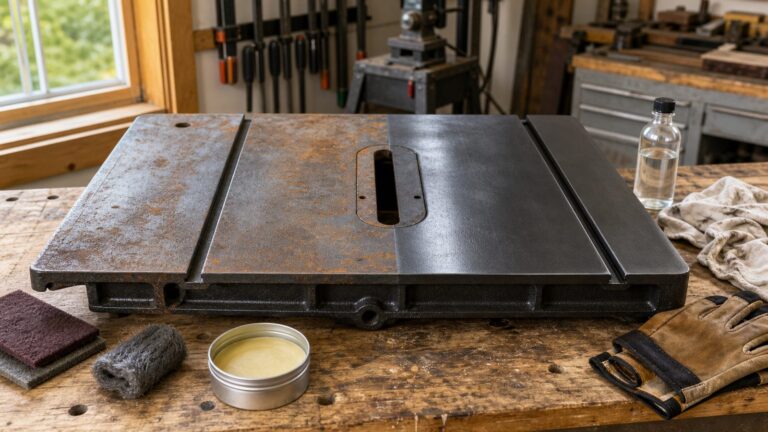
Let the pot cool completely, remove loose food with a wooden or plastic utensil, then cover the residue with hot water and a little hand dish soap. Soak it for 15 to 30 minutes before scrubbing gently. If residue remains, use a short simmer or a cookware cleaner approved for the pot’s material. Do not use the same treatment on stainless steel, nonstick, enamel, cast iron, carbon steel, aluminum, and copper.
The cleaning method matters, but so does the final safety check. Burnt food and heat discoloration can usually be removed or lived with; peeling nonstick, chipped enamel, warping, deep pitting, and loose hardware cannot be repaired by cleaning.
As an Amazon Associate I earn from qualifying purchases.
First, make sure the pot is safe to approach
If the pot is still smoking, turn off the heat and keep people away from it. If burning oil or grease is involved, do not pour water into the pot. Cover a small grease fire with a metal lid or baking sheet, leave it covered, and turn off the heat if you can do so safely. If the fire continues, leave the area and call emergency services. The U.S. Fire Administration’s cooking-fire guidance provides this basic response.
Crashes, No Sound, or Screen Glitches?
Random freezes, missing sound and display glitches usually trace back to one bad driver. Find and replace yours safely.Free scan · under a minuteWindows Errors? Fix Them Before They Spread
Repair common Windows errors and clear accumulated junk for a smoother, more stable PC - no reinstall needed.Free scan · no reinstallDo not carry a smoking or flaming pot to the sink. Cleaning begins only after the immediate fire risk has ended and the cookware has cooled.
#1 Best Overall

- KITCHEN COOKWARE SET: This Cuisinart stainless steel cookware set includes 1.5 qt. & 2.5 qt. saucepans w/glass covers, 3 qt. saucepan w/glass cover & helper handle, 8 qt. stockpot w/glass cover, 8" skillet, 10" skillet and 7.08" steamer insert
- PREMIUM STAINLESS STEEL: Premium stainless steel pots and pans set with aluminum encapsulated base heats quickly and spreads heat evenly, eliminating hot spots for optimal cooking performance
- COOL GRIP HANDLES: Cast stainless steel Cool Grip stick handles are contoured for a secure grip and designed to stay cool on the stovetop, while glass lids equipped with wide, easy-grip handles fit tight to lock in flavor, texture and nutrients
- EXCEPTIONAL HANDLING: Riveted stainless steel handles, including side grips and helper handles, are professionally riveted to ensure a lifetime of perfect balance and a drip-free pour every time for your best cooking results
- DISHWASHER & OVEN SAFE: Easy to clean and conveniently dishwasher safe, this stainless steel cookware set is also oven safe up to 500°F and can be used on stovetop, in oven or under broiler, providing a range of versatile, professional performance
Why you should let the pot cool first
Putting a very hot pot under cold running water can warp the metal. A sudden temperature change may also cause enamel, glass, or stoneware to crack through thermal shock. Let the cookware cool naturally before adding water; this precaution is recommended in care guidance from All-Clad and Le Creuset.
Identify the cookware before choosing a strong cleaner
Look at the cooking surface, the underside, the handle, and any markings on the base. If you are unsure, check the brand’s care manual or product page before using abrasives, acids, dishwasher detergent, or a commercial cleanser.
| What it looks or feels like | Likely material | Important limitation |
|---|---|---|
| Shiny silver, usually uncoated, with a substantial feel | Stainless steel | Can tolerate more cleaning than coated cookware, but ordinary steel wool can damage the finish and leave rust stains. |
| Black or dark matte metal with a slightly oily or seasoned surface | Seasoned cast iron or carbon steel | Acid, prolonged soaking, and aggressive scrubbing can remove seasoning. |
| Colored, cream, or glossy glass-like interior over heavy iron | Enameled cast iron | Metal tools and abrasive pads can scratch or chip the enamel. |
| Smooth dark, speckled, or patterned slick surface | PTFE nonstick or ceramic-coated nonstick | Use only soft tools and nonabrasive cleaners. Do not try to polish a damaged coating. |
| Lightweight silver metal that scratches relatively easily | Aluminum or hard-anodized aluminum | Strong acids, strong alkalis, dishwasher detergents, and scouring can discolor or corrode it. |
| Reddish or orange-brown metal, often with a silver, gray, or reddish lining | Copper | Cleaning must account for whether it is stainless-lined, tin-lined, nickel-lined, or unlined. |
| Glassy or glazed baking surface rather than a metal cooking surface | Glass, porcelain, or stoneware | Prevent thermal shock and avoid metal tools. |
First determine what is stuck to the pot
Not every black or brown mark is burnt food. Identify the problem before escalating:
- Hard burnt food: A crust or solid layer of rice, sauce, milk, sugar, or other food is physically bonded to the surface.
- Burnt oil or polymerized grease: A brown-black, sticky, varnish-like film may require repeated treatment or an approved commercial cleanser.
- Heat discoloration: Stainless steel may develop rainbow, blue, brown, gray, or cloudy marks. These can be cosmetic rather than residue.
- Mineral deposits: White or chalky spots are usually a different problem from burnt food and may need a short, material-approved acidic treatment.
- Coating damage: Blistering, peeling, flaking, lifting, or deep scratches indicate that the surface itself—not just the food—has been damaged.
- Structural damage: Warping, cracks, chips, loose handles, loose rivets, or a separated multilayer base cannot be fixed by cleaning.
A method that removes burnt food will not restore a nonstick coating, repair chipped enamel, or flatten a warped base.
The safest cleaning method for most intact pots
- Cool the cookware completely. Do not use cold water on a hot pot.
- Remove loose debris. Use a wooden, silicone, rubber, or plastic utensil. Do not use a knife or metal scraper on nonstick or enamel.
- Cover the residue with hot water. Add a small amount of ordinary hand dish soap. Do not use automatic dishwasher detergent as a substitute.
- Soak for 15 to 30 minutes. A longer soak can help with a severe burn when the cookware’s care instructions allow it. The American Cleaning Institute recommends a hot-water-and-detergent or baking-soda soak in this range.
- Scrape while the residue is softened. Lift it with a wooden spoon, plastic scraper, nylon brush, or soft sponge instead of increasing pressure.
- Simmer only when the material permits it. A short simmer can loosen carbonized food more effectively than hard scrubbing. Keep the pot attended and do not fill it near the rim.
- Wash, rinse, and dry. Wash once more with ordinary dish soap, rinse thoroughly, and dry completely. Cast iron and carbon steel need immediate drying and a thin film of oil.
An optional baking-soda escalation for compatible cookware
For suitable bare cookware, the American Cleaning Institute gives this specific method: use 3 tablespoons of baking soda per 1 quart of water. Bring the solution to a boil, remove the pot from the heat, add 1 tablespoon of liquid dish detergent, and allow the solution to cool. Then scrub with baking soda and a plastic scouring pad or sponge.
Do not treat this as a universal recipe. It is not a blanket recommendation for PTFE nonstick, ceramic-coated nonstick, seasoned cast iron, carbon steel, or aluminum. If the manufacturer gives different instructions, follow the manufacturer’s instructions.
How to clean a burnt stainless-steel pot
Stainless steel is generally recoverable when the damage is burnt food, oil film, or heat discoloration rather than warping or pitting.
Do these 3 things before closing this tab:
1Fix the driver behind crashes, sound loss and screen glitches2Repair Windows errors before they cause bigger problems3Scan for outdated or missing drivers - takes under a minute- Cool the pot and remove loose food with a wooden utensil.
- Cover the burnt area with hot water and a little dish soap.
- Soak for about 15 minutes, then scrub with a sponge, nylon pad, or stainless-steel-safe pad.
- If food remains, simmer water in the pot and loosen the softened residue with a wooden spoon.
- For a severe deposit, dissolve a few teaspoons of washing soda—sodium carbonate, not baking soda—in hot water and allow it to work for several hours. This stronger treatment comes from World Stainless guidance; use it only if the cookware and its finish can tolerate it.
- Rinse thoroughly, wash with dish soap, and dry promptly.
For stubborn marks, use a cookware cleanser whose label specifically includes stainless steel. For example, the directions for Bar Keepers Friend Cookware Cleanser & Polish say to wet the surface, apply the product, rub gently with a wet cloth or sponge, and rinse thoroughly within one minute. Its paste treatment is also limited to one minute. Follow the product label rather than leaving it on the pot while you do something else.
Heat tint is not the same as burnt food
Rainbow or blue discoloration on stainless steel may be heat tint. It can be cosmetic even when the surface is smooth and free of stuck food. Some stainless-steel manufacturers, including All-Clad, recommend a brief white-vinegar treatment for certain discoloration or hard-water marks. Other manufacturer guidance is more conservative about acids; KitchenAid’s guidance should be checked alongside the care instructions for your exact pot. Do not leave vinegar soaking for a prolonged period unless the manufacturer specifically permits it.
Do not use ordinary steel wool as the default. World Stainless warns that steel wool can leave rusty stains and may permanently damage stainless steel’s corrosion resistance. Use nylon or a stainless-steel-safe pad instead. All-Clad also warns against oven cleaner, steel scouring pads, harsh detergents, bleach, and peroxide for its cookware.
How to clean burnt enameled cast iron
Enameled cast iron combines a heavy iron body with a glass-like enamel surface. It is not the same as bare cast iron and should be treated more gently.
The Tool Desk
Outbyte Driver Updater FREEScan for outdated or missing drivers - takes under a minuteDriver Scan →Outbyte PC Repair FREERepair Windows errors before they cause bigger problemsFix Now →Rank #2

- Sturdy Construction - The Idymere pot features a tri-ply design with a food-grade 304 (18/8) stainless steel interior, a thick aluminum core, and a magnetic 430 stainless steel exterior. This construction of the sauce pot ensures even heating without hot spots and provides a non-reactive cooking surface that won’t impart flavors. Free from coatings or harmful substances, the cooking pot offers excellent rust and corrosion resistance while meeting health standards.
- Efficient Heating - An extra-thick impact-bonded aluminum disc at the bottom of the stainless steel pot promotes even heat distribution and prevents hot spots. The magnetic stainless steel exterior of the sauce pan makes the pot compatible with all cooktops, including induction, gas, electric, ceramic, and halogen.
- Versatile - Available in 1.5 and 2.5-quart sizes, this stainless steel cookware set is perfect for everyday tasks such as heating milk, boiling eggs, making sauces, soups, pasta, or noodles, and blanching vegetables. The saucepan's range of sizes accommodates different portion needs and recipe types. These nice sauce pot set is an ideal gift for family or friends, perfect for housewarmings, birthdays, Thanksgiving, or Christmas
- Riveted Handles and Glass Lid - The pot features a securely riveted stainless steel handle that stays cool for safe handling and a firm grip. The transparent glass lid lets you monitor cooking progress, while a steam vent helps prevent overflow by releasing excess pressure. The stainless steel lid of the stainless steel pot locks in moisture, perfect for cooking vegetables or cooking rice.
- Easy to Clean and Maintain - Designed with smooth edges and no sharp corners, the stainless steel pot is safe to handle and easy to clean by hand with hot soapy water and a non-abrasive pad. Its mirror-polished exterior of the cooking pot is dishwasher-safe. The handle of soup pot includes a hole for convenient wall hanging to save storage space.
- Let the pot cool naturally.
- Soak it in warm, soapy water for 15 to 20 minutes.
- For stubborn food, add 1 to 2 tablespoons of baking soda to warm water.
- Simmer for approximately 8 to 10 minutes, then turn off the heat and let the pot cool.
- Drain it and clean with a soft sponge and dish soap.
- Rinse and dry fully.
These soak and simmer times come from Le Creuset’s enameled-cast-iron care guidance. Do not use metal sponges, metal utensils, abrasive powders, or aggressive scrapers; they can scratch the enamel. A commercial cleanser may be used only if both the cookware and product labels approve it. Bar Keepers Friend lists porcelain-enamel cookware among the materials for its cookware cleanser, but test an inconspicuous area and rinse thoroughly.
Do not fill a hot enamel pot with cold water. If the enamel is chipped through to the metal on the cooking surface, stop aggressive cleaning and consult the manufacturer about whether the pot should be replaced.
How to clean burnt PTFE nonstick cookware
Nonstick cookware needs the least aggressive approach. The goal is to soften and lift the food without scratching the coating.
- Let the pot cool completely.
- Lift loose food with a wooden, silicone, rubber, or plastic utensil.
- Soak it in warm water and liquid dish soap for at least 30 minutes. An overnight soak is reasonable only if the manufacturer allows it.
- Clean with a soft sponge or soft-bristle brush.
- Repeat the soak rather than switching to steel wool, a scouring pad, abrasive powder, or a metal scraper.
Calphalon recommends liquid dish detergent and a nonabrasive sponge or soft brush for nonstick cookware. Tefal likewise recommends warm water, dishwashing liquid, and a nonabrasive sponge after accidental burning.
Do not use oven cleaner, abrasive powders, steel wool, unapproved dishwasher detergent, or high heat to burn the residue away. Do not boil a cleaning solution in nonstick cookware unless the exact care manual says it is acceptable.
When a nonstick pot should be replaced
Cleaning will not restore a coating that is peeling, blistered, flaking, or visibly lifting. Replace the cookware when the coating is substantially deteriorated or the pot no longer performs properly. This is not because every tiny flake is automatically poisonous: the German Federal Institute for Risk Assessment says accidentally ingesting tiny PTFE particles is not expected to harm health. Replacement is the practical response to a failing surface and prevents further deterioration.
If an empty PTFE-coated pan was severely overheated and produced smoke, ventilate the area and do not repeat the heating process. Health Canada advises against preheating empty nonstick cookware and gives 500°F/260°C as an upper-use warning; BfR identifies approximately 360°C as the point at which strongly overheated empty PTFE cookware can produce hazardous gases.
How to clean burnt ceramic nonstick cookware
Treat ceramic-coated cookware like nonstick cookware—not like an uncoated ceramic casserole dish. Cool it, soak it in warm soapy water, and use a soft sponge or soft brush. Repeat the process if necessary.
Free tools Windows power users keep installed
One-click scans. No signup required.
Avoid steel wool, iron sponges, abrasive detergents, hard scrapers, and harsh dishwasher detergents. Calphalon specifically warns that these can damage ceramic nonstick surfaces. If the coating is chipped, blistered, or lifting, replace the pot rather than trying to scour it smooth.
How to clean burnt cast iron
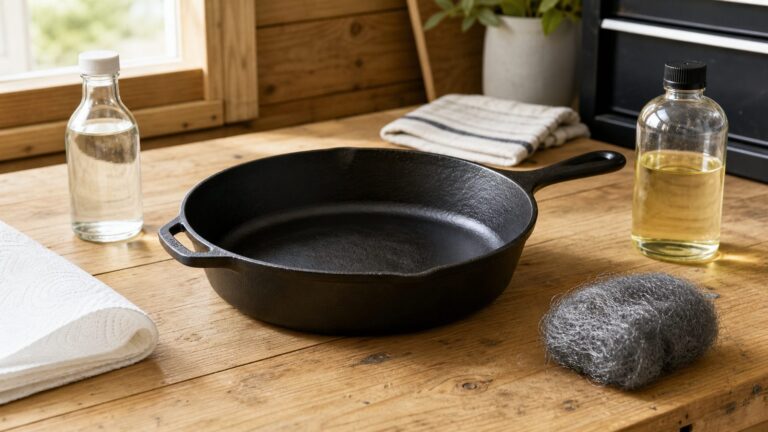
For seasoned, uncoated cast iron, a brief water simmer is usually preferable to prolonged soaking.
Rank #3

- EXCEPTIONAL DESIGN: enjoy mirror finish, classic look and professional performance. Aluminum encapsulated base heats quickly and spreads heat evenly– eliminating hot spots
- PREMIUM COOKING: stainless steel cooking surface does not discolor, react with food or alter flavors. Measurement markings for ease of use, drip free pouring, and flavor lock lid
- EXCEPTIONAL HANDLING: cool grip handles are solid stainless steel riveted handles that stay cool on the stove top and provide a safe a solid grip
- CLEAN UP: dishwasher safe for an effortless clean up
- LIFETIME WARRANTY: Refer to user manual for troubleshooting steps and questions surrounding warranty policies – this product is BPA free. Quantanium Non-Stick for Professional Results
- Let the pan cool.
- Add a small amount of water—enough to cover the stuck area.
- Simmer for 3 to 5 minutes.
- Scrape with a pan scraper or brush as the residue loosens.
- Wash according to the manufacturer’s instructions.
- Dry thoroughly over low heat or with a towel.
- Apply a thin layer of cooking oil.
This 3-to-5-minute simmer and wash-dry-oil sequence is recommended by Lodge. Manufacturer advice about soap varies: Lodge currently permits warm, soapy water, while some other brands advise hot water without soap. The important points are to avoid prolonged soaking, dry the pan immediately, and restore oil if the surface has become dull or dry.
Avoid vinegar, lemon juice, and acidic cleaners as default treatments. Do not use a commercial product unless it specifically says it is suitable for uncoated cast iron. For example, the Bar Keepers Friend safety documentation excludes uncoated cast iron and carbon steel.
If the burn removed seasoning, the pan may still be usable after re-seasoning. If it has deep rust, severe pitting, cracks, or a damaged cooking surface, replacement may be more sensible.
How to clean burnt carbon steel
Use essentially the same procedure as for seasoned cast iron:
- Simmer a little water briefly.
- Scrape gently with a suitable scraper or brush.
- Dry immediately.
- Apply a thin film of oil.
- Re-season if the surface has become bare, dull, or sticky.
Do not leave carbon steel soaking and do not use acidic cleaners as a default. Lodge’s carbon-steel instructions should be used as a starting point, but the cookware’s own manufacturer takes priority because specialized finishes can differ.
How to clean burnt aluminum
Aluminum is where internet cleaning advice is especially inconsistent. Some recipes recommend lemon juice or vinegar; others recommend strong alkalis, dishwasher tablets, or abrasive powders. Those treatments can discolor, scratch, or corrode aluminum, and they are not universally approved.
Recommended Free Tools
- Cool the pot.
- Soak it in warm water with mild dish soap.
- Use a soft sponge or plastic scraper.
- Rinse and dry it.
- Repeat the gentle treatment rather than immediately increasing chemical strength or abrasion.
Health Canada recommends hand-washing aluminum cookware with mild detergent and a soft cloth or sponge. It also advises avoiding high-acid or high-salt foods in ordinary aluminum cookware and using low-to-medium heat. For hard-anodized aluminum, follow the brand’s care instructions especially closely; Health Canada advises against using scratched or worn anodized aluminum cookware.
Do not use a dishwasher tablet, washing soda, oven cleaner, strong acid, or scouring pad on aluminum unless the manufacturer explicitly approves that exact treatment.
How to clean burnt copper
First identify the lining. Copper cookware may be stainless-lined, tin-lined, nickel-lined, or unlined. A harsh abrasive that is acceptable on an exterior may damage a protective interior lining.
For burnt food inside the pot, begin with a warm-water-and-dish-soap soak and use the lining manufacturer’s instructions. For tarnish on the exterior, use a copper cleaner approved by the cookware manufacturer. Bar Keepers Friend lists copper among the intended materials for its cookware cleanser, but it must be used for the time stated on the label and rinsed thoroughly.
Rank #4

- 【COOKWARE SETS INCLUDE】: 8-inch fry pan, 10-inch fry pan, 2.5 qt. sauce pan with lid, 5.5 qt. saute pot with lid.
- 【STAY-COOL HANDLES & SEE-THROUGH LIDS】: The cookware sets are equipped with comfortable and stay-cool handles; The pots and pans set is equipped with tempered glass lids and steam vents that allow steam to escape for viewing food while cooking.
- 【DURABLE DESIGN】: The professional Three Ply Construction features a core of pure aluminum and a handsome brushed stainless finish. Heat Surround Technology allows for even heat distribution along the bottom and sidewalls of the cookware.
- 【COOKING AND CLEANING】: The stainless steel cooking surface does not discolor, react with food, or alter flavors. Dishwasher safe, making cleanup effortless, giving you a healthier and easy at-home culinary experience.
- 【WIDELY USED】: The kitchen cookware sets are suitable for most cooktops including induction, gas, electric, halogen, etc; The cookware sets can match any kitchen and accommodate all your cooking needs.
Do not assume that a treatment suitable for bare copper is suitable for tin or stainless lining. Health Canada’s cookware guidance also supports checking the construction and care instructions before cleaning copper.
How to clean burnt glass, porcelain, and stoneware
- Allow the dish or pot to cool completely.
- Soak it rather than exposing it to a sudden temperature change.
- Use a soft sponge or nylon brush.
- Use a baking-soda-and-water paste only if the product’s instructions permit it.
- Do not use metal tools on glazed surfaces.
- Follow the product instructions for soap, dishwasher use, and thermal shock; stoneware care can differ from enameled metal.
Never move a hot glass or stoneware dish directly into cold water. A crack may not be visible until the next use.
Should you use vinegar and baking soda?
Not as a universal first choice. Vinegar is acidic and baking soda is alkaline. When mixed, they react to produce carbon dioxide bubbles, water, and sodium acetate. The fizz is visible, but it does not prove that the mixture is a better cleaner. The American Chemical Society explains the reaction.
For ordinary stuck-on food, America’s Test Kitchen reports that plain boiling water performed no worse in its testing than formulas containing vinegar or baking soda. On the other hand, some manufacturer guidance recommends vinegar-and-baking-soda treatments for particular copper or aluminum cookware while warning against the combination for stainless steel and cast iron. The Whirlpool guidance illustrates why the material and manufacturer matter.
Quick wins for a faster PC:
Repair Windows errors before they cause bigger problemsFix Now →Scan for outdated or missing drivers - takes under a minuteDriver Scan →Clear out junk files and repair common Windows errorsFree Scan →Use vinegar or lemon only for a specific purpose—such as a manufacturer-approved short treatment for mineral deposits or copper tarnish—and do not leave acid soaking on seasoned cast iron, carbon steel, or a lined metal surface without approval. Never mix vinegar with bleach or other cleaning products.
Can a dishwasher tablet clean a burnt pot?
It may remove residue from some compatible bare cookware, but it should not be the default method. Automatic dishwasher detergents are formulated differently from hand dish soap and may be strongly alkaline or contain bleaching agents. The American Cleaning Institute says not to use automatic dishwasher detergent for hand washing unless the product manufacturer recommends it.
The risk is particularly important for nonstick coatings, ceramic coatings, uncoated or anodized aluminum, decorative exterior finishes, and cookware marked hand-wash only. Tefal warns that some dishwasher detergents can dull or discolor coated cookware and recommends gentler liquid or gel detergents rather than tablets for one of its cookware lines; see its care instructions.
Independent reader supportYour contribution helps us test, update, and keep practical guides available for everyone.Is steel wool safe?
| Cookware | Default advice |
|---|---|
| PTFE nonstick, ceramic-coated nonstick, or enamel | No. Use a soft sponge, nylon brush, or manufacturer-approved nonabrasive pad. |
| Stainless steel | Ordinary steel wool is a poor default because it can leave rust stains and damage corrosion resistance. Use nylon or stainless-steel-safe pads if the manufacturer allows abrasion. |
| Cast iron | More aggressive scrubbing may be permitted, but it can remove seasoning. Dry and oil the pan afterward. |
| Aluminum | Avoid it unless the manufacturer explicitly approves it; aluminum scratches relatively easily. |
| Carbon steel | Avoid unnecessary abrasion because it can remove seasoning and expose bare metal. |
The stainless-steel cautions are explained in World Stainless’ household cleaning guidance.
What’s actually slowing this PC down?
Pick the symptom - the matching free tool is one click away.
What about oven cleaner?
Oven cleaner is a caustic last resort, not a standard interior-pot treatment. It can damage aluminum, coatings, decorative finishes, and skin, and its fumes require careful handling. Do not use it on a pot unless the cookware manufacturer and cleaner label both permit that application. For an ordinary burnt pot, hot water, dish soap, a compatible simmer, and a material-approved cookware cleanser are safer escalation steps.
If the first soak did nothing
Do not immediately reach for steel wool or a stronger chemical. Use this recovery sequence:
Best Value
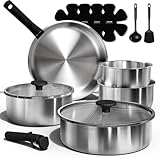
- Made of food-grade 18/8 stainless steel, this stainless steel cookware set won’t warp or deform. Free of PFAS, PFOA, and PFOS for healthy cooking. Oven safe to 600°F and works on all cooktops, including induction. Built to last a lifetime.
- Unlike cookware with just a triple-layer base, CAROTE stainless steel pots and pans feature full tri-ply construction from base to sides for 3× more even heat than single-ply. No hot spots, no base separation. The smooth, seamless curve of the base helps preserve your valuable glass cooktop by preventing scratches and uneven heat buildup. (A visible seam usually means a single-ply body with only a bonded tri-layer base.)
- Detachable handles allow easy stacking, saving up to 70% cabinet space—stacked like a small stockpot. One click transfers cookware seamlessly from stove to oven, table, or fridge. Serves as both a cooking tool and a serving plate.
- Brushed finish ensures easy browning and dishwasher safe. Unlike nonstick pans, stainless steel cookware requires a learning curve but offers durable, worry-free cooking. See manual for more using tips.
- Carote provides 12 months warranty from the date of purchase. Please don't hesitate to reach out if any quality problem. You will be guaranteed to get satisfying solution.
- Scrape away softened material with a wooden or plastic utensil.
- Repeat the hot-water soak or use a short simmer if the material permits it.
- Work while the residue is softened rather than allowing it to dry again.
- Use a manufacturer-approved cookware cleanser for the specific material.
- Rinse thoroughly and wash with ordinary dish soap.
If baking soda foams or boils over, remove the pot from the heat before adding detergent or more baking soda. Use enough headroom to prevent overflow.
If vinegar and baking soda fizzed but did not clean, that is normal. The bubbles came from the acid-base reaction, not from proof of superior cleaning. Use the ingredients separately, and only when the cookware’s instructions allow them.
What to do if the pot smells like cleaner
Wash it with hot water and ordinary dish soap, rinse repeatedly, and dry it. Do not add another chemical to neutralize the odor. Poison Control warns against mixing vinegar with bleach or other acids, and its guidance on hand dish soap and household cleaning products emphasizes avoiding combinations that can produce dangerous fumes. If there has been a significant exposure, eye contact, breathing difficulty, or ingestion of a cleaner, contact your local poison center or emergency service.
When should you replace the pot?
Stop cleaning and assess the cookware once the residue is gone. Replacement or manufacturer advice is appropriate when:
- A nonstick or ceramic coating is peeling, blistered, flaking, or visibly lifting.
- The pot has deep scratches that affect a coating or lining.
- Enamel is chipped through to the metal, especially on the cooking surface.
- The pot is warped, rocks, spins, sits unevenly on an induction cooktop, or heats irregularly.
- Aluminum or copper has severe pitting, holes, or deep corrosion.
- A handle, rivet, bonded base, or other structural part is loose.
- The cookware cracked after thermal shock.
- Repeated cleaning leaves persistent smoke, chemical residue, or a surface that cannot be washed clean.
A permanently stained but intact enamel surface may still be usable. Stainless-steel heat tint may be cosmetic. Cast iron with damaged seasoning may be recoverable through re-seasoning. Conversely, a pot that looks clean is not automatically safe if its coating, enamel, lining, or structure has failed.
How to prevent another burnt pot
- Reduce heat once rice, oatmeal, sauces, milk, or other foods begin simmering.
- Use enough liquid for foods that absorb water.
- Stay with cooking that can scorch quickly.
- Do not preheat an empty nonstick pot.
- Soak the cookware soon after it is safe to handle; dried residue is harder to remove.
- Use wooden, silicone, or plastic utensils on coated and enameled surfaces.
- Dry and lightly oil cast iron and carbon steel after washing.
- Follow the exact care guide for the brand and lining rather than relying on a general internet cleaning hack.
Quick method by material
| Material | Start here | Do not default to |
|---|---|---|
| Stainless steel | Hot soapy soak; water or baking-soda simmer; approved stainless cleanser if needed. | Ordinary steel wool, bleach, peroxide, oven cleaner, prolonged acid soaking. |
| Enameled cast iron | Warm soapy soak; baking soda simmer for about 8–10 minutes; soft sponge. | Metal tools, abrasive pads, cold water on hot enamel. |
| PTFE nonstick | Warm soapy soak for at least 30 minutes; soft sponge. | Metal, abrasives, oven cleaner, high heat, unapproved dishwasher tablets. |
| Ceramic nonstick | Warm soapy soak; soft sponge. | Steel wool, iron sponges, abrasive detergent. |
| Cast iron or carbon steel | Brief water simmer; scrape; dry; oil; re-season if needed. | Prolonged soaking and acids. |
| Aluminum | Warm water, mild dish soap, soft sponge, repeat if needed. | Universal vinegar, strong alkali, dishwasher tablets, aggressive scouring. |
| Copper | Identify the lining; use the manufacturer-approved cleaner. | Abrasives that could damage the lining. |
| Glass or stoneware | Cool completely; soak; use a soft sponge. | Thermal shock and metal tools. |
Frequently Asked Questions
What is the fastest safe way to clean a burnt pot?
Let it cool completely, remove loose food with a wooden or plastic utensil, cover the residue with hot water and hand dish soap, and soak for 15 to 30 minutes. If the material allows it, use a short water or baking-soda simmer before scrubbing gently. The exact stronger method depends on whether the pot is stainless steel, enamel, nonstick, cast iron, carbon steel, aluminum, copper, glass, or stoneware.
Free tools Windows power users keep installed
One-click scans. No signup required.
Can I use vinegar and baking soda together on a burnt pot?
Not as a universal method. They fizz because an acid-base reaction produces carbon dioxide, but the bubbles do not prove better cleaning. Vinegar can harm seasoning and may conflict with manufacturer guidance for some metals. Use either ingredient only for a material-approved purpose and never mix vinegar with bleach or other cleaners.
Can I use a dishwasher tablet to clean a burnt pot?
It is not a universal cookware cleaner. Automatic dishwasher detergent can be strongly alkaline or contain bleaching agents, creating particular risks for nonstick, ceramic-coated, aluminum, anodized, and decorative cookware. Use it only if the pot’s manufacturer explicitly approves it.
How do I know whether a burnt pot is still safe to use?
A pot is usually salvageable when the surface is intact and the problem is removable food or cosmetic discoloration. Replace or seek manufacturer advice for peeling coatings, chipped cooking-surface enamel, warping, cracks, deep pitting, holes, loose handles, separated bases, or persistent chemical residue.
Is a blackened pot automatically unsafe?
No. Blackening may be burnt food, polymerized oil, seasoning, heat tint, oxidation, staining, or coating damage. Identify the material and inspect the surface after cleaning. Appearance alone does not establish whether the pot is safe.
The Tool Desk
Outbyte PC Repair FREEClear out junk files and repair common Windows errorsFree Scan →Outbyte Driver Updater FREEFix the driver behind crashes, sound loss and screen glitchesFind Drivers →The Bottom Line
Start gently: cool the pot, soak it in hot water with hand dish soap, and loosen the residue with a nonmetal utensil. Escalate only with a method approved for that material. Stainless steel and intact enamel can often be restored; seasoned cast iron and carbon steel may need oiling or re-seasoning; nonstick, chipped, warped, cracked, or deeply pitted cookware may need replacement.
Quick Recap
Product prices and availability are accurate as of the date/time indicated and are subject to change. Any price and availability information displayed on Amazon at the time of purchase will apply.