The right way to clean a shower is to match the cleaner to both the surface and the buildup. Use a mild detergent or pH-neutral cleaner for routine soap, body-oil, and product residue. Treat hard-water scale with an acid only when the surface is acid-safe, address mold by correcting moisture as well as removing the visible growth, and use disinfectant only when it is actually needed and the product label permits the use.
The safest overall process is simple: identify the materials, ventilate, remove loose debris, work from top to bottom with nonabrasive tools, rinse completely, and dry the shower. Do not use vinegar on natural stone, do not use bleach as an everyday shower cleaner, and never mix bleach, ammonia, acids, or other cleaning products.
As an Amazon Associate I earn from qualifying purchases.
Quick answer: For an unknown shower, start with warm water and a small amount of mild detergent on an inconspicuous area. If the surface changes color, dulls, becomes sticky, or develops a haze, stop, rinse, and consult the manufacturer.
Free tools Windows power users keep installed
One-click scans. No signup required.
Choose the method before you choose the cleaner
There is no single best shower cleaner. A product that works on glazed tile may etch marble, damage an acrylic surround, strip a glass coating, discolor grout, or corrode a metal finish.
Before cleaning, identify the shower materials and the problem you are trying to remove:
#1 Best Overall

- REPLACEABLE SCRUBBER PADS: Cleaning floors? Scrubbing a pool surface, bath tub or shower? These 6pcs replaceable pads with handles will meet your cleaning needs and makes cleaning work effortlessly, and you can replace the pads according to you.
- NON-SCRATCH PAD: Our products are made of high-quality scratch-free materials, it scrubs away dirt and grime without damaging delicate surfaces. Our scrubbing pads are strong enough to last, but gentle enough for use on most household items.
- COMFORTABLE SCOURING HANDLE: The scrub brush and handle are simply to install and remove.It protect your hands and provide good cleaning leverage, easy to grip and won't slip in wet hands while you cleaning bathtup, bathroom or pool.
- BRIGHT WHITE COLOR WON'T STAIN. These set of simple white scrubbing pads won't discolor porous surfaces and won't fade after you using it. Besides, the bright white color lets you see the dirt you wipe away while deep cleaning!
- MULTI-PURPOSE: Use these scourers on vinyl, tile, steel and other surfaces. Strong but flexible to access tight corners, ideal for home and commercial use, such as scrubing the water line of bathtube, and scrub the calcium off the tiles in pool.
| Problem | Start with | Important qualification |
|---|---|---|
| Everyday dirt, body oils, or product residue | Mild detergent or pH-neutral cleaner | Use a soft cloth, sponge, or compatible nylon brush, then rinse and dry. |
| Soap scum | Mild detergent and gentle agitation | Hard water can make soap residue much more stubborn. |
| White, chalky scale | A labeled mineral remover or compatible mild acid | Only use acid on acid-safe surfaces; protect stone, grout, metal, coatings, and caulk. |
| Mold or mildew | Detergent and water, followed by complete drying | Find and correct the moisture problem. Bleach is not a substitute for mold removal. |
| Orange or brown staining | A surface-compatible rust or iron-stain remover | Do not use an acid rust remover on stone, acrylic, or an unknown finish. |
| Blackened or failed caulk | Gentle cleaning and inspection | Mold inside silicone, cracked caulk, or a separated seal usually requires replacement. |
Check installation paperwork, care labels, the fixture model number, or the manufacturer’s website before using a specialty product. This is especially important for natural stone, coated shower glass, acrylic and fiberglass surrounds, premixed grout, and brushed or plated fixtures.
What to gather
- Rubber or nitrile gloves
- Eye protection when using sprays, acids, bleach, or mold products
- A bathroom exhaust fan that vents outdoors, or an open window where practical
- Microfiber cloths and a nonabrasive sponge
- A soft nylon or grout brush and a small detailing brush
- A squeegee
- A bucket and warm water
- Mild liquid dish detergent or a pH-neutral bathroom or stone cleaner approved for the surface
- A plastic scraper for loose residue, if appropriate
- A drain strainer or mechanical hair-removal tool
- A manufacturer-approved specialty cleaner for mineral deposits, rust, or disinfection when needed
Do not treat baking soda, vinegar, bleach, ammonia, hydrogen peroxide, steam, or commercial cleaners as a universal shower-cleaning kit. Their suitability depends on the material and on what other products may already be on the surface.
Safety rules before you start
- Never mix cleaning products. In particular, never mix bleach with ammonia, acids, vinegar, or any other cleaner. Dangerous gases can result; CDC also warns about the hazards of ammonia mixtures in its ammonia safety guidance.
- Ventilate the room, but do not create a spray cloud in a poorly ventilated bathroom.
- Wear gloves. Add eye protection for chemical sprays, acids, bleach, and mold cleanup.
- Follow the product label for dilution, approved surfaces, dwell time, contact time, rinsing, and disposal.
- Test an inconspicuous area first, particularly when the material or finish is unknown.
- Do not use steel wool, pumice, razor blades, coarse scouring pads, or aggressive brushes on glass, acrylic, fiberglass, grout, or finished fixtures unless the manufacturer explicitly permits them.
For significant mold cleanup, CDC recommends protective equipment including gloves, eye protection, and at least a NIOSH-approved N95 respirator. People with asthma, chronic lung disease, serious allergies, or weakened immune systems should avoid substantial mold-cleanup work; see CDC mold cleanup guidance.
The complete top-to-bottom shower-cleaning method
Cleaning from high surfaces toward low surfaces prevents dirty runoff from recontaminating areas you have already finished. Work in small sections so cleaner does not dry on the surface.
- Ventilate. Turn on the exhaust fan if it vents outdoors, open a window when conditions allow, and keep the bathroom door open if that improves airflow.
- Remove everything. Take out shampoo bottles, soap, razors, accessories, bath mats, and the shower curtain or liner. Remove the drain cover if it is designed to come off. Wipe bottles and storage accessories separately; residue underneath them often causes rings and mildew.
- Remove loose debris. Pull hair and visible material from the drain by hand, with gloves, or with a mechanical hair-removal tool. Do not begin by pouring an unknown chemical into a clogged drain.
- Clean the showerhead and upper fixtures. Remove loose scale with a soft brush. If the showerhead can be removed, use only the descaling method approved for that model and finish. Rinse it thoroughly before reinstalling.
- Rinse loose soil. Use warm water to loosen ordinary soap and product residue. Do not use very hot water unless the surface manufacturer permits it.
- Apply the mildest compatible cleaner. Use a pH-neutral stone or tile cleaner, or a small amount of mild liquid detergent in warm water when the manufacturer permits it. Apply it according to the label rather than assuming that more product cleans better.
- Allow the stated dwell time. If the label says to leave the cleaner wet for a certain period, keep the surface wet for that period. Do not allow a product to dry on the surface unless its instructions specifically say to do so.
- Work downward. Clean the showerhead area, shelves, ledges, niches, and bottle holders first; then upper walls, lower walls, grout, glass, hardware, caulk, floor, and drain cover.
- Agitate gently. Use microfiber or a nonabrasive sponge on glass, acrylic, fiberglass, and finished fixtures. Use a soft nylon brush on compatible grout and in corners or tracks.
- Rinse thoroughly. Remove both the loosened soil and the cleaner. Residual cleaner can leave a film and may damage some finishes with repeated exposure.
- Dry the shower. Squeegee glass and walls, then towel-dry ledges, tracks, corners, fixtures, and the floor where water remains.
- Inspect instead of scrubbing harder. If a stain remains, determine whether it is etched glass, mold inside silicone, deeply stained grout, rust, efflorescence, a damaged finish, or a leak. More aggressive scrubbing may make the damage worse.
Surface-by-surface instructions
Glazed ceramic or porcelain tile
For routine cleaning, use mild detergent or a compatible tile cleaner with a soft sponge or soft nylon brush. Rinse and dry. Avoid abrasive tools that can scratch or dull the finish.
A labeled acidic mineral remover may be appropriate for compatible ceramic or porcelain when hard-water deposits persist, but it is not routine maintenance. Protect cement grout and nearby metal, and follow the label. Home Depot’s tile-cleaning guidance also cautions against abrasive methods and incompatible chemicals.
Do these 3 things before closing this tab:
1Clear out junk files and repair common Windows errors2Scan for outdated or missing drivers - takes under a minute3Repair Windows errors before they cause bigger problemsCement-based grout
Use a neutral cleaner for regular work and a soft nylon grout brush for embedded residue. Rinse and dry thoroughly. A penetrating sealer may be appropriate after the grout has cured, but use one approved by the grout or sealer manufacturer.
Sealer does not make grout maintenance-free: it can reduce absorption and staining, but it does not prevent all dirt, mold, mildew, or buildup. MAPEI advises against making acid cleaners or regular bleach part of routine grout maintenance because they may erode, discolor, or weaken cement-based grout. See MAPEI’s shower maintenance guidance.
Epoxy or premixed grout
Use a mild, compatible cleaner, rinse, and dry. Epoxy grout is generally impervious enough that it does not require sealer, although the specific product instructions control. Premixed or ready-to-use grouts may have different heat and chemical limitations.
Steam can be useful on some tile and grout, but it is not safe to assume that every grout tolerates prolonged heat. MAPEI describes steam cleaning as generally safe for tile and grout while warning that extended high temperatures can damage some premixed products; check the grout manufacturer’s instructions in its care and maintenance guidance.
Quick wins for a faster PC:
Clear out junk files and repair common Windows errorsFree Scan →Fix the driver behind crashes, sound loss and screen glitchesFind Drivers →Repair Windows errors before they cause bigger problemsFix Now →Marble, travertine, limestone, terrazzo, and other natural stone
Use a pH-neutral stone cleaner, stone soap, or mild detergent only when the stone manufacturer permits it. Apply with a soft cloth or sponge, rinse as directed, and dry promptly.
Do not use vinegar, lemon juice, citric-acid products, limescale removers, or other acids on acid-sensitive stone. Marble, travertine, and limestone can be etched by acids; some terrazzo and other stones may also be vulnerable. The Natural Stone Institute recommends neutral cleaning products for natural stone.
Rank #2

- ✔ SCRUB PADS FIRMLY ATTACHED - All scrub pads are backed with a layer of fleece fabric, so they can be firmly attached to the attachment, and will NOT become loose when in use (unlike most of other similar products in the market that the scrub pad always comes loose from the attachment).
- ✔ SUPER EFFICIENT CLEANING TOOL - Much more efficient than those 4 inch or 3 inch diameter pads when cleaning large flat surfaces such as wall tiles, floors or glass doors. PLEASE NOTE: make sure the brush is rotating CLOCKWISE when in use.
- ✔ TWO DIFFERENT STIFFNESSES - The green ones are a bit stiffer and thicker than the red ones. The red pads are abrasive enough to clean your bathroom or kitchen floor very efficiently. If you need stronger scrubbing, try the green ones!
- ✔ FITS ANY CORDLESS DRILL - Features 1/4-inch quick change shaft that fits any cordless drill. Package includes a drill attachment, 3 red pads and 3 green pads. Drill NOT Included.
- ✔ WEAR RESISTANT & DURABLE - The scrub pads are easy to rinse clean and they will be ready for next use again. Saves your cleaning time and make it more fun! 🙂
If a stone surface has already become dull or developed a lighter ring after acidic cleaning, the problem may be etching rather than leftover dirt. Stop experimenting with stronger products and consult a stone-care professional.
Acrylic or fiberglass
Clean with mild detergent, warm water, a terry cloth, soft cloth, or nonabrasive sponge. Rinse thoroughly and dry. Delta’s acrylic shower-base care instructions warn against abrasive pads, steel wool, harsh solvents, acetone, paint thinner, and unapproved drain or clog removers.
Recommended Free Tools
Do not use a razor blade or pumice to remove scale from an acrylic or fiberglass surface. A cloudy area may be scratched or chemically damaged rather than dirty.
Glass shower doors
First determine whether the glass has a manufacturer-applied protective or water-repellent coating. For Delta treated doors, the approved approach is mild detergent, warm soapy water, and a nonabrasive cloth or sponge; its care instructions prohibit ammonia, hydrogen peroxide, naphtha, toluene, ethyl acetate, lye, acetone, steel wool, and aggressive brushes.
For uncoated glass, a compatible glass cleaner or diluted vinegar may help with mineral film. Use that approach only after confirming that runoff cannot contact acid-sensitive stone, grout, metal finishes, caulk, or a glass coating. Rinse and dry completely, and never use abrasive cleaners or scouring pads.
Persistent cloudiness may be mineral buildup, cleaner residue, or permanent etching. If a compatible cleaner does not remove it, more force is not necessarily the answer; identify the glass and coating before attempting restoration.
Chrome, stainless steel, brass, and other fixtures
Follow the fixture manufacturer’s care instructions. Apply mild cleaner to a soft cloth or sponge, wipe gently, rinse or wipe away residue, and dry. Avoid prolonged contact with strong acids, bleach, chlorides, abrasives, and unapproved disinfectants. These can corrode metal or damage plated, brushed, or specialty finishes.
Do not leave vinegar or a descaler soaking on a decorative finish simply because it removed scale elsewhere in the shower.
Silicone caulk
Clean caulk gently with a compatible cleaner and soft brush. If it is cracked, pulling away, permanently discolored, or blackened through the silicone, cleaning may not restore the seal.
Do not apply new caulk over mold, old sealant, or a damp substrate. Remove the failed caulk, clean away soap residue and visible mold, allow the joint and underlying surfaces to dry completely, and apply a bathroom sealant according to the product instructions. DAP’s shower-recaulking instructions cover the preparation required before new sealant is applied.
Shower curtains and liners
Separate the curtain or liner from the hard-surface cleaning process. Read the care label before washing. Some fabric curtains can be machine-washed, while plastic, coated, or specialty liners may require a different cycle or hand cleaning. Do not assume that bleach, hot water, or machine drying is permitted. Hang the item to dry when the care instructions require it; Maytag provides general curtain-washing guidance.
How to remove specific shower buildup
Soap scum and body-product film
Hard water contains calcium and magnesium. These minerals can react with soap and form an insoluble residue that sticks to shower surfaces, which is why ordinary soap film can be harder to rinse away in some homes. The USGS explains this relationship in its discussion of hard and soft water.
Rank #3

- [EFFICIENT SURFACE SCRUBBING]: This comprehensive 11-piece set contains 5 distinct shapes of medium stiffness brushes designed for full-scale household washing. The durable nylon bristles target deep grout lines, tiled floors, and shower glass, scrubbing away stubborn hard water stains with rotational energy instead of manual force.
- [HEAVY-DUTY COOKWARE SCOURING]: Capable of cutting through burnt-on grease and stubborn food residues, the package includes 3 different stiffness scouring pads, 1-piece scrub sponge, and a robust 4-inch backer pad. Designed for durable surfaces like cast iron grates, ovens, and stoves, always test on a small hidden area first to prevent unwanted scratching.
- [TIME-SAVING HOMEOWNERS PARTNER]: Engineered specifically for busy homeowners, DIY cleaning enthusiasts, and elderly individuals seeking to reduce physical strain. This automatic scrubbing solution reduces deep-cleaning labor by up to 50%, keeping your hands clean and protecting joints during long bathroom maintenance sessions.
- [VERSATILE BATHROOM & KITCHEN USE]: Perfect for wet spaces including bathtubs, toilets, and sinks, as well as kitchen stovetops, ovens, and cast iron skillets. Outfitted with an extension rod, the kit easily reaches high corners, deep drains, and sliding door tracks that standard hand brushes cannot access.
- [UNIVERSAL DRILL COMPATIBILITY]: This kit is designed to be used with standard cordless drills . The diameter of the connecting rod connecting the drill is 1/4inch.And it is equipped with an extension rod, each attachment locks securely into place, allowing you to easily reach deep into narrow corners or high ceilings without losing torque. (DRILL IS NOT INCLUDED)
- Rinse with warm water to soften the film.
- Apply mild detergent or a compatible neutral cleaner.
- Let it work for the label-directed time without drying.
- Wipe with a nonabrasive sponge or soft brush.
- Rinse completely and dry.
Repeated scrubbing with a stronger chemical is not the best next step if the film is actually mineral scale. Identify the surface and switch to a compatible descaler only when necessary.
Hard-water scale and white mineral deposits
Cloudy glass, chalky deposits around fixtures, and crust concentrated where droplets evaporate are typical signs of mineral scale.
- Confirm that the surface is acid-safe.
- Use a labeled limescale remover or a compatible diluted-vinegar method only where permitted.
- Protect adjacent stone, grout, metal, coatings, and caulk from the product and runoff.
- Follow the stated dwell time.
- Rinse very thoroughly and dry.
Acid-based products should not be used for everyday cleaning. MAPEI warns that they can erode grout and damage sensitive tile or stone. If the material is unknown, use a neutral cleaner and consult the manufacturer instead.
Mold and mildew
Mold is a moisture problem as well as a cleaning problem. For a small area of visible growth on a compatible hard surface:
- Fix or reduce the moisture source, such as poor ventilation, a leak, or water trapped behind failed caulk.
- Ventilate the room and wear appropriate protection.
- Clean the visible growth with detergent and water.
- Scrub carefully, remove the residue, and dry the surface completely.
- Use a disinfectant only if there is a specific reason to disinfect and only according to its label.
- Do not paint or recaulk over visible mold or a damp surface.
EPA says areas smaller than approximately 10 square feet—about a 3-foot-by-3-foot patch—can usually be handled by homeowners, while larger areas, extensive water damage, porous building materials, or uncertain conditions warrant professional guidance. See EPA’s mold cleanup recommendations.
EPA does not recommend bleach as a routine mold-cleanup practice. Dead mold can still trigger allergic reactions, so killing it without physically removing the residue and correcting the moisture source is not enough; see EPA’s explanation of bleach and mold.
What’s actually slowing this PC down?
Pick the symptom - the matching free tool is one click away.
CDC notes that bleach or dish detergent may be used for some mold cleanup, but says not to use more than 1 cup of bleach per gallon of water and never to mix bleach with ammonia or any other cleaner. That guidance is not a universal recipe for every shower surface or finish.
Mold inside silicone caulk
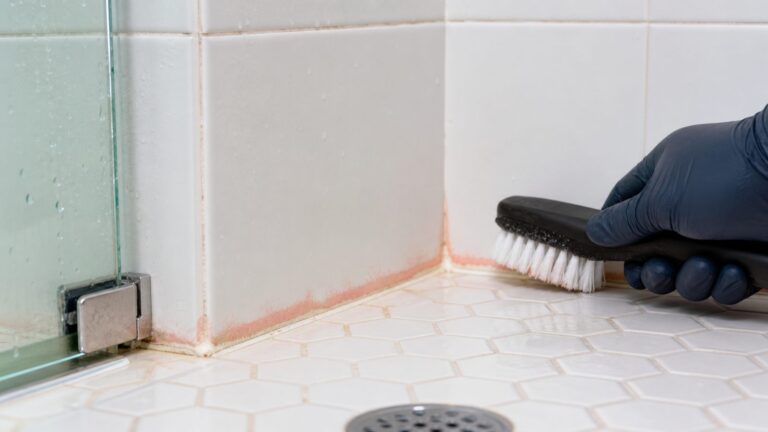
If black discoloration is embedded in silicone, surface scrubbing or bleach may not restore its appearance or its seal. Recurring discoloration, cracks, gaps, or separation from the wall are reasons to remove and replace the caulk after the joint is cleaned and fully dried.
If mold returns behind new caulk, look for a plumbing leak, water intrusion, poor drainage, trapped moisture, or inadequate ventilation. Recaulking without correcting the source only hides the problem temporarily.
Showerhead buildup
Clean a showerhead when visible scale or reduced spray appears. CDC recommends cleaning showerheads and faucet aerators when buildup is visible. Depending on the model, it may be possible to remove the showerhead and soak it in white vinegar, but the model’s instructions and finish take precedence. Follow CDC’s showerhead guidance.
Windows Errors? Fix Them Before They Spread
Repair common Windows errors and clear accumulated junk for a smoother, more stable PC - no reinstall needed.Free scan · no reinstallOutdated Drivers Are Slowing You Down
One free scan finds every outdated or missing driver and matches the right update for your exact hardware.Free scan · exact hardware match- Remove the showerhead if the manufacturer permits it.
- Brush away loose scale.
- Use the approved descaling method.
- Rinse internal and external surfaces thoroughly.
- Reinstall it and run water to flush loosened residue.
Do not soak brass, nickel, gold, or specialty finishes in vinegar without checking the manufacturer’s instructions. If a showerhead has been unused for a week or longer, CDC advises flushing cold water fully for 2 minutes, then running hot water until it begins to feel hot.
Shower-door tracks
- Remove hair, loose debris, and standing water.
- Start with mild cleaner and a cloth.
- Use a small soft brush in corners and around drainage openings.
- If the track is acid-safe and has mineral scale, use a compatible descaler carefully.
- Wipe or rinse away all residue.
- Dry the track, especially areas where water collects.
Do not flood a track with an unknown chemical if it contains a sensitive metal finish or if runoff can reach stone, grout, acrylic, or caulk.
Rank #4

- Yocada Handheld Cleaning Scrub Brush Set 2 Pack: COMPLETE CLEANING SET – Includes 2 durable handheld scrub brushes and 10 hook-shaped scouring pads (each pad: 5.9”L x 2.68”W). Good for tackling tough messes without buying extra refills
- Yocada Handheld Cleaning Scrub Brush Set 2 Pack: HOOK-SHAPED PADS FOR STUBBORN STAINS – The unique hook design increases friction and scrubbing power, effectively removing baked-on grease, soap scum, hard water stains, and grime from sinks, stovetops, shower tiles, and more
- Yocada Handheld Cleaning Scrub Brush Set 2 Pack: ERGONOMIC HANDHELD BRUSH – Comfortable non-slip grip reduces hand fatigue during extended cleaning. Compact size fits easily in your hand to reach tight corners, faucets, and grout lines
- Yocada Handheld Cleaning Scrub Brush Set 2 Pack: VERSATILE USE – Works great on bathroom surfaces (tubs, tiles, toilets), kitchen sinks, cookware, stovetops, outdoor furniture, and even automotive interiors. Safe for ceramic, stainless steel, glass, and most non-scratch surfaces
- Yocada Handheld Cleaning Scrub Brush Set 2 Pack: LONG-LASTING & REPLACEABLE – Pads are washable and reusable. The set of 10 ensures you always have a fresh pad ready for heavy-duty jobs. Brushes are built to last through daily cleaning.
Slow drain or drain odor
- Remove the drain cover if possible.
- Pull out hair and visible debris mechanically.
- Wash the cover with mild detergent.
- Brush accessible residue around the drain opening.
- Rinse with water.
- If the drain remains slow, use a mechanical drain tool or call a plumber.
A baking-soda-and-vinegar reaction may foam, but it is not a dependable substitute for removing a hair clog. Never add a chemical drain opener on top of another cleaner, and check the product label for compatibility with acrylic, metal, and the plumbing system.
Rust or orange staining
Orange or brown marks may come from iron in the water, corroding metal, or a metal object left on the surface. Use a product specifically labeled for both the stain and the surface. Do not use an acid rust remover on marble, limestone, terrazzo, acrylic, or a coated finish unless the manufacturer explicitly approves it.
The Tool Desk
Outbyte Driver Updater FREEScan for outdated or missing drivers - takes under a minuteDriver Scan →Outbyte PC Repair FREEClear out junk files and repair common Windows errorsFree Scan →Bleach, vinegar, ammonia, peroxide, and disinfectants
Bleach
Routine shower cleaning generally does not require bleach. Bleach is not the right tool for ordinary soap scum or hard-water scale, and it can discolor fabrics, damage finishes, and corrode some metals or grout.
If disinfection is genuinely needed, clean visible dirt first and follow the bleach product’s label. CDC’s general guidance for regular unscented bleach at 5%–9% sodium hypochlorite gives a fallback dilution—when the bottle provides no dilution instructions—of 5 tablespoons, or one-third cup, per gallon of room-temperature water, or 4 teaspoons per quart. The diluted solution should be made fresh daily, and the surface must remain visibly wet for the required contact time. See CDC’s bleach guidance.
Do not assume that a bleach dilution is permitted on your shower’s tile, grout, stone, metal, glass coating, acrylic, or curtain. The product label and surface manufacturer’s instructions control.
Vinegar
Vinegar can dissolve mineral deposits on some acid-safe surfaces, particularly uncoated glass and suitable ceramic or porcelain. It is not a universal shower cleaner.
Avoid vinegar and other acids on marble, travertine, limestone, many terrazzo surfaces, unknown natural stone, some metal finishes, manufacturer-coated glass, and any surface whose grout or fixture manufacturer prohibits acids. Never let vinegar runoff sit on adjacent stone or metal.
Ammonia
Do not make ammonia the default glass-door cleaner. Generic glass-cleaning advice may recommend it, but some treated-door manufacturers specifically prohibit ammonia. Delta warns that ammonia can discolor or damage its treated glass and metal finishes.
Never mix ammonia with bleach. If a cleaner is already on the surface and you are unsure what it contains, rinse it away before using another product.
Hydrogen peroxide
Hydrogen peroxide is not automatically safe for every shower surface. Some coatings and metal finishes may be damaged by it; Delta lists hydrogen peroxide among the chemicals it does not recommend for its treated shower doors.
Commercial disinfectants
Cleaning and disinfecting are different tasks. CDC defines cleaning as removing dirt, impurities, and germs with soap, water, and scrubbing. Disinfecting uses chemicals to kill remaining germs. In most homes, routine disinfection is unnecessary unless someone is sick or has recently been sick; see CDC’s distinction between cleaning and disinfecting.
When disinfection is needed, choose an EPA-registered product whose label covers the intended surface, use site, germ or pathogen claim, dilution, contact time, and rinsing requirements. EPA explains that the disinfectant label controls how and where the product can be used in its guidance on selected EPA-registered disinfectants. If the label requires a 10-minute contact time, the surface must remain visibly wet for at least 10 minutes; spraying and immediately wiping is not equivalent.
Best Value
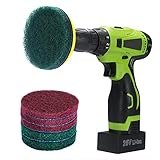
- Scrub Pads Firmly Attached - All scrub pads are backed with a layer of fleece fabric, so they can be firmly attached to the drill attachment, and will not become loose when in use (unlike most of other similar products in the market that the scrub pad always comes loose from the attachment).
- Super Efficient Cleaning Tool - Works great on tiles, tubs, glass, stone, porcelain. Use them on big flat areas and you’ll find they are a huge time saver! Note: make sure the brush rotates clockwise when in use.
- Two Different Stiffness - The green pads are a bit stiffer and thicker than the red ones. The red pads are abrasive enough to clean your bathroom or kitchen floor very efficiently. If you need stronger scrubbing, try the green ones!
- Fits Any Cordless Drill - 1/4-inch (6mm) quick change metal shaft that fits any cordless drill. Package includes a drill attachment, 3 red pads and 3 green pads. Drill not Included.
- Wear Resistant and Durable - The scrub pads are easy to rinse clean and they will be ready for next use again. Perfect for cleaning showers, bathtubs, sinks, tile and many more tasks. Saves your cleaning time and make it more fun! 🙂
For people seeking products with additional ingredient and environmental criteria, EPA’s Safer Choice and Design for the Environment resources explain their respective labels. “Natural” by itself does not prove that a product is safer or surface-compatible.
A practical maintenance routine
The correct frequency depends on shower use, water hardness, ventilation, products used, surface type, and how well the shower dries. MAPEI notes that cleaning frequency depends on usage, so use the following as a starting point rather than a fixed rule.
Do these 3 things before closing this tab:
1Repair Windows errors before they cause bigger problems2Fix the driver behind crashes, sound loss and screen glitches3Clear out junk files and repair common Windows errors- After every shower: Squeegee or wipe glass and wet walls, remove pooled water from ledges, leave the door or curtain open to improve airflow, and run the exhaust fan during and after showering.
- Weekly or as needed: Use a compatible mild cleaner for the walls, floor, fixtures, and high-touch areas. Wipe bottles and storage accessories.
- Monthly or whenever buildup appears: Clean the showerhead, drain cover, door tracks, corners, niches, curtain liner, and areas behind bottles.
- When needed: Treat mineral scale, rust, mold, and stained grout separately. Inspect caulk, grout, drainage, and the shower enclosure for leaks or damage.
EPA recommends wiping shower walls with a squeegee or towel and using ventilation to control moisture. EPA advises keeping indoor relative humidity below 60%, ideally between 30% and 50%; CDC gives a mold-prevention target of no higher than 50%. See the EPA moisture guidance and CDC mold information.
Run an exhaust fan that vents outdoors during and after showering, not merely a recirculating fan. If the room stays damp long after use, improve airflow or investigate the fan, door or curtain arrangement, plumbing, caulk, wall cavities, drain slope, and other sources of trapped moisture.
When cleaning cannot solve the problem
Stop escalating the chemistry when the evidence points to permanent damage, a failed seal, or a building problem.
- Cloudy or damaged glass: The surface may be etched or its coating may be damaged. More abrasive scrubbing can make it worse; identify the manufacturer or consult a glass-restoration professional.
- Black grout that stays black: It may be embedded mold, permanent staining, or moisture behind the joint. Clean and dry it, then investigate the moisture source and consider grout repair or replacement.
- Black spots inside silicone: Replace the caulk if the staining is embedded, the seal is cracked, or it is pulling away.
- Mold larger than approximately 10 square feet: Follow EPA’s recommendation to seek professional guidance, particularly if porous materials or extensive water damage are involved.
- Mold that repeatedly returns: Cleaning is not correcting the moisture source. Investigate ventilation, leaks, trapped water, and failed caulk.
- Persistent drain blockage: A deeper obstruction may require a mechanical tool or plumber.
- Valuable natural stone or specialty finishes: Consult the installer, manufacturer, stone professional, or finish specialist before experimenting.
What to do after a cleaning mistake
| What happened | What it may mean | Next step |
|---|---|---|
| Glass remains cloudy | Etching, permanent mineral damage, or a damaged coating | Stop increasing abrasiveness; identify the coating and seek professional restoration advice. |
| Surface becomes dull | Acid on stone, an abrasive tool, or an incompatible cleaner | Stop, rinse thoroughly, document the product, and contact the manufacturer or a specialist. |
| White haze appears | Cleaner residue, mineral scale, or efflorescence | Rinse with clean water, then identify the residue before selecting another chemical. |
| Strong odor, coughing, or breathing irritation | Poor ventilation or an accidental mixture | Leave the area and get fresh air. Do not try to neutralize the mixture. In the United States, contact Poison Help at 1-800-222-1222 for exposure guidance; seek emergency help for severe symptoms. |
| Mold returns after caulking | Moisture, leakage, or mold remains behind the new seal | Remove the affected sealant if necessary and investigate the underlying moisture problem. |
| Drain remains slow | Hair or an obstruction deeper in the trap or pipe | Use a mechanical tool or call a plumber rather than repeatedly adding chemicals. |
The core rule
Use the least aggressive method that can solve the specific problem. Mild detergent or neutral cleaner is the right starting point for most showers. Acid is for compatible mineral deposits, not routine maintenance. Mold requires removal and moisture control. Disinfectant is a targeted, label-directed step—not a synonym for clean. And when caulk, grout, glass, drainage, or the wall assembly has failed, repair is more effective than repeatedly scrubbing the symptom.
PC Slower Than It Used to Be?
A free scan shows the junk files, broken settings and background clutter dragging Windows down - then fixes them in one click.Free scan · Windows 10 & 11Outdated Drivers Are Slowing You Down
One free scan finds every outdated or missing driver and matches the right update for your exact hardware.Free scan · exact hardware matchFrequently Asked Questions
Is vinegar safe for cleaning a shower?
Only on confirmed acid-safe surfaces, such as some uncoated glass or suitable ceramic and porcelain. Do not use vinegar on marble, travertine, limestone, many terrazzo surfaces, unknown natural stone, some metal finishes, coated glass, or surfaces whose manufacturer prohibits acids. Keep vinegar runoff away from stone, grout, metal, and caulk.
Can I use bleach on shower grout or mold?
Bleach is not recommended as an everyday shower cleaner, and EPA does not recommend it as routine mold cleanup. For a specific disinfection need, follow the bleach label and surface manufacturer’s instructions, keep the surface wet for the required contact time, and never mix bleach with ammonia, vinegar, acids, or any other cleaner.
What removes hard-water stains from shower glass?
First determine whether the glass is coated. Use the manufacturer-approved cleaner for treated glass. On confirmed uncoated glass, a compatible glass cleaner or diluted vinegar may help, followed by thorough rinsing and drying. If the glass remains cloudy, it may be etched rather than dirty; more abrasive scrubbing can cause permanent damage.
How do I clean moldy silicone caulk?
Clean the surface gently and correct the moisture problem. If black discoloration is embedded in the silicone, or the caulk is cracked or pulling away, remove and replace it after cleaning and drying the substrate. Never apply new caulk over mold, old sealant, or damp material.
How often should a shower be cleaned?
Squeegee or wipe water away after every shower and ventilate the room. Light-clean the shower weekly or as needed, and clean tracks, the showerhead, drain cover, bottles, and curtain liner about monthly or whenever buildup appears. Homes with hard water, heavy use, poor ventilation, or recurring mold may need more frequent cleaning.
What should I do if I accidentally mix cleaners?
Leave the bathroom immediately, get fresh air, and do not try to neutralize the mixture or continue cleaning. For exposure concerns in the United States, call Poison Help at 1-800-222-1222; seek emergency assistance for severe breathing problems, chest pain, confusion, or other serious symptoms.
The Bottom Line
A clean shower is a compatible-cleaner-and-drying problem, not a strongest-chemical problem. Start gently, identify the surface, treat only the buildup you actually have, rinse away residue, and dry the enclosure after use. If mold, discoloration, a slow drain, or failed caulk keeps returning, look for the leak, moisture, or material damage that cleaning alone cannot fix.
Quick Recap
Product prices and availability are accurate as of the date/time indicated and are subject to change. Any price and availability information displayed on Amazon at the time of purchase will apply.
What’s actually slowing this PC down?
Pick the symptom - the matching free tool is one click away.