The best tile depends on where it will be installed—not just how it looks. Porcelain is usually the most versatile choice for moisture, traffic, and outdoor exposure, while ceramic is often the better value for walls and backsplashes. Natural stone offers unmatched variation but requires more maintenance. Glass, cement, metal, mosaics, and decorative waterjet designs can be excellent choices when their application ratings and care requirements are understood.
There are not exactly 15 universally recognized tile types. The list below combines material categories, natural-stone varieties, formats, and manufacturing methods because those are the labels homeowners actually encounter when shopping. The important distinction is that porcelain is a type of ceramic tile, while mosaic and waterjet describe how tile is arranged or cut—not necessarily what it is made from.

As an Amazon Associate I earn from qualifying purchases.
Quick comparison: 15 types of tile
Use this table to narrow the field, then check the manufacturer’s technical sheet before ordering. A material name alone does not establish whether a tile is suitable for a shower floor, exterior installation, fireplace, or high-traffic floor.
| Type | What it is | Common uses | Main advantages | Main cautions |
|---|---|---|---|---|
| Ceramic | Clay-based tile fired in a kiln; glazed or unglazed | Walls, backsplashes, floors, shower walls | Affordable, broad design range, relatively easy to cut | Absorption and wear resistance vary; some products are wall-only |
| Porcelain | Dense ceramic tile with water absorption of 0.5% or less | High-traffic floors, showers, kitchens, outdoor areas | Low absorption, durability, and potential frost resistance | Harder to cut and install; polished finishes can be slippery when wet |
| Glass | Solid glass tile, often supplied in mosaic sheets | Backsplashes, shower walls, pools, feature walls | Impervious surface, vivid color, easy cleaning | Adhesive may show through; smooth products are often wall-only |
| Cement or encaustic | Pigmented cement tile, usually pressed and cured | Decorative floors, bathrooms, entries, feature walls | Strong patterns, matte texture, distinctive patina | Porous, sealing-sensitive, and vulnerable to staining and acid |
| Marble | Calcite- or dolomite-based natural stone | Bathrooms, entries, walls, decorative floors | Unique veining and a high-end appearance | Can scratch, stain, and etch |
| Granite | Hard natural igneous stone | Floors, entries, counters, rated exterior applications | Generally hard, heat-resistant, and scratch-resistant | Absorption and slip characteristics still vary by product and finish |
| Limestone | Soft, sedimentary natural stone | Walls and low- to moderate-traffic interiors | Calm, architectural appearance | Porous and acid-sensitive |
| Travertine | Porous limestone formed by mineral springs | Floors, walls, patios, traditional interiors | Warm color, movement, and natural texture | Requires more maintenance; filled and unfilled products behave differently |
| Slate | Layered natural stone, commonly cleft or honed | Entries, mudrooms, floors, showers, patios when rated | Texture, color variation, and useful traction | May flake, shed dust, vary in thickness, and require sealing |
| Quarry | Dense, generally unglazed clay-and-shale ceramic tile | Commercial kitchens, mudrooms, patios, high-traffic floors | Tough and textured, with good traction in many applications | Unglazed surfaces can stain and need appropriate care |
| Terracotta | Traditional porous fired clay, usually warm red or orange | Dry interiors and covered exterior areas | Handmade character and a natural patina | Porous, stain-prone, and potentially vulnerable to frost |
| Terrazzo | Aggregate set in cement, epoxy, or another binder | Floors, stairs, walls, modern and commercial interiors | Durable and highly customizable | Tile, poured, cement, epoxy, and look-alike products need different care |
| Metal | Stainless steel, aluminum, copper, tin, or metal-faced tile | Backsplashes, shower walls, accent walls | Distinctive appearance and easy cleaning when properly coated | Can scratch, dent, tarnish, or react to harsh cleaners |
| Mosaic | Small pieces arranged in a pattern; available in many materials | Shower floors, backsplashes, niches, curves, accents | Flexible layouts, strong visual detail, and many grout joints | More grout to clean and more opportunities for sheet seams or misalignment |
| Waterjet mosaic | Stone, glass, metal, or composite pieces precision-cut with a waterjet | Feature walls, inlays, fireplaces, luxury floors | Intricate curves, borders, and custom patterns | Expensive and labor-intensive; performance depends on the actual material |
1. Ceramic tile
Ceramic tile is made from clay or other mineral materials, shaped, dried, and fired in a kiln. It may have a colored glaze on the surface or remain unglazed. Ceramic is a broad category: absorption, hardness, finish, and intended use vary significantly from one product to another.
#1 Best Overall
Glazed ceramic is a practical choice for many kitchen backsplashes, bathroom walls, shower walls, fireplace surrounds, and interior floors that meet the manufacturer’s floor rating. It is available in nearly every color, pattern, size, and price tier, and it is generally easier to cut than dense porcelain. That can reduce labor on a complicated layout, although installation quality still matters.
Do not assume that every ceramic tile can go on a floor. Some thin or decorative wall tile is not designed for foot traffic, impact, or abrasion. Check the application symbols, water absorption, breaking strength, and wear information. A floor-rated tile can generally be used on a wall when the substrate and setting system can support it, but a wall-only tile should not automatically be installed on a floor. The manufacturer’s wall-tile guidance and the product’s technical sheet should control.
2. Porcelain tile
Porcelain is not a separate family from ceramic. It is a dense ceramic tile that meets a water-absorption definition: 0.5% or less when tested under ASTM C373. The Tile Council of North America explains the distinction and notes that products marketed as porcelain do not always meet the industry definition. Check the technical data and, where available, PTCA certification rather than relying on the label, body color, weight, or a salesperson’s description.
Qualifying porcelain is a strong general-purpose choice for kitchens, entries, high-traffic interior floors, bathrooms, shower walls, and many patios. Its low absorption is useful where water exposure or freeze-thaw conditions are concerns, but an outdoor installation still requires the exact product to be approved for exterior and frost-prone use. Low absorption does not make every porcelain tile suitable for every climate or installation method.
Porcelain’s trade-off is installation. The dense body is harder to cut and drill, and large-format porcelain places greater demands on substrate flatness, mortar coverage, handling, and movement-joint planning. Polished porcelain can also be slippery when wet. Matte or textured porcelain may be more appropriate for a wet floor, but the finish must still have suitable tested performance.
3. Glass tile
Glass tile is made from solid glass and is commonly sold as individual pieces or mesh-mounted mosaics. It is impervious to water, does not absorb grease in the way porous stone or cement can, and is easy to wipe clean. Those characteristics make it particularly useful for kitchen backsplashes, shower walls, niches, feature walls, and some pool applications.
Glass is not automatically a floor tile. Smooth glass can be unsuitable for walking surfaces, while small-format glass mosaics with appropriate traction and application data may be approved for shower floors. One manufacturer’s glass-mosaic technical sheet, for example, specifically identifies certain mosaics for shower-floor use; that is a product-specific approval, not a rule for all glass. Review the exact product rating before using it underfoot.
Crashes, No Sound, or Screen Glitches?
Random freezes, missing sound and display glitches usually trace back to one bad driver. Find and replace yours safely.Free scan · under a minutePC Slower Than It Used to Be?
A free scan shows the junk files, broken settings and background clutter dragging Windows down - then fixes them in one click.Free scan · Windows 10 & 11Transparent or translucent glass can reveal the adhesive, trowel marks, substrate color, or voids beneath the tile. The installer may need a manufacturer-approved mortar and a carefully prepared, uniform substrate. Clean glass with a non-abrasive product and soft tools; abrasive pads can scratch some finishes.
4. Cement and encaustic tile
Traditional cement tile is made by pressing mineral pigments and cement into a mold, then curing the tile rather than glazing and kiln-firing it like ordinary ceramic. Retailers often use encaustic to describe patterned cement tile, although the terminology can also refer to genuine clay encaustic tile or a printed porcelain tile designed to look like encaustic cement.
That distinction matters. A patterned porcelain with an encaustic look may have low absorption and relatively simple maintenance, while genuine cement tile is porous and can develop patina, color variation, staining, or efflorescence. Cement tile is often chosen for decorative floors, entryways, bathrooms, backsplashes, and feature areas where its matte surface and strong pattern are part of the appeal.
Installation requires discipline. Use a sound, level, dry substrate; blend tiles from multiple boxes; follow the manufacturer’s instructions for pre-sealing; and use a compatible, often light-colored grout. Grout residue should be removed promptly rather than allowed to cure on the porous surface. A penetrating sealer can reduce absorption, but it does not make cement tile stain-proof or acid-proof. The cement-tile installation guidance illustrates the importance of substrate preparation, grout selection, immediate cleanup, and sealing after the tile is clean and dry.
The Tool Desk
Outbyte PC Repair FREERepair Windows errors before they cause bigger problemsFix Now →Outbyte Driver Updater FREEScan for outdated or missing drivers - takes under a minuteDriver Scan →5–9. Natural stone tile
Natural stone is not one performance category. Marble, granite, limestone, travertine, and slate differ in absorption, hardness, chemical resistance, surface texture, thickness, and freeze-thaw behavior. The same stone can also perform differently depending on whether it is polished, honed, tumbled, brushed, flamed, or left cleft.
5. Marble tile
Marble is a metamorphic stone valued for veining, translucency, and variation. It can create an elegant bathroom wall, backsplash, entry, fireplace surround, or decorative floor. Honed marble is often more forgiving visually than polished marble, but changing the finish does not eliminate its chemical sensitivity.
Marble can scratch, stain, and etch. Etching is a chemical change to the surface—often a dull or light mark caused by an acidic substance—not merely a stain that can be removed. Lemon juice, vinegar, some bathroom products, and acidic cleaners are common risks. Sealing can reduce absorption and improve stain resistance, but it cannot make marble immune to acid or scratching.
6. Granite tile
Granite is a hard igneous stone frequently selected for floors, entries, counters, and certain exterior applications. It is generally more resistant to scratching and heat than softer stones, making it a logical option for heavy-use areas.
Granite still varies. Mineral composition, finish, thickness, and source affect absorption and traction. A polished granite may not be the right choice for a wet floor, and an exterior product must be confirmed for freeze-thaw exposure. Some granite benefits from an impregnating sealer, while denser products may need less frequent treatment. Test the actual stone rather than generalizing from its name.
7. Limestone tile
Limestone has a soft, quiet appearance and is commonly used in neutral, traditional, and architectural interiors. It works well on walls and on carefully selected low- to moderate-traffic floors.
It is usually more porous and softer than granite and is vulnerable to acids because it is largely calcium-carbonate based. Limestone can absorb spills, show wear, and etch from acidic cleaners. It may be suitable for a bathroom or shower wall with the right installation and maintenance plan, but a busy shower floor or exterior application requires particularly careful product-specific review.
8. Travertine tile
Travertine is a form of porous limestone formed around mineral springs. Its warm beige, cream, gold, and brown tones, along with natural voids and movement, suit rustic, Mediterranean, and traditional designs. It may be supplied filled, unfilled, honed, polished, or tumbled.
Filled travertine has its holes filled with cement or resin; unfilled travertine retains openings that can collect dirt and complicate cleaning. Both forms remain acid-sensitive, and both can absorb liquids. Travertine may be used on floors, walls, patios, and showers when the exact product, finish, drainage, and maintenance plan are appropriate. It is not a low-maintenance substitute for porcelain.
9. Slate tile
Slate is a layered natural stone often sold with a cleft surface that provides visual depth and texture. It is popular in entries, mudrooms, kitchens, showers, patios, and other areas where a more natural, tactile surface is desired.
Slate can offer useful traction, but cleft slate may vary in thickness and can shed flakes or dust. Some products are smoother and more consistent than others. Sealers can help reduce absorption and make cleaning easier, but they do not stop a weak or naturally flaky stone from delaminating. For an exterior installation, verify freeze-thaw and exterior-use data.
The Natural Stone Institute’s care guidance explains that sealers generally act as repellents rather than complete barriers. Its stone-selection guidance recommends considering porosity, scratching, etching, staining, finish, and location before buying.
Quick wins for a faster PC:
Repair Windows errors before they cause bigger problemsFix Now →Fix the driver behind crashes, sound loss and screen glitchesFind Drivers →Clear out junk files and repair common Windows errorsFree Scan →10. Quarry tile
Quarry tile is generally an unglazed ceramic tile made from clay and shale and fired into a dense, durable body. It is associated with commercial kitchens, restaurants, mudrooms, utility spaces, patios, and high-traffic floors. Its textured surface can provide useful traction, and its limited palette of red, brown, gray, and earth tones suits practical or traditional designs.
Unglazed does not mean waterproof or nonporous. Quarry tile can absorb soil, grease, and spills, especially if it is not properly maintained. Sealing before grouting can help protect the surface and prevent grout from lodging in the pores. Daltile provides separate quarry-tile product information and care guidance; follow the exact product instructions.
Rank #2

- 【Strong Bonding Performance】- This is a new type of heavy duty construction adhesive, the main material is modified polyether with silane formula offers Strong bonding performance, no need to worry about it falling off or cracking.
- 【Suitable For Most Surfaces】- Our construction adhesive bonds subfloor, mirrors, masonry, landscaping, brick, tile, metal, decks, drywall, concrete, aluminum, tub & shower, wet surfaces, granite, marble, trim, paneling. And it is 100% waterproof after solidification.
- 【Multifunctional adhesive】- Our product can not only be used to bond and fix items but also to fill gaps, making it a good product home repairs.
- 【Environmentally Friendly and Non-toxic-No unpleasant smell】- This product instead of traditional adhesive, formaldehyde-free, solvent-free, non-toxic, odorless, very low VOC emission and other outstanding environmental characteristics, to the environment and the human body affinity, you can rest assured to use it.
- 【Your satisfaction is our pursuit】- Any product-related problems are welcome to contact us, we will do our best to serve you!
11. Terracotta tile
Terracotta is a traditional porous fired-clay tile, usually unglazed and warm red, orange, brown, or ochre. It is a type of ceramic tile, but its relatively absorbent body and handmade appearance distinguish it from dense porcelain. Variations in color, shape, thickness, and surface are often inherent rather than defects.
Terracotta can give dry interiors a warm, old-world character and may work in covered outdoor spaces. It usually needs protection from staining and careful grout installation, often including pre-sealing or a grout release. Interior, covered exterior, and fully exposed exterior installations should not be treated alike. In a cold climate, confirm the product’s frost rating before using it outdoors; sealer alone cannot make a non-frost-rated tile suitable for freeze-thaw exposure. Product guidance such as this terracotta installation guide distinguishes sealing and installation requirements by location.
What’s actually slowing this PC down?
Pick the symptom - the matching free tool is one click away.
12. Terrazzo tile
Terrazzo is an aggregate surface rather than a single stone. Marble, granite, quartz, shell, glass, porcelain, or mirror chips are set in cement, epoxy, resin, or another binder and then ground or polished. Terrazzo may be poured in place, precast, supplied as tile, or imitated by porcelain and ceramic products.
Tile terrazzo is not the same as poured cement terrazzo or epoxy terrazzo. The installation method, joint layout, thickness, patching options, and maintenance vary. Cement-based terrazzo may need sealing and attention to spills, while epoxy terrazzo has different chemical and moisture considerations. Terrazzo can be durable and visually distinctive for floors, stairs, walls, and commercial interiors, but it still needs routine cleaning and prompt spill removal. The National Terrazzo & Mosaic Association explains the material’s aggregate composition and maintenance differences.
13. Metal tile
Metal tile may be made from stainless steel, aluminum, copper, tin, or another metal. Some products are solid metal; others use a metal face over a ceramic, resin, or other backing. Metal is most commonly used for kitchen backsplashes, accent walls, shower walls, and decorative bands.
It is a design-focused choice rather than a universal floor material. Metal can dent, scratch, tarnish, or show fingerprints, and the protective coating often determines whether it can tolerate moisture or cleaning chemicals. Avoid assuming that a metal tile is safe beside a cooktop, inside a shower, or on a floor without checking its application instructions.
Free tools Windows power users keep installed
One-click scans. No signup required.
Abrasive pads and cleaners containing acids, ammonia, bleach, or harsh alkalis can damage some metal finishes. Use the cleaning method specified for the product. Daltile’s metal-tile information and care guidance provide examples of why the finish and coating matter.
14. Mosaic tile
Mosaic is a format, not a material. A mosaic can be made from ceramic, porcelain, glass, stone, metal, shell, or a combination of materials. Pieces may be mounted on mesh sheets, paper, or another temporary backing, or installed individually.
The small format is useful on shower floors because individual pieces can follow a sloped surface more easily than a large rigid tile. The additional grout joints can also contribute texture and visual traction, although they do not guarantee slip resistance. A mosaic is also effective on backsplashes, niches, curved walls, borders, and small accent areas.
The trade-off is maintenance and installation precision. More joints mean more grout to clean and potentially more areas for discoloration. Mesh-backed sheets can reveal repeating patterns, uneven spacing, or visible seams if they are not carefully staggered and aligned. A sheet can be easy to handle but is not automatically easy to install. Dry-lay the sheets, inspect the joint rhythm, and plan transitions before spreading mortar. This mosaic-tile overview covers the format’s material choices and common installation considerations.
Recommended Free Tools
15. Waterjet mosaic
Waterjet tile describes a precision-cutting process, not a material. A high-pressure water stream, often combined with an abrasive, cuts stone, glass, metal, or composite pieces into intricate curves, medallions, borders, and inlays.
A waterjet marble mosaic is still marble, with marble’s absorption and acid sensitivity. A waterjet glass mosaic is still glass, with glass’s adhesive-visibility and floor-rating considerations. The cutting method does not make a product waterproof, slip-resistant, frost-proof, or maintenance-free.
Waterjet designs can be costly because the pattern is complex, the pieces may be individually sorted, and installation requires careful alignment. They are best suited to feature walls, backsplashes, fireplaces, decorative floors, and luxury details. Confirm that the exact material and finish are approved for any wet or floor application. See the explanations of waterjet cutting and waterjet mosaic production for more detail.
Related categories that do not fit neatly into the 15
Zellige
Zellige is handmade glazed Moroccan ceramic tile known for irregular edges, uneven thickness, color variation, and a reflective surface. Those irregularities are part of the intended appearance, not necessarily installation defects. Zellige is commonly used on backsplashes, bathroom walls, shower walls, and decorative surfaces, but do not assume that a particular product is suitable for a floor or continuously wet location. Check the manufacturer’s application rating, glaze instructions, grout recommendations, and acceptable variation before ordering.
Do these 3 things before closing this tab:
1Repair Windows errors before they cause bigger problems2Scan for outdated or missing drivers - takes under a minute3Clear out junk files and repair common Windows errorsResin tile
Resin tile is an inconsistent retail label. It may mean resin-backed stone, a decorative resin-faced tile, metal set in resin, cast resin flooring, or a proprietary synthetic tile product. Those products can have very different limits for water, sunlight, heat, chemicals, scratching, and wear.
Ask for the exact technical sheet and look for floor or wall approval, UV stability, chemical resistance, water-exposure limits, cleaning instructions, and whether a sealer is allowed. One manufacturer’s resin-care guidance says its resin tile does not require sealing but warns that prolonged water exposure can affect wear and appearance. That is a product-specific instruction, not a rule for all resin products. See the resin-tile care guide.
Luxury vinyl tile
Luxury vinyl tile, or LVT, is a multilayer synthetic resilient flooring product designed to imitate ceramic, porcelain, or stone. It is warmer and softer underfoot than mineral tile, may be quicker to install, and can be water-resistant or waterproof depending on the product and installation.
LVT is a legitimate tile-shaped flooring option, but it is not fired ceramic, porcelain, or natural stone. Its wear layer can eventually be exhausted, and the material may be more vulnerable to dents, cuts, heat, or UV exposure than a mineral tile. It is often a good fit when comfort, sound reduction, impact tolerance, or easier installation matters more than a true tile surface. LVT construction and care vary by product, including groutable designs described by Shaw Floors.
Is tile waterproof?
Tile alone does not make a shower waterproof. Keep these three concepts separate:
- Impervious tile: A tile such as qualifying porcelain or glass absorbs very little water through its body.
- Water-resistant surface: A tile and grout surface can resist ordinary splashes while still allowing moisture through joints, edges, cracks, or penetrations.
- Waterproof assembly: A shower requires a correctly installed waterproofing system, including the membrane, pan, seams, corners, penetrations, slope, drain connection, transitions, and movement details.
A porcelain shower tile can be highly resistant to water while the wall or floor assembly behind it leaks if the membrane, drain, curb, niche, or plumbing penetration is wrong. Review the principles in this tiled-shower waterproofing explanation and shower water-management guidance.
Steam showers require additional attention to vapor management, not merely liquid-water waterproofing. Curbless showers require continuous waterproofing, accurate slope, suitable drain placement, and tile sizes that can conform to the planned geometry.
Which tile is best for each room?
Shower floor
Prioritize wet traction, a floor-rated product, a format that can follow the slope, grout and cleaning tolerance, and compatibility with the waterproofing and setting system. Small porcelain or ceramic mosaics are often practical because they conform to slopes and provide more joints, but a specific product must still be approved for wet floors. Textured stone, quarry tile, and some glass mosaics can also work when rated.
Do not select a polished marble, smooth glass, decorative metal, or resin mosaic for a shower floor based only on appearance. Check wet slip data and the manufacturer’s application symbols.
Shower walls
Porcelain, ceramic, glass, stone, and some mosaics can work on shower walls. Focus on water and chemical resistance, ease of cleaning, weight, adhesive compatibility, layout, and the waterproofing behind the tile. Large-format tile reduces grout but requires a flatter substrate and more careful handling; smaller formats make niches and curves easier.
Kitchen backsplash
Glazed ceramic, porcelain, glass, metal, stone, cement, and mosaics are all possible. Compare grease resistance, grout quantity, heat exposure, outlet cuts, and the cleaners you actually use. Glass is impervious and easy to wipe, while cement and porous stone require more care. Coated metal may be damaged by abrasive, acidic, alkaline, ammonia-based, or bleach-containing products.
Rank #3
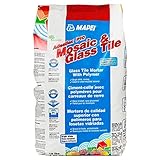
- Nonsag performance
- Great for sheet-mounted mosaics
- Quality-controlled color matching for consistent bright white color
- Mix with Keraply for increased performance and submerged installations.
- Coverage 11 to 24 sq ft
Kitchen floor or entryway
Choose a floor-rated tile based on traffic, impact, dirt, wet traction, cleanability, and subfloor stiffness. Porcelain is a broad default; quarry tile, slate, granite, and suitable terrazzo are also strong candidates. Polished surfaces may show scratches or become slicker when wet, while deeply textured surfaces can collect soil.
Recommended Free Tools
Mudroom
Prioritize durable, easy-to-clean, wet-traction-rated materials. Porcelain, quarry tile, slate, and some textured ceramic products are common choices. Terracotta and porous stone can work when the owner accepts sealing and maintenance.
Fireplace surround
Ceramic, porcelain, stone, glass, metal, and decorative mosaics may be suitable, but heat exposure, clearances, mortar, grout, and the fireplace manufacturer’s requirements control. Do not assume that a decorative resin, vinyl, or adhesive-backed product is appropriate near a heat source.
Patio or outdoor area
Confirm exterior approval, freeze-thaw performance, wet traction, drainage, slope, installation method, and thermal movement. Outdoor porcelain, quarry tile, terracotta, and natural stone can all be appropriate in the right climate and system. An indoor-only ceramic, polished marble, or untested terracotta product should not be installed outdoors simply because it looks attractive.
Pool or constantly wet area
Use products specifically rated for pool or submerged applications where applicable. Glass and porcelain are common choices, but water absorption, chemical exposure, slip performance, freeze-thaw conditions, edge details, and compatible setting materials still need review. Pool use is not automatically covered by a general shower-wall rating.
PC Slower Than It Used to Be?
A free scan shows the junk files, broken settings and background clutter dragging Windows down - then fixes them in one click.Free scan · Windows 10 & 11Outdated Drivers Are Slowing You Down
One free scan finds every outdated or missing driver and matches the right update for your exact hardware.Free scan · exact hardware matchCommercial kitchen
Quarry tile is a traditional option because of its dense body and textured surface, but grout, grease, cleaning chemicals, drainage, and local code requirements remain important. Porcelain and other commercial-rated products may also be suitable. Select the complete floor system, not just the tile face.
Independent reader supportYour contribution helps us test, update, and keep practical guides available for everyone.How to compare ceramic and porcelain
The short version is simple: porcelain is ceramic, but not all ceramic is porcelain. The U.S. industry distinction is based on water absorption, with porcelain at 0.5% or less under ASTM C373. ANSI A137.1:2022 covers multiple ceramic-tile categories, including porcelain, mosaic, quarry, pressed floor tile, glazed wall tile, trim, and specialty tile; the ANSI catalog entry describes that scope.
| Consideration | Ceramic | Porcelain |
|---|---|---|
| Absorption | Varies; non-porcelain ceramic is above the porcelain threshold | 0.5% or less under ASTM C373 when it meets the definition |
| Best value | Many walls, backsplashes, and ordinary interior applications | Wet, high-traffic, and demanding applications when correctly rated |
| Cutting | Often easier and less labor-intensive | Denser and usually harder to cut or drill |
| Outdoor potential | Only products specifically rated for exterior and frost exposure | Often a better starting point, but the product rating still controls |
| Slip resistance | Depends on finish and testing | Depends on finish and testing; polished porcelain can be slick when wet |
Neither material is automatically slip-resistant. Size, texture, finish, grout joints, slope, contaminants, cleaning, footwear, and user behavior all affect real-world slip risk.
Understanding wet slip resistance
For applicable level interior floors intended to be walked on when wet, ANSI A137.1 references a minimum wet dynamic coefficient of friction, or wet DCOF, of 0.42 or greater under the applicable test method. That number is useful for comparing products, but it is not a universal non-slip guarantee. Test results do not account for every shoe, contaminant, slope, maintenance condition, outdoor ramp, pool deck, or industrial exposure.
Ask for the product’s wet DCOF or equivalent slip data when selecting a bathroom, entry, kitchen, pool, or commercial floor. Then consider the actual conditions: standing water, soap, grease, mud, slope, cleaning practices, and whether a textured finish will be difficult to keep clean. The Daltile DCOF explanation describes both the 0.42 reference and its limitations.
Does natural stone need to be sealed?
Often, but not always—and sealing is not a substitute for choosing the right stone. Porosity varies by species, quarry, finish, thickness, and batch. An impregnating sealer generally reduces absorption and improves resistance to some staining; it does not create an impermeable plastic barrier.
- Marble, limestone, travertine, and some onyx are acid-sensitive even when sealed.
- Granite is generally harder and more resistant, but the exact product should still be tested.
- Slate may benefit from sealing, particularly where staining and cleaning are concerns, but sealing cannot prevent natural flaking.
- Filled and unfilled travertine have different cleaning and repair issues.
- A sealer can reduce absorption but cannot repair cracks, stop poor installation, or eliminate grout maintenance.
Use the stone supplier’s and sealer manufacturer’s instructions. Test the cleaner and sealer on a spare tile or inconspicuous area first. The Natural Stone Institute explains why sealers are repellents rather than complete barriers and distinguishes etching from staining.
Finish, size, and grout can change the result
Finish
Polished, honed, matte, textured, cleft, tumbled, glazed, unglazed, brushed, flamed, and lappato finishes do not perform identically. A polished porcelain may be excellent on a dry wall but inappropriate for a wet floor. Honed marble may provide a different feel from polished marble, but it remains acid-sensitive. Textured quarry tile may improve traction while collecting more dirt.
Free tools Windows power users keep installed
One-click scans. No signup required.
Size
- Small tile conforms more easily to shower slopes, curves, and irregular surfaces.
- Large-format tile creates fewer grout joints but requires a flatter substrate and careful handling.
- Large pieces increase the consequences of substrate unevenness, lippage, inadequate mortar coverage, and missing movement details.
- Mosaic sheets can simplify layout, but visible sheet seams and repeating patterns are common installation problems.
Grout
Grout is part of the finished system, not an afterthought. More grout joints can improve flexibility and traction, but they also create more surface to clean. Porous cement tile, terracotta, unglazed quarry tile, and some natural stone may need protection before grouting so the grout does not permanently discolor the surface. Always use the grout type, joint width, sealant, and cleaning method specified for the tile and exposure.
Maintenance: which tile is easiest to live with?
No tile is maintenance-free because every installation includes grout, edges, transitions, and cleaning requirements. As a general comparison:
- Lower routine maintenance: glazed porcelain, many glazed ceramic tiles, and properly specified glass.
- Moderate maintenance: quarry tile, terrazzo, metal, and some slate.
- Higher maintenance: cement tile, terracotta, marble, limestone, travertine, and porous unglazed products.
- Different maintenance model: LVT and resinous products, which may be easy to clean but can have wear-layer, UV, denting, chemical, or replacement limitations.
Cleaning products matter. Acidic cleaners can etch calcium-based stone and damage cement-based surfaces. Abrasive cleaners can scratch glass, metal coatings, polished stone, and some synthetic finishes. Bleach, ammonia, strong alkalis, and prolonged water exposure can also be unsuitable for particular products. Read the tile, grout, sealer, and finish-care instructions together.
What to check before buying tile
Take the product sample and technical sheet to the project conditions. Ask the supplier or manufacturer for:
What’s actually slowing this PC down?
Pick the symptom - the matching free tool is one click away.
- Material: ceramic, porcelain, glass, stone, cement, metal, terrazzo, resin, or vinyl.
- Water absorption: especially for showers, wet rooms, pools, and exterior work.
- Application rating: wall, floor, shower floor, submerged, fireplace, commercial, or exterior.
- Wet slip data: wet DCOF or an equivalent test appropriate to the location.
- Freeze-thaw rating: required for cold-climate exterior installations.
- Breaking strength and wear data: particularly for floors and high-traffic areas.
- PEI or abrasion information: where provided for glazed floor tile.
- Finish: polished, honed, matte, textured, cleft, tumbled, glazed, or unglazed.
- Shade variation: natural stone and handmade products may vary substantially.
- Caliber and actual dimensions: important for layout and grout-joint consistency.
- Recommended grout joint: do not force a tight joint on a product with dimensional variation.
- Compatible mortar, grout, adhesive, and sealer: especially for glass, resin, cement, and large-format tile.
- Maintenance instructions: including approved cleaners and sealing requirements.
- Trim and replacement availability: order matching trim and keep replacement stock for future repairs.
If natural variation is part of the product, open multiple cartons and dry-lay a representative area before installation. Approve a mock-up when the tile has strong veining, handmade variation, a complex mosaic, or a decorative waterjet pattern.
Professional installation warnings
The tile is only one part of a tile assembly. A beautiful material can fail when the substrate, waterproofing, mortar, grout, or movement planning is wrong.
- Check the substrate. It must be suitable, sufficiently stiff, clean, and flat enough for the selected tile size. Large-format tile is less forgiving of unevenness.
- Waterproof wet areas correctly. Use a compatible membrane, pan, drain, seam, corner, niche, curb, and penetration system. Tile and grout are not the shower waterproofing.
- Plan slope and drain geometry. Shower floors, especially curbless showers, need continuous drainage and a format that can follow the slope.
- Use the specified setting materials. Glass, resin, cement, natural stone, and large-format porcelain may have different mortar or adhesive requirements.
- Provide adequate mortar coverage. Follow the applicable installation standard and manufacturer’s instructions; back-butter when required by the tile size or system.
- Allow movement. Perimeter and field movement joints are necessary where required by the installation conditions. Do not fill every change of plane rigidly with grout.
- Dry-layout complicated areas. Check centering, cuts, trim, niches, outlets, corners, and mosaic sheet seams before setting.
- Blend cartons. Mix tile from several boxes to distribute shade and pattern variation.
- Pre-seal when instructed. Cement tile, terracotta, porous stone, and some unglazed products may need protection before grouting.
- Inspect before installation. Do not install damaged, cracked, badly warped, or unacceptable pieces and then expect a manufacturer claim to succeed.
- Protect the finished work. Keep construction traffic, dirt, paint, and incompatible cleaners away from newly installed tile and grout.
A practical selection rule
Start with the location and eliminate products that do not meet the performance requirements. Then compare appearance, maintenance, installation complexity, and budget. Material cost is only part of the project: labor, difficult cuts, substrate preparation, waterproofing, trim, sealing, grout, and future maintenance can change the total significantly. Mosaics and waterjet designs often carry more installation labor than a simple field tile; dense porcelain may cost more to cut; cement and natural stone may require sealing and more careful cleaning.
For many homeowners, the shortlist looks like this:
- Choose porcelain for a broad combination of low absorption, durability, and relatively low routine maintenance.
- Choose ceramic for many walls, backsplashes, and value-conscious interior applications.
- Choose natural stone when unique appearance matters and the owner accepts sealing, variation, and chemical sensitivity.
- Choose glass for vivid, easy-clean walls or backsplashes, and use it on floors only when specifically rated.
- Choose cement, terracotta, quarry, or terrazzo when their texture and character justify their particular maintenance requirements.
- Choose metal for a distinctive wall or backsplash after verifying the finish and cleaner limitations.
- Choose mosaic or waterjet when the format or pattern solves a layout problem or provides the desired decorative effect—not because those labels guarantee a material’s performance.
- Choose LVT when comfort, warmth, impact tolerance, or quicker installation matters more than having a fired ceramic or stone surface.
Frequently Asked Questions
Is porcelain tile better than ceramic tile?
Neither is universally better. Qualifying porcelain has water absorption of 0.5% or less under ASTM C373 and is often the safer starting point for high traffic, wet areas, and rated exterior work. Ceramic may be less expensive and easier to cut, making it an excellent choice for many walls, backsplashes, and ordinary interior floors. Check the exact product’s application and performance ratings.
Can tile alone waterproof a shower?
No. Tile is the finish, not the complete waterproofing system. The membrane, pan, seams, corners, penetrations, slope, drain, curb or curbless transition, setting materials, grout, and movement details must work together. A low-absorption porcelain tile cannot prevent a leak caused by failed waterproofing behind it.
Which tile types usually need sealing?
Porous cement tile, terracotta, limestone, travertine, marble, slate, quarry tile, and some granite may benefit from sealing, but requirements vary by product and finish. An impregnating sealer reduces absorption; it does not make tile stain-proof, repair cracks, or prevent acid etching. Follow the tile and sealer manufacturer’s instructions and test first.
Can wall tile be used on a floor?
Only when the specific product is rated for floor use and the installation system supports it. A floor-rated tile can generally be used on a wall, but a decorative wall-only tile may not have adequate breaking strength, wear resistance, or slip performance for foot traffic.
The Tool Desk
Outbyte PC Repair FREEClear out junk files and repair common Windows errorsFree Scan →Outbyte Driver Updater FREEScan for outdated or missing drivers - takes under a minuteDriver Scan →The Bottom Line
Choose tile by exposure first and appearance second. Verify absorption, floor or wall rating, wet slip data, freeze-thaw performance, finish, maintenance, and installation requirements for the exact product. Porcelain is a versatile default, ceramic is often a smart value, natural stone rewards owners who accept its care requirements, and decorative formats such as mosaics and waterjets should be judged by the material beneath the label.
Quick Recap
Product prices and availability are accurate as of the date/time indicated and are subject to change. Any price and availability information displayed on Amazon at the time of purchase will apply.