Recommended Free Tools
Some links on this page are affiliate links: if you buy through them we may earn a commission, at no extra cost to you.
To get rid of fruit flies for good, stop treating them like a spray problem and start treating them like a source problem. Adult fruit flies are only the visible part of the issue. The real infestation is usually in fermenting produce, sticky recycling residue, a dirty trash pull-out, garbage disposal buildup, drain biofilm, damp dish rags, mop heads, or a hidden wet spot under the sink.
The fast answer is this: remove all exposed fruit and food waste today, deep-clean every wet organic area in the kitchen, set simple vinegar traps near likely sources, and keep the area clean for 7 to 14 days. That timing matters. Fruit flies can complete a life cycle in about a week under favorable conditions, and one female can lay hundreds of eggs. If you only kill the adults tonight but leave larvae in a drain, trash can, onion bin, or disposal splash guard, the flies come right back.
On our job sites, small fly complaints are often a housekeeping issue, but persistent ones are worth taking seriously. We have seen them point to loose sink strainers, leaking P-traps, damp cabinet bottoms, failed caulk at the sink backsplash, poorly sealed trash pull-outs, and garbage disposals that were never cleaned under the rubber splash guard. A clean kitchen can still have a fruit fly problem if the building details are holding moisture and organic residue.
As an Amazon Associate I earn from qualifying purchases.
First, Make Sure They Are Actually Fruit Flies
Before you clean, trap, or call anyone, identify the insect. Many homeowners call every tiny indoor fly a fruit fly, but different flies need different fixes. If you misidentify the pest, you can scrub the fruit bowl all week while the real source sits in a houseplant, floor drain, or plumbing defect.
Fruit flies
Fruit flies are small, usually about 1/8 inch long, and are commonly seen around bananas, tomatoes, peaches, onions, potatoes, wine glasses, beer bottles, juice spills, compost bowls, trash cans, and recycling bins. They are often tan or brownish and may have red eyes. They are attracted to fermenting organic material, which is why activity often spikes after grocery trips, canning, parties, summer harvests, or warm-weather trash buildup.
Popular on Amazon

- COMPREHENSIVE COVERAGE: 4-pack of TERRO fruit fly traps for indoors with 180 days of lure supply provides comprehensive pest control coverage for your home's fruit fly infestations
- FAST-ACTING CONTROL: The liquid bait attracts and eliminates fruit flies within days, targeting common problem areas like fruit bowls, trash cans, and kitchen countertops for maximum impact while reducing fruit fly populations efficiently
- DISCREET DESIGN: Apple-shaped fly trap indoor design blends seamlessly with your fruit display while built-in monitoring windows allow easy tracking of catches and lure levels throughout use, maintaining discretion in your kitchen environment
- LONG-LASTING PROTECTION: Each ready-to-use flying insect trap provides up to 45 days of continuous protection with non-staining formula that requires no mixing or preparation, ensuring consistent pest control performance
- TARGET BREEDING AREAS: Place near fruit fly breeding areas to maximize effectiveness, helping eliminate pest populations and maintain a clean, comfortable living environment free from annoying flying insects
Fungus gnats
Fungus gnats are usually found around houseplants. They look delicate and mosquito-like, and their larvae develop in damp potting soil. If the flies are concentrated at plant pots rather than the sink or fruit bowl, reduce watering, let the top 1 to 2 inches of soil dry between watering, remove decaying leaves, and consider yellow sticky cards for monitoring.
Free tools Windows power users keep installed
One-click scans. No signup required.
Drain flies
Drain flies are fuzzy, moth-like flies that rest near sinks, tubs, floor drains, and laundry standpipes. They are not controlled by moving fruit into the refrigerator. They need drain cleaning, biofilm removal, and sometimes plumbing inspection.
Phorid flies
Phorid flies can look like fruit flies, but they often run in short, quick bursts on surfaces before flying. They can indicate decaying organic matter, sewer-related issues, hidden drain problems, or moist structural cavities. If you see them repeatedly after two clean weeks, treat that as a source investigation, not a countertop nuisance.
Why Fruit Flies Keep Coming Back
Fruit flies breed in fermenting organic material. That includes obvious sources like overripe bananas, but it also includes less obvious material: juice under a refrigerator drawer, syrup in a trash can seam, wine residue in a recycling bin, beer left in bottles, damp mop heads, dish rags, garbage disposal sludge, and residue on drain sidewalls.
They often arrive as eggs or larvae on store-bought or homegrown produce. They do not appear from nowhere. If outdoor populations have access through open doors, torn screens, or produce brought indoors, a small population can become visible fast once they find food and moisture.
The Tool Desk
Outbyte PC Repair FREEClear out junk files and repair common Windows errorsFree Scan →Outbyte Driver Updater FREEFix the driver behind crashes, sound loss and screen glitchesFind Drivers →The reason fruit flies feel impossible is their timeline. In warm indoor conditions, the egg-to-adult cycle can be about 7 to 10 days. Females can lay around 500 eggs. That means a few missed scraps in a trash pull-out track, a sticky bottle return bag, or the underside of a disposal splash guard can restart the problem after the first wave of adults disappears.
That is why the correct cleanup window is not one night. Plan on 7 to 14 days of source control, drain cleaning, sealed produce, and monitoring. If you keep the breeding areas dry and clean across that full cycle, the infestation usually collapses.
The 24-Hour Knockdown Plan
If you want the fastest practical result, spend the first hour removing breeding material rather than buying sprays. This sequence is what we recommend because it addresses the places fruit flies actually use.
1. Remove exposed produce and food waste
Move bananas, peaches, tomatoes, onions, potatoes, and ripe fruit into the refrigerator or sealed containers. Throw out damaged or overripe produce. Check the pantry floor, under wire shelving, inside produce baskets, and behind countertop appliances. One forgotten potato or onion can carry an infestation longer than a dirty sink.
2. Empty and wash trash and recycling
Take kitchen trash out immediately. Do not just replace the bag. Wash the can with hot water and dish soap, then dry it. Pay attention to seams, lid hinges, foot pedals, and the bottom rim. Rinse cans and bottles before they go into recycling, especially beer, wine, juice, soda, kombucha, cocktail mixers, and anything sugary.
If you use a cabinet trash pull-out, pull the bin completely out and inspect the tracks, cabinet floor, back wall, and toe-kick gap. We often find sticky residue where a bag leaked weeks earlier. A damp cabinet bottom can keep fruit flies active even when the visible kitchen looks clean.
3. Clean the sink, strainer, and disposal
Remove the sink strainer basket and scrub it with a brush. Clean the sink rim, the underside of the strainer flange, and the seam where the sink meets the countertop. If you have a garbage disposal, scrub the rubber splash guard from the top and underneath the flaps. That underside is one of the most common missed areas.
Run cold water and operate the disposal for 30 to 60 seconds after cleaning. If there is odor, slow drainage, or visible black buildup, continue with the drain-cleaning steps below.
Quick wins for a faster PC:
Clear out junk files and repair common Windows errorsFree Scan →Fix the driver behind crashes, sound loss and screen glitchesFind Drivers →Repair Windows errors before they cause bigger problemsFix Now →Also popular on Amazon

- COMPREHENSIVE COVERAGE: 6-pack of TERRO fruit fly traps for indoors with 270 days of lure supply provides comprehensive pest control coverage for your home's fruit fly infestations
- FAST-ACTING CONTROL: The liquid bait attracts and eliminates fruit flies within days, targeting common problem areas like fruit bowls, trash cans, and kitchen countertops for maximum impact while reducing fruit fly populations efficiently
- DISCREET DESIGN: Apple-shaped fly trap indoor design blends seamlessly with your fruit display while built-in monitoring windows allow easy tracking of catches and lure levels throughout use, maintaining discretion in your kitchen environment
- LONG-LASTING PROTECTION: Each ready-to-use flying insect trap provides up to 45 days of continuous protection with non-staining formula that requires no mixing or preparation, ensuring consistent pest control performance
- TARGET BREEDING AREAS: Place near fruit fly breeding areas to maximize effectiveness, helping eliminate pest populations and maintain a clean, comfortable living environment free from annoying flying insects
4. Remove damp organic items
Wash or replace dish rags, sponges, sink mats, mop heads, bottle brushes, toddler cups, pet bowls, and cleaning buckets. A sour-smelling dish rag is a fruit fly source. So is a mop head stored wet in a closet.
5. Set traps as monitors
Use traps to reduce adult flies and identify the source. Place one near the fruit bowl, one near the sink or disposal, one near trash and recycling, and one near houseplants. The trap with the most activity tells you where to inspect next.
Best Fruit Fly Traps and What They Actually Do
Traps help, but they are not the cure. A vinegar trap catches adults. It does not kill larvae inside fruit, sludge in a disposal, biofilm on drain walls, residue in a trash can, or eggs in a damp mop. Use traps as a dashboard for the infestation.
Apple cider vinegar trap
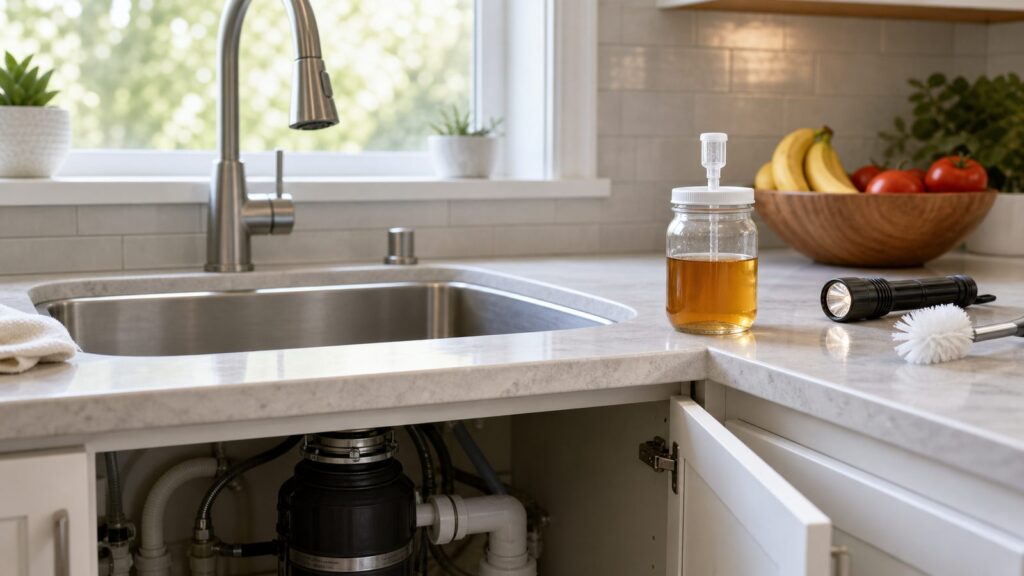
Pour 1/2 inch of apple cider vinegar into a jar or cup. Add 1 to 2 drops of dish soap to break the surface tension. Cover with plastic wrap and poke several small holes, or use a paper cone with a narrow opening. Place it near the suspected source and refresh it every 2 to 3 days.
This costs under $5 if you already have vinegar, dish soap, and a jar. It is best for small, obvious infestations and for confirming whether the source is near produce, trash, or the sink.
Wine or beer trap
Leave 1/2 inch of wine or beer in a bottle with a narrow neck. Add a drop of dish soap if using an open cup. This works because fruit flies are attracted to fermentation. It is useful near recycling areas, but it should not become another sticky item left out for a week.
Commercial traps
Commercial fruit fly traps usually cost about $5 to $20 for a small pack of traps or bait refills. Plug-in UV and sticky traps commonly run about $20 to $45. These can be useful in kitchens where you want a cleaner-looking setup, but they still need source control.
| Option | Typical 2026 Cost | Best Use | Limitation |
|---|---|---|---|
| DIY apple cider vinegar trap | Under $5 | Small infestations and source monitoring | Does not remove larvae or breeding material |
| Commercial bait trap | $5-$20 | Cleaner countertop appearance | Needs replacement bait or refills |
| Plug-in UV/sticky trap | $20-$45 | Ongoing adult fly reduction | May miss the source entirely |
| Drain brush and enzyme cleaner | $8-$30 per item | Drain, disposal, and biofilm issues | Works best after mechanical scrubbing |
| One-time pest control visit | Commonly $100-$300 | Persistent or widespread activity | Repairs cost extra if plumbing is involved |
How to Clean Drains and Garbage Disposals Correctly
Fruit flies can breed in drains and garbage disposals when organic film builds up on the sidewalls, splash guard, overflow channel, or P-trap. The key word is film. Pouring liquid down the drain may pass through the pipe without touching the areas where larvae are developing.
Do these 3 things before closing this tab:
1Clear out junk files and repair common Windows errors2Fix the driver behind crashes, sound loss and screen glitches3Repair Windows errors before they cause bigger problemsWe do not recommend relying on bleach as the main fix. It may reduce odor temporarily, but it often misses the sidewalls, rubber flaps, overflow passages, and disposal buildup. Mechanical cleaning is usually more important.
Kitchen sink drain without disposal
Remove the strainer basket. Scrub the basket, drain opening, and visible pipe wall with a stiff nylon brush. Use hot water and dish soap. If the sink has an overflow channel, clean that opening as well. After scrubbing, use an enzyme drain cleaner according to the label directions if odor or fly activity continues. Many enzyme products require repeated use over several nights.
Garbage disposal
Turn the disposal off at the switch and avoid putting your hand inside. Use a long-handled disposal brush to scrub the underside of the rubber splash guard. Clean each flap. Then scrub the visible upper chamber. Run cold water and the disposal for 30 to 60 seconds. You can follow with ice cubes to help knock loose residue, but do not treat ice as a substitute for cleaning the splash guard.
If the splash guard is torn, permanently slimy, or loose, replacing it is often better than scrubbing it every week. The part itself may be inexpensive, but some models require removing or lowering the disposal to replace the guard. If you are not comfortable supporting and reconnecting a disposal, hire a plumber or handyman.
Also popular on Amazon

- Highly Effective & Reliable Fruit Fly Catcher: This fruit fly trap is expertly engineered to stop fruit flies where they hover most—kitchen counters, trash bins, and near fruit. See results in just 24 hours!
- Natural Attractant That Works: Our fruit fly traps use a natural liquid bait that mimics decaying fruit to lure flies fast. No harsh smells or chemicals—just clean, safe, and powerful fruit fly control for any space in your home.
- Extended Protection - Up to 3 weeks: Enjoy long-lasting protection with our fruit fly trap. Each bottle offers up to 3 weeks of continuous coverage—just place it in high-traffic areas and let this powerful trap do the work.
- Safe Around Kids & Pets: Made with natural, non-toxic ingredients, this fruit fly catcher for indoor use is safe to use around kids and pets. No need to stress about dangerous chemicals in your home—our fruit fly killer is a safe, effective, and family-friendly way to deal with annoying flies.
- Sustainable Trap Design: This is more than just an effective fruit fly trap—it’s a planet-friendly solution. The liquid bait is crafted from natural ingredients, and the bottle and packaging are made with recycled materials, so you can keep your home free from flies while keeping waste to a minimum.
P-trap and under-sink area
Open the cabinet and inspect with a flashlight. Look at the P-trap joints, disposal connection, dishwasher drain hose, supply valves, cabinet floor, back wall, and toe-kick. A slow drip can keep sawdust, spilled soap, food residue, or cabinet material damp enough to support small flies.
If you see staining, swelling, soft cabinet bottom panels, mildew odor, or active dripping, the fly issue has crossed into repair work. At that point, cleaning the counter will not solve it. Fix the leak, dry the cabinet, and replace damaged material if it cannot be cleaned and dried fully.
The 7- to 14-Day Source-Control Routine
After the first cleanup, the goal is to break the life cycle. Keep the kitchen boring for fruit flies for at least two weeks.
Every day, rinse bottles and cans before recycling. Take food waste out nightly. Wipe counters, cutting boards, and the sink area. Run and rinse the disposal after food prep. Do not leave wine glasses, cocktail mixers, fruit scraps, or compost bowls out overnight. Keep ripe produce refrigerated or sealed.
What’s actually slowing this PC down?
Pick the symptom - the matching free tool is one click away.
Every 2 to 3 days, refresh vinegar traps and record where activity is highest. Wash the trash can lid and rim. Check under the sink for new moisture. Inspect the pantry for onions, potatoes, and fruit that have softened. If you use indoor compost, switch to a sealed container and empty it daily during warm months.
At day 7, you should see a sharp drop in adult flies. At day 10 to 14, activity should be gone or close to gone. If fresh flies keep appearing in the same location after two clean weeks, you probably have a hidden source, a misidentified pest, or a building issue.
Homeowner Inspection Checklist
Use this checklist when fruit flies persist after the obvious cleanup. It is the same kind of practical inspection path we use when a kitchen, pantry, or utility area is not behaving the way it should.
- Fruit bowl and pantry: Check bananas, peaches, tomatoes, onions, potatoes, garlic, and any produce stored in paper bags.
- Countertop appliances: Look behind coffee makers, blenders, juicers, stand mixers, toaster ovens, and under removable trays.
- Sink rim and strainer: Scrub the sink flange, basket, stopper, and the seam between sink and counter.
- Disposal splash guard: Clean underneath the rubber flaps, not just the visible top surface.
- P-trap joints: Look for drips, staining, swollen cabinet panels, or sewer odor.
- Dishwasher air gap and drain hose: Inspect for food residue, hose sagging, leaks, or odor at the sink connection.
- Trash pull-out: Remove the bin and clean tracks, slides, cabinet floor, back corners, and lid hardware.
- Recycling area: Rinse beer, wine, juice, soda, kombucha, and cocktail-mixer containers before storage.
- Toe-kick gaps: Check for dropped food, leaking cabinet bottoms, or gaps that hold debris.
- Cleaning tools: Wash mop heads, sponges, bottle brushes, dish rags, sink mats, and buckets.
- Houseplants: If flies concentrate at soil, investigate fungus gnats instead of fruit flies.
When Fruit Flies Point to a Construction or Plumbing Problem
A normal fruit fly outbreak after a summer grocery run is not a construction defect. But recurring fly activity in a clean kitchen often has a physical reason. The built environment may be trapping residue or moisture where the homeowner cannot easily clean it.
Common kitchen details that contribute to fly problems include loose sink strainers, failed sink caulk, poorly sealed undermount sink edges, trash pull-outs that allow bag leaks into cabinet corners, rough or unsealed cabinet bottoms, inaccessible P-traps, slow drains, leaking disposal connections, and damp toe-kick spaces.
During kitchen remodels, we like practical specifications that make the space easier to maintain: smooth washable cabinet interiors near trash zones, removable trash bins, full-extension trash pull-out slides, tight sink sealing, accessible P-traps, a disposal splash guard that can be removed or replaced, and durable surfaces around prep zones. Good design is not just how a kitchen looks on day one. It is how easily the homeowner can keep it clean after five years of dinners, grocery bags, kids, guests, and recycling.
Also popular on Amazon

- Catch Flying Insects 24/7: This plug-in flying insect trap uses blue & UV light to attract and catch house flies, fruit flies, gnats, and flying pests. Its continuous attraction helps catch insects day and night for everyday indoor flying pest control.
- No-Mess Adhesive Cartridge: Disposable glue cartridge works like bug sticky traps by holding trapped insects hidden on the wall-facing adhesive pad, while the no-mess tab makes cartridge removal simple when it is time to toss and replace.
- Spray-Free, Zap-Free, Odor-Free Design: This quiet fly trap helps quickly and continuously control small flying insects indoors without spraying, zapping or added odors, making it a discreet everyday option in kitchens, living rooms, bathrooms, enclosed patios, and other indoor spaces.
- Family-Friendly Fly Trap: Safe for use around children and pets when used as directed.* Works best placed near the source - fruit bowls, trash bins and indoor plants, where flying insects and fungus gnats gather.
- Year-Round Indoor Fly Control: Blinking blue light reminds you to check the cartridge every six weeks. Includes 1 device & 1 cartridge for everyday fly control in your kitchen and home. Stock up on refills or choose a Value Pack to keep a fly catcher in every room.
Ventilation and humidity also matter. A kitchen that stays damp because of poor ventilation, chronic leaks, or condensation gives residue more time to ferment. If cabinets smell musty, if the sink base stays damp, or if caulk repeatedly fails at the backsplash, solve the moisture issue. The fruit flies are only the symptom.
Safety Notes for Sprays, Foggers, and Indoor Pesticides
Most fruit fly problems do not need indoor fogging or broad insecticide use. Sanitation, exclusion, traps, and drain cleaning are usually lower-risk and more effective because they remove the breeding site.
Crashes, No Sound, or Screen Glitches?
Random freezes, missing sound and display glitches usually trace back to one bad driver. Find and replace yours safely.Free scan · under a minuteWindows Errors? Fix Them Before They Spread
Repair common Windows errors and clear accumulated junk for a smoother, more stable PC - no reinstall needed.Free scan · no reinstallIf you use any pesticide product indoors, read the label first and follow it exactly. The label tells you where the product can be used, how much to apply, what surfaces to avoid, how long people and pets should stay out, and what to do around food, dishes, counters, and utensils. Do not improvise around food-prep areas.
Avoid casual spraying near cutting boards, dish racks, pet bowls, open food, and children’s items. More chemical does not mean better control. If adults keep emerging, the source is still active. Find it rather than coating the kitchen.
Independent reader supportYour contribution helps us test, update, and keep practical guides available for everyone.When to DIY vs. When to Hire a Pro
Most small fruit fly infestations are a good DIY project. If you can identify the source, remove food waste, clean the sink and trash areas, and keep the kitchen controlled for 7 to 14 days, you can usually solve it for under $30.
DIY is the right choice when flies are limited to one room, the source is obvious, there is no plumbing odor, drains run normally, cabinets are dry, and activity drops clearly within a week.
Hire pest control when activity is widespread, recurring, or still active after two clean weeks. Professional one-time residential pest control in 2026 is commonly reported around $100 to $300, with broad ranges from about $50 to $500 depending on location, severity, home size, and follow-up needs. Fruit-fly-specific exterminator pricing is commonly cited around $150 to $300 on average. Minor cases may be near $100, while severe or widespread infestations can reach $700 or more if repeat visits or source investigation are required.
Recurring pest-control plans are often quoted around $40 to $80 per visit, or roughly $44 to $55 per month when averaged annually, depending on service frequency and region. For a single fruit fly issue, a plan may not be necessary unless the home has repeated pest pressure or other pests at the same time.
Call a plumber or contractor instead of only pest control when you see leaks, swelling cabinet panels, sewer odor, slow drainage, loose sink components, damaged disposal parts, wet toe-kicks, or suspected concealed moisture. Once repairs are involved, pest-control pricing no longer applies. Replacing a disposal splash guard, repairing a P-trap, correcting a leak, replacing a damaged cabinet bottom, or opening a wall or floor to address a concealed drain issue are separate repair scopes.
| Situation | Best Next Step | Typical Cost Range |
|---|---|---|
| A few flies near ripe fruit | Remove produce, clean surfaces, set vinegar traps | Under $5-$20 |
| Flies near sink or disposal | Scrub drain, splash guard, strainer, and use enzyme cleaner if needed | $8-$30 per cleaning item |
| Flies near recycling or trash | Wash bins, rinse containers, clean pull-out tracks | Usually DIY, under $30 |
| Activity persists after 14 clean days | Hire pest control or investigate hidden sources | $100-$300 common one-time range |
| Flies plus leaks, odors, or wet cabinets | Call plumber or contractor | Varies by repair scope |
Permit and Repair Considerations
Cleaning a drain, replacing a trap washer, tightening an accessible slip nut, or replacing a removable disposal splash guard usually does not require a building permit for a homeowner, but plumbing rules vary by city and county. Work that changes plumbing layout, opens walls, replaces concealed piping, alters venting, or affects multifamily or commercial systems may require a licensed plumber and a permit.
Also popular on Amazon

- ATTRACTS AND KILLS FRUIT FLIES. Proven to work and easy to use, this fruit fly trap is designed to bait and kill quickly. Starts working as soon as you untwist the cap. Just set it where you don’t want anymore fruit flies and forget it! Lasts up to 21 days.
- PROTECT YOUR KITCHEN AND HOME. This versatile solution is safe for use throughout your home and kitchen areas. Use in areas where fruit flies breed such as around kitchen sinks, garbage cans, dishwashers, dining tables, and near fruits and vegetables on counter tops.
- SAFE AROUND KIDS AND PETS WHEN USED AS DIRECTED. Because this fruit fly catcher is plant-powered, you don’t have to worry when using this around kids and pets. Safe to use as needed around your loved ones, throughout the house, yet powerful enough to fully eliminate fruit flies and provide lasting defense of your household.
- PLANT-POWERED AND POWERFULLY EFFECTIVE. Powered by plants, this fruit fly sticky trap is a safe alternative to commonly-used fruit fly traps that contain nasty ingredients. No artificial colors or fragrances. Cruelty-free.
- EASY SOLUTION THAT WORKS FAST. This eco-conscious fruit fly trap can be easily used around the home, throughout the kitchen, and any other living areas without the mess. For protection and prevention, make sure to replace the trap every 21 days or as often as desired for a bug-free home. Made in the USA from plant-based ingredients.
In rental housing, restaurants, multifamily buildings, and recently remodeled kitchens, do not ignore persistent fly activity. Document where the flies appear, when traps catch the most, and whether odors or leaks are present. In food-service spaces, standards are stricter because sanitation, drains, waste handling, and pest activity affect operations and inspections.
If the issue appears after a remodel, look closely at the sink installation, disposal connection, dishwasher drain routing, trash cabinet, and any new toe-kick or cabinet panels. A small leak inside a new sink base can create a recurring nuisance and damage the cabinet before anyone sees standing water.
How to Keep Fruit Flies Gone
Long-term prevention is straightforward: reduce fermentation, reduce moisture, and make hidden areas cleanable. Store ripe produce in the refrigerator during warm months. Keep onions and potatoes in a dry, ventilated area and inspect them weekly. Empty indoor compost daily or use a sealed container. Rinse bottles and cans before recycling. Clean the trash can weekly during summer and after parties.
Clean the disposal splash guard monthly if you use the disposal often. Scrub the sink strainer and drain opening, not just the basin. Replace sponges and dish rags before they smell sour. Let mop heads dry fully. Keep cabinet floors under sinks dry and visible enough that you can inspect them with a flashlight.
Free tools Windows power users keep installed
One-click scans. No signup required.
For kitchen upgrades, choose details that do not hide mess: removable bins, washable liners, accessible plumbing, durable cabinet bottoms, quality sink sealing, and smooth surfaces around prep areas. Fruit fly prevention is not glamorous, but it is one of those home maintenance issues where good design and good habits overlap.
If you want the shortest version, here it is: identify the fly, remove the food source, scrub the wet organic zones, use traps to monitor, and stay disciplined for two weeks. If the flies survive that, stop buying more traps and start looking for a hidden source, a different pest, or a plumbing problem.
Frequently Asked Questions
What causes fruit flies in the house?
Fruit flies are usually caused by fermenting organic material such as overripe fruit, onions, potatoes, spilled juice, beer or wine residue, dirty trash cans, recycling bins, compost scraps, garbage disposal buildup, drain biofilm, damp mops, or sour dish rags. They often arrive as eggs or larvae on produce.
How do I get rid of fruit flies fast?
Remove exposed produce and food waste, wash trash and recycling bins, scrub the sink strainer and disposal splash guard, clean drain buildup, remove damp cleaning tools, and set vinegar traps near likely sources. Expect 7 to 14 days of cleanup and monitoring to break the life cycle.
Do these 3 things before closing this tab:
1Repair Windows errors before they cause bigger problems2Fix the driver behind crashes, sound loss and screen glitches3Clear out junk files and repair common Windows errorsDo apple cider vinegar traps really work?
Yes, apple cider vinegar traps catch adult fruit flies and help identify where activity is strongest. They do not solve larvae or eggs in produce, drains, trash residue, or garbage disposal buildup, so they must be paired with source removal and cleaning.
Can fruit flies live in drains or garbage disposals?
Yes. Fruit flies can breed in organic film inside drains, garbage disposals, overflow channels, and especially under disposal splash guard flaps. Scrubbing the film away is more reliable than simply pouring bleach or cleaner down the drain.
Why do fruit flies keep coming back after I clean?
They usually come back because a breeding source remains hidden. Check trash pull-out tracks, recycling residue, pantry produce, damp dish rags, mop heads, sink strainers, disposal splash guards, P-trap leaks, wet cabinet bottoms, and houseplants in case the pest is actually fungus gnats.
When should I call pest control or a plumber?
Call pest control if flies are widespread, recurring, or still active after two clean weeks. Call a plumber or contractor if the flies are associated with slow drains, sewer odor, leaks, swollen cabinet panels, damp toe-kicks, loose sink strainers, or suspected concealed moisture.
Quick Recap
Product prices and availability are accurate as of the date/time indicated and are subject to change. Any price and availability information displayed on Amazon at the time of purchase will apply.

