Some links on this page are affiliate links: if you buy through them we may earn a commission, at no extra cost to you.
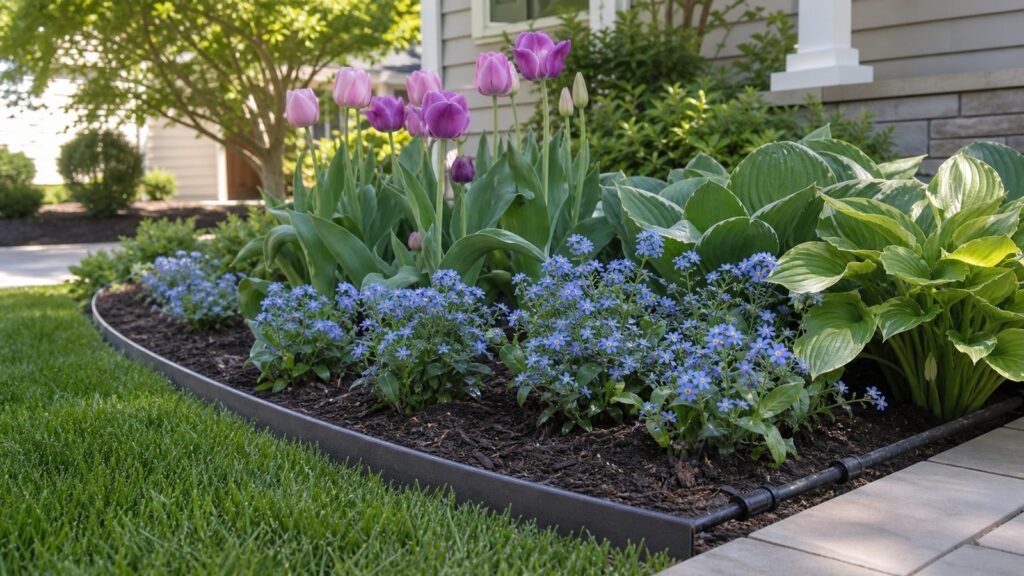
Forget-me-nots are compact, cool-season flowering plants best used as a spring layer in a planned garden bed, not as a plant-it-and-forget-it groundcover. The common garden type is usually Myosotis sylvatica, a biennial or short-lived perennial that blooms in spring, often around April to May depending on the region. It likes organically rich, consistently moist soil, part shade in many yards, and afternoon shade where summers run hot.
The practical catch is spread. Forget-me-nots self-seed heavily when seed heads are allowed to mature. That can be useful in a cottage garden or under spring bulbs, but it can also push plants into lawns, drainage areas, woodland edges, and nearby natural spaces. On our job sites, we treat forget-me-nots the same way we treat any enthusiastic groundcover: pick the right location, define the bed edge, control water, and decide up front whether the plant is allowed to naturalize.
As an Amazon Associate I earn from qualifying purchases.
Recommended Free Tools
For most homeowners, the right answer is simple: use forget-me-nots in contained beds, containers, or small seasonal pockets where you can deadhead them before seed set. If your property backs up to woods, wetlands, creeks, ponds, swales, or stormwater features, check your state invasive-plant guidance and local extension recommendations before planting any Myosotis.
What Forget-Me-Nots Are Best For
Forget-me-nots are low, soft-looking spring bloomers with small blue flowers, though white and pink forms exist. Many garden types stay about 6 to 8 inches tall and spread into a loose mat. That makes them useful where a tall perennial would look bulky: under tulips and daffodils, along shaded bed edges, around hostas, near ferns, or in a woodland-style border.
Popular on Amazon

- Vibrant Color Trio: Includes classic true blue, soft pink, and pure white forget-me-not varieties, creating a charming pastel mix with tiny, star-shaped blooms and yellow centers for delightful spring-to-summer display.
- Easy & Reliable Growth: These cold-hardy, heirloom-style seeds are simple to grow, often self-sowing naturally to form dense carpets in shady or moist garden spots, borders, or woodland areas.
- Long-Lasting Blooms: Produces clusters of delicate flowers that bloom profusely from early spring through summer (and sometimes into fall), attracting pollinators like bees while adding sentimental charm to any garden.
- Versatile Collection: Perfect for creating mixed color patches, companion planting (e.g., with tulips or other spring bulbs), or naturalizing in partial shade—ideal for beginners and experienced gardeners seeking low-maintenance beauty.
- Quality: All seeds packaged by Seed Needs are intended for the current and the following growing seasons. All seeds are stored in a temperature controlled facility that is free of significant amounts of moisture.
They are strongest as a seasonal underplanting. They fill the gap between bare winter soil and the heavier growth of summer perennials. By the time hostas, heuchera, ferns, and shrubs are carrying the bed, forget-me-nots are usually fading or going to seed.
Good places for forget-me-nots include:
- Spring bulb beds where they can hide fading daffodil or tulip foliage.
- Part-shade borders with moist, improved soil.
- Containers near patios, porches, and entry walks.
- Memorial gardens where remembrance symbolism matters.
- Small woodland-edge beds that are actively maintained and not next to natural waterways.
Weak places include hot south-facing strips, dry curbside beds, compacted construction fill, gravelly slopes, and unmanaged areas near drainage outlets. If the soil bakes hard in July, forget-me-nots will struggle unless irrigation and shade are part of the design.
Free tools Windows power users keep installed
One-click scans. No signup required.
Growing Conditions: Sun, Soil, Water, and Hardiness
Light
In cool climates, forget-me-nots can handle full sun if the soil stays moist. In much of the United States, especially warmer zones, they perform better with morning sun and afternoon shade. A bed that gets 3 to 5 hours of direct morning light and filtered shade later in the day is often ideal.
Hot afternoon sun is the problem. It dries the top inch of soil quickly, stresses the plants, and shortens bloom time. If the only available bed faces west or southwest, use containers you can move or choose a tougher regional alternative.
Soil
Forget-me-nots prefer organically rich, consistently moist, well-drained soil. Loam or clay-loam works if it has enough organic matter and does not dry out between watering. They can tolerate wet conditions better than many bedding flowers, and common garden forget-me-not can even handle shallow standing water for short periods, but that does not mean the bed should be a stagnant sump.
For a new bed, we usually want at least 8 to 12 inches of workable soil. If a shovel hits compacted subsoil, construction debris, or hardpan after 2 or 3 inches, seed establishment will be poor. Amend with finished compost and correct the grade before planting. A typical small bed refresh may use 1 to 2 inches of compost worked into the top 6 to 8 inches of soil, then 1 to 2 inches of mulch after plants are established.
Water
Consistent moisture is the difference between a clean spring display and a patchy one. Forget-me-nots should not be treated like drought-tolerant perennials. Use drip tubing or a soaker hose instead of late-day overhead watering. Drip keeps moisture at the root zone while reducing wet foliage, which helps limit powdery mildew and rust pressure.
For most small beds, one line of 1/2-inch drip tubing or a soaker hose looped through the planting area is enough. In sandy soil, water may need to run more frequently for shorter periods. In clay soil, water less often but long enough to soak in without puddling. The goal is evenly moist soil, not mud.
Hardiness Zones
Most common forget-me-not guidance places garden types around USDA Zones 3 to 8 or 3 to 9. The current USDA Plant Hardiness Zone Map is the 2023 map, based on 30-year averages of annual extreme minimum temperatures and divided into 10-degree zones with 5-degree half-zones. That map is useful, but for forget-me-nots, summer heat and dry soil often matter more than winter cold.
A Zone 7 yard with cool, moist shade may grow forget-me-nots easily. A Zone 7 yard with reflected driveway heat, compacted soil, and no irrigation may burn them out fast. Match the plant to the microclimate, not just the zip code.
The Tool Desk
Outbyte Driver Updater FREEFix the driver behind crashes, sound loss and screen glitchesFind Drivers →Outbyte PC Repair FREERepair Windows errors before they cause bigger problemsFix Now →How to Plant Forget-Me-Nots
Starting From Seed
Seed is the cheapest way to grow forget-me-nots. DIY seed packets commonly run about $2 to $6, depending on seed count, cultivar, shipping, and whether the packet is true Myosotis or Chinese forget-me-not, which is a different genus. Read the label carefully.
Also popular on Amazon

- Honor Loved Ones with Symbolic Bloom – These memorial seed packets of forget me not seeds create a touching tribute at any funeral or celebration of life event, symbolizing eternal love, remembrance, and heartfelt connection
- 60 Individually Packaged Funeral Favors – Each set includes 60 elegant seed packets with pre-measured forget me not flower seeds, ideal as funeral favors or remembrance gifts for guests to plant in memory of someone dear
- Easy to Plant, Beautiful to Bloom – Our forget me not seeds bulk are easy to grow and thrive in outdoor gardens with spring planting; they germinate quickly and blossom into delicate blue perennial flowers that last through the season
- Premium Non-GMO Quality – We use only non-GMO forget me not seeds with no chemical treatment, ensuring a safe and natural planting experience suitable for all ages – perfect for classroom planting, community gardens, or home memorials
- Poetic Packaging for a Lasting Impact – Each packet features a touching poem and instructions for planting, offering a meaningful gift that continues to grow – ideal for memorials, funeral services, or celebration of life ceremonies
In many regions, seed is sown in late summer or fall for spring bloom the following year. In colder climates, spring sowing may also work, though flowering can be delayed. Press seed lightly into prepared soil and keep the surface evenly moist while germinating. Do not bury seed deeply. A fine-textured seedbed matters; rough clods and mulch-heavy surfaces make germination uneven.
For a controlled planting, sow in a defined strip or pocket rather than broadcasting across the whole bed. That makes future weeding and deadheading easier.
Planting Nursery Starts
Live plants usually cost about $4 to $12 per small nursery pot in many U.S. retail settings, with price depending on pot size, season, region, and cultivar. Nursery starts give faster results and more predictable spacing than seed.
Plant starts 6 to 10 inches apart for a full spring look. Use wider spacing where air movement is limited or where humidity is high. Water them in thoroughly, then check the bed every 2 to 3 days for the first two weeks. Once roots establish, the bed should still stay consistently moist, but plants should not sit in sour, compacted soil.
Growing in Pots
Containers are the best choice when you want the flower without the spread risk. Use a pot at least 10 to 12 inches wide with drainage holes. A standard potting mix works better than dense garden soil. Keep the container evenly moist, and move it out of harsh afternoon sun when temperatures climb.
At the end of bloom, cut plants back before seed heads mature if you do not want volunteers. Do not dump spent potting mix with mature seed into a natural area, drainage ditch, or woodland edge.
How to Keep Forget-Me-Nots From Spreading
Self-seeding is the main management issue. It is also why gardeners like them. One small planting can return the next year with very little help, but the same habit can create unwanted seedlings in lawn edges, cracks, adjacent beds, and nearby natural areas.
Use one of three strategies before you plant:
- Naturalize intentionally: Let some seed mature in a maintained cottage garden or bulb bed where volunteers are acceptable.
- Contain tightly: Grow in pots, deadhead promptly, and use a defined edging system.
- Skip or replace: Avoid planting where local guidance flags escape risk or where the bed borders woods, wetlands, ponds, streams, or drainage channels.
Deadheading is the most direct control. After flowering, remove spent blooms before seed heads dry and scatter. In a small bed, this may take 10 to 20 minutes once or twice in late spring. In a larger naturalized bed, plan for repeat passes. If you wait until the seed is mature, cleanup becomes less effective.
Edging also helps, but it is not magic. A steel, aluminum, stone, or concrete edge can keep the bed line clean and reduce creep into turf. It will not stop seed from moving by water, tools, shoes, pets, or mulch. LawnStarter’s 2026 edging data puts average edging or curbing around $3.50 to $8.80 per linear foot, with plastic material often around $1 to $3.50 per linear foot, metal around $5 to $11, and stone reaching up to about $21.50 depending on material and installation.
Regional caution: Before planting forget-me-nots near woods, wetlands, creeks, ponds, stormwater basins, or drainage swales, check your state invasive-plant list and local extension recommendations. Some areas treat certain forget-me-not species as plants of concern because they can escape cultivation and spread aggressively. A plant can be legal to sell and still be a poor choice for a specific site.
Designing a Bed That Actually Works
A good forget-me-not bed starts with layout, not flowers. On construction and landscape jobs, we look first at grade, drainage, access, and edges. The prettiest spring planting will become a maintenance headache if it blocks a cleanout, traps water against a foundation, or sends runoff across a walkway.
Quick wins for a faster PC:
Fix the driver behind crashes, sound loss and screen glitchesFind Drivers →Repair Windows errors before they cause bigger problemsFix Now →Scan for outdated or missing drivers - takes under a minuteDriver Scan →Also popular on Amazon

- 💠MEANINGFUL REMEMBRANCE FAVORS FOR FUNERAL SERVICES - Each of these 50 forget me not seed packets is pre-filled and ready to hand out as funeral gifts or celebration of life favors for guests. A beautiful, lasting tribute that lets loved ones plant flowers in loving memory of someone special.
- 💠ELEGANT MEMORIAL DECORATIONS AND FUNERAL DECOR - These forget me not flowers adorn each beautifully designed packet (4.5 x 3.25 inches), making them ideal memorial service decorations and celebration of life decor. Display them on tables, in guest books, or alongside other unique celebration of life ideas for a heartfelt setting.
- 💠EASY TO GROW FORGET ME NOTS IN ALL US REGIONS - These bulk seed packets contain premium sympathy seeds that produce vibrant blue blooms year after year. No green thumb needed. Simply scatter or plant the seeds and watch a living memorial garden grow as a lasting symbol of love and remembrance.
- 💠VERSATILE FORGET ME NOT GIFTS AND FUNERAL MEMENTOS - Perfect as seed packets party favors, memorial keepsakes for guests, or sympathy gifts. These memorial favors for celebration of life events and remembrance ceremonies offer a thoughtful alternative to traditional guest favors at any memorial gathering.
- 💠50 INDIVIDUAL PRE-FILLED PACKETS, READY TO SHARE - Each funeral keepsake packet is compact enough for funeral centerpieces for tables, baskets, or memorial guest books. Whether you need funeral decorations, mini seed packets for a memorial service, or meaningful celebration of life party supplies, these make a beautiful and budget-friendly choice.
Before planting, confirm four things:
- Drainage path: Water should move away from the foundation and have a clear overflow route during heavy rain.
- Access: Keep plants and edging clear of hose bibs, utility boxes, cleanouts, meter bases, and HVAC equipment.
- Bed edge: Define the line before planting so mowing, mulching, and deadheading are manageable.
- Irrigation: Decide whether the bed will rely on hand watering, soaker hose, drip tubing, or an existing irrigation zone.
Forget-me-nots are shallow, low plants, so they pair well with structure behind them. Use them in front of longer-lived perennials and shrubs rather than as the whole design. Good companions include daffodils, tulips, hostas, heuchera, ferns, astilbe, sedges, and shade-tolerant shrubs. In a memorial garden, pair the symbolic spring bloom with plants that hold the space together for the other 10 months of the year.
Keep bed widths practical. A 2- to 3-foot-deep border is easy to maintain from one side. A 4- to 6-foot bed needs stepping stones or rear access so you are not reaching across wet foliage. For a remembrance garden with a bench or path, keep walking surfaces at least 36 inches wide where possible, and avoid placing self-seeding plants directly against paver joints.
Forget-Me-Not Costs in 2026
Forget-me-nots themselves are inexpensive. The real cost is the bed: soil correction, edging, irrigation, mulch, drainage fixes, and labor. A $5 seed packet can turn into a $2,000 flowerbed project if the area needs excavation, compost, edging, drip irrigation, and professional installation.
| Project Type | Typical 2026 Cost | Best Fit |
|---|---|---|
| DIY seed packet | About $2-$6 per packet | Small controlled patches, patient gardeners, fall sowing |
| Small nursery pots | About $4-$12 per pot | Faster spring display, containers, defined bed edges |
| DIY bed refresh | Often under a few hundred dollars for compost, mulch, simple edging, and hose watering | Existing bed with decent soil and drainage |
| Professional flowerbed installation | Commonly about $1,000-$3,000, averaging near $2,000, or roughly $10-$20 per square foot | New beds, poor soil, grading, design, and installed planting |
| Flower planting service | About $10-$30 per pot or $15-$45 per square foot | Seasonal color installation with minimal soil prep |
| 5-by-12-foot flower bed | About $900-$2,700 with minimal soil prep | Typical front-yard or side-yard planting bed |
| Landscape edging | Average about $3.50-$8.80 per linear foot; higher for stone | Containment, clean mowing edge, bed definition |
| Wood raised garden bed | About $25-$50 per square foot DIY | Controlled soil, better access, contained planting |
For broader landscape work, 2026 figures commonly land around $4.50 to $17 per square foot depending on scope, with many full projects ranging from roughly $3,300 to $13,200. Simpler landscaping may sit closer to $4.50 to $12 per square foot, while drainage correction, hardscape, irrigation, and difficult access can push costs higher.
What’s actually slowing this PC down?
Pick the symptom - the matching free tool is one click away.
The cost drivers are predictable: bed size, soil condition, drainage correction, irrigation, edging material, plant density, local labor rates, access to the work area, grading changes, and how much containment you want. A backyard bed that needs wheelbarrow access through a narrow gate will cost more than the same bed along an open driveway.
When to DIY and When to Hire a Pro
DIY Makes Sense When
DIY is reasonable for a small container planting, a narrow bed refresh, or a controlled spring patch in an existing garden. If the soil is already loose, drainage is good, and you are comfortable deadheading plants before seed set, forget-me-nots are not technically difficult.
A typical DIY weekend project might include a 3-by-8-foot bed edge, 2 to 4 bags of compost, a few bags of mulch, a packet of seed or 10 to 20 nursery starts, and a simple soaker hose. The work is mostly layout, soil prep, planting, and watering. The biggest DIY mistake is skipping bed prep and expecting seed to establish in compacted fill or dry mulch.
Hire a Pro When
Bring in a professional when the flower bed is part of a larger landscape change, when drainage is uncertain, or when the planting area is near a foundation, swale, retaining wall, hardscape, driveway, or stormwater feature. Also hire help if you want permanent edging, drip irrigation tied into an existing system, grading correction, or a raised bed built from wood, stone, brick, or steel.
A pro is also the better call for memorial gardens that need to be accessible and durable. The flowers carry meaning, but the layout carries the use. A bench needs a stable base. A path needs proper width and slope. Irrigation needs to be reachable. Plants should not block lighting, drainage, or maintenance access.
Permits, HOAs, Drainage, and Safety Notes
Most simple flower beds do not need a building permit, but that does not mean every location is fair game. Check HOA rules before changing front-yard beds, edging materials, or visible hardscape. Some communities regulate bed borders, plant height, drainage changes, and work in easements.
Rain gardens and stormwater work deserve extra care. The EPA promotes rain gardens as a way to help soak up rain, but local stormwater rules still matter. Do not regrade, block, or plant aggressively spreading species in drainage easements, roadside swales, detention areas, or near outfalls without checking local requirements. In some municipalities, work that changes runoff patterns or connects to stormwater infrastructure may need review.
Also popular on Amazon

- 🌱 Charming Blue Forget Me Not Flowers – Produces delicate sky-blue blooms with yellow centers that brighten gardens, borders, woodland spaces, and spring landscapes.
- ☀️ Easy to Grow & Low Maintenance – Forget-Me-Not seeds for planting germinate quickly and thrive in partial sun to shade with moist, well-drained soil.
- 🐝 Pollinator Friendly Garden Flowers – Early blooming forget me not flowers help attract bees and butterflies while adding natural beauty to outdoor spaces.
- 🌿 Beautiful Ground Cover & Borders – These compact flowers spread gently to create soft flowering carpets ideal for pathways, flower beds, containers, and companion planting.
- 📦 Generous Forget Me Not Seed Packets – Includes 5600+ seeds for large planting projects, seasonal garden displays, and long-lasting spring-to-summer blooms.
Keep soil and mulch below siding, weep holes, and wood trim. As a practical rule, maintain visible clearance between mulch and the bottom of siding or trim, and do not pile mulch against posts or foundations. Avoid digging where utilities may be present. Call 811 before excavation, even for landscape work, if stakes, edging, irrigation, or bed construction will go deeper than routine hand cultivation.
Do these 3 things before closing this tab:
1Clear out junk files and repair common Windows errors2Fix the driver behind crashes, sound loss and screen glitches3Repair Windows errors before they cause bigger problemsIf using herbicides or pesticides around forget-me-nots, follow the product label exactly. In the United States, pesticide labels are legal directions, not suggestions. Use only products labeled for the site and target issue, and avoid spraying near waterways or pollinator activity.
Independent reader supportYour contribution helps us test, update, and keep practical guides available for everyone.Care Calendar for Forget-Me-Nots
Late Summer to Fall
Sow seed for next spring bloom in many regions. Prep soil first: remove weeds, loosen the top 6 to 8 inches, add compost if needed, and water gently after sowing. Keep the area evenly moist until seedlings establish.
Early Spring
Check for winter heaving, thin crowded seedlings, and refresh mulch lightly around the planting, not over the crown. Install or test drip tubing before dry weather arrives. If using nursery starts, plant once the bed can be worked and hard freezes are no longer a major risk for tender greenhouse-grown plants.
Bloom Period
Water consistently, especially during dry spells. Avoid overhead watering late in the day. Watch for mildew, rust, and crowding. Pull weeds while they are small because forget-me-not seedlings can be hard to distinguish from unwanted volunteers once the bed fills in.
Outdated Drivers Are Slowing You Down
One free scan finds every outdated or missing driver and matches the right update for your exact hardware.Free scan · exact hardware matchPC Slower Than It Used to Be?
A free scan shows the junk files, broken settings and background clutter dragging Windows down - then fixes them in one click.Free scan · Windows 10 & 11After Bloom
Decide whether you want seed. If you want control, deadhead before seed heads mature. If you want naturalizing, allow limited seed set only where volunteers are acceptable. Remove plants that spread beyond the bed edge.
Summer
Expect many plants to decline in heat. Treat them as a seasonal layer and let longer-lived perennials take over the design. Keep the bed weeded and avoid heavy fertilizer. Rich soil helps, but excess nitrogen can push soft growth and reduce the clean spring habit.
Symbolism and Memorial Garden Use
Forget-me-nots symbolize remembrance, faithful love, memory, and connection. That is why they show up in memorial gardens, wedding plantings, sympathy arrangements, and heirloom-style cottage gardens. The symbolism is real, but a meaningful garden still has to function.
For a memorial space, we recommend designing the permanent parts first: path, seating, drainage, irrigation, edging, and year-round plant structure. Then use forget-me-nots as the spring note of remembrance. A small blue bloom in April can be powerful, but the garden should still look cared for in August and accessible in November.
Recommended Free Tools
A practical memorial planting might include a 36-inch-wide path, a bench on a compacted gravel or paver base, spring bulbs with forget-me-nots beneath them, and durable perennials or shrubs for structure. If the family wants low maintenance, containers may be better than in-ground naturalizing because they allow seasonal refreshes without years of seedling control.
Common Mistakes to Avoid
The first mistake is planting forget-me-nots in hot, dry, full sun and expecting perennial performance. They are moisture-loving spring plants. If the site is dry by noon, fix irrigation or choose something else.
Also popular on Amazon

- EXTRA-LARGE 1 OZ PACKET WITH 5,000+ SEEDS: A full ounce of fresh, Non-GMO Forget-Me-Not (Chinese Blue) seeds. Each resealable pouch contains enough seed to cover up to 100 square feet with soft, sky-blue blooms throughout the growing season
- CLASSIC BLUE FORGET-ME-NOT FLOWERS: Produces abundant clusters of delicate blue blossoms that brighten borders, beds, containers, and wildflower gardens with early-season color
- FAST-GROWING ANNUAL (CYNOGLOSSUM AMABILE): Also known as Chinese Blue Forget-Me-Not, this easy-to-grow annual germinates quickly and forms a fine-textured carpet of sky-blue blooms within weeks
- THRIVES IN FULL SUN OR PARTIAL SHADE: Highly adaptable and beginner-friendly, these flowers perform well in bright sun or light shade and prefer well-drained soil; suitable for many climates and garden styles
- FRESH, NON-GMO & OPEN-POLLINATED SEEDS: Carefully packed in a durable, resealable pouch to maintain seed freshness between plantings. Each packet includes clear sowing instructions for simple, successful results
The second mistake is assuming every plant sold as forget-me-not behaves the same way. Common garden forget-me-not, water forget-me-not, alpine forget-me-not, and Chinese forget-me-not are not interchangeable. Confirm the botanical name before planting, especially near natural areas.
The third mistake is letting every plant go to seed. If containment matters, deadhead before seed matures. Once seed drops into mulch, lawn edges, and cracks, the job becomes ongoing removal rather than simple prevention.
Windows Errors? Fix Them Before They Spread
Repair common Windows errors and clear accumulated junk for a smoother, more stable PC - no reinstall needed.Free scan · no reinstallOutdated Drivers Are Slowing You Down
One free scan finds every outdated or missing driver and matches the right update for your exact hardware.Free scan · exact hardware matchThe fourth mistake is building a bed where water already has a job to do. Swales, downspout discharge areas, easements, and low points should be evaluated as drainage features first and planting areas second. A flower bed should not push water toward the house, trap water against hardscape, or interfere with stormwater flow.
The fifth mistake is overbuilding the planting and underbuilding the access. If you cannot reach the back of the bed to weed, deadhead, and inspect irrigation, the bed will decline. Keep bed depth realistic or add stepping stones.
Bottom Line
Forget-me-nots are worth growing when you want a soft, symbolic spring flower in a moist, partly shaded, well-built bed. They are not the right plant for every yard, and they should not be scattered casually near woods, wetlands, ponds, creeks, or stormwater routes.
Use them as a seasonal layer under bulbs and around shade perennials. Give them 6 to 8 inches of good soil, consistent moisture, afternoon shade in warm regions, and a defined edge. Decide before planting whether you want naturalizing or control. If control matters, containers, deadheading, and clean edging are the tools that keep a beautiful spring flower from becoming next year’s maintenance problem.
Quick wins for a faster PC:
Repair Windows errors before they cause bigger problemsFix Now →Fix the driver behind crashes, sound loss and screen glitchesFind Drivers →Frequently Asked Questions
Do forget-me-nots come back every year?
Often, yes, but usually because they self-seed rather than because each plant lives for many years. Common garden forget-me-not is typically a biennial or short-lived perennial. If you allow seed heads to mature, new seedlings may return the following spring.
Are forget-me-nots invasive in the United States?
They can be a problem in some regions and sites. Some Myosotis species self-seed aggressively and may escape garden beds, especially near woods, wetlands, waterways, or drainage areas. Check your state invasive-plant list and local extension guidance before planting.
Do forget-me-nots need sun or shade?
They can take full sun in cool climates if soil stays moist, but many U.S. yards do better with morning sun and afternoon shade. Hot, dry, full-sun locations usually shorten bloom time and stress the plants.
Can forget-me-nots grow in pots?
Yes. Pots are one of the best ways to enjoy forget-me-nots while controlling spread. Use a container at least 10 to 12 inches wide with drainage holes, keep the soil evenly moist, and remove spent blooms before seeds mature.
How do I stop forget-me-nots from spreading?
Deadhead them before seed heads mature, grow them in containers, and use a defined bed edge. Do not plant them near natural areas or drainage routes where seed can move beyond the maintained garden.
Do I need a permit to add a flower bed or rain garden?
A simple flower bed usually does not require a building permit, but HOAs, easements, and stormwater rules may apply. Rain gardens, grading changes, work near drainage swales, and changes that affect runoff should be checked with the local municipality before work starts.
Quick Recap
Product prices and availability are accurate as of the date/time indicated and are subject to change. Any price and availability information displayed on Amazon at the time of purchase will apply.

