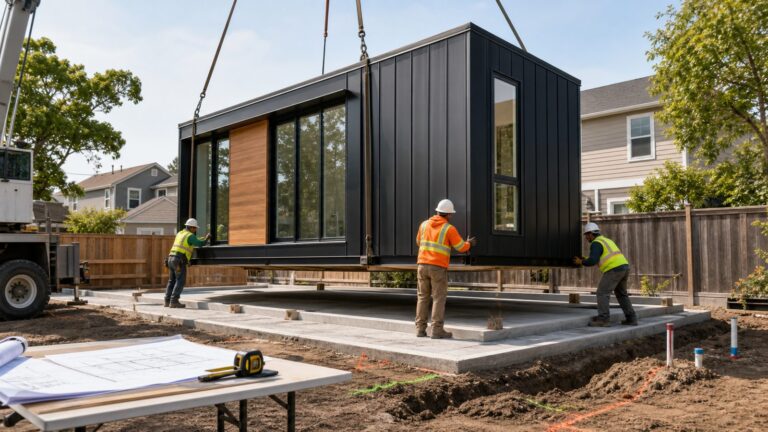
To find the right permit requirements for a Philadelphia home project, describe the work precisely, check the City’s building-permit triggers and conditional exemptions, then check zoning and the property’s historic or floodplain status. If a permit is required, use the City’s instructions for that permit type to confirm documents and file online through eCLIPSE or in person by appointment. A label such as “renovation” is not enough to determine what approvals apply.
Start with the work and the property—not a generic project label
Philadelphia’s Department of Licenses and Inspections (L&I) bases permit requirements on what a project changes and on conditions at the property. Before checking the rules, write a short, complete scope of work. Identify what will be added, removed, replaced, enlarged, relocated, or altered; whether the work affects the structure, use, or occupancy; and the area involved. For excavation or grading, record the size of the disturbed area and the depth of any cut, trench, or depression.
As an Amazon Associate I earn from qualifying purchases.
Identify the property by its legal address as established by the Office of Property Assessment (OPA), rather than relying on an informal address or a project description. Applications need the legal OPA address and current owner information. If ownership recently changed, L&I may require evidence such as a settlement sheet or deed. A tenant applying for a permit must provide an executed lease. These details are part of determining and processing the application, not minor paperwork to fix at the end. See L&I’s building permit application requirements.
Recommended Free Tools
Also check the property’s zoning and whether it is on the Philadelphia Historic Registry or in a floodplain. The City’s zoning instructions direct applicants to check a property through City Atlas. Historic status can affect whether a work item that otherwise appears exempt needs a building permit, while floodplain conditions can trigger special documents or review. These checks can change the approval path even when the physical work sounds small.
#1 Best Overall

- Valued Carpenter Pencil Set: You will get 2 pcs solid carpenter pencils with 26 piece 2.8 mm refills, 1 replaceable sharpener, 1 plastic storage box.The complete carpenter pencils combination allows you to finish your work faster and more easily
- Deep Hole Marker Pencil: The deep-hole construction pencils adopts 45mm elongated tip design, which is more convenient to mark in the small hole or in other tight areas that other carpenter markers cannot reach
- Carpenter Pencils with Sharpener: The sharpener is screwed into the top of the work pencil, which won't get lost either. Built-in pencil sharpener that keep the lead with pointed and smooth to Improves line of sight in fine work
- Stronger Solid Lead: This work pencil is matched with a 2.8 mm thick lead , which is much thicker and stronger during the drawing process of construction work, it will not break or damage easily
- Marks on Various Surfaces: 3 colors solid construction pencil can marks on various surfaces,such as metal, plastic, wood, paper etc. Ideals for woodworkers, contractors, craftsmen, builders, merchants and masons
Keep the scope specific enough to compare with the City’s rules. For instance, “replace a door” is less useful than identifying which door, where it is, whether its opening or dimensions will change, and whether the work affects another part of the structure. For an addition, note the proposed area and location. For demolition, distinguish a partial removal from removal of an entire structure. These are not additional permit tests; they are details that help you decide which listed trigger, exception, or project-specific instruction to review.
Do I need a building permit?
L&I says a building permit is required before work that falls into specified categories. The central question is whether the actual scope crosses one of those triggers—not whether a contractor or homeowner calls the job a repair, remodel, or upgrade. The City’s building permit page lists the following general triggers:
- Constructing a new building.
- Enlarging or adding to an existing structure.
- Changing an existing structure’s interior or exterior.
- Partially or fully demolishing a structure.
- Changing the occupancy classification or increasing the occupant load.
- Making major repairs that go beyond regular maintenance.
- Disturbing 5,000 square feet or more of earth.
Excavation can create an additional sequencing issue: a cut, trench, or depression more than five feet below adjacent grade has additional permit sequencing requirements. Do not treat the earth-disturbance area threshold as the only excavation rule. For site work, consider both the disturbed area and the depth, then check the permit instructions for the specific work.
Outdated Drivers Are Slowing You Down
One free scan finds every outdated or missing driver and matches the right update for your exact hardware.Free scan · exact hardware matchWindows Errors? Fix Them Before They Spread
Repair common Windows errors and clear accumulated junk for a smoother, more stable PC - no reinstall needed.Free scan · no reinstallSome triggers are easy to overlook if you focus only on visible construction. A project that changes the use or occupancy, or increases the occupant load, can raise a permit question even if it is not a large addition. Demolition also appears on the City’s trigger list, including partial demolition. When a project combines activities—for example, removal followed by replacement—describe each part rather than checking only the final appearance.
The trigger list is a starting point, not a substitute for the instructions for the work. If a project appears to fit both a general trigger and a listed exemption, check the exemption’s conditions, the property status, and whether another approval is required. When the facts are not clear, ask L&I about the specific scope and parcel rather than relying on a broad label such as “minor repair.”
What work may be exempt from a building permit?
The City gives examples of work that often does not require a building permit at properties not on the Philadelphia Historic Registry. These are conditional examples, not a blanket exemption for every project involving similar materials. Historic status and other rules can change the result, and zoning or trade permits may still be relevant. Check the item against the City’s current permit and exemption guidance rather than assuming that “small” means permit-free.
- Regular-maintenance repairs.
- Fences up to six feet high and retaining walls up to two feet high, subject to applicable conditions.
- Certain sidewalks, driveways, masonry pointing, and door or window replacements in one- or two-family homes.
- Painting and other listed interior finish work.
- Cabinets and countertops.
- Detached sheds of 200 square feet or less for one- or two-family dwellings.
The size and type of work matter, but so does what the work changes. For example, the exemption examples do not establish that every door or window project is exempt, regardless of property status or scope. A change that affects the structure, a historic property, or another regulated feature needs its own check. Likewise, a building-permit exemption does not determine whether a zoning approval or a trade permit is necessary.
What’s actually slowing this PC down?
Pick the symptom - the matching free tool is one click away.
Rank #2

- Ergonomically Designed: Work in tight areas with a compact design that gets into tough spots
- Compact and Lightweight: Both tools are designed to fit into difficult to reach spaces. The 1/4" impact driver has a length of 5.55 in. and weighs just 2.8 lbs, while the 1/2" drill/driver measures only 7.5 in. and weighs 3.6 lbs
- Both the DEWALT impact driver and electric drill driver feature integrated LED work lights with a convenient 20-second delay, ensuring enhanced visibility in dimly lit or challenging work areas
- One-Handed Loading - Keep one hand free with a 1/4 in. hex chuck that accepts 1 in. bit tips
- Power drill cordless with 1/2" single sleeve ratcheting chuck provides tight bit gripping strength, making bit changes faster and more secure
Think of an exemption as a limited answer to one question: whether that work item needs a building permit under the conditions stated by the City. It does not automatically clear the project under zoning rules or other applicable permit requirements. Nor should a listed example be generalized to a different property type or a larger scope without checking the page. The City’s exemption examples are especially easy to misread when the property is historic or when the work is part of a broader project that changes more than one feature.
Check zoning separately
Zoning approval and a building permit answer different questions. Zoning addresses whether a proposed use or development is allowed at a particular location and under the applicable dimensional rules; the building-permit review addresses construction and code requirements. In most cases, zoning approval comes before a building permit. The City explicitly requires zoning approval for new buildings and additions, and many building-permit applications need zoning approval first.
There are limited situations in which L&I may review zoning and building-code requirements together. For example, for some smaller projects such as additions to single-family homes, the City may review both when the applicant also submits a building-permit application. That does not make zoning optional: it changes how the reviews may be handled. Check the instructions for the project rather than assuming every application follows the same sequence.
Use the City’s zoning permit guidance to check the project’s zoning path and exceptions. An alteration to an existing structure may not need a zoning permit if it changes none of the structure’s area, height, floor area, or legal use. That zoning exception does not decide whether a building permit or trade permit is required.
If a proposal does not meet zoning requirements, a special exception or variance from the Zoning Board of Adjustment may be needed. These are not automatic alternatives to an ordinary permit; they are separate relief processes. For new construction or an addition, consult the City’s specific zoning guidance for new construction and additions before preparing the building-permit application.
When comparing a zoning permit with a possible zoning exception, focus on what changes at the site: use, area, height, floor area, location, and any applicable overlay or parcel condition. An exception that applies to one alteration does not necessarily apply to a new building or addition. Similarly, meeting the dimensional limits for an accessory structure does not establish that the structure meets every building-permit condition. Check zoning and building rules as separate tracks, and follow the project-specific instructions if both approvals are needed.
Do not confuse the shed thresholds
Philadelphia describes a zoning exception for a rear-yard shed or similar structure that is under 130 square feet and under 15 feet high, provided it is not used to store motor vehicles. Separately, the building-permit page lists detached sheds of 200 square feet or less for one- or two-family dwellings among examples that may not need a building permit, subject to the listed conditions. These are different tests: one concerns zoning and the other concerns a building permit. A shed that falls within one threshold does not automatically fall within the other or satisfy all site conditions. Review the City’s zoning permit rules and building permit rules independently.
Rank #3

- 【Great Compatibility】This Katerk 1/4 inch hex shank bit holder is specifically designed for 1/4 inch hex shank drill bits. It's compatible with most 1/4 fast hex handles, hex sockets, various electric screwdrivers, and handheld screwdrivers. The bit holder makes it a valuable addition for any handyman.
- 【Secure and Safe】Built with a secure backup nut design, each drill bit holder securely locks onto your bits, ensuring they stay firmly in place. Additionally, our bit holder incorporates a high-quality steel ball rolling design that holds up to several kilograms of weight, ensuring your various drill bits don't fall off.
- 【Easy One-Handed Operation】The bit holder for impact driver allows you to change bits single-handedly, simplifying your workflow. Its multi-color design further allows for quick identification of the drill bit you need.
- 【Compact and Convenient】Thanks to its compact size, this 1/4 inch bit holder is easy to carry around. The bit holder allows for easy attachment to various tools, making this a convenient addition to your construction accessories. The Katerk bit holder is cast from high-quality alloy material, promising a long product lifespan. Despite its rugged strength, the bit holder remains lightweight, making it portable.
- 【Cool Christmas Gift For Men Stocking Stuffers】 This screwdriver bit holder, driver bit holder, impact bit holder, can be given as a gift to your loved one, especially for anyone involved in construction or electrical work. It's a must-have for stocking stuffers for men and women, tools gifts for dad, tech gadgets for men, gifts for dad, gifts for him, gifts for husband, gifts for boyfriend, cool gadgets for men, and cool gifts for dad.
Use the fence-specific rules for fence projects
Fences illustrate why a general exemption list is not enough. L&I’s fence instructions distinguish the permit path by fence material, height, and location in the yard. The City also says a building permit is always required for a fence on a property on the Philadelphia Historic Registry or in the 100-year floodplain. Check the fence-specific permit guidance and tables for the proposed fence rather than relying only on the general example for fences up to six feet high.
For a fence, have the material, proposed height, and yard location ready when you review the tables. These are the comparison points the City uses to distinguish requirements, so a general statement such as “a low fence is exempt” can miss the relevant conditions. Check historic-registry and floodplain status too: either condition can change the building-permit result. Also keep the zoning check separate; a building-permit answer for the fence does not answer every zoning question about its placement.
Can I get a permit without plans?
Some qualifying projects can use an EZ permit, which does not require plans. L&I lists project-specific standards, including standards for some residential decks and certain door, window, or trade work. The project must match the applicable standard and meet its conditions; the existence of an EZ category does not mean the work requires no permit.
Open the City’s EZ permit standards and compare the proposed work with the exact category. If the scope does not fit, or a condition is not met, use the standard permit instructions for the work. Do not infer eligibility from a similar project title or from the fact that another job was approved without plans.
The practical comparison is not simply “plans or no plans.” First determine whether the work needs a permit. If it does, see whether the City’s EZ standard covers that exact category and whether the stated conditions are met. An EZ permit is a permit path with its own requirements, not an exemption. If no listed standard fits, the standard permit route and its document requirements may apply; consult the relevant permit page rather than leaving out plans or other materials based on an informal comparison.
The Tool Desk
Outbyte PC Repair FREEClear out junk files and repair common Windows errorsFree Scan →Outbyte Driver Updater FREEScan for outdated or missing drivers - takes under a minuteDriver Scan →Prepare the application and supporting documents
Once the approval path is clear, assemble the application around the complete scope and the actual property. L&I specifies supporting documents according to the permit type and project conditions. Depending on the work, the application may require a zoning permit and approved zoning site plan, structural information, protection-of-property materials, special-inspection documents, engineering reports, asbestos inspection reports, or other approvals. The list is not the same for every residential project; follow the instructions attached to the specific permit category and property conditions.
- State the complete scope, including the components and areas affected, rather than a broad label such as “remodel.”
- Use the legal OPA address and provide current owner information.
- If ownership recently changed, be prepared to provide proof such as a settlement sheet or deed if L&I requires it.
- If a tenant is applying, include an executed lease.
- Check whether zoning approval and an approved zoning site plan are needed before building-permit review.
- Use the permit-specific document list to determine whether structural, property-protection, inspection, engineering, asbestos, or other materials apply.
An owner or authorized agent may apply. L&I identifies design professionals, attorneys, contractors, and licensed expediters as examples of authorized agents. The application can be submitted online through eCLIPSE. For an in-person application, the City requires an appointment at the Permit and License Center, 1401 John F. Kennedy Blvd., Municipal Services Building, Public Service Concourse. Check the City’s current application instructions before filing for current office details and fees.
Rank #4

- Long Nib and Deep Hole Marker: Our mechanical carpenter pencil with 45mm nib is designed for easy marking of deep holes or narrow areas. These construction pencils are the great choice for woodworking tools, construction tools, carpenter tools, contractor tools, wood carpentry tools and architect tools
- Extra Refills in 2 Colors for Versatile Marking: The construction mechanical pencil comes with 12 extra 2.8mm refills, including 6 red and 6 black refills. The black refill is suitable for light surfaces, while the red wax is perfect for dark surfaces. Our carpenter mechanical pencil makes sure that you'll have an ample supply for extended use
- Built-in Sharpener: Our construction pencil comes with a built-in sharpener to ensure the mechanical pencil tip is always sharp and ready for use. Never buy an extra pencil sharpener again. A great tool for any woodworker pencil, contractor pencils. The refill can easily be extended or retracted with a simple click of the pencils mechanical, allowing you to work more efficiently and accurately
- Portable Clip Design: Our deep hole construction pencil features a portable clip design, easy to carry and attach to your pocket or tool box, so that you can keep the carpenter pencils mechanical close at hand, making it a convenient tool to have on the go. Great gifts choice for carpenters
- Stronger Pencil Lead: The black refills are made of lead, sturdy and smooth. The red refills are made of wax, clear and light. These marking pencils are much thicker and stronger than normal pencils during the marking process of construction work, suitable for various surfaces, such as glasses, metal, boards, floors, walls, furniture, etc. The written marks can be easily wiped with a wet paper towel when needed
Online and in-person filing are submission options, not different standards for the project. Use eCLIPSE if you are applying online; choose in-person service only with an appointment at the listed Permit and License Center. In either case, the scope, owner details, and supporting documents need to match the specific application. Before submitting, confirm the current instructions, fees, and office details on the City page, since procedures and charges can change. The City’s published thresholds—such as 5,000 square feet of earth disturbance—are regulatory criteria, not estimates of project cost.
If the document list seems extensive, do not assume every item applies to every home project. L&I ties documents to permit type and project conditions. Use the relevant list to identify what is required for this application; for example, zoning and an approved site plan may be relevant before building review, while structural, engineering, inspection, protection-of-property, or asbestos materials depend on the work. A complete, project-specific application is more useful than a broad submission that leaves the scope or required materials unclear.
Do these 3 things before closing this tab:
1Fix the driver behind crashes, sound loss and screen glitches2Clear out junk files and repair common Windows errors3Scan for outdated or missing drivers - takes under a minuteConfirm who may perform the work
Philadelphia generally requires a licensed Philadelphia contractor. The City describes exceptions for some work on an existing one- or two-family dwelling, including certain work by an owner who lives there or by an eligible registered Pennsylvania Home Improvement Contractor who holds a Philadelphia Commercial Activity License. The exception depends on the work and the applicable rule; it should not be read as permission for any owner or contractor to perform every kind of permitted work. Confirm the contractor requirement for the specific building permit and any trade permit through the City’s building permit instructions.
Separate the question of who can apply from who can perform the work. An owner or authorized agent may submit an application, but that does not establish that the person doing the construction meets the contractor rules. Likewise, the described exceptions are limited to some work on an existing one- or two-family dwelling and have stated qualifications. Check the applicable building and trade permit instructions before assuming an owner-builder or contractor exception applies.
Emergency repairs follow a narrow process
L&I describes an emergency-repair process for sudden, unforeseen conditions that present a significant threat to life or property and require immediate action. It is not a general way to begin planned work before obtaining a permit. For a qualifying emergency, the owner or contractor must notify the appropriate inspection district as soon as possible, document the work with time-stamped photos or video, and file a permit application to legalize the work within three business days after the repair. The City’s construction and repair permit information describes this process.
The key distinction is whether the condition was sudden and unforeseen and presents a significant threat that requires immediate action. A planned renovation, a convenient schedule, or an ordinary repair does not become an emergency merely because it is urgent to the owner. If the emergency process applies, notification, time-stamped documentation, and the application deadline are part of the process; do not treat the initial repair as the end of the permit obligation.
Quick wins for a faster PC:
Repair Windows errors before they cause bigger problemsFix Now →Fix the driver behind crashes, sound loss and screen glitchesFind Drivers →Clear out junk files and repair common Windows errorsFree Scan →A practical decision sequence
- Write down the complete scope. Include structural changes, additions, demolition, occupancy or use changes, affected areas, and excavation dimensions.
- Identify the property correctly. Use the legal OPA address, confirm the owner information, and note whether the applicant is an owner, tenant, or authorized agent.
- Check parcel conditions. Look up zoning through City Atlas and determine whether historic-registry or floodplain conditions may apply.
- Compare the scope with building-permit triggers. If the work matches a trigger, review the relevant permit type. If it resembles an exemption, verify its conditions and whether historic status or another approval changes the result.
- Run the zoning check independently. Determine whether zoning approval is needed, whether an exception applies, and whether zoning must be approved before the building permit.
- Check project-specific paths. For fences, use the fence rules; for potentially eligible work without plans, compare the work with the EZ standard.
- Gather the documents for that permit. Use L&I’s project-specific list and include zoning and site-plan materials or technical documents when required.
- Submit through the appropriate channel. Apply in eCLIPSE or book an appointment for in-person filing, and confirm current office details and fees on the City page.
This sequence also helps you see where a generic answer can fail. A project may be exempt from a building permit but still need a zoning or trade permit; zoning approval may be needed before building review; and historic or floodplain conditions can change an apparent exemption. For a shed, check both the zoning and building thresholds. For a fence, use the material-, height-, and location-specific tables. For an EZ permit, confirm that the exact category and conditions fit.
Best Value

- Milwaukee Ink all Fine Point Marker, Black, 4 Per Pack
- 4 per pack Features Clog Resistant Marker Tip Writes through Dusty, Wet and Oily Surfaces Durable Marker Tip for Writing on Concrete, OSB and Rough Surfaces
- Clog resistant tip writes on dusty, wet and oily surfaces and is optimized for rough surfaces such as OSB, cinderblock and concrete
- Hard hat clip- attaches for easy access
- Quick dry time with reduced smearing and marking
If the result is still unclear, the most useful next step is to refine the scope and ask L&I about that specific work and parcel—not to rely on a generic answer about “home renovations.” A correct determination can depend on the exact dimensions, what is being altered, and the property’s status.
Frequently Asked Questions
Do I need a building permit for my Philadelphia home project?
Start by matching the actual work to L&I’s triggers: new construction, an addition or enlargement, a change to an existing structure, demolition, certain occupancy changes, major repairs beyond regular maintenance, or earth disturbance of 5,000 square feet or more. Then check the project-specific instructions and conditions, including historic-registry or floodplain status. The project label alone does not determine the answer.
Do I need a zoning permit as well as a building permit?
Check zoning separately. In most cases zoning approval comes before a building permit, and the City requires zoning approval for new buildings and additions. Some smaller projects may receive combined zoning and building-code review when a building-permit application is filed. An alteration that changes none of area, height, floor area, or legal use may fall within a zoning exception, but that does not decide whether a building or trade permit is required.
What can I do without a building permit?
L&I lists conditional examples for properties not on the Philadelphia Historic Registry, including regular-maintenance repairs, certain low fences and retaining walls, specified work on sidewalks, driveways, masonry, doors and windows in one- or two-family homes, listed interior finish work, cabinets and countertops, and certain detached sheds. Check the current conditions for the specific item. A building-permit exemption does not automatically exempt the work from zoning or trade requirements.
Can I get a Philadelphia permit without plans?
Some qualifying work can use an EZ permit, which does not require plans. Compare the project with the exact L&I EZ standard, including its conditions; some residential deck, door, window, and trade work has standards. If the project does not fit, check the standard permit instructions. An EZ permit is still a permit.
Can I submit the application online, and what will it cost?
L&I accepts online applications through eCLIPSE. In-person applicants need an appointment at the Permit and License Center, 1401 John F. Kennedy Blvd., Municipal Services Building, Public Service Concourse. Fees and procedures can change, and the amount depends on the applicable permit instructions; check the City’s current page before filing rather than relying on an old fee amount.
Can I do emergency repairs before getting the permit?
L&I describes a narrow process for sudden, unforeseen conditions that pose a significant threat to life or property and require immediate action. The owner or contractor must notify the appropriate inspection district as soon as possible, document work with time-stamped photos or video, and file an application to legalize the work within three business days after repair. This is not an exception for ordinary planned work.
Free tools Windows power users keep installed
One-click scans. No signup required.
The Bottom Line
For a Philadelphia home project, determine requirements from the exact scope and parcel—not from a generic project name. Check L&I’s building-permit triggers and conditional exemptions, then check zoning, historic and floodplain status, and any project-specific rules such as the fence tables or EZ standards. Follow the instructions for the permit type to confirm documents, contractor requirements, filing method, and current fees before work begins.
Quick Recap
Product prices and availability are accurate as of the date/time indicated and are subject to change. Any price and availability information displayed on Amazon at the time of purchase will apply.