Quick wins for a faster PC:
Fix the driver behind crashes, sound loss and screen glitchesFind Drivers →Repair Windows errors before they cause bigger problemsFix Now →Scan for outdated or missing drivers - takes under a minuteDriver Scan →Almost anything can be cleaned safely if you answer three questions first: What is the item made of? What is making it dirty? Do you need to clean, sanitize, or disinfect it?
Those questions matter more than owning a cabinet full of powerful chemicals. A mild detergent may be ideal for a washable hard surface and completely wrong for leather, unfinished wood, electronics, natural stone, or a delicate textile. Start with the least aggressive compatible method, test it, use less moisture than you think you need, and stop if the finish begins to change.
As an Amazon Associate I earn from qualifying purchases.
This guide applies to ordinary household cleaning, renovation cleanup, finished rooms, fixtures, tools, and many jobsite surfaces. It does not replace a care label, warranty instructions, a product label, or professional guidance for mold, sewage, floodwater, hazardous dust, or extensive contamination.
The three questions to ask before cleaning anything
- What is the material? Identify whether it is glass, glazed tile, stainless steel, painted metal, wood, stone, leather, fabric, upholstery, plastic, a coated finish, or an electronic device. If you cannot identify the material, assume it may be sensitive until you can check the maker’s instructions.
- What is the soil? Dust, grit, grease, mineral scale, food, blood, ink, adhesive, paint, mold, and sewage contamination need different approaches. A product that dissolves one type of soil may stain, etch, dull, or weaken another material.
- What is the objective? Cleaning removes dirt and many germs. Sanitizing reduces germs to a level specified by a sanitizer’s label or public-health standard. Disinfecting uses an appropriate disinfectant and its required wet contact time to inactivate specified pathogens. These terms are not interchangeable. The CDC’s cleaning and disinfecting guidance explains the distinction.
For ordinary dirt, cleaning is usually enough. Disinfect only when there is a genuine reason—such as a product-specific requirement, a known contamination event, or a public-health recommendation—and use a product whose label authorizes the particular surface and claim.
#1 Best Overall

- 10x GRIP-ROOT WEAVE - TRAP MORE, WORK LESS: Ultra-absorbent microfiber towels for car Grip Root weave works like PLANT ROOT FOLLICLES, sucking up & LOCKING AWAY 8x to 10x its weight in liquid, particulates, moisture, grime and dirt in far LESS TIME than traditional ‘Heavy Duty’ Cleaning Rags. Each towel features a 2.5mm thick design, providing enhanced durability and better grip during use.
- WON’T LINT, SCRATCH, PILL, SWIRL, SHED, or BLEED like thin, cheaply made microfiber towels for cars. RAPID DRY release layers make these the ideal microfiber towels for cars, creating that spectacular, SWIRL-FREE MIRROR SHINE with our cleaning rags. With a solid 2.5mm thickness, these towels are built to prevent damage while ensuring optimal performance.
- LASTS 1200+ WASHES - That’s 3.27 YEARS worth of use in this 12-pack of COMMERCIAL GRADE 300 GSM Reuseable Cleaning Cloth. The 2.5mm thickness and OVERLOCK BRAIDED STITCHING makes the ideal SUSTAINABLE SOLUTION for cleaning every SURFACE, crack, and CREVICE in your home, garage, or office.
- SOAK IT UP FASTER - 4X’s MORE ABSORBENT than COTTON cloths, these are the microfiber cleaning cloth for cars to get if you want an ALL PURPOSE cleaning towel, crafted with 2.5mm thickness to scoop up your messes, oils, and liquids FASTER than a SPONGE
- UNRIVALED POWER - TEST THIS GRIP-ROOT technology risk-free for 30 full days. With a 2.5mm thick design, it LOCKS AWAY dirt, dust, grime, spills, and messes better than any other high-performance cleaning rags you’ve tried.
The universal low-risk cleaning workflow
Use this sequence whether you are cleaning a countertop, a door, a tool, a fixture, or a piece of furniture.
- Read the care and product labels. The item’s manufacturer instructions take priority over generic advice. Read the cleaner’s directions, approved surfaces, dilution, ventilation requirements, protective equipment, contact time, storage, disposal, and first-aid information. This is especially important for electronics, coated finishes, leather, stone, technical fabrics, appliances, and newly installed materials.
- Remove loose soil dry. Vacuum, brush, sweep carefully where appropriate, or lift away crumbs, hair, dust, and grit before using liquid. Wetting grit can make abrasive mud; rubbing it across a glossy finish can create scratches.
- Match the chemistry to the soil. Begin with water and a mild detergent on a compatible washable surface. Move to a labeled degreaser, descaler, stain treatment, or disinfectant only when the soil or objective justifies it.
- Use the least aggressive compatible method. Start with a soft, lint-free cloth, a small amount of properly diluted product, and gentle pressure. More product and more force do not automatically produce a cleaner result.
- Pretest in an inconspicuous place. Test dyed fabric, leather, painted surfaces, wood, stone, upholstery, and unfamiliar coatings on a hidden area. Allow the test area to dry before judging color or sheen.
- Control moisture. Do not flood porous surfaces, saturate upholstery, or allow liquid to enter electronic openings, seams, vents, switches, or sockets.
- Remove residue when directed. Rinse or wipe away cleaner residue if the label or material requires it. Leftover residue can attract more soil or leave a cloudy film.
- Dry completely. Use ventilation and Absorbent towels where suitable. Persistent moisture can damage finishes and contribute to mold growth.
A practical cleaning kit
A small, well-chosen kit is safer and more useful than a collection of incompatible chemicals. Keep the following items clean and separated by purpose:
- microfiber cleaning cloths that are soft, clean, and lint-free. Use separate cloths for dirty work, glass, electronics, and disinfectant application so grit and chemical residue are not transferred.
- Absorbent towels for blotting spills and drying surfaces.
- A mild detergent and water for compatible washable surfaces.
- soft-bristle detail cleaning brushes for seams, textured surfaces, grout, and crevices. A brush is a mechanical tool, not permission to scrub delicate finishes.
- nitrile cleaning gloves when the product label or task calls for hand protection. Gloves do not make an unknown chemical, mold, sewage, or hazardous-contamination job safe by themselves.
- Surface-specific products selected from their labels, rather than one unverified cleaner for every room.
If you want a routine hard-surface cleaner, the EPA Safer Choice-certified all-purpose cleaner category is a useful screening starting point. EPA evaluates products in the Safer Choice program against ingredient and performance criteria, but certification does not override the product label or make a cleaner suitable for every surface. Check the current EPA Safer Choice product directory and verify the exact product’s approved uses, directions, and availability before buying.
Recommended Free Tools
Label every chemical correctly
Keep products in their original containers whenever possible. Never transfer a cleaner into an unmarked bottle. If a workplace procedure or product label permits a diluted solution in another container, the container must remain clearly identified with the product and relevant hazard information. Store chemicals away from children and pets, maintain ventilation, follow the specified protective equipment, and obey disposal instructions.
Material-by-material cleaning methods
Glass, glazed tile, stainless steel, and hard nonporous surfaces
Remove loose grit first. Apply a suitable cleaner to the cloth or surface as directed, wipe with a soft cloth, and dry to prevent streaks or residue. For ordinary maintenance, cleaning is generally sufficient.
Avoid abrasive pads, gritty powders, and excessive force on glass, polished metal, glossy tile, and coated fixtures. A hard nonporous surface is not automatically scratch-proof. Stainless steel and specialty finishes may also have directional grain or a manufacturer-specific restriction.
If disinfection is justified, choose an EPA-registered product in the United States that lists the surface and intended pathogen claim. Follow the label’s preparation, application, ventilation, and wet contact time exactly. The surface must stay wet for the stated time; a quick wipe is not equivalent to disinfection.
Do these 3 things before closing this tab:
1Scan for outdated or missing drivers - takes under a minute2Clear out junk files and repair common Windows errors3Fix the driver behind crashes, sound loss and screen glitchesRank #2

- Microfiber 16 x 12-inch cleaning cloth (24-pack); ideal for cleaning cars, trucks, boats, and more
- Ultra-soft and non-abrasive car drying towels; will not scratch paints, vinyl, glass, finishes, or other surfaces
- Effectively cleans either dry or with liquid cleaners for streak-free results and a lint-free shine
- Durable and absorbent; soak up 8 times their own weight
- Can be reused hundreds of times
Electronics, screens, keyboards, and controls
- Power down and disconnect the device before cleaning. Do not work on a powered or charging device unless the manufacturer specifically directs otherwise.
- Remove dust and crumbs with a clean, dry, soft cloth or an approved method. Avoid pushing debris into ports, seams, speakers, fans, or keys.
- Keep liquid away from openings. Never spray directly onto a screen or device; apply only the amount and type of product the maker permits to the cloth, if the instructions allow it.
- Avoid abrasive cloths, aerosol sprays, bleach, and hydrogen peroxide unless the device manufacturer specifically permits them.
- Use the maker’s instructions for coated displays, touchscreens, accessories, and keyboards. For example, Apple permits certain alcohol wipes on some hard, nonporous exterior surfaces but gives material-specific exceptions, including warnings for Apple Vision Pro and fabric or leather surfaces. Its Apple product-cleaning guidance is an example of why model-specific instructions control.
A clean microfiber cleaning cloth can reduce lint and scratching risk, but the cloth itself is not a universal electronics cleaner. Do not reuse one that contains grit, abrasive dust, disinfectant residue, or grease.
Clothing, washable fabrics, and upholstery
Read the care label before applying anything. Identify the stain if possible, then blot rather than aggressively rub when rubbing could spread the soil, raise the nap, or drive the stain deeper. Apply a label-approved treatment sparingly and test for colorfastness in a hidden location first. After treatment, wash or rinse as the care instructions require and dry completely.
Wool, silk, fragile dyes, structured upholstery, antique textiles, and fabrics marked for specialist care should not be treated as ordinary cotton. Never assume chlorine bleach is safe simply because a fabric is white. The garment’s bleach symbol, fiber, dye, finish, and care label all matter. University textile guidance likewise emphasizes reading the care label and testing colorfastness before stain treatment.
Carpet and soft furnishings
Treat the stain and the fiber separately. Remove solid material carefully, blot liquid, and use a compatible carpet or upholstery product after testing. Avoid saturating the backing, padding, seams, or adjoining flooring; moisture trapped below the visible surface can create a larger problem than the original stain.
Vomit, diarrhea, and suspected norovirus contamination are not ordinary stain-removal jobs. Use public-health guidance and the carpet or upholstery maker’s instructions rather than a casual homemade recipe. Guidance from the University of Minnesota Extension on cleaning vomit and diarrhea emphasizes safe handling, hand hygiene, and approved steam or EPA-registered antimicrobial approaches for porous surfaces. If the material cannot be effectively cleaned and disinfected, replacement or professional remediation may be necessary.
Wood, finished furniture, and painted surfaces
Start with the manufacturer’s finish guidance, a soft cloth, and minimal moisture. Wipe rather than soak, and dry promptly. Test any cleaner on an unseen area because water, alcohol, solvents, alkaline products, and abrasives can change sheen, soften finishes, lift color, or leave cloudy marks.
Rank #3
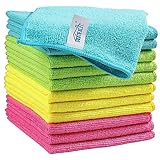
- Effective Streak-Free Cleaning: Clean kitchen countertops, windows, mirrors, bathroom surfaces, stainless steel, car interiors, glass, and other delicate surfaces with just water or your favorite cleaner—these microfiber cloths deliver streak-free, neat results with minimal effort, making daily cleanup fast and simple
- Lint-Free & Scratch-Safe: Soft to the touch and completely lint-free, these cloths won't scratch or damage delicate finishes like glass, ceramic, coated metals, car paint, or polished surfaces—clean with confidence on everything from household appliances to auto trim and electronics screens
- Ultra-Absorbent for Spills, Polishing & Drying: Designed to quickly soak up liquids, grease, and grime, making them ideal for drying dishes, wiping spills, polishing stainless steel, buffing car surfaces, and tackling everyday messes around the house, garage, or workshop—efficient cleaning without extra effort
- Reusable, Washable & Long-lasting: Machine washable and reusable hundreds of times with reinforced edges that hold up wash after wash—a durable replacement for disposable paper towels that cuts down on waste and repeat purchases for families, pet owners, detailers, and busy households
- Versatile Across Home, Auto & Beyond: Equally suited for general household cleaning, interior car detailing, exterior buffing, polishing wheels, wiping down tools, workshop surfaces, electronics, eyeglasses, screens, and more—simply rinse after use or toss in the washing machine; a practical all-around choice for homes, garages, shops, and small businesses
Do not use flood-cleanup methods or unfinished-wood recipes on ordinary finished furniture without verifying compatibility. Newly painted walls, trim, cabinetry, sealants, and coatings may have curing or maintenance instructions that differ from older finishes. If wood is swollen, delaminated, moldy, or water-damaged, cleaning alone may not restore it; drying, refinishing, replacement, or professional assessment may be required.
Leather and specialty finishes
Use only the maker’s recommended mild method. A manufacturer may permit mild soap and warm water for one leather case or finish, while another may prohibit it. Even an approved method can change leather color or appearance.
The Tool Desk
Outbyte PC Repair FREEClear out junk files and repair common Windows errorsFree Scan →Outbyte Driver Updater FREEScan for outdated or missing drivers - takes under a minuteDriver Scan →Avoid soaking, harsh solvents, unverified disinfectants, abrasive scrubbing, and improvised alcohol treatments. The same caution applies to vinyl, faux leather, fabric-coated panels, powder coats, optical coatings, and other specialty finishes: identify the finish and follow its instructions before choosing a chemical.
Natural stone and acid-sensitive surfaces
First determine whether the surface is natural stone, engineered stone, glazed tile, or another material. Do not assume that a product safe for ceramic tile is safe for stone. Vinegar and other acidic descalers may remove mineral scale but can etch or dull acid-sensitive stone and some finishes.
Use the stone or installer’s approved cleaner, a soft cloth, controlled moisture, and a hidden-area test. For an unknown white crust, identify whether it is mineral scale, grout residue, efflorescence, or damaged finish before reaching for an acid.
Tools, fixtures, and construction surfaces
For metal tools, handles, fixtures, and cured hard surfaces, remove dust and grit first, then use a compatible detergent or labeled degreaser. Grease, adhesive, uncured sealant, paint, and cured coating may require entirely different products. Check the manufacturer’s instructions for tool handles, rubber components, electrical controls, powder-coated metal, and newly installed fixtures.
Crashes, No Sound, or Screen Glitches?
Random freezes, missing sound and display glitches usually trace back to one bad driver. Find and replace yours safely.Free scan · under a minutePC Slower Than It Used to Be?
A free scan shows the junk files, broken settings and background clutter dragging Windows down - then fixes them in one click.Free scan · Windows 10 & 11Rank #4

- Unparalleled Cleaning Performance: Our microfiber towels provide outstanding water absorption and adhesion; effortlessly absorb dirt and liquid, delivering exceptional cleaning results that will leave your car looking brand new
- No Scratching: Made from incredibly soft fabric; provides gentle care for your car; delicately wipes surfaces without scratching or damaging the paint, restoring your car's shine
- Super Absorbent: Ideal for drying your car quickly; designed to rapidly soak up water and moisture; perfect for wiping down surfaces and ensuring a streak-free, spotless finish after washing your vehicle
- Versatile Applications: Suitable for various applications; ideal for exterior car care; also effective for household cleaning, such as wiping furniture, kitchen utensils, and glass surfaces
- Easy to Clean and Long-lasting: Designed to withstand repeated use and washing; maintains performance and quality after multiple washes; machine washable and quick-drying for convenient and efficient cleaning
Do not use a powerful solvent simply because it removes the soil quickly. It may soften plastic, strip a coating, discolor a floor, or spread the contamination. On a new surface, confirm that paint, sealant, grout, adhesive, or finish has cured as directed before wet cleaning.
Stain-specific decision table
| Problem | Start with | Important limit |
|---|---|---|
| Dust, crumbs, hair, or loose grit | Vacuuming, brushing, or lifting the material away while dry | Do not turn abrasive grit into wet mud and rub it across a finish. |
| Ordinary dirt on a washable hard surface | Water and a mild detergent, properly diluted | Confirm the surface tolerates moisture and the product’s dilution. |
| Grease or oily soil | A labeled, surface-compatible degreaser after removing loose soil | Test painted, plastic, rubber, wood, and coated surfaces; rinse or wipe residue as directed. |
| Mineral scale or hard-water residue | A compatible descaler or the surface maker’s recommended method | Acid can damage natural stone and other acid-sensitive finishes. |
| Food, protein, or biological stains on textiles | Blotting, care-label instructions, and a tested textile treatment | Do not assume bleach or aggressive rubbing is safe; suspected infectious contamination needs a higher-control method. |
| Ink, dye, or transferred color | Identify the fiber and use a tested, label-approved stain method | Solvents can spread color or damage coatings and finishes. |
| Adhesive, paint, or sealant | Identify whether it is fresh or cured, then consult the substrate and product instructions | Scraping and solvents can remove the finish along with the residue. |
| Mold or recurring musty growth | Address the moisture source and assess the size and location of the problem | Do not treat extensive, hidden, or repeatedly returning mold as a simple wipe-down. |
| Floodwater, sewage, vomit, or diarrhea contamination | Public-health or professional remediation guidance | Porous materials may not be safely recoverable with ordinary household cleaning. |
Cleaning, sanitizing, and disinfecting: choose the right level
Cleaning
Cleaning is the default for visible dirt and routine maintenance. It removes soil and many germs through detergent, water, mechanical action, and rinsing or wiping. Cleaning first also helps a later disinfectant work as intended because heavy soil can interfere with contact between the product and the surface.
Sanitizing
Sanitizing is a separate, label-defined objective. Use a product labeled for sanitizing, on a surface the label permits, using the stated concentration and contact time. A product marketed as a cleaner is not automatically a sanitizer, and a sanitizer is not automatically a disinfectant.
Disinfecting
Disinfecting is appropriate only when the situation justifies it. In the United States, use an EPA-registered disinfectant whose label covers the surface and the relevant organism or claim. Clean first, then apply enough product to keep the surface visibly wet for the full label contact time. Observe ventilation, personal-protection, rinsing, and food-contact instructions.
Never use a disinfectant on skin, pets, food, or an object unless its label specifically authorizes that use. Do not assume that a claim such as “kills germs” means the product disinfects every pathogen on every material. Performance depends on the registered claim, surface, concentration, application, and contact time.
Independent reader supportYour contribution helps us test, update, and keep practical guides available for everyone.Safety rules that prevent the worst mistakes
- Never mix bleach with ammonia or any other cleaner. Toxic gases can result. Do not experiment with bleach, vinegar, acids, peroxide, alcohol, ammonia, or commercial products as though they were interchangeable ingredients.
- Ventilate and follow the label. Use the protective equipment, dilution, application method, storage, first-aid, and disposal instructions stated by the product or required by the task.
- Keep products away from children and pets. Close containers after use and never leave a bucket or spray bottle unattended where it can be accessed.
- Keep chemicals in identifiable containers. The original label is part of the safety information. Never rely on memory or an unmarked bottle.
- Do not let marketing replace evidence. “Natural,” “green,” and “non-toxic” do not by themselves prove safety or effectiveness. Safer Choice is a more meaningful screening signal, but the exact label still controls.
- Stop for unknown contamination. Mold, sewage, floodwater, hidden moisture, extensive biological contamination, and respiratory vulnerability may require professional or public-health guidance. Protective gloves alone do not eliminate those risks.
For mold cleanup, the CDC’s mold guidance addresses respiratory and injury risks and reinforces the rule against mixing bleach with ammonia or another cleanser. If the source of moisture remains, repeated surface cleaning will not solve the underlying problem.
When to stop and call a professional
Stop cleaning and seek qualified advice when:
- the item’s care label is missing, contradictory, or unavailable and the material is valuable or delicate;
- a test patch changes color, sheen, texture, adhesion, or feel;
- the material is swelling, delaminating, flaking, blistering, or becoming sticky;
- mold is extensive, hidden, recurrent, or associated with ongoing water intrusion;
- the area involves sewage, floodwater, vomit, diarrhea, or another significant biological-contamination event;
- you suspect the item contains a hazardous construction material or unknown dust;
- the necessary product requires controls, ventilation, or protective equipment you cannot provide; or
- you cannot identify the chemical, contamination, or surface well enough to choose a compatible method.
Professional remediation is not an admission that cleaning failed. It is the appropriate choice when the material, exposure, or contamination exceeds routine cleaning.
Best Value

- Super Absorbent: Experience the excellent quality of AIDEA all-purpose microfiber cleaning cloths; made from premium materials; offering exceptional absorbency and quickly wicking away water to keep you dry; ideal for swiftly and safely removing dirt, grime, and liquids
- Soft & Lint-Free: Our ultra-soft and non-abrasive microfiber towels ensure a scratch-free cleaning experience on surfaces, paint, glass, and coatings; effective in tackling the toughest grease, grime, and dirt; suitable for cleaning kitchens or cars; leaving surfaces shiny and pristine
- Remarkable Durability and Reusability: These microfiber dusting cloths can be washed and reused hundreds of times; resistant to shrinking, falling apart, or losing cleaning power; designed for long-term use
- Easy Care and Use: The shop towels available in five different colors for easy color coding of cleaning tasks; designed with premium fabrics that prevent scratching; ideal for polishing and drying without damaging surfaces; keeps your car shiny and intact
- Versatile: AIDEA cleaning rags are perfect for a variety of tasks; effective with just plain water; suitable for use in kitchens, bathrooms, and for dusting; an essential tool for any cleaning routine
Compact troubleshooting matrix
| If the surface is… | And the problem is… | Start with… | Stop if… |
|---|---|---|---|
| Glass, glazed tile, or stainless steel | Routine dirt | Remove grit, then use a suitable cleaner and soft cloth | You see scratching, dulling, streaks that do not wipe away, or a finish change. |
| An electronic device or screen | Dust or fingerprints | Power down, disconnect, and use a clean soft lint-free cloth according to the maker’s instructions | Liquid approaches an opening or the coating, display, or finish begins to change. |
| Dyed fabric or upholstery | Unknown stain | Read the care label, blot as appropriate, and test a compatible treatment in a hidden spot | Color transfers, the nap changes, or the stain spreads. |
| Finished wood or painted furniture | Surface dirt | Use minimal moisture and a soft cloth after checking finish guidance | The finish becomes cloudy, tacky, swollen, or discolored. |
| Leather or specialty coating | Spill or grime | Use only the maker-approved mild method and test first | Color, texture, or sheen changes. |
| Natural stone | White mineral residue | Identify the stone and use its approved cleaner or descaler | The surface dulls, etches, or the residue’s identity is uncertain. |
| Carpet or soft furnishing | Vomit, diarrhea, or suspected pathogen contamination | Follow public-health and manufacturer guidance for porous surfaces | You cannot clean, disinfect, dry, or isolate the material safely. |
| Any material | Mold, sewage, floodwater, or unknown chemical | Isolate the area and obtain professional or public-health guidance | Exposure, moisture, contamination, or respiratory symptoms are continuing. |
A final label-and-care checklist
Before starting, confirm:
- I know what the item and its finish are made of.
- I have read the care label, warranty guidance, or manufacturer instructions.
- I have identified the soil and chosen a product for that soil.
- I have removed loose dust and grit.
- I have tested the method in an inconspicuous area.
- I know the correct dilution and whether the surface must be rinsed.
- I will not oversaturate the material or spray into electronics.
- If disinfecting, the product is authorized for this surface and claim, and I can maintain the required wet contact time.
- I have ventilation and the label-specified protective equipment.
- I know how to store and dispose of the product.
- I know when I will stop and call a professional.
The best cleaning method is usually not the strongest one. It is the least aggressive method that is compatible with the material, effective against the actual soil, and appropriate for the level of hygiene required.
Free tools Windows power users keep installed
One-click scans. No signup required.
Frequently Asked Questions
Does vinegar clean almost anything?
No. Vinegar can help with some mineral deposits, but it is not a universal disinfectant and its acidity can damage natural stone, some metals, coatings, and other acid-sensitive finishes. Identify the material and use the maker-approved or label-approved method instead.
Can I use one all-purpose cleaner on every surface?
No. An all-purpose cleaner may be suitable for some routine hard-surface jobs, but its label does not authorize every material. Check approved surfaces, dilution, ventilation, contact time, and rinsing requirements. A product’s marketing claim never overrides the care label.
Is steam safe for every surface?
No. Steam is not automatically safe for electronics, unsealed wood, adhesives, painted finishes, or every textile. Use steam only when the item and equipment instructions specifically support it.
What should I do if cleaning starts damaging the surface?
Stop immediately, blot or wipe away residue as the material allows, and let the area dry. Record the product used and seek guidance from the manufacturer or a qualified professional before trying another chemical.
The Bottom Line
Bottom line: To clean almost anything, identify the material, identify the soil, and decide whether you need cleaning, sanitizing, or disinfecting. Remove loose grit first, use the least aggressive compatible method, test before treating the visible area, control moisture, follow every label, and never mix chemicals. For mold, sewage, floodwater, unknown contamination, or damaged specialty materials, stop experimenting and get professional guidance.
Quick Recap
Product prices and availability are accurate as of the date/time indicated and are subject to change. Any price and availability information displayed on Amazon at the time of purchase will apply.