Do these 3 things before closing this tab:
1Fix the driver behind crashes, sound loss and screen glitches2Clear out junk files and repair common Windows errors3Scan for outdated or missing drivers - takes under a minuteA yard of dirt usually means one cubic yard: 27 cubic feet of material. One cubic yard covers about 324 square feet at 1 inch deep, 162 square feet at 2 inches, or 108 square feet at 3 inches. In the 2026 supplier examples reviewed for this guide, bulk soil costs roughly $35 to $90 per cubic yard before delivery, but the delivered total can be substantially higher for a small order.
To calculate how much you need, multiply the area’s length, width, and depth, then convert the result to cubic yards. The most useful shortcut is:
As an Amazon Associate I earn from qualifying purchases.
Cubic yards = square feet × depth in inches × 0.0031
What does “a yard of dirt” mean?
In landscaping and construction, “a yard of dirt” almost always means a cubic yard, not a linear yard. A cubic yard is a volume measurement equal to:
#1 Best Overall

- OUTDOOR POTTING SOIL: Miracle-Gro Organic Outdoor Potting Mix contains a quick-release natural plant fertilizer and also feeds plants for up to 2 months
- PEAT MOSS: This organic potting soil mix is made with responsibly sourced peat (one hundred percent of peat sourced from certified producers)
- OUTDOOR CONTAINER USE: Use this organic potting mix with all types of outdoor container plants, including flowers, vegetables, herbs, annuals, and perennials
- HOW TO USE: To plant in pots, fill the container partially full with this potting soil for outdoor plants, place the plant in the pot after loosening the root ball, cover with more mix and water thoroughly
- COVERAGE: One 16 qt. bag of Miracle-Gro Organic Outdoor Potting Mix fills one 12-inch pot with garden soil for containers (amounts may vary based on the size of the root ball)
- 27 cubic feet
- 46,656 cubic inches
- Approximately 324 square feet covered to a depth of 1 inch
The actual amount of ground covered depends entirely on how deeply the material is spread. A cubic yard spread thinly over a lawn covers far more area than the same cubic yard used to fill a deep raised bed or low spot.
How much area does one cubic yard cover?
These are mathematical conversions based on 27 cubic feet per cubic yard:
| Applied depth | Coverage from 1 cubic yard |
|---|---|
| 1 inch | 324 square feet |
| 2 inches | 162 square feet |
| 3 inches | 108 square feet |
| 4 inches | 81 square feet |
| 6 inches | 54 square feet |
| 8 inches | 40.5 square feet |
| 12 inches | 27 square feet |
For example, one cubic yard covers approximately 108 square feet at 3 inches deep. The same yard covers only 54 square feet at 6 inches deep.
Recommended Free Tools
How to calculate the number of cubic yards
For a rectangular area
Use this formula when measurements are in feet:
Cubic yards = length × width × (depth in feet) ÷ 27
Since depth is often measured in inches, you can write the same formula as:
Cubic yards = length in feet × width in feet × (depth in inches ÷ 12) ÷ 27
Worked example: a 20-by-30-foot area at 3 inches
- Calculate the surface area: 20 × 30 = 600 square feet.
- Convert the depth to feet: 3 ÷ 12 = 0.25 feet.
- Calculate the volume: 600 × 0.25 = 150 cubic feet.
- Convert cubic feet to cubic yards: 150 ÷ 27 = 5.56 cubic yards.
You would generally order 6 cubic yards if the supplier sells whole cubic yards. The shortcut produces the same practical answer: 600 × 3 × 0.0031 = approximately 5.58 cubic yards.
For an irregular area
Divide the space into rectangles, calculate the volume of each rectangle, and add the results. For a roughly oval or triangular area, measure as accurately as possible and use a suitable area estimate before applying the depth.
Rank #2
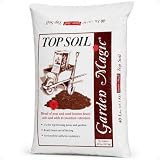
- Ready-to-Use for All Planting Needs: This general-purpose potting soil is ready to use out of the bag, perfect for both indoor and outdoor planting without any extra prep
- Optimal Moisture Retention and Drainage: Designed to let excess water drain effectively while retaining moisture, promoting healthy plant growth in the garden or lawn
- Top Soil Blend: Features a dark blend of reed sedge peat and sand, offering the best conditions for grass, vegetables, and plant root health in raised beds
- Perfect for All Gardeners: Developed for both new and experienced home gardeners, this soil mix enhances plant growth in a variety of environments and garden projects
- Improves Soil Quality: Ideal for loosening heavy clay soil and enhancing moisture in light soil, making it perfect as a top dressing to fill holes in lawns and garden beds
Consider a modest extra allowance when the ground is uneven, the material will settle or compact, or some spillage is unavoidable. Do not automatically add a large percentage. Over-ordering leaves you with extra soil to spread, store, or dispose of, and a supplier’s “yard” may be sold only in specific increments.
How much does a yard of dirt cost in 2026?
There is no dependable national price. The cost depends on whether you are buying fill dirt, screened topsoil, garden soil, compost, or a blend; where you live; the season; order size; screening and organic content; and the delivery distance.
The published 2026 examples reviewed for this article show a broad material-only range of approximately $35 to $90 per cubic yard:
Quick wins for a faster PC:
Repair Windows errors before they cause bigger problemsFix Now →Scan for outdated or missing drivers - takes under a minuteDriver Scan →Clear out junk files and repair common Windows errorsFree Scan →- One 2026 bulk supplier price list lists landscaper-blend topsoil at $90 per cubic yard. It specifies a one-yard minimum and a four-yard maximum per delivery, with separate delivery examples of $50, $65, and $70 depending on destination.
- Another supplier’s May 6, 2026 retail list shows bulk topsoil at $36.75 per cubic yard.
- A Home Depot listing for locally delivered bulk topsoil shows a 9-cubic-yard option at $698.97, equivalent to approximately $77.66 per cubic yard. The listing notes that the product is locally sourced and that texture, color, and particle size vary by state.
These are supplier-specific examples, not a guaranteed national average. Your local quote may be lower or higher, particularly after delivery, taxes, minimum charges, and placement limitations are added.
Material price versus delivered price
Ask for the complete project total rather than comparing only the advertised price per yard. A quote may separate:
- Material cost per cubic yard
- Delivery or trucking charge
- Minimum-order fee
- Sales tax
- Special-access or placement charges
For example, three yards at $36.75 per yard would cost $110.25 for material before delivery and tax. Three yards at $90 per yard plus a $50 delivery charge would total $320 before tax. The lower material price is not automatically the lower delivered price.
Also confirm what “delivery” means. Many trucks dump at an accessible driveway, curb, or other location; they do not necessarily carry the material to the backyard, spread it, or move it through a gate. A large truck can also damage pavement, irrigation lines, septic components, lawns, or soft ground if access is not planned.
The Tool Desk
Outbyte Driver Updater FREEScan for outdated or missing drivers - takes under a minuteDriver Scan →Outbyte PC Repair FREERepair Windows errors before they cause bigger problemsFix Now →Bulk soil versus bags
Bulk delivery is usually more practical once a project requires multiple cubic yards. Bags can be better for a small repair, containers, a narrow backyard, or a site that a delivery truck cannot reach.
To convert cubic yards to bags, multiply the number of yards by 27 cubic feet and divide by the bag’s stated volume:
Rank #3

- FEEDS UP TO 6 MONTHS: Miracle-Gro Potting Mix is a gardening soil for outdoor containers that feeds all types of potted plants, including flowers, vegetables, shrubs, annuals, and perennials for up to 6 months
- PROMOTES GROWTH: This potting soil for outdoor plants Grows Plants Twice As Big! (vs. unfed plants)
- WHERE TO USE: Use this home gardening product with all types of outdoor container plants, including annual and perennial flowers, vegetables, herbs and shrubs
- HOW TO USE: To use this plant soil for potting, fill a container about 1/3 full with potting mix, place your plant in the soil, and fill the rest of the pot, pressing lightly
- COVERAGE: This bundle includes two 16 qt. bags of Miracle-Gro Potting Mix, an outdoor potting soil; each bag fills one 12-inch container (amounts may vary depending on the size of the root ball)
Number of bags = cubic yards × 27 ÷ bag size in cubic feet
| Bag size | Approximate bags per cubic yard |
|---|---|
| 2 cubic feet | 14 bags |
| 1.25 cubic feet | 22 bags |
| 1 cubic foot | 27 bags |
| 0.75 cubic feet | 36 bags |
Round up because bags are sold as whole units. Labels may state coverage rather than volume, and products can settle after installation, so check the actual bag size and coverage instructions before comparing prices.
One 2026 supplier list prices 40-pound bagged topsoil at $3.70 per bag when buying three or more bags and states coverage of 3 square feet at 2 inches. At that stated coverage, covering 162 square feet at 2 inches would require roughly 54 bags. That comparison is illustrative: the supplier’s coverage convention and the bulk product’s measured volume should be verified before treating the prices as directly equivalent.
For readers who need only a small quantity, garden soil or a soil amendment from a local retailer can be more manageable than arranging a bulk delivery. For several cubic yards, compare the delivered bulk quote with the total cost and handling time of dozens of bags.
“Dirt,” fill dirt, topsoil, garden soil, and compost are different
“Dirt” is a casual term, not a reliable product specification. Tell the supplier what the material will do.
Fill dirt or subsoil
Fill dirt is commonly used to raise low areas, build rough grades, form berms, backfill, or fill below a finished surface. It may contain more clay, sand, stones, or other coarse material and generally has less organic matter than planting soil.
It can be the economical choice beneath a lawn or landscape layer, but it is not automatically suitable as the final growing medium.
Topsoil
Topsoil may refer to naturally collected surface soil or a commercial material marketed for lawns and landscape planting. The name alone does not guarantee good texture, fertility, drainage, or freedom from weeds and contaminants.
Rank #4

- Includes 10lb block of Back to the Roots compressed Coconut Coir that expands to 51qt of potting soil. A balanced pH, which means it’s truly all-purpose. Use alone or as an amendment for anything in a pot or in the ground — vegetables, flowers, herbs, and even starting seeds.
- Expands to over 2 cubic feet
- Peat Free OMRI Listed, assuring organic production, handling, and processing
- 100% SATISFACTION GUARANTEE: If you are not satisfied or have any issues with this Organic Coconut Coir, just shoot us a note and our dedicacted customer support team will make sure we get you growing or send you a refund/replacement.
- GROWONEGIVEONE — Share a photo of your growing garden and we’ll donate a Grow Kit and STEM elementary school curriculum to a classroom of your choice.
Before ordering a large quantity, ask about texture, organic matter, salts, pH, nutrient levels, coarse fragments, weeds, and possible herbicide residues. A dark color is not proof of quality, and some products sold as topsoil may be closer to subsoil.
Garden soil or raised-bed mix
Garden soil and raised-bed mixes are planting-oriented products, often combining topsoil with compost or another organic ingredient. They are generally more appropriate than fill dirt for vegetable beds, flower beds, and ornamental planting areas, provided the ingredients are good quality and appropriate for the site.
Free tools Windows power users keep installed
One-click scans. No signup required.
Compost
Compost is an organic amendment. It can improve soil structure and add organic matter, but it is not automatically a replacement for the mineral soil volume needed to fill a bed. Using pure compost for deep fills can produce an unsuitable growing medium and may lead to excessive settling or moisture-related problems.
Independent reader supportYour contribution helps us test, update, and keep practical guides available for everyone.Which material should you buy?
For lawn leveling or a new lawn
Use screened topsoil or a lawn-oriented soil product for shallow depressions or lawn establishment. Avoid assuming that any dark, loose material is suitable. Existing soil texture, compaction, drainage, and nutrient conditions may require a soil test or a different amendment strategy.
A thin layer of imported soil may not solve a compacted or poorly drained site. If the new layer forms a sharp boundary with the native soil, water movement and root growth can be restricted.
For grading, berms, and low areas
Ask for fill dirt or another suitable fill material when the main purpose is to build elevation or establish rough grade. If plants or grass will grow above it, plan for an appropriate top layer rather than using expensive garden soil throughout the entire fill.
What’s actually slowing this PC down?
Pick the symptom - the matching free tool is one click away.
For flower beds and shrubs
A screened topsoil or landscape blend may work, but evaluate the existing soil first. Simply spreading a thin layer over compacted ground can leave the underlying drainage and rooting problem unchanged. Loosening or improving the existing soil may be more effective than importing a shallow layer.
For vegetables or raised beds
Use a specified raised-bed blend, or begin with quality soil and compost. A useful starting ratio is approximately 70% soil and 30% compost, provided both materials are reputable and well suited to the crop and climate. Adjust the blend when drainage, existing soil, or the ingredients’ quality calls for it.
Best Value

- OUTDOOR POTTING SOIL: Miracle-Gro Organic Outdoor Potting Mix contains a quick-release natural plant fertilizer and also feeds plants for up to 2 months
- PEAT MOSS: This organic potting soil mix is made with responsibly sourced peat (one hundred percent of peat sourced from certified producers)
- OUTDOOR CONTAINER USE: Use this organic potting mix with all types of outdoor container plants, including flowers, vegetables, herbs, annuals, and perennials
- HOW TO USE: To plant in pots, fill the container partially full with this potting soil for outdoor plants, place the plant in the pot after loosening the root ball, cover with more mix and water thoroughly
- COVERAGE: Each 16 qt. bag of Miracle-Gro Organic Outdoor Potting Mix fills one 12-inch pot with garden soil for containers (amounts may vary based on the size of the root ball)
Questions to ask before ordering
- What exactly is the product? Confirm whether it is fill dirt, screened topsoil, garden soil, compost, or a blend.
- What is the complete price? Ask for material, delivery, taxes, minimum-order charges, and any placement fees.
- How much material can the truck carry? Some suppliers set minimums or maximums by delivery.
- How will the quantity be measured? Ask whether the quoted yard is loose volume as delivered or an estimate of compacted/finished volume.
- Is the material screened? Find out what rock size, roots, debris, or coarse fragments may remain.
- Can you provide specifications or test information? Ask about texture, pH, salts, organic matter, nutrients, and potential contaminants when relevant.
- Where will the truck dump? Confirm driveway access, overhead clearance, gates, turning space, and whether placement is curbside only.
- What site features need protection? Identify irrigation, septic systems, pavement, lawns, drainage structures, and underground utilities.
Sample budgets
These examples use the cited 2026 supplier prices and are not universal quotes:
| Order | Illustrative calculation | Subtotal before tax |
|---|---|---|
| 1 cubic yard at $36.75 | 1 × $36.75 | $36.75, before delivery |
| 1 cubic yard at $90 plus $50 delivery | $90 + $50 | $140 |
| 3 cubic yards at $36.75 | 3 × $36.75 | $110.25, before delivery |
| 3 cubic yards at $90 plus $50 delivery | 3 × $90 + $50 | $320 |
| 9-cubic-yard delivered listing | $698.97 total ÷ 9 | $698.97 total, or $77.66 per yard |
The comparison demonstrates why the right number to compare is the delivered project total, not just the material-only price.
Frequently Asked Questions
How many square feet does a yard of dirt cover?
One cubic yard covers about 324 square feet at 1 inch deep, 162 square feet at 2 inches, or 108 square feet at 3 inches. At 6 inches, it covers about 54 square feet.
How many bags of soil are in a cubic yard?
Approximately 14 two-cubic-foot bags, 22 1.25-cubic-foot bags, 27 one-cubic-foot bags, or 36 0.75-cubic-foot bags. Round up to whole bags.
Is fill dirt the same as topsoil?
No. Fill dirt is generally used for grading, backfill, and building up low areas, while topsoil is intended for the upper planting or lawn layer. Fill dirt may contain more clay, stones, or coarse material and less organic matter.
Should I buy bulk dirt or bags?
Bulk is usually more practical for multiple cubic yards, while bags can make sense for containers, small repairs, narrow access, or a location where a truck cannot dump. Compare the complete delivered cost and the labor required.
Crashes, No Sound, or Screen Glitches?
Random freezes, missing sound and display glitches usually trace back to one bad driver. Find and replace yours safely.Free scan · under a minutePC Slower Than It Used to Be?
A free scan shows the junk files, broken settings and background clutter dragging Windows down - then fixes them in one click.Free scan · Windows 10 & 11How much does a cubic yard of dirt weigh?
There is no dependable single weight. Moisture, texture, organic content, and compaction can change the weight substantially, so ask the supplier about truck capacity and material-specific weight if load limits matter.
The Bottom Line
Plan on 27 cubic feet per cubic yard, calculate your required volume from the area and depth, and round up only as much as the project and supplier increments require. For 2026 planning, the cited material-only examples range from about $35 to $90 per cubic yard, while delivery and minimum charges can change the final price significantly. Most importantly, order the right material—fill dirt for structural fill, suitable topsoil for lawns and planting, and a quality soil-and-compost blend for raised beds.
Quick Recap
Product prices and availability are accurate as of the date/time indicated and are subject to change. Any price and availability information displayed on Amazon at the time of purchase will apply.