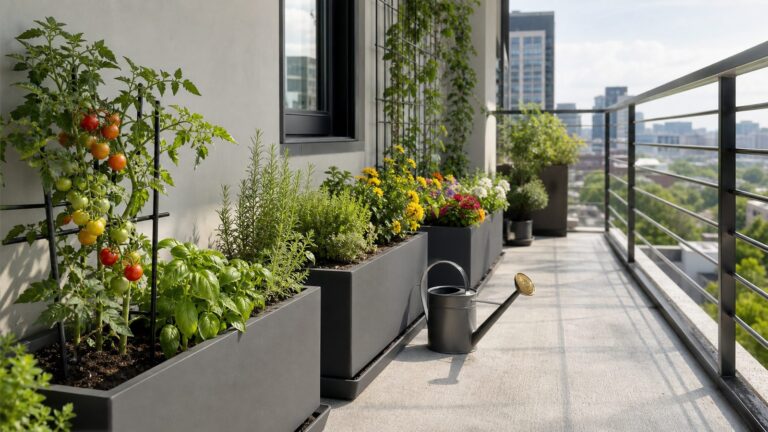
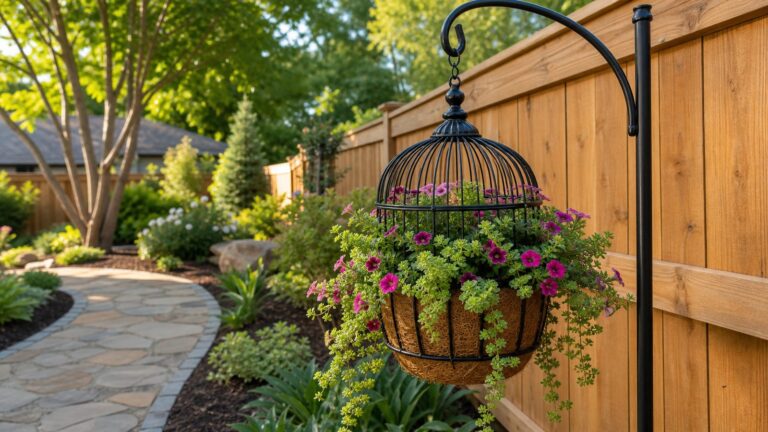
Choose plants for a shaded courtyard by matching them to both its light and its soil moisture. A spot under a tree may be dry from root competition, while a shady bed beside a building may receive little rain; a sheltered area can also stay moist. Observe the conditions before selecting plants, then check mature size and local hardiness.
1. Map the courtyard’s light
Shade is not one uniform condition. A courtyard may have bright open shade, periods of direct sun, or dense shade cast by walls, fences, or trees. Observe where and when direct sunlight reaches the planting area over the day. Midday sun is strongest, and the pattern can shift with the seasons and nearby structures. The Royal Horticultural Society’s shade gardening guidance notes that few plants thrive in very dense shade, particularly when the soil is also dry and poor.
As an Amazon Associate I earn from qualifying purchases.
Separate light from moisture when assessing a spot: two areas that look equally shady may need different plants because one stays damp and the other dries quickly.
Free tools Windows power users keep installed
One-click scans. No signup required.
2. Find out whether the soil is dry or moist
Before choosing plants, check the soil in the places you intend to plant. Tree and shrub roots compete for water, so soil beneath them is often dry. A wall or building can also block rainfall and create a rain shadow. Other shaded areas may retain moisture, especially where drainage is slow. The RHS explains these dry-shade conditions in its guidance on dry shade.
#1 Best Overall
- 6 Fresh, Healthy Bare Root Starts
- 100% Grow Guarantee
- Blooms Summer Through Fall
- Perennializing Hostas
- Low Maintenance & Grows To About 18" Diameter
- Dry shade: choose plants that tolerate limited moisture once established, and plan to water them while they settle in.
- Moist shade: select plants suited to consistently moist conditions, while making sure the soil is not waterlogged.
- Uncertain conditions: check the soil more than once, including after rain and during a dry spell. A single observation may not reflect how the bed behaves through the season.
3. Shortlist plants for the conditions
For dry shade
The RHS’s dry-shade planting suggestions include Dryopteris erythrosora ‘Brilliance’, Epimedium × versicolor ‘Sulphureum’ and Heuchera ‘Lipstick’. These are examples to investigate for dry, shaded beds—not a guarantee that they will suit every courtyard or climate. The RHS notes that waxy leaf surfaces can help reduce moisture loss. See its dry-shade planting combination for context.
For light-shade summer containers
For seasonal pots in light shade, the RHS lists options including begonia, Impatiens walleriana, coleus, torenia, monkey flower (Mimulus Magic Series), creeping Jenny (Lysimachia nummularia ‘Aurea’) and variegated ground ivy (Glechoma hederacea ‘Variegata’). This list is specifically for light-shade summer containers. Most summer bedding plants prefer sun, so do not assume that any bedding plant will perform well in shade. Consult the RHS summer container planting ideas when choosing.
Rank #2

- ELEGANT GARDEN AESTHETIC: These perennial seeds produce graceful, arching stems adorned with delicate, pendulous white bell-shaped flowers that add a touch of sophisticated charm to shaded landscapes or woodland garden settings
- THRIVES IN SHADY AREAS: Specially selected for low-light environments, this variety excels in partial to full shade locations where other flowers struggle, making it an ideal choice for planting under trees or near walls
- LONG-LASTING PERENNIAL: Once established, these hardy plants return year after year, developing into lush clumps of deep green foliage that maintains its structural beauty throughout the growing season until the first frost
- VERSATILE LANDSCAPE USE: Perfect for creating naturalized borders, decorative ground covers, or accent pieces in cool, moist spots, providing unique vertical texture and architectural interest to your outdoor spaces
- PREMIUM SEED SELECTION: This package contains 18 high-quality Solomon’s Seal seeds, carefully sorted to ensure you receive consistent specimens for starting your own collection of these classic and enchanting perennials
For deep shade
Ferns appear among the RHS’s shade-plant suggestions, but their mature size, spread and growth habit vary by species. Check the dimensions of the specific fern rather than relying on a general estimate for all ferns. The RHS offers a broader guide to annuals, bulbs and perennials for shade.
Quick wins for a faster PC:
Fix the driver behind crashes, sound loss and screen glitchesFind Drivers →Clear out junk files and repair common Windows errorsFree Scan →Scan for outdated or missing drivers - takes under a minuteDriver Scan →4. Choose beds or containers based on available soil
Use an in-ground bed where there is adequate soil volume and the conditions suit your chosen plants. Containers can make a paved or soil-limited courtyard plantable, but they add maintenance and change how quickly roots are exposed to drying, cold and excess water.
Rank #3

- No Stratification Needed: Forget me not seeds for planting germinate in 10–21 days at 65–72°F; direct sow heirloom seeds just below the surface and keep soil consistently moist for reliable sprouting.
- True Blue Blooms: Forget me not flowers garden seeds bring classic blue perennial flowers from late spring to early summer; these wildflower seeds are hardy in USDA zones 1–12. Flower Seeds to Plant Outside - thrive in part sun to shade for garden borders.
- Compact Border Plant: Forget me nots grow upright and clumping to 16 inches blue flowers; thin or transplant to 6–12 inch spacing for low ground cover and mass plantings in beds.
- Easy Seed Saving: Forget me not seed packets form papery pods that turn brown; gently shake to collect ripe black seed before it drops. Store cool & dry for heirloom seed garden.
- Cut-Flower Ready: Harvest stems as blooms just open; strip foliage below waterline and place in water at once. These bulk Forget Me Not Seeds are easy to sow & grow.
- Choose pots with drainage holes so water can escape. Poor drainage can leave roots waterlogged, particularly in winter.
- Allow for regular watering in spring and summer. Larger containers generally dry more slowly than small ones; shallow pots dry quickly.
- Remember that container plants are more exposed to cold than plants in the ground.
- When selecting pot size, account for the plant’s eventual dimensions and the space available in the courtyard.
The RHS covers container size, drainage and seasonal care in its container-growing guide. Oregon State University Extension advises watering when the top 1–2 inches of potting soil are dry, watering thoroughly, and emptying saucers so roots do not sit in excess water. Treat that as a useful check, not a substitute for monitoring the plant and local weather; see its container gardening basics.
5. Compare the final candidates
There is no universal best plant list for shaded courtyards. Once you have matched light and moisture, compare the specific plants you are considering against the space and the care you can provide.
Rank #4

- RICHLY COLORED FOLIAGE: Crimson Sky caladium grows decorative red leaves with pink and green accents for warm season color. Use the six dormant tubers to add a focused splash of foliage to a shaded garden bed or outdoor planter. This plant is grown chiefly for its leaves, not for a spring flower display.
- SIX TUBERS TO ARRANGE: Group the tubers in one appropriately sized container or divide them among a few smaller garden areas. In a bed, allow approximately 8–12 inches between tubers so emerging plants have room to develop. Six bulbs make a believable planting for a real home garden.
- PLANT WHEN THE SOIL WARMS: Wait until frost has passed and garden soil is warm before planting outdoors. Place each tuber with its knobby side facing up, about 2 inches deep. Cool soil can slow growth and increase the chance of rot, so this is a warm season planting project.
- FILTERED LIGHT AND MOIST SOIL: Choose a position with partial shade or bright filtered light and soil that drains well. Keep the soil evenly moist during active growth without leaving the tubers waterlogged. If growing in a patio pot, use a container with drainage holes.
- PLAN FOR WINTER IN YOUR CLIMATE: Caladiums are tender perennials. Gardeners in colder regions can lift and store tubers before frost, or enjoy them as seasonal foliage plants. The pack contains six dormant planting tubers; it does not include established plants, a container, or decorative accessories.
- Light tolerance: does the plant suit light shade or dense shade?
- Moisture needs: does it suit dry shade or moist soil?
- Mature size: will its height and spread fit the bed or container without crowding paths?
- Seasonal interest: do you want evergreen structure, foliage colour, flowers, or a mix across the year?
- Planting format: is the plant suited to an in-ground bed, a pot, or both?
- Local suitability: check hardiness and availability for your region before buying. RHS and Oregon State guidance does not establish that every listed species or cultivar suits every climate.
6. Plan establishment and ongoing care
Water new plants while they establish, including plants selected for dry shade. For containers, check soil moisture regularly rather than waiting for leaves to wilt. Adjust watering to the plant, pot size, drainage and weather, and prevent pots from sitting in standing water. These checks are particularly important in a small courtyard, where nearby walls, paving and roofs can produce conditions that differ sharply from the surrounding garden.
What’s actually slowing this PC down?
Pick the symptom - the matching free tool is one click away.
Quick Recap
Best Value

- Perfect for Shade Gardens: Hosta seeds thrive in shaded environments, offering stunning ornamental foliage that adds texture and color to low-light garden spaces such as under trees or shaded borders
- Low Maintenance & Hardy: Once established, Hosta plants are drought-tolerant and grow well in a variety of soils. They require little care, making them a hassle-free addition to your garden
- Versatile Planting: Ideal for containers, flower beds, or as ground cover, these perennial plants are perfect for enhancing both small and large gardens, bringing beauty and utility to any space
- Attract Pollinators: As they bloom, Hosta flowers draw in butterflies and bees, helping to enrich your garden's ecosystem while adding vibrant colors
- Yearly Returns: These perennial plants come back year after year, continuing to grow and thrive with minimal upkeep, ensuring long-term beauty for your garden
Product prices and availability are accurate as of the date/time indicated and are subject to change. Any price and availability information displayed on Amazon at the time of purchase will apply.