Choose an office plant by measuring the light where it will sit, then match its size and care needs to the people and conditions around it. A plant described as low-light tolerant still needs light; a windowless office may need a suitable grow light or a non-living alternative. Before buying, check for nearby heating or air-conditioning outlets, agree who will care for it, and verify any ingestion cautions if pets or children can reach it.
Start with the exact spot, not the room
A bright-looking office can still be dim where a plant sits. Human vision adapts to surrounding conditions, so two locations that look similarly bright may deliver very different light to a plant. UF/IFAS Gardening Solutions notes that terms such as “low light” and “bright indirect light” are vague; it identifies a digital light meter as the most accurate way to assess intensity and says a phone app can help estimate it.
As an Amazon Associate I earn from qualifying purchases.
Assess light at the plant’s intended location during the office’s normal working conditions. Note how far the spot is from a window and whether blinds, neighboring buildings, partitions, or other obstructions block daylight. If you use a meter or app, take the reading where leaves will be, rather than beside the window or at eye level across the room. A reading describes that location and moment; it does not guarantee that every cultivar will grow well there.
Quick wins for a faster PC:
Clear out junk files and repair common Windows errorsFree Scan →Scan for outdated or missing drivers - takes under a minuteDriver Scan →Repair Windows errors before they cause bigger problemsFix Now →The University of Maryland Extension’s indoor-plant lighting chart describes low light as 25–100 footcandles. It lists ZZ plant, snake plant, cast-iron plant, peace lily, and resurrection plant as examples in that category. Its medium-bright examples include Chinese evergreen, rubber plant, dracaena, African violet, and Norfolk Island pine. Treat the categories as a starting point for matching plants, not as a promise that all listed plants will thrive in every office or cultivar.
#1 Best Overall

- Valued Carpenter Pencil Set: You will get 2 pcs solid carpenter pencils with 26 piece 2.8 mm refills, 1 replaceable sharpener, 1 plastic storage box.The complete carpenter pencils combination allows you to finish your work faster and more easily
- Deep Hole Marker Pencil: The deep-hole construction pencils adopts 45mm elongated tip design, which is more convenient to mark in the small hole or in other tight areas that other carpenter markers cannot reach
- Carpenter Pencils with Sharpener: The sharpener is screwed into the top of the work pencil, which won't get lost either. Built-in pencil sharpener that keep the lead with pointed and smooth to Improves line of sight in fine work
- Stronger Solid Lead: This work pencil is matched with a 2.8 mm thick lead , which is much thicker and stronger during the drawing process of construction work, it will not break or damage easily
- Marks on Various Surfaces: 3 colors solid construction pencil can marks on various surfaces,such as metal, plastic, wood, paper etc. Ideals for woodworkers, contractors, craftsmen, builders, merchants and masons
Check for changes through the day
Observe the spot at different times during the working day. A window may provide useful light for only part of the day, and blinds or a neighboring building can change what reaches the plant. Also consider whether the plant will be moved after installation: the light assessment only applies to the location you checked.
Think about the normal office schedule as well as the physical layout. A plant near a window may receive daylight only during part of the day, while a plant set deeper inside may depend more heavily on artificial lighting. If blinds are usually closed or the office is unoccupied for long stretches, assess the location under that ordinary routine rather than an unusually bright day. Recheck if furniture, partitions, or the plant’s position changes.
A light meter can make the comparison between possible locations more concrete. Use it to compare the desk, a nearby shelf, and a floor spot instead of treating the entire room as having one light level. A phone application can provide an estimate when a meter is not available, but UF/IFAS identifies a digital light meter as the best option for accurate intensity readings. Neither a reading nor a plant label removes the need to observe how the particular plant responds over time.
Match the plant to the light you actually have
For lower-light locations, the clearest-supported options in the extension guidance are ZZ plant (Zamioculcas zamiifolia), snake plant (Dracaena trifasciata), and cast-iron plant (Aspidistra elatior). The Royal Horticultural Society (RHS) also identifies Chinese evergreen, snake plant, and ZZ plant in its low-light section. “Low-light” here means more tolerant of lower light than many houseplants, not capable of growing without light.
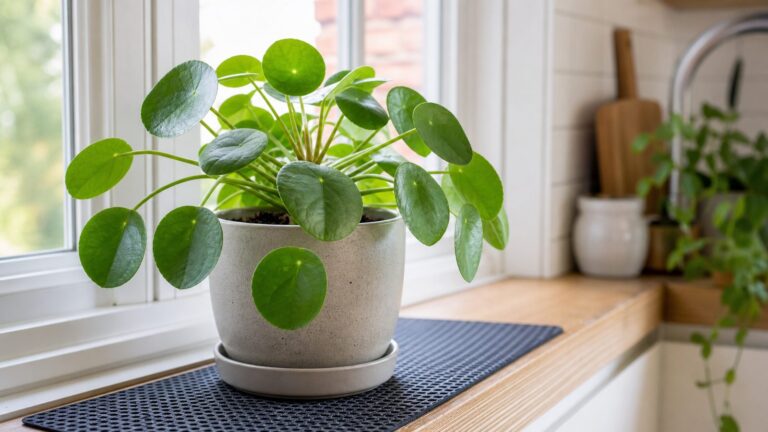
For a small desk, RHS highlights compact peperomia and philodendron varieties. Those are possible space-saving choices, not a blanket claim that every variety suits deep shade. For a larger room, it identifies Monstera deliciosa, cast-iron plant, and areca palm as statement-plant options. Check both the plant’s light fit and the room it will occupy before choosing a large specimen.
Use the comparison below to narrow the list. The source guidance does not establish universal watering intervals, exact mature sizes, or a universal ranking; those depend on the plant and the office conditions.
| Candidate or group | Light fit supported by the guidance | Likely placement to consider | Key decision or caution |
|---|---|---|---|
| ZZ plant | Listed among Maryland Extension’s low-light examples; also in the RHS low-light section | Desk or floor, depending on the specimen and available room | UF/IFAS Osceola County labels it toxic to ingest; check access by pets or children. |
| Snake plant | Listed among Maryland Extension’s low-light examples; also in the RHS low-light section | Desk or floor, according to the space available | UF/IFAS Osceola County labels it toxic to ingest; check access by pets or children. |
| Cast-iron plant | Listed among Maryland Extension’s low-light examples | Floor or other suitable larger spot | Also named by RHS as a possible statement plant; confirm the available space and light. |
| Chinese evergreen | Maryland Extension’s medium-bright examples; also in the RHS low-light section | Choose a location based on its measured light and the selected plant | These source classifications are general guidance, not a guarantee for every variety. |
| Compact peperomia or philodendron varieties | RHS identifies them as compact desk-plant ideas; no blanket deep-shade tolerance is established | Desk | Check the chosen variety’s light needs rather than relying on the group name. |
| Monstera deliciosa or areca palm | RHS identifies them as possible statement plants; a specific light category is not stated | Larger room or floor placement | Confirm room, light, and final placement before purchasing a large plant. |
| Spider plant or prayer plant | Light category not stated in UF/IFAS Osceola County’s office list | Choose based on the selected plant and actual conditions | That UF/IFAS list calls them non-toxic; check the exact plant and exposure circumstances. |
Compare candidates on more than a “low-light” label. First look for a fit with the measured or observed light. Then consider whether the available position is a desk, floor, or hanging location; whether the plant’s eventual footprint is workable; and whether someone can reliably check its moisture. Add practical constraints such as vent exposure, access by pets or children, and whether supplemental light may be needed. Without knowing those conditions, there is no meaningful universal “best office plant.”
The Tool Desk
Outbyte PC Repair FREEClear out junk files and repair common Windows errorsFree Scan →Outbyte Driver Updater FREEFix the driver behind crashes, sound loss and screen glitchesFind Drivers →Rank #2

- Ergonomically Designed: Work in tight areas with a compact design that gets into tough spots
- Compact and Lightweight: Both tools are designed to fit into difficult to reach spaces. The 1/4" impact driver has a length of 5.55 in. and weighs just 2.8 lbs, while the 1/2" drill/driver measures only 7.5 in. and weighs 3.6 lbs
- Both the DEWALT impact driver and electric drill driver feature integrated LED work lights with a convenient 20-second delay, ensuring enhanced visibility in dimly lit or challenging work areas
- One-Handed Loading - Keep one hand free with a 1/4 in. hex chuck that accepts 1 in. bit tips
- Power drill cordless with 1/2" single sleeve ratcheting chuck provides tight bit gripping strength, making bit changes faster and more secure
The light categories are not interchangeable across every source or variety. Chinese evergreen, for example, appears among Maryland Extension’s medium-bright examples and in the RHS low-light section. That is a reason to assess the actual spot and identify the selected plant, not to assume a plant in that group will be content in any dim corner. Compact peperomia or philodendron likewise describe desk-friendly options, not a promise of deep-shade tolerance.
UF/IFAS Osceola County’s labels concern ingestion cautions in its office-plant list, not an exhaustive assessment of every cultivar or exposure. If a pet or child can chew a plant, verify the exact plant before bringing it into the office rather than assuming that a familiar common name settles the question. A plant considered suitable for a shared office should work for the people and animals who can actually reach it, not just for its appearance or size.
Do not mistake low light for no light
Light supports photosynthesis and affects growth form, leaf color, leaf size, and flowering. Maryland Extension says insufficient light can result in leggy growth, fading leaf color, diminished flowering, and poor growth. A plant surviving for a while in a dim spot is not proof that the light is sufficient for healthy continued growth.
For an office with no nearby windows, assess the light that reaches the plant under the usual lighting schedule instead of assuming overhead fluorescent or other office lighting is enough. If it is inadequate, consider a suitable plant grow light or choose a non-living alternative. Artificial lighting can supplement natural light, but intensity, distance from the plant, and spectrum matter. No particular lamp or fixture is established as suitable for every office or plant here.
Do these 3 things before closing this tab:
1Repair Windows errors before they cause bigger problems2Scan for outdated or missing drivers - takes under a minute3Clear out junk files and repair common Windows errorsMaryland Extension recommends no more than 16 total hours of light each day, especially when natural and artificial light are combined, and notes that most plants need a period of darkness. Count the full lighting period rather than adding a grow light without considering the hours the plant already receives daylight or office lighting. Follow the chosen plant’s care guidance and position any supplemental lamp with its distance and coverage in mind.
When evaluating a windowless space, separate two questions: how much light does the plant actually receive, and can the office provide more if needed? If the ordinary overhead schedule leaves the location too dim, a grow light may be an option, but it needs to be chosen and positioned with light intensity, distance, spectrum, and duration in mind. The guidance does not establish that any generic desk lamp will work. If adding and managing suitable supplemental light is impractical, a non-living alternative is more realistic than expecting a low-light-tolerant plant to grow with no light.
More light is not simply a matter of leaving a lamp on indefinitely. Include daylight and artificial lighting when counting the total light period, and retain a dark period because most plants need one. Maryland Extension’s recommendation is no more than 16 total light hours each day, particularly when combining natural and supplemental light. Follow plant-specific guidance when available rather than applying one lighting setup to every species.
Rank #3

- 【Great Compatibility】This Katerk 1/4 inch hex shank bit holder is specifically designed for 1/4 inch hex shank drill bits. It's compatible with most 1/4 fast hex handles, hex sockets, various electric screwdrivers, and handheld screwdrivers. The bit holder makes it a valuable addition for any handyman.
- 【Secure and Safe】Built with a secure backup nut design, each drill bit holder securely locks onto your bits, ensuring they stay firmly in place. Additionally, our bit holder incorporates a high-quality steel ball rolling design that holds up to several kilograms of weight, ensuring your various drill bits don't fall off.
- 【Easy One-Handed Operation】The bit holder for impact driver allows you to change bits single-handedly, simplifying your workflow. Its multi-color design further allows for quick identification of the drill bit you need.
- 【Compact and Convenient】Thanks to its compact size, this 1/4 inch bit holder is easy to carry around. The bit holder allows for easy attachment to various tools, making this a convenient addition to your construction accessories. The Katerk bit holder is cast from high-quality alloy material, promising a long product lifespan. Despite its rugged strength, the bit holder remains lightweight, making it portable.
- 【Cool Christmas Gift For Men Stocking Stuffers】 This screwdriver bit holder, driver bit holder, impact bit holder, can be given as a gift to your loved one, especially for anyone involved in construction or electrical work. It's a must-have for stocking stuffers for men and women, tools gifts for dad, tech gadgets for men, gifts for dad, gifts for him, gifts for husband, gifts for boyfriend, cool gadgets for men, and cool gifts for dad.
Choose a watering routine the office can sustain
Do not assign watering by a rigid “once a week” rule. UF/IFAS Gardening Solutions explains that water needs vary with light, temperature, and plant size; a fixed schedule can lead to overwatering or underwatering. It recommends touching the topsoil every couple of days to check moisture. Some plants need the soil to dry periodically, while others decline when allowed to dry, so use the needs of the selected plant to interpret the check.
Recommended Free Tools
- Check the soil before watering. Touch the topsoil every couple of days, as UF/IFAS recommends, and note whether it is still moist or has dried.
- Apply the plant’s specific guidance. Do not treat a dry surface as a universal signal for every species; some plants need periodic drying and others do poorly when dry.
- Give one person responsibility. RHS warns that too many people may overwater, while a plant may be neglected when nobody owns its care. Agree who checks the soil and who waters before the plant arrives.
- Keep checking after changes. Since light, temperature, and plant size affect water needs, reassess rather than carrying over a routine blindly if the location or conditions change.
A self-watering container may help avoid overwatering, according to RHS, but it does not eliminate monitoring. UF/IFAS recommends using a drainage planter and indoor potting mix suited to the plant; specialized groups such as succulents, orchids, and ferns may need different media. A container or watering device cannot compensate for a plant being placed in unsuitable light or left without an accountable caretaker.
For a shared office, write down who owns each basic task rather than assuming that anyone nearby will do it. One person can check soil moisture and water only when the plant’s needs indicate it is time; that person can also coordinate turning and dust removal. This avoids the two opposite problems RHS describes: several well-meaning coworkers watering too often, or a plant being overlooked because no one thinks it is their responsibility.
Choose supplies around the plant rather than buying one generic setup for every species. A drainage planter and indoor potting mix are basic considerations, but the mix should suit the plant. UF/IFAS notes that specialized groups such as succulents, orchids, and ferns may need different media. A self-watering pot can be considered as a way to help avoid overwatering, not as a substitute for checking the plant. No universal care schedule or product choice fits every office plant.
Screen the office for placement problems
Heating and air-conditioning outlets can affect plant health quickly, RHS cautions. Check whether a candidate spot is exposed to a vent or heating outlet, including outlets that may be overlooked near desks or floor-level installations. If it is, choose another location rather than relying on a watering change to offset that exposure.
RHS also advises turning plants regularly for even growth and removing office dust at least every other week. Build these small tasks into the care arrangement so they do not depend on whoever happens to notice the plant. Avoid frequent relocations: RHS notes that plants may be moved around by office occupants, and the new spot may not have the same light or exposure conditions as the one assessed.
Shared spaces need an owner as much as they need a suitable plant. Decide who is responsible for moisture checks, watering when appropriate, occasional turning, and dust removal. If the plant is moved, have that person reassess the light and nearby vents rather than assuming the original placement remains suitable.
Rank #4

- Long Nib and Deep Hole Marker: Our mechanical carpenter pencil with 45mm nib is designed for easy marking of deep holes or narrow areas. These construction pencils are the great choice for woodworking tools, construction tools, carpenter tools, contractor tools, wood carpentry tools and architect tools
- Extra Refills in 2 Colors for Versatile Marking: The construction mechanical pencil comes with 12 extra 2.8mm refills, including 6 red and 6 black refills. The black refill is suitable for light surfaces, while the red wax is perfect for dark surfaces. Our carpenter mechanical pencil makes sure that you'll have an ample supply for extended use
- Built-in Sharpener: Our construction pencil comes with a built-in sharpener to ensure the mechanical pencil tip is always sharp and ready for use. Never buy an extra pencil sharpener again. A great tool for any woodworker pencil, contractor pencils. The refill can easily be extended or retracted with a simple click of the pencils mechanical, allowing you to work more efficiently and accurately
- Portable Clip Design: Our deep hole construction pencil features a portable clip design, easy to carry and attach to your pocket or tool box, so that you can keep the carpenter pencils mechanical close at hand, making it a convenient tool to have on the go. Great gifts choice for carpenters
- Stronger Pencil Lead: The black refills are made of lead, sturdy and smooth. The red refills are made of wax, clear and light. These marking pencils are much thicker and stronger than normal pencils during the marking process of construction work, suitable for various surfaces, such as glasses, metal, boards, floors, walls, furniture, etc. The written marks can be easily wiped with a wet paper towel when needed
Keep the physical environment in the selection process. A location may have adequate light but still be a poor choice if it sits beside a heating outlet or air-conditioning vent. RHS quotes Kali Hamerton-Stove, Managing Director of The Glasshouse, on office constraints: “The biggest challenge is lighting” says Kali. “Offices don’t always have great access to natural light. We need to have a variety of plants and solutions for different degrees of light. The next biggest challenge is heating and air conditioning. We have to be careful of placing plants in locations where there’s a vent or a heating outlet. It can affect the plant’s health quite quickly. Then there’s the people factor. Sometimes people aren’t always as aware of the plants around them as they should be, and the plants get moved around.” Her points make a practical checklist: assess light, avoid vents, and account for the people who share the space.
Dust and movement are easy to overlook because neither is solved by choosing a different species alone. RHS recommends removing office dust at least every other week and turning plants regularly for even growth. Assign those chores to the same identified caretaker or otherwise make ownership explicit. If someone moves the plant to make room, the old light reading no longer describes its new position; check light and vent exposure again.
What’s actually slowing this PC down?
Pick the symptom - the matching free tool is one click away.
Use a practical decision sequence
- Pick the permanent location. Identify a desk, floor, or other intended position and note its distance from windows, obstructions, and nearby heating or air-conditioning outlets.
- Assess the light there. Observe the normal daylight pattern; use a digital light meter for a more accurate intensity reading or a phone app for an estimate. Do not use how bright the room looks to your eyes as the only test.
- Choose a light-compatible candidate. Consider the lower-light examples or medium-bright examples above in light of the actual reading. For a windowless spot, determine whether the usual artificial light is adequate; otherwise plan for suitable supplemental lighting or a non-living option.
- Confirm the footprint. Decide whether the plant belongs on a desk or on the floor, and whether a compact variety or a larger statement plant suits the available room. Do not choose a large plant before confirming its final location.
- Check access and ingestion cautions. If pets or children can reach the plant, identify the exact species or variety and verify its cautions before purchase.
- Set up care before bringing it in. Identify one responsible person, determine how soil moisture will be checked, and obtain a suitable planter and plant-appropriate potting mix.
- Reassess when conditions change. If the plant is moved, lighting changes, or the office’s routine shifts, reconsider its placement and care instead of assuming the initial decision still fits.
If several candidate locations are available, compare them with the same questions instead of picking the brightest-looking corner by instinct. Which spot has the clearest light fit? Is it away from vents? Does the plant fit the desk or floor area? Can the assigned caretaker reach it to check the soil and remove dust? Could a pet or child reach it? Does the location rely on supplemental light that someone will need to manage? This makes the eventual choice easier to maintain, not merely easier to buy.
There is no need to choose the most ambitious plant for a shared workplace. A compact desk plant can be a better fit than a statement specimen if space is limited; a larger plant makes sense only when the room, light, and final placement support it. Likewise, selecting a lower-light candidate does not remove the need for light or basic care. The goal is a plant that fits the actual conditions and the care that people can reliably provide.
What office plants can—and cannot—promise
RHS reports claims such as a 15% rise in productivity and 1.6 fewer sick days per year, but the opened RHS page does not provide the original study details for those figures. It also cautions that small, isolated studies may not conclusively prove many claims. Those numbers should not be treated as a guaranteed result of adding plants to an office.
The useful, decision-ready case is more specific: choose a plant whose light and care needs match its actual location and the people who will maintain it. RHS’s account of office constraints highlights lighting, heating and air-conditioning, and the way plants can be moved by people. A suitable choice begins with those practical conditions, not an unsupported promise about productivity or health.
Outdated Drivers Are Slowing You Down
One free scan finds every outdated or missing driver and matches the right update for your exact hardware.Free scan · exact hardware matchWindows Errors? Fix Them Before They Spread
Repair common Windows errors and clear accumulated junk for a smoother, more stable PC - no reinstall needed.Free scan · no reinstallDo not let an attractive benefits claim substitute for checking the plant’s growing conditions. The RHS-reported figures are not a promise that a particular desk plant will change productivity or sick days, and the page cautions that small, isolated studies may not conclusively prove broad claims. A plant can be selected on the concrete grounds that matter to its survival: location-specific light, appropriate space, manageable moisture needs, protection from problematic vents, and clearly assigned care.
Best Value

- Milwaukee Ink all Fine Point Marker, Black, 4 Per Pack
- 4 per pack Features Clog Resistant Marker Tip Writes through Dusty, Wet and Oily Surfaces Durable Marker Tip for Writing on Concrete, OSB and Rough Surfaces
- Clog resistant tip writes on dusty, wet and oily surfaces and is optimized for rough surfaces such as OSB, cinderblock and concrete
- Hard hat clip- attaches for easy access
- Quick dry time with reduced smearing and marking
Sources for the plant and care guidance include the Royal Horticultural Society’s “Choosing and caring for office plants”; UF/IFAS Gardening Solutions’ “Indoor Gardens”; UF/IFAS Extension Osceola County’s “Great Plants for the Office,” posted and updated May 23, 2023; and University of Maryland Extension’s “Lighting for Indoor Plants,” updated March 10, 2023.
Frequently Asked Questions
What are the best plants for an office?
There is no universal best choice. Start with light at the intended spot, then compare available space, watering responsibility, vent exposure, ingestion cautions, and any need for supplemental light. ZZ plant, snake plant, and cast-iron plant are among the lower-light examples identified by extension guidance; compact peperomia and philodendron varieties are desk-plant ideas, while larger specimens such as Monstera deliciosa or areca palm need a suitable room and placement.
Can an indoor plant survive in an office with only fluorescent lights and no nearby windows?
Do not assume that overhead office lighting is sufficient. Assess the light reaching the plant under the normal office schedule. If it is inadequate, consider a suitable plant grow light or a non-living alternative. Supplemental lighting depends on intensity, distance, spectrum, and duration; Maryland Extension recommends no more than 16 total light hours per day and notes that most plants need a period of darkness.
Free tools Windows power users keep installed
One-click scans. No signup required.
How can I tell whether my office is low-light?
Human vision adapts, so a room that looks bright may still provide little light at the plant. Observe the spot during normal conditions and account for window distance, blinds, buildings, and partitions. A digital light meter gives the most accurate intensity reading according to UF/IFAS; a phone application can help estimate. Maryland Extension describes low light in its chart as 25–100 footcandles, but that is a guide rather than a guarantee for every plant or cultivar.
How often should office plants be watered?
Avoid a universal weekly schedule. UF/IFAS recommends touching the topsoil every couple of days to check moisture, then following the selected plant’s needs: some plants need the soil to dry periodically, while others decline when dry. Light, temperature, and plant size affect water needs, so reassess if conditions change.
Are office plants safe around pets or children?
Check the exact plant before bringing it into a space where pets or children can reach it. UF/IFAS Extension Osceola County labels pothos, snake plant, and ZZ plant toxic to ingest in its office-plant list, and calls spider plant and prayer plant non-toxic. Those labels are not an exhaustive assessment of every cultivar or exposure.
What office conditions can harm a plant besides low light?
Heating and air-conditioning outlets can affect plant health quickly, and plants may be moved by coworkers into locations with different light or vent exposure. RHS recommends turning plants regularly for even growth and removing office dust at least every other week. Assign someone to monitor these tasks instead of relying on informal shared care.
The Bottom Line
Choose for the exact office location, not for a generic “low-light” label: assess light, fit the plant to available space and safety needs, avoid heating and air-conditioning outlets, and assign one person to check soil moisture and handle routine care. If a windowless spot lacks enough light, consider suitable supplemental lighting or choose a non-living alternative.
Quick Recap
Product prices and availability are accurate as of the date/time indicated and are subject to change. Any price and availability information displayed on Amazon at the time of purchase will apply.