For most in-ground tomato plants, aim for about 1 inch of water per week from rainfall, irrigation, or both. Apply it as a slow, thorough soaking rather than sprinkling a little every day. In practice, the right schedule depends on soil, heat, plant size, mulch, rainfall, and whether the tomato is growing in the ground or in a container.
Moisture-retentive soil may need one deep watering per week during ordinary weather. Sandy soil may need watering about twice weekly, while containers often need water daily—or even more frequently—during hot weather. The reliable rule is not a particular day on the calendar: keep the root zone evenly moist without leaving it saturated.
As an Amazon Associate I earn from qualifying purchases.
The short answer: water deeply, then check the soil
Tomatoes need consistent access to moisture for strong growth and good fruit quality. As a general starting point, provide approximately 1 inch of rainfall or irrigation per week for tomatoes planted in the ground when there is no meaningful rainfall. Utah State University gives a broader production range of 1 to 2 inches per week.
Those figures are starting points, not universal prescriptions. A large plant in hot, windy weather can use substantially more water than a newly planted tomato in cool weather. Sandy soil drains faster than clay, mulch slows evaporation, and a container holds far less water than a garden bed.
#1 Best Overall

- Complete Drip Kit with Automatic Watering Timer: The Tomato Watering Kit is a complete drip irrigation kit that comes in a box with everything you need to install drip irrigation for ten tomato plants. With the addition of an automatic watering timer, this kit makes it even more convenient for gardeners to set up a garden watering system. The timer can be easily programmed to water your plants at specific times of the day, providing a hassle-free and hands-free solution for garden maintenance.
- Ideal for Tomato Plants and Other Vegetables: Although designed for tomato plants, this kit can be used for other vegetables such as peppers and eggplants as well. The Tomato Watering Kit provides a gentle, consistent water flow to plants, ensuring they receive the proper amount of moisture they need to thrive. By adding an automatic watering timer, you can ensure that your plants receive water at the right times of the day, even when you're away from home.
- Easy Installation Process: The Tomato Watering Kit is easy to install, and the entire process should take approximately an hour to complete. The kit includes clear instructions to guide you through the process, making it simple for gardeners of all experience levels to set up. You can attach the kit to a hose or hose faucet, and the automatic watering timer can be easily connected to the system, providing a seamless and efficient garden watering solution.
- Reusable and Cost-Effective Solution: The materials used in the Tomato Watering Kit are of high quality, making it a durable and long-lasting solution for your garden watering needs. You can reuse the kit season after season, which means you'll save money in the long run compared to manual watering methods. By using a drip irrigation system with an automatic watering timer, you'll also save water, making this an environmentally friendly choice for your garden.
- Includes Helpful Garden Tips: The Tomato Watering Kit comes with helpful garden tips to ensure that your plants thrive. These tips cover everything from soil preparation to plant spacing, helping you get the most out of your garden. By using this kit with an automatic watering timer, you'll be able to enjoy healthy, vibrant plants, and a beautiful garden throughout the season with minimal effort.
Instead of asking, “Is today watering day?” use this sequence:
- Check recent rainfall and the soil in the root zone.
- Water slowly at the base of the plant if the soil is beginning to dry.
- Continue long enough to wet the root zone thoroughly, not just the surface.
- Check the soil again after watering to confirm that moisture penetrated deeply.
Light, shallow watering encourages shallow roots and leaves plants more vulnerable to drought. Repeatedly allowing tomatoes to become very dry and then soaking them heavily can also contribute to fruit cracking and blossom-end rot.
How often to water tomatoes in different situations
| Growing situation | Practical starting schedule | What to watch for |
|---|---|---|
| Typical in-ground garden | One thorough watering per week when rainfall is absent | Adjust after checking soil moisture and recent rainfall |
| Moisture-retentive loam or clay | Often approximately weekly in ordinary weather | Do not water while the root zone remains wet; heavy soil can stay moist longer |
| Sandy or very well-drained soil | Often around twice per week | Water deeply enough to wet the root zone; surface dampness is not enough |
| Extreme heat | Daily or every other day may be necessary | Minnesota Extension identifies conditions above approximately 90°F during the day and 70°F at night as a situation requiring this type of adjustment |
| Container tomatoes | At least daily in hot summer weather; sometimes more often | Small pots, wind, porous containers, and large fruiting plants dry fastest |
| Newly transplanted tomatoes | Water thoroughly at planting and during establishment | Once roots are established, move toward deeper, less frequent irrigation |
| Cool or rainy weather | Water less often or not at all when rainfall has kept the soil moist | Check the root zone instead of following a fixed schedule |
These frequencies describe common starting points. Your soil and weather determine whether the next watering should happen tomorrow, in several days, or next week.
What does “1 inch of water per week” mean?
One inch refers to the depth of water spread across the planted area. It does not mean filling a 1-inch cup beside every tomato stem.
You can measure rainfall with a rain gauge or measure irrigation by placing a straight-sided container beneath a sprinkler or other delivery system. After watering, verify the result in the soil rather than relying on the measurement alone.
The same inch of water does not penetrate every soil type to the same depth. Minnesota Extension notes that 1 inch may wet sandy soil to roughly 10 inches but heavy clay to roughly 6 inches. Drainage, compaction, organic matter, slope, and the shape of the root zone also affect how far water travels.
The trowel test
- Wait until the water has had time to move through the soil. Oregon State recommends checking approximately 24 hours after irrigation.
- Push a trowel or narrow spade into the soil near—but not directly against—the plant.
- Examine the soil through the root zone. For an established tomato, moisture should reach roughly 1 foot, according to Oregon State guidance.
- The soil should be moist enough to form a ball when squeezed, but not so wet that it is muddy or saturated.
If only the top inch or two is wet, the plant received a surface sprinkling rather than a deep irrigation. If the soil remains saturated, improve drainage and reduce the amount or frequency of watering.
Rank #2

- Complete Solution: All-in-one kit waters up to 10 tomato plants with everything included; push-connect fittings require no special tools for quick setup
- Veggie Versatility: Perfect for tomatoes, peppers, eggplants and other garden vegetables; delivers consistent moisture directly to roots where plants need it most
- Quick Installation: Attaches directly to hose faucet or garden hose with included adapters; complete setup takes under an hour with easy-to-follow instructions
- Water Smart Design: Precision drip technology targets plant roots with up to 70% less water than traditional watering methods; ideal for conservation
- Season After Season: Durable, high-quality components can be reused year after year; includes expert garden tips for soil preparation and plant spacing
For beginners, a garden soil moisture meter or rain gauge can provide an additional reference, but inexpensive meters may be inconsistent. Use them alongside a physical soil check rather than treating a meter reading as a diagnosis.
How to water tomato plants correctly
1. Apply water at the base
Direct water toward the soil around the plant’s root zone. Water slowly so it can infiltrate instead of running off the surface.
Drip irrigation and soaker-style systems are useful because they deliver water near the roots while limiting the amount that lands on foliage and fruit. A tomato drip irrigation kit can be practical for in-ground beds or raised beds, provided the emitters, spacing, flow rate, and run time are adjusted to your layout. A kit is not automatically correctly calibrated for every garden.
2. Prefer morning watering
Morning is generally the best time to water. It gives leaves and the soil surface time to dry during the day and reduces the period in which foliage remains wet.
Avoid overhead sprinkling in the late afternoon or evening when possible. Wet foliage overnight can favor foliar disease, and overhead water can splash soil and potential disease organisms onto the leaves.
3. Soak thoroughly rather than sprinkling briefly
Brief daily sprinkling often wets only the surface. For established in-ground plants, a slower, deeper application encourages moisture farther down in the root zone and helps avoid rapid drying at the surface.
There is an important distinction between deep, infrequent watering and letting the plant become severely drought-stressed. Tomatoes still need reasonably uniform moisture. Allowing the soil to become bone-dry between waterings is not the goal.
Watering tomatoes in containers
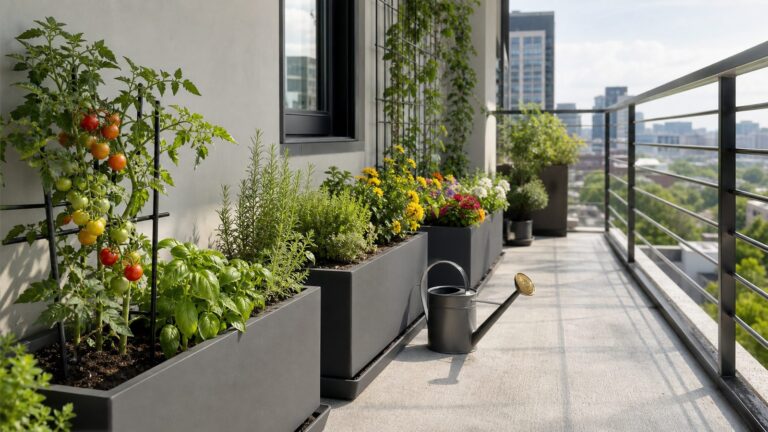
Container tomatoes follow different rules from in-ground plants. A pot contains a limited volume of growing medium, so roots have less stored moisture available. Containers also dry faster when they are exposed to sun and wind.
What’s actually slowing this PC down?
Pick the symptom - the matching free tool is one click away.
During hot summer weather, container vegetables commonly need watering at least once a day, and Illinois Extension notes that container tomatoes may need daily or even more frequent watering. Check the potting mix at least once daily during hot weather, then check more frequently during heat, wind, or heavy fruit production.
Rank #3

- Quick Connect Design: Newly Upgraded Quick Connect Irrigation System Say Goodbye to Complicated Settings! Our upgraded 4-way connectors, tees, and nozzles can now be easily connected directly to 1/4 "irrigation pipes. No more trouble with heating or softening - just plug and play!
- A brand new drip irrigation kit: ABAKUKU drip irrigation system, equipped with multiple components to meet all your garden watering needs. Including basic components such as 197 foot 1/4 inch irrigation pipe, 33 foot 1/2 inch irrigation pipe, 1/2 inch locking barbed tee connector, drip emitter flow, vortex emitter, blue mist nozzle, quick connect tee, faucet connector, etc.
- Multifunctional Applicability: Whether it is a small home garden or a large plantation, this drip irrigation system can provide even moisture distribution and is suitable for a variety of plants such as vegetables, flowers, fruit trees, etc., ensuring the healthy growth of plants.
- Four kinds of irrigation systems: the irrigation device includes four kinds of drip emitters, which can adjust different irrigation modes, such as micro drop, spray, watering, etc. A precise watering system can solve the watering problem of plants in different locations, and the amount of water sprayed can be adjusted separately according to the settings and needs.
- Easy to install and use: The set contains all the necessary components, and is easy to install without professional tools. Users can freely adjust the location of the drip irrigation tubes according to the garden layout to meet the irrigation needs of different plants.
Water a container slowly until excess begins to drain from the bottom. This helps moisten the full volume of growing medium. The pot must have unobstructed drainage holes, and it should not sit in a saucer or tray of standing water. Roots need oxygen; permanently waterlogged media can damage them.
Penn State recommends a container approximately 20 inches wide for one tomato plant. Larger containers generally provide a more forgiving moisture reserve than small pots, but size does not eliminate the need to inspect the soil.
For patio and balcony growers, choose a large tomato container with drainage holes rather than trying to force a full-size tomato into a small decorative pot. The exact watering frequency still depends on the container, potting mix, exposure, weather, and plant size.
Free tools Windows power users keep installed
One-click scans. No signup required.
Adjusting the schedule as tomatoes grow
Water demand usually increases as tomato plants become larger, set fruit, and encounter warmer weather. Increase irrigation as needed while maintaining uniform moisture in the root zone.
- At transplanting: Water thoroughly to settle the soil around the roots. Keep the plant supplied with moisture while it establishes.
- During vegetative growth: Begin with the weekly in-ground guideline, then adjust according to soil moisture and weather.
- During flowering and fruit development: Avoid major swings from very dry to very wet soil. Consistency is especially important for fruit quality.
- As fruit reaches mature size: A modest reduction in water may help encourage ripening, but do not allow the plant to become drought-stressed.
- Late in the season: Cooler weather and reduced plant activity may allow less frequent watering. Oregon State notes that conditions after mid-September may permit a reduction, provided plants are not allowed to suffer drought stress when fruit quality and yield still matter.
Mulch helps stabilize moisture
Clean organic mulch or another suitable mulch can reduce evaporation and moderate the swings between wet and dry soil. Apply it around the plant, but leave space around the stem rather than packing mulch directly against it.
Mulch does not replace irrigation. It changes how quickly the soil loses moisture, so a mulched bed may need watering less often than an exposed bed under the same weather conditions. Check the soil before changing your schedule.
Suitable tomato plant mulch can be especially useful where summer heat causes the surface to dry rapidly. Use clean material and keep it away from direct contact with the stem.
The Tool Desk
Outbyte Driver Updater FREEFix the driver behind crashes, sound loss and screen glitchesFind Drivers →Outbyte PC Repair FREERepair Windows errors before they cause bigger problemsFix Now →Symptoms that your watering needs adjustment
Leaves are wilting
First check the soil. If the root zone is dry, water slowly and deeply. Repeated wilting can reduce fruit size and quality and may contribute to disorders such as blossom-end rot or cracking.
If the soil is already wet, do not automatically add more water. Wilting can also occur when roots are damaged or when saturated soil prevents them from getting enough oxygen. Check drainage and whether water is pooling around the plant.
Rank #4
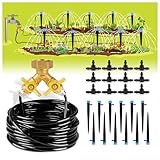
- Adjustable Water Flow: The drip emitter can be adjusted to stop, micro-drip, and spray so that you can use the water drip system to water many kinds of plants in your garden. Moreover, the drip emitters have a support stake for easy placement in the soil
- No-leaking Brass Splitter: The splitter has a solid brass construction and no rust. It not only separates the two drip lines but also controls each line individually with a butterfly-shaped switch. US standard 3/4" thread size
- Easy To Assemble and Use: Simple installation, simply insert the fittings and droppers, and you can begin watering your plants instantly. The drip system kit includes the User Manual to get the installation video
- Wide Applications: The irrigation system kit is great for lawns, patio vegetable gardens, plant greenhouses, flower beds, and raised beds
- The Whole Kit to Make The Drip System: This automatic drip irrigation kit includes all the accessories to make a drip irrigation system. 50 FT 1/4'' black tubing, brass splitter adapter * 1, Tee-connectors * 12, blue drip emitters * 12
Blossom-end rot appears
Blossom-end rot is the dark, sunken area that develops at the bottom of a tomato. It is a physiological disorder associated with water and nutrient balance, not an infectious disease.
The first corrective action is to maintain even moisture in the root zone. Simply adding calcium is not a substitute for consistent irrigation. Avoid the cycle of severe drying followed by heavy soaking, and use mulch to help moderate moisture changes.
Recommended Free Tools
Fruit is cracking
Cracks commonly follow uneven moisture, particularly when a plant receives a large amount of water after becoming very dry. Keep watering more uniform, check the soil before irrigating, and use mulch to reduce rapid moisture loss.
Foliage stays wet or disease develops
Move from overhead watering to a base-level method such as drip or soaker irrigation. Water in the morning rather than late in the day or at night. Avoid splashing soil onto leaves and keep the plant’s foliage as dry as practical.
Water runs off instead of soaking in
Apply water more slowly, especially on compacted, sloped, or clay soil. Several slow passes may work better than one fast application. A trowel check will show whether the water is actually reaching the root zone.
Independent reader supportYour contribution helps us test, update, and keep practical guides available for everyone.Common tomato-watering mistakes
- Watering a little every day in the ground: Frequent shallow applications may encourage shallow roots and fail to wet the full root zone.
- Following the calendar after rainfall: Count meaningful rainfall toward the weekly total and check the soil before adding irrigation.
- Waiting until plants repeatedly collapse: Wilting is a sign that the plant is already under water stress. Adjust before severe wilting becomes routine.
- Using an overhead sprinkler at night: Wet leaves overnight and soil splash can increase disease risk.
- Treating blossom-end rot only with calcium: Correct inconsistent moisture first; calcium products do not replace sound irrigation.
- Applying in-ground rules to containers: Pots often need daily or more frequent watering in hot weather.
- Leaving containers in standing water: Drainage is essential because roots need oxygen as well as moisture.
- Putting mulch directly against stems: Keep a gap around the stem and use clean mulch.
Practical tools for consistent watering
The goal of a watering tool is to make correct irrigation easier—not to eliminate the need to inspect the plant and soil.
Quick wins for a faster PC:
Scan for outdated or missing drivers - takes under a minuteDriver Scan →Clear out junk files and repair common Windows errorsFree Scan →Fix the driver behind crashes, sound loss and screen glitchesFind Drivers →- Drip irrigation: Useful for delivering water at the root zone with minimal foliage wetting. Consider a micro drip irrigation system for a vegetable garden or a kit designed for raised beds, then adjust the layout and run time to your plants.
- Soaker hose: A practical alternative for rows or beds. Pairing a soaker hose for a vegetable garden with a hose timer can make repeated watering more consistent, but inspect the soil because different hoses and placements deliver water unevenly.
- Rain gauge: Helps determine how much natural rainfall has contributed to the weekly total.
- Soil-moisture meter: Can offer a useful supplementary indication, although inexpensive meters may be inconsistent.
- Trowel: Often the most direct way to confirm whether the root zone is actually moist at depth.
A timer can automate a schedule, but it cannot know whether a storm has already saturated the bed or whether one section is draining faster than another. Use automation to deliver water consistently, then adjust the schedule based on soil and weather.
Best Value
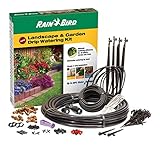
- Comprehensive 108-piece kit for flower beds, gardens and landscaped areas; eliminates hand watering, saves time and money
- Ultimate watering efficiency for all plants, shrubs and trees; up to 80% water savings
- Simple 3-step installation: connect to faucet, insert fittings into tubing, attach watering devices
- Includes 3 differnet types of watering devices: drippers, micro-bubblers and micro sprays
- Pressure-compensating technology ensures all plants receive same amount of water
A simple decision process
When deciding whether to water today, work through these checks:
- Has it rained? If rainfall was substantial, count it toward the weekly amount and inspect the soil before irrigating.
- What type of soil or growing medium holds the plant? Sandy soil and small containers generally dry faster; clay and larger containers may hold moisture longer.
- Is the root zone moist at depth? Dig down rather than judging only by the surface.
- What is the weather doing? Heat, wind, and intense sun increase water loss. During extreme heat, daily or every-other-day watering may be necessary for in-ground plants.
- Is the plant actively growing or carrying fruit? Larger, fruiting plants generally need more consistent water than small, newly established plants.
- Can water drain away? If soil is saturated or water pools, solve the drainage problem instead of adding more irrigation.
This approach is more reliable than a universal “water tomatoes every day” rule. Some tomatoes need daily attention; others in a moisture-retentive garden may need a deep soaking only about once a week during normal weather.
Frequently Asked Questions
Should tomato plants be watered every day?
Not usually when they are planted in the ground and the weather is moderate. Most in-ground tomatoes can begin with about 1 inch of water per week, applied deeply, then be adjusted according to soil and weather. Containers often do need daily or more frequent watering during hot weather.
Do these 3 things before closing this tab:
1Fix the driver behind crashes, sound loss and screen glitches2Clear out junk files and repair common Windows errors3Scan for outdated or missing drivers - takes under a minuteHow do I know whether a tomato plant has received enough water?
Check the soil approximately 24 hours after irrigation. Dig into the root zone with a trowel; for an established plant, moisture should reach roughly 1 foot. The soil should form a ball when squeezed but should not be saturated or muddy.
Is morning or evening better for watering tomatoes?
Morning is generally preferable because foliage and the soil surface have more time to dry during the day. Avoid late-afternoon or evening overhead watering when possible, since wet foliage overnight can favor disease.
Does watering prevent blossom-end rot?
Consistent moisture helps address one of the main conditions associated with blossom-end rot. The disorder involves water and nutrient balance rather than infection, so adding calcium alone does not replace regular, even irrigation.
Should I water tomatoes after rain?
Only if the root zone is becoming dry. Meaningful rainfall counts toward the weekly water total, so check the soil before irrigating rather than following the calendar.
Windows Errors? Fix Them Before They Spread
Repair common Windows errors and clear accumulated junk for a smoother, more stable PC - no reinstall needed.Free scan · no reinstallCrashes, No Sound, or Screen Glitches?
Random freezes, missing sound and display glitches usually trace back to one bad driver. Find and replace yours safely.Free scan · under a minuteThe Bottom Line
For in-ground tomatoes, start with about 1 inch of water per week and adjust to the soil, weather, plant size, rainfall, and mulch. Water slowly at the base, preferably in the morning, and confirm with a trowel that moisture reaches the root zone. Water containers much more frequently in hot weather, and always prioritize consistent moisture over a rigid schedule.
Quick Recap
Product prices and availability are accurate as of the date/time indicated and are subject to change. Any price and availability information displayed on Amazon at the time of purchase will apply.