High-voltage direct current (HVDC) is becoming a leading power-distribution architecture for the densest AI data centers—but it is not yet a universal replacement for alternating current. The strongest emerging designs distribute power at approximately 800 VDC or through nominal +400 VDC and −400 VDC rails, reducing current between the facility and high-density GPU racks. That can ease conductor, busway, conversion and space constraints as AI racks move from roughly 100 kW toward 1 MW.
For construction and infrastructure teams, the practical conclusion is straightforward: HVDC deserves serious consideration in new AI-focused facilities, while hybrid designs are usually more realistic for existing buildings. The electrical one-line, cooling plant, protection system, backup strategy, equipment availability and authority-having-jurisdiction requirements must be designed together.
As an Amazon Associate I earn from qualifying purchases.
Why AI is turning power delivery into a construction problem
AI accelerator systems concentrate far more electrical power in a rack than conventional enterprise servers. Open Compute Project materials discuss high-density clusters with racks above 100 kW and designs scaling toward 1 MW. NVIDIA is positioning its 800 VDC architecture for 1 MW-class racks and beyond.
Recommended Free Tools
At constant power, current is determined by:
I = P / V
A simplified 1 MW comparison illustrates the problem:
#1 Best Overall

- 80 PLUS GOLD CERTIFIED
- 10-year limited warranty, guaranteeing long term reliable operation
- Fully modular design
- ATX 3.1 & PCIE 5.1
| Distribution voltage | Approximate current for 1 MW |
|---|---|
| 48 VDC | 20,833 A |
| 400 VDC | 2,500 A |
| 800 VDC | 1,250 A |
These figures exclude conversion losses, redundancy, transient headroom and the details of the selected topology. They nevertheless show why increasing voltage is attractive: the same power can be moved with substantially less current.
Resistive distribution loss follows Ploss = I2R. Lower current can therefore reduce cable and busbar losses, voltage drop and the physical burden of distributing power across a row or hall. It may also allow more manageable conductors and higher power transfer through constrained routes. The actual saving depends on conductor length, topology, load, redundancy, cooling and conversion efficiency.
What HVDC means inside a data center
“HVDC” can refer to utility-scale transmission at hundreds of kilovolts. That is not what this discussion concerns. Here, the term means high-voltage DC distribution inside the facility, particularly systems in the 400 VDC-class and 800 VDC-class range.
That is materially different from:
- Utility HVDC: long-distance electricity transmission.
- Facility HVDC: several-hundred-volt DC distribution between conversion equipment and AI racks.
- Rack-level DC: familiar 48 VDC or similar distribution.
NVIDIA describes an approximately 800 VDC architecture. The OCP Diablo specification describes nominal +400 VDC and −400 VDC rails relative to a common conductor. A bipolar ±400 VDC system has 800 V between its positive and negative rails, but it is not automatically electrically identical to a single-rail 800 VDC system. Grounding, insulation, connectors, protection and converter topology can differ.
From utility power to the GPU
Conventional architecture
Utility AC
  ↓
Medium-voltage switchgear and transformer
  ↓
AC UPS or backup system
  ↓
Low-voltage AC distribution
  ↓
Rack power supplies
  ↓
48 VDC or similar rack bus
  ↓
Board and point-of-load converters
  ↓
GPU and CPU core voltages
Facilities vary. Some use different UPS topologies, voltage levels, redundancy arrangements and rack power designs. The common issue at extreme rack density is that low-voltage distribution requires very high current.
Emerging 800 VDC architecture
Utility AC
  ↓
Medium-voltage equipment and transformer or solid-state conversion
  ↓
Centralized AC-to-800 VDC rectification
  ↓
800 VDC busway or distribution backbone
  ↓
Rack-side high-ratio DC-to-DC conversion
  ↓
54 VDC, 48 VDC or 12 VDC intermediate bus
  ↓
Point-of-load conversion
  ↓
GPU and CPU core voltages
NVIDIA describes centralized conversion followed by high-ratio conversion near the compute load. Its technical material identifies a possible 64:1 LLC conversion from 800 VDC to 12 VDC. That is an example of a proposed topology, not a requirement for every implementation.
Disaggregated sidecar architecture
OCP’s Diablo approach separates power equipment from the compute rack in a dedicated power sidecar or disaggregated power rack. Rectifiers, power shelves, energy storage and related equipment can be placed outside the IT enclosure while the compute rack receives high-voltage DC.
This physical separation matters to construction teams. It changes floor planning, equipment clearances, service routes, failure domains, busway layout, fire protection, maintenance access and the way power capacity is added independently of compute hardware.
Rank #2
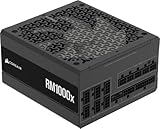
- Fully Modular: Reliable and efficient low-noise power supply with fully modular cabling, so you only have to connect the cables your system needs.
- Cybenetics Gold-Certified: Rated for up to 91% efficiency, resulting in lower power consumption, less noise, and cooler temperatures.
- ATX 3.1 Compliant: Compliant with the ATX 3.1 power standard from Intel, supporting PCIe 5.1 and resisting transient power spikes.
- Native 12V-2x6 Connector: Ensures compatibility with the latest graphics cards with a direct GPU to PSU connection – no adapter necessary.
- Embossed Cables with Low-Profile Combs: Sleek, ultra-flexible embossed cables look great and make installing and connecting the RMx a breeze.
The two leading industry directions
| Attribute | Conventional low-voltage rack power | OCP Diablo / Mt. Diablo | NVIDIA 800 VDC direction |
|---|---|---|---|
| Rack distribution | 48 VDC or similar | Nominal +400 VDC and −400 VDC | Approximately 800 VDC |
| Physical model | Power equipment closely integrated with racks | Disaggregated power sidecar | Centralized conversion with HVDC distribution |
| Target use | Existing and conventional workloads | High-density AI clusters | Future AI factories |
| Power ambition | Lower than emerging megawatt designs | Approximately 100 kW to 1 MW | 1 MW-class and beyond |
| Primary challenge | Very high current at extreme power | Developing standards and protection practices | New equipment and ecosystem maturity |
| Status | Mature ecosystem | OCP specification and active workstreams | NVIDIA architecture and partner roadmap |
Relevant sources include the OCP Diablo specification, the OCP sidecar description and NVIDIA’s 800 VDC architecture page.
What higher-voltage DC can improve
Lower distribution current
This is the fundamental benefit. Less current can reduce conductor size, busbar loading, voltage drop and resistive loss. It can also make a row or hall capable of supporting more power without routing an impractical number of low-voltage conductors.
Fewer or better-placed conversion stages
Centralizing AC-to-DC conversion and distributing DC nearer to the load may avoid duplicated rack-level conversions or repeated AC/DC changes. That can reduce some electrical losses, heat and equipment volume.
It does not guarantee a particular efficiency improvement. A proper comparison must measure from utility input to GPU core voltage and include rectifiers, DC-to-DC converters, busways, cables, backup systems, cooling and part-load operation. Fewer conversion stages are helpful only if the replacement equipment performs well across the intended operating range.
More practical high-density racks
Higher voltage makes it more feasible to deliver hundreds of kilowatts or more without forcing extreme current through low-voltage conductors. This is why both NVIDIA’s 800 VDC direction and OCP’s Diablo work are aimed at dense AI deployments rather than ordinary enterprise server rooms.
More usable IT space
Sidecars and centralized power rooms can move conversion, storage and protection equipment out of the compute enclosure. The resulting space benefit is design-dependent, but it may leave more rack volume for compute, networking and cooling interfaces.
Integration with DC-native storage
Batteries, solar systems, fuel cells and some other energy-storage technologies are naturally DC. A DC backbone may reduce conversion steps when these systems are integrated. It does not eliminate the need for isolation, protection, controls, power-quality management, fault handling or backup coordination.
Do these 3 things before closing this tab:
1Clear out junk files and repair common Windows errors2Fix the driver behind crashes, sound loss and screen glitches3Repair Windows errors before they cause bigger problemsModular scaling
A sidecar can allow operators to add power shelves, storage or conversion capacity independently from IT racks. That may support phased construction and reduce the need to install every future power module on day one. It also creates new requirements for controls, capacity planning, spare modules and failure-domain analysis.
Rank #3

- 80 PLUS GOLD CERTIFIED
- 10-year limited warranty, guaranteeing long term reliable operation
- Fully modular design
- ATX 3.1 & PCIE 5.1
What HVDC does not solve
Cooling
Nearly all power consumed by an AI rack ultimately becomes heat. More efficient distribution may reduce some electrical losses, but it does not remove the need to reject the IT load.
Power and mechanical design should therefore be developed together, including:
- Direct-to-chip liquid cooling
- Coolant distribution units
- Facility-water capacity and heat rejection
- Pumping power
- Water quality and leak detection
- Rack and sidecar service clearances
- Thermal shutdown coordination
OCP materials discuss AI racks above 250 kW alongside liquid-cooling approaches. A high-voltage electrical design without a credible thermal design is not a complete AI-facility plan. See the OCP power and cooling material.
Free tools Windows power users keep installed
One-click scans. No signup required.
Grid interconnection
An efficient internal DC system does not remove utility interconnection queues, medium-voltage switchgear, transformers, generator capacity, fuel requirements, harmonics, load transients or campus distribution constraints.
AI workload volatility
Training and inference can produce rapid changes in demand. Google has described battery-based approaches to managing the “spikiness” of AI loads. Operators must distinguish steady-state efficiency from transient support, voltage regulation, demand management, grid services and backup power. They are related functions, not interchangeable ones.
Safety and protection are central design issues
DC faults can be difficult to interrupt because direct current does not naturally pass through zero every cycle as alternating current does. High-voltage DC systems therefore require specialized switching, fault-clearing and arc-management equipment.
Important functions include:
- Fast overcurrent detection
- Short-circuit interruption
- Precharge and inrush-current control
- Isolation and insulation-fault monitoring
- Bus discharge and verification
- Interlocks and controlled access
- Connector sequencing
- Ground-fault protection
- Selective coordination
- Emergency shutdown
- Arc-flash and approach-boundary analysis
- Lockout/tagout and safe de-energization
NVIDIA’s architecture discusses protection at power-room, hall, row and rack boundaries. Texas Instruments also identifies high-voltage sensing, protection and safety mechanisms as requirements for 800 VDC operation. Consult the NVIDIA architecture discussion and Texas Instruments technical material.
Quick wins for a faster PC:
Clear out junk files and repair common Windows errorsFree Scan →Scan for outdated or missing drivers - takes under a minuteDriver Scan →Repair Windows errors before they cause bigger problemsFix Now →Lower current does not make energized high-voltage equipment safe to touch. Compliance depends on jurisdiction, equipment listing, local electrical and fire codes, occupational-safety rules, the authority having jurisdiction and the specific equipment design. Qualified electrical personnel, engineered protection and documented operating procedures are essential.
Rank #4

- Fully Modular: Reliable and efficient low-noise power supply with fully modular cabling, so you only have to connect the cables your system needs.
- Cybenetics Gold-Certified: Rated for up to 91% efficiency, resulting in lower power consumption, less noise, and cooler temperatures.
- ATX 3.1 Compliant: Compliant with the ATX 3.1 power standard from Intel, supporting PCIe 5.1 and resisting transient power spikes.
- Native 12V-2x6 Connector: Ensures compatibility with the latest graphics cards with a direct GPU to PSU connection – no adapter necessary.
- Embossed Cables with Low-Profile Combs: Sleek, ultra-flexible embossed cables look great and make installing and connecting the RMx a breeze.
Reliability depends on the architecture
HVDC does not inherently make a data center more or less reliable. The owner and design team should ask:
- Is the system N+1, N+X, 2N or single-feed?
- Are power shelves hot-swappable?
- Can a failed converter be isolated without dropping the rack?
- Does a sidecar failure affect one rack, a row or multiple halls?
- Where is backup energy located?
- What happens during a bus fault?
- How are maintenance bypasses implemented?
- How are transients handled?
- How are battery state-of-charge and capacitor health monitored?
- Can DC protection devices coordinate selectively?
- Can technicians work safely near adjacent energized equipment?
The Diablo specification includes an optional battery-backup arrangement supporting 45 to 90 seconds at 100% loading. That is a specification requirement for the relevant option, not a claim that every Diablo implementation or HVDC site provides that duration. Short-duration storage can provide ride-through, load smoothing or transient support; it does not automatically replace generators or long-duration backup systems.
New build or retrofit?
New construction: the strongest use case
A new AI-focused facility can coordinate medium-voltage distribution, rectification, DC busways, sidecars, liquid cooling, backup energy, fire protection, controls and service access from the beginning. It can also reserve space for future power modules and design equipment rooms around the selected voltage architecture.
The Tool Desk
Outbyte Driver Updater FREEScan for outdated or missing drivers - takes under a minuteDriver Scan →Outbyte PC Repair FREEClear out junk files and repair common Windows errorsFree Scan →Existing facility: consider a hybrid design
Retrofitting an entire conventional data center may be difficult and uneconomic. A more practical arrangement may be:
Existing AC infrastructure
  ↓
Dedicated HVDC conversion zone
  ↓
HVDC sidecars or rows for selected AI racks
Conventional racks can remain on the existing AC system while a purpose-built AI cluster uses a separate HVDC zone. This still requires a detailed feasibility study, new protection and service procedures, and careful review of floor loading, clearances, cooling and electrical capacity.
When HVDC is a strong fit
- The project is a new AI-focused build.
- Rack power is expected to exceed approximately 100 kW and grow toward several hundred kilowatts or 1 MW.
- The operator can standardize on compatible compute platforms.
- Dedicated sidecar or power-room space is available.
- The electrical team and service partners can support high-voltage DC.
- Power, cooling and controls can be designed as one system.
- Future rack-density growth has high value.
When it is a weaker fit
- The site mainly contains conventional enterprise racks.
- Existing AC infrastructure has substantial spare capacity.
- Broad compatibility with many server vendors is essential.
- Qualified staff or service partners are unavailable.
- Regional equipment availability is limited.
- The installation is too small to justify specialized infrastructure.
- Interchangeable replacement parts and mature serviceability are higher priorities than maximum density.
Construction and procurement checklist
Before selecting an HVDC design, require the project team and vendors to document:
- Actual rack-load forecast, including growth and transient behavior
- Complete electrical one-line and voltage boundaries
- Short-circuit and protection-coordination studies
- Arc-flash analysis and approach boundaries
- Grounding, isolation and insulation-monitoring strategy
- Busway, connector and enclosure ratings
- Rectifier and DC-to-DC efficiency at expected load levels
- Cooling load from power-conversion equipment
- Backup-energy location, duration and operating mode
- Maintenance bypass and module-replacement procedures
- Interoperability with the intended GPU platform
- Firmware, management and monitoring interfaces
- Spare-parts availability and local service coverage
- Warranty, commissioning and training responsibilities
- Equipment certification and local code compliance
- Authority-having-jurisdiction review
- Total cost of ownership under realistic load profiles
Ask suppliers to demonstrate the complete power chain rather than quoting only a rectifier or busway efficiency number. The evaluation should identify the measurement boundary, load percentage, redundancy mode, temperature, cooling overhead and backup-system state.
Standards and market maturity
The ecosystem is active but not fully standardized or universally available. OCP has workstreams covering Diablo, protection and safety, voltage levels, power quality, solid-state transformers and 400 V onboard power. NVIDIA has published an 800 VDC architecture and identified a broad ecosystem of infrastructure participants. Vertiv has announced an 800 VDC portfolio roadmap intended to align with future NVIDIA platforms, with planned availability cited for the second half of 2026.
Best Value
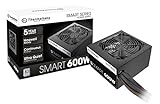
- Delivers 600W Continuous output at plus 40℃. Compliance with Intel ATX 12V 2. 31 and EPS 12V 2. 92 standards
- 80 PLUS Certified – 80% efficiency under typical load. Power good signal is 100-500 millisecond
- Supports (2) PCI-E 6 plus 2pin Connectors. Active (PFC) Power Factor Correction, MTBF: 100, 000 hours
- Industry Grade Protections: (OPP) Over Power Protection, (OVP) Over Voltage Protection, (SCP) Short Circuit Protection
- Hold up time is 16 millisecond minimum within 60 percent load. Input frequency range 50 - 60 in Hz
These developments should be separated into distinct categories:
- Published specification: a documented technical target or interface.
- Demonstrated system: equipment shown to operate in a defined setting.
- Roadmap: a vendor’s stated future direction.
- Generally orderable product: equipment available with defined support, certification and delivery terms.
- Broad interoperability: compatibility demonstrated across multiple vendors and platforms.
An ecosystem partner list is not proof that every named company currently sells a universally compatible 800 VDC product. Procurement teams should obtain model numbers, delivery dates, certifications, service commitments and tested interfaces.
Does HVDC improve AI performance?
HVDC primarily addresses power delivery. It can reduce distribution losses, release space and support higher rack density. It does not directly improve GPU architecture or automatically increase tokens per watt.
Windows Errors? Fix Them Before They Spread
Repair common Windows errors and clear accumulated junk for a smoother, more stable PC - no reinstall needed.Free scan · no reinstallOutdated Drivers Are Slowing You Down
One free scan finds every outdated or missing driver and matches the right update for your exact hardware.Free scan · exact hardware matchAny improvement in useful AI output per unit of facility energy depends on the entire system: accelerator efficiency, utilization, networking, memory, cooling, power conversion, workload scheduling and the facility’s operating point. HVDC can improve the infrastructure portion of that equation, but it is not a substitute for efficient compute or effective workload management.
The construction outlook
The most defensible future view is not that AC disappears. Utility power, medium-voltage equipment and much of the upstream facility infrastructure will remain AC in many designs, while higher-voltage DC becomes an internal distribution layer for the densest AI zones.
New AI campuses are the most natural place for this transition because they can coordinate electrical, mechanical and controls engineering from the outset. Existing facilities are more likely to adopt selective or hybrid deployments. The right decision depends on rack density, building capacity, cooling strategy, vendor standardization, local code, workforce readiness and the value of future expansion.
HVDC is therefore best understood as a leading architecture for next-generation AI data centers—not a plug-and-play answer for every project. The projects most likely to benefit are those that treat power conversion, protection, cooling, construction phasing and maintainability as one integrated infrastructure program.
What’s actually slowing this PC down?
Pick the symptom - the matching free tool is one click away.
Quick Recap
Product prices and availability are accurate as of the date/time indicated and are subject to change. Any price and availability information displayed on Amazon at the time of purchase will apply.

