Some links on this page are affiliate links: if you buy through them we may earn a commission, at no extra cost to you.
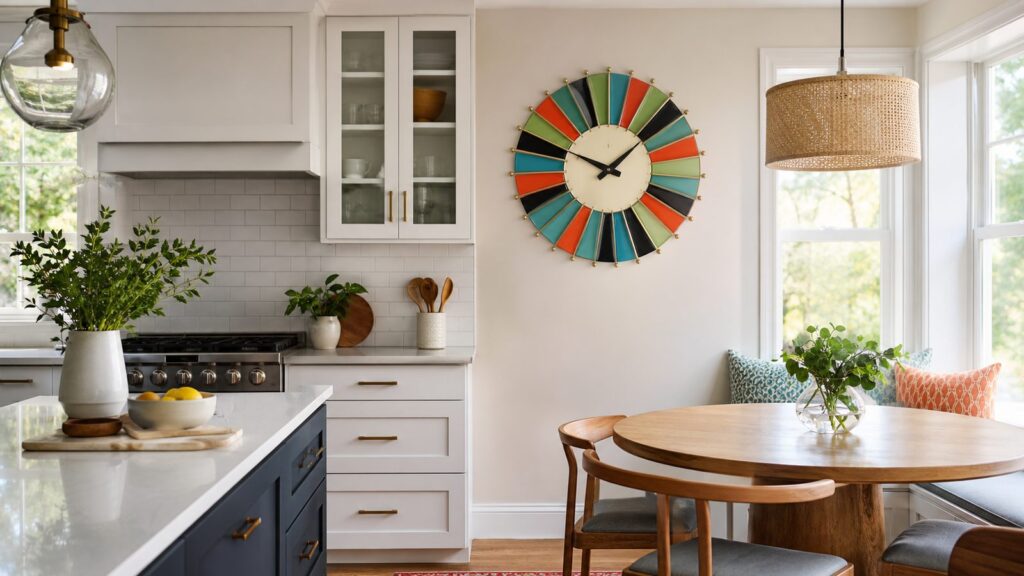
A fun wall clock is one of the easiest ways to give a room personality without committing to wallpaper, tile, custom cabinetry, or a new paint color. The best ones do two jobs at once: they make the wall feel finished, and they stay readable from the sink, island, vanity, hallway, desk, or breakfast table.
For most homes, the sweet spot is a 10- to 18-inch clock in a kitchen, powder room, laundry room, mudroom, kid zone, or home office. Expect to spend about $25 to $75 for a solid midrange decorative clock, $75 to $250 for a larger statement piece, and $250 to $900 or more for artisan, sculptural, imported, or specialty clocks. If you hire someone to mount a large or tricky clock, a small handyman visit commonly lands around $120 to $220 in 2026, depending on the wall and local labor rates.
As an Amazon Associate I earn from qualifying purchases.
Free tools Windows power users keep installed
One-click scans. No signup required.
On our remodeling jobs, the clocks that work best are not always the loudest designs. They are the ones that fit the scale of the wall, repeat a color or material already in the room, clear cabinet doors and mirrors, and can be mounted without damaging tile, wallpaper, shiplap, or new paint. A novelty clock can look sharp. A poorly placed novelty clock looks like an afterthought.
What Makes a Wall Clock Fun Without Making the Room Feel Busy?
A fun clock has some point of view: color, shape, texture, humor, retro styling, oversized scale, sculptural hands, or an unexpected material. The mistake is assuming that fun means random. In a finished room, especially a kitchen or bathroom, the clock should connect to at least one existing element.
Popular on Amazon

- Dimensions 19.5 x 25 x 4.5cm / 7.5 x 10 x 2in.
- Designed and made exclusively by Jones Clocks.
- A modern take on a retro wall clock, with subtle nods to 60s television sets and mid-century interiors, made from high quality acrylic in a contemporary matt finish and glass lens.
- Eye catching yet compact clock, perfect for your kitchen, living room, study, large or small space. Designed in the UK, it’s a nostalgic piece with plenty of modern appeal.
- Accurate and reliable quartz step movement with faint ticking sound. Requires 1 x high quality branded alkaline AA battery (not included).
Use this rule first: repeat one color or finish that is already present. If the kitchen has black cabinet pulls, a black-rimmed retro diner clock feels intentional. If the backsplash has blue accent tile, a blue ceramic clock can look custom. If the laundry room has brass hardware, a playful clock with warm metal hands will usually look better than a bright red one that has no relationship to the room.
Scale matters just as much as color. Small clocks, usually 8 to 12 inches, work on narrow wall strips, command centers, shelf zones, and powder rooms. Medium clocks, roughly 12 to 24 inches, are the most flexible size for kitchens, baths, offices, and bedrooms. Large clocks, about 24 to 32 inches, can anchor a breakfast nook, stair landing, dining wall, or mudroom bench. Oversized clocks, 32 inches and larger, need clean wall space, stronger anchoring, and enough distance for the face to breathe.
Quick wins for a faster PC:
Scan for outdated or missing drivers - takes under a minuteDriver Scan →Repair Windows errors before they cause bigger problemsFix Now →Fix the driver behind crashes, sound loss and screen glitchesFind Drivers →Readability is the other half of the decision. A clock with tiny hands, no contrast, or decorative numerals may look clever in a product photo and still fail in a real kitchen. If you cannot read it from 8 to 12 feet away, it is wall art pretending to be a clock. That may be fine in a hallway, but it is frustrating over a coffee bar or family command center.
Best Fun Wall Clock Styles by Room
The best clock for a room depends on what that room asks from the wall. Kitchens need wipeable materials. Bathrooms need moisture resistance. Laundry rooms need durability. Bedrooms and offices need quiet movements. Family spaces can handle more personality, but the clock still has to fit the furniture layout.
Kitchen: Retro, Colorful, and Easy to Clean
Kitchens are the natural home for playful clocks. Retro diner clocks, colorful enamel-style faces, utensil-themed clocks, fruit or coffee motifs, and mid-century starburst styles all work well if the material can handle grease and wipe-downs.
For kitchens, choose powder-coated metal, aluminum, glass, acrylic, ceramic, resin, or sealed wood. Avoid raw MDF, exposed paper faces, and unsealed wood near cooking areas. A clock does not need to be mounted over the range to collect cooking film. If it sits in the path between the cooktop and exhaust hood, it will need cleaning.
A 12- to 18-inch clock usually fits well above a coffee station, pantry door, open shelf run, or small dining table. A 20- to 30-inch clock can work over a breakfast nook or on a blank wall at the end of a galley kitchen. In most kitchens, set the center of the clock around 57 to 60 inches from the floor when it is on a clear wall. Go higher only when it must clear backsplash tile, upper cabinets, a banquette, or open shelving.
Bathroom and Powder Room: Moisture-Resistant First
A fun clock in a powder room can be a strong design move because the room is small and guests actually notice details. Bathrooms, however, are harder on materials than people expect. Steam, splash, cleaning spray, and repeated humidity swings can warp cheap clock backs or wrinkle paper faces.
For bathrooms, look for sealed plastic, acrylic, resin, ceramic, metal, glass, or properly sealed wood. Avoid exposed paper faces, cardboard backs, raw MDF, and any clock with visible gaps where moisture can get behind the face. In a full bath, keep the clock out of direct shower spray and away from the tub splash zone unless the product is rated for damp conditions.
Most powder rooms do best with an 8- to 12-inch clock. Full baths can handle 10 to 16 inches if there is wall space opposite the vanity or near a linen cabinet. Over a toilet can work, but make sure the clock is not so low that it feels crowded by the tank or wall shelf.
Do these 3 things before closing this tab:
1Scan for outdated or missing drivers - takes under a minute2Repair Windows errors before they cause bigger problems3Fix the driver behind crashes, sound loss and screen glitchesLaundry Room and Mudroom: Durable, Bright, and Practical
Laundry rooms and mudrooms can handle bolder design because they are utility spaces. Colorful schoolhouse clocks, oversized numerals, playful typography, and graphic metal clocks work well here. These rooms also benefit from high contrast because homeowners are often moving quickly, carrying baskets, shoes, bags, and jackets.
Use metal, plastic, acrylic, or sealed wood. If the laundry room has poor ventilation or a sink nearby, treat it more like a bathroom. A 12- to 18-inch clock is usually enough. In a mudroom with a long bench and hooks, a 20- to 24-inch clock can center the wall and make the area feel designed instead of merely functional.
Also popular on Amazon

- Mid-Century Modern Style: The Starburst Wall Clock features a bold, sunburst design that is a signature of mid-century modern decor. With sharp, radiating blue orange or red rays emanating from the center, this clock adds a dynamic and stylish element to any room.
- Retro Decor::The fashion wall clock is handmade and the modern design sets your room apart. Creative design of iron art. Not only a large wall clock, but also the perfect complement to a blank wall
- Silent Quartz Movement::Equipped with a high-quality silent quartz movement to ensure accurate timekeeping without ticking noise, ideal for bedrooms, living rooms, and offices
- Easy to Install:The Starburst Wall Clock comes with a simple mounting system, making it easy to hang on any wall. The battery-operated clock (requires 1 AA battery, not included) requires minimal maintenance, and its timeless design means it will continue to enhance your space for years to come
- Reliable Service:If you encounter any problem while using it, you can tell us anytime, we will try our best to solve your problem. Please be confident in our service
Bedroom, Nursery, or Home Office: Silent Movement Matters
Ticking is one of the most common reasons people stop liking a clock. For bedrooms, nurseries, home offices, reading rooms, and open-plan kitchens near seating, buy a silent sweep quartz movement. It usually does not add much cost, but it makes a real difference.
Fun does not have to mean loud color in these rooms. A mid-century starburst, softened geometric face, sculptural wood clock, or quiet pastel design can add personality without pulling attention away from sleep or work. For bedrooms, 10 to 16 inches is usually enough unless the clock is part of a larger wall arrangement.
Recommended Free Tools
Cost Guide for Fun Wall Clocks in 2026
Decorative wall clocks cover a wide price range. The numbers below are realistic for US homeowners in 2026 and include the types of clocks we commonly see in kitchens, baths, laundry rooms, and family spaces.
| Clock Type | Typical 2026 Price | Best Use | Installer Notes |
|---|---|---|---|
| Budget plastic, MDF, or lightweight quartz clock | $10-$30 | Kids rooms, temporary decor, rental-friendly updates | Usually light enough for a picture hook or small drywall anchor |
| Midrange fun kitchen or bath clock | $25-$75 | Kitchens, powder rooms, laundry rooms, offices | Check for silent movement, wipeable face, and secure hanger |
| Large statement clock, 24-36 inches | $75-$250 | Breakfast nook, dining wall, mudroom, stair landing | Often needs stronger anchors or studs, especially if metal or wood |
| Digital, LED, RGB, or atomic clock | $20-$100+ | Game rooms, offices, garages, family command centers | Plan cord routing or battery access before mounting |
| Premium, artisan, pendulum, sculptural, or imported clock | $250-$900+ | Feature walls, designer kitchens, formal spaces | Use hardware matched to actual weight and wall type |
| Professional mounting visit | $120-$220 typical task | Oversized clocks, tile, brick, plaster, high walls | Hourly handyman rates often run about $48-$150 nationally |
DIY materials are usually modest: $5 to $25 for picture hooks, drywall anchors, screws, adhesive bumpers, batteries, and a small level. Tile, stone, brick, or plaster can add $10 to $30 for specialty bits if you do not already own them. That sounds small, but the cost of a cracked tile or scarred wallpaper panel is much higher than the hardware.
How to Choose the Right Size
Before buying a clock, tape a paper template to the wall. This is one of the simplest job-site habits homeowners can copy. Cut kraft paper, cardboard, or painter’s paper to the clock diameter, tape it in place, and live with it for a day. Open nearby cabinet doors. Stand at the sink. Sit at the breakfast table. Walk in from the hallway. Check whether pendants, range hoods, mirrors, open shelves, sconces, and door swings compete with the clock.
Use these size ranges as a practical starting point:
- 8-12 inches: narrow walls, powder rooms, shelves, desk areas, kids rooms, and small laundry rooms.
- 12-18 inches: most kitchens, baths, mudrooms, offices, and family command centers.
- 18-24 inches: breakfast nooks, larger kitchens, hallway ends, and walls above benches.
- 24-32 inches: dining walls, stair landings, open-plan living spaces, and large mudrooms.
- 32 inches or larger: oversized feature walls with open space and stronger mounting points.
A clock should not crowd the wall. Leave at least 6 inches of breathing room from nearby trim, shelves, cabinet edges, mirrors, and light fixtures for small and medium clocks. For large clocks, 10 to 18 inches of open space around the face usually looks more intentional.
Materials That Work in Kitchens and Bathrooms
Kitchens and bathrooms punish decorative items more than living rooms do. Heat, steam, grease, cleaning spray, and fingerprints all matter. The clock material should match the room conditions.
Good Choices for Kitchens
Powder-coated metal, glass, acrylic, ceramic, resin, aluminum, and sealed wood are the most forgiving choices. These wipe clean and usually hold their shape. A glass lens helps protect the face, but it can add glare if the clock is across from a window or under strong recessed lighting.
If the kitchen has heavy cooking traffic, keep the clock away from the direct grease path above or beside the range. A wall near the pantry, breakfast nook, coffee station, or refrigerator zone is usually better. Avoid mounting directly above a cooktop, near an open flame, or so close to a hood that it interferes with cleaning or service access.
What’s actually slowing this PC down?
Pick the symptom - the matching free tool is one click away.
Good Choices for Bathrooms
For bathrooms, moisture resistance comes before novelty. Acrylic, resin, ceramic, glass, sealed metal, and well-sealed plastic are practical. If you love a wood clock, look for a sealed finish and a back that is not raw fiberboard. Raw MDF and paper-backed clocks can swell or delaminate after enough steam cycles.
Do not install a typical decorative clock inside a shower area, over a tub where it can be splashed, or in a location where condensation runs down the wall. Even if the clock survives, the fastener and wall finish may not.
Also popular on Amazon

- Metal construction, modern design make your room looks good, a perfect art clock decor for your home or office.
- Silent and decorative, has a silent ticking mechanism for a quiet, elegant look.
- Features a precise analog clock movement powered by batteries, can work for long time.
- Easy installation, that not damage the wall, easy to install the clock on wall.
- Suitable for kitchen, dining, living room, bedroom, foyer, hallway, bar, restaur
Mounting Methods by Wall Type
The wall matters as much as the clock. A 2-pound plastic clock on drywall is a different job from a 22-pound metal clock on brick veneer or a tile backsplash.
Drywall
For small clocks under about 3 pounds, a quality picture hook or self-drilling drywall anchor is usually enough. For medium clocks, use an anchor rated above the clock’s actual weight, not equal to it. If the clock is heavy, oversized, or mounted in a busy area where it may get bumped, hit a stud when possible.
The Tool Desk
Outbyte PC Repair FREEClear out junk files and repair common Windows errorsFree Scan →Outbyte Driver Updater FREEScan for outdated or missing drivers - takes under a minuteDriver Scan →Do not trust the tiny nail included with a large clock unless the clock is very light and the wall is standard drywall. Many decorative clocks ship with minimal hardware because the manufacturer cannot know your wall assembly.
Plaster
Older plaster can crack if treated like drywall. Pre-drill carefully, avoid hammering aggressively, and use anchors meant for plaster or fasten into lath/studs when possible. If the clock is valuable or oversized, this is often worth a professional visit.
Tile and Stone
Tile is where patience saves money. If possible, place the clock on adjacent drywall instead of drilling decorative tile. If the clock must go on tile, use a grout-line-friendly location when the layout allows it. When drilling tile, use the correct bit, keep the drill steady, avoid hammer mode on brittle tile, and understand what is behind the tile before drilling.
New backsplash tile is expensive to repair. On kitchen projects, we prefer to decide clock placement before tile is installed. That lets us plan layout, avoid awkward cuts, and sometimes add blocking or choose a nearby painted wall instead.
Brick Veneer, Shiplap, and Cabinet Panels
Brick veneer usually needs masonry anchors. Shiplap may be mounted over drywall or directly to framing, so the fastener choice depends on what is behind it. Cabinet side panels require extra caution. A screw that is too long can break through the inside of the cabinet, interfere with pull-outs, or damage a finished panel. Use short, appropriate hardware and confirm panel thickness first.
When to DIY vs When to Hire a Pro
Most lightweight wall clocks are good DIY projects. If the clock weighs less than 5 pounds, the wall is standard drywall, and the location is easy to reach from the floor or a small step stool, a careful homeowner can usually handle it in 20 to 40 minutes. Tools are basic: tape measure, pencil, level, painter’s tape, anchor or hook, screwdriver or drill, and batteries.
Hire a pro when the wall or clock raises the risk. That includes oversized clocks over 24 inches, heavy metal or wood clocks, plaster walls, tile backsplashes, stone, brick, high stair landings, walls above tubs, and any location near concealed wiring or plumbing. Also hire help if the clock is expensive enough that dropping it would be painful.
In 2026, professional mounting usually falls into a small handyman task. National hourly rates commonly run about $48 to $150, with many simple completed tasks around $120 to $220. A straightforward drywall install may be near the low end. Tile, masonry, ladder work, layout adjustments, or patching old holes can push the price higher.
Outdated Drivers Are Slowing You Down
One free scan finds every outdated or missing driver and matches the right update for your exact hardware.Free scan · exact hardware matchWindows Errors? Fix Them Before They Spread
Repair common Windows errors and clear accumulated junk for a smoother, more stable PC - no reinstall needed.Free scan · no reinstallElectrical, Digital, and Smart Clock Safety Notes
Battery-operated wall clocks do not normally need a permit. A simple AA or C-cell quartz clock is decor, not electrical work. The safety issues are mounting strength, battery access, and avoiding hidden utilities when drilling.
Plug-in digital clocks, LED clocks, RGB clocks, atomic clocks with power adapters, and smart displays need more planning. Do not bury a cord behind drywall unless the system is specifically rated and installed for that use. Do not run a standard power cord through a wall cavity. If you want a clean hardwired look, an electrician should handle the outlet or wiring.
Also popular on Amazon

- size:30in 27in 25in Primary color:Brown Orange
- MATERIALS: Constructed with gold-toned and brass-finished metal elements that create an elegant industrial aesthetic
- VERSATILE DECOR: Perfect blend of vintage and modern design elements makes it suitable for various interior styles from retro to contemporary
- HANDCRAFTED DETAILS: Each spoke is carefully arranged in a starburst pattern, creating dynamic visual interest and sophisticated wall art appeal
- DESIGN INSPIRATION: Features a stunning mid-century modern sunburst pattern with multiple radiating brass spokes in an elegant gold finish
Low-voltage work can also have local rules, especially for permanent installations, concealed wiring, or commercial-type systems. Requirements vary by jurisdiction. For a typical homeowner hanging a battery clock, permits are not the issue. For new wiring, hidden cables, added outlets, or integrated smart controls, check local code or bring in a licensed electrician.
Design Ideas That Actually Work
Here are the clock styles we see work well in real rooms, including where they make the most sense.
Retro Diner Clocks
Best for kitchens, breakfast nooks, pantries, and coffee bars. Choose chrome, red, black, mint, cream, or powder blue only if that color already appears somewhere in the room. A 12- to 16-inch size usually works well.
Food-Shaped or Utensil Clocks
Best for casual kitchens, rental refreshes, and family spaces. These can get kitschy fast, so keep the rest of the wall simple. If the room already has patterned tile, open shelving, and colorful small appliances, use a simpler face.
Cat, Animal, or Character Clocks
Best for kids rooms, laundry rooms, craft rooms, back entries, and playful powder rooms. Keep readability in mind. Moving tails, swinging pendulums, and irregular silhouettes need enough clearance.
Mid-Century Starburst Clocks
Best for dining areas, living rooms, offices, and kitchens with flat-panel cabinets or warm wood tones. These often need more open wall space than their clock face suggests because the points extend outward.
Neon-Style, LED, RGB, and Digital Clocks
Best for game rooms, home gyms, garages, offices, and teen spaces. Check brightness controls, cord placement, and whether the display is readable during daylight. Plan where the cord will go before drilling.
Oversized Farmhouse or Metal Clocks
Best for breakfast rooms, stair landings, large mudrooms, and open living spaces. They can look undersized on a two-story wall if they are only 24 inches, but they can overwhelm a small kitchen. For 32 inches or larger, confirm the weight and mounting hardware before purchase.
Artisan Ceramic or Wood Clocks
Best for powder rooms, offices, kitchens away from grease paths, and feature walls. These can cost $250 to $900 or more, so treat them like installed decor. Use proper anchors and avoid locations where steam, splashes, or direct sun will age the finish quickly.
Independent reader supportYour contribution helps us test, update, and keep practical guides available for everyone.Room-by-Room Clock Planning Matrix
Use this as a quick planning guide before you buy. It pairs style with practical installation details, which is where many homeowners avoid costly mistakes.
Do these 3 things before closing this tab:
1Scan for outdated or missing drivers - takes under a minute2Clear out junk files and repair common Windows errors3Fix the driver behind crashes, sound loss and screen glitches| Room | Good Clock Styles | Ideal Size | Best Materials | Mounting Concern | Approx. Installed Cost |
|---|---|---|---|---|---|
| Kitchen | Retro, colorful, coffee, diner, ceramic, starburst | 12-24 inches | Metal, glass, acrylic, ceramic, sealed wood | Grease, steam, tile, cabinet clearance | $30-$250 DIY; $150-$350 with pro on tricky walls |
| Powder room | Graphic, sculptural, small novelty, ceramic | 8-12 inches | Ceramic, resin, acrylic, sealed metal | Mirror height, towel bars, humidity | $25-$150 DIY; $120-$220 pro |
| Full bath | Simple colorful, sealed modern, high contrast | 10-16 inches | Acrylic, resin, glass, sealed plastic or metal | Steam and splash zones | $25-$150 DIY; $120-$250 pro if tile |
| Laundry room | Bright numerals, schoolhouse, playful typography | 12-18 inches | Metal, acrylic, sealed wood, plastic | Humidity, vibration, shelf clearance | $20-$125 DIY; $120-$220 pro |
| Mudroom | Oversized, industrial, colorful, family command | 18-30 inches | Metal, wood, acrylic | Hooks, benches, door swings, bumps | $75-$300 DIY/pro depending on weight |
| Office or bedroom | Silent sweep, mid-century, sculptural, digital | 10-18 inches | Wood, metal, acrylic, glass | Ticking noise, glare, cord routing | $25-$200 DIY; $120-$220 pro for large pieces |
Common Mistakes to Avoid
The first mistake is buying only for novelty. A clock shaped like a pan, cat, lemon, sunburst, or record can be great, but it still needs contrast and readable hands. Thin gold hands on a busy yellow face may disappear from 10 feet away.
The second mistake is ignoring the sound. If the clock will be near a bed, desk, nursery chair, reading nook, or quiet open kitchen, choose silent sweep. A ticking clock that seems harmless at 2 p.m. can become irritating at 2 a.m.
Also popular on Amazon

- SILENT MOVEMENT: The Retro line of Infinity Instruments wall clocks features a non-ticking, quiet silent quartz sweep movement that means you won't have to deal with annoying ticking ever again!
- RETRO LOOK: The timeless line of Retro Infinity Instruments wall clocks achieves a distinguished and unique retro look. Bring back the charm of 60 years ago with a retro-inspired wall clock for your kitchen, living room, bedroom, or bathroom.
- COLOR SELECTION: Choose from our innovative and iconic retro colors designed to deliver a splash of fun to any room.
- EASY TO READ AND INSTALLATION: Large black bold numbers are easy to read from any angle. The clock comes with hooks to ensure easy installation. Uses 1 AA Battery (Not included)
- MATERIALS: Plastic case, metal hands, and glass lens. Size: 9.25" H x 9.25" W x 2.12" D
The third mistake is drilling into tile without a plan. Tile can crack, glaze can chip, and hidden pipes or wiring may sit behind the wall. If the room was recently remodeled, check drawings, photos from construction, or stud finder readings before drilling. On our job sites, we often photograph open walls before drywall or tile goes up so homeowners know where blocking, pipes, wires, and studs are later.
The fourth mistake is forgetting battery access. A clock mounted over a deep shelf, above a stair, or tight against an upper cabinet may look good on day one and become annoying every time the battery dies. Leave room to lift the clock off its hanger without scraping the wall.
The fifth mistake is choosing glossy glass across from a bright window. Glare can make the face unreadable. If the location gets strong light, look for a matte face, raised numerals, dark hands, or a different wall.
Final Recommendation
For most homeowners, the best fun wall clock is a 12- to 18-inch silent quartz clock with a wipeable face, strong contrast, and one color or finish that repeats something already in the room. In kitchens and baths, prioritize metal, acrylic, glass, ceramic, resin, or sealed wood. In bedrooms and offices, prioritize quiet movement. For oversized pieces, tile, plaster, brick, stone, or high walls, budget for professional mounting.
A clock is a small purchase compared with most home improvements, but it sits on the finished surface everyone sees. Choose it the way a good builder places trim, hardware, and lighting: with scale, clearance, material, and daily use in mind. That is how a playful piece looks intentional instead of temporary.
Frequently Asked Questions
What size wall clock is best for a kitchen or breakfast nook?
Most kitchens work best with a 12- to 18-inch wall clock. A breakfast nook or open dining wall can usually handle 20 to 30 inches if there is enough blank wall around it.
Recommended Free Tools
Can you hang a wall clock on a tile backsplash without cracking it?
Yes, but it requires the right drill bit, steady pressure, and a clear understanding of what is behind the tile. When possible, use adjacent drywall or a grout-line-friendly location instead of drilling through decorative tile.
Do battery-operated wall clocks need a permit?
A standard battery-operated wall clock normally does not need a permit. Permits or licensed electrical work may become relevant if you add outlets, conceal wiring, hardwire a clock, or install permanent low-voltage systems.
What type of wall clock is best for a bathroom?
Choose moisture-resistant materials such as acrylic, resin, ceramic, glass, sealed metal, or sealed plastic. Avoid raw MDF, paper faces, cardboard backs, and unsealed wood in humid bathrooms.
How much does it cost to have a handyman hang a large wall clock in 2026?
A simple wall-mounting task commonly costs about $120 to $220 in 2026. Hourly handyman rates often run about $48 to $150 nationally, with tile, plaster, masonry, height, and oversized clocks increasing the price.
The Tool Desk
Outbyte PC Repair FREEClear out junk files and repair common Windows errorsFree Scan →Outbyte Driver Updater FREEFix the driver behind crashes, sound loss and screen glitchesFind Drivers →Are silent wall clocks worth it?
Yes for bedrooms, nurseries, offices, reading rooms, and open-plan kitchens. Silent sweep quartz movements reduce ticking noise and usually do not add much cost compared with standard decorative clocks.
Quick Recap
Product prices and availability are accurate as of the date/time indicated and are subject to change. Any price and availability information displayed on Amazon at the time of purchase will apply.

