What’s actually slowing this PC down?
Pick the symptom - the matching free tool is one click away.
For most U.S. households, a good front-load washer is the better overall choice. It generally combines stronger average cleaning performance, lower water and energy use, gentler fabric treatment, better moisture extraction, and the ability to stack the washer and dryer. A top-load washer is often the better practical choice when you value shorter cycles, easier loading, a lower purchase price, mid-cycle access, or simpler odor management.
There is one essential clarification: “top-load” describes two significantly different machines. A top-load washer may use a traditional central agitator or a low-profile impeller wash plate. The fairest comparison is therefore front-load vs. top-load agitator, front-load vs. top-load impeller, and agitator vs. impeller.

As an Amazon Associate I earn from qualifying purchases.
Front-load vs. top-load washers at a glance
The best washer depends on what you value most, but the broad trade-offs are consistent. The figures below describe category tendencies rather than guarantees for every individual model.
| Priority | Best default | Why |
|---|---|---|
| Best overall cleaning and efficiency | Front-load | Independent testing generally finds strong stain removal, gentler treatment, and better water extraction. |
| Lowest water use | Front-load | Certified front-loaders generally use less water than both agitator and impeller top-loaders. |
| Shortest normal cycles | Top-load agitator | Testing commonly shows shorter wash cycles, although faster does not automatically mean cleaner. |
| Lowest upfront price | Top-load agitator | Traditional top-load models tend to cost less initially. |
| Large bulky loads | Front-load or impeller top-load | Both usually provide more unobstructed space than a central agitator. |
| Simplest odor prevention | Top-load | There is no front door gasket that stays wet between loads. |
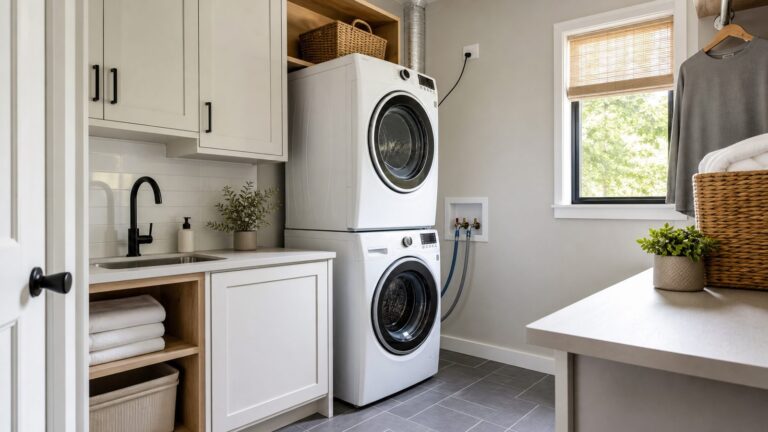
| Stacking a separate washer and dryer | Front-load | Compatible front-load pairs can usually be stacked with the correct kit. |
| Wheelchair access or limited reach into a drum | Usually front-load | A front opening can reduce the need to reach down into a deep top-load basket, but height and clear floor space still matter. |
| Deep-fill soaking | Top-load, if the model supports it | Useful for selected loads, but additional water is an efficiency trade-off rather than a universal cleaning benefit. |
| Long-term reliability | No universal winner | Brand, model, installation, maintenance, and local service matter more than loading direction alone. |
ENERGY STAR says certified front-load washers use approximately 50% less energy and water than top-load agitator washers and are approximately 25% more energy- and water-efficient than top-load impeller washers. Those are category-level comparisons, not promises that every front-loader will outperform every top-loader on every cycle.
#1 Best Overall

- Large 4.8 Cu. Ft. Capacity : Wash more in fewer loads—perfect for families and busy households with heavy laundry demands.
- UltraFresh Vent System with OdorBlock: Helps eliminate excess moisture after each wash cycle, keeping your washer interior fresh between uses.
- Built-In WiFi with SmartHQ App Integration: Remotely control your washer from your phone—start, stop, monitor, and receive alerts anytime, anywhere.
- Quick Wash Cycle (20 Minutes): Perfect for lightly soiled clothes, this cycle delivers a fast and efficient clean when time is limited.
- Time Saver Mode (35 Minutes): Enjoy a full, deep clean in just 35 minutes—ideal for mixed loads on busy days.
First, distinguish agitator and impeller top-loaders
Top-load agitator washers
A traditional agitator washer has a central post, often with fins or vanes, that moves clothing through the wash water. These machines are usually straightforward to load, offer relatively short cycles, and are commonly among the least expensive full-size options.
The trade-offs are higher water use, more fabric movement around the agitator, and less unobstructed drum space. The central post can make comforters, blankets, and other bulky items harder to distribute. Many models offer a deep-fill setting, but more water should not automatically be interpreted as better cleaning. It may increase water, sewer, and water-heating costs and can dilute detergent if used inappropriately.
Top-load impeller or HE washers
An impeller top-loader uses a low-profile wash plate, cone, or disc instead of a central post. The basket and wash plate move the load through a smaller amount of water. Because there is no tall agitator, an impeller model generally has more usable interior space than an agitator model with a similar advertised capacity.
Recommended Free Tools
Impeller machines are the more efficient top-load comparison to a front-loader. They can provide strong cleaning while retaining the convenience of a top-opening lid, but some models are more sensitive to load placement and balance. Clothes may need to be arranged around the wash plate rather than simply dropped into the basket.
ENERGY STAR and EPA WaterSense specifically distinguish agitator top-loaders from impeller top-loaders. Impeller models are generally more efficient than agitator designs, so a comparison that treats every top-loader as an old-fashioned, water-filled agitator machine gives an incomplete answer. See the EPA clothes-washer technology fact sheet for the design and efficiency comparison.
How the three washer types clean clothes
Front-load: tumbling through a shallow pool
A front-loader rotates the drum horizontally. Clothes lift and fall through a relatively small amount of water, while detergent, mechanical action, temperature, and time work together to release soil. The load does not need to be completely submerged for the machine to clean effectively.
That horizontal tumbling action also leaves the drum unobstructed. It is particularly useful for bulky loads that need room to move, although the manufacturer’s bedding and capacity instructions still control.
Agitator top-load: vertical movement around a central post
An agitator moves the load up, down, and around a central post. This can provide vigorous mechanical action and short cycles, but the action can be harder on some fabrics. The agitator also occupies space and can make a large item wrap around the post or fail to circulate properly.
Impeller top-load: movement over a wash plate
An impeller uses the wash plate, basket rotation, and water flow to move clothing. It generally uses less water than a conventional agitator machine and provides more open space, but proper loading matters. A tightly packed or poorly balanced load may not move as intended and may trigger repeated balance corrections.
Low-water washing is not evidence that a washer is doing nothing. Modern HE machines use sensors, concentrated detergent, controlled movement, and programmed rinses rather than filling the entire basket. The correct HE detergent and correct dosage are important to that design.
Which type cleans better?
Front-load washers are the strongest category-level choice for cleaning performance, but not every front-loader beats every top-loader. Consumer Reports describes front-loaders as the strongest-performing category overall in its testing, citing good stain removal, gentler fabric treatment, and greater water extraction. It also reports that HE top-loaders can deliver impressive cleaning, while agitator top-loaders may struggle more with difficult stains. See Consumer Reports’ front-loader comparison and its laundry performance guidance.
Free tools Windows power users keep installed
One-click scans. No signup required.
Individual model variation is substantial. A well-designed impeller washer can outperform a poorly designed front-loader on a particular cycle, and a top-loader may be the better choice if its heavy-soil program, controls, and loading routine match your needs. DOE test data also show meaningful variation among individual machines, so washer orientation alone cannot predict cleaning results. The DOE clothes-washer test data are useful context.
Do not confuse a deep-fill option with guaranteed stain removal. More water can help with certain heavily soiled loads or user preferences, but cleaning also depends on mechanical action, detergent concentration, temperature, cycle duration, pretreatment, and whether the load has enough room to move.
Water, energy, and the real operating cost
Efficiency is where front-loaders usually establish their clearest advantage. ENERGY STAR’s consumer comparison says:
- Certified front-load washers use approximately 50% less energy and water than top-load agitator washers.
- Certified front-load washers are approximately 25% more energy- and water-efficient than top-load impeller washers.
- A full-size ENERGY STAR washer uses about 14 gallons per load, compared with about 20 gallons per load for a standard machine.
These figures are broad comparisons. Actual use changes with load size, water temperature, selected cycle, extra rinses, deep-fill settings, household laundry volume, and the specific model.
Do these 3 things before closing this tab:
1Scan for outdated or missing drivers - takes under a minute2Clear out junk files and repair common Windows errors3Fix the driver behind crashes, sound loss and screen glitchesHow to read current U.S. efficiency metrics
For U.S. residential washers larger than 2.5 cubic feet, ENERGY STAR specification Version 8.1 is listed as in effect as of August 10, 2026. Its current thresholds are:
| Washer type | IMEF threshold | IWF threshold |
|---|---|---|
| Front-load | IMEF ≥ 2.76 | IWF ≤ 3.2 |
| Top-load | IMEF ≥ 2.06 | IWF ≤ 4.3 |
IMEF is the integrated modified energy factor; higher is better. IWF is the integrated water factor, which relates water use to capacity; lower is better. Check the current ENERGY STAR clothes-washer criteria for the applicable product class and requirements.
ENERGY STAR certification addresses efficiency thresholds. It does not guarantee that a washer has the best stain removal, quietest operation, longest life, easiest controls, or best local service network.
Use the EnergyGuide label before buying
Do not estimate running cost from the washer’s category alone. Compare the yellow EnergyGuide label on each candidate model. It provides annual energy consumption, estimated annual operating cost, and a comparison range for similar appliances. The FTC explains the label and its limits in its Energy and Water Use Labeling rule and consumer EnergyGuide guidance.
The Tool Desk
Outbyte Driver Updater FREEScan for outdated or missing drivers - takes under a minuteDriver Scan →Outbyte PC Repair FREERepair Windows errors before they cause bigger problemsFix Now →The annual estimate is not your guaranteed bill. Your actual cost depends on local electricity, natural gas, water, and sewer rates; the number of loads you run; and your selected cycles. A household washing eight loads per week will experience the efficiency difference more quickly than one washing two loads per week.
Do front-load washers reduce dryer time?
Usually, yes. Front-load washers commonly extract more water during the high-speed spin, leaving clothing less wet when it reaches the dryer. Consumer Reports identifies greater water extraction as a front-loader benefit.
This creates a whole-laundry-system effect. A washer may use less electricity directly, but the larger practical saving can come from requiring the dryer to remove less moisture. Shorter dryer cycles can reduce dryer energy use, heat exposure, and wear on clothing. The exact result depends on spin speed, fabric type, load size, dryer efficiency, and whether the high-spin setting is suitable for the garments.
A high spin speed is not automatically gentle. Delicate items, loosely woven fabrics, and garments with zippers or rough hardware can still suffer damage. Use the manufacturer’s cycle and spin recommendations rather than selecting maximum spin for every load.
Crashes, No Sound, or Screen Glitches?
Random freezes, missing sound and display glitches usually trace back to one bad driver. Find and replace yours safely.Free scan · under a minutePC Slower Than It Used to Be?
A free scan shows the junk files, broken settings and background clutter dragging Windows down - then fixes them in one click.Free scan · Windows 10 & 11Cycle time: top-loaders are usually faster, but that is not the whole story
Top-loaders generally win on the length of a normal wash cycle. In Consumer Reports testing using specific settings, front-loaders took approximately 70 to 120 minutes, HE top-loaders approximately 60 to 80 minutes, and agitator top-loaders approximately 35 to 70 minutes.
Those ranges are not universal. Soil level, load size, temperature, extra rinses, sensor adjustments, and quick-wash settings can change the time substantially. A longer front-load wash may still produce a faster complete laundry process if the better spin extraction shortens dryer time.
Choose a top-loader when short washer cycles are a daily priority and you are willing to accept higher resource use or potentially longer dryer work. Choose a front-loader when the overall throughput of washing and drying, rather than the washer timer alone, matters more.
Fabric care and clothing life
Front-load tumbling generally reduces the kind of aggressive movement associated with a central agitator. Independent testing commonly finds front-loaders gentler on fabrics, and their stronger spin can reduce time in the dryer—another source of heat and wear.
That does not make every front-loader automatically gentle. Overloading, high spin speeds, abrasive zippers, rough cycle settings, and mixing delicate items with heavy garments can damage clothing in any washer. An impeller top-loader can also be a reasonable fabric-care compromise, while an agitator model may be less suitable for fragile garments depending on its wash action.
Mold and odor: the front-loader drawback that is real but manageable
Front-loaders have a genuine odor-management disadvantage. The rubber door gasket can retain water, lint, hair, and detergent residue. If the door is closed immediately after a wash, the damp enclosed space may develop mildew or an unpleasant smell.
Consumer Reports’ 2023 owner survey found that:
- 13% of front-load owners reported mold or mildew buildup.
- 3% of HE top-load owners reported it.
- 1% of top-load agitator owners reported it.
The survey covered Consumer Reports members who purchased machines between 2014 and 2024. These are self-reported owner experiences, not laboratory failure rates or a prediction that a particular model will develop mold.
How to prevent front-loader odors
- Remove wet laundry promptly after the cycle ends.
- Wipe water, lint, and residue from the gasket, especially the folds at the bottom.
- Leave the door ajar between loads when it is safe to do so.
- Leave the detergent dispenser open so it can dry.
- Use the correct amount of HE detergent. Excess detergent creates residue and can worsen odor.
- Run the washer-cleaning or Tub Clean cycle according to the owner’s manual.
- Clean the drain pump filter if the model has an accessible filter and the manual instructs you to do so.
Maintenance intervals vary by manufacturer. Whirlpool recommends wiping the gasket after each cycle and deep-cleaning it roughly monthly or every 30 cycles. LG recommends running Tub Clean after every 30 uses and leaving the door and dispenser open to dry. Follow your specific manual rather than treating either schedule as universal: Whirlpool gasket-care instructions and LG Tub Clean instructions.
Some newer front-loaders add fans, venting systems, antimicrobial materials, or drum-drying programs. These may reduce the inconvenience of maintenance, but they do not make odor impossible. If you cannot safely leave the door open or will not perform routine cleaning, a top-loader may be the more practical choice.
Never mix bleach, vinegar, acids, or other cleaning products. Use only the cleaner and procedure approved by the manufacturer. If the odor remains after the recommended cleaning procedure, possible causes include residue in the gasket, a clogged drain pump filter, an over-sudsing problem, a dirty dispenser, a contaminated drain hose or standpipe, mold within a replaceable gasket, or a mechanical drainage fault. Persistent odor may require service.
Reliability: is one format more likely to last?
There is no reliable universal rule that top-load washers last longer. Available studies use different populations and definitions, and their results should not be treated as interchangeable.
- Consumer NZ: In a survey of 1,292 top-loaders and 2,068 front-loaders, five-year fault-free rates were 86% for top-loaders and 88% for front-loaders. This is non-U.S. data and is comparative context, not a prediction for a particular American model. See the Consumer NZ comparison.
- Yale Appliance: Its 2026 regional service data, based on 33,190 service calls, reported average first-year service rates of 4.4% for top-load washers and 4.6% for front-load washers. The data cover brands and products Yale sells and services in parts of New England, not the entire U.S. See Yale’s washer reliability data.
- J.D. Power: Its 2025 study measured reported problems per 100 appliances during the first one to three years and reported 89 problems per 100 front-load washers. Its category and brand rankings used a different methodology from Yale’s service-call rate and cannot be directly compared with it. See the 2025 J.D. Power appliance reliability study.
Front-load repairs can be more expensive when they involve the door gasket, bearings, or drum-related components. But top-load machines are not automatically simple: electronic controls, sensors, suspension systems, lids, motors, and drive components can also fail.
Before buying, find out who actually services the brand in your area, whether parts are available, what the labor warranty covers, and whether the retailer offers meaningful delivery, installation, return, and haul-away support. Local service availability can matter more than a national reliability reputation.
Purchase price versus lifetime cost
Front-load washers commonly cost more upfront, although sales and feature differences can erase the gap. Consumer Reports reported 2025 median prices of approximately:
| Washer category | Approximate median price |
|---|---|
| Front-load | $862 |
| HE top-load | $741 |
| Top-load agitator | $687 |
These are U.S. price snapshots from 2025, not fixed market prices. Capacity, brand, controls, retailer discounts, region, and specialized features can change the price quickly.
A lower purchase price does not necessarily mean a lower total cost. For a useful comparison, account for:
Quick wins for a faster PC:
Fix the driver behind crashes, sound loss and screen glitchesFind Drivers →Repair Windows errors before they cause bigger problemsFix Now →Scan for outdated or missing drivers - takes under a minuteDriver Scan →- purchase price and applicable delivery or installation fees;
- annual washer energy use from the EnergyGuide label;
- water and sewer charges;
- dryer energy associated with residual moisture;
- detergent and cleaning-product costs;
- warranty coverage and likely repair costs;
- the expected number of loads per week.
For a household that runs frequent loads for years, front-load efficiency may offset some of the higher initial price. For a low-volume household, the energy and water savings may take longer to recover. Calculate with your own utility rates instead of relying on a generic payback claim.
Detergent matters more than many buyers expect
Modern front-load and impeller top-load washers are HE designs and require or recommend HE detergent. Conventional detergent can create excessive suds in a low-water washer. Too many suds can lengthen cycles, interfere with rinsing, reduce cleaning performance, and leave residue.
Do not treat a universal tablespoon amount as correct for every load. Detergent concentration varies. Use the washer manual and detergent label, adjusting for load size and soil level. Whirlpool gives approximately two tablespoons as a general example for a normal HE load but also explains that concentration and manufacturer directions control; see its HE detergent guidance.
More detergent is not better. Oversudsing can contribute to residue and odor and may cause the washer to spend extra time trying to rinse the load.
Space, stacking, and installation
Front-load pairs generally provide the greatest installation flexibility: they can be placed side by side, stacked with a compatible dryer and approved stacking kit, or raised on a pedestal. A conventional top-load washer generally cannot be stacked with a separate dryer, although a top-load laundry center is a different all-in-one configuration.
Stacking is always model-specific. For example, GE states that only compatible front-load models with an approved stacking kit should be stacked, with the dryer on top of the washer. Review the manufacturer’s instructions, such as GE stacking guidance and Whirlpool’s stacking information.
General sizing guidance often places front-load units around 39 inches high and approximately 32 to 34 inches deep, while top-load machines may be taller because of the lid and require clearance above the washer. These are only rough ranges; actual model specifications override them. Whirlpool provides general laundry sizing guidance.
Measure the entire delivery and operating path
Before ordering, check:
- washer width, height, and depth;
- depth with hoses, ventilation space, and the door fully open;
- doorways, turns, stairs, and elevator dimensions;
- rear clearance for water hoses and the drain connection;
- front-door swing and space to load a front-loader;
- top clearance for a top-loader lid;
- height of controls, detergent drawer, and display;
- whether a pedestal changes the total height or creates a reach problem;
- whether the washer door and dryer door can both be used comfortably.
For a construction or renovation project, coordinate the washer dimensions with the finished alcove, water shutoffs, drain standpipe, electrical outlet, dryer vent, floor strength, and service access. Do not design a tight enclosure around a generic “27-inch washer” assumption.
Do these 3 things before closing this tab:
1Repair Windows errors before they cause bigger problems2Fix the driver behind crashes, sound loss and screen glitches3Clear out junk files and repair common Windows errorsAccessibility and ergonomics
A front-loader is often easier for wheelchair users or people who cannot reach deeply into a top-load basket, but it is not automatically accessible. Door height, pedestal height, clear floor space, control placement, detergent access, and door swing all affect usability.
Rank #3

- CHOOSE YOUR CYCLE—Our phenomenal BLACK+DECKER washing machine has 16 cycles you can choose: My Cycle, Quick Wash, Delicates, Wool, Baby Wear, Sanitary, Cold Wash, Tub Clean, Normal/Cotton, Permanent Press, Heavy Duty, Bulky/Large, Sports Wear, Spin Only, Drain Only and Rinse & Spin.
- IMPRESSIVE CAPACITY—With an interior stainless steel tub that is 2.7 cu. ft., this front loader washing machine (23.4” x 23.1” x 33.5”) is your solution to fresh laundry week after week. Simply load clothing, select your cycle and let this compact washer (160.9 lbs.) do all the work for you.
- ADDITIONAL CYCLE FEATURES—Additional highlights of this fantastic clothes washer is auto unbalance detection, a 1300 RPM max spin speed, easy-to-read LED control panel along with Add a Garment & Extra Rinse selections.
- SAFETY FIRST—With a Child Lock and Door Lock safety features, you can rest assured you are using a washing machine that values the well-being of others. The transparent front loading lid allows you to see your laundry cleaned in real time, spin by spin.
- QUALITY GUARANTEED—This phenomenal front load washer offers the highest quality.
The U.S. Access Board notes that front-mounted controls can provide easier access and that top-loading machines may obstruct reach to rear controls. Its accessible-washer guidance should be consulted for applicable projects and reach requirements.
A pedestal can raise the front-loader opening and reduce bending for one user while making the controls or opening harder to reach from a wheelchair. A top-loader may be preferable for someone who dislikes bending, but difficult for a shorter person trying to retrieve items from the bottom of a deep basket. If more than one person uses the laundry room, test the actual reach and loading motion rather than choosing by category.
Independent reader supportYour contribution helps us test, update, and keep practical guides available for everyone.Which washer should you choose?
Choose a front-loader if you prioritize efficiency and clothing care
Choose a front-load washer when you:
- want the lowest typical water use;
- run many loads each week;
- want to reduce dryer time and dryer energy;
- wash delicate clothing or care about fabric longevity;
- wash bulky items that benefit from an unobstructed drum;
- need or want a stacked washer-dryer pair;
- can provide front-door clearance;
- are willing to leave the door ajar and perform periodic gasket and tub maintenance;
- benefit from a front opening and properly selected height for accessibility.
Choose a top-load agitator if convenience and price come first
An agitator top-loader may be the better fit when you:
The Tool Desk
Outbyte Driver Updater FREEScan for outdated or missing drivers - takes under a minuteDriver Scan →Outbyte PC Repair FREERepair Windows errors before they cause bigger problemsFix Now →- want the lowest initial purchase price;
- prefer short normal wash cycles;
- strongly prefer loading from above;
- regularly add items after a cycle begins;
- want a model with a deep-fill option;
- do not have enough room for a front door to open;
- are unlikely to maintain a front-door gasket;
- prefer to minimize the risk of enclosed-door odor.
Choose a top-load impeller if you want a middle ground
An impeller HE washer is a sensible compromise when you want top loading, more open drum space, and lower water use than a traditional agitator. It gives up some of the front-loader’s efficiency, moisture extraction, and stacking flexibility, but may better match a household that values a top-opening lid and easier mid-cycle access.
Special situations and failure modes
“I need to add clothes after the cycle starts.”
Top-loaders are usually more convenient because the lid can often be opened once agitation or filling stops. Some front-loaders have a pause-and-add feature; others keep the door locked for most of the cycle. Check the exact model manual instead of assuming all front-loaders behave the same way.
“My laundry room is a humid basement.”
Humidity increases the front-loader’s odor-management burden. Look for a manufacturer-supported venting or drum-drying system, an accessible drain filter, a door that can remain ajar safely, and a documented cleaning cycle. Improve room ventilation or use dehumidification if necessary. A top-loader may be more practical if the door cannot be left open.
“I wash muddy work clothes, towels, or pet bedding.”
Do not equate more water with cleaner laundry. A deep-fill top-loader can be useful for selected loads, but compare heavy-duty-cycle instructions and test results for the exact model. Pretreatment, correct detergent dosing, sufficient drum space, and the appropriate cycle often matter more than simply filling the basket.
Free tools Windows power users keep installed
One-click scans. No signup required.
“I wash comforters and bulky bedding.”
Compare usable drum dimensions and the manufacturer’s bedding guidance, not only advertised cubic feet. A central agitator occupies space and can make bulky items harder to distribute. Large impeller machines and front-loaders are often more practical, but capacity ratings are not perfectly standardized.
“I have a septic system or limited water supply.”
Front-load efficiency is generally attractive when water use matters. However, do not promise a universal septic benefit. The effect depends on household load frequency, water and sewer costs, septic or drain-field design, and the condition of the system.
“I want the quietest washer.”
Front-loaders are often quieter in independent testing, but vibration depends heavily on leveling, floor construction, load distribution, and spin speed. A poorly installed front-loader can shake, while a correctly installed top-loader can be quiet. Proper installation is part of noise performance.
“The washer is unbalanced.”
First check for an overloaded basket, a single heavy item, mixed loads with very different weights, an unlevel floor or washer, or shipping bolts left installed on a front-loader. Redistribute the load and follow the installation manual before assuming a component has failed. Persistent vibration can indicate worn suspension parts, inadequate flooring, or another service issue.
A model-by-model buying checklist
Once you decide on a format, compare individual models using this checklist:
- Identify the design: front-load, top-load agitator, or top-load impeller.
- Check the actual dimensions: include hoses, door swing, lid clearance, pedestal height, and the delivery route.
- Compare usable capacity: consider the drum shape and whether an agitator occupies space.
- Review EnergyGuide data: compare annual energy use and operating-cost estimates.
- Check ENERGY STAR status: use the current U.S. criteria, but do not treat certification as a complete quality rating.
- Compare IWF and IMEF: lower IWF and higher IMEF generally indicate better efficiency.
- Review spin performance: higher extraction can reduce dryer time, but use appropriate settings for delicate items.
- Verify stacking: confirm that the exact washer, dryer, and stacking kit are approved as a combination.
- Read the maintenance instructions: check gasket care, Tub Clean requirements, drain-filter access, and whether the door must remain open.
- Check mid-cycle loading: confirm whether the model supports adding clothes after the cycle begins.
- Review accessibility: assess door or lid height, controls, detergent access, clear floor space, and door swing.
- Investigate local service: identify authorized technicians, parts availability, warranty terms, and expected labor coverage.
- Check installation and return policies: verify delivery clearance, haul-away, hookup requirements, floor conditions, and what happens if the appliance does not fit.
Do current or proposed rules change the decision?
For U.S. buyers, do not confuse proposed changes with current requirements. As of August 10, 2026, the U.S. Department of Energy’s consumer clothes-washer page describes proposed changes to water-use standards; it does not present those proposals as finalized current requirements. ENERGY STAR Version 9.0 is likewise shown as a draft development document, not the in-effect certification specification. See the ENERGY STAR specification page and the Version 9.0 draft for status.
Final verdict
Best overall: front-load. It is the strongest default for buyers who want efficient washing, strong average cleaning, fabric care, reduced residual moisture, and stacking flexibility.
Best for speed and simplicity: top-load. Choose an agitator model when low upfront price, short cycles, deep-fill capability, and easy loading matter most. Choose an impeller HE model when you want top-loading convenience with more usable space and better efficiency than a traditional agitator.
The correct decision is not “front-load always wins” or “top-load lasts longer.” Compare the exact model’s EnergyGuide data, usable capacity, maintenance requirements, fit, accessibility, warranty, and local service against the way your household actually does laundry. A washer that fits your room and your routine will usually be a better purchase than a theoretically superior format that you cannot maintain, access, or repair.
Frequently Asked Questions
Are front-load washers better than top-load washers?
Front-load washers are generally better overall for cleaning performance, water and energy efficiency, fabric care, moisture extraction, and stacking. Top-load washers can be better for shorter cycles, easier mid-cycle loading, lower upfront cost, deep-fill options, and simpler odor management. The individual model still matters.
Which is better: a top-load agitator or impeller washer?
A top-load agitator usually offers shorter cycles and a lower purchase price, but uses more water and occupies usable drum space. An impeller HE washer is generally more efficient and provides more open space, making it a closer top-load alternative to a front-loader.
Do front-load washers always get moldy?
No. Front-loaders have a higher odor and mildew risk because the door gasket can retain moisture and residue, but routine care substantially reduces the problem. Remove laundry promptly, wipe the gasket, leave the door and dispenser open to dry, use the correct HE detergent amount, and run the manufacturer’s cleaning cycle.
Recommended Free Tools
Which washer uses less water and energy?
Front-load washers generally use the least water and energy. ENERGY STAR says certified front-loaders use approximately 50% less energy and water than top-load agitator washers and are approximately 25% more efficient than top-load impeller washers. Compare the exact model’s EnergyGuide label and IWF/IMEF values for a purchase decision.
Are top-load washers more reliable than front-load washers?
There is no universal type-level reliability winner. Studies differ by country, brands, sample, time period, and whether they measure service calls, owner-reported problems, or fault-free operation. Brand, model, installation, maintenance, and local service availability are more useful buying criteria than loading direction alone.
Can any front-load washer and dryer be stacked?
No. Stacking is model-specific. The washer and dryer must be approved as a pair and installed with the manufacturer’s compatible stacking kit, with the dryer on top. A conventional top-load washer generally cannot be stacked with a separate dryer.
The Bottom Line
Bottom line: Buy a front-load washer if efficiency, cleaning, fabric care, dryer-time reduction, or stacking is your priority. Buy a top-load agitator for the lowest initial cost, fast cycles, deep-fill flexibility, and easy loading. Choose a top-load impeller when you want a more efficient top-opening compromise. In every case, verify the exact model’s fit, usable capacity, EnergyGuide data, maintenance routine, accessibility, warranty, and local service before ordering.
PC Slower Than It Used to Be?
A free scan shows the junk files, broken settings and background clutter dragging Windows down - then fixes them in one click.Free scan · Windows 10 & 11Crashes, No Sound, or Screen Glitches?
Random freezes, missing sound and display glitches usually trace back to one bad driver. Find and replace yours safely.Free scan · under a minuteQuick Recap
Product prices and availability are accurate as of the date/time indicated and are subject to change. Any price and availability information displayed on Amazon at the time of purchase will apply.