Some links on this page are affiliate links: if you buy through them we may earn a commission, at no extra cost to you.
Flush-mount wall hangers are the right hardware when you want a mirror, medicine cabinet, panel, headboard, shelf, or light wall cabinet to sit tight against the wall without bulky brackets showing. The strongest choice for most heavy residential work is a properly sized French cleat or Z-clip fastened into studs, blocking, plywood backing, or masonry. For lighter art and frames, small flush plates or self-leveling picture hangers can work well, but they should not be treated like structural supports.
On our job sites, the hanger itself is rarely the weak link. The failure usually starts at the wall: short screws, missed studs, brittle plaster, plastic anchors in drywall, cracked tile, or no blocking where a heavy item needs to land. That matters most in kitchens and bathrooms because these rooms add tile, moisture, plumbing, electrical, cabinet loads, doors that get pulled open every day, and fixtures people may accidentally grab.
As an Amazon Associate I earn from qualifying purchases.
Free tools Windows power users keep installed
One-click scans. No signup required.
The practical rule is simple: choose the hanger after you know the item weight, width, wall type, stud or blocking location, and how the piece will be used. A 30 lb framed print over drywall is one problem. A 90 lb mirror over tile, a medicine cabinet with a swinging door, or a floating shelf loaded with dishes is a different problem.
What Flush-Mount Wall Hangers Are
A flush-mount hanger is a low-profile fastening system that lets an object hang close to the wall. The hardware usually has two interlocking pieces: one part fastens to the wall, and the matching part fastens to the object. When the item is lowered into place, the two pieces lock together by shape and gravity.
#1 Best Overall

- BRACKET SIZE: 60 lbs max load/pair of clips, L x W: 1.7" x 0.73"/ 43*18.5mm, Thickness: 0.08"/ 2.0mm/, Hole Diameter: 0.2"/ 5MM, Number of Holes: 2 holes.
- HIGH QUALITY: Our flush mount brackets are made of iron with nickel plating, rust and corrosion resistant, durable and longer service life.
- FLUSH MOUNTING: Z Clip hanging bracket with interlocking design for flush mounting can prevent the mounting object from falling, strong load bearing capacity, more safety.
- EASY INSTALLATION: Simply fasten one clip to the wall with long screws with the protrusions facing upwards, then fasten the other clip to the furniture with short screws with the protrusions facing downwards, and finally install them together in an interlocking fashion.
- WIDE APPLICATIONS: The interlocking wall mount is perfect for holding picture frames, artwork, exhibition paintings, posters, headboards, clocks, mirrors, etc.
Common residential types include aluminum French cleats, Z-bar hangers, small stainless-steel flush plates, keyhole plates, cabinet hanging rails, mirror clips, and self-leveling flushmount picture hangers. Some are designed for framed art. Others are better for mirrors, panels, headboards, wall cabinets, and built-in millwork.
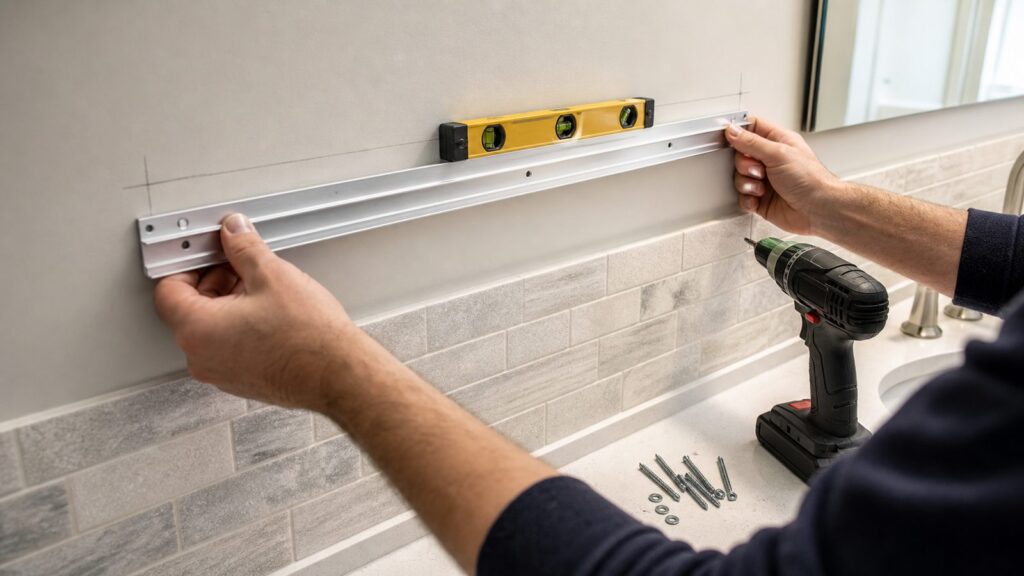
A French cleat is usually the best-known version. One beveled rail mounts to the wall and a matching beveled rail mounts to the object. Z-clips and Z-bars work on the same principle, using interlocking aluminum profiles. A continuous cleat can run 12 inches, 17 inches, 24 inches, 36 inches, or longer, while smaller clips may be only 2 inches wide.
Crashes, No Sound, or Screen Glitches?
Random freezes, missing sound and display glitches usually trace back to one bad driver. Find and replace yours safely.Free scan · under a minutePC Slower Than It Used to Be?
A free scan shows the junk files, broken settings and background clutter dragging Windows down - then fixes them in one click.Free scan · Windows 10 & 11The word “flush” deserves a reality check. No hanger makes a wall perfectly disappear. Screw heads, bracket thickness, outlet covers, tile lippage, backsplash edges, drywall waves, and proud fasteners can hold the item off the surface. Before final installation, we dry-fit the object and check whether the bottom rocks or the top binds.
Best Hanger Types by Use
For heavy mirrors, wide panels, and shallow wall cabinets, we usually prefer a continuous aluminum French cleat or Z-bar. A continuous rail spreads the load across more wall area, gives us a better chance of hitting two or three studs, and makes final leveling cleaner than trying to align two tiny plates perfectly.
For small art, signs, and light open-backed frames, stainless flush plates or self-leveling flushmount picture hanger kits can be a clean solution. Some common flushmount picture kits are intended for canvas or open-backed frames in the 20 lb to 75 lb range, depending on the exact product and installation conditions.
For cabinets, a cabinet rail or cleat system is generally better than small keyhole plates. A cabinet creates both dead load and use load. The dead load is the cabinet and contents. The use load comes from opening doors, pulling drawers, and leaning on the face frame. That repeated movement can loosen marginal anchors over time.
For towel bars, grab bars, shower seats, and anything a person may use for support, ordinary picture-hanging hardware is the wrong category. Accessibility grab bars are life-safety fixtures. ADA Section 609.8 requires grab bars, fasteners, mounting devices, and supporting structure to withstand 250 pounds of force in vertical or horizontal directions. That requires proper backing and rated fixture hardware, not decorative flush hangers.
| Hanger Type | Best Use | Typical Capacity Range | Job-Site Notes |
|---|---|---|---|
| 2-inch aluminum Z-clips | Small panels, signs, light mirrors | About 30 lb on some products | Good for light loads; not ideal for wide or valuable glass unless several clips are engineered into the layout. |
| Short Z-clip or French cleat kits | Medium art, mirrors, panels | Often 40-80 lb | Use rated screws and try to catch framing or solid backing. |
| 17-inch aluminum French cleat or Z-bar | Wide mirrors, panels, headboards | About 90 lb on some products | Better load spread and easier leveling than small plates. |
| Heavy-duty picture French cleat | Large mirrors, heavy framed art | Up to about 200 lb on some products | The wall attachment must match the rating; drywall alone is not enough for heavy items. |
| Stainless flush plates | Small shelves, frames, access panels | Varies widely | Low profile, but alignment must be precise. |
| Cabinet rail | Wall cabinets and built-ins | System-specific | Best paired with blocking, studs, or plywood backing. |
Weight Ratings Are Not the Whole Story
Published hanger capacities vary widely. Small aluminum Z-clips may be rated around 30 lb. Short Z-clip or French cleat kits are often listed around 40-80 lb. Longer 17-inch aluminum cleats may be advertised around 90 lb. Heavy-duty picture French cleats can be advertised up to 200 lb. Those numbers are useful for comparison, but they are manufacturer ratings, not a guarantee that the same hanger will safely hold that weight in every wall.
The fastener and wall assembly control the real capacity. A screw driven 1-1/4 inches into a stud is very different from a short screw in 1/2-inch drywall. A masonry screw in sound concrete or brick behaves differently from a plastic anchor in old plaster. A tile wall may look strong, but tile is only the finish surface; the load still has to transfer into cement board, framing, blocking, masonry, or a rated anchor assembly.
We build in a safety factor, especially for glass, overhead items, or anything expensive. If a mirror weighs 55 lb, we do not look for a hanger rated at exactly 55 lb and call it done. We would rather use a cleat rated well above the load and fasten it into framing or blocking. For a valuable 70 lb mirror, a 90 lb cleat into two studs may be acceptable in some layouts, but a 200 lb-rated cleat with better screw engagement gives more margin.
Quick wins for a faster PC:
Repair Windows errors before they cause bigger problemsFix Now →Fix the driver behind crashes, sound loss and screen glitchesFind Drivers →Dynamic load matters too. A medicine cabinet door gets opened hundreds or thousands of times. A headboard moves when someone sits up in bed. A towel warmer or shelf may get tugged. These forces are not the same as a static framed print hanging quietly on a wall.
How We Match the Hanger to the Wall
Before choosing hardware, identify the wall. In a typical U.S. home, you may be dealing with 1/2-inch drywall over wood studs, 5/8-inch drywall, plaster over lath, tile over cement board, tile over drywall, brick, concrete block, or poured concrete. Each wall type changes the fastener choice.
Drywall Over Studs
For heavy work, studs are the first choice. Most modern wood studs are spaced 16 inches on center, though 24 inches on center is also common. A continuous cleat lets us catch two studs on many mirrors and three studs on wide pieces. For heavy mirrors, we aim for at least two studs, and three is better when the width allows it.
Rank #2

- Package Includes: You will receive 10 round keyhole hooks and 20 matching mounting screws, sufficient for a variety of hanging needs.
- Sturdy Iron Material: Picture mounting hardware made of high-quality iron, the structure is sturdy and durable, non-deformable, and has good load-bearing capacity for a long service life.
- Sophisticated Dimensions: The keyhole hanger hooks are 25mm in diameter and 1mm thick; the center keyhole measures 10 x 18mm. Compact and rounded, they install discreetly without detracting from the aesthetics of the items being hung.
- Precise Hole Design: The key hole hanger bracket holes are 4.5mm in diameter and 16mm apart, ensuring precise and consistent positioning for quick and easy installation, ensuring stable and efficient hanging.
- Easy Installation: These round picture hangers are easy to install; simply screw the screws into the holes and then hang your item in the keyholes.
If the studs do not land where the object needs to hang, we look for blocking or add it during remodeling. In kitchens and baths, adding 2×6, 2×8, or plywood blocking before drywall or tile is one of the cheapest upgrades in the project. It can support future mirrors, medicine cabinets, floating shelves, towel warmers, shower accessories, grab bars, and wall-mounted storage.
Drywall Without Stud Alignment
Drywall anchors can be acceptable for light and moderate decorative items, but they are not our first choice for heavy, valuable, or high-use items. Toggle bolts and high-quality hollow-wall anchors are stronger than small plastic plugs, but the drywall itself can still crush, tear, or fatigue.
If a homeowner asks whether a 75 lb mirror can hang from drywall anchors only, our answer is usually: avoid it if you can. Find framing, open the wall and add blocking, use a surface backer that can be finished cleanly, or choose a different location. The cost of repairing a failed mirror and damaged wall is much higher than doing the anchorage correctly.
Tile Walls
Tile adds precision and risk. We mark holes with painter’s tape, verify layout twice, start slowly, and use the right bit for the tile. Hammer mode should stay off until the bit is through the tile surface, and even then only if the substrate calls for it. Porcelain tile is harder than ceramic and often needs a diamond bit.
The anchor still has to suit the material behind the tile. A screw into blocking behind tile is excellent. A rated masonry anchor into concrete or block can also be strong. A hollow-wall anchor through tile and drywall may be acceptable for light items, but it is not the same as structural backing.
Plaster, Brick, and Concrete
Older plaster can be brittle, and it may hide irregular framing. We drill pilot holes carefully and avoid assuming that a stud finder will read cleanly through dense plaster. Brick and concrete usually require masonry bits and compatible anchors or screws. For masonry, the condition of the material matters: soft brick, crumbly mortar, and hollow block are not equal to poured concrete.
Kitchen and Bathroom Details That Change the Job
Kitchens and bathrooms punish weak hanging details. Moisture, cleaning chemicals, steam, tile, backsplashes, and concentrated storage loads all matter. A flush-mounted mirror over a vanity may be exposed to daily condensation. A wall cabinet near a range or sink may see humidity, vibration, and repeated door movement. A shelf may start light and end up holding jars, cookware, or folded towels.
In damp rooms, we specify stainless steel, coated steel, or corrosion-resistant aluminum hardware with compatible screws. Mixing metals carelessly can speed up corrosion in humid areas. Near showers, tubs, exterior walls, and poorly ventilated bathrooms, bare low-grade steel hardware is a bad bet.
Flush mounting can also conflict with tile edges and backsplash thickness. A mirror that hangs flat on painted drywall may rock when the bottom crosses a raised tile backsplash. A cabinet cleat may need a lower spacer or rail so the cabinet face stays parallel to the wall. For large mirrors and panels, we often add bottom bumpers, rubber pads, shims, or a lower standoff so the piece does not rattle or tilt inward.
Do these 3 things before closing this tab:
1Repair Windows errors before they cause bigger problems2Fix the driver behind crashes, sound loss and screen glitches3Clear out junk files and repair common Windows errorsHidden utilities are another kitchen and bath concern. Water lines, drain vents, electrical cables, vanity lights, medicine cabinet wiring, and old abandoned lines may sit exactly where a screw wants to go. During remodels, we photograph open walls before closing them. Those photos save time later and help future installers fasten safely without exploratory holes.
Installation Sequence for a Strong Flush Mount
The best installation is boring and methodical. We start by weighing the item or checking the manufacturer’s stated weight. For a mirror, cabinet, or panel, we also measure width, height, depth, and where the center of gravity sits. A deep cabinet pulls differently on the wall than a flat framed print of the same weight.
Next, we locate studs, blocking, or masonry. We mark the top line, hanger line, and centerline. On finished walls, we confirm the layout against faucets, outlets, sconces, backsplash heights, door swings, and trim. A mirror that is structurally secure but visually 1 inch too low above a faucet still has to be moved.
Then we select the hanger. For a small 15 lb frame, a flush plate or self-leveling hanger may be enough. For a 45 lb mirror, a medium cleat fastened into studs is better. For a 75-100 lb mirror, a long cleat or heavy-duty cleat with multiple structural fasteners is the safer path. For a wall cabinet, we treat the cabinet contents and use load as part of the design, not just the empty cabinet weight.
Rank #3

- QUALITY MATERIAL - The interlocking hanging buckle is made of stainless steel with smooth surface, rustproof and durable.
- EASY TO INSTALL - Nail the two connector pieces into the wall and the picture frame respectively.
- PRACTICAL DESIGN - The stainless steel interlocking hanging buckle can be disassembled and use repeatedly.
- WIDE APPLICATION - The flush mount brackets can be applied for photo frame hanging, pictures display, mirror mounting, furniture connecting.
- PACKAGE INCLUDE - You will receive interlocking hanging buckle, 54mm in length, 30mm in width.
Predrilling matters. It prevents splitting wood, makes screws seat cleanly, and reduces wandering on tile or masonry. Screw heads must sit fully in the hanger recess. If a screw head stands proud, the object may not fully engage the cleat, or it may sit crooked off the wall.
Before final loading, we dry-fit the piece. We check that the object-side bracket fully drops into the wall-side bracket, that the bottom does not rock, and that the piece cannot lift off easily in normal use. For high-use pieces, we add an anti-lift screw, small security clip, or retaining bracket when the hardware design allows it.
Cost to Install Flush-Mount Wall Hangers in 2026
Hardware is usually the inexpensive part. Labor, wall conditions, precision layout, tile drilling, and risk control drive the real cost. In 2026, small stainless flush-mount plate sets commonly run about $8-$20 per multipack online. Short aluminum Z-clip or French cleat kits are often about $10-$25. Longer or heavy-duty cleats commonly run about $25-$60. Recent big-box examples include 2-inch aluminum French cleats rated around 30 lb, flushmount hanger kits for canvas or open-backed frames in the 20-75 lb range, a 17-inch Z-bar set listed at $58.44 and rated around 90 lb, and a 200 lb French cleat listed at $27.39.
Professional labor varies by market. National handyman pricing in 2026 is commonly quoted around $60-$125 per hour, with total handyman projects ranging from about $65-$1,200 depending on scope. Picture and mirror hanging often lands around $175-$323 through national service marketplaces, while simple picture or mirror hanging may be listed around $60-$120 for smaller jobs.
Recommended Free Tools
| Project Type | Typical 2026 Cost | What Changes the Price |
|---|---|---|
| DIY small frame or light mirror | $25-$100 if basic tools are already owned | Hardware, anchors, level, drill bits, patch supplies |
| DIY with new tools | $150-$250+ | Stud finder, tile bit, masonry bit, better anchors, longer level |
| Simple professional mirror or art install on drywall | $75-$250 | Trip minimum, item size, stud alignment, layout precision |
| Heavy mirror, cabinet, tile, masonry, or multiple items | $200-$600+ | Tile drilling, blocking, access, hidden utilities, wall repair |
| Added blocking during remodel | Often low incremental cost during open-wall work | Wall already open, lumber type, inspection schedule |
If walls must be opened to add blocking, drywall repair, paint, tile work, and return trips can exceed the cost of the hanging hardware many times over. That is why we plan backing during rough-in whenever a kitchen or bath layout is being changed.
When to DIY and When to Hire a Pro
A careful homeowner can usually DIY a light or medium flush-mount installation on standard drywall when the item is not fragile, studs are easy to locate, and the hanger instructions are clear. A 20 lb framed print, small sign, or modest mirror can be a reasonable weekend task with a drill, level, tape measure, stud finder, and correct fasteners.
Hire a pro when the item is heavy, expensive, glass, oversized, overhead, mounted over tile or stone, or connected to a cabinet or fixture that will be used daily. Also hire help when you are unsure what is inside the wall. In kitchens and baths, a misplaced screw can hit wiring, a water line, or a drain vent. The repair can quickly turn a small hanging job into a plumbing, electrical, drywall, or tile project.
For grab bars, shower seats, fold-down benches, and accessibility fixtures, use a contractor familiar with structural backing and fixture requirements. Do not rely on decorative flush-mount hangers. The support has to be designed for a person’s weight and force, not just the weight of the accessory.
The Tool Desk
Outbyte PC Repair FREERepair Windows errors before they cause bigger problemsFix Now →Outbyte Driver Updater FREEFix the driver behind crashes, sound loss and screen glitchesFind Drivers →In homes built before 1978, painted surfaces may contain lead. A paid contractor who disturbs painted surfaces generally has to follow EPA Renovation, Repair and Painting rules, including certification and lead-safe work practices. For a small hanger installation, this may be as simple as controlling dust and following proper procedures, but it should not be ignored in older homes.
Independent reader supportYour contribution helps us test, update, and keep practical guides available for everyone.Safety, Permits, and Code Notes
Most simple mirror, art, and panel hanging jobs do not require a building permit in typical residential work. That changes when the work becomes part of a larger remodel, involves electrical relocation, plumbing, structural changes, commercial accessibility requirements, or fixtures that must meet code.
Wall-hung cabinets may not need a permit by themselves, but kitchen and bath remodels often do when electrical, plumbing, ventilation, or structural work is involved. If blocking is added while walls are open under a permitted remodel, the inspector may see it as part of the overall wall assembly. Local rules vary, so the safest answer is to check with the local building department when the hanging work is tied to a larger scope.
For accessibility work, separate decorative hanging from structural support. A mirror may need to be mounted at an accessible height in a commercial restroom, but the mirror hanger itself is not the same issue as a grab bar. Grab bars require fasteners and supporting structure that can resist a 250 lb force. That requirement belongs in the framing and backing plan before tile or wall finishes go up.
What’s actually slowing this PC down?
Pick the symptom - the matching free tool is one click away.
Common Mistakes We Avoid
The most common mistake is choosing hardware by the advertised weight rating without checking what that rating assumes. A cleat rated for 100 lb may perform that way only with proper screws into framing or another approved substrate. The same cleat installed with weak anchors in damaged drywall is not a 100 lb system.
Rank #4
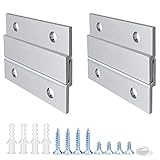
- [ What You Get ] : 2 pairs 2 Inch french cleat picture hanger X 4 pieces self-tapping screws X 4 pieces self drilling screw X 4 pieces expansion rubber plugs X 4 pieces clear bumpers
- [ Easy to Install ]: This interlocking wall mounting bracket hardware kit includes all of the tools for a quick and easy installation. With mini square spirit level that can keep standard level, you’ll have all you need to begin hanging your memories throughout home
- [ Safe & Portable Z Hanger ] : Install these beneficial screws in wood, drywall, and other wall compositions. Our picture hanging kit will keep your valuables securely mounted onto the wall for your safety and convenience
- [ Multi- Purpose Usages ]: French cleat picture hanger is an ideal tool for hanging mounting wall panels, mirrors, photo, shelf ,headboards, artwork, cabinet, partition, whiteboard, art Frames and more
- [ Highly Flexible Z Bar Clips ] : You can change your design easily, create a new look wall art for home from time to time. The French cleat is reusable. Note:For hanging heavy objects, we recommend adding more screws or buying more stable screws
The second mistake is using screws that are too short or too soft. A screw should match the hanger holes, penetrate framing enough to matter, and seat cleanly without stripping. Drywall screws are not universal structural fasteners. Cabinet screws, construction screws, masonry screws, or manufacturer-provided fasteners may be more appropriate depending on the wall.
Leveling is another failure point. If the wall cleat is out of level, trying to correct the object-side bracket usually creates more problems. We set the wall cleat level first, then verify the object-side hardware is parallel and centered.
Flush clearance is easy to underestimate. Tile thickness, backsplash transitions, wall waviness, screw heads, and bracket stack-up can all keep a piece from sitting flat. A lower bumper or spacer often solves this, but it should be planned before the final holes are drilled.
PC Slower Than It Used to Be?
A free scan shows the junk files, broken settings and background clutter dragging Windows down - then fixes them in one click.Free scan · Windows 10 & 11Crashes, No Sound, or Screen Glitches?
Random freezes, missing sound and display glitches usually trace back to one bad driver. Find and replace yours safely.Free scan · under a minuteFinally, many people ignore lift-off risk. A French cleat is strong in downward load, but some designs can be lifted off the wall if bumped from below. For headboards, cabinets, rental properties, children’s rooms, and busy bathrooms, a small retaining screw or security clip is worth considering.
Bottom Line
Flush-mount wall hangers are excellent hardware when the whole load path is right. For light items, small flush plates or self-leveling kits can keep the installation clean and simple. For heavy mirrors, panels, headboards, and wall cabinets, a continuous French cleat or Z-bar fastened into studs, blocking, plywood backing, or masonry is the more dependable choice.
The professional approach is to start with the wall, not the package rating. Weigh the item, locate structure, account for tile and moisture, use corrosion-resistant hardware where needed, and build in a safety margin. If the wall is open during a kitchen or bath remodel, add blocking anywhere future hanging loads might land. That small decision can save hundreds of dollars and prevent failed anchors, cracked tile, and unsafe fixtures later.
Frequently Asked Questions
What is the strongest flush-mount hanger for a heavy mirror?
For most heavy mirrors, a continuous French cleat or Z-bar fastened into at least two studs or solid blocking is the strongest practical choice. Heavy-duty cleats may be rated up to about 200 lb, but the wall connection must support that load.
Quick wins for a faster PC:
Repair Windows errors before they cause bigger problemsFix Now →Fix the driver behind crashes, sound loss and screen glitchesFind Drivers →Can flush-mount hangers be used on drywall without studs?
Yes, but only for light or moderate decorative items using anchors rated for the wall condition and load. For heavy mirrors, cabinets, shelves, or high-use pieces, studs, blocking, plywood backing, masonry, or another structural substrate is much safer.
How much weight can a French cleat or Z-clip hold?
Small 2-inch Z-clips may be rated around 30 lb, short cleat kits often fall around 40-80 lb, longer 17-inch cleats may be around 90 lb, and heavy-duty picture cleats can be advertised up to 200 lb. Treat those as product ratings only; actual performance depends on the fasteners and wall.
Are flush-mount hangers safe for bathroom walls?
They can be, if the hardware is corrosion-resistant and the fasteners are appropriate for the wall. In bathrooms, use stainless steel, coated steel, or aluminum hardware near moisture, and fasten heavy items into blocking, studs, or masonry whenever possible.
How much does professional mirror or wall cabinet hanging cost in 2026?
A simple professional mirror or art installation on drywall often runs about $75-$250. Heavy mirrors, tile walls, masonry, cabinets, multiple items, or added blocking commonly run about $200-$600 or more, with wall repair billed separately.
Recommended Free Tools
Can I use a flush-mount hanger for a grab bar?
No. Grab bars and accessibility fixtures need structural backing and rated fasteners. ADA standards require grab bars and their supporting structure to withstand 250 lb of force, which is not what ordinary picture or mirror hangers are designed for.
Quick Recap
Product prices and availability are accurate as of the date/time indicated and are subject to change. Any price and availability information displayed on Amazon at the time of purchase will apply.

