Some links on this page are affiliate links: if you buy through them we may earn a commission, at no extra cost to you.
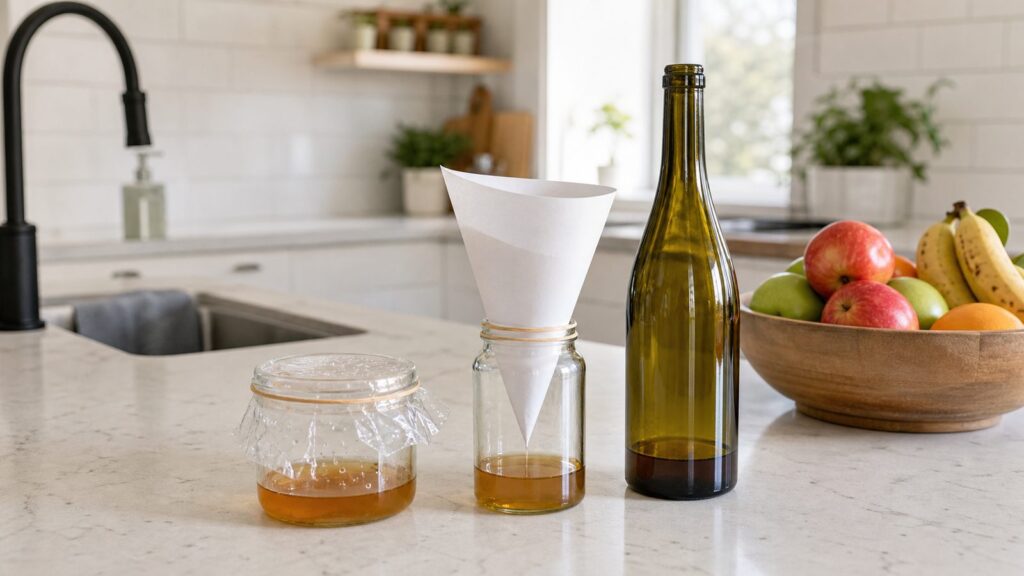
If you need a fruit fly trap right now, make this first: pour 1/4 cup of apple cider vinegar into a small jar, add 1 to 2 drops of dish soap, cover the top with plastic wrap, and poke 6 to 10 small holes with a toothpick. Set it beside the fruit bowl, sink, trash can, recycling bin, compost pail, or bar area where you see the most activity. It takes about 3 minutes and usually costs less than $1 if you already have the basics in the kitchen.
That trap works because fruit flies are attracted to fermenting material: ripe fruit, vinegar, beer, wine, and residue in trash or drains. The dish soap breaks the surface tension so adults that land on the bait sink instead of standing on top of it.
As an Amazon Associate I earn from qualifying purchases.
But here is the part many homeowners miss: traps catch adult flies. They do not remove the breeding source. On our job sites, when we see fruit flies around a temporary kitchen, break room, or finished basement bar, the fix is never just a cup of vinegar. We look for the wet organic residue: overripe produce, sticky recycling, food residue under the trash liner, a dirty sink strainer, buildup under the garbage disposal splash guard, damp mop heads, compost pails, floor mats, and drain biofilm.
A fruit fly life cycle can run roughly 8 to 11 days under favorable conditions, so one missed source can make the problem look like it came back overnight. The right approach is simple: inspect for 10 minutes, set 2 to 4 traps in the right locations for 48 hours, clean the source, then refresh traps every 2 to 3 days until activity stops.
Start With a 10-Minute Source Audit
Before you make a trap, walk the kitchen like a builder checking a punch list. Fruit flies are small, but the sources are usually obvious once you stop looking only at the flying adults.
Popular on Amazon

- COMPREHENSIVE COVERAGE: 4-pack of TERRO fruit fly traps for indoors with 180 days of lure supply provides comprehensive pest control coverage for your home's fruit fly infestations
- FAST-ACTING CONTROL: The liquid bait attracts and eliminates fruit flies within days, targeting common problem areas like fruit bowls, trash cans, and kitchen countertops for maximum impact while reducing fruit fly populations efficiently
- DISCREET DESIGN: Apple-shaped fly trap indoor design blends seamlessly with your fruit display while built-in monitoring windows allow easy tracking of catches and lure levels throughout use, maintaining discretion in your kitchen environment
- LONG-LASTING PROTECTION: Each ready-to-use flying insect trap provides up to 45 days of continuous protection with non-staining formula that requires no mixing or preparation, ensuring consistent pest control performance
- TARGET BREEDING AREAS: Place near fruit fly breeding areas to maximize effectiveness, helping eliminate pest populations and maintain a clean, comfortable living environment free from annoying flying insects
Check these areas in order:
- Fruit bowl: bananas, tomatoes, peaches, berries, melons, apples, and any bruised or overripe produce.
- Pantry produce: onions, potatoes, squash, fruit stored in bags, and anything forgotten in a cabinet.
- Trash can: residue under the bag, around the rim, on the lid, and in the bottom of the can.
- Recycling: bottles, cans, juice containers, wine bottles, beer cans, and sticky bins.
- Sink area: sink strainer, stopper, garbage disposal, splash guard, dish brush, sponge, and drain opening.
- Compost pail: lid seal, liner, handle, and the area underneath it.
- Cleaning storage: mop bucket, wet mop head, floor mats, and damp towels.
- Small appliances: under the toaster, coffee maker, blender base, air fryer, or counter appliances where crumbs and liquid can collect.
Remove or refrigerate ripe produce during an outbreak. Rinse bottles and cans before they go into recycling, let them drain, and empty the bin more often in warm months. If the trash can has sticky residue, wash it with hot water and dish soap, then let it dry before adding a new liner.
Quick wins for a faster PC:
Clear out junk files and repair common Windows errorsFree Scan →Fix the driver behind crashes, sound loss and screen glitchesFind Drivers →Use the traps as indicators. If one trap catches 20 flies beside the recycling bin and another catches 2 beside the fruit bowl, the recycling area deserves your first cleanup pass. For the first 48 hours, 2 to 4 traps are better than one trap in a random location.
Trap 1: Apple Cider Vinegar and Dish Soap Jar
This is the best all-around DIY fruit fly trap for most homes. It is cheap, fast, and easy to place near a sink, trash can, pantry shelf, or fruit bowl.
Materials
- Small jar, cup, or bowl, ideally 4 to 8 ounces
- 1/4 cup apple cider vinegar, about 2 fluid ounces
- 1 to 2 drops dish soap
- Plastic wrap, rubber band, foil, or a punctured lid
- Toothpick, skewer, or small nail for holes
How to Make It
- Pour 1/4 cup of apple cider vinegar into the jar.
- Add 1 to 2 drops of dish soap. Do not overdo it; too much soap can reduce the fermented odor that attracts flies.
- Cover the opening with plastic wrap and secure it with a rubber band.
- Poke 6 to 10 small holes in the top. A toothpick-sized hole is usually enough.
- Set the trap within 1 to 3 feet of the activity, not across the room.
The covered top slows escape and reduces the chance of spills. A wide, shallow bait surface can catch well, but in a working kitchen, a covered jar is usually the cleaner setup.
Placement Tips
Put one trap near the suspected source and one nearby backup location. Good first placements are beside the fruit bowl, behind the sink faucet, beside the trash can, on top of the recycling bin lid, near the pantry produce shelf, or near a wet bar. If the flies are mostly around a garbage disposal, place the trap beside the sink after you clean the disposal, not before.
Recommended Free Tools
Cost
A 32-ounce store-brand apple cider vinegar bottle is commonly around $2.36 in 2026. Since one trap uses 2 ounces, the vinegar cost is about $0.15 per trap. Raw, unfiltered, or branded 32-ounce vinegar often runs about $4.27 to $6.17, which puts the bait liquid around $0.27 to $0.39 per trap. Dish soap is effectively under a few cents because the trap uses only 1 to 2 drops. If you reuse a jar, the full trap usually costs about $0.10 to $0.50.
Trap 2: Paper-Cone Ripe Fruit Trap
The paper-cone trap is a good choice when the flies are ignoring vinegar or when you have a small piece of fruit that is already attracting them. It works by using ripe fruit or vinegar as bait and a funnel-shaped cone to make entry easier than escape.
Materials
- Small jar, drinking glass, or cup
- Ripe banana peel, peach scraps, melon rind, or 1 to 2 ounces of apple cider vinegar
- Sheet of paper
- Tape
- Optional: 1 drop dish soap if using liquid bait
How to Make It
- Place a small amount of ripe fruit or vinegar in the bottom of the jar.
- Roll a sheet of paper into a cone with a small bottom opening, about 1/8 to 1/4 inch wide.
- Tape the cone so it holds its shape.
- Set the cone into the jar with the narrow tip pointing down.
- Keep the cone tip above the bait. Do not let it touch the fruit or liquid.
- Tape around the rim if gaps are large enough for flies to escape.
The cone tip matters. If it touches the bait, flies can crawl back up the wet paper. Leave a little air space between the funnel opening and the bait surface.
Also popular on Amazon

- COMPREHENSIVE COVERAGE: 6-pack of TERRO fruit fly traps for indoors with 270 days of lure supply provides comprehensive pest control coverage for your home's fruit fly infestations
- FAST-ACTING CONTROL: The liquid bait attracts and eliminates fruit flies within days, targeting common problem areas like fruit bowls, trash cans, and kitchen countertops for maximum impact while reducing fruit fly populations efficiently
- DISCREET DESIGN: Apple-shaped fly trap indoor design blends seamlessly with your fruit display while built-in monitoring windows allow easy tracking of catches and lure levels throughout use, maintaining discretion in your kitchen environment
- LONG-LASTING PROTECTION: Each ready-to-use flying insect trap provides up to 45 days of continuous protection with non-staining formula that requires no mixing or preparation, ensuring consistent pest control performance
- TARGET BREEDING AREAS: Place near fruit fly breeding areas to maximize effectiveness, helping eliminate pest populations and maintain a clean, comfortable living environment free from annoying flying insects
Best Uses
Use this trap near fruit bowls, pantry produce, compost pails, or anywhere the flies are clearly interested in ripe produce. Banana peel works well because it ferments quickly, but use a small piece. You do not need to build a buffet. A square of peel, a peach scrap, or 1 to 2 tablespoons of bait is enough.
Refresh this trap every 2 to 3 days, or sooner if the fruit grows mold, dries out, or smells worse than the source you are trying to eliminate. If the trap becomes the strongest food source in the room, you have waited too long.
Trap 3: Leftover Wine or Beer Bottle Trap
If the fruit flies are near a bar, dining area, recycling bin, or party cleanup, a wine or beer bottle trap is the fastest option. The fermented smell attracts adults, and the narrow neck works like a built-in funnel.
Materials
- Empty wine bottle, beer bottle, or narrow-neck bottle
- 1/2 to 1 inch of leftover wine or beer
- 1 drop dish soap
- Optional: plastic wrap for the top if flies escape easily
How to Make It
- Leave 1/2 to 1 inch of wine or beer in the bottle.
- Add 1 drop of dish soap and swirl gently.
- Set the bottle near the activity.
- If flies enter and escape, cover the opening with plastic wrap and poke 3 to 5 small holes.
This trap is useful after cookouts, holidays, or weekend gatherings, especially when bottles and cans sit in recycling overnight. It also helps diagnose whether the recycling zone is the problem. If this trap fills quickly, rinse bottles and cans before storage and empty the bin more often.
DIY Fruit Fly Trap Cost Comparison
Most DIY traps cost pennies if you already have jars, cups, paper, vinegar, and soap. The real cost difference comes from buying containers, choosing branded vinegar, or deciding to use commercial traps or professional treatment.
Windows Errors? Fix Them Before They Spread
Repair common Windows errors and clear accumulated junk for a smoother, more stable PC - no reinstall needed.Free scan · no reinstallCrashes, No Sound, or Screen Glitches?
Random freezes, missing sound and display glitches usually trace back to one bad driver. Find and replace yours safely.Free scan · under a minute| Option | Typical 2026 Cost | Best For | Limitations |
|---|---|---|---|
| Apple cider vinegar and dish soap jar | About $0.10 to $1.50 per setup; vinegar usually about $0.15 to $0.40 per 1/4-cup trap | Fast kitchen trapping near fruit, trash, sink, pantry, or compost | Catches adults only; bait needs refreshing every 2 to 3 days |
| Paper-cone fruit trap | Usually under $1 if using scrap fruit and a reused jar | Fruit bowl, pantry produce, compost pail, or flies ignoring vinegar | Can become messy or moldy if left too long |
| Wine or beer bottle trap | Near $0 if using leftovers; under a few cents for soap | Bars, recycling bins, party cleanup, wine or beer residue | Works best close to the source; bottle must be discarded or washed |
| Commercial indoor fruit fly traps | Common listings around $13.94 for a 4-count fruit fly trap pack; plug-in sticky/light traps around $14.97 to $37.47 | Convenience, cleaner appearance, ongoing monitoring | Still does not remove breeding sources |
| Drain gel or enzyme cleaner | Varies by product and size | Drain biofilm, disposal buildup, sink or floor-drain activity | Works best after mechanical brushing; must be used per label |
| Professional fruit fly service | Average about $150 to $300; minor jobs around $100; severe or widespread infestations can reach $700+ | Persistent infestations, multiple rooms, food-service risk, floor drains, rental or commercial spaces | Cost depends on inspection, sanitation work, follow-up visits, and local labor rates |
For a normal kitchen outbreak, start with DIY traps and source cleanup. If you are dealing with multiple rooms, floor drains, a commercial kitchen, or a problem that survives a full week of sanitation, the cost is no longer about the trap. It is about finding and correcting the breeding area.
Where to Put Fruit Fly Traps
Placement makes or breaks the result. One trap on a clean counter can look useless while flies breed 8 feet away in a sticky recycling bin.
Use this placement sequence:
- Put the first trap within 1 to 3 feet of the heaviest activity.
- Put the second trap near the next most likely source: sink, trash, recycling, fruit bowl, compost, pantry, or bar.
- For the first 48 hours, run 2 to 4 traps at once.
- After 48 hours, keep the traps that are catching flies and remove the ones that are not.
- Date each trap with tape and refresh the bait every 2 to 3 days.
Trap counts are useful. A jar near the sink catching 30 flies while the fruit bowl trap catches 3 tells you to clean the disposal, splash guard, strainer, and drain opening. A trap near recycling catching the most flies tells you to rinse containers, clean the bin, and empty it more often.
Also popular on Amazon

- Highly Effective & Reliable Fruit Fly Catcher: This fruit fly trap is expertly engineered to stop fruit flies where they hover most—kitchen counters, trash bins, and near fruit. See results in just 24 hours!
- Natural Attractant That Works: Our fruit fly traps use a natural liquid bait that mimics decaying fruit to lure flies fast. No harsh smells or chemicals—just clean, safe, and powerful fruit fly control for any space in your home.
- Extended Protection - Up to 3 weeks: Enjoy long-lasting protection with our fruit fly trap. Each bottle offers up to 3 weeks of continuous coverage—just place it in high-traffic areas and let this powerful trap do the work.
- Safe Around Kids & Pets: Made with natural, non-toxic ingredients, this fruit fly catcher for indoor use is safe to use around kids and pets. No need to stress about dangerous chemicals in your home—our fruit fly killer is a safe, effective, and family-friendly way to deal with annoying flies.
- Sustainable Trap Design: This is more than just an effective fruit fly trap—it’s a planet-friendly solution. The liquid bait is crafted from natural ingredients, and the bottle and packaging are made with recycled materials, so you can keep your home free from flies while keeping waste to a minimum.
Clean the Source or the Flies Come Back
Fruit flies are a sanitation and moisture problem first. Sealing building gaps, repairing screens, and maintaining door sweeps are good prevention measures, but an indoor fruit fly outbreak is usually not solved at the exterior wall. It is solved at the breeding source.
The Tool Desk
Outbyte PC Repair FREERepair Windows errors before they cause bigger problemsFix Now →Outbyte Driver Updater FREEScan for outdated or missing drivers - takes under a minuteDriver Scan →Produce and Pantry
Refrigerate or cover ripe produce during an outbreak. Pay special attention to bananas, tomatoes, peaches, berries, melons, and bruised fruit. Check bags of onions and potatoes for one bad piece at the bottom. A single leaking tomato or peach in a pantry can support a surprising amount of activity.
Trash and Recycling
Remove the trash bag and inspect the can itself. Wash the rim, lid, foot pedal area, and bottom of the can with hot water and dish soap. For recycling, rinse bottles and cans, let them drain, and do not store sticky containers for a week in a warm garage or mudroom. During warm months, shorten the interval between recycling pickups or bin emptying when possible.
Garbage Disposal
The garbage disposal splash guard is a common miss. Food residue collects on the underside of the rubber baffles above the drain line, where a quick rinse does not reach. Lift the splash guard carefully if your model allows it, scrub the underside with a brush and dish soap, then run hot water while operating the disposal. If the splash guard is removable and deteriorated, replacing it is often cleaner than trying to rescue it.
Drains and Biofilm
If flies are concentrated around sinks, floor drains, wet bars, laundry rooms, or basement utility areas, do not rely on bleach alone. Small flies can breed in organic buildup and biofilm along the drain wall. Use a stiff drain brush or appropriate drain-cleaning tool to disturb the buildup, then use an enzyme or bio-sanitation product according to the label if needed.
Free tools Windows power users keep installed
One-click scans. No signup required.
Read and follow every pesticide, sanitizer, drain product, or fogger label. More product is not a better plan. Total-release foggers are not a smart first response for fruit flies in a home kitchen because they do not remove the breeding material, and misuse can create safety hazards.
Fruit Flies, Drain Flies, or Fungus Gnats?
Identification matters because the fix changes. Many small flying insects get called fruit flies, but they do not all breed in the same place.
| Pest | What You Usually See | Likely Source | Best First Fix |
|---|---|---|---|
| Fruit flies | Small tan or brown flies around fruit, trash, recycling, vinegar, wine, beer, or compost | Fermenting produce, sticky containers, trash residue, compost, disposal residue | Remove food source, clean residue, set vinegar or fruit traps nearby |
| Drain or moth flies | Small fuzzy flies near sinks, floor drains, bathrooms, laundry rooms, or wet utility areas | Drain biofilm, wet organic buildup, floor drains, neglected traps | Mechanically clean drains and use appropriate enzyme or bio-sanitation products per label |
| Fungus gnats | Small dark flies around houseplants and damp potting soil | Overwatered plants, wet soil, organic potting mix | Let soil dry appropriately, adjust watering, use plant-safe monitoring traps |
If activity is mainly in a bathroom or around a floor drain, a fruit fly vinegar trap may catch a few adults but miss the real issue. If activity is mostly around houseplants, look at watering and soil moisture before blaming the kitchen.
Also popular on Amazon

- Catch Flying Insects 24/7: This plug-in flying insect trap uses blue & UV light to attract and catch house flies, fruit flies, gnats, and flying pests. Its continuous attraction helps catch insects day and night for everyday indoor flying pest control.
- No-Mess Adhesive Cartridge: Disposable glue cartridge works like bug sticky traps by holding trapped insects hidden on the wall-facing adhesive pad, while the no-mess tab makes cartridge removal simple when it is time to toss and replace.
- Spray-Free, Zap-Free, Odor-Free Design: This quiet fly trap helps quickly and continuously control small flying insects indoors without spraying, zapping or added odors, making it a discreet everyday option in kitchens, living rooms, bathrooms, enclosed patios, and other indoor spaces.
- Family-Friendly Fly Trap: Safe for use around children and pets when used as directed.* Works best placed near the source - fruit bowls, trash bins and indoor plants, where flying insects and fungus gnats gather.
- Year-Round Indoor Fly Control: Blinking blue light reminds you to check the cartridge every six weeks. Includes 1 device & 1 cartridge for everyday fly control in your kitchen and home. Stock up on refills or choose a Value Pack to keep a fly catcher in every room.
When to DIY vs. When to Hire a Pro
DIY is the right first move for most residential kitchen fruit fly problems. A homeowner can usually handle a small outbreak with 2 to 4 traps, a 10-minute source audit, and a real cleanup of produce, trash, recycling, sink, and disposal areas.
Do these 3 things before closing this tab:
1Fix the driver behind crashes, sound loss and screen glitches2Clear out junk files and repair common Windows errors3Scan for outdated or missing drivers - takes under a minuteGive the DIY approach 7 to 10 days if you are actively removing sources and refreshing traps. That timeframe matters because the life cycle can be short, and adults may keep appearing for several days after cleanup if eggs or larvae were already present in a missed area.
Call a professional when:
- Flies persist more than 7 to 10 days after source removal.
- Activity appears in multiple rooms or on multiple floors.
- Flies are concentrated around floor drains, commercial sinks, wet bars, or utility areas.
- The property has restaurant, food-service, rental, office, or health-code exposure.
- You cannot identify the breeding source after a careful inspection.
- You are dealing with recurring moisture, drainage, or building maintenance issues.
Professional fruit fly service commonly runs about $150 to $300 in 2026, with minor jobs around $100 and severe or widespread infestations reaching $700 or more when multiple treatments or follow-ups are needed. Price varies with property size, number of breeding areas, drain involvement, residential versus commercial use, local labor rates, urgency, after-hours service, and whether sanitation work is included.
For structural pest work, licensing rules vary by state. Texas and North Carolina, for example, regulate structural pest control licensing. If a contractor or pest company is applying pesticides, ask whether the applicator is properly licensed for that work and what product is being used. Always follow EPA label directions for pesticide products.
Common Mistakes That Make Fruit Fly Traps Fail
The trap recipe is rarely the problem. The setup, placement, or cleanup usually is.
What’s actually slowing this PC down?
Pick the symptom - the matching free tool is one click away.
- Leaving the source in place: traps cannot outwork a leaking peach, sticky trash can, or dirty drain.
- Using too much dish soap: 1 to 2 drops is enough. More can mask the bait odor.
- Making holes too large: large openings let flies escape. Use toothpick-sized holes.
- Letting traps sit too long: refresh bait every 2 to 3 days indoors, or sooner if it dries, molds, smells bad, or fills with insects.
- Placing traps randomly: set traps near the activity, not where they look tidy.
- Misidentifying the insect: fruit flies, drain flies, and fungus gnats need different source fixes.
- Ignoring the disposal splash guard: the underside often holds organic residue above the drain line.
- Relying on sprays or foggers: killing adults without removing breeding material leads to rebound.
The Practical 48-Hour Plan
If you want the fastest clean result, use this simple sequence.
- Minute 0 to 10: inspect produce, pantry, trash, recycling, sink, disposal, compost, mop area, and under small appliances.
- Minute 10 to 20: remove bad produce, take out trash, rinse recycling, wash the trash can, and move ripe produce into the refrigerator.
- Minute 20 to 30: make 2 to 4 traps. Use at least one apple cider vinegar jar and one trap near the most active location.
- Hour 24: compare trap counts and clean the area near the most productive trap again.
- Hour 48: discard or refresh weak traps, keep productive traps, and inspect drains or the disposal if sink activity remains high.
- Days 3 to 10: refresh bait every 2 to 3 days and keep sanitation tight for at least one life cycle after the last visible adult.
A fruit fly problem is usually small, but it rewards precision. Put the bait where the flies are, clean the wet organic residue they are breeding in, and keep the area dry and boring for a week. That is what actually ends the cycle.
Also popular on Amazon

- ATTRACTS AND KILLS FRUIT FLIES. Proven to work and easy to use, this fruit fly trap is designed to bait and kill quickly. Starts working as soon as you untwist the cap. Just set it where you don’t want anymore fruit flies and forget it! Lasts up to 21 days.
- PROTECT YOUR KITCHEN AND HOME. This versatile solution is safe for use throughout your home and kitchen areas. Use in areas where fruit flies breed such as around kitchen sinks, garbage cans, dishwashers, dining tables, and near fruits and vegetables on counter tops.
- SAFE AROUND KIDS AND PETS WHEN USED AS DIRECTED. Because this fruit fly catcher is plant-powered, you don’t have to worry when using this around kids and pets. Safe to use as needed around your loved ones, throughout the house, yet powerful enough to fully eliminate fruit flies and provide lasting defense of your household.
- PLANT-POWERED AND POWERFULLY EFFECTIVE. Powered by plants, this fruit fly sticky trap is a safe alternative to commonly-used fruit fly traps that contain nasty ingredients. No artificial colors or fragrances. Cruelty-free.
- EASY SOLUTION THAT WORKS FAST. This eco-conscious fruit fly trap can be easily used around the home, throughout the kitchen, and any other living areas without the mess. For protection and prevention, make sure to replace the trap every 21 days or as often as desired for a bug-free home. Made in the USA from plant-based ingredients.
Frequently Asked Questions
What is the fastest DIY fruit fly trap?
The fastest trap is a small jar with 1/4 cup apple cider vinegar and 1 to 2 drops of dish soap, covered with plastic wrap and punctured with small holes. It takes about 3 minutes to make and should be placed within 1 to 3 feet of the activity.
How much apple cider vinegar and dish soap should I use?
Use 1/4 cup, or 2 fluid ounces, of apple cider vinegar and only 1 to 2 drops of dish soap. Too much soap can reduce the fermented smell that attracts fruit flies.
Why is my vinegar fruit fly trap not working?
The trap is usually too far from the source, the holes are too large, the bait is old, or the insect is not actually a fruit fly. Check fruit, trash, recycling, compost, drains, and the garbage disposal splash guard.
Are fruit flies coming from my sink drain?
They can be, especially if there is organic residue in the sink strainer, garbage disposal, splash guard, or drain biofilm. If the flies are fuzzy and concentrated around drains or bathrooms, they may be drain flies rather than fruit flies.
How long does it take to get rid of fruit flies with DIY traps?
You may see fewer adults within 24 to 48 hours, but full control often takes 7 to 10 days if a breeding source was present. Keep traps refreshed every 2 to 3 days and continue sanitation after the last visible adult.
When should I call a pest control professional?
Call a pro if flies persist more than 7 to 10 days after cleanup, appear in multiple rooms, cluster around floor drains, or affect a food-service, rental, office, or health-code-sensitive property.
Quick Recap
Product prices and availability are accurate as of the date/time indicated and are subject to change. Any price and availability information displayed on Amazon at the time of purchase will apply.

