Free tools Windows power users keep installed
One-click scans. No signup required.
DIY fence planters are one of the fastest ways to make a plain backyard fence feel intentional. They add color, soften hard fence lines, create a small herb garden, and can even improve privacy without rebuilding the yard. The mistake many homeowners make is treating every planter like a lightweight decoration. A small hanging pot is one thing. A 36-inch box filled with wet potting mix, mature plants, and water can weigh about 75 pounds.
On our job sites, we look at fence planters the same way we look at any exterior attachment: load, water, fasteners, and maintenance access. If those four details are handled correctly, a planter can last for years. If they are ignored, the planter can pull pickets loose, stain the fence, hold moisture against wood, crack vinyl panels, or drip onto a neighbor’s side of the property.
Below are 10 buildable fence planter ideas that work for real backyards, with practical dimensions, 2026 cost ranges, and guidance on when to mount to the fence, when to use brackets, and when to build freestanding instead.
Start With Weight, Drainage, and Fence Condition
Before choosing a style, inspect the fence. A newer wood fence with solid 4×4 posts and tight rails gives you more options than an older fence with loose pickets or soft post bases. Vinyl and metal fences need extra caution because many panels are not designed to carry concentrated loads.
What’s actually slowing this PC down?
Pick the symptom - the matching free tool is one click away.
#1 Best Overall

- Heavy Metal & Coconut Coir Fiber Liner: Crafted from robust carbon steel with a rust-resistant powder coating, large black hanging planter box is strong and corrosion-proof, natural coco fiber promotes healthy plant growth with good breathability and water retention, suitable for year-round planting
- Exquisite Unique Original Design: Uniquely designed rectangular hanging planter with a classic pattern and good drainage system, the reinforced hardware prevents soil leakage, offering optimal plant protection, the versatile adjustable bracket has four installation options, suitable for various fence and windowsill sizes
- Super Easy to Use: Assemble effortlessly without tools,Install and adjust the bracket, hang it in your desired spot, and place the coconut liner in the hanging basket, effortlessly grow your favorite plants and flowers
- Stylish and Captivating Outdoor Garden Decor: Extra large flower baskets plant holder offer versatile hanging options for different settings, easily hang them on windows sill, walls, fence, railings, garden terraces, balconies, porches, patios, pergolas, outdoor living space and landscaping projects, this multifunctional outdoor plant stand with hanging pots is a top choice for homeowners and gardening enthusiasts, best gift for avid gardeners
- Quantity & Dimension: Set of 2, 24 inch Horse trough hanging baskets window boxes, 24" L x 7" W x 5.5" H, metal coco hanging plant baskets will enhance the beauty of your home and garden
As a rule, keep heavy planters low and reserve high fence positions for lightweight pots, herbs, annuals, or shallow boxes. Deep soil boxes should sit on legs, posts, or the ground along the fence line. If you mount a box, attach it to posts or horizontal rails with exterior-rated screws and brackets. Do not rely on thin pickets alone.
Drainage is just as important as strength. Long boxes need drainage holes every 6 to 8 inches, plus a liner or nursery-pot insert that still allows water to escape. Leave a small air gap behind wood planters so the fence can dry after rain and irrigation. Trapped wet soil against a fence shortens the life of paint, stain, and wood fibers.
Quick Cost and Difficulty Comparison
Fence planter costs vary most by material, size, mounting hardware, liner or reservoir, soil volume, and plant selection. The table below gives realistic 2026 US ranges for a homeowner with basic tools.
| Planter idea | Typical DIY cost | Best location | Difficulty | Fence load risk |
|---|---|---|---|---|
| Galvanized bucket rail | $15-$60 per 6-8 ft section | Rails, hooks, renter-friendly setups | Easy | Low if lightly planted |
| Cedar picket trough | $30-$90 per planter | Wood fences, patios, herb runs | Moderate | Medium unless bracketed well |
| Window-box style planter | $40-$150 per box | Posts or rails with brackets | Moderate | Medium to high when saturated |
| Vertical pallet pocket planter | $25-$100 | Sunny fence sections, annuals | Moderate | Medium if soil-filled |
| Freestanding raised trough | $80-$250 | Vinyl, shared, or older fences | Moderate | Low because it supports itself |
| Self-watering fence planter | $75-$200 DIY | Long fence runs, herbs, hot yards | Moderate to advanced | Medium unless independently supported |
1. Rail-Mounted Herb Boxes
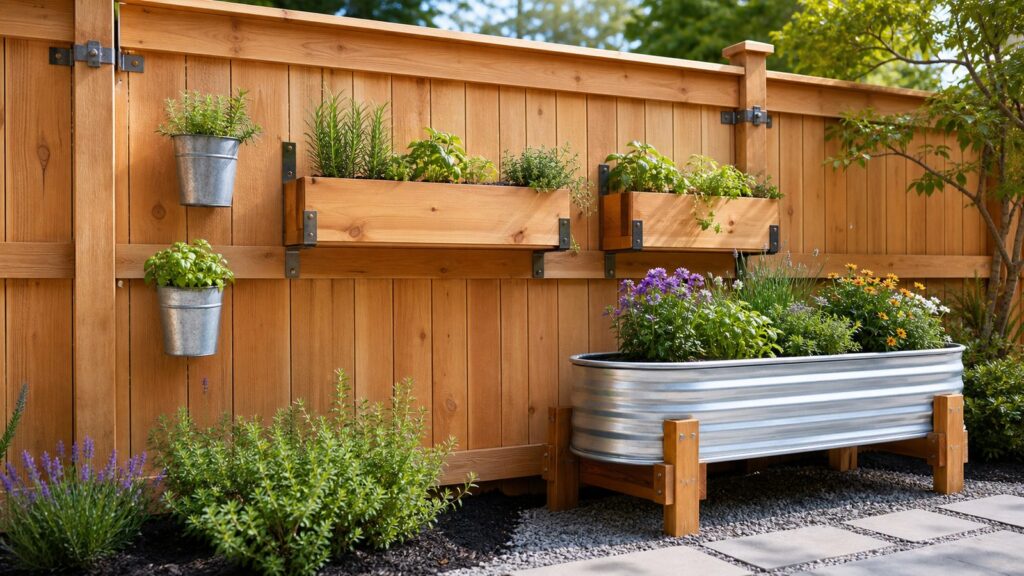
A rail-mounted herb box is the best first project for many homeowners because it is small, useful, and easy to maintain. Build each box about 24 to 36 inches long, 6 to 8 inches deep, and 6 to 8 inches tall. That size is enough for basil, parsley, thyme, oregano, chives, mint in its own pot, or compact flowers without creating a huge saturated load.
Recommended Free Tools
Use cedar boards or cedar fence pickets for the sides, with 1×2 or 2×2 cleats at the corners. Cedar is a strong choice because it is naturally rot- and decay-resistant. In 2026, common 6-foot cedar fence pickets are often around $3.58 to $4.18 each, while pressure-treated pine pickets may run around $3.48. Pine is cheaper, but for edible herbs and vegetables, use only garden-rated treated material and line it properly.
Mount the box to a fence rail or post with galvanized or stainless brackets. Add drainage holes every 6 to 8 inches and set small plastic nursery pots inside the box so you can remove plants without dismantling anything. Expect to spend $30 to $90 per cedar herb box depending on length, hardware, liner, and finish.
2. Cedar Fence-Picket Trough Planters
Cedar picket troughs give you the most visual impact for the money. They work well along a privacy fence where you want a continuous run of flowers or herbs. A practical size is 48 inches long, 8 to 10 inches deep, and 8 to 12 inches tall. Longer than 4 feet, the box becomes harder to support and more likely to bow unless you add internal blocking.
For a simple build, use cedar pickets for the faces and bottom, 2×2 framing at the corners and back, and exterior-rated screws. Seal exposed end grain because that is where wood absorbs water fastest. A thin landscape-fabric liner can keep soil from washing through gaps, but do not make the liner watertight. Water must leave the box.
If the trough is mounted above ground, fasten it to fence posts or rails with sturdy L-brackets or shelf brackets. If it will carry vegetables, deeper soil, or larger perennials, build it as a freestanding trough on legs instead. A wet 4-foot box creates leverage, especially on an older fence. This is where homeowners often save $20 on brackets and later spend much more repairing boards.
3. Removable Bracket Window Boxes
Window-box style planters are clean, removable, and easy to replant. They are especially useful when you want seasonal color against a fence: pansies in spring, petunias or calibrachoa in summer, mums in fall, and evergreen cuttings in winter.
Choose adjustable metal brackets rated for exterior use and match them to the box depth. A 30- to 36-inch box is usually easier to manage than a 48-inch box because it is lighter when wet and easier to lift off for maintenance. DIY costs typically run $40 to $150 per box, depending on the planter material and bracket quality.
Use removable liners or nursery-pot inserts. They make planting faster and keep wet soil from sitting directly against wood. Leave at least a small air gap between the box and fence, and avoid letting the back of the planter become a sponge pressed against painted boards. For a shared fence, confirm permission before drilling, even if the planter is on your side.
Windows Errors? Fix Them Before They Spread
Repair common Windows errors and clear accumulated junk for a smoother, more stable PC - no reinstall needed.Free scan · no reinstallCrashes, No Sound, or Screen Glitches?
Random freezes, missing sound and display glitches usually trace back to one bad driver. Find and replace yours safely.Free scan · under a minute4. Vertical Pallet Pocket Planters
A vertical pallet planter is a good low-cost option for annuals, strawberries, succulents, and trailing plants. The key is to use a clean, safe pallet. Avoid pallets with chemical staining, heavy oil residue, unknown spills, or strong odors. Sand rough areas, add exterior finish if desired, and staple landscape fabric to create soil pockets.
Budget $25 to $100 if the pallet is reclaimed and you are buying fabric, staples, soil, and starter plants. The plant count drives the price. A full pallet can take 20 to 40 small starts, which adds up quickly.
Rank #2

- MAXIMIZE YOUR SPACE: Our balcony railing planters are designed to help you make the most of your porch or patio living space. With their rectangular shape and drainage holes, you can grow strong, healthy plants easily.
- VERSATILE DECOR: These hanging baskets are perfect for any home or apartment. You can use them to grow flowers, herbs, peppers, strawberries, and more. They're designed to look great wherever you put them.
- STYLISH AND FUNCTIONAL: With their countryside style, these planter boxes are sure to brighten up any dull wall or shed. They make a great focal point on your balcony, deck, front porch, or inside your home.
- Suitable size: Our railing planters measure 15.8" x 5.1" x 5.1", and the hook is suitable for railings up to 2.5 inches. Make sure to check the size before purchasing, and note that the hook arrives disassembled.
- EASY TO INSTALL: Our hanging planters come with everything you need to get started. Simply install the hook on your railing and assemble the planter yourself. You'll be enjoying your new plants in no time!
Do not hang a fully soil-loaded pallet from a weak fence panel. It can become very heavy after watering. Instead, lean it against the fence with blocking at the base, secure it to posts so it cannot tip, or mount it on its own support frame. This gives you the vertical garden look without asking the fence pickets to carry the whole load.
5. Trellis-Planter Combos for Vines
A trellis-planter combo can add privacy and soften a fence, but choose plants carefully. The planter box should sit at ground level or on short legs, with the trellis attached to the planter frame rather than depending entirely on the fence.
The Tool Desk
Outbyte PC Repair FREERepair Windows errors before they cause bigger problemsFix Now →Outbyte Driver Updater FREEScan for outdated or missing drivers - takes under a minuteDriver Scan →A good DIY size is a 48- to 72-inch-long box, 12 to 18 inches deep, and 14 to 18 inches tall, with a trellis rising 48 to 72 inches above the soil. This gives roots enough volume and keeps the heavy soil load low. Expect $80 to $250 for a freestanding build, depending on lumber, soil volume, and trellis material.
Use lighter vines and annual climbers where possible. Sweet peas, black-eyed Susan vine, nasturtium, and compact clematis are easier to manage than aggressive vines that pry into boards or trap moisture. Avoid planting anything that will become too woody or heavy for the support system unless the trellis is independently framed and anchored.
6. Galvanized Bucket Planters
Galvanized bucket planters are simple, inexpensive, and flexible. Use 1- to 3-gallon pails with drilled drainage holes, S-hooks, rail hooks, or a mounted metal rod. They work well for herbs, annuals, and small trailing plants.
The typical cost is $15 to $60 per 6- to 8-foot section, depending on the number of containers, plant size, and hardware. Use corrosion-resistant hooks, especially in humid climates or near irrigation. Drill several 1/4-inch drainage holes in the bottom of each bucket and add a thin layer of coarse material only if it does not block drainage.
Metal containers heat up quickly on south- and west-facing fences. In hot climates, use heat-tolerant herbs such as rosemary, thyme, oregano, sage, or lavender, and water consistently. On vinyl or metal fences, reflected heat can stress roots, so keep buckets smaller, use lighter-colored containers, and check moisture often.
7. Lattice-Mounted Pot Holders
A lattice-mounted pot grid lets you decorate a fence without building large soil boxes. Install a separate wood or metal lattice panel slightly in front of the fence, then hang small pots from the grid. This keeps loads distributed and makes it easy to rearrange plants.
Use 4- to 6-inch pots for annuals and herbs. Larger pots become heavy fast, especially ceramic ones. If you want a 4-by-6-foot lattice panel, anchor it to posts or a freestanding frame. Leave an air gap so leaves and irrigation do not keep the fence damp.
This is one of the better options for renters and HOA-sensitive yards because the system can be made removable. Clamp-on brackets, S-hooks, and freestanding frames avoid drilling into a shared or vinyl fence. Keep a record of the fence condition before installing anything, especially in a rental property.
8. Freestanding Fence-Line Raised Planters
For heavy planting, freestanding fence-line raised planters are the most durable answer. They visually sit against the fence, but they do not rely on it structurally. This is our preferred approach for vinyl fences, aging wood fences, shared property-line fences, and deeper vegetable or perennial plantings.
A practical backyard size is 6 to 8 feet long, 18 to 24 inches deep, and 18 to 30 inches tall. Use cedar, garden-rated treated lumber, or exterior-rated composite material. Add legs, posts, or a continuous base so the box carries its own weight. A 6-foot planter can hold a large volume of wet soil, so build it like outdoor carpentry, not like a decorative craft project.
DIY cost typically runs $80 to $250, driven by lumber, soil, liner, post anchoring, and whether the planter also supports a privacy screen. Leave 1 to 3 inches behind the planter for airflow and inspection. That gap helps the fence dry and gives you room to clean leaves out before they hold moisture against the boards.
9. Self-Watering Fence Boxes
Self-watering planters are useful on long fence runs because wall-mounted and raised containers dry out faster than ground beds. A reservoir reduces daily watering and helps prevent the wet-dry swings that stress herbs and annuals.
Do these 3 things before closing this tab:
1Repair Windows errors before they cause bigger problems2Fix the driver behind crashes, sound loss and screen glitches3Clear out junk files and repair common Windows errorsRank #3
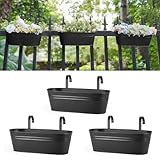
- Balcony Rail Planter: Rectangular outdoor planters was designed to maximize inside growing space allowing dirt and roots to grow strong and deep.This special design can be hung on the balcony, window, garden,railing, anywhere in the room,also can be used as desktop.
- Garden Decor: Imagine your home with colourful flowers, tasty herbs, peppers, succulent strawberries, salad garden, plump tomatoes and much more.Mountable exterior hanging balcony garden decorations.
- Hanging Baskets: This hanging planter is great for home or apartment use and helps you make the most of your porch or patio living space. Grow a mini garden in an elevated space.The pots have drainage holes,you can drill hole with tool knife as you like. It can drain the stagnant water and effectively make the plants grow healthier.
- Countryside Style: Ideal for brightening up dull brick walls and sheds with your favourite flowers, herbs or plants. Perfect for your deck, patio, front porch, balcony or inside your home making an attractive focal point on your balcony.
- Large Size: Planter:15.74" x 6.10" x 5". Hook is 4" x 2.7"x 0.7"(Suitable for rail up to 2.7 inch). Please check the size carefully before purchasing. Pay attention to:The hook is disassembled for transportation,you need to install the iron bucket yourself when it arrive.
A DIY self-watering box can cost about $75 to $200 depending on the reservoir design, liner, fill tube, overflow outlet, and planter size. Ready-made cedar self-watering planters commonly list around $249.99 to $499.99 in 2026, so a DIY version can save money if you already own basic tools.
The important detail is overflow. Every reservoir needs a way to drain excess water during storms. Without an overflow hole, the box can become waterlogged, attract mosquitoes, stain the fence, or freeze and split in cold climates. For mounted self-watering boxes, use brackets rated for the wet weight, not the empty-box weight.
10. Modular Hanging Pocket Systems
Modular pocket systems use fabric, plastic, or metal pockets that hang from a rail, grid, or hooks. They are fast to install and good for shallow-rooted plants, especially lettuce, strawberries, small herbs, succulents, and annual color.
Costs vary widely, but a modest section can often be assembled in the $25 to $100 range before plants. The advantage is flexibility: you can move pockets, replace individual plants, and take the system down for winter. The drawback is that small pockets dry quickly and may not protect roots well in extreme heat or freezing weather.
Use these systems for decorative planting, not heavy structural planting. Mount to posts, rails, or a separate grid, and avoid overloading one fastener. If the system sits against wood, add spacers or a stand-off rail so the fabric does not stay wet against the fence.
Best Plants for Fence Planters by Exposure
Fence exposure matters. South- and west-facing fences get strong sun and reflected heat, especially with vinyl, metal, or dark-stained wood. Use rosemary, thyme, oregano, sage, lavender, sedum, portulaca, lantana, calibrachoa, and other heat-tolerant plants. Water early in the day and check small containers often.
North- and east-facing fences are usually cooler and shadier. Use ferns, impatiens, coleus, parsley, cilantro in cooler seasons, mint in its own pot, begonias, and shade-tolerant annuals. Watch for excess moisture because shaded fence areas dry more slowly.
For privacy, use freestanding planter-trellis combinations with manageable climbers. For herbs, use shallow removable boxes. For color, use window boxes, buckets, or pocket systems. Matching plant size to planter volume is the difference between a one-month display and a backyard feature that looks good all season.
Quick wins for a faster PC:
Fix the driver behind crashes, sound loss and screen glitchesFind Drivers →Repair Windows errors before they cause bigger problemsFix Now →How to Attach Fence Planters Without Damage
Use exterior-rated screws, stainless or galvanized brackets, and post or rail attachment points. Interior screws rust, stain the fence, and lose strength outdoors. For wood fences, predrill near board ends to reduce splitting. For older fences, check whether the post moves before adding any load.
For vinyl fences, avoid drilling into panels unless the fence manufacturer allows it and you understand where the structural members are. Many vinyl panels are not designed to hold planters and can crack or sag. Use over-rail hooks only for lightweight pots, or build a freestanding trough that sits close to the fence without attaching to it.
For shared fences, rental homes, and HOA communities, removable systems are usually smarter. Clamp-on brackets, S-hooks, freestanding troughs, and pot grids are easier to approve and easier to remove without repair.
Independent reader supportYour contribution helps us test, update, and keep practical guides available for everyone.Permits, HOA Rules, and Neighbor Considerations
Most small removable fence planters do not require a building permit, but rules vary by city, fence height, location, and whether the work changes the fence structure. Some cities regulate fence height, front-yard placement, retaining wall combinations, and visibility near sidewalks or driveways. A planter-trellis combo that effectively adds height to a fence may be treated differently than a few small pots.
Check local rules before installing tall privacy planters, drilling into a shared fence, or adding anything near a property line. Also manage runoff. A planter that drains onto a neighbor’s side, stains a shared fence, or drips over a patio will create problems even if the planter itself is attractive.
When to DIY vs. When to Hire a Pro
DIY is a good fit when the planter is lightweight, removable, and mounted to a sound fence. Rail herb boxes, bucket planters, lattice pot grids, and small bracket boxes are reasonable weekend projects. Most take 2 to 5 hours once materials are on site, plus planting time.
Rank #4

- Multi-purpose application: The railing flower box is equipped with adjustable metal supports. It is suitable for displaying flowers, herbs and small fruits and vegetables on balconies, windowsills or railings. It can withstand long-term outdoor conditions and can be used all year round without worries.
- Dual installation method and width compatibility: The bracket offers two installation options, allowing for easy attachment to railings with widths ranging from 1.6 to 4.9 inches (approximately 4 to 12.5 cm). It is suitable for both indoor and outdoor use.
- Water storage and drainage design: The bottom ventilation holes of the railing planter window box ensure the circulation of water and air preventing root rot. The tray can collect excess water, while also maintaining a certain level of moisture to promote the healthy growth of plants.
- Large capacity space: The size of the flower box is 16.9 x 6.9 x 5.5 inches (approximately 43 x 17.5 x 14 cm). It can accommodate multiple plants such as flowers, herbs, or small vegetables, making it both practical and aesthetically pleasing.
- Installation is convenient: The window planter boxes comes with a detailed illustrated installation manual and the necessary installation tools. Installation can be completed without any additional tools; if you have any questions, please let us assist you.
Hire a carpenter, handyman, or contractor when the planter is long, heavy, elevated, custom-built, or tied into a privacy screen. Also bring in help if the fence is leaning, posts are soft at the base, vinyl panels need structural modification, or the planter sits near stairs, gates, pools, or a property line. A professionally built custom row can cost several hundred dollars once labor, anchoring, finish, and materials are included, but that may be cheaper than repairing a damaged fence later.
Our rule is simple: decorative hanging planters can hang from appropriate hooks; structural planters need posts, rails, brackets, legs, or their own frame. When in doubt, support the soil from the ground instead of asking the fence to do the work.
Maintenance Checklist for Longer Planter and Fence Life
Inspect fasteners once a year, preferably in spring before planting season. Tighten loose brackets, replace rusted hardware, and look for dark staining, soft wood, or paint failure behind the box. Clean leaves and soil from the gap between planter and fence.
Refresh potting mix as needed and replace compacted soil that no longer drains well. Budget $10 to $40 for herbs or annuals in a small planter and $50 to $150 or more for a larger decorative run, depending on plant size, perennials versus annuals, soil replacement, and mulch.
Winterize removable boxes in cold climates. Empty or store containers that may freeze, and make sure self-watering reservoirs are drained before hard freezes. A planter that survives summer can still split or stain if it holds trapped water all winter.
Bottom Line
The best DIY fence planter is not the heaviest or most elaborate one. It is the one that fits the fence, drains properly, can be removed or inspected, and uses hardware strong enough for wet soil. For most homeowners, the safest combination is lightweight planters up high and freestanding troughs down low.
If you build with cedar, exterior fasteners, drainage every 6 to 8 inches, and an air gap behind the planter, you will avoid most of the problems that shorten the life of both the planter and the fence. That is how a simple backyard upgrade stays attractive instead of becoming a repair project.
Frequently Asked Questions
Can you hang planter boxes on a fence?
Yes, but heavy boxes should be fastened to fence posts or rails with exterior-rated brackets, not just thin pickets. A planted 36-inch box can weigh about 75 pounds after watering.
Do fence planters need drainage holes?
Yes. Add drainage holes every 6 to 8 inches along long boxes, and make sure liners or reservoirs have a path for overflow. Poor drainage causes root rot, stains, rust, mosquitoes, and freeze damage.
What is the best wood for DIY fence planters?
Cedar is usually the best DIY choice because it is naturally rot- and decay-resistant. Pressure-treated pine is cheaper, but for herbs or vegetables it should be garden-rated and lined appropriately.
Outdated Drivers Are Slowing You Down
One free scan finds every outdated or missing driver and matches the right update for your exact hardware.Free scan · exact hardware matchWindows Errors? Fix Them Before They Spread
Repair common Windows errors and clear accumulated junk for a smoother, more stable PC - no reinstall needed.Free scan · no reinstallHow do you attach a planter box to a vinyl fence?
Avoid drilling into vinyl panels unless the manufacturer allows it. Use lightweight over-rail hooks for small pots, or build a freestanding trough that sits near the fence but supports itself.
Do I need a permit for fence planters?
Small removable planters usually do not need a permit, but local rules vary. Check before adding tall trellis planters, changing fence height, drilling into shared fences, or building near property lines.
How do I keep fence planters from rotting the fence?
Leave an air gap behind the planter, use liners or removable inserts, provide plenty of drainage, avoid constant wet soil against fence boards, and inspect fasteners and wood condition every year.
Quick Recap
Product prices and availability are accurate as of the date/time indicated and are subject to change. Any price and availability information displayed on Amazon at the time of purchase will apply.
Do these 3 things before closing this tab:
1Scan for outdated or missing drivers - takes under a minute2Repair Windows errors before they cause bigger problems3Fix the driver behind crashes, sound loss and screen glitches