Stamp duty reform could encourage some buyers to choose efficient homes, but it is not, on the evidence currently available, a complete route to net-zero housing. The UK has recorded a narrow relief for qualifying zero-carbon homes and Parliament has considered wider incentives, yet no general stamp-duty discount for energy-efficient homes or retrofit is established in the sources reviewed. A credible strategy would combine any tax signal with fabric improvements, low-carbon heating, reliable information, finance, grants and enforceable standards.
The central test is not whether a discount sounds attractive. It is whether a particular design causes additional retrofit, cuts measured energy use and emissions, remains affordable and fair, and does so without an unacceptable loss of Stamp Duty Land Tax (SDLT) revenue.
As an Amazon Associate I earn from qualifying purchases.
What stamp-duty policy exists today?
A historic relief for qualifying zero-carbon homes
HMRC’s Stamp Duty Land Tax Manual records a zero-carbon homes relief introduced on 1 October 2007. For a qualifying home priced below £500,000, the relief was an SDLT exemption. For a qualifying home above £500,000, it provided a £15,000 reduction. The figures describe that specific relief; they are not a general discount available to every efficient property or to an owner carrying out work after purchase.
Free tools Windows power users keep installed
One-click scans. No signup required.
Eligibility was tied to a demanding zero-carbon standard. The home had to generate enough renewable power to cover its average annual consumption, and the vendor had to provide certification from an accredited assessor. Anyone relying on the manual should check HMRC’s current guidance and the transaction date, because a historic relief should not be assumed to remain open on the same terms.
#1 Best Overall

- CLASS A SURFACE-BURNING PERFORMANCE + HIGH R-VALUE: BEEST FullStop was tested to ASTM E84 and achieved a Flame Spread Index of 0 and Smoke Developed Index of 120, meeting Class A surface-burning criteria. Delivers strong thermal insulation performance with an R-Value of 8.24 at 2" thickness.
- ALL-IN-ONE SPRAY FOAM INSULATION KIT — UP TO 240 BOARD FT: Get everything needed to start insulating in one box, including 12 spray foam cans, heavy-duty applicator gun, solvent-based cleaner, gloves, goggles and coverall for a complete DIY insulation setup.
- ADVANCED HYBRID FOAM WITH LOW WATER ABSORPTION: FullStop combines strength and controlled expansion for dependable gap filling, insulation and coverage. Its cured foam structure helps resist water absorption, with short-term water absorption tested under EN 1609.
- HELPS REDUCE AIR LEAKS & IMPROVE THERMAL COMFORT: FullStop expands consistently within the recommended 68–77°F application range to fill gaps, cracks and hard-to-reach spaces. Its insulating foam helps reduce unwanted air movement and heat transfer for improved year-round comfort.
- STRONG ADHESION TO COMMON BUILDING MATERIALS: The moisture-cured polyurethane formula bonds securely to wood, metal, drywall, concrete, brick and other common building surfaces. Once cured, the foam creates a durable insulating seal that helps reduce drafts while resisting water absorption.
Why that relief is different from a retrofit incentive
The 2007 mechanism was linked to the status of a qualifying home at the point of sale, particularly a newly built property. Most of the UK’s emissions challenge sits in existing homes that need insulation, ventilation improvements, controls, glazing, heat-pump preparation or a different heating system. A buyer purchasing an older house cannot automatically obtain the historic zero-carbon treatment merely by intending to retrofit it.
A broader reform could instead link SDLT to an Energy Performance Certificate (EPC), verified measured improvements, a list of eligible works or a post-completion performance test. Each approach would raise different questions about timing, proof and who receives the benefit.
What Parliament and government have actually proposed
Parliamentary material supports describing a wider SDLT incentive as an idea for consideration, not as current general policy. A government response on local government and net zero recorded a recommendation to consider lower stamp duty among incentives for energy-efficient measures and homes. A House of Commons committee report recommended a demonstration programme that would test a package of incentives, including a stamp-duty incentive, in the able-to-pay market.
A recommendation or pilot is not legislation. The reviewed material does not establish a nationwide SDLT rate, rebate, exemption or completion deadline tied generally to EPC performance or retrofit.
Why the housing stock makes this a difficult problem
The scale of inefficient homes
The UK Government’s Net Zero Strategy, published in 2021 using 2019 data, reported that approximately 15 million homes in England—60% of homes—were rated EPC band D or below. That is a large and varied stock: solid-wall terraces, post-war estates, flats, rural properties and newer homes can require very different interventions.
Rank #2
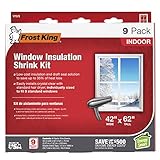
- This product adds a great value
- Product is highly durable and very easy to use
- This product is manufactured in China
- If you want to open your windows in the warmer months, you'll need to take it off. Otherwise, sunlight and normal stress can also make the tape fail eventually. For a good seal, it's probably best to re-apply them every year.
The Heat and Buildings Strategy committed to improving as many homes as possible to EPC band C by 2035 where that is cost-effective, practical and affordable. The conditions matter. A band-C pathway that works for a cavity-wall house may be unsuitable or disproportionately expensive for a listed building, a hard-to-treat flat or a home with limited electrical capacity.
Fabric first, then heating that can run efficiently
Government strategy describes a fabric-first approach as important for cost-effective low-carbon heating. Insulation, airtightness, ventilation and moisture control affect the size and performance of a replacement heating system. Installing a heat pump before addressing severe heat loss can produce disappointing comfort, higher electricity demand or expensive remedial work.
Quick wins for a faster PC:
Clear out junk files and repair common Windows errorsFree Scan →Scan for outdated or missing drivers - takes under a minuteDriver Scan →Repair Windows errors before they cause bigger problemsFix Now →Stamp duty is charged when a property changes hands. It therefore reaches movers, not every owner. A household that stays put for decades receives no direct SDLT signal, even if its home is among the least efficient. That structural limitation is why a tax-at-purchase measure would need to sit alongside measures that reach non-movers.
How a stamp-duty incentive could influence decisions
Possible designs
Future legislation could take several forms. The following are design options, not adopted schemes:
- Performance-based rates: charge less SDLT for homes meeting a specified EPC band or verified energy-use threshold.
- Completion rebates: collect ordinary SDLT, then repay an amount after the buyer completes approved works within a defined period.
- New-build treatment: apply relief to homes certified against a high construction and renewable-energy standard, building on the logic of the historic zero-carbon relief.
- Deferred or conditional liability: defer part of the tax while the buyer meets a retrofit plan, with repayment if the work is not completed.
- Seller-funded adjustment: allow the transaction price or tax calculation to reflect verified improvements completed before marketing.
Each model changes behaviour differently. A discount available immediately favours a buyer who can already afford an efficient home. A post-completion rebate may motivate work but requires the buyer to fund it first. A deferred liability could help cash flow while creating enforcement and resale questions.
Rank #3

- Save on energy costs during cold weather months. Duck Max Strength shrink window film is puncture-resistant and two times thicker than standard window kits to create an airtight seal inside your home to block drafts and cold weather
- Easy-to-install roll of shrink film means no measuring needed - once applied, cut film to size
- Tools needed: scissors and hair dryer. For best results apply window films indoors on clean and dry surfaces, including painted or finished wood, aluminum or vinyl
- After installation, crystal clear and transparent window film is easy to see through. Once season is over, the window kit removes easily
- Window Kit includes 2, 62" x 210" roll of shrink film and 2, 0.5" x 54' foot rolls of tape; Can insulate up to 10 standard sized 3' x 5' windows
The decision chain policymakers would have to measure
For an SDLT reform to reduce emissions rather than simply change which homes people buy, it would need to affect at least one of these decisions:
The Tool Desk
Outbyte Driver Updater FREEFix the driver behind crashes, sound loss and screen glitchesFind Drivers →Outbyte PC Repair FREERepair Windows errors before they cause bigger problemsFix Now →- Property choice: a buyer selects a more efficient home instead of a less efficient one.
- Offer price: the tax saving is reflected in what buyers are willing to pay, giving sellers a reason to improve a property before sale.
- Retrofit timing: a buyer brings forward insulation or heating work that would otherwise not happen.
- Specification: a developer builds to a higher standard because demand and tax treatment reward it.
Evidence would need to separate those effects from transactions that would have happened anyway. A buyer who claims a discount after installing measures they had already planned has received a fiscal transfer, but the additional emissions saving may be zero.
Who could gain or lose?
Affordability and distribution
SDLT is linked to property value and location, so an identical percentage discount has different cash value in different regions. A buyer in a high-price market may receive a larger saving while a buyer in a lower-price area faces a smaller nominal benefit. Yet the lower-price household may have less access to borrowing for a heat pump, insulation or electrical upgrades.
Owner-occupiers who move frequently could collect incentives more often than households that remain in one home. Private landlords, housing associations and social tenants would experience different rules and constraints. A design that rewards only owner-occupied transactions could miss rented homes, where the bill payer, property owner and decision-maker are not always the same person.
Public finances and housing access
The government has noted that SDLT raises billions of pounds each year. Any reduction would therefore have a fiscal cost unless higher rates elsewhere, additional transactions or other revenue compensate for it. A broad relief could also increase demand for qualifying properties and raise their prices, transferring part of the benefit to sellers rather than paying for extra work.
What’s actually slowing this PC down?
Pick the symptom - the matching free tool is one click away.
Rank #4

- Save on energy costs during cold weather months. Duck Max Strength shrink window film is puncture-resistant and two times thicker than standard window kits to create an airtight seal inside your home to block drafts and cold weather
- Easy-to-install roll of shrink film means no measuring needed - once applied, cut film to size
- Tools needed: scissors and hair dryer. For best results apply window films indoors on clean and dry surfaces, including painted or finished wood, aluminum or vinyl
- After installation, crystal clear and transparent window film is easy to see through. Once season is over, the window kit removes easily
- Window Kit includes 1, 62" x 210" roll of shrink film and 1, 0.5" x 84' foot roll of tape; Can insulate up to 5 standard sized 3' x 5' windows
Policy appraisal would have to test effects by income, region, property value, tenure and ability to borrow. The reviewed sources do not quantify those effects for any specific SDLT design, so claims that a discount would be progressive, revenue-neutral or strongly emissions-cutting would be premature.
How SDLT compares with other policy tools
The relevant question is not whether stamp duty is good or bad in isolation, but which mechanism reaches the required homes and creates additional work. The main comparison criteria are behavioural reach, measurable carbon impact, distribution, fiscal cost, administration and coverage of existing homes.
| Policy tool | What it can change | Measurement challenge | Who may be missed | Key trade-off |
|---|---|---|---|---|
| SDLT incentive | Purchase choice, sale preparation or retrofit timing for movers | Proving that the tax benefit caused additional improvement and estimating operational emissions | Long-term owners and households unable to move | Potentially visible price signal, but reduced SDLT receipts and uncertain additionality |
| Targeted grants | Ability to pay for insulation, controls or low-carbon heating | Verifying eligible works, quality and energy performance after installation | Households outside eligibility rules or without trusted installers | Can target need, but requires public funding and delivery capacity |
| Minimum standards | Landlord or building-owner compliance at a defined threshold | Setting a fair standard for diverse buildings and enforcing it | Hard-to-treat properties and owners facing high upfront costs | Creates certainty, but can impose costs and needs workable exemptions |
| Low-cost finance | Spreads retrofit expenditure over time | Assessing affordability, default risk and actual energy savings | People with weak credit or insufficient property value | Reduces upfront barrier, but is still a debt obligation |
| Advice and information | Awareness, sequencing and confidence in retrofit decisions | Linking advice to completed, high-quality work | Households unable to fund measures even when informed | Relatively low fiscal cost, but weak without finance or supply |
A coherent package can combine these tools: advice identifies a suitable pathway, grants or finance address the upfront cost, standards create a baseline, and a carefully tested SDLT signal influences transactions. No source reviewed here provides a head-to-head result proving that one instrument will outperform the others.
Independent reader supportYour contribution helps us test, update, and keep practical guides available for everyone.How current standards and EPC changes affect the debate
Private rented homes in England and Wales
A 2025 update to privately rented home energy standards set a single compliance date of 1 October 2030 for the new standard in England and Wales. It adopted a dual-metric approach, raised the cost cap to £10,000 and made exemptions valid for 10 years. These details apply to the private rented sector policy described by that update; they do not establish requirements for owner-occupiers, social housing or every UK nation.
Do these 3 things before closing this tab:
1Fix the driver behind crashes, sound loss and screen glitches2Repair Windows errors before they cause bigger problems3Scan for outdated or missing drivers - takes under a minuteAn SDLT reform designed around rental properties would need to fit with those rules rather than duplicate them. It would also need to address split incentives: a landlord pays for improvements while a tenant may receive much of the benefit through lower energy bills.
Best Value

- SINGLE DOOR COVERAGE (8ft x 8ft): Designed to insulate one standard single garage door. For double-wide or two-car garage doors, purchase two kits for full coverage.
- KIT COMES WITH 8 PRE-CUT PANELS: Each panel measures 24"x48" and includes 48 one-inch square adhesive pads. Each panel is 5/32 inch thick and has reflective film on both sides, with 2 layers of bubble between the layers.
- RADIANT HEAT CONTROL: Reflective air insulation reduces radiant heat transfer for more consistent garage temperatures. Durable in extreme conditions, engineered to perform in high heat and humidity while maintaining insulation integrity over time.
- COMPLETE DO-IT-YOURSELF KIT: Installation requires no special tools. Panels can be trimmed with scissors or a box knife. Make sure door surfaces are free of dirt, moisture, and oil before applying the adhesive squares.
- HIGH-TEMPERATURE ADHESIVE PADS: Open-cell polyurethane foam pads are 1/8 inch thick with double-sided acrylic adhesive that conforms to multiple surfaces for secure attachment.
Domestic EPC reform timetable
The government’s partial response to EPC reform confirms plans for four new headline metrics on domestic EPCs. Its update dated 9 March 2026 moved the launch to the second half of 2027 while work continues with industry and devolved administrations on a shared implementation plan. That is the latest dated timetable identified here, not a guarantee that the schedule cannot change.
Using an EPC band as the trigger for SDLT would therefore create transition risks. Buyers, lenders, sellers and conveyancers would need to know which certificate version applies, how long it remains valid and whether a rating reflects actual energy use. A policy based on measured consumption might be more meaningful for emissions but harder and slower to verify.
What a robust pilot should test before national reform
The parliamentary recommendation for a demonstration programme points to a practical way to learn without committing the entire SDLT base at once. A pilot should publish its eligibility rules, baseline and evaluation method before transactions are selected.
- Additionality: compare retrofit completion with similar transactions that receive no tax incentive.
- Carbon and energy outcomes: track measured energy use, heating fuel and emissions, not just EPC scores.
- Distribution: report results by income, region, property value, tenure, household type and ability to access finance.
- Fiscal impact: calculate foregone SDLT, administration costs, changes in transaction volumes and any price effects.
- Quality and durability: inspect workmanship, ventilation and moisture outcomes and record whether improvements remain in place at resale.
- Administrative burden: test the workload for assessors, installers, conveyancers, HMRC and local authorities.
- Non-mover coverage: measure whether complementary grants, standards or finance reach owners who do not transact.
Without these controls, a successful-looking uptake figure could simply show that people claimed a discount on homes they would have bought and improved anyway.
What homeowners and buyers can do while policy develops
There is no need to wait for a possible SDLT change to establish what a particular home requires. The safest sequence is specific to the building, its construction, its location and the owner’s finances.
- Check the current EPC and building history. Treat the certificate as a starting point, and note its date, assumptions and recommended measures.
- Obtain independent retrofit advice. A qualified assessor can identify insulation, ventilation, moisture and heating interactions that a single-product quote may overlook.
- Prioritise fabric and safety. Address defects, insulation continuity, draughts and ventilation before sizing new low-carbon heating.
- Compare whole-life costs. Include installation, maintenance, electricity or fuel use, financing, disruption and likely future standards rather than focusing only on the headline grant or tax saving.
- Verify available support at the point of decision. Grant rules, eligibility and funding availability change; check the relevant government or local-authority guidance before signing work.
- Keep evidence. Retain invoices, product information, certificates, photographs and commissioning records in case a future sale or incentive requires proof.
Any recommendation should be adapted to the home’s construction and the owner’s circumstances. A measure that is suitable for a modern cavity-wall house may be inappropriate without specialist design in a solid-wall or traditionally built property.
So, could stamp duty reform be the answer?
It could be one incentive in a wider package, especially if a carefully designed pilot shows that it causes additional improvements rather than rewarding decisions that would have happened anyway. The historic zero-carbon relief demonstrates that SDLT can be connected to demanding building criteria, while parliamentary recommendations show continuing interest in testing broader approaches.
Windows Errors? Fix Them Before They Spread
Repair common Windows errors and clear accumulated junk for a smoother, more stable PC - no reinstall needed.Free scan · no reinstallCrashes, No Sound, or Screen Glitches?
Random freezes, missing sound and display glitches usually trace back to one bad driver. Find and replace yours safely.Free scan · under a minuteIt is not a sufficient answer on its own. SDLT reaches only transactions, its revenue cost could be substantial, and its distributional effects are uncertain. The UK’s net-zero housing challenge includes millions of existing homes, many occupied by people who will not move before 2035. Effective policy therefore has to combine fabric-first retrofit, low-carbon heating, practical standards, trusted information and finance with any purchase-tax signal.
Quick Recap
Product prices and availability are accurate as of the date/time indicated and are subject to change. Any price and availability information displayed on Amazon at the time of purchase will apply.

