Crashes, No Sound, or Screen Glitches?
Random freezes, missing sound and display glitches usually trace back to one bad driver. Find and replace yours safely.Free scan · under a minutePC Slower Than It Used to Be?
A free scan shows the junk files, broken settings and background clutter dragging Windows down - then fixes them in one click.Free scan · Windows 10 & 11Some links on this page are affiliate links: if you buy through them we may earn a commission, at no extra cost to you.
Cork flooring can feel warm, quiet and resilient underfoot, but “cork floor” is not one uniform product. A bonded tile and a floating click-lock plank have different subfloor requirements, installation steps, moisture tolerances, finishes and repair options. Choose the construction first, then follow that product’s preparation, adhesive, underlayment, finishing and care instructions.
What cork flooring is—and what the standard actually covers
Cork flooring is made from cork particles or layers that are formed into a flooring product, often with a factory-applied finish. The visible surface may be a solid agglomerated cork tile, a cork wear layer over a rigid or wood-based core, or another construction described by the manufacturer. Those constructions should not be treated as interchangeable.
As an Amazon Associate I earn from qualifying purchases.
ASTM International’s active F3008-13(2025) Standard Specification for Cork Floor Tile addresses agglomerated composition cork supplied in tile form. It defines a product category and its specification requirements; it is not a certification that every product marketed as cork flooring complies with the standard, and it does not cover every floating or multilayer format. Ask for the product’s technical documentation if compliance matters to your project.
Are cork floors waterproof?
There is no universal yes-or-no answer. Cork itself is cellular and can absorb moisture, while a particular floor’s finish, joints, backing and installation details determine how water behaves on the completed surface. A manufacturer may permit damp cleaning or use in some rooms while prohibiting standing water, wet rooms or installation over a damp slab.
Popular on Amazon

- 💪 #𝟭 𝗣𝗥𝗢𝗧𝗘𝗖𝗧𝗜𝗩𝗘 𝗙𝗟𝗢𝗢𝗥 𝗠𝗔𝗧 𝗦𝗘𝗧 𝗪𝗜𝗧𝗛 𝟭𝟴 𝗣𝗨𝗭𝗭𝗟𝗘 𝗣𝗜𝗘𝗖𝗘𝗦 + EDGE PIECES FOR PERFECT FLOOR PROTECTION - protect your floor from scratches, knocks, dents, cold, noise, sweat and other fluids with probably the best and most secure protective floor mat available on the market. Completely BPA-free for your safety and well-being.
- 💪 𝗛𝗜𝗚𝗛-𝗤𝗨𝗔𝗟𝗜𝗧𝗬, 𝗗𝗨𝗥𝗔𝗕𝗟𝗘, 𝗥𝗘𝗟𝗜𝗔𝗕𝗟𝗘 - the highly compressed, environmentally friendly, non-toxic EVA foam with anti-slip surface is perfect as floor layering for fitness and gym spaces, under sports equipment, work spaces, garages, basements and more. The mat's premium lightweight material also makes it noise- and impact-dampening, warmth-insulating, waterproof, long-lasting and easy to clean with soap and water.
- 💪 𝗧𝗛𝗘 𝗕𝗘𝗦𝗧 𝗖𝗛𝗢𝗜𝗖𝗘 𝗙𝗢𝗥 𝗬𝗢𝗨𝗥 𝗙𝗟𝗢𝗢𝗥 𝗔𝗡𝗗 𝗬𝗢𝗨𝗥 𝗜𝗡𝗗𝗜𝗩𝗜𝗗𝗨𝗔𝗟 𝗡𝗘𝗘𝗗𝗦 - Perfect if you’re a home gym owner or renter building your own workout space. Used by athletes and families, the cushioned EVA surface reduces pressure on knees and joints, while the expandable puzzle design lets you customize your floor protection setup.
- 💪 𝗦𝗠𝗔𝗟𝗟𝗘𝗥 𝗠𝗔𝗧𝗦 𝗙𝗢𝗥 𝗠𝗢𝗥𝗘 𝗙𝗟𝗘𝗫𝗜𝗕𝗜𝗟𝗜𝗧𝗬 - 18 mats, with each one a size of 12.6'' x 12.6'' x 0.40'' + edge pieces | 𝗖𝗼𝗺𝗽𝗹𝗲𝘁𝗲 𝘀𝘂𝗿𝗳𝗮𝗰𝗲 𝗮𝗿𝗲𝗮: 𝗮𝗽𝗽𝗿𝗼𝘅. 𝟲 𝗳𝘁 𝘅 𝟯 𝗳𝘁 = 𝟭𝟴 𝗳𝘁𝟮.
- 💪 𝗣𝗥𝗘𝗠𝗜𝗨𝗠 𝟮𝟰/𝟳 𝗦𝗨𝗣𝗣𝗢𝗥𝗧: 𝗪𝗘 𝗔𝗥𝗘 𝗔𝗟𝗪𝗔𝗬𝗦 𝗧𝗛𝗘𝗥𝗘 𝗙𝗢𝗥 𝗬𝗢𝗨 - Order today and see for yourself. If you are not completely satisfied, just contact our 24/7 support team and we will help you in any way we can.
- Surface finish: Factory polyurethane, acrylic, wax or other finishes have different resistance and renewal instructions.
- Joints and edges: Click-lock joints and tile seams can admit moisture if they are not designed or sealed for that exposure.
- Subfloor moisture: Moisture rising from concrete or leaking from plumbing can damage the floor from below, even when the top finish appears intact.
- Room use: Kitchens, entryways and bathrooms expose flooring to different spill frequency and drying conditions. A product approved for one setting is not automatically suitable for another.
Treat cork as moisture-sensitive unless the exact product documentation states otherwise. Wipe spills promptly, use mats where appropriate, and never rely on a generic “waterproof flooring” description without checking the construction, warranty and installation limitations.
Which format fits the project?
| Format | How it is installed | What must be matched to the product | Typical planning questions |
|---|---|---|---|
| Glue-down cork tile | Tiles are bonded directly to a properly prepared subfloor with the specified adhesive. | Adhesive type, trowel, open time, tile layout, rolling pressure and any required sealer or finish. | Is the subfloor flat, clean, dry and stable enough for a thin tile? Can the room remain undisturbed during bonding and curing? |
| Floating or click-lock flooring | Planks or tiles lock together and rest over an approved underlayment or integrated pad; they are not normally bonded across the field. | Underlayment, expansion clearances, perimeter details, transitions and the locking system’s assembly method. | Will the subfloor support a floating assembly? Are doorways, cabinets and transitions detailed for movement? |
Specialist installation guidance, such as CanCork’s instructions, separates these two methods because the preparation and materials differ. A list of adhesives, underlayments, transitions, stair nosing or finish products is not a universal shopping list: buy only what the exact product and installation method require.
Recommended Free Tools
How to prepare before installation
Identify the complete product system
- Record the manufacturer, collection, thickness, format and finish from the carton or technical sheet.
- Confirm whether the product is a bonded tile or a floating/click-lock assembly.
- Download the matching installation, maintenance and warranty documents. Do not substitute instructions for a visually similar product.
- Check whether the floor requires a separate underlayment, adhesive, primer, seam treatment, perimeter sealant or final finish.
Check the room
Installation documents may specify temperature, humidity, acclimation time, heating or cooling conditions, and when the room can be occupied. Keep the product and room within those stated conditions. If the project involves radiant heat, below-grade construction, a recently poured slab or an area with a history of leaks, obtain the product’s written compatibility requirements before ordering.
Check the subfloor
- Flatness: High or low spots telegraph through thin tile and can stress click joints. Use the manufacturer’s stated tolerance and approved leveling method.
- Cleanliness: Remove dust, grease, adhesive residue, paint flakes and other bond-breaking contamination.
- Stability: Repair loose panels, squeaks, cracked concrete or movement before covering them.
- Dryness: Test concrete and other substrates using the method and limits specified by the flooring and adhesive manufacturers.
- Transitions and height: Plan door clearances, adjoining-floor transitions, stair edges and cabinet interfaces before the first cut.
Do not conceal a moisture or structural problem under cork. If the substrate fails the product’s requirements, stop and correct it or choose a flooring system designed for those conditions.
Also popular on Amazon

- 💰UNMATCHED CUSTOMER SUPPORT -- We Follow Up With Every Order to be Certain That You Are Loving "Corksidol" Product. We Want Our Customers Completely Happy. We Offer a 100% If you don't love the cork board, just let us know and we'll either refund or replace your purchase. Click "Add to Cart" Above and Start
- ✅ULTRA STRENGTH ADHESIVE--Whole page Self-stick backing,quick and easy mounting in any space,Unique glue can very good adsorption cork board and metope, need not worry colloid and cork or metope stripping, no to the trouble that cork falls off,Make sure surface area of wall/cabinet is SMOOTH/CLEANED before adhering cork board tiles.
- ✅【High Density Cork】-- High density natural cork not easy to deform,that holds push pins tight and pull out push needle does not drop chip. without unsightly pin holes for longer lasting use;
- ✅ PERFECT FOR DIY PROJECTS -- Cut and trim your cork boards as desired. DIY coasters, custom bulletin boards, mini walls, dart back boards, acoustic panels, etc. in your office, home, dorm room, cubicle, kitchen and more!
- ✅ THICK (1/2”) NATURAL CORK PANELS -- Thick enough to hold push pins and so that push pins will not go through your boards & damage your wall.with a simple peel of the back paper, is ready to be adhered to your wall!
How do I install cork flooring?
Glue-down cork tile
- Lay out the room. Establish reference lines so border cuts are balanced and the pattern runs as intended. Dry-lay enough tile to verify color, batch and orientation.
- Prepare the substrate. Complete cleaning, patching, leveling and moisture testing required by the tile and adhesive instructions. Allow patches and primers to cure for the stated time.
- Use the specified adhesive. Follow the adhesive manufacturer’s trowel notch, spread rate, flash or open time and working area. A substitute adhesive can affect bond, discolor the cork or void the warranty.
- Place and seat tiles. Set each tile along the reference lines, maintain the specified joint treatment, and use the recommended roller or pressure method to remove trapped air and ensure contact.
- Allow curing. Keep traffic, furniture and cleaning water off the installation for the period stated in the instructions. Do not judge readiness by touch alone.
- Apply field or maintenance finish if required. Some tiles arrive prefinished; others require a compatible sealer or finish after bonding. Use only the listed product and coverage procedure.
Thin cork tile shows substrate irregularities readily. Spending more time on flatness and layout usually prevents more trouble than trying to correct misaligned or poorly bonded tiles afterward.
Floating or click-lock cork
- Verify the base. Confirm that the subfloor meets the product’s flatness, dryness and cleanliness limits and that the selected underlayment is approved.
- Install the underlayment system. Run it in the direction and pattern specified, tape or join it as directed, and avoid adding extra layers that change compression or height.
- Plan movement. Mark the required perimeter and fixed-object clearances. Floating floors need room to expand and contract; do not wedge planks tightly against walls, pipes or cabinets unless the instructions specifically detail that condition.
- Start the first course accurately. Use the manufacturer’s recommended starting wall and stagger end joints to the stated minimum. A crooked first row can multiply across the room.
- Lock boards without damaging edges. Engage the angle, drop or tapping method specified for that profile. Do not hammer directly on a locking edge or force a joint that contains debris.
- Finish the perimeter. Fit transitions, stair nosing and trim so they cover the movement gap without pinning the floating field. Never fasten trim through the floor unless the system permits it.
Some click products have an attached pad and prohibit a second underlayment; others require a separate layer. The product sheet, not a generic flooring rule, decides.
Quick wins for a faster PC:
Repair Windows errors before they cause bigger problemsFix Now →Scan for outdated or missing drivers - takes under a minuteDriver Scan →Clear out junk files and repair common Windows errorsFree Scan →How do I clean and maintain cork flooring?
Care follows the finish as much as the cork. WECORK’s downloads index, for example, provides product brochures, installation and maintenance instructions, specifications and warranty information; use the document for your exact collection rather than a general cork-care recipe.
- Remove dry grit regularly. Vacuum with a hard-floor setting or sweep with a soft tool so sand does not abrade the finish.
- Control moisture. Use the smallest amount of water permitted by the instructions, wring cleaning tools well, and dry the surface rather than leaving a film.
- Use the approved cleaner. Avoid bleach, abrasive powders, solvent-based products, steam and high-alkaline cleaners unless the manufacturer explicitly allows them.
- Protect high-traffic areas. Place suitable mats at exterior doors, add felt glides to furniture and lift rather than drag heavy pieces. Avoid rubber or plastic backings if the finish guide warns they can stain.
- Renew the finish when specified. Recoating or resealing can be part of the maintenance plan for some floors. Clean and abrade only as directed so the new finish bonds without damaging the cork.
For a scratch, dent, swollen edge or loose tile, identify the cause first. A compatible repair compound, replacement tile or recoating system may be appropriate; sanding through a factory finish or flooding the area with cleaner can make the damage larger.
Also popular on Amazon

- [Eco-Friendly Cork Flooring Solution]: Transform your space with eco-friendly interlocking cork floor tiles, designed for a seamless 10' x 10' area with a natural, sustainable touch.
- [Easy Installation with Jigsaw Design]: Enjoy hassle-free setup with our jigsaw profile cork tiles, complete with edge strips for a professional finish in any room or setting.
- [Water and Flame Resistance for Safety]: Our 8mm thick cork tiles are engineered to resist water and flames, making them ideal for areas prone to spills and moisture.
- [Non-Toxic and Odor-Free]: Experience peace of mind with non-toxic, odor-free cork tiles, perfect for trade show booths, yoga studios, and more.
- [Versatile Indoor Use]: These FSC-certified cork tiles are recommended for indoor use, offering a durable and stylish flooring solution for various environments.
What environmental claims can you verify?
The European Commission’s EU Ecolabel product group for indoor wood-, cork- and bamboo-based floor coverings includes criteria addressing issues such as emissions and raw-material sourcing. The criteria describe raw material from sustainably managed forests and note that floors can be designed for repair and dismantling for reuse or recycling. The current criteria are listed as valid through 31 December 2029, following an amendment dated 23 December 2025.
Those statements describe the ecolabel criteria, not every cork floor. Check the specific product for an EU Ecolabel mark and a valid registration before making a certified-sourcing or low-emission claim. A manufacturer’s environmental declaration, recycled-content statement or chain-of-custody evidence is separate evidence and should be read on its own terms.
Buying checklist for a cork-floor project
- Write down the exact product construction, dimensions, thickness and finish.
- Choose glue-down or floating installation before buying accessories.
- Obtain the current installation, care and warranty documents.
- Confirm subfloor type, flatness, moisture limits and any radiant-heat restrictions.
- Price the complete system: flooring, approved adhesive or underlayment, transitions, stair parts, tools and any required finish.
- Order enough material from one production batch for the planned area and retain cartons for future repairs.
- Inspect cartons before installation for damage, shade variation and manufacturing defects; set aside questionable pieces.
- Plan where water, grit, rolling loads and furniture will affect the floor, then select mats and protection accordingly.
Common mistakes and how to prevent them
Using the wrong installation guide
A floating product’s expansion details cannot be applied to glue-down tile, and a tile adhesive schedule cannot be applied to click-lock planks. Match every step to the product code and method.
Assuming a finish makes the floor waterproof
A finish can slow moisture entry without making seams, edges or the substrate leak-proof. Follow the room-use and spill instructions in the warranty.
Also popular on Amazon
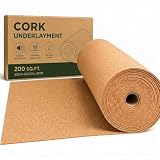
- Package Includes: you will get 1 roll 3 mm thick, 48" x 600" large cork roll, large enough size to meet your daily DIY use and replacement needs, you can cut them into different sizes according to your needs, DIY these cork tiles as cork underlayment, cork shelf liner, cork drawer liner and so on
- Quality Material: the large cork roll are made of quality cork material, durable and has the ability to absorb noise, making it a convenient sound insulator, high density cork not easy to deform, the cork roll is natural, helps create healthy indoor air quality, functional and looks brilliant
- DIY Cork Roll: you can cut and trim your cork roll to suit your large or small home or work project, use for shelves, drawer linings, walls or any other project in your office, home, dorm room, cubicle, kitchen and more, these cork board tiles can also reduce heat transfer and increase the efficiency of floor heating systems
- Easy installation: cork backing rolls are easy to install, cut to the appropriate size and can be paved where needed, suitable for installation of glued floors and floating floors; the cork backing rolls can prevent stress cracks from transferring from the subfloor to the floor surface, unlike ceramic tiles, porcelain, stone, wood floors compatible
- Wide Application: the cork roll can be applied as cork liners, cork shelf liners, cork drawer liners, ideal for home, kitchen, classroom, office and dorm; You can cut the large cork roll into different sizes, such as square cork boards, hexagonal cork boards, and cork strips, according to your needs, fun way to decorate your walls, place pictures and leave messages
Skipping moisture testing
Visible dryness is not a test. Use the method and maximum reading specified for the substrate, adhesive and flooring system, and correct the source of excess moisture.
Adding unapproved materials
Extra underlayment, a generic primer or a different cleaner can change bond, acoustics, movement or finish chemistry. Approval for one cork product does not transfer automatically to another.
What’s actually slowing this PC down?
Pick the symptom - the matching free tool is one click away.
Pinning a floating floor
Fixed cabinets, trim, fasteners and heavy built-ins can prevent movement and create peaking or open joints. Detail these locations before installation and keep the required clearances functional.
When professional installation is the safer choice
Hire an experienced flooring installer when the substrate needs extensive leveling, moisture mitigation, repair, radiant-heat coordination or complex stair and transition work. Professional help is also sensible when the warranty requires certified installation or when the room cannot remain within the product’s curing and occupancy conditions. Give the installer the exact product documents and ask which preparation tests will be recorded.
Bottom line
Cork can be an excellent floor when its construction, finish, room and subfloor are compatible. Decide between bonded tile and floating click-lock flooring first, verify the substrate and moisture conditions, buy only the supplies specified for that system, and base cleaning and environmental claims on the product’s own documentation. That approach is more reliable than treating every cork floor as waterproof, interchangeable or automatically sustainable.
Quick Recap
Product prices and availability are accurate as of the date/time indicated and are subject to change. Any price and availability information displayed on Amazon at the time of purchase will apply.
Do these 3 things before closing this tab:
1Scan for outdated or missing drivers - takes under a minute2Clear out junk files and repair common Windows errors3Fix the driver behind crashes, sound loss and screen glitches
