Free tools Windows power users keep installed
One-click scans. No signup required.
An intelligent jobsite connects project models and management systems with field data and tools such as sensors, wearables, drones, AI and robotics. Its advantage is not any single device: it is the ability to get useful information to the people making field decisions, within workflows crews can actually use. Technology can improve visibility and coordination, but the available evidence does not establish a universal productivity gain or typical return on investment.
What is an intelligent jobsite?
“Intelligent jobsite” is a practical description of a connected construction operating environment, not a universally accepted technical standard. It brings together digital project information, field capture, connected equipment and analysis so teams can make decisions using a more current picture of the work.



As an Amazon Associate I earn from qualifying purchases.
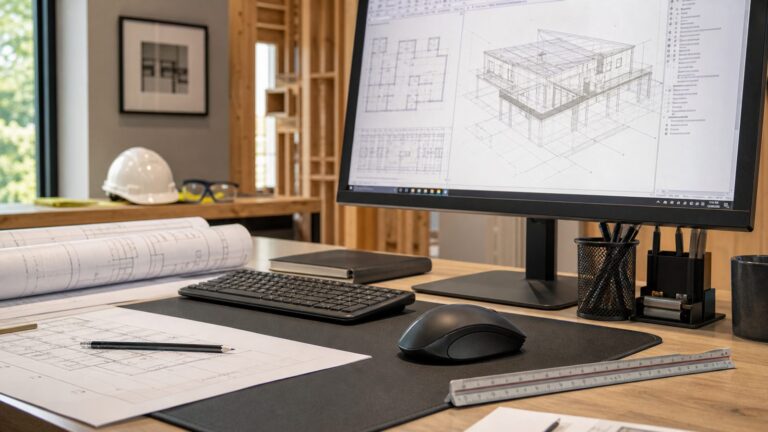
The building information model (BIM), for example, can help teams coordinate design and construction information. A common data environment can give project participants a shared place to manage that information; Deloitte’s 2025 Engineering and Construction Industry Outlook discusses the growing use of common data environments and standards such as ISO 19650. Field tools may then capture conditions or activity that can be connected back to the project’s information and management systems.
What’s actually slowing this PC down?
Pick the symptom - the matching free tool is one click away.
A digital twin is a further step: a digital representation used to examine or simulate aspects of a physical asset or process. Deloitte describes a “whole digital twin” linking physical, operational, and predictive or intelligent layers. That is an emerging direction, not a capability that every current jobsite has or needs.
#1 Best Overall

- We search for any book you like In Chinese, Russian and Spanish Service for Businesses, Individuals, Governments, Universities Any medium you choose, that is available Read, Learn, Research and Enjoy
What technologies are used, and what do they do?
These tools address different tasks. They become part of an intelligent jobsite only when their information can be used in the project’s actual decision-making workflows.
| Technology | Documented construction use | What to assess |
|---|---|---|
| BIM and common data environments | Coordinate project information and support material, schedule and conflict-resolution decisions. | Whether teams can keep information current and exchange it across project systems and participants. |
| Digital twins | Represent or simulate construction processes; more developed concepts connect physical, operational and predictive layers. | Whether the model is linked to information the project can maintain and use. A whole digital twin should be treated as an emerging direction, not an assumed off-the-shelf outcome. |
| IoT sensors and connected networks | Contribute site and equipment information. Construction firms are also using cloud computing, IoT, 5G and private cellular networks. | Coverage, reliability and whether captured information reaches a system where it can inform a decision. |
| AI and analytics | Help interpret or use large datasets. | Whether the tool is suitable for the specific task and whether its outputs can be checked. Do not assume real-time accuracy or results without evidence for the system and use case. |
| Drones and field capture | Support surveying, inspection, inventory management, progress monitoring and information capture. | How captured information is reviewed, integrated and acted on; a drone is a field-capture tool, not an end-to-end jobsite system. |
| Robotics and automation | Examples include autonomous material transport, precision welding, layout planning and remote work in hazardous environments. | Fit with the task and worksite conditions, coordination with trades, and procedures for safe operation as site conditions change. |
| Wearables | GAO groups workplace wearables into support, monitoring, training and tracking devices, including exoskeletons, smart helmets, ergonomic sensors, AR glasses and GPS trackers. | Worker acceptance, privacy, data security, cost, usability, battery life and tracking accuracy; maturity varies by device type. |
Deloitte’s industry outlook describes technology uses and investment direction; it is not an independent effectiveness evaluation of every tool listed. NIOSH likewise discusses emerging technologies and their potential, while warning that changing site conditions can create new hazards.
How can connected tools support project delivery?
The practical opportunity is to improve the information available for a defined task, not to digitize a site for its own sake. For example, field capture may help a team compare observed progress with project information; a shared model and information environment may help coordinate work; and equipment or site data may give project leaders additional context for planning. These are plausible workflow applications, not proof that any particular deployment will save time or money.
Rank #2
Drones have documented construction uses in surveying, inspection, inventory and progress monitoring. Robotics can support selected transport, layout, welding or hazardous tasks. Those examples show where technologies are being applied; they do not demonstrate that every project, vendor or configuration is cost-effective.
To determine whether a tool helps delivery, define the project decision it should improve and establish a baseline before deployment. Choose a measure tied to that decision—for example, the time required to complete a specified capture or coordination task—and compare like with like. Record deployment and operating costs as well as the result. Do not attribute a change to a tool unless the project can distinguish its effect from other changes in scope, staffing, conditions or process.
How can technology make construction sites safer—and what risks can it add?
Technology may support safety by providing alerts, movement feedback, physical assistance, training or information about work conditions. GAO’s March 2024 overview describes these wearable functions, but says published data on wearable efficacy are limited. It identifies privacy, data-security, cost, ease-of-use, battery-life and tracking-accuracy concerns. Wearable benefits should therefore be treated as possibilities, not established reductions in injuries across construction.
Rank #3
NIOSH’s 2021 discussion of future construction technology identifies potential productivity, quality, cost and safety advantages, while emphasizing that unfamiliar equipment and changing worksite conditions can create new risks. A construction site may have multiple trades, employers and automated equipment working in a shifting environment. Introducing a tool requires planning for those interactions, not just checking whether the device works in isolation.
For perspective, GAO reported more than 700,000 nonfatal injuries and more than 2,000 fatal accidents in 2022 across warehousing, manufacturing and construction combined. Those totals are not construction-only figures, and they do not show that a particular technology prevents injuries.
What are construction firms investing in—and why does governance matter?
Wipfli’s 2026 survey included 308 construction executives and business leaders. Among those respondents, 54% said they planned to add or replace construction project-management technology within 12 to 24 months, and 68% reported centralized technology standards or governance processes. These are survey responses, not a census of construction firms.
Rank #4

- Author Sherri Duskey Rinker’s sweet rhyming text soothes little ones into a peaceful rest|Full of irresistible artwork by illustrator Tom Lichtenheld| Goodnight Goodnight Construction Site is the perfect read-aloud |Ideal for children ages 3 to 5 years old|Great for young construction fans|This adorable hardcover bedtime book is a go-to gift for any occasion
Connected systems make governance a practical part of adoption. Before information flows between field tools, project models and management systems, decide who can access it, who is responsible for it, how long it is retained and how it is protected. Clarify how systems will exchange information and who will handle failures or security incidents. Wipfli’s July 2026 release also reported that seven in 10 survey respondents had experienced at least one cybersecurity incident in the previous 12 months. The figure reflects respondents’ reported experience and period, not a universal industry rate.
Brad Werner, Wipfli’s partner and construction and real estate industry leader, said in the release: “Cybersecurity isn’t just an overhead line item anymore. It’s business continuity, and the resilient firms already know it.” The practical implication for a project is to include security and continuity planning in technology decisions rather than treating them as later add-ons.
The Tool Desk
Outbyte Driver Updater FREEFix the driver behind crashes, sound loss and screen glitchesFind Drivers →Outbyte PC Repair FREERepair Windows errors before they cause bigger problemsFix Now →How should you evaluate an intelligent-jobsite investment?
Start with a field problem that matters to the project, then test whether a technology addresses it without creating larger integration, safety or usability burdens. Use the following questions to compare options.
- Use case: Which specific field task or decision will the system support—coordination, capture, monitoring, safety, layout or operations?
- Integration: Can it exchange usable information with the project model, project-management platform and other field tools, or will it create a separate data silo?
- Field usability: Can crews use it reliably in changing site conditions? For connected or wearable devices, consider coverage, battery life and tracking accuracy where relevant.
- Safety and acceptance: Does it introduce unfamiliar operating hazards, surveillance concerns, discomfort or extra work? Include workers who will use or be affected by the system in the decision.
- Governance and security: Who owns, accesses, protects and retains the data? Are standards, responsibilities and incident-response processes clear?
- Demonstrated value: What outcome will be measured, against what baseline, and what are the deployment and ongoing costs? The available sources do not provide a universal ROI benchmark.
A sensible rollout is to document the task and current process, verify the technology in the site conditions where it will be used, train affected workers, and review measured results before expanding. If the tool cannot exchange information reliably, crews do not trust it, or its outputs do not affect a real decision, adding more devices is unlikely to make the jobsite meaningfully more intelligent.
What the evidence does—and does not—show
The sources identify concrete applications, industry investment direction and risks that owners and contractors should consider. They do not establish a causal, sector-wide productivity increase, a representative return on investment, or a superior vendor. Treat technology as a means of improving a defined workflow, and judge results using evidence from the relevant task and project rather than a general promise of transformation.
Quick Recap
Product prices and availability are accurate as of the date/time indicated and are subject to change. Any price and availability information displayed on Amazon at the time of purchase will apply.