The Tool Desk
Outbyte PC Repair FREERepair Windows errors before they cause bigger problemsFix Now →Outbyte Driver Updater FREEFix the driver behind crashes, sound loss and screen glitchesFind Drivers →Some links on this page are affiliate links: if you buy through them we may earn a commission, at no extra cost to you.
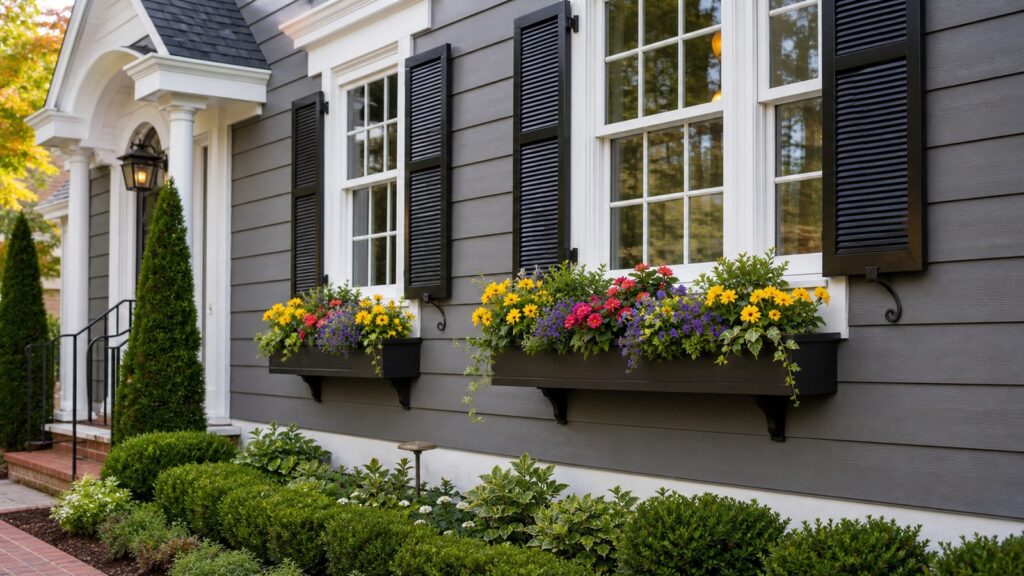
Colorful window boxes are one of the fastest ways to make a home feel finished from the street. A well-built box can add seasonal color, soften hard siding or masonry, and tie the front door, trim, shutters, and landscaping together. But a window box is not just a planter. Once it is filled with wet potting mix, plants, water, liner, and hardware, a typical 36- to 48-inch box can weigh 50 to 100 pounds or more.
That weight is hanging on the exterior of your house, usually near trim, siding, brick, stucco, or a window opening. On our job sites, we treat window boxes like a small exterior assembly: the load path has to make sense, the drainage has to move water away from the wall, and the box has to come off later for painting, repairs, or seasonal maintenance.
For most homeowners in 2026, a basic DIY window box costs about $75 to $300 per window once you include the box, brackets, soil, liner, plants, and hardware. A professionally installed standard box usually lands around $250 to $800 per window. Custom PVC, composite, copper, fiberglass, masonry, second-story, or irrigation-ready window boxes can run $800 to $2,500 or more for a feature window or small front-facade package.
What’s actually slowing this PC down?
Pick the symptom - the matching free tool is one click away.
As an Amazon Associate I earn from qualifying purchases.
The difference between a window box that lasts and one that stains siding, rots trim, cracks masonry, or blocks a code-required egress window is in the details. Here is how to design and install colorful window boxes the right way.
Start With the House, Not the Flowers
The best window boxes look intentional because they are sized and mounted for the house first. Plants can change every season. The box, brackets, fasteners, and wall penetrations are the permanent part.
#1 Best Overall

- High Quality: Made of high quality plastic, which is durable, allows you to reuse the planter for several seasons.
- Perfect Size: 7 Pack, Planter: length 17”, width 7.4”; Tray: length 15.7”, width 6”; the total height: 5.5”, including planter, tray and 7 Pack Plant labels(RANDOM LABEL COLOR).
- Unique Bottom Design: The bottom of nursery pot has 6 opened drainage holes with removable tray.
- Modern Shape: Classive color with simple design, great for displaying most plants and matching most home decorative styles well.
- Widely Used: These window planter boxes are widely used in windowsill, patio, garden, porch or other indoor outdoor occasions.
A good visual rule is to size the box close to the width of the window or slightly wider. For a 36-inch window, a 36- to 42-inch box usually looks balanced. For a pair of narrow windows, one continuous 60- to 72-inch box can look better than two undersized boxes, but only if the wall can support it and the bracket spacing is correct.
Depth matters too. Many off-the-shelf boxes are 7 to 9 inches deep. That works for annuals, herbs, and compact flowers, but it dries out quickly in full sun. A 10- to 12-inch-deep box gives roots more room, holds moisture longer, and supports fuller planting. Once you go deeper than 12 inches or longer than about 48 inches, the wet weight increases fast and the mounting needs more attention.
Before you buy plants, check the window and wall conditions:
- Can the window open fully without hitting the box?
- Will a casement sash swing into the planter?
- Are screens, shutters, storm windows, or sill weep holes blocked?
- Is the siding, trim, brick, stucco, or sill already damaged?
- Is the window a bedroom emergency escape and rescue opening?
- Will the box sit above a walkway, driveway, entry, or porch where failure could injure someone?
If any of those answers raise concerns, solve them before installing the box. A planter should enhance the exterior, not hide a building-envelope problem.
What Window Boxes Cost in 2026
Window box costs vary because the box itself is only one part of the work. The installed price depends on material, length, depth, bracket type, fastening substrate, height above grade, paint or stain, plant selection, and whether the installer discovers rotted trim or weak siding.
For a simple first-floor window with solid framing behind it, a homeowner can often install a basic box in 2 to 4 hours. A professional crew may install several standard boxes in half a day, but small exterior jobs often carry a minimum trip charge. That is why the per-box price usually drops when several windows are done at the same time.
| Window box scope | Typical 2026 cost | What is usually included |
|---|---|---|
| Basic DIY off-the-shelf box | $75-$300 per window | $30-$150 box, $15-$60 brackets and hardware, $20-$75 soil, liner, fertilizer, and plants |
| Professionally installed standard box | $250-$800 per window | Standard box, layout, mounting, basic hardware, first-floor access, normal siding or trim conditions |
| Custom carpentry, PVC, or composite box | $400-$1,200 per window | Built-to-fit box, paint or finish, drainage detailing, stronger brackets, trim coordination |
| Premium or complex installation | $800-$2,500+ | Copper, fiberglass, wrought iron, large assemblies, masonry drilling, second-story access, irrigation, or multiple windows |
If you are already replacing windows, repairing trim, painting the exterior, adding shutters, or reworking siding, that is the best time to add window boxes. Related window work is much larger in scope: common 2026 window replacement pricing runs roughly $300 to $2,100 per window, with many full-project averages in the several-thousand-dollar range. Window boxes are not window replacement, but bundling them with exterior work can save labor mobilization and allow better blocking, flashing, paint matching, and trim detailing.
Choose a Box Material That Fits the Exterior
There is no single best window box material. The right choice depends on the house, exposure, maintenance tolerance, and budget.
Wood
Cedar and redwood are traditional choices because they look natural, accept paint or stain, and can be built to match existing trim. A painted cedar box can look excellent on colonial, farmhouse, craftsman, and cottage-style homes. The tradeoff is maintenance. Wood needs primer, paint or stain, sealed end grain, and periodic repainting. In wet climates or against shaded north-facing walls, wood boxes need extra attention to drainage and airflow.
For wood boxes, we prefer rot-resistant lumber, stainless or coated fasteners, a removable liner, and a small air gap behind the box. The box should not sit tight against wood siding or trim.
PVC and Composite
PVC and composite boxes are practical for homeowners who want a painted trim look without wood rot. They resist moisture, hold paint well when properly prepared, and work nicely with modern exterior trim packages. They cost more than basic plastic but usually less than premium copper or custom metal.
For a professional exterior upgrade, PVC or composite is often the sweet spot. It can be built to the exact window width, painted to match trim or shutters, and detailed with removable liners.
Fiberglass and Resin
Fiberglass and resin boxes are lightweight, durable, and low maintenance. They are useful where weight is a concern, although the filled box still becomes heavy once saturated. Many come in clean profiles that fit modern, transitional, and coastal homes.
Free tools Windows power users keep installed
One-click scans. No signup required.
In high-sun exposures, choose UV-resistant products and lighter colors when possible. Dark boxes against south- or west-facing walls can heat up and dry soil faster.
Metal and Copper
Metal boxes can look refined, especially on brick, stone, stucco, and historic-style facades. Copper is a premium option and will develop a patina over time. Wrought iron cages with liners can also work well, especially where the design calls for an open architectural bracket.
Rank #2

- WINDOW BOX PLANTERS DIMENSIONS - Includes pack rectangular plastic planters. The size of plastic flower planters: L16.6 x W7 x H5.9 inches, large enough to support any projects and ideas. Great for herbs, flowers, foliage, grass, cactus, succulents, ferns, arborvitae and more.
- DURABLE PLANT POTS - Made of high quality plastic, which is recyclable, lightweight and sturdy, our window planters for outdoor can be exposed to the sun, rain and snow without discoloration for a long-lasting use. The surface of the planters is smooth, so it is easy to clean too.
- ATTACHED DRAINAGE TRAY - This large plastic plant pot with drainage features a attached saucer at the bottom for proper draining of live plants. Which helps your plants to grow healthier.
- WATER INLET DESIGN - The rectangular plant pots are designed with 2 water inlets at the bottom, so you can water your plants from the water inlet directly. This design ensures that you can water your plants well without making the tables or windowsills get wet, keeping it clean and dry.
- MULTIPURPOSE - The rectangular red planter is simple and practical, which makes it a nice home decor for your windowsill, garden, porch, balcony, kitchen, deck, patio, and other indoor outdoor use. Suitable to plant miniature roses, tulip, carnation or other flowers, vegetables, fruits.
The construction detail to watch is corrosion. Avoid mixing metals carelessly. Copper, steel brackets, treated lumber, and incompatible fasteners can create corrosion problems. In wet or coastal areas, use stainless steel or high-quality coated fasteners and hardware suited to the box material.
Mounting Is the Part That Matters Most
Most window box failures are not caused by flowers. They are caused by weak attachment, trapped water, or both.
Quick wins for a faster PC:
Repair Windows errors before they cause bigger problemsFix Now →Scan for outdated or missing drivers - takes under a minuteDriver Scan →Clear out junk files and repair common Windows errorsFree Scan →A filled window box imposes a downward load and a pull-out force on the wall. If someone leans on it, if wet snow accumulates, or if the soil becomes fully saturated after a storm, the load increases. Fastening only into siding, thin trim, mortar joints, or 1/2-inch sheathing is not enough for long-term support.
For wood-framed walls, the strongest approach is to fasten brackets into wall studs or solid blocking. Many homes have studs at 16 inches on center, but you should verify the layout instead of guessing. Exterior trim and siding can hide the framing pattern. For boxes longer than about 30 inches, use metal brackets or a bracket system rated for the load. A 48-inch box commonly needs at least three brackets, and larger or heavier boxes may need more.
For masonry, use proper masonry anchors installed into sound brick, block, concrete, or stone. Avoid relying on deteriorated mortar joints. Drilling brick or stone takes the right bit, anchor, spacing, and judgment. If the masonry is old, soft, spalling, or part of a historic facade, hire a contractor who understands masonry attachment.
For stucco, be careful. Stucco is not the structure. Penetrations must be sealed correctly, and the fasteners need to reach framing or suitable backing. Poorly sealed stucco penetrations can let water into the wall assembly, and that can become expensive quickly.
On our installs, we want the box to be secure but removable. That means the mounted brackets carry the load, the box can be lifted out or unscrewed for maintenance, and the installer is not depending on caulk as the structural or waterproofing strategy.
Drainage Protects Both the Plants and the House
Window boxes need water, but the wall behind them does not. Drainage is a plant-health issue and a construction issue.
Every box needs drain holes. Without them, roots sit in water, soil turns sour, and the box becomes heavier after every rain. But uncontrolled drainage can stain brick, streak siding, saturate trim, or drip onto a porch. The goal is to let water leave the planter without trapping it against the building.
Use a high-quality potting mix instead of garden soil. Potting mix is lighter, drains better, and resists compaction in a confined box. Garden soil is heavier, can clog drain holes, and increases the load on the brackets. For most annual window box plantings, a fresh lightweight potting mix with slow-release fertilizer is a better choice than digging soil out of a bed.
PC Slower Than It Used to Be?
A free scan shows the junk files, broken settings and background clutter dragging Windows down - then fixes them in one click.Free scan · Windows 10 & 11Outdated Drivers Are Slowing You Down
One free scan finds every outdated or missing driver and matches the right update for your exact hardware.Free scan · exact hardware matchLeave a small gap between the box and the wall. Even 1/2 inch of standoff helps air move and lets incidental water dry. Spacers, bracket geometry, or a mounted rail can create that gap. Do not press a planter tight against wood siding or trim, especially on shaded walls.
Removable liners or drop-in nursery trays are worth the small added cost. They keep the outer shell cleaner, make seasonal changes faster, and reduce repeated scraping or soil disturbance inside a mounted box. If the liner has drain holes, make sure they align with the box drainage path.
Look below the planned location too. If the box drains onto a wood deck rail, painted porch floor, metal roof, or light-colored masonry, adjust the location or drainage setup before installation.
Color Planning by Exterior Material
Good window box color is not random. The easiest way to make the design look professional is to repeat one permanent house color and add one seasonal contrast.
Recommended Free Tools
A three-layer planting plan works for most boxes: upright plants in the back or center, mounding plants through the middle, and trailing plants over the front edge. Designers often call these thrillers, fillers, and spillers. For a 36-inch box, three upright plants, five to seven filler plants, and three trailing plants is a reasonable starting point. For a 48-inch box, increase that to four or five upright plants, seven to nine fillers, and four or five trailing plants.
Rank #3
- WINDOW BOX PLANTERS DIMENSIONS - Includes pack rectangular plastic planters. The size of plastic flower planters: L16.6 x W7 x H5.9 inches, large enough to support any projects and ideas. Great for herbs, flowers, foliage, grass, cactus, succulents, ferns, arborvitae and more.
- DURABLE PLANT POTS - Made of high quality plastic, which is recyclable, lightweight and sturdy, our window planters for outdoor can be exposed to the sun, rain and snow without discoloration for a long-lasting use. The surface of the planters is smooth, so it is easy to clean too.
- ATTACHED DRAINAGE TRAY - This large plastic plant pot with drainage features a attached saucer at the bottom for proper draining of live plants. Which helps your plants to grow healthier.
- WATER INLET DESIGN - The rectangular plant pots are designed with 2 water inlets at the bottom, so you can water your plants from the water inlet directly. This design ensures that you can water your plants well without making the tables or windowsills get wet, keeping it clean and dry.
- MULTIPURPOSE - The rectangular red planter is simple and practical, which makes it a nice home decor for your windowsill, garden, porch, balcony, kitchen, deck, patio, and other indoor outdoor use. Suitable to plant miniature roses, tulip, carnation or other flowers, vegetables, fruits.
Brick Homes
Brick already has strong color variation. For red brick, white, deep green, purple, soft yellow, and coral usually work better than trying to match the brick exactly. A black or bronze metal box can look sharp, while painted white or cream boxes can connect to trim.
For tan or buff brick, use richer plant colors: burgundy coleus, blue salvia, white petunias, pink geraniums, or trailing sweet potato vine. Avoid a planter color too close to the brick unless the trim provides contrast.
White or Light Siding
White siding can handle strong color. Red geraniums, blue lobelia, purple petunias, chartreuse foliage, and dark green trailing vines all read clearly from the street. A black, charcoal, navy, or trim-matched box can provide structure.
Be careful with all-pastel plantings on light siding. They may look pleasant up close but disappear from the curb. Add dark foliage or saturated flowers for definition.
Dark Siding
Dark gray, navy, deep green, and black exteriors need plants with contrast. White, lime green, pale pink, lavender, yellow, and silver foliage can brighten the facade. Use lighter-colored boxes if the trim is light, or choose a box that disappears into the siding and lets the plants carry the color.
Dark walls also absorb heat. On south- and west-facing exposures, choose drought-tolerant plants and use larger soil volume when possible.
Stone Veneer and Stucco
Stone and stucco often look best with disciplined color. Choose one strong flower color and one foliage contrast instead of using every color available at the nursery. Bronze, charcoal, copper, and warm white boxes usually pair well with stone. For stucco, painted wood, composite, or clean fiberglass boxes often look more integrated than lightweight plastic.
Do these 3 things before closing this tab:
1Repair Windows errors before they cause bigger problems2Scan for outdated or missing drivers - takes under a minute3Clear out junk files and repair common Windows errorsCraftsman, Colonial, and Farmhouse Exteriors
Craftsman homes can support deeper earth tones, greens, burgundy foliage, and copper or stained wood boxes. Colonial homes often look best with symmetrical boxes, restrained colors, and trim-matched paint. Farmhouse exteriors can handle white, black, galvanized, or natural wood boxes with loose seasonal planting.
Best Plants for Colorful Window Boxes
Plant choice depends on sun exposure first. A beautiful shade plant will struggle on a hot west wall. A full-sun annual will thin out under a covered porch.
For full sun, reliable choices include geraniums, petunias, calibrachoa, lantana, verbena, salvia, marigolds, zinnias, ornamental peppers, sweet potato vine, and trailing vinca. These need consistent water, especially in metal or dark-colored boxes.
For part sun, consider begonias, coleus, impatiens, lobelia, bacopa, alyssum, fuchsia, heuchera, and trailing ivy. Coleus is especially useful because it brings color through foliage even when flowers slow down.
For shade, use caladium, begonias, impatiens, ferns, ivy, lamium, torenia, and shade-tolerant coleus. White and lime foliage can brighten a shaded window more effectively than dark flowers.
Herbs can work in kitchen window boxes, but they need enough sun and drainage. Basil, thyme, oregano, parsley, chives, and trailing rosemary are practical choices. Avoid overloading a narrow box with aggressive herbs that crowd everything else.
For four-season interest, use cool-season pansies, violas, ornamental kale, small evergreens, cut branches, and winterberry stems where climate allows. In cold regions, remove soil from boxes that are not designed for freeze-thaw exposure or use liners that can come inside.
Rank #4

- 2 DRAINAGE HOLES & ATTACHED SAUCER – This box planter for window was created with an integrated planter tray and two drainage holes to allow excess water to drain over time and avoid leaks from ruining your windowsill, making it a simple task to grow a plant or flower for beginners. This was done to guarantee that the soil could breathe while still maintaining a clean appearance.
- PREMIUM MATERIAL & LONGER-LASTING – Our windowsill planter is crafted from high-quality plastic that is resistant to the effects of aging. As a result, it is extremely durable, resistant to damage, and able to withstand extended exposure to outdoor elements such as light, wind, and sunshine. It has a service life that spans decades and is a dependable companion for you.
- RECTANGULAR BOX PLANTER FOR WINDOW – This rectangular window planter box was designed specifically for windowsill planting projects. It measures 17x7x6.3 inches and is able to fit perfectly on most windowsills, windows, balconies, and other narrow areas. As a result, you will be able to have your very own miniature planting garden in a space that is only a few square feet in size.
- COMBINATION OF FUNCTIONALITY & FASHION – The rectangular planter that we provide has a clean and contemporary look to it. Your plants, flowers, veggies, and herbs will have the ideal growing environment thanks to the monochromic design and clean lines, and your space will have a more intimate feel as a result of the greenhouse's contribution to the overall ambiance. There are 8 planter box in the package, plenty enough for growing enough plants for the house.
- VERSATILE PLANTER & SATISFACTION – This windowsill planter flower pot comes with an integrated tray that may be used to cultivate a wide range of plants, including succulent, flowers, greeneries, veggies, basil, and many more. It is the ideal size for the window in the kitchen, the windowsill, the deck, the patio, the porch, the desk in the workplace, the indoors, and the outdoors. If you have any question regarding this window box planter, please turn to us, we are glad to assist you!
Permits, Codes, Egress, and HOA Rules
Most simple first-floor window boxes do not require a building permit, but local rules vary. Some cities treat minor exterior decorative work differently from work that affects structure, siding, historic facades, multi-family buildings, or public walkways. If you live in an HOA, historic district, townhouse community, condo, or attached building, check the rules before drilling into the exterior.
Quick wins for a faster PC:
Scan for outdated or missing drivers - takes under a minuteDriver Scan →Repair Windows errors before they cause bigger problemsFix Now →Fix the driver behind crashes, sound loss and screen glitchesFind Drivers →The biggest code-related issue is emergency escape and rescue openings. Many bedrooms require an egress window that can open enough for escape and rescue access. A window box should not block the window from opening, reduce the clear opening, interfere with exterior rescue access, or create an obstruction below the window. If the window is part of a basement window well system, be even more careful. Do not install a planter where it blocks ladders, covers, grates, or the required opening path.
Also think about overhead risk. A second-story box above a sidewalk, entry, driveway, or patio needs professional-grade attachment. If a box fails from that height, it is not just a maintenance issue. It is a safety issue.
Hire a professional when the installation involves masonry, stucco, second-story access, historic exterior materials, large boxes, copper or custom metal, irrigation lines, suspected rot, or anything above a walkway or door.
When to DIY and When to Hire a Pro
A capable homeowner can DIY a window box when the project is simple, accessible, and low risk. A good DIY candidate is a first-floor wood-framed wall, a moderate box length, known stud locations, sound trim and siding, and no egress conflict. Expect to spend 2 to 4 hours per box if you are working carefully, plus time for painting or staining.
Recommended Free Tools
Use a level, stud finder, drill, exterior-rated screws or lag fasteners, proper brackets, sealant compatible with the exterior material, and corrosion-resistant hardware. Pre-finish wood parts before installation when possible. Test the bracket layout before planting. It is much easier to correct a mounting problem with an empty box than a wet planted one.
Hire a pro when the box is large, high, heavy, custom, or mounted to a complicated exterior. That includes brick, stone, stucco, fiber cement siding where fastening details are unclear, second-story windows, bay windows, historic trim, or homes with visible water damage near the sill. A contractor can also add blocking during siding or window work, which is the cleanest way to support a heavy box.
Professional installation is also worth it when you want several boxes to align perfectly across the facade. Small layout errors are obvious from the street. A half-inch height difference between two front windows can make the whole elevation look off.
Independent reader supportYour contribution helps us test, update, and keep practical guides available for everyone.Installation Details We Look For on Job Sites
Before a box goes up, we check the substrate. Paint blisters, soft trim, cracked brick, loose stucco, open caulk joints, or dark staining below a sill are warning signs. Installing a planter over existing moisture damage traps the problem and makes the repair harder later.
The bracket layout should match the load. For many standard 36-inch boxes, two structural brackets may be enough if they are rated and fastened properly. For boxes longer than 30 inches, metal brackets are strongly recommended, and for 48-inch boxes we usually want three supports. For 60 inches and longer, bracket spacing and attachment points should be planned carefully instead of guessed.
Fasteners should penetrate structural framing or proper masonry anchors. The exact fastener depends on the wall, bracket, and box, but exterior-rated screws, lag screws, stainless fasteners, coated structural screws, and masonry anchors are common. Drywall screws, short trim screws, and light decorative screws do not belong in this assembly.
Penetrations should be sealed without trapping water. A small amount of compatible exterior sealant at fastener penetrations can help, but caulk should not be the only water strategy. The box still needs drain holes, airflow behind it, and a clear drip path.
After installation, load-test sensibly. We do not yank on trim, but we do confirm that brackets do not flex excessively, fasteners do not move, and the box remains level before soil and plants go in.
Free tools Windows power users keep installed
One-click scans. No signup required.
Maintenance That Prevents Rot, Stains, and Failures
Window boxes are not install-and-forget exterior components. Plan on a quick inspection every month during the growing season and a more careful check twice a year.
Best Value

- Durable Window Boxes: We use 100% high-grade Polyethylene resin in the manufacturing process - making our products durable, lightweight and highly shock resistant
- Four Season Use: These 4ft window boxes are resistant to high impact, chemicals and extreme weather conditions - this product stands true to its 'four-season use' tag with very little winter preparation
- Long Lasting Quality: The resin used to create our products contains built-in UV inhibitors that reduce the damaging effects of the sun - this ensures that your product doesn't fade, preserves its color and increases its overall lifespan
- Innovative Design: Double-wall design makes these Fairfield Window Boxes sturdy, and provides the roots and potting mix with adequate insulation from surrounding weather conditions
- Self-watering Factor: In a self-watering window box, the planting container sits directly inside the water reservoir - the water is then pulled into the potting mix through capillary action, keeping your plants watered & happy!
Use this checklist:
- Box remains level from side to side and front to back.
- Fasteners are tight and brackets are not bending.
- Drain holes are open and water leaves the box freely.
- Siding, trim, brick, or stucco behind the box is dry after normal watering.
- No dark stains, cracks, peeling paint, or soft wood appear below the anchors.
- Plants are not forcing water against the wall or growing into the window operation.
- Window sills, weep holes, screens, and shutters still function properly.
Watering is the daily maintenance item most homeowners underestimate. In midsummer, a shallow box on a hot wall may need water every day. A larger 10- to 12-inch-deep box with good potting mix may last longer, but it still dries faster than a garden bed. self-watering inserts can help, especially on south- and west-facing walls, but they do not eliminate the need for inspection.
At the end of the season, remove dead plants and check the liner. If the box is wood, look for paint failure and open joints. Touch up paint before water gets into end grain. If the box is metal, check for corrosion. If it is PVC or composite, clean it and inspect fasteners and seams.
Common Mistakes to Avoid
The most common mistake is mounting into whatever is easiest to hit: siding, thin trim, sheathing, or a soft mortar joint. That may hold an empty box for a while, but it is not a reliable long-term attachment for a saturated planter.
The Tool Desk
Outbyte PC Repair FREEClear out junk files and repair common Windows errorsFree Scan →Outbyte Driver Updater FREEScan for outdated or missing drivers - takes under a minuteDriver Scan →The second mistake is ignoring drainage. A box with no drain holes can drown plants and overload brackets. A box tight against siding can hold moisture against the house. A box that drains directly onto trim, porch flooring, or light masonry can leave stains and accelerate deterioration.
Another mistake is using garden soil. It is heavier than potting mix, compacts in a confined space, and can clog drainage. Use high-quality potting mix and refresh it as needed.
Homeowners also forget about window operation. A box may look perfect until the casement sash hits the flowers, the screen cannot come out, or a bedroom egress window no longer functions as required. Always test the window before final installation.
Finally, do not let plants become a maintenance cover-up. If you see peeling paint, soft trim, cracked stucco, or staining around a window, fix the exterior assembly first. A flower box can dress up a house, but it should never be used to hide water damage.
Windows Errors? Fix Them Before They Spread
Repair common Windows errors and clear accumulated junk for a smoother, more stable PC - no reinstall needed.Free scan · no reinstallCrashes, No Sound, or Screen Glitches?
Random freezes, missing sound and display glitches usually trace back to one bad driver. Find and replace yours safely.Free scan · under a minuteA Practical Window Box Plan for a Finished Front Elevation
For many homes, the best result comes from treating window boxes as part of a small exterior package. Instead of buying one planter and hoping it works, plan the front elevation in one pass.
Start with the main public-facing windows. On a typical front facade, two or three matching boxes often look stronger than one isolated box. Match the box color to trim, shutters, front door hardware, railing, or another permanent element. Then use plants to bring in seasonal color.
If the house needs paint, trim repair, shutter replacement, or siding touch-up, do that work first. It is cleaner to paint behind a box before installation than to work around brackets later. If new windows are being installed, ask about adding blocking or confirming structural fastening locations before the exterior is closed up.
A simple, durable specification for many homes would be a 36- to 48-inch PVC or composite box, 9 to 12 inches deep, painted to match trim, mounted on three corrosion-resistant metal brackets fastened to studs or blocking, held off the wall slightly for airflow, fitted with a removable liner, and planted with a sun-appropriate three-layer mix. That is not the cheapest version, but it is a practical balance of appearance, maintenance, and building protection.
Done correctly, colorful window boxes give you curb appeal without compromising the exterior envelope. The color is the part everyone notices. The structure, drainage, and fastening are the parts that make it last.
Frequently Asked Questions
How much does it cost to add window boxes in 2026?
A basic DIY window box usually costs about $75 to $300 per window including the box, brackets, soil, liner, plants, and hardware. Professionally installed standard boxes typically run $250 to $800 per window. Custom PVC, composite, copper, fiberglass, masonry, second-story, or irrigation-ready installations can cost $800 to $2,500 or more.
Do window boxes need to be attached to studs?
On wood-framed walls, yes, the safest approach is to fasten brackets into studs or solid blocking. Siding, thin trim, and sheathing alone are not reliable long-term support for a wet planter that may weigh 50 to 100 pounds or more.
Can window boxes damage siding or brick?
They can if they are mounted poorly or drained poorly. Common damage includes rotted wood trim, stained siding, cracked masonry, loose anchors, and trapped moisture behind the box. Use proper structural attachment, drain holes, corrosion-resistant hardware, and a small air gap behind the box.
Can I put a window box under a bedroom egress window?
Only if it does not interfere with the required emergency escape and rescue opening. The box must not block the sash, reduce the clear opening, interfere with exterior rescue access, or obstruct a basement window well, ladder, cover, or grate.
What is the best material for window boxes?
PVC and composite are strong low-maintenance choices for many homes. Cedar and redwood look traditional but need sealing and repainting. Fiberglass and resin are lightweight and durable. Metal and copper offer a premium look but require attention to heat, drainage, and corrosion-compatible hardware.
What plants work best for colorful window boxes?
Use a three-layer mix: upright plants, mounding fillers, and trailing spillers. For full sun, geraniums, petunias, calibrachoa, lantana, verbena, salvia, and sweet potato vine work well. For shade or part sun, consider begonias, coleus, impatiens, ferns, ivy, torenia, and caladium.
Quick Recap
Product prices and availability are accurate as of the date/time indicated and are subject to change. Any price and availability information displayed on Amazon at the time of purchase will apply.
What’s actually slowing this PC down?
Pick the symptom - the matching free tool is one click away.

