Free tools Windows power users keep installed
One-click scans. No signup required.
Some links on this page are affiliate links: if you buy through them we may earn a commission, at no extra cost to you.
Asbestos siding on a house is not automatically an emergency. In many older homes, asbestos-cement shingles have been sitting on the exterior for 50, 70, or even 90 years with little trouble because the asbestos fibers are locked into a hard cement matrix. If the siding is intact, painted, and not being cut, sanded, drilled, crushed, or demolished, the practical risk is often lower than homeowners expect.
The risk changes quickly when the material is disturbed. Broken shingles, aggressive pressure washing, window replacement, storm repair, demolition, or a siding tear-off can release asbestos fibers and turn a simple exterior project into a regulated abatement job. That is where homeowners get into trouble: not because asbestos siding exists, but because somebody treats it like ordinary cement board.

As an Amazon Associate I earn from qualifying purchases.
Outdated Drivers Are Slowing You Down
One free scan finds every outdated or missing driver and matches the right update for your exact hardware.Free scan · exact hardware matchPC Slower Than It Used to Be?
A free scan shows the junk files, broken settings and background clutter dragging Windows down - then fixes them in one click.Free scan · Windows 10 & 11On our job sites, we approach suspected asbestos siding with a simple rule: identify it before disturbing it, document what is there, and choose the least disruptive method that still solves the building problem. Sometimes that means leaving the siding alone and painting it. Sometimes it means replacing a few damaged shingles with asbestos-free repair shingles. Sometimes it means covering it with a new cladding system. And when the siding is damaged, in the way of renovation work, or headed for demolition, it usually means bringing in a qualified asbestos professional before the siding crew starts.
This guide explains how asbestos siding behaves, how to confirm whether you have it, what your options are, what removal and replacement cost in 2026, and where DIY ends and professional abatement begins.
#1 Best Overall
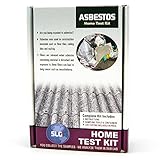
- SLGi Home Test Kits includes sampling tools, a prepaid return shipping label, instructions, and analysis.
- We perform Asbestos PLM analysis by EPA Method 600/R-93 for (1) sample.
- Your results will be ready within (5) business days of your kit arriving at our lab.
- Your sample takes 1–5 business days to reach our lab.
What Asbestos Siding Usually Is
Most residential asbestos siding is asbestos-cement siding. It was commonly made as shingles or panels with asbestos fibers mixed into Portland cement and other binders. The result was a durable, fire-resistant, rot-resistant exterior product that became popular on many U.S. homes from roughly the 1930s through the 1970s.
Typical asbestos-cement siding shingles are about 12 inches by 24 inches, often installed in a staggered pattern. Many have a wavy bottom edge, wood-grain texture, or a flat slate-like face. Older panels may be larger. Some homes have asbestos-cement siding as the visible exterior; others have it hidden under later vinyl, aluminum, or wood siding.
The important technical point is that asbestos-cement siding is generally considered non-friable when it is intact. Non-friable means the material cannot easily be crumbled by hand pressure. That is different from friable asbestos materials such as old pipe insulation, boiler insulation, sprayed fireproofing, or some textured materials, which can release fibers more easily when deteriorated.
Non-friable does not mean harmless. If asbestos-cement siding is sawed, drilled, sanded, ground, broken, crushed, or badly weathered, fibers can be released. Once that happens, the issue is no longer just the siding; it becomes airborne dust, contaminated soil near the foundation, waste handling, worker exposure, and cleanup.
Is It Safe to Live in a House With Asbestos Siding?
Usually, yes, if the siding is intact, sealed with paint, and left undisturbed. Federal safety agencies have long emphasized a practical principle for asbestos-containing materials in homes: material in good condition is often best managed in place. The mere presence of asbestos in a house does not automatically mean the occupants are being exposed.
That said, the siding should not be ignored. It should be inspected visually at least once a year, and again after hail, wind, tree impact, exterior remodeling, or foundation work that may crack brittle siding. Look for broken corners, missing shingles, loose fasteners, powdery surfaces, delamination, impact holes, open seams, and debris at the base of the wall.
Health risks from asbestos come from inhaling microscopic fibers. Known diseases include asbestosis, lung cancer, and mesothelioma. These diseases often appear many years after exposure. That long delay is one reason asbestos gets mishandled: a dusty shortcut may not create an obvious immediate injury, but it can create a serious long-term exposure.
For a homeowner, the safest mindset is this: intact asbestos siding is usually a management issue; disturbed asbestos siding is a health, legal, and construction planning issue.
How to Tell Whether Your Siding Contains Asbestos
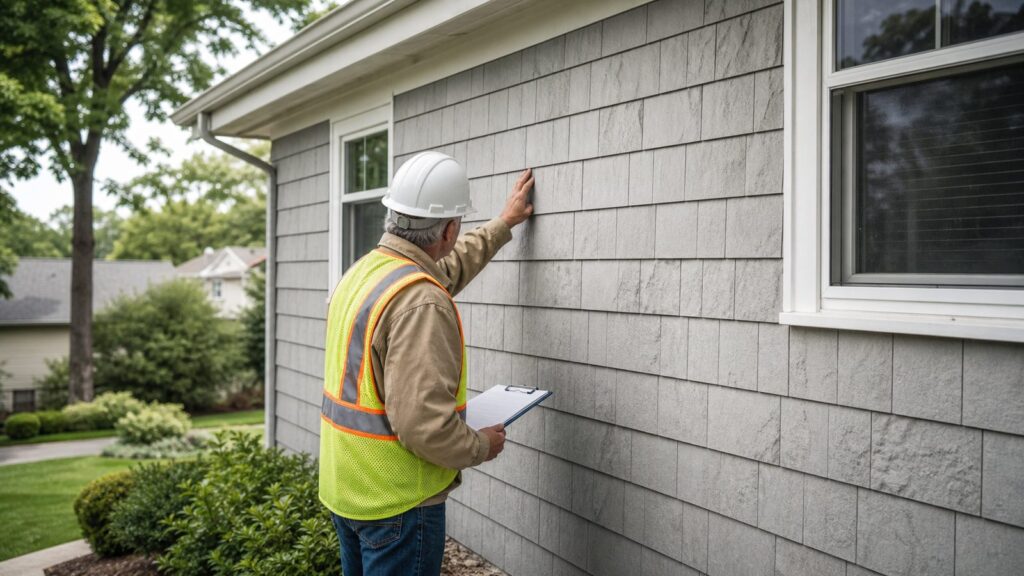
You cannot confirm asbestos by appearance. Age, shape, and texture can raise suspicion, but only lab analysis can verify whether siding contains asbestos.
There are common clues. If your house was built or re-sided between the 1930s and late 1970s, asbestos-cement siding is possible. If the shingles are hard, brittle, cement-like, and roughly 12 by 24 inches, suspicion goes up. If they have a stamped wood-grain pattern, scalloped edge, or slate-like surface, suspicion also goes up. But modern fiber-cement products can look similar, and not every old cement-like siding product contains asbestos.
Before siding replacement, demolition, window replacement, exterior door changes, deck ledger work, electrical service upgrades, plumbing penetrations, or storm-restoration work, hire a qualified asbestos inspector or environmental professional to collect samples. A small targeted sample may be enough for a limited repair area, while a whole-house renovation may require a broader asbestos survey. In 2026, professional asbestos inspection and assessment commonly costs about $500 to $2,500 depending on house size, number of samples, access, and reporting requirements.
Do not break off a piece casually and mail it to a lab unless your local rules allow homeowner sampling and you know how to wet, contain, patch, label, and clean the sample area. A poor sample method can create the exposure you were trying to avoid.
Your Main Options: Leave, Repair, Cover, or Remove
The best choice depends on four things: current condition, whether planned work will disturb the siding, budget, and resale or insurance goals. A full tear-off is not always the best first move. But covering failing siding is not a magic fix either.
| Option | Best Fit | Watchouts | Typical 2026 Cost Impact |
|---|---|---|---|
| Leave it alone | Intact, painted siding with no renovation planned | Requires monitoring and disclosure documentation | Lowest cost; inspection may run $500-$2,500 if confirmation is needed |
| Paint and maintain | Sound siding with weathered paint but no broken shingles | No sanding, grinding, or aggressive pressure washing | Paint cost varies by house size; asbestos-safe prep may add labor |
| Limited repair | A few cracked or missing shingles | Matching profile and safe handling matter | Often far less than full abatement; pricing depends on access and local rules |
| Cover with new siding | Stable, flat, well-fastened siding where removal is not required | Changes wall thickness at windows, doors, outlets, hose bibbs, trim, and flashing | New siding cost plus trim build-outs and detailing |
| Remove and replace | Damaged siding, major remodels, demolition, resale strategy, or work that will disturb siding | Requires abatement planning, disposal, weather protection, and coordination | Removal often $7-$15 per sq. ft.; full replacement commonly $16,000-$22,000 |
Leaving Asbestos Siding in Place
If the shingles are intact and painted, leaving them alone may be the most responsible option. That means no drilling new penetrations without a plan, no dry scraping, no sanding, no cutting, and no pressure washing with a high-powered washer. It also means keeping gutters working, grading soil away from the house, and fixing water issues that can worsen freeze-thaw damage.
Do these 3 things before closing this tab:
1Fix the driver behind crashes, sound loss and screen glitches2Clear out junk files and repair common Windows errors3Scan for outdated or missing drivers - takes under a minuteGood documentation helps. Take clear photos of all elevations. Keep lab reports, inspection notes, contractor licenses, permits, and any disposal receipts in a permanent home file. If you sell, refinance, insure, or remodel later, that record reduces confusion and gives future contractors a clean starting point.
Painting and Maintaining It
Paint can help keep asbestos-cement siding sealed, but surface prep has to be gentle. Use low-pressure washing only where allowed and appropriate, soft brushing, wet methods, and paint systems compatible with cementitious siding. Avoid sanding, abrasive blasting, grinding wheels, wire wheels, and aggressive scraping.
On older houses, paint failure often shows up first at lower courses, shaded walls, or areas below leaky gutters. Before repainting, solve the water source. Paint over damp, loose, or powdering siding and the finish may fail quickly. Worse, repeated scraping cycles increase the chance of disturbing the material.
Repairing a Few Broken Shingles
If only a handful of shingles are damaged, do not assume you need a full-house tear-off. In many cases, an experienced contractor can evaluate whether limited replacement is possible using asbestos-free fiber-cement repair shingles. Some modern replacement shingles are made in familiar 12 by 24 inch profiles intended to blend with older cement-shingle patterns.
The key is how the damaged pieces are removed and how the area is cleaned. Brittle asbestos-cement shingles can crack when fasteners are pulled. A qualified pro will know when the repair remains minor and when the breakage risk makes abatement procedures necessary.
Covering Asbestos Siding With New Siding
Covering asbestos siding can be a valid approach, but it has to be designed, not improvised. New siding installed over old asbestos-cement siding adds wall thickness. That affects window and door trim, sill extensions, exterior outlets, meter bases, light blocks, hose bibbs, dryer vents, corner boards, and transitions to masonry, decks, porches, and rooflines.
Water management is the bigger issue. The new wall assembly still needs a reliable drainage plane. Depending on the house, that may involve furring strips, housewrap, flashing tape, trim build-outs, and careful detailing around penetrations. If the old siding is loose, bulging, wet, badly cracked, or concealing rot, covering it can trap problems inside the wall.
We do not like covering asbestos siding until we know three things: the existing siding is stable, the fastening plan will not shatter the old shingles, and the new system has a clear drainage and flashing strategy. Without those three answers, covering can become an expensive way to hide a problem.
Full Removal and Replacement
Removal makes sense when the siding is extensively damaged, when demolition is planned, when major exterior remodeling will disturb the siding, or when the owner wants the asbestos issue fully resolved before resale or a large renovation. Removal also may be required by local rules or by the scope of work, especially when contractors will be cutting into the exterior wall.
A good replacement scope should name who is responsible for abatement, disposal, sheathing repair, weather-resistive barrier, flashing, window and door trim, temporary weather protection, new siding, paint, and final cleanup. Do not let the abatement contractor and siding contractor assume the other one is handling the transition. After old siding comes off, the house may expose damaged sheathing, missing WRB, outdated flashing, or framing repairs that were impossible to see before.
What Asbestos Siding Removal Costs in 2026
For general asbestos removal, 2026 national averages commonly land around $2,244, with broad project ranges from roughly $462 to $6,100 and per-square-foot pricing around $5 to $20 depending on material, quantity, access, containment, repairs, and disposal. Another national 2026 range puts typical projects around $1,307 to $3,927, with many jobs near $2,290.
Siding-specific numbers are usually higher because exterior wall area adds up fast. Asbestos siding removal commonly runs about $7 to $10 per square foot in straightforward conditions, and many real-world projects fall closer to $8 to $15 per square foot once access, brittle material, multiple stories, waste handling, and local requirements are included. For 2,000 square feet of siding, removal alone can be roughly $14,000 to $20,000, and sometimes more in high-cost or heavily regulated markets.
Recommended Free Tools
Full asbestos siding replacement is a bigger number because removal is only one part of the job. In July 2026 figures, a full asbestos siding replacement often averages about $16,000 to $22,000, with a typical project around $19,000, or roughly $8 to $15 per square foot depending on the house and material. That number can climb if the project includes sheathing replacement, upgraded insulation, complex trim, multiple colors, tall walls, porch tie-ins, or premium siding.
After abatement, new siding material and installation vary widely. Vinyl siding may be roughly $3 to $7 per square foot installed in many markets. Fiber cement often runs around $8.92 to $14.69 per square foot nationally in 2026. Wood, stucco, metal, engineered wood, and veneer systems vary by region, design, and wall preparation.
Rank #3

- DIY Asbestos Sample Test Kit
- Free Consultation and Lab Fees Included. No additional lab fees required
- Fast Turnaround: Results within 2–3 business days after samples are received.
- NVLAP 201031-0 Accredited Laboratory
- Professional and Detailed Report Included in Price
Cost Drivers Homeowners Miss
The square footage is only the starting point. A one-story ranch with easy access is not the same project as a three-story house with tight side yards, mature landscaping, brittle shingles, and siding buried under vinyl. Hidden asbestos beneath newer siding can add labor because the outer cladding must be removed carefully before the asbestos work even begins.
Permits, notifications, and waiting periods can also affect schedule and cost. Some jurisdictions require asbestos surveys before demolition or renovation. Some require notification before removal. Disposal must go to an approved facility, and waste may need specific packaging, labeling, transport records, and disposal manifests.
Quick wins for a faster PC:
Clear out junk files and repair common Windows errorsFree Scan →Scan for outdated or missing drivers - takes under a minuteDriver Scan →Then there is the wall itself. Once old siding is removed, crews may find soft sheathing, missing flashing, old water damage, insect damage, or out-of-plane walls. Budget for the full cost stack: testing, abatement, disposal, temporary weather protection, sheathing repair, WRB, flashing, trim, siding, paint, and cleanup.
Permits, OSHA Rules, and Disposal Requirements
Asbestos rules are layered. Federal rules, OSHA worker-safety standards, state environmental rules, local air-quality rules, landfill requirements, and building permits may all touch the same project.
For contractors, OSHA asbestos standards apply when employees disturb asbestos-containing materials, including residential construction work. OSHA’s asbestos permissible exposure limit is 0.1 fibers per cubic centimeter as an 8-hour time-weighted average, with a 1.0 fiber per cubic centimeter 30-minute excursion limit. That means contractors cannot treat asbestos siding removal as ordinary demolition just because the work is outside.
Residential NESHAP rules can be confusing. EPA guidance notes that asbestos NESHAP excludes many residential buildings with four or fewer dwelling units in certain contexts, but that does not mean homeowners and contractors can ignore asbestos. State and local rules may still require surveys, notifications, permits, specific work practices, and approved disposal. OSHA rules still apply to workers. Landfills may reject improperly packaged waste.
What’s actually slowing this PC down?
Pick the symptom - the matching free tool is one click away.
The practical takeaway: check your city, county, state environmental agency, and local air authority before work begins. A licensed abatement contractor should know the local process and should provide documentation. Ask for license numbers, insurance, written scope, waste packaging method, disposal facility, and final disposal records.
When to DIY vs. When to Hire a Pro
DIY is reasonable only for non-disturbing tasks. A homeowner can monitor siding condition, photograph elevations, keep records, clean gutters, redirect downspouts, trim vegetation away from walls, and call for testing before renovation. Depending on local rules and the condition of the siding, gentle painting may be possible if it does not involve sanding, grinding, dry scraping, or breaking material.
Hire a qualified asbestos professional before any work that involves removal, broken shingles, demolition, cutting, drilling, window or door replacement, new penetrations, storm-damage tear-off, or siding replacement. Also hire a pro if siding is hidden under vinyl or aluminum and the outer cladding must be removed to inspect it.
We draw the line at dust and breakage. If the task may create dust, fragments, or debris, it belongs in a controlled plan. That plan should include wet methods where appropriate, restricted work areas, worker protection, packaging, transport, legal disposal, and cleanup verification. A general handyman or siding crew without asbestos credentials is not the right fit for asbestos-cement removal.
The Tool Desk
Outbyte PC Repair FREERepair Windows errors before they cause bigger problemsFix Now →Outbyte Driver Updater FREEFix the driver behind crashes, sound loss and screen glitchesFind Drivers →Storm Damage, Insurance, and Hidden Siding
Storm claims can get complicated when asbestos siding is involved. Hail may crack individual shingles. Wind may pull loose areas. A fallen limb may break a section. Insurance may cover sudden damage, but the presence of asbestos can change the repair method, labor cost, and disposal requirements.
Before anyone starts tearing off storm-damaged siding, document the damage with photos from all sides of the home. If asbestos is suspected, get testing or a professional assessment. Keep every report, estimate, permit, license, and disposal receipt. If only a few shingles are broken, ask whether asbestos-free matching repair shingles are feasible. If matching is not possible or local rules require more extensive handling, the scope may expand.
Hidden asbestos is another common surprise. Many older homes were covered with vinyl or aluminum siding without removing the original asbestos-cement shingles. That can be manageable for years, but it matters when the newer siding is replaced. A contractor may remove the vinyl and discover old cement shingles underneath. At that point, the project should pause until the material is identified and the work plan is adjusted.
Planning a Replacement Project the Right Way
A clean asbestos siding replacement project is mostly about sequencing. Testing comes first. Then scope. Then permits and notifications. Then abatement. Then wall repair and weatherproofing. Then new siding. If those steps are out of order, the house can sit exposed, costs can grow, and accountability gets muddy.
What’s actually slowing this PC down?
Pick the symptom - the matching free tool is one click away.
Rank #4
- SLGi Home Test Kits includes sampling tools, a return shipping label, instructions, and analysis.
- We perform Asbestos PLM analysis by EPA Method 600/R-93 for (1) sample.
- Your results will be ready within (3) bus. days of your kit arriving at our lab.
- Your sample takes 1–5 bus. days to reach our lab.
Before signing, ask for a written scope that answers these questions:
- Who is collecting samples and providing lab results?
- Who is filing asbestos notifications or permits if required?
- Who removes, packages, transports, and disposes of asbestos waste?
- Which disposal facility will receive the material?
- Who repairs sheathing if damage is found?
- What weather-resistive barrier will be installed?
- How will windows, doors, outlets, hose bibbs, vents, meters, and trim be flashed or extended?
- How long will the house be without finished siding?
- Who performs final cleanup, and what documentation will you receive?
For many homes, the best schedule is tight coordination between the abatement crew and siding crew. Removal should not happen weeks before the exterior contractor is ready. Once the old siding is off, the wall needs temporary weather protection quickly, especially during rain, snow, or high-humidity seasons.
What Not to Do With Asbestos Siding
Do not pressure-wash old asbestos-cement siding aggressively. High pressure can abrade the surface, break brittle edges, and spread contaminated debris into soil, mulch, walkways, and neighboring areas.
Do not sand, grind, saw, drill, or cut suspected asbestos siding without proper controls. That includes cutting around new windows, exterior lights, dryer vents, hose bibbs, deck ledgers, conduit, and HVAC lines.
Do not toss broken shingles into a regular dumpster unless your local rules and disposal facility specifically allow the waste in the required packaging. Many facilities have strict asbestos acceptance rules.
Do not let a general siding crew remove suspicious shingles casually. If they are not trained, licensed where required, insured for asbestos work, and prepared to document disposal, the homeowner can inherit the mess.
Do not cover damaged, loose, wet, or actively deteriorating siding just to avoid removal. Covering can be a smart strategy only when the old siding is stable and the new wall system is detailed correctly.
Bottom Line
Asbestos siding deserves respect, not panic. If it is intact, painted, and undisturbed, it is often best managed in place with careful maintenance and documentation. If it is damaged or in the path of remodeling, replacement, demolition, or storm repair, stop and get it assessed before work starts.
The biggest mistakes are treating old asbestos-cement siding like normal siding, underestimating the cost stack, and separating abatement from the rest of the exterior plan. A good project accounts for testing, permits, worker safety, disposal, wall repair, flashing, trim, and new siding before the first shingle comes off.
For homeowners, the smart move is straightforward: confirm what you have, choose the least disruptive option that solves the problem, and use qualified professionals when the siding will be disturbed. That approach protects the house, the people working on it, and the value of the renovation.
Frequently Asked Questions
Is it safe to live in a house with asbestos siding?
Usually, yes, if the siding is intact, painted, and not being disturbed. Asbestos becomes a serious concern when fibers are released through breaking, sanding, sawing, drilling, demolition, or heavy abrasion.
How can I tell if my siding contains asbestos?
You cannot confirm asbestos by appearance. Older cement-like shingles from roughly the 1930s through 1970s are suspicious, but confirmation requires bulk sampling and lab analysis by a qualified asbestos inspector or environmental professional.
Should asbestos siding be removed or left alone?
If it is sound and you are not remodeling, leaving it alone or repainting it may be best. Removal is usually considered when siding is damaged, will be disturbed by construction, is involved in demolition, or creates resale or insurance complications.
Can new siding be installed over asbestos siding?
Sometimes. The old siding must be stable, flat, and dry, and the new system needs proper fastening, drainage, flashing, and trim build-outs. Covering loose or damaged asbestos siding can hide moisture and wall problems.
How much does asbestos siding removal cost in 2026?
Asbestos siding removal commonly runs about $7 to $15 per square foot. A 2,000-square-foot siding removal can land around $14,000 to $20,000, with full replacement often averaging about $16,000 to $22,000 depending on material, access, repairs, permits, and disposal.
Can I pressure-wash asbestos siding?
Avoid aggressive pressure washing. High pressure can abrade old asbestos-cement siding and spread contaminated debris. Use gentler cleaning methods and consult a qualified professional if the surface is chalky, cracked, or deteriorated.
Quick Recap
Product prices and availability are accurate as of the date/time indicated and are subject to change. Any price and availability information displayed on Amazon at the time of purchase will apply.

