Quick wins for a faster PC:
Clear out junk files and repair common Windows errorsFree Scan →Fix the driver behind crashes, sound loss and screen glitchesFind Drivers →Some links on this page are affiliate links: if you buy through them we may earn a commission, at no extra cost to you.
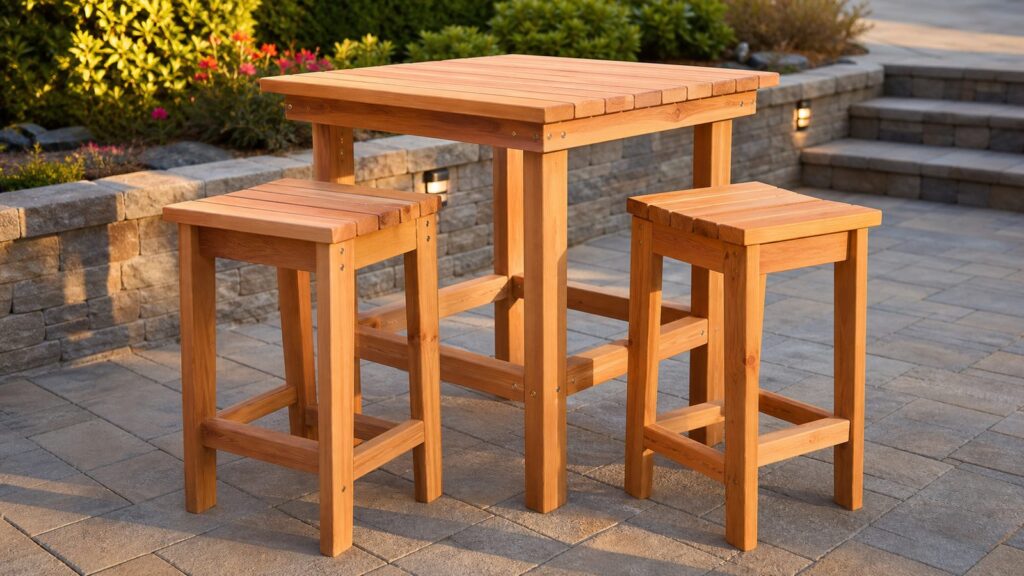
A bistro patio table and stool set is one of the better small outdoor woodworking projects because it gives you a real-use dining surface without taking over the patio. The common plan size is compact: about 34 to 34.5 inches square and 36 inches high for the table, with stools around 15 inches square and 25 inches tall. That puts it in bar-height territory, sized for coffee, drinks, a casual meal, or a tight balcony corner.
The plan itself is only part of the job. Outdoors, the difference between a set that still looks good in five years and one that starts wobbling after two seasons is usually not fancy joinery. It is water management, wood selection, corrosion-rated fasteners, stable stool geometry, and a finish system you are actually willing to maintain.
On our job sites, we treat outdoor furniture like small-scale exterior construction. The parts are smaller than a deck or pergola, but the exposure is the same: sun, standing water, swelling, shrinking, fastener corrosion, and repeated loading. This guide walks through the build decisions a homeowner should make before cutting boards, with real 2026 cost ranges and practical details that most plan sheets do not fully cover.
PC Slower Than It Used to Be?
A free scan shows the junk files, broken settings and background clutter dragging Windows down - then fixes them in one click.Free scan · Windows 10 & 11Outdated Drivers Are Slowing You Down
One free scan finds every outdated or missing driver and matches the right update for your exact hardware.Free scan · exact hardware matchAs an Amazon Associate I earn from qualifying purchases.
What You Are Building
A typical bistro patio table and stools woodworking plan produces a square, bar-height outdoor set. The published dimensions commonly run about 34 inches wide by 34 inches deep by 36 inches high for the table. Matching stools are usually about 15 inches square and 25 inches tall.
Those numbers matter. A 36-inch-high table pairs well with stools in the 24 to 26 inch seat-height range. That gives most adults about 10 to 12 inches of clearance between the stool seat and the underside of the tabletop, which is comfortable for short meals and drinks. If you change the table height, change the stool height with it. A 30-inch dining-height table needs chairs closer to 17 to 19 inches high, not 25-inch stools.
Popular on Amazon

- VERSATILE 3 PIECE DINING SET: Ideal for apartments, breakfast nooks, patios, game rooms, home offices & more
- BAR TABLE AND CHAIRS SET FOR 2: The perfect accent piece for any outdoor space with a bar height table and two stools-enjoy casual dining on your patio, balcony, or poolside
- SLATTED DESIGN: Elevate the look of any space with an attractive open panel construction. This easy to clean surface is simple to maintain and completes the look of any aesthetic
- ALL-WEATHER SOLID STEEL FRAME: A robust steel construction allows each seat and provides lasting quality even when exposed to the sun and rain
- BAR STOOLS: Slatted, round, backless stools with a sturdy footrest and a weight capacity of 240lbs per stool; OVERALL DIMENSIONS: Table: 29.5"(Dia) x 40"(H); Stool: 16"(Dia) x 29"(H); WEIGHT CAPACITY: Table: 110 lbs; Stool: 240 lbs (Each)
The footprint is also intentional. A 34-inch square top gives two people room to sit across from each other and can work for four people if the stools tuck in cleanly. On a narrow patio, balcony, or deck landing, that size is useful because it does not demand the 7 to 9 foot clear zone that a larger dining set often needs.
Recommended Free Tools
For planning space, allow at least 30 inches from the table edge to a wall, railing, planter, grill, or door swing. If people need to walk behind seated guests, 42 inches is more comfortable. Near stairs, guardrails, pools, or exterior doors, do not let the furniture create a trip point or block egress.
Best Wood Choices for an Outdoor Bistro Set
The best wood for an outdoor bistro table depends on budget, tools, climate, and the finish look you want. Cedar is a strong choice for this project because it is relatively light, naturally decay resistant, easy to machine, and comfortable to touch. Pressure-treated pine is cheaper and available almost everywhere, but it moves more, can be wet at purchase, and requires more patience before finishing. Premium hardwoods like teak, ipe, and white oak can make a long-lived set, but they cost more and are harder on tools.
For stool legs, stretchers, seat supports, and table frame parts, sort boards more carefully than you would for blocking or rough framing. Avoid large loose knots, checking, severe cup, and grain that runs out across a narrow leg. A small bistro stool concentrates a person’s weight through a few short parts, so straight stock is worth the extra time at the lumber rack.
| Material | 2026 DIY Cost Range for Set | Workability | Outdoor Performance | Best Use |
|---|---|---|---|---|
| Cedar | $180-$450 | Easy to cut, sand, and shape | Good natural decay resistance; softer surface dents more easily | Best all-around choice for most homeowners |
| Pressure-treated pine | $90-$180 | Easy to cut, but often wet and prone to movement | Good decay resistance when rated for exterior use; finish timing matters | Budget builds, painted sets, rental properties |
| Redwood | $250-$600+ | Easy to work when available | Good decay resistance; regional pricing varies sharply | Western markets and natural-finish projects |
| Teak, ipe, or similar hardwood | $500-$1,500+ | Harder cutting, drilling, sanding; carbide blades recommended | Excellent when detailed correctly | Premium patio, poolside, or coastal work |
| Painted exterior-grade pine | $120-$300 | Very workable | Depends heavily on primer, paint, drainage, and maintenance | Covered patios and color-matched exterior trim |
If you use pressure-treated lumber, buy it early and let it acclimate. Many boards are still wet when they leave the store. Building immediately is fine for rough outdoor structures, but furniture tolerances are less forgiving. Wet treated lumber can shrink, twist, and open gaps as it dries. For a cleaner furniture build, sticker the boards under cover with airflow for one to three weeks, then cut final parts after the worst movement has happened.
For cedar, pay attention to softness. It is comfortable and forgiving, but screw heads can overdrive easily. Use clutch settings on the drill, pre-drill near ends, and avoid crushing corners during clamp-up. For hardwoods, pre-drill and countersink every screw. If the budget allows, plug visible screw holes for a cleaner finished piece.
2026 Cost to Build a Bistro Patio Table and Stools
For a compact table plus two stools, a realistic 2026 DIY budget starts around $90 on the low end and can pass $1,500 for premium hardwood. The woodworking plan itself is usually a small line item. Downloadable plan pricing commonly sits around $14.95, with related plan formats and vendors often landing around $19.95 to $25.
The real spread comes from lumber, fasteners, finish, and tools. Pressure-treated pine is the low-cost path. Big-box pressure-treated lumber commonly shows category pricing around $12 per piece, with many 2×4 examples around $4 to $12 depending on length, grade, and store. Cedar costs several times more in many regions, especially outside areas where it is commonly stocked.
| Budget Item | Typical 2026 Cost | Notes |
|---|---|---|
| Woodworking plan | $15-$25 | Downloadable plans are usually cheaper than printed bundles. |
| Pressure-treated pine lumber | $90-$180 | Lowest-cost practical option for table plus two stools. |
| Cedar lumber | $180-$450 | Better feel and appearance; pricing varies heavily by region. |
| Premium hardwood lumber | $500-$1,500+ | Teak, ipe, white oak, and similar woods add material and labor cost. |
| Exterior fasteners and hardware | $20-$75 | Use stainless or hot-dip galvanized where appropriate. |
| Finish and supplies | $25-$90 | Oil, stain, paint, primer, brushes, rags, and cleanup materials. |
| Tools if not already owned | $150-$700+ | Saw, drill, clamps, sander, square, countersink, bits, and safety gear. |
| Professional custom build | $800-$2,500+ | Driven by species, finish schedule, delivery, and site fit. |
Compared with buying a retail patio bar set, DIY does not always win on price if you need to buy every tool. Where DIY makes sense is control: matching a deck species, fitting an odd corner, building stools that tuck under cleanly, making parts replaceable, and choosing fasteners and finishes that are better than typical imported flat-pack furniture.
Tools and Materials to Plan For
A compact bistro set can be built with modest tools, but accuracy matters because small furniture exposes small errors. At minimum, plan on a circular saw or miter saw, drill/driver, countersink bit, clamps, random-orbit sander, tape measure, square, exterior-rated glue if the design calls for glue, and safety gear. A router with a roundover or chamfer bit is strongly recommended because eased edges are better outdoors and more comfortable on hands, thighs, and feet.
More advanced plans may assume a table saw, planer, jointer, bandsaw, drill press, table-mounted router, and a larger clamp collection. You do not always need every shop tool, but you do need flat, consistent parts. If your boards are cupped, twisted, or inconsistent in thickness, stool seats and table frames become harder to assemble square.
For materials, expect a mix of 1-by and 2-by stock depending on the plan. A slatted tabletop and slatted stool seats are preferred outdoors because water drains through the gaps. Solid panels look clean on day one, but they hold water, move more across the grain, and are more likely to check or cup if not detailed carefully.
Build for Weather Before You Build for Looks
Outdoor furniture fails when water sits where it should drain, when end grain is left exposed to soak up moisture, or when hardware corrodes inside the joint. Finish helps, but finish is not a substitute for construction detailing.
Use Drainage Gaps
For tabletop slats and stool seat slats, leave consistent drainage gaps. A gap around 1/8 inch to 1/4 inch is usually enough for water to shed and for debris to be brushed out. Keep gaps even with spacers during assembly. Do not trap the ends of slats behind decorative trim where water cannot escape.
Ease Every Exposed Edge
Sharp corners are uncomfortable and they do not hold finish well. A 1/8-inch roundover or small chamfer on tabletop edges, stool seats, foot rails, and leg corners improves both feel and durability. On our crews, we ease exterior wood edges before finishing because coatings tend to thin out and fail first on sharp corners.
Seal End Grain and Hidden Faces
End grain absorbs moisture faster than face grain. Coat leg bottoms, slat ends, rail ends, and underside surfaces before final assembly where access will be difficult later. This is especially useful on stool seats, foot rails, and table aprons where water can collect on horizontal ledges.
Keep Feet Out of Standing Water
Do not let bare wood legs sit directly in puddles season after season. Add nylon glides, rubber pads, stainless leveling feet, or replaceable sacrificial feet. This small detail can add years to the service life of a patio set, especially on concrete slabs, pavers, and uncovered decks.
Free tools Windows power users keep installed
One-click scans. No signup required.
Fasteners: Do Not Use Indoor Screws Outdoors
Fasteners are not the place to save $12. Indoor screws, drywall screws, and unrated utility screws corrode outdoors. They can stain cedar, weaken under repeated loading, and fail inside joints where you cannot see the damage. For outdoor furniture, use screws rated for exterior use and compatible with the wood species.
With preservative-treated lumber, use hot-dip galvanized or stainless steel fasteners and connectors rated for contact with treated wood. Stainless is the safer premium choice near pools, salt air, irrigation overspray, and wet locations. Avoid mixing metals casually. Combining incompatible screws, washers, brackets, and connectors can accelerate corrosion.
Also popular on Amazon
- VERSATILE 3 PIECE DINING SET: Ideal for apartments, breakfast nooks, patios, game rooms, home offices & more
- BAR TABLE AND CHAIRS SET FOR 2: The perfect accent piece for any outdoor space with a bar height table and two stools-enjoy casual dining on your patio, balcony, or poolside
- SLATTED DESIGN: Elevate the look of any space with an attractive open panel construction. This easy to clean surface is simple to maintain and completes the look of any aesthetic
- ALL-WEATHER SOLID STEEL FRAME: A robust steel construction allows each seat and provides lasting quality even when exposed to the sun and rain
- BAR STOOLS: Slatted, round, backless stools with a sturdy footrest and a weight capacity of 240lbs per stool; OVERALL DIMENSIONS: Table: 29.5"(Dia) x 40"(H); Stool: 16"(Dia) x 29"(H); WEIGHT CAPACITY: Table: 110 lbs; Stool: 240 lbs (Each)
If you use pocket-hole joinery, make sure the pocket screws are rated for exterior exposure. Many indoor pocket screws are not appropriate for patio furniture. For cedar, pre-drill near board ends to reduce splitting. For hardwoods, pre-drill and countersink every fastener, and consider plugs where visible screw heads would make the finished set look less professional.
Stool Stability and User Safety
A bar-height stool needs more attention than a low bench. A 25-inch-tall stool with a 15-inch-square seat is convenient, but it also has a higher center of gravity than a dining chair. Small changes in leg spread, foot contact, and cross-bracing can decide whether the stool feels solid or nervous.
Build the stools square and flat. Check diagonals before final fastening. If the plan includes stretchers or foot rails, install them tightly and consistently because they do double duty: they stiffen the legs and give users a comfortable place to rest their feet. A foot rail that is too low will not get used. A foot rail that is too high can make the stool feel cramped. For a 25-inch stool, foot rails often work well in the lower third of the leg height, but follow the plan geometry unless you are deliberately redesigning the stool.
Place the finished set on a stable surface. Patio slabs and decks are often sloped for drainage, commonly around 1/8 inch to 1/4 inch per foot. That is good for water, but it can make furniture rock. Adjustable leveling feet are worth considering if the set will live on uneven pavers or a sloped concrete pad.
Keep bar-height stools and climbable furniture away from deck guardrails when children are present. A stool next to a guardrail can become an unintended step. Also keep the set clear of stairs, door thresholds, grill heat zones, and pool edges.
Finish Options That Make Sense Outdoors
There is no no-maintenance exterior wood finish. The honest question is how you want the set to age and how often you are willing to refresh it.
The Tool Desk
Outbyte Driver Updater FREEFix the driver behind crashes, sound loss and screen glitchesFind Drivers →Outbyte PC Repair FREERepair Windows errors before they cause bigger problemsFix Now →Penetrating exterior oil is forgiving and easy to renew. It usually needs attention every 6 to 18 months depending on sun and rain exposure, but it does not peel like a failed film coating. Semi-transparent exterior stain gives more UV protection and color control, often with a 1 to 3 year maintenance cycle. Exterior paint over proper primer gives the most color control and good UV protection, but it requires careful prep and performs best when the furniture sheds water well.
Spar urethane and other film finishes can look excellent at first, especially on hardwoods, but they demand maintenance. Once water gets under a film finish, peeling and cloudy patches follow. For uncovered furniture that sees full sun and rain, we generally prefer penetrating or stain systems unless the owner understands the upkeep.
Do not finish wet pressure-treated lumber with a heavy film coating immediately. Let it dry enough for the selected finish. Follow the finish manufacturer’s moisture and prep directions. Rushing this step can trap moisture and cause peeling, blotching, or movement after assembly.
Permits, Patios, and Code Triggers
A freestanding bistro patio table and stools set is furniture. By itself, it is not usually a permitted structure. The permit conversation changes when the furniture is part of a larger project: a new or expanded deck, raised patio, roof cover, pergola, outdoor kitchen, gas line, electrical work, plumbing, or an elevated walking surface.
Do these 3 things before closing this tab:
1Fix the driver behind crashes, sound loss and screen glitches2Repair Windows errors before they cause bigger problems3Scan for outdated or missing drivers - takes under a minuteMany jurisdictions use IRC-style deck exemptions, where a detached deck may be permit-exempt if it is under 200 square feet, not more than 30 inches above grade, not attached to the dwelling, and not serving the required egress door. That is a common framework, not a universal permission slip.
Local rules vary. Denver, for example, has zoning permit requirements for decks more than 12 inches above ground and building permit requirements at 30 inches or more. Naperville, Illinois, has patio permit triggers that include patios over 500 square feet, permanent fire pits, fireplaces, grills, elevation over 30 inches, and electrical, plumbing, or gas fixtures. Other cities set different thresholds.
Before building the surrounding patio or deck, check your local building department. For the furniture itself, focus on safe construction. For the surface it sits on, confirm setbacks, height, drainage, utilities, guardrails, stairs, and egress requirements.
Step-by-Step Planning Sequence
Start by choosing the location. Measure the available footprint, including chair movement and walking clearance. A 34-inch-square table with two stools can fit in a small area, but it still needs room for people to sit down and stand up without backing into a grill, railing, or door.
Next, choose the wood species and finish together. Cedar with penetrating oil is a different project from painted pressure-treated pine or plugged teak. Your species affects fasteners, pre-drilling, sanding, finish timing, and maintenance.
Then buy extra lumber. For outdoor furniture, a 15 to 25 percent waste factor is reasonable because you should reject bad knots, splits, twist, and ugly grain in visible or load-bearing parts. If the plan calls for exact board lengths, do not assume every board at the store is straight enough to use end to end.
Mill and cut accurately. Group matching parts and label them. Stool legs, stretchers, and seat supports should be cut consistently so the stool does not rack during assembly. Dry-fit before glue or final screws. Check for square at each frame stage, not only at the end.
Sand and ease edges before assembly where possible. It is much easier to round over slats and rails on a bench than after they are trapped inside a stool frame. Pre-finish hidden faces, underside surfaces, and end grain. Assemble with exterior-rated fasteners. After assembly, spot-sand, apply the final finish coats, and install glides or leveling feet.
What’s actually slowing this PC down?
Pick the symptom - the matching free tool is one click away.
Common Mistakes to Avoid
The first mistake is using indoor screws. They are cheap because they are not built for the exposure. Use exterior-rated screws, stainless screws, or hot-dip galvanized fasteners appropriate for the wood.
Also popular on Amazon

- VERSATILE 3 PIECE DINING SET: Ideal for apartments, breakfast nooks, patios, game rooms, home offices & more
- BAR TABLE AND CHAIRS SET FOR 2: The perfect accent piece for any outdoor space with a bar height table and two stools-enjoy casual dining on your patio, balcony, or poolside
- SLATTED DESIGN: Elevate the look of any space with an attractive open panel construction. This easy to clean surface is simple to maintain and completes the look of any aesthetic
- ALL-WEATHER SOLID STEEL FRAME: A robust steel construction allows each seat and provides lasting quality even when exposed to the sun and rain
- BAR STOOLS: Slatted, round, backless stools with a sturdy footrest and a weight capacity of 240lbs per stool; OVERALL DIMENSIONS: Table: 29.5"(Dia) x 40"(H); Stool: 16"(Dia) x 29"(H); WEIGHT CAPACITY: Table: 110 lbs; Stool: 240 lbs (Each)
The second mistake is ignoring moisture movement. Wet pressure-treated lumber can shrink after assembly. Wide solid tops can cup. Tight joints that trap water can stay wet long after rain stops. Slats, gaps, chamfers, and sealed end grain are not cosmetic details; they are durability details.
The third mistake is skipping stool stability. A stool that rocks in the shop will feel worse on a sloped patio. Use flat feet, strong bracing, consistent leg geometry, and a rigid seat frame. If the design feels narrow for your household, widen the base before building all the stools.
The fourth mistake is making repairs impossible. Outdoor furniture should be serviceable. Seat slats, foot rails, and leg feet take abuse. Whenever possible, make those pieces replaceable with visible screws or plugged screws instead of burying them behind permanent trim.
When to DIY and When to Hire a Pro
DIY makes sense when you already own basic tools, enjoy careful layout, and want a compact set tailored to your patio. A pressure-treated pine version can land around $90 to $180 in materials, while cedar often falls around $180 to $450. If you own the tools and can spend a weekend on the build, the value is strong.
Expect the project to take 8 to 16 hours for a capable DIYer working from a clear plan, plus finish drying time. Add more time if you are milling rough lumber, plugging screws, using hardwood, or building additional stools. A first-time builder should plan for two weekends: one for cutting and assembly, one for sanding, finishing, and adjustments.
Hire a pro when the set is part of a larger deck, patio, pergola, or outdoor kitchen project; when you want premium hardwood; when the layout needs to fit a tight built-in condition; or when you want a furniture-grade finish without buying tools. A contractor-built cedar or hardwood set commonly runs about $800 to $2,500 or more because one-off furniture is labor-heavy. The number climbs with hardwood, delivery, custom dimensions, and multi-coat finish schedules.
The best reason to bundle this with a professional outdoor project is coordination. If we are already building the deck or patio, we can match material, confirm clearances, keep furniture away from guardrail hazards, and make sure the finished space drains correctly.
What’s actually slowing this PC down?
Pick the symptom - the matching free tool is one click away.
Maintenance Schedule for a Longer-Lasting Set
After the first month outdoors, check every stool and the table for fastener movement, wobble, and finish absorption. Wood moves most after its first exposure cycle. Tighten hardware where appropriate, but do not overdrive screws into cedar or soft pine.
Twice a year, clean the set with mild soap and water, inspect leg bottoms, check the stool foot rails, and look for finish wear on horizontal surfaces. Recoat penetrating oil when the surface looks dry and absorbs water quickly. Refresh stain before it fully erodes. Touch up paint chips before water gets under the coating.
During winter or long wet seasons, storage helps. A covered porch, shed, or breathable furniture cover can extend finish life. Avoid plastic tarps pulled tight around the wood; they can trap condensation. If the set stays outside year-round, keeping the feet off standing water is one of the highest-value upgrades you can make.
Bottom Line
A bistro patio table and stools plan is a smart outdoor woodworking project when it is built like exterior work, not indoor furniture moved outside. Keep the table around 34 inches square and 36 inches high, pair it with 25-inch stools, choose cedar or another outdoor-suitable species, use corrosion-rated fasteners, and design every horizontal surface to shed water.
For most homeowners, cedar offers the best balance of cost, appearance, and workability. Pressure-treated pine is the budget choice if you allow for drying and movement. Premium hardwood is excellent when the budget and tools support it. The plan may cost only $15 to $25, but the real success of the project comes from the details: drainage gaps, eased edges, sealed end grain, stable stools, replaceable wear parts, and a finish schedule you will maintain.
Frequently Asked Questions
Do you need a permit to build a bistro patio table and stools?
Usually no. A freestanding table and stools are furniture, not a permitted structure. Permits may apply if the project includes a new or expanded deck, raised patio, pergola, roof cover, outdoor kitchen, gas, plumbing, or electrical work.
What is the best wood for an outdoor bistro table?
Cedar is the best all-around choice for many homeowners because it is decay resistant, light, attractive, and easy to work. Pressure-treated pine is cheaper, while teak, ipe, white oak, and similar hardwoods are premium options with higher cost and more demanding tooling.
How much does it cost to build a DIY patio table and stools in 2026?
A compact set typically costs about $90-$180 in pressure-treated pine, $180-$450 in cedar, and $500-$1,500 or more in premium hardwood. Add about $20-$75 for exterior hardware and $25-$90 for finish supplies.
Windows Errors? Fix Them Before They Spread
Repair common Windows errors and clear accumulated junk for a smoother, more stable PC - no reinstall needed.Free scan · no reinstallOutdated Drivers Are Slowing You Down
One free scan finds every outdated or missing driver and matches the right update for your exact hardware.Free scan · exact hardware matchCan pressure-treated lumber be used for outdoor furniture?
Yes, if it is appropriate for exterior use and you use compatible fasteners. Let wet treated lumber dry before applying many finishes, and expect more movement than with cedar or dry hardwood.
What fasteners should be used for outdoor wood furniture?
Use exterior-rated screws. For pressure-treated lumber, use hot-dip galvanized or stainless steel fasteners rated for treated wood. Stainless steel is usually the better premium choice near pools, salt air, and consistently wet locations.
How do you keep outdoor wooden stools from wobbling?
Cut matching parts accurately, assemble the frame square, use solid cross-bracing or foot rails, keep all feet flat, and consider leveling glides for sloped patios or uneven pavers.
Quick Recap
Product prices and availability are accurate as of the date/time indicated and are subject to change. Any price and availability information displayed on Amazon at the time of purchase will apply.

