Quick wins for a faster PC:
Scan for outdated or missing drivers - takes under a minuteDriver Scan →Clear out junk files and repair common Windows errorsFree Scan →Fix the driver behind crashes, sound loss and screen glitchesFind Drivers →Some links on this page are affiliate links: if you buy through them we may earn a commission, at no extra cost to you.
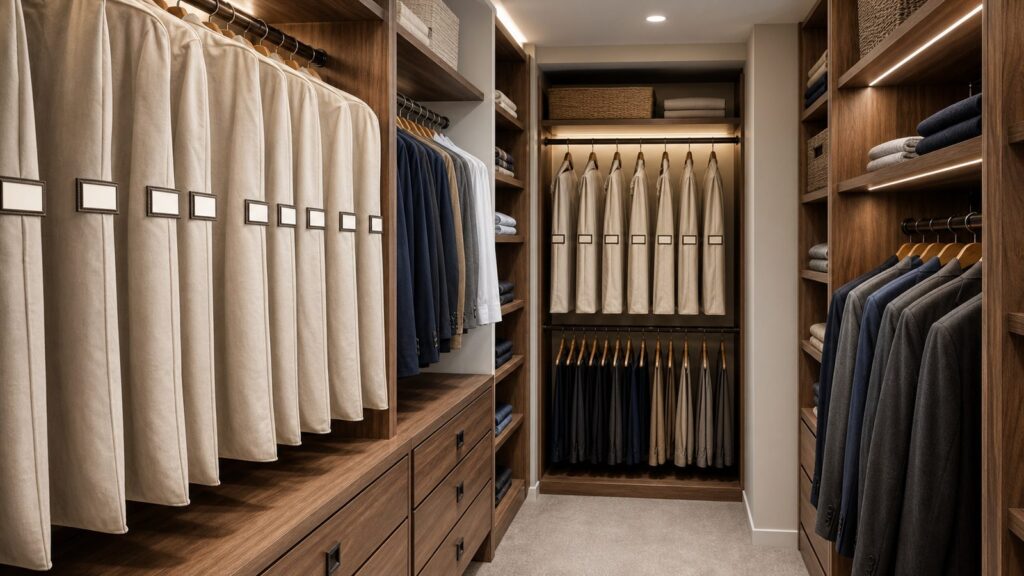
The best garment covers for closet organization are not the stiffest, clearest, or most expensive ones. They are the covers that match the garment, allow the right amount of airflow, fit the closet depth, and do not create a moisture problem inside the closet. For most homeowners, breathable cotton or cotton canvas covers are the best long-term choice for suits, wool coats, cashmere, silk, formalwear, heirloom clothing, and any natural fiber you care about. Budget nonwoven or PEVA covers are fine for short-term dust control and active closets, but they are not our first choice for long-term storage in humid spaces.
On our closet and remodeling projects, we treat garment covers as the final layer of the storage system. They cannot fix a shallow rod, a packed closet, poor ventilation, a damp wall, or a light fixture installed too close to stored clothing. A good cover protects against dust, abrasion, and light exposure. A bad storage setup can still leave you with crushed shoulders, musty fabric, moth damage, or mildew.
As an Amazon Associate I earn from qualifying purchases.
If you want the fast answer: use 40-inch breathable covers for jackets and suits, 54- to 60-inch covers for coats and dresses, and 65- to 72-inch covers for gowns or long formalwear. Choose gusseted covers, usually 3 to 6 inches deep, for coats, multiple pieces, or structured shoulders. Avoid leaving clothes in dry-cleaner plastic for months. Keep closet humidity below 60 percent, with 30 to 50 percent relative humidity as the better target.
Best Garment Cover Choices by Use
Most product listings make garment covers look interchangeable. They are not. A cover for a tuxedo you wear twice a year should not be chosen the same way as a clear plastic cover for uniforms you grab every week. Start with the purpose, then pick the material and size.
Popular on Amazon

- 🎅PEVA
- 🎅DURABLE & LONG-LASTING:Made of soft and durable PE material with a thickness of 50gsm, This upgraded version clear garment bags for storage is washable, lightweight and built to last. Dustproof and water-resistant plastic garment bags protect your delicate clothes against dampness, dust, pet hair, and keep them fresh and wrinkle free!
- 🎅HIGH-QUALITY UPGRADED 5# ZIPPERS:You may suffer a traumatic experience on the broken or slip off zipper, but no more with our hanging garment bag. We chose 5# zippers with superior quality to ensure smooth and flawless zipping experience and a longer service life.
- 🎅EXCELLENT COST EFFICTIENCY: You will receive 6 pcs of peva garment bags with a size of 24*40 inch. These suit bags for closet storage are washable and thus you can easily clean them and reuse them for a long period of time.
- 🎅ADVANCED DESIGN:The clear design of HomeClean small garment bags for hanging clothes eliminates the guess work of trying to figure out what’s inside! Each suit protector garment bags is 40 inch in length and 24 inch in width, making it perfect for storing small shirt, faux fur coat, T-shirts, winter sweater, short jacket, uniforms, winter coat, pure silk clothes etc.
| Use Case | Best Cover Type | Typical Size | 2026 Cost Range | Builder’s Notes |
|---|---|---|---|---|
| Suits, sport coats, blazers | Breathable cotton or cotton canvas | About 40 inches long | $9-$25 each, or $30-$80+ for multi-packs | Pair with wide wood or contoured hangers to prevent shoulder dents. |
| Wool coats and heavy outerwear | Gusseted cotton/canvas cover | 54-60 inches long, 3-6 inch gusset | $15-$50+ each depending on construction | Needs more rod space; do not compress coats wall-to-wall. |
| Dresses and formalwear | Breathable cotton, preferably undyed for long-term storage | 54-72 inches depending on hem length | $15-$50+ each | Measure from hanger hook to hem before buying. |
| Everyday dust control | Nonwoven polypropylene or PEVA | 40-54 inches | $10-$40 per pack | Useful for visibility and budget storage, less ideal in damp closets. |
| Seasonal guest-room closet storage | Breathable fabric or hybrid breathable cover | 40-60 inches | $15-$40 per pack, more for cotton | Add labels if the garments will sit for months. |
| Travel | Travel garment bag with handles and fold point | Usually 40-60 inches | Varies widely | Good for transport, but not always best for stationary closet preservation. |
The cleanest closet setup is usually a mix. Use cotton covers on higher-value garments, PEVA or nonwoven covers on frequently used pieces, and uncovered open hanging for clothing that needs daily access. Covering every shirt in a tight closet often creates more friction than benefit.
Cotton, Canvas, PEVA, Nonwoven, or Plastic: What Actually Works?
Material choice matters because clothing is not inert. Wool, silk, cashmere, leather, linen, and structured tailoring all respond to humidity, pressure, dust, oils, and air movement. The wrong cover can trap the very conditions you are trying to avoid.
Cotton and cotton canvas
Breathable cotton is the best overall material for long-term closet storage. For valuable garments, we prefer undyed or unbleached cotton because it keeps the storage system simple: breathable fabric, no strong plastic odor, no stiff vinyl face pressed against the garment, and less risk of moisture getting trapped inside.
Cotton canvas is stronger and often hangs better than thin cotton muslin. It is a smart choice for wool coats, suits, tuxedos, heirloom garments, and formal dresses. The tradeoff is price and visibility. You may pay $9 to $25 per cover for standard cotton bags, while premium structured or gusseted versions can exceed $25 to $50 each. Because they are opaque, you will want labels or a small breathable tag system if several covers look alike.
PEVA covers
PEVA is a common low-cost plastic alternative used for clear or semi-clear garment covers. It is useful when you want visibility and dust control in an active closet. Midrange PEVA or hybrid breathable covers often run about $15 to $40 per pack. For kids’ dress clothes, work uniforms, costumes, or garments rotated frequently, PEVA can make sense.
Where we get cautious is long-term storage in humid closets. If the closet is near a bathroom, laundry room, exterior wall, basement, or slab floor, a plastic-like cover can hold moisture against the garment. If you use PEVA in those locations, add a humidity monitor and check the closet after showers, laundry cycles, and seasonal weather swings.
Do these 3 things before closing this tab:
1Fix the driver behind crashes, sound loss and screen glitches2Clear out junk files and repair common Windows errors3Scan for outdated or missing drivers - takes under a minuteNonwoven polypropylene
Nonwoven garment covers are budget-friendly and lightweight. Basic packs commonly cost $10 to $25 for 3 to 10 pieces. They are better than thin dry-cleaner plastic for many everyday uses because they are less clingy and often allow more air exchange, depending on the construction.
The downside is durability. Zippers, seams, and hanger openings can fail earlier than heavier cotton or canvas. We use this category for simple dust protection, not for the best suit in the closet or a gown that may hang untouched for two years.
Dry-cleaner plastic
Dry-cleaner plastic is for transport, not storage. Leaving clothes in those thin bags for months or years is one of the most common closet mistakes we see. The plastic can trap moisture, hold cleaning solvent odors, restrict airflow, and contribute to yellowing or mildew problems. When a garment comes home from the cleaner, remove the plastic once the garment is indoors and fully dry, then move it to a proper breathable cover if it needs protection.
Measure the Garment Before You Buy Covers
Garment covers are simple products, but sizing errors waste money fast. Do not buy one universal length for the whole closet. Measure from the top of the hanger hook down to the garment hem. Then add a little breathing room so the bottom is not folded inside the cover.
What’s actually slowing this PC down?
Pick the symptom - the matching free tool is one click away.
Also popular on Amazon

- 【Breathable Garment Bags】: Our cotton garment bag for hanging clothes allows your clothes to breathe, ensuring they stay fresh. This is beneficial for long-term storage of your clothes and protects your high-end garments, including fur coats, short dresses, men’s suits, .
- 【Easy to Identify】: Kntiwiwo suit cover bags side-on organza panel down to the end allows you to identify what's inside, saving time and hassle during busy mornings or when selecting the suitable outfit for an occasion. The cotton hanging garment bag features sturdy zippers with two ends stoppers to avoid zipper slip off, which ensure the zip stays stable and smooth.
- 【10 Inches Gusseted】: The white suit bags with 10" gusset, measures approximately 43” H x 21.5” L x 10” W, this garment storage bag with extra wide offers large capacity and wrinkle-free storage for your beloved clothes, suits, short dressess, fur coats, leather jackets, sweaters, keeping your closet stays immaculate and ready to wear.
- 【Versatile Use】: This cloth garment bag is not only suitable for home use, but also for travel, meeting the needs of frequent travelers who value garment protection. Its washable yet repeated use design offers flexibility and protection for all types of clothing, from suits and dresses to seasonal attire, making this the perfect suit garment bags.
- 【Stylish Storage】: Garment Covers are crafted from soft, high-quality cotton. hanging garment bag by Kntiwiwo protects your precious garments, while providing a gentle touch. Our designs are durable beautiful, and elegant additions to your wardrobe.
Common sizes work like this: jackets, shirts, blazers, and most suits usually need around 40 inches. Coats and many dresses usually need 54 to 60 inches. Long formal gowns, robes, and some bridal or eveningwear may need 65 to 72 inches or longer. If the dress puddles at the bottom of the cover, the size is wrong.
Depth matters too. Flat covers save space, but they are poor for bulky garments. A 3-inch gusset can work for a suit or light coat. A 4- to 6-inch gusset is better for heavy wool coats, structured shoulders, or two coordinated garments stored together. Be careful with the phrase “multiple garments.” Just because a cover can hold three items does not mean those items should be compressed together for a full season.
Check rod depth and closet clearance
A standard hanger is roughly 17 inches wide. Many reach-in closets are built with rods set around 11 to 12 inches from the back wall, which lets garments hang reasonably centered in a 24-inch-deep closet. If the rod is too close to the back wall, covered garments push against the wall and wrinkle. If the closet has sliding doors and bulky covers, the front shoulder line may rub the door.
For walk-ins, group covered garments by length. Short covered jackets can hang above drawers, shoe shelves, or a second rod. Long covered dresses and coats need uninterrupted drop space. We typically avoid putting long covered garments over open shoe storage because shoe moisture, soil, and odor do not belong under formalwear.
Do Garment Covers Prevent Moths, Mold, and Odors?
Garment covers help, but they are not a full pest or moisture-control system. Think of them as one layer. Clean clothes, dry conditions, airflow, proper storage density, and regular inspection matter just as much.
Moths
Clothes moths are most interested in animal fibers such as wool, cashmere, silk, fur, feathers, and blends that contain body oils or food residue. Cedar alone is not a complete moth-control plan. It may help as part of a clean storage routine, but it does not make a dirty wool coat safe for long-term storage.
Before storing susceptible garments, clean them according to the care label, let them dry fully, vacuum the closet, and inspect corners, baseboards, shelves, and carpet edges. For known moth risk, use well-closing garment bags or sealed containers for vulnerable fibers. Cotton covers reduce dust and handling, but if the closure is loose and the closet is actively infested, the cover is not enough by itself.
Mold and musty smells
Mold prevention starts with humidity. The practical target for closets is 30 to 50 percent relative humidity, and indoor humidity should stay below 60 percent. This is especially relevant in closets near bathrooms, laundry rooms, exterior walls, slab-on-grade floors, coastal areas, and basements.
The Tool Desk
Outbyte PC Repair FREERepair Windows errors before they cause bigger problemsFix Now →Outbyte Driver Updater FREEFix the driver behind crashes, sound loss and screen glitchesFind Drivers →A $8 to $25 humidity monitor is cheap insurance. If readings are repeatedly above 60 percent, do not solve the problem by buying more plastic covers. Improve ventilation, check for plumbing or roof leaks, inspect exterior wall condensation, and consider a small closet dehumidifier or moisture absorber, typically $10 to $50. In a remodel, we also look at bath fan performance, door undercuts, HVAC return paths, and whether the closet is being cut off from conditioned air.
Odors
Odor usually comes from storing garments before they are clean and dry. Body oils, perfume, food residue, smoke, and moisture can all intensify inside a cover. If a garment smells stale before it goes into the bag, the cover will preserve the problem. Clean first, air-dry fully, then cover.
Also popular on Amazon

- 【Pack Up The Whole Season】Stop stuffing your seasonal clothes into thin bags again and again. This 3-pack hanging garment bag with a full 10 inches of depth — 67% roomier than 4-inch bags — holds up to 30 garments total, so all shirts, dresses and coats hang free. Ideal for storing, moving, or organizing the whole family's clothes
- 【Side Zipper for Easy Reach】The metal side zipper lets you quickly grab your blazer before a meeting or your favorite dress before dinner in seconds, without the struggle. It opens and closes smoothly with no zippers that jam or catch on fabric
- 【Fresh Closet, Fresh Clothes】Say goodbye to musty smells taking over your closet. This garment bags for hanging clothes has a small hanger opening up top that keeps falling dust out, while breathable fabric lets air flow through, so shirts and suits smell just as fresh as the day you hung them
- 【See It, Grab It, Go】Tired of unzipping every coat bags for closet storage hunting for one winter coat? The fully transparent design lets you spot exactly what's inside at a glance, so getting dressed takes less time and less guessing
- 【Built to Last, Season After Season】Forget flimsy suit bags for closet storage that rip and smell like plastic. Our thickened PEVA material stands up to daily use without ripping, stays odorless even zipped shut for months, and keeps dust and spills off your suits, uniforms, coats, and sweaters all year long
How Garment Covers Fit Into a Well-Built Closet
A garment cover is only as good as the closet around it. On our job sites, the closet details that matter most are rod placement, shelving layout, lighting clearance, wall condition, humidity exposure, and storage density.
Rod spacing and support
Covered garments need lateral space. If a 36-inch rod is packed with 36 inches of clothing, adding covers will make the closet worse. Shoulders get crushed, zippers catch, and air cannot move. As a practical rule, leave enough room that each covered garment can slide a little on the rod without dragging the item beside it.
For heavier coats, rod support matters. A long rod loaded with wool coats in canvas covers can sag if brackets are undersized or not properly anchored. In remodel work, we like solid blocking where possible, proper wall anchors where blocking is not available, and rods matched to the load. A light-duty rod that handled shirts may not handle 10 winter coats.
Shelving materials and ventilation
Melamine, plywood, solid wood, and wire shelving can all work, but each behaves differently. Melamine is clean and common in closet systems, but exposed edges and wet conditions are a problem. Plywood is strong and adaptable when properly finished. Solid wood looks good but moves with humidity. Wire shelving provides airflow, though it can leave pressure marks on soft items if bins are not used.
If the closet has had moisture issues, do not ignore the wall and finish materials. Moisture-resistant finishes, better ventilation, or a layout that pulls stored garments away from cold exterior walls may matter more than the brand of cover.
Lighting clearances
Closet lighting is one of the places where storage and construction safety overlap. Fixtures need proper clearance from the defined storage space, and older bare-bulb or poorly placed fixtures can be a hazard. Modern LED fixtures help, but placement still matters. If you are adding, moving, or replacing hardwired closet lighting, check local code requirements and use a licensed electrician where required.
Recommended Free Tools
As a practical homeowner rule, do not let garment covers touch light fixtures. Do not add a shelf that pushes covered clothing into a fixture. Do not run extension cords into a closet for permanent lighting. Battery or plug-in accessories may look simple, but permanent electrical work belongs in the permit and code conversation.
What Garment Covers and Closet Upgrades Cost in 2026
A simple garment-cover upgrade is inexpensive. A full closet remodel is not. The useful way to budget is to separate accessories, storage improvements, and built-in construction.
| Project Scope | Typical 2026 US Cost | What Is Usually Included |
|---|---|---|
| Garment covers only | $10-$25 for basic packs; $30-$80+ for cotton multi-packs; $25-$50+ each for premium covers | Dust covers, suit bags, coat bags, gown bags, or mixed sizes |
| Closet accessory refresh | $50-$300 | Garment covers, better hangers, bins, labels, shelf dividers, cedar, humidity monitor, moisture absorbers |
| Closet shelving installation | Commonly around $331-$662 | Basic shelves, rods, brackets, and labor depending on wall conditions and layout |
| Professional closet organizer project | Often around $627-$2,526, with averages near $1,542-$1,545 | Planning, components, installation, and closet-specific organization upgrades |
| Reach-in custom closet | Often $800-$3,500 | Double hanging, shelves, drawers, shoe storage, finish upgrades |
| Walk-in custom closet | Often $3,000-$8,000 | Multiple zones, drawers, long-hang sections, lighting coordination, higher material quantities |
| High-end built-in closet | $6,000-$20,000+ | Premium finishes, integrated lighting, glass fronts, extensive drawers, electrical work, custom details |
The spread is wide because the work changes from simple organization to construction. A $150 refresh may solve a hall closet. A primary walk-in with poor lighting, sagging rods, no long-hang section, and moisture issues may need carpentry, electrical work, finish repair, and ventilation improvements before garment covers make sense.
Cost drivers include closet size, number of rods and shelves, drawer count, finish level, demolition, wall repair, integrated lighting, electrical work, moisture control, accessibility, and local labor rates. In older homes, walls may be out of square, blocking may be missing, and previous closet systems may have left drywall damage that needs patching before a clean installation.
Free tools Windows power users keep installed
One-click scans. No signup required.
Also popular on Amazon

- Breathable Protection: Non-woven suit bag travel allows airflow around garments, helping reduce wrinkles and keeping them fresh; Also serves as a dress bag, preventing wrinkles and odor during flights and road trips
- Full Enclosure: Place these garment bags for hanging clothes in your wardrobe to block dust and dirt; Also work as suit bags for closet storage, keeping every outfit organized and protected
- Extended Capacity: 43" garment bag fits suits, dresses, coats, and shirts on any hanger; Transparent window lets you spot the right outfit without unzipping
- Versatile Carrier: Folds flat inside a suitcase for easy packing and carrying, then opens as a full-size garment bag for travel at your destination; Lightweight garment bag adds no bulk, ideal for home storage, business trips, vacations, and weekend getaways
- Shoe Compartment: Separate pocket keeps footwear apart from clothing inside each suit bag, preventing scuffs and dirt transfer; Each garment bag comes with one 13"x17" shoe bag
When to DIY and When to Hire a Pro
Buying garment covers is usually a DIY job. Rebuilding the closet around them may not be. The line is whether the existing closet can support the storage plan safely and cleanly.
Good DIY projects
DIY is a good fit when the rod is solid, the closet is dry, the lighting is already code-compliant, and you are only improving organization. A typical weekend refresh takes 2 to 6 hours: remove everything, sort garments, clean the closet, measure clothing lengths, buy the right cover sizes, upgrade hangers, and group items by length and use.
For a basic reach-in closet, a practical DIY budget is $50 to $300. That can cover 10 to 20 garment covers, a set of better hangers, labels, cedar blocks or sachets, a humidity monitor, and a few bins or shelf dividers. Spend the money first on the garments that need protection most, not on making every hanger look identical.
Call a pro when the closet itself is the problem
Hire a contractor, closet installer, or electrician when rods are sagging, shelves are pulling from the wall, the closet smells musty, there is visible staining, you need new hardwired lighting, or the layout wastes too much space. Also call a pro if you are converting a room, adding built-ins, opening walls, changing electrical, or dealing with recurring moisture.
Windows Errors? Fix Them Before They Spread
Repair common Windows errors and clear accumulated junk for a smoother, more stable PC - no reinstall needed.Free scan · no reinstallCrashes, No Sound, or Screen Glitches?
Random freezes, missing sound and display glitches usually trace back to one bad driver. Find and replace yours safely.Free scan · under a minuteFor homeowners planning a custom closet, garment storage should be discussed before the system is built. Tell the contractor how many long garments you own, how many suits or coats need covered storage, whether you want glass doors, and whether the closet is near a bath or laundry area. Those details affect rod heights, shelf positions, drawer placement, lighting, and ventilation.
Independent reader supportYour contribution helps us test, update, and keep practical guides available for everyone.A Practical Buying Checklist
Before ordering covers, do a 30-minute closet audit. Count suits, coats, dresses, gowns, uniforms, seasonal pieces, and heirloom garments. Measure the longest item in each category from hanger hook to hem. Check the closet depth and note whether doors rub the clothing. Look for moth evidence, dust buildup, damp smells, staining, or condensation risk.
Then buy by category. Use 40-inch cotton covers for suits and jackets. Use 54- to 60-inch gusseted covers for coats and dresses. Use 65- to 72-inch covers for long gowns. Use PEVA or nonwoven covers for active, lower-risk garments where visibility matters. Add labels to opaque covers, but keep them simple so the closet stays easy to scan.
Upgrade hangers at the same time. A breathable cotton cover on a thin wire hanger still leaves shoulder dents and poor support. For suits and coats, use contoured hangers, often $2 to $8 each or more for better wood versions. For delicate dresses, choose hangers that support straps and shoulder shape without stretching the fabric.
Finally, avoid overfilling. One garment per cover is best for valuable clothing. Two coordinated pieces can share a gusseted cover if they hang freely. More than that usually becomes compression, not organization.
Safety, Permits, and Moisture Notes for Closet Remodels
Garment covers are not a permit issue. Closet construction can be. Simple removable accessories usually do not require a permit. Hardwired lighting, new circuits, moving switches, structural changes, and some built-in remodels may require permits depending on the municipality. Local code controls the final answer, so verify before work starts.
Also popular on Amazon

- PREMIUM BREATHABLE & WATERPROOF FABRIC: Crafted from high-quality, eco-friendly non-woven fabric, these garment bags are lightweight yet highly durable. The material is breathable to keep clothes smelling fresh while providing a waterproof barrier that effectively protects your garments from humidity, moisture, dust, and pet hair.
- CLEAR WINDOW WITH ID POCKET: Unlike standard bags, our design features a transparent PVC window that allows you to see which garment is inside without opening the bag. Uniquely, this window also functions as a card slot—perfect for inserting name cards, business cards, or content labels to keep your closet perfectly organized.
- SMOOTH ZIPPER & REINFORCED OPENING: Equipped with a sturdy, smooth-gliding zipper that runs the full length of the bag for easy access. The top hanger opening is designed to be small to minimize dust entry, while the reinforced stitching ensures the bag will not tear or fray over time.
- FOLDABLE DESIGN WITH METAL GROMMET: These bags feature a metal grommet at the bottom, allowing you to fold the bag over and hook it onto the hanger. This space-saving feature makes it easy to transport clothes for travel or to shorten long bags for compact closets.
- AVAILABLE IN FOUR SIZES & COLORS: Available in classic Black or White. Choose from four lengths (32"/40"/55"/65") to suit your wardrobe needs: for shirts, suits, jackets, and sweaters; or for dresses, gowns, long coats, and winter trenches.
Lighting deserves special attention because closets combine stored fabric and confined space. Use listed fixtures appropriate for closets, maintain required clearances from storage areas, and avoid exposed bulbs near clothing. If your plan adds LED tape, recessed fixtures, occupancy sensors, or cabinet lighting, coordinate the wiring and switching before the closet components are installed.
Moisture is the other safety and durability issue. If a closet is musty, fix the moisture source before sealing garments in covers. Look for bath fan problems, dryer vent leaks, plumbing leaks, exterior wall condensation, roof leaks, slab moisture, or blocked airflow. A garment cover should protect clean fabric in a stable closet. It should not become a bag around a damp problem.
What’s actually slowing this PC down?
Pick the symptom - the matching free tool is one click away.
Our Bottom Line
For long-term closet organization, breathable cotton or cotton canvas garment covers are the best choice for the clothing most worth protecting. Use PEVA or nonwoven covers where cost and visibility matter more than preservation. Avoid dry-cleaner plastic for storage. Match the cover length and gusset depth to the garment, keep humidity in the 30 to 50 percent range when possible, and leave enough rod space for air and fabric movement.
If the closet is crowded, damp, poorly lit, or badly laid out, start there. Good garment covers are a finishing detail, not a substitute for a sound closet system. The best result comes from pairing the right cover with proper hangers, solid rods, sensible shelving, code-compliant lighting, and a closet that stays clean and dry year-round.
Frequently Asked Questions
What material is best for garment covers in a closet?
Breathable cotton or cotton canvas is best for long-term closet storage, especially for wool, suits, coats, silk, cashmere, formalwear, and heirloom garments. PEVA and nonwoven covers are useful for lower-cost dust control and active closets.
Are cotton garment bags better than plastic garment bags?
For long-term storage, yes. Cotton allows more airflow and is less likely to trap moisture against the garment. Plastic-like covers can be useful for visibility, but they are not ideal in humid closets or for valuable natural-fiber clothing.
Do these 3 things before closing this tab:
1Scan for outdated or missing drivers - takes under a minute2Clear out junk files and repair common Windows errors3Fix the driver behind crashes, sound loss and screen glitchesCan I leave clothes in dry-cleaner plastic bags?
No, not for long-term storage. Dry-cleaner plastic is meant for transport. Remove it once the garment is home and dry, then use a breathable garment cover if the item needs dust and light protection.
What size garment cover do I need for suits, coats, and dresses?
Most jackets and suits need about 40 inches. Coats and many dresses need 54 to 60 inches. Long gowns and formalwear may need 65 to 72 inches or more. Measure from the hanger hook to the hem before buying.
Do garment covers prevent moths?
They help, but they do not solve moth problems by themselves. Clean garments before storage, vacuum the closet, inspect susceptible fibers like wool and cashmere, and use well-closing bags or sealed containers if there is active moth risk.
How much do garment covers and closet organization upgrades cost in 2026?
Basic garment-cover packs often cost $10 to $25, midrange PEVA or hybrid packs run about $15 to $40, and cotton or canvas covers commonly cost $9 to $25 each. A broader DIY closet refresh usually runs $50 to $300, while professional organizer projects often range from about $627 to $2,526.
Free tools Windows power users keep installed
One-click scans. No signup required.
Quick Recap
Product prices and availability are accurate as of the date/time indicated and are subject to change. Any price and availability information displayed on Amazon at the time of purchase will apply.

