Some links on this page are affiliate links: if you buy through them we may earn a commission, at no extra cost to you.
The best wall panels for a bathroom are not the same for every wall. A shower surround, tub alcove, vanity backsplash, powder room wainscot, and laundry-bath combo all see different levels of water, heat, impact, and cleaning. On our job sites, the right answer starts with one question: is this wall inside the wet zone?
For a shower or tub surround, choose a complete waterproof wall panel system with manufacturer-approved panels, trims, adhesives, sealants, inside corners, and penetrations. For dry bathroom walls, you have more design freedom: PVC, composite, laminate, beadboard-style panels, fluted accents, and moisture-resistant decorative panels can all work if they are kept out of direct spray and installed over a sound wall.
As an Amazon Associate I earn from qualifying purchases.
What’s actually slowing this PC down?
Pick the symptom - the matching free tool is one click away.
In 2026, most homeowners choose bathroom wall panels for faster installation and lower maintenance, not always because they are cheaper than tile. A typical shower remodel averages about $7,000 nationally, with many projects landing between $2,000 and $9,000. Basic surrounds can cost far less when plumbing stays put, while premium solid surface, cultured marble, porcelain slab, and stone-look systems can exceed the cost of a mid-range tile shower once templating, wall prep, and skilled labor are included.
Best Bathroom Wall Panels by Use Case
If you want the short version, here are the wall panel types we would consider first for common bathroom remodel goals.
Popular on Amazon

- AUTHENTIC STONE-LOOK FINISH: Elevate your space with elegant bathtub surround panels, featuring a white marble effect. The ultimate symbol of timeless luxury and sophistication.
- EASY INSTALLATION: Can be installed directly on all types of surfaces and easily adjusted for the perfect fit. Instantly transform your bath and shower space with a quick, hassle-free remodel.
- LEAKPROOF IN TWO STEPS: Tongue and groove panels and mouldings ensure a watertight seal that locks out moisture when sealed with silicone. Built to last in humid spaces.
- WATERPROOF & EASY TO CLEAN: These waterproof wall panels for showers resist humidity and moisture buildup. Their smooth surface makes cleaning effortless while ensuring superior hygiene.
- ALL-IN-ONE KIT: Includes everything you need in a box. 4 panels, 2 corner trims, and 2 finishing trims. A perfect tub surround wall kit solution for your bathroom remodel. Backed by a 5-year warranty.
Best budget tub surround: acrylic or fiberglass
Acrylic and fiberglass surrounds are practical when the goal is a clean, watertight, budget-conscious replacement around a tub or shower. They are common in hall baths, rentals, starter homes, and fast-turn remodels. Material categories commonly run from about $500 to $2,500 for acrylic systems and about $400 to $5,000 for fiberglass, depending on size, finish, brand, and whether the surround is part of a full shower or tub kit.
The upside is speed. A simple three-wall tub surround can often be installed in 1 to 2 working days after demolition if the framing, valve, tub flange, and substrate are in good condition. The downside is appearance and repairability. Lower-end fiberglass can flex, yellow, or show scratches. Acrylic usually looks cleaner and holds up better, but it still reads as a manufactured surround rather than stone or tile.
Free tools Windows power users keep installed
One-click scans. No signup required.
Best low-maintenance family bath: composite or laminated wall panel systems
Composite and laminated shower wall systems are a strong middle ground for busy households. These panels often mimic tile, stone, marble, concrete, or large-format slab without grout joints across the full wall. Good systems include matching trims, inside corners, sealants, shelves, niches, and edge details.
We like them for family bathrooms because they reduce grout maintenance and install faster than tile. Many projects can be completed in 2 to 4 days depending on demolition, plumbing changes, niche details, and whether the glass enclosure needs coordination. The key is buying a true wet-area system, not just a decorative wall panel that looks waterproof in a showroom.
Best premium long-life shower: solid surface
Solid surface panels are one of the best choices for homeowners who want a durable, low-maintenance shower without grout. Material categories commonly run about $40 to $70 per square foot before the full labor, trim, substrate, and project scope are added. Installed cost varies widely because wall size, seam layout, custom fabrication, and site access matter.
Solid surface performs well because it is nonporous, repairable in many cases, and available in large panels with fewer seams. It is a good fit for primary bathrooms, aging-in-place remodels, and homes where the owner wants a clean, substantial finish without taking on stone slab maintenance.
Quick wins for a faster PC:
Scan for outdated or missing drivers - takes under a minuteDriver Scan →Clear out junk files and repair common Windows errorsFree Scan →Best traditional slab look: cultured marble
Cultured marble remains popular because it delivers a smooth slab look at a mid-range price. Material categories commonly run about $700 to $2,450 for shower applications, though custom sizing, colors, trims, pans, and installation can move the final number considerably.
It works especially well in bathrooms where the homeowner wants a traditional polished finish, integrated accessories, and fewer grout lines. It is heavier than thin PVC or acrylic panels, so the wall needs to be flat and ready. We also plan carefully around valve trim depth because thicker panels can change how the escutcheon plate and handle sit.
Best luxury wall panel: porcelain or stone slab
Large-format porcelain, engineered stone, and natural stone slabs can create a high-end bathroom with very few seams. Stone slab material categories commonly run about $40 to $65 per square foot, but that number does not tell the whole story. Templating, fabrication, handling, edge finishing, substrate correction, and specialized installation can be a major part of the budget.
These panels are not forgiving. Walls need to be flat, plumb, and properly prepared. Openings for valves, niches, windows, and benches must be planned before cutting. Large panels usually require two-person handling or more. For the right project, the result is excellent. For a rushed remodel with crooked walls and no waterproofing plan, it is an expensive way to create problems.
Windows Errors? Fix Them Before They Spread
Repair common Windows errors and clear accumulated junk for a smoother, more stable PC - no reinstall needed.Free scan · no reinstallOutdated Drivers Are Slowing You Down
One free scan finds every outdated or missing driver and matches the right update for your exact hardware.Free scan · exact hardware matchBest rental or fast turnover option: quality PVC panels
PVC bathroom panels can be useful for budget upgrades, rentals, basements, and fast turnovers. Common PVC wall panel material pricing often falls around $2 to $10 per square foot, with installed costs often landing around $7 to $25 per square foot depending on substrate prep, trim complexity, panel quality, and local labor.
The caution is quality. Decorative PVC cladding is not the same as a structural waterproof backer board or a complete shower wall system. Some PVC panels are fine for dry bathroom walls or splash areas but not appropriate for direct shower spray. For shower use, the product should be rated for that application, installed with the approved adhesive and sealant, and detailed correctly at corners, valves, and the tub or shower base.
Bathroom Wall Panel Cost Comparison for 2026
Cost depends on the wall condition as much as the panel. A clean replacement over flat, dry, serviceable walls is one price. A bathroom with rotten drywall, mold, a leaking valve, an out-of-level tub, and framing corrections is a different project.
| Panel type | Typical material cost range | Best use | Maintenance | DIY difficulty |
|---|---|---|---|---|
| Acrylic surround | $500-$2,500 system category | Budget tub or shower surround | Low; clean with nonabrasive products | Moderate |
| Fiberglass surround | $400-$5,000 system category | Rental, secondary bath, basic replacement | Low, but can scratch or dull | Moderate |
| PVC panels | $2-$10/sq ft material; roughly $7-$25/sq ft installed | Fast upgrades, dry walls, some rated wet systems | Low; seams still need attention | Easy to moderate |
| Composite or laminated panels | Varies widely by brand and thickness | Family bath, grout-free shower upgrade | Low; inspect seams and sealant | Moderate to hard |
| Cultured marble | $700-$2,450 material category | Mid-range slab-look shower | Low; avoid harsh abrasives | Hard |
| Solid surface | $40-$70/sq ft material category | Premium low-maintenance shower | Very low; often repairable | Hard |
| Stone slab | $40-$65/sq ft material category | Luxury bathroom walls | Varies by stone and sealer | Professional only |
Homeowners often compare panels to tile by material price alone, but that misses the real budget. Ceramic tile can range from very inexpensive commodity tile to premium products, and porcelain tile has a broad material range as well. In a shower, labor, waterproofing, layout, niche work, corners, and grout details drive the total cost. Panels reduce many grout lines, but premium panels bring their own costs for shipping, cutting, handling, templating, and trim.
For a 2026 shower remodel, we would treat $2,000 to $9,000 as a normal national planning range, with about $7,000 as a broad average. High-end or complex work can reach $15,000 or more. Hidden water damage can change the number quickly. Mold removal can start around $500, and water damage repair can run $1,000 to $3,000 before the new wall system even goes in.
What Makes a Bathroom Wall Panel Waterproof?
A waterproof bathroom wall is an assembly, not a surface. The panel face matters, but so do the substrate, seams, corners, fastener penetrations, valve openings, tub flange, shower base connection, inside corners, outside edges, and sealant.
Also popular on Amazon
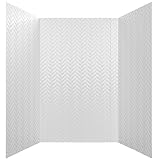
- 100% Grout-Free & Watertight System: Eliminate the hassle of grout maintenance forever. Made from robust, non-porous PVC, this surround is naturally water resistant, providing a seamless, wipe-clean surface that guarantees a watertight seal when installed correctly.
- Professional Tile Look, DIY Installation: Achieve the premium, classic look of Tub and shower without the expense or labor of traditional ceramic tiling. The kit is designed for homeowners and can often be installed directly over existing tile or drywall in a single weekend.
- Universal, Adjustable Fit (Up to 96" High): Includes two 96-inch tall panels and a 60-inch wide back panel to ensure ample coverage and a uniform look. Our innovative side panels feature a 6-inch adjustable folding edge designed to fit standard tubs/showers ranging from 30 to 40 inches deep, eliminating difficult corner seams.
- Cut with Standard Tools: The high-grade PVC is easily customizable. Panels and the included J-channel trim molding can be precisely cut to size with simple tools, like sharp utility scissors or a circular saw, making on-site adjustments straightforward and simple.
- Complete 3-Piece Kit: Everything you need for the walls is included: (2) 4'x8' Side Panels with folding edges, (1) 4'x8' Center Panel, and (2) 8ft J-Channel Molding pieces for a clean, finished edge. (Adhesive sold separately).
For wet zones, we want a manufacturer-tested path from the shower head down to the drain. That usually means approved panels, approved adhesive, approved seam treatment, approved trims, and approved sealant. Mixing a panel from one brand with a generic adhesive and a random silicone may look fine on day one and fail later. It can also void the warranty.
The most common leak points are predictable: inside corners, the bottom edge where the panel meets the tub or shower base, valve penetrations, niche corners, bench transitions, window returns, and shelves screwed through the panel. A grout-free wall still has seams. Those seams need to be detailed correctly.
Wet zone versus dry bathroom walls
The wet zone includes shower walls, tub surrounds, and any wall that receives direct spray or repeated soaking. These walls need a complete waterproof assembly. Standard drywall behind a panel is not a good wet-area strategy unless the specific system is approved for that exact condition.
Dry bathroom walls are different. Vanity backsplashes, toilet walls, powder room paneling, and decorative wainscoting mainly need splash resistance, cleanability, and stable installation. Moisture-resistant drywall, proper ventilation, paint, trim, and caulk may be enough behind many decorative panel products. The mistake is using a dry-wall decorative product inside a shower because it looks similar to a wet-rated panel.
Substrate and Installation Details That Matter
Most wall panel failures start before the panel is installed. On our remodels, we check the wall condition before pricing the job as a simple overlay. That means looking at the tub flange, lower corners, valve wall, floor intersection, old caulk lines, and any soft or swollen wall material.
Panels should not be installed over active leaks, damp drywall, loose tile, mold, failing backer, or walls that are badly out of plane. Panels can hide damage; they do not repair it. If moisture is trapped behind a new panel system, the bathroom may look finished while the wall continues to deteriorate.
Flatness and plumb
Large panels need flatter walls than many homeowners expect. A bowed wall can create hollow spots, poor adhesive contact, open seams, or trim that refuses to sit correctly. For acrylic and fiberglass surrounds, framing and flange alignment matter. For solid surface, cultured marble, porcelain, and stone, flatness matters even more because the material is heavier and less forgiving.
Panel thickness and valve trim
Panel thickness can change the finished wall depth. Before panels go up, we verify that the shower valve, diverter, tub spout, and trim kit will still fit correctly. Sometimes a valve extension is needed. It is much cheaper to solve that before the wall is closed than after the finished panel is installed.
Niches, shelves, benches, and grab bars
Every penetration is a potential leak. For niches, shelves, and benches, manufacturer-approved components are usually the safer route. If the bathroom is being upgraded for aging in place, we also add blocking for future grab bars before the walls are closed. Even if grab bars are not installed right away, solid backing gives the homeowner options later.
Best Wall Panels for Showers and Tub Surrounds
For showers and tub surrounds, our top picks are acrylic, fiberglass, composite wet-wall systems, laminated waterproof panels, cultured marble, solid surface, and porcelain or stone slabs. The right choice depends on budget, finish expectations, wall condition, and how long the homeowner plans to keep the bathroom.
Do these 3 things before closing this tab:
1Clear out junk files and repair common Windows errors2Scan for outdated or missing drivers - takes under a minute3Repair Windows errors before they cause bigger problemsAcrylic and fiberglass make sense when speed and cost control matter most. They are not usually the most custom-looking option, but they can perform well when installed correctly. Composite and laminated systems are a strong upgrade when the homeowner wants a more finished look without grout maintenance. Cultured marble, solid surface, and slab panels move into higher-end territory and require better planning.
If a homeowner asks for the most waterproof panel, we do not answer with one material only. A properly installed solid surface or acrylic system can outperform a poorly installed stone slab. A complete system with correct seams, sealant, and substrate beats an expensive material installed casually.
Best Panels for Vanity Walls, Wainscoting, and Powder Rooms
Outside the shower, bathroom wall panels can be used more creatively. This is where decorative PVC, moisture-resistant MDF panels, beadboard-style products, fluted panels, laminate panels, and tile-look wall boards can make sense. These areas need to handle humidity, splashes, cleaning products, and occasional water, but they do not need the same waterproofing strategy as a shower wall.
For vanity walls, we like durable, wipeable surfaces behind the sink and along the side splash. A 4-inch backsplash is common, but full-height paneling behind a vanity can protect drywall better and create a cleaner design. In powder rooms, wall panels are mostly about durability and appearance. In kids’ baths, we pay more attention to impact resistance and cleanability.
Textured and fluted panels are trending in 2026, especially in warmer neutrals and bolder accent colors. We usually keep heavily textured panels out of direct spray zones because grooves and ridges are harder to clean. They work better on vanity walls, toilet walls, and feature walls with good ventilation.
Independent reader supportYour contribution helps us test, update, and keep practical guides available for everyone.When Not to Use Bathroom Wall Panels
Wall panels are not the right answer for every bathroom. We would pause before recommending panels in these situations:
Also popular on Amazon

- Designed with interlocking edges, these wall tiles fit snugly together to minimize gaps, keep moisture out, and deliver a sleek, low-maintenance finish when applied over a waterproof substrate
- Shower surrounds are easy to install with no contractor needed, enabling a project finish in about 1 day; glues onto any surface with construction adhesive, eliminating time-consuming demo work; built in grout line eliminates the need for grout, saving time and money
- Durable, UV-cured protective polyurethane surface layer provides better wear and scratch resistance than other wall surrounds; UV resistance prevents yellowing from reflected light or fluorescent light
- Includes two 32”W x 78”H panels, two interlocking 30” W x 78”H panels (these have a combined nominal measurement of 58.75”W x 78”H to allow room for trim), two 78” j-trims, two 78” inside corner trims, two 78” l-trims, two corner shelves, four tubes of adhesive and two tubes of sealant
- Due to the size of the product, Palisade Shower Surround Kits are shipped on a pallet with an LTL carrier
- Active leaks: A leaking valve, failed tub flange, roof leak, or plumbing issue must be fixed first.
- Mold or soft wall material: Covering damaged drywall or backer board traps the problem.
- Loose tile: Panels installed over unstable tile are only as secure as the failing tile behind them.
- Badly uneven walls: Large panels need a flat surface or corrected framing.
- Historic or high-detail bathrooms: In some homes, real tile is part of the architectural value.
- Luxury custom baths with budget panels: Cheap panels can pull down the finish level of an otherwise high-end room.
There is also a design judgment call. Panels are excellent for clean, low-maintenance bathrooms. But if the homeowner wants handmade tile, intricate layouts, true stone detailing, or a historically accurate restoration, panels may not deliver the right feel.
Permits, Codes, and Safety Notes
Permit rules vary by city and county, so the local building department has the final word. In many areas, a simple like-for-like wall finish replacement may be treated differently from a remodel that moves plumbing, changes electrical, alters ventilation, replaces a tub with a shower, or opens walls. Once walls are open, inspectors may require code corrections that were not part of the original cosmetic plan.
The Tool Desk
Outbyte Driver Updater FREEFix the driver behind crashes, sound loss and screen glitchesFind Drivers →Outbyte PC Repair FREERepair Windows errors before they cause bigger problemsFix Now →Common bathroom remodel triggers include plumbing valve changes, drain relocation, electrical work, new lighting, exhaust fan changes, GFCI protection, framing changes, and structural repairs. Some municipalities publish bathroom remodel guides that separate non-structural finish work from work requiring plumbing, electrical, or building permits. The practical advice is simple: check before demolition, especially if the project touches plumbing, wiring, ventilation, or framing.
From a construction standpoint, moisture management is the safety issue. Bathrooms need proper ventilation, water-resistant assemblies in the right places, and safe electrical protection near wet areas. If we open a wall and find ungrounded wiring, missing GFCI protection, bad fan ducting, or a leaking valve, it should be corrected before the new panels cover the wall.
When to DIY vs. When to Hire a Pro
A careful DIY homeowner can handle some bathroom wall panel work, especially outside the shower. Vanity wall panels, powder room wainscoting, and simple dry-wall accent panels are reasonable DIY projects if the wall is sound and the product is easy to cut. Expect a small dry-wall panel project to take a weekend once materials, trim, adhesive, caulk, and paint are ready.
DIY shower panels are more demanding. A three-piece acrylic or fiberglass surround may be possible for a skilled homeowner, but the details still matter: the tub or base must be level, the wall must be flat, the valve depth must be right, panels must be cut cleanly, and seams must be sealed exactly as specified. One bad corner or valve opening can cause damage behind a finished wall.
Recommended Free Tools
Hire a professional when the project includes demolition, plumbing changes, mold or water damage, large panels, solid surface, cultured marble, porcelain slabs, stone slabs, niches, benches, windows inside the shower, or glass enclosure coordination. Also hire a pro if the wall is out of plumb, the existing tile is loose, or the bathroom is the only full bath in the house and downtime matters.
For a straightforward professional panel shower installation, many projects take 2 to 5 working days depending on demolition, repairs, curing time, plumbing, and glass. Large slab and custom solid surface work may need separate templating and fabrication time before installation day.
How We Help Homeowners Choose
When we walk a bathroom with a homeowner, we do not start with a catalog. We start with conditions and priorities. Is the existing tub staying? Is the valve moving? Is there a window in the shower? Are there signs of water damage at the corners? Does the family want the lowest installed cost, the easiest cleaning, the best resale impression, or a bathroom built for the next 20 years?
For a rental or quick secondary bath, acrylic, fiberglass, or quality PVC may be the right call. For a family bathroom, composite or laminated waterproof panels can be a strong balance of cost, speed, and maintenance. For a primary suite, solid surface, cultured marble, or large-format porcelain-look panels usually provide a more substantial finish. For aging-in-place planning, we prioritize backing, slip-resistant shower bases, low thresholds, handheld shower locations, and future grab bar placement.
The best bathroom wall panel is the one that fits the room, the budget, and the water exposure. A good panel system installed over a properly prepared wall can give you a cleaner, faster, lower-maintenance bathroom. A panel chosen by photo alone can hide damage, leak at seams, or look out of place. The difference is planning.
Frequently Asked Questions
What are the best wall panels for a bathroom shower?
For showers, the best choices are complete wet-rated systems: acrylic, fiberglass, composite, laminated waterproof panels, cultured marble, solid surface, and porcelain or stone slab systems. The installation details matter as much as the material.
Are bathroom wall panels cheaper than tile in 2026?
Sometimes. Acrylic, fiberglass, and some PVC systems can cost less than tile. Premium solid surface, cultured marble, porcelain, and stone panels can cost as much as or more than mid-range tile once labor, wall prep, and trim are included.
Can bathroom wall panels be installed over existing tile?
Only if the manufacturer allows it and the tile is clean, sound, flat, dry, and firmly bonded. Panels should not be installed over loose tile, active leaks, mold, soft drywall, or moisture damage.
Free tools Windows power users keep installed
One-click scans. No signup required.
What is the most waterproof bathroom wall panel material?
There is no single winner by material alone. A properly installed waterproof panel system with approved seams, trims, adhesives, sealants, and substrate will outperform an expensive panel installed without a complete waterproofing plan.
Do I need a permit to replace bathroom wall panels?
Permit requirements depend on your local jurisdiction and project scope. A simple finish replacement may not be treated the same as work involving plumbing, electrical, ventilation, framing, or structural repair. Check locally before demolition.
What should be behind shower wall panels?
Use the substrate required by the panel manufacturer. Depending on the system, that may be cement board, waterproof backer, moisture-resistant materials, or direct-to-stud framing. Standard drywall is not automatically acceptable in a wet zone.
Quick Recap
Product prices and availability are accurate as of the date/time indicated and are subject to change. Any price and availability information displayed on Amazon at the time of purchase will apply.

