Some links on this page are affiliate links: if you buy through them we may earn a commission, at no extra cost to you.
The best boots for hanging drywall every day are usually not the heaviest logger boots on the shelf and not the softest “comfort” shoes either. For most drywall installers, the right daily boot is a 6-inch or 8-inch ASTM F2413-rated safety-toe work boot with a slip-resistant outsole, good ankle support, moderate weight, a durable toe area, and enough flexibility to crouch, kneel, climb, and carry board without fighting the boot all day.
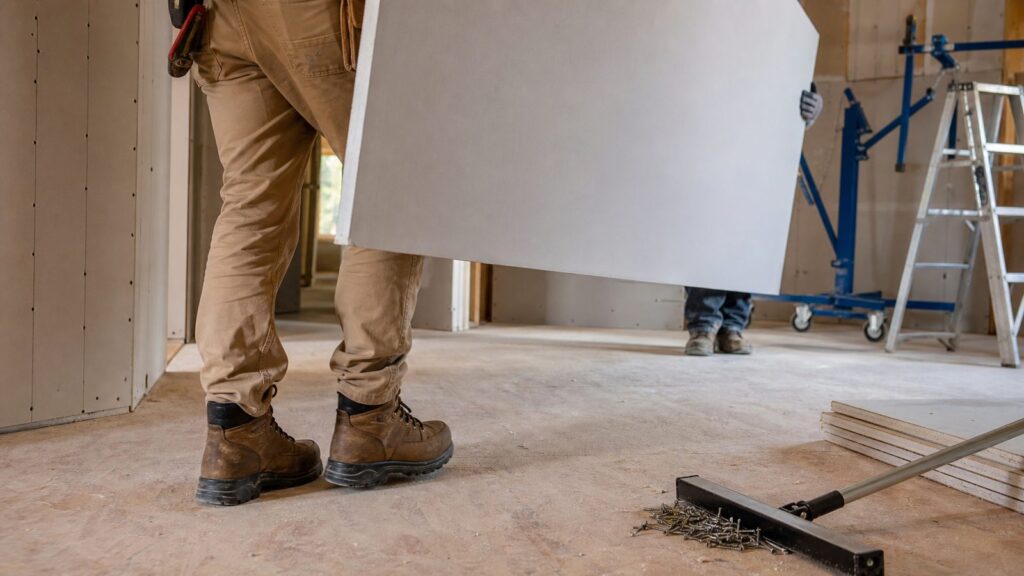
On our job sites, drywall footwear has to solve several problems at once. A standard 1/2-inch sheet can be manageable, but larger and specialty panels change the risk fast. NIOSH notes that drywall sheets can weigh under 55 pounds on the light end and more than 120 pounds on the heavy end. When two workers are carrying 12-foot board through a framed house, stepping over cords, loose screws, scrap studs, and dusty subfloor seams, boot choice becomes part of the safety system.
As an Amazon Associate I earn from qualifying purchases.
Free tools Windows power users keep installed
One-click scans. No signup required.
If you want the short answer, look for this daily-driver spec: 6-inch composite safety toe, ASTM F2413 I/C and EH markings, slip-resistant low-heel outsole, toe bumper or abrasion-resistant toe, removable cushioned insole, and a weight that does not wear you out by lunch. Add puncture resistance, waterproofing, metatarsal guards, insulation, or a more aggressive lug sole only when the jobsite hazards justify them.
What Drywall Work Demands From a Boot
Hanging drywall is different from general construction labor. The work looks simple from the outside, but the movement pattern is demanding: lift, carry, pivot, brace, climb, reach overhead, fasten, crouch, kneel, repeat. A boot that feels fine for walking across a yard can feel clumsy after 80 sheets of board.
Popular on Amazon
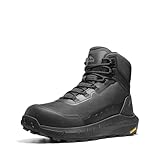
- Lightweight and Comfortable: Each boot only weighs approx. 22.5 oz (based on size 9), these men's industrial and construction boots feature a thick E-TPU midsole that offers high energy return and long-lasting durability, reducing foot fatigue during prolonged standing or walking.
- Protective and Safe: Meeting ASTM F2413-24 I/75 standards for impact resistance, these men's work boots feature an advanced nano composite toe that provides reliable toe protection while offering heat and cold insulation, protecting your feet from unexpected impacts.
- Durable and Supportive: These nano composite toe work boots for men are crafted with a wear-resistant nylon upper with TPU structure that withstands wear and tear in demanding work environments. The resilient synthetic leather insole provides contoured arch support.
- Enhanced Safety & Slip-Resistant: Meeting ASTM F2413-24 EH SR standards for electrical hazard resistance and slip resistance, these industrial work boots for men reduce the risk of electric shock while ensuring your feet stay stable in slippery or muddy conditions.
- Quality Zipper: With a smooth zipper for easy wear and lace-up closure for adjustable fit, these durable work boots for men are convenient for construction workers, electricians, logistics workers, warehouse workers, delivery staff, and other professions requiring protection and support.
Drywall crews deal with four main footwear hazards. First, there is impact and compression from dropped sheets, dropped routers, screw guns, lifts, buckets, and bundled materials. Second, there are puncture hazards from drywall screws, metal track, cut studs, wire ends, and demolition debris. Third, there is traction loss from drywall dust on concrete, plywood, OSB, scaffold planks, ladder rungs, and temporary stairs. Fourth, there is fatigue from standing, overhead fastening, stair carries, and repeated kneeling.
OSHA’s foot protection rule requires employers to ensure protective footwear where employees face hazards from falling or rolling objects, objects piercing the sole, or electrical hazards. For drywall crews, those hazards are not theoretical. Dropped board can crush toes, loose screws can work into soft soles, and rough-in electrical work may be active or partially exposed depending on the job phase.
Quick wins for a faster PC:
Repair Windows errors before they cause bigger problemsFix Now →Scan for outdated or missing drivers - takes under a minuteDriver Scan →The best boot is the one that fits the actual workflow. A residential hanging crew working mostly on clean interior subfloors may benefit from a lighter 6-inch composite-toe boot. A commercial crew working around metal studs, scissor lifts, extension cords, and rough concrete may need more puncture resistance and a tougher outsole. A finisher on stilts has different needs than a hanger carrying 5/8-inch fire-rated sheets into a garage.
The Best Everyday Boot Profile for Drywall Installers
For everyday drywall hanging, we recommend starting with a practical middle-ground boot instead of chasing specialty features. The ideal profile is protective enough for real construction work, light enough for production, and flexible enough for kneeling and stair work.
Daily-driver drywall boot spec
A strong drywall boot should have a 6-inch or 8-inch height, ASTM F2413 safety-toe rating, impact and compression protection, electrical-hazard protection where required, slip-resistant outsole, durable toe covering, cushioned removable insole, and a sole that bends naturally at the ball of the foot. The boot should feel secure when carrying a sheet sideways, not just comfortable while standing still.
For many drywall crews, a 6-inch boot is the practical choice. It gives ankle coverage without feeling as restrictive as an 8-inch boot. An 8-inch boot can be better for commercial jobs, uneven sites, demolition tie-ins, and workers who want more ankle support. Anything much taller tends to be more boot than most interior drywall work requires unless the site is muddy, exterior, or mixed with heavier trade work.
What’s actually slowing this PC down?
Pick the symptom - the matching free tool is one click away.
Weight matters. Heavy boots make every stair carry and overhead fastening cycle harder. That fatigue shows up late in the day, when workers are more likely to misstep, drag their feet, or stop paying attention to cords and scraps. A moderate-weight safety boot is usually better than a maximum-protection boot that workers hate wearing.
Composite toe versus steel toe
Steel toe boots are common, durable, and often less expensive. Composite toe boots are usually lighter and do not transfer temperature as much. For drywall installers working indoors, composite toe is often the better everyday choice because it reduces fatigue while still offering protective performance when properly rated.
The key is not the material alone. Check the label. A boot marketed as “safety toe” should show ASTM F2413 markings. Look for I/C for impact and compression protection. EH means electrical-hazard protection. PR means puncture resistance. Do not assume that a boot is protective because it looks rugged or has a reinforced-looking toe.
Boot Features That Actually Matter for Hanging Drywall
Drywall work exposes weak boot choices quickly. The wrong sole gets slick. The wrong toe wears through from kneeling. The wrong heel feels unstable on ladders. The wrong upper traps heat indoors. Here is how we sort the features that matter from upgrades that only sound useful.
Safety toe protection
A safety toe is a sensible baseline for professional drywall hanging. Sheets are awkward, edges are sharp, and a dropped panel does not need to fall far to injure toes. This is especially true with 5/8-inch Type X drywall, longer 12-foot panels, ceiling work, and garage fire separation work.
For homeowners hanging one room, safety-toe boots are still the better choice if you already own them or plan to do more remodeling. Regular sneakers may feel easier for a few hours, but they offer little protection from dropped board, screw punctures, or ladder pressure.
Slip-resistant outsole
Drywall dust is a traction problem. It turns smooth floors into something closer to powder-coated concrete. A sole that grips well in mud may not grip well on dusty plywood. A sole that feels comfortable in a store may skate on a scaffold plank covered with gypsum dust.
Look for a slip-resistant outsole with enough tread pattern to shed dust but not so much that it tracks debris through finished areas. On interior remodels, we like a low-profile tread that has more bite than a smooth wedge but is not a deep mud lug. For exterior staging, muddy access, or jobs that mix framing and drywall, a more aggressive lug sole may be justified.
Recommended Free Tools
Defined heel for ladders
If the job involves ladders, use a boot with a defined heel or at least a clear ladder-friendly edge. A pure wedge sole can be comfortable on flat slabs, but it does not hook a ladder rung the same way. For ladder-heavy hanging, especially stairwells, vaulted ceilings, garages, and small rooms where lifts do not fit, a defined heel and supportive shank are worth having.
For flat interior production work with limited ladder exposure, wedge soles can reduce pressure points and feel better underfoot. The tradeoff is ladder security. Mixed drywall work usually favors a low-heel, slip-resistant sole rather than a completely flat wedge.
Puncture resistance and midsole durability
Drywall screws are everywhere during hanging. A true ASTM PR-rated boot is the better option when crews work around loose fasteners, metal track, demo debris, or rough commercial sites. For clean residential hanging, a durable midsole and disciplined cleanup may be enough, but that depends on the crew’s housekeeping.
We like having a screw magnet or daily sweep habit near cutting and fastening areas. Puncture-resistant soles help, but prevention is better. Boots should not be the only thing standing between a worker and a floor full of fasteners.
The Tool Desk
Outbyte PC Repair FREERepair Windows errors before they cause bigger problemsFix Now →Outbyte Driver Updater FREEFix the driver behind crashes, sound loss and screen glitchesFind Drivers →Toe abrasion protection
Drywall installers kneel and crouch constantly: lower courses, bottom screws, closet work, patches, returns, and low outlet areas. Soft leather toes can get chewed up quickly. A rubber toe bumper, scuff cap, or abrasion-resistant overlay can add months of service life.
This is one of the most overlooked features for drywall. A boot can have a good safety toe and still fail early because the outside toe wears through from kneeling. For everyday installers, toe durability affects real annual cost.
Flexibility for kneeling
A boot must bend where your foot bends. If the sole is too stiff, workers compensate by lifting the heel, twisting the ankle, or avoiding proper kneeling positions. That can make low fastening slower and more awkward.
When trying boots on, do not just walk 20 feet. Crouch, kneel, climb a step, and simulate carrying a panel. The boot should not pinch the top of the foot, jam the toe box, or pull the heel loose.
Best Boot Choices by Drywall Work Type
There is no single best boot for every drywall job. A smart boot policy starts with the work type and the hazards. Here is how we think about it in the field.
Interior residential board hanging
For houses, additions, basements, and remodels, choose a 6-inch composite safety-toe boot with ASTM I/C and EH markings, a slip-resistant sole, and a toe bumper. Waterproofing is optional unless the jobsite is wet or the access path is muddy. Insulation is usually unnecessary indoors and can make feet overheat.
A good residential drywall boot should be light enough for stair carries. Carrying 12-foot board through a house is already hard on the body. Heavy boots add load with every step.
Commercial metal-stud work
Commercial drywall often means metal studs, track, lifts, concrete slabs, and more exposed fasteners. For this work, we prefer an 8-inch or supportive 6-inch safety boot with puncture resistance, EH rating where appropriate, and a tougher outsole.
Also popular on Amazon
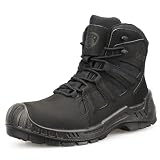
- 【Lightweight Composite Safety Toe】Experience reliable protective work boot performance without the bulk. Our advanced composite toe cap meets ASTM F2413-18 I/75 C/75 standards for impact and compression resistance, while being metal-free for easy airport security clearance and reduced electrical hazard risk.
- 【One-Piece Injection Molded Construction】Engineered for maximum durability. The outsole and upper are molecularly fused into a single, seamless unit through precision injection molding. This work boot construction eliminates the main cause of failure—glue separation—ensuring long-lasting performance that withstands heavy-duty use and tough job site conditions.
- 【Slip & Oil Resistant Outsole】Work with confidence on hazardous surfaces. The slip-resistant and oil-resistant PU outsole delivers exceptional traction on wet floors and greasy surfaces, actively reducing slip and fall accidents to keep you safe and productive all day.
- 【All-Day Comfort & Breathable Work Boots】Built for extended wear. A cushioned PU midsole provides shock absorption for all-day comfort, while the breathable mesh lining promotes airflow and wicking moisture to keep your feet cool and dry throughout long shifts.
- 【Worry-Free Guarantee】Your satisfaction is guaranteed. Enjoy peace of mind with our OUXX work boots: 7-day return, 30-day exchange, and a full 6-month warranty. Our customer service is here to help with any questions.
Metal track and cut studs can slice soft materials. If workers are walking rough slabs or active multi-trade floors, choose durability over sneaker-like comfort. The boot still needs enough flex for production, but this is where PR-rated soles make more sense.
Garage and fire-rated drywall
Garage work often involves heavier 5/8-inch fire-rated panels, ladders, overhead installation, and rougher floors. A safety toe, defined heel, and stable outsole are important here. Code requirements vary by location, but the International Residential Code includes fire separation provisions between private garages and dwelling areas. That context matters because garage drywall is often not just cosmetic work.
For these jobs, a boot with a low heel, good ladder stability, and a reinforced toe is usually a better pick than a soft wedge sole. If the garage slab is dusty, sealed, or slightly damp, traction becomes even more important.
Wet access, exterior staging, and winter work
If the crew crosses mud, wet grass, frost, or exterior staging before hanging inside, waterproofing can be worth it. A waterproof membrane adds cost and can reduce breathability, so we do not treat it as a universal upgrade. Use it when the site demands it.
Insulated boots are similar. They make sense for cold conditions, unheated buildings, or exterior work. For heated interiors and production hanging, insulation can cause sweating and discomfort. Wet socks inside a boot are bad for both comfort and skin health.
Ladder-heavy drywall work
For stairwells, closets, small rooms, garages, and high ceilings where ladders are unavoidable, choose a boot with a defined heel and supportive shank or midsole. The boot should sit cleanly on ladder rungs without rolling.
A very soft sole may feel comfortable on the floor but painful on ladders after an hour. A defined heel helps position the foot and reduces the chance of slipping forward off the rung.
Stilt work
Stilt users need to test boots with the exact stilt model before production work. The boot must sit flat on the footplate, and the straps must lock it down without crushing the foot or allowing side-to-side roll.
Do these 3 things before closing this tab:
1Clear out junk files and repair common Windows errors2Fix the driver behind crashes, sound loss and screen glitches3Repair Windows errors before they cause bigger problemsAvoid bulky outsoles, unstable high heels, and oddly shaped soles that do not mate well with the stilt plate. A low-profile, secure, slip-resistant boot is usually better than a tall, heavy boot. If the stilt strap crosses a sensitive part of the boot or foot, do not ignore it. Small fit problems become major problems after several hours overhead.
Cost Guide: What Drywall Installers Should Spend in 2026
Most professional drywall installers should expect to spend about $160 to $260 for a strong everyday pair of boots. Budget options can work for occasional use, and premium boots can be worth it for certain trades, but mid-range boots usually hit the best balance for drywall.
| Boot tier | Typical 2026 cost | What you usually get | Best fit |
|---|---|---|---|
| Budget safety-toe | $90-$160 | Basic ASTM safety toe, cement construction, synthetic or lower-cost leather, basic slip-resistant sole | DIY work, occasional drywall, helpers, light residential use |
| Mid-range drywall daily driver | $160-$260 | Better cushioning, composite toe options, EH ratings, stronger outsole, waterproof options, better warranty | Everyday residential and light commercial drywall crews |
| Premium construction boot | $260-$400+ | Higher-grade leather, welted or rebuildable construction, better support, specialty safety features | Full-time installers, commercial crews, workers who wear boots hard |
| Specialty or US-made heavy industrial | $500-$740 | Premium rebuildable construction, metatarsal protection, heavy-duty materials, specialty fit or features | Heavy industrial sites, demanding commercial work, workers who need specific protection |
Do not buy more boot than the job needs. A $500 boot may be excellent, but ordinary residential drywall hanging does not always justify heavy industrial features. On the other hand, a $70 non-rated boot that wears out fast or lacks toe protection is not a bargain if it fails on site.
For full-time drywall installers, replacement planning matters. Drywall dust dries leather. Screws damage soles. Kneeling abrades toes. Daily installers may go through boots much faster than homeowners. Toe guards, regular cleaning, leather conditioner where appropriate, and rotating insoles can extend service life. Under heavy use, budgeting for annual replacement is realistic.
PC Slower Than It Used to Be?
A free scan shows the junk files, broken settings and background clutter dragging Windows down - then fixes them in one click.Free scan · Windows 10 & 11Outdated Drivers Are Slowing You Down
One free scan finds every outdated or missing driver and matches the right update for your exact hardware.Free scan · exact hardware matchAlso compare boots to other fatigue reducers. A homeowner-grade drywall lift often costs roughly $150 to $350 to buy, and many rental yards rent lifts locally. Drywall stilts commonly range from about $80 to $300 or more. panel carriers, dollies, and good knee pads are relatively low-cost tools that can reduce strain more effectively than simply buying heavier boots.
How to Read ASTM Boot Markings Without Guessing
Do not rely on product names like “contractor,” “industrial,” or “work.” The label matters. Protective footwear in the United States is commonly marked to ASTM F2413. ASTM F2413-24 is the current protective footwear performance standard often referenced in 2026 guidance.
For drywall, the markings we care about most are I/C, EH, and PR. I/C indicates impact and compression protection. EH indicates electrical-hazard protection. PR indicates puncture resistance. A boot may have some of these and not others, so read the label inside the boot or in the manufacturer’s specifications.
OSHA expects employers to assess hazards and provide appropriate protection where required. That means a drywall company should not simply say, “Wear boots.” A useful policy names the hazards and the minimum markings. For example, a drywall crew policy might require ASTM F2413 I/C safety-toe boots, minimum 6-inch height, slip-resistant soles in serviceable condition, and EH or PR ratings where the job hazard assessment calls for them.
Sole condition should be part of the policy. A slip-resistant boot with worn-smooth tread is no longer doing its job. If a worker can see exposed midsole, separated outsole, cracked leather at stress points, or a crushed toe cap area, that boot should be replaced.
Wedge Sole or Lug Sole for Drywall?
Wedge soles are popular because they spread pressure across the foot and feel good on flat concrete or subfloors. For interior drywall work with limited ladder use, they can be comfortable and productive. The problem is that some wedge soles are too smooth for dusty work or too flat for ladders.
Lug soles offer more bite and often perform better on rough, wet, or mixed-condition sites. They can also hold more dust and debris, and aggressive lugs may feel less comfortable on flat interior floors during long days.
For mixed drywall work, a low-heel, slip-resistant sole is usually the best compromise. It gives better ladder behavior than a pure wedge and less bulk than a deep lug. If a worker spends 90 percent of the day on clean, flat interior floors and rarely climbs ladders, a quality wedge can make sense. If that same worker is moving between ladders, garages, exterior access, and rough slabs, choose a defined heel.
What’s actually slowing this PC down?
Pick the symptom - the matching free tool is one click away.
Fit Testing: What to Do Before You Wear Boots on Site
Boot fit should be tested like a tool, not like casual footwear. Try boots with the socks you actually wear on site. Test late in the day if possible, because feet are often slightly swollen after hours of standing and walking.
Leave enough toe room so the safety cap does not rub when walking downhill, kneeling, or carrying loads. The heel should stay planted without heavy lace tension. The boot should flex at the ball of the foot, not across the toe cap. If the top of the boot bites into your foot when crouching, it will not get better after a full day of fastening lower sheets.
For wide feet, do not force a standard-width safety toe. A safety cap that presses the toes can cause numbness, blisters, and long-term discomfort. Look for wide sizing. Crews should also make sure women’s sizing is available when needed. A smaller men’s boot is not the same as a properly fitted women’s work boot, especially around heel shape, arch placement, and toe box volume.
Break boots in before a production day. Wear them for shorter tasks first: layout, cleanup, material staging, or a half-day shift. If a boot causes hot spots in the first few hours, solve the fit problem before wearing it through a 10-hour hanging day.
Boots Help, But They Do Not Replace Good Drywall Handling
Footwear is only one layer of protection. Drywall hanging combines overexertion and fall risk. NIOSH has identified drywall handling as high risk for back pain, overexertion, and falls. BLS reported 1,034 private-sector construction deaths in 2024, including 389 from falls, slips, and trips. Boots reduce risk, but they do not make poor handling methods safe.
Use panel handling controls first. Stage material close to the work area. Keep walking paths clear. Use team lifts for large or heavy sheets. Use drywall lifts for ceilings when practical. Use dollies and panel carriers when moving board through longer paths. Plan the route before lifting a sheet, especially in tight houses with stairs, temporary rails, cords, and partially finished openings.
Also popular on Amazon

- Composite Toe ASTM F2413-11 M I/75 C/75 EH
- Flexible, athletic contour welt construction moves with you by bending and flexing at essential points
- Premium waterproof leather with abrasion resistant toe
- Removable ortholite cushioned footbed for all-day comfort
- Slip, oil, water, abrasion, and chemical-resistant outsole for added protection on the job site
Housekeeping is a production issue, not just a safety issue. Drywall screws underfoot slow workers down and damage soles. Scrap rips trip people. Dust builds up on ladder rungs and scaffold planks. A five-minute cleanup at the right time can prevent a puncture, a fall, or a ruined finished floor.
Knee pads also matter. Boots protect the feet, but lower-course fastening and patch work punish knees. Good knee pads can reduce awkward foot positions because workers do not avoid kneeling as much. The result is better body mechanics and cleaner fastening.
Quick wins for a faster PC:
Repair Windows errors before they cause bigger problemsFix Now →Fix the driver behind crashes, sound loss and screen glitchesFind Drivers →Clear out junk files and repair common Windows errorsFree Scan →When to DIY Drywall and When to Hire a Pro
A handy homeowner can hang drywall in a small room, closet, garage patch, or basement area with the right planning. For DIY work, do not overbuy industrial boots if you will only hang a few sheets, but do not wear running shoes either. A budget ASTM safety-toe boot in the $90 to $160 range, knee pads, gloves, a panel carrier, and a rented lift can make the work safer and cleaner.
DIY makes sense when the work is cosmetic, small in scale, and not tied to rated assemblies, major electrical changes, moisture damage, or structural repair. Examples include replacing a damaged sheet in a bedroom, hanging board in a simple storage room, or finishing a small partition where framing and utilities are already correct.
Hire a professional when the job involves ceilings, stairwells, 12-foot sheets, 5/8-inch fire-rated board, garages, multi-room production, water damage, mold concerns, commercial spaces, or tight schedule requirements. Pros bring more than speed. They bring lifts, staging habits, cutting accuracy, fastening pattern discipline, code awareness, and crew coordination.
Boots become especially relevant for pros because exposure is repeated. A homeowner may carry 10 sheets in a weekend. A crew may carry and hang dozens or hundreds of sheets in a week. That difference changes the math on safety-toe protection, cushioning, toe abrasion, and replacement cost.
Do these 3 things before closing this tab:
1Repair Windows errors before they cause bigger problems2Scan for outdated or missing drivers - takes under a minute3Clear out junk files and repair common Windows errorsPermit and Code Notes for Drywall Replacement
Permit requirements for drywall vary by city and scope. Some jurisdictions allow minor drywall repair without a permit. Others require permits when drywall work exposes framing, affects fire-rated assemblies, changes electrical or plumbing systems, or involves larger replacement areas.
Garage drywall deserves special attention. Fire separation between a garage and living space is not just a finish preference. The IRC includes provisions for separation between private garages and dwelling areas, and local amendments may add details. If you are replacing garage ceiling drywall below living space, repairing walls between a garage and house, or changing board thickness, verify the local requirement before closing the wall.
Electrical rough-ins are another reason to slow down. If drywall is being removed or replaced around wiring, boxes, panels, or new circuits, make sure the work is inspected where required and that boxes remain accessible and correctly set for the finished surface. EH-rated boots are not a license to work around live electrical hazards casually.
For homeowners, the practical rule is simple: call the local building department before larger drywall replacement, garage work, fire damage repair, water damage repair, or any project tied to electrical, plumbing, mechanical, or structural changes. A five-minute permit check is cheaper than removing finished drywall for an inspection later.
The Tool Desk
Outbyte PC Repair FREEClear out junk files and repair common Windows errorsFree Scan →Outbyte Driver Updater FREEScan for outdated or missing drivers - takes under a minuteDriver Scan →Common Boot Mistakes We See on Drywall Jobs
The most common mistake is buying a generic steel-toe boot without checking the ASTM label. A protective-looking boot is not the same as properly rated protective footwear. The marking should match the hazard.
The second mistake is choosing heavy waterproof or insulated boots for indoor work. Waterproofing and insulation are useful in the right conditions, but they add heat and weight. A worker hanging board inside a conditioned house may be less productive in a heavy waterproof boot than in a lighter breathable safety boot.
The third mistake is wearing sneakers because they feel comfortable. Sneakers usually lack toe protection, puncture resistance, ladder stability, and durable toe materials. They may be fine for painting a closet, but they are a poor choice for carrying drywall sheets through an active jobsite.
The fourth mistake is ignoring dusty traction. Smooth soles, worn wedge soles, and old boots with hardened rubber can become slick on gypsum dust. If a boot slips on a dusty slab during a normal step, replace it before using ladders or carrying board.
The fifth mistake is buying boots without testing kneeling and crouching. Drywall work is not just walking. If the boot pinches when kneeling in the store, it will be worse on the job.
Our Practical Recommendation
For most drywall installers, buy a 6-inch composite safety-toe boot with ASTM F2413 I/C and EH markings, a slip-resistant low-heel outsole, a reinforced toe, and a removable cushioned insole. Keep the boot moderate in weight. Choose puncture resistance for commercial, metal-stud, demolition, or debris-heavy jobs. Choose waterproofing only when wet access is normal. Choose insulation only for cold conditions.
If your work is ladder-heavy, prioritize a defined heel and midsole support. If your work is mostly flat interior production, a quality wedge sole can be comfortable, but check traction in dust and be honest about ladder exposure. If you use stilts, test the exact boot and stilt combination before production work.
For crews, put the requirements in writing. A good drywall footwear policy should cover ASTM markings, minimum boot height, toe protection, sole condition, puncture resistance triggers, EH requirements, stilt compatibility, and replacement rules. Brand is less important than fit, condition, and matching the boot to the hazard.
The right drywall boot should disappear while you work. It should protect against dropped sheets and jobsite debris, grip dusty floors, behave on ladders, fit securely on stilts when needed, and still let you kneel and move naturally. That balance is what keeps installers safer and more efficient every day.
Frequently Asked Questions
Do drywall installers need steel toe boots or composite toe boots?
Professional drywall installers should usually wear ASTM-rated safety-toe boots. Composite toes are often preferred for drywall because they are lighter and reduce fatigue, while steel toes are common, durable, and often less expensive. The key is checking the ASTM F2413 marking, not just the toe material.
What ASTM rating should work boots have for hanging drywall?
For everyday drywall work, look for ASTM F2413 footwear with I/C impact and compression protection. EH electrical-hazard protection is commonly useful on active construction sites, and PR puncture resistance is recommended where screws, metal studs, track, or demolition debris are common.
Are wedge sole boots good for drywall work?
Wedge sole boots can be good for flat interior drywall work because they spread pressure across the foot. They are less ideal for ladder-heavy work because a defined heel gives better ladder stability. For mixed drywall work, a low-heel slip-resistant outsole is often the best compromise.
Free tools Windows power users keep installed
One-click scans. No signup required.
What boots work best with drywall stilts?
Boots used with drywall stilts should sit flat on the stilt footplate and allow the straps to lock securely without side-to-side roll. Avoid bulky outsoles, unstable high heels, or boot shapes that prevent full contact with the stilt plate. Always test the boot and stilt combination before production work.
How much should drywall installers spend on work boots in 2026?
Budget ASTM safety-toe boots commonly run about $90-$160. Most full-time drywall installers are better served in the $160-$260 mid-range, where cushioning, composite toes, EH ratings, outsole quality, and durability usually improve. Premium construction boots can cost $260-$400+, with specialty models reaching $500-$740.
Can I wear regular sneakers to hang drywall at home?
Sneakers are not recommended for hanging drywall. They usually lack toe protection, puncture resistance, ladder stability, and durable toe materials. For a small DIY drywall project, a budget ASTM safety-toe work boot, knee pads, gloves, and a rented drywall lift are a safer setup.
Quick Recap
Product prices and availability are accurate as of the date/time indicated and are subject to change. Any price and availability information displayed on Amazon at the time of purchase will apply.

