Quick wins for a faster PC:
Clear out junk files and repair common Windows errorsFree Scan →Scan for outdated or missing drivers - takes under a minuteDriver Scan →Repair Windows errors before they cause bigger problemsFix Now →Some links on this page are affiliate links: if you buy through them we may earn a commission, at no extra cost to you.
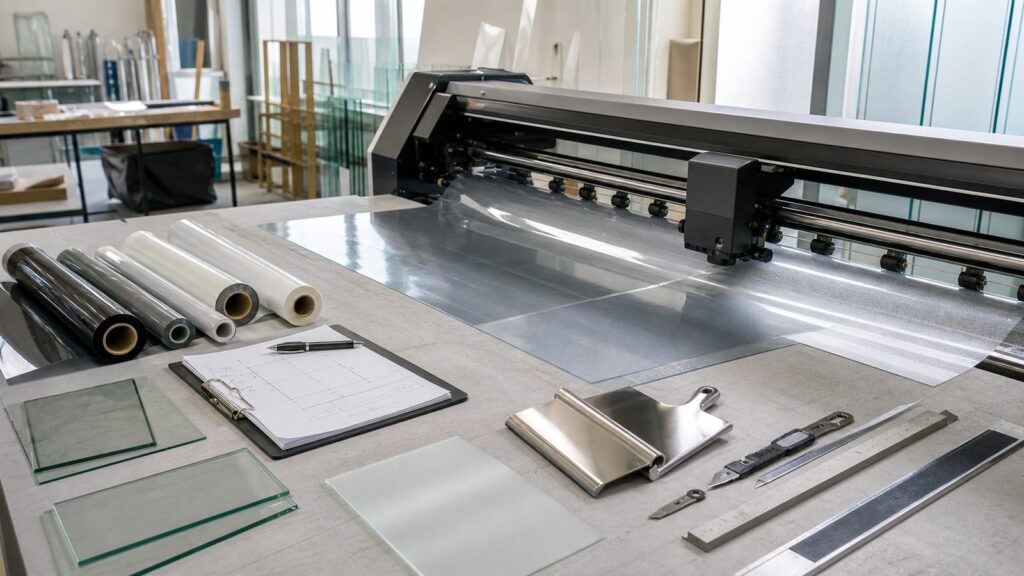
The best plotter for window tint is usually a 48- to 54-inch servo-motor vinyl cutter paired with reliable tint software, clean measuring procedures, and film-specific cut presets. For most professional residential and commercial flat-glass work, that points toward a Graphtec CE7000/CE8000-class cutter, a Roland GR2-540-class cutter, or a comparable production machine from Summa. Budget 53-inch servo cutters can be a solid value for lighter use, but cheap stepper cutters become expensive fast when they waste film, lose tracking, or turn a simple storefront job into hand-trimming every lite.
That answer may sound broader than a single model recommendation, but it is the honest job-site answer. A plotter is not a magic box. It is one part of a window film system that includes site measurement, glass compatibility, film selection, software, blade depth, cutting strip condition, installer skill, and warranty discipline. On our job sites, the cleanest results come from treating the plotter like layout equipment, not like a shortcut around field verification.
If you install automotive tint only, a 24- to 30-inch cutter with a strong vehicle pattern database may cover much of your work. If you install house windows, storefronts, office glass, schools, medical buildings, or mixed residential/commercial film, a wider machine makes more sense. Architectural film commonly comes on 40-inch and 60-inch rolls. A small desktop cutter can cut decals and narrow lites, but it will limit your layout, waste more material, and force unnecessary seams on larger glass.
| # | Preview | Product | Price | |
|---|---|---|---|---|
| 1 |

|
15pcs 60 Degree Graphtec CB15/CB15U Vinyl Cutter Plotter/Printer Blades | $14.99 | Buy on Amazon |
| 2 |

|
60 Degree Deep Cut Blades for Graphtec Cutting Plotter,30Pcs | $32.99 | Buy on Amazon |
As an Amazon Associate I earn from qualifying purchases.
Best Window Tint Plotter by Use Case
The right cutter depends on the work mix. A mobile auto tint shop, a residential solar film installer, and a commercial glazing subcontractor do not need the same machine.
| Use case | Recommended plotter class | Typical width | Budget range in 2026 | Why it fits |
|---|---|---|---|---|
| Occasional tint, decals, small panes | Entry-level vinyl cutter | 24 to 34 inches | $200 to $800 | Low upfront cost, acceptable for simple rectangles and light use, but limited tracking and width. |
| Value professional tint setup | Servo cutter such as a Workhorse or USCutter Titan-class machine | 50 to 54 inches | $1,500 to $3,000 | Good starting point for flat glass and mixed tint work when support and calibration are handled carefully. |
| Best overall professional category | Graphtec CE7000/CE8000-class or Roland GR2-540-class cutter | 48 to 54 inches | $4,000 to $4,800 | Better tracking, stronger support, cleaner repeatability, and enough width for most architectural film layouts. |
| High-volume production shop | Summa S One/S3, Graphtec/Roland production-class machines | 54 to 64 inches | $5,000 to $9,000+ | Built for daily production, long-run accuracy, demanding films, and fewer interruptions. |
| Safety/security film specialist | High-force servo cutter with excellent tracking | 54 to 64 inches | $5,000 to $9,000+ | Thicker 4- to 15-mil films need controlled blade force, stable feed, sharp blades, and sometimes multiple passes. |
For a construction company or serious flat-glass installer, the sweet spot is normally the professional 54-inch class. It handles 40-inch rolls comfortably and gives practical flexibility around 48-inch architectural film. It will not cut every 60-inch pattern at full width, but it covers a large percentage of real residential and commercial work without forcing the budget into large-format production equipment.
Popular on Amazon
What a Window Tint Plotter Actually Does
A tint plotter is a computer-controlled vinyl cutting plotter configured to cut window film, paint protection film, vinyl graphics, decorative films, and sometimes thicker safety film. The machine pulls film through rollers while a small blade follows a digital cut path. For architectural film, that cut path may come from measured rectangles, CAD drawings, storefront schedules, a pattern database, or custom layout software.
The goal is not just speed. The goal is repeatability. If a building has 42 matching office lites, a plotter can cut those pieces consistently, label them logically, and reduce the chance of scratching glass with blades during hand cutting. That matters on tempered glass, insulated glass units, large storefront systems, and occupied buildings where cleanup and disruption affect the whole job.
Hand cutting still has a place. Older homes, putty-glazed sash, uneven stops, inconsistent gasket bite, and out-of-square frames often need field trimming. But when the openings are measured correctly, a plotter can save material, reduce rework, and let the installer focus on prep, placement, slip solution, edge finish, and final inspection.
The Specs That Matter Most
Usable Cutting Width
For architectural flat glass, start with width. Film rolls commonly come in 30-, 40-, 48-, 60-, and 72-inch widths, with 40-inch and 60-inch rolls showing up frequently in building work. A 24-inch cutter is too small for most professional flat-glass layouts. It may be fine for automotive quarter windows, decals, or small residential panes, but it becomes a bottleneck on patio doors, storefront lites, sidelites, conference rooms, and commercial interior glass.
A 48- to 54-inch plotter is a practical minimum for many residential and commercial installers. A 64-inch cutter gives more room for 60-inch media, but it costs more, takes more shop space, and may be unnecessary if most of your work is standard residential glass, office partitions, or modest storefronts.
The Tool Desk
Outbyte Driver Updater FREEScan for outdated or missing drivers - takes under a minuteDriver Scan →Outbyte PC Repair FREEClear out junk files and repair common Windows errorsFree Scan →Servo Motor vs Stepper Motor
Servo-motor cutters are the better choice for tint work. They are quieter, smoother, and more accurate over longer patterns than low-cost stepper machines. A stepper cutter can be acceptable for occasional simple rectangles, but it is more likely to chatter on curves, drift over longer runs, and struggle with thin or soft films.
That accuracy shows up in practical ways. A pattern that is off by 1/16 inch may be usable on a forgiving frame. A pattern that wanders 1/8 inch across a long glass door becomes a visible problem. On decorative frost, privacy bands, anti-graffiti film, or safety film, small alignment errors are harder to hide.
Tracking Over Long Runs
Tracking is how well the plotter keeps media moving straight. It is one of the biggest differences between hobby equipment and professional machines. Long conference room bands, repeated storefront panels, and large residential sliders can waste a lot of film if the plotter feeds slightly crooked.
When we evaluate a cutter, we care less about the maximum advertised speed and more about whether it can cut a 6-, 8-, or 10-foot run without walking off line. Good pinch rollers, a straight stand, proper media loading, and a clean cutting strip all matter.
Downforce and Blade Control
Window films are not all the same. Solar film, ceramic film, decorative frost, exterior film, anti-graffiti film, and safety/security film cut differently. Common safety films can run from about 4 mil to 15 mil thick, and they may need a sharper blade, more force, slower speed, or multiple passes.
Professional cutters give better control over force, speed, blade offset, and pass count. For reference, Roland lists GR2 series cutters with up to 600 gf of downforce and fast cutting speeds up to 1,530 mm/s. Graphtec CE7000 literature lists 450 gf of cutting force and emphasizes tracking and registration features. Those numbers do not install film for you, but they show why better machines handle a wider range of materials with less trial and error.
Software Compatibility
The cutter is only useful if your software can drive it cleanly. For automotive tint, pattern database coverage is a major buying factor. For architectural tint, database coverage is less complete because buildings are more custom. You may rely more on measured dimensions, CAD files, manual layout, nesting, and project labeling.
Software also becomes a recurring cost. Public pricing examples in 2026 show window tint software and pattern tools ranging from one-time products around $199.99 to quarterly tint or tint/PPF subscriptions in the hundreds of dollars. Before buying hardware, confirm the software supports your plotter, your operating system, your pattern workflow, and your cancellation terms.
Top Plotter Categories for Window Tint
Best Overall: Graphtec CE7000/CE8000-Class Cutters
Graphtec cutters are a strong fit for professional tint work because they are accurate, widely supported, and proven in sign, film, and vinyl shops. The CE7000 class lists 450 gf of cutting force and includes features such as ARMS registration for contour cutting. For flat glass, the value is not only registration. It is predictable tracking, clean blade control, and a support ecosystem that most professional shops can live with.
Expect pricing around the mid-$4,000 range for a 54-inch professional setup, depending on dealer, software bundle, stand, and accessories. That is a meaningful investment, but it is modest compared with the labor and material cost of repeated miscuts on commercial film jobs.
Best Overall Alternative: Roland GR2-540-Class Cutters
Roland GR2-540-class cutters are another professional choice. A 54-inch machine fits the practical architectural sweet spot, and Roland lists GR2 models with strong speed and 600 gf cutting force. Public marketplace pricing has commonly shown the GR2-540 around $4,395 to $4,495, with some plotter/software bundles running much higher.
Roland equipment is attractive when the shop wants brand support, predictable setup, and a machine that can also handle vinyl graphics or print-then-cut workflows. For a contractor adding tint as a serious service line, that flexibility can matter.
Recommended Free Tools
Best Value: Workhorse or USCutter Titan-Class Servo Cutters
A 53-inch value servo cutter can make sense for a newer tint operation that needs real width without spending nearly $5,000 on day one. Published examples include a 53-inch Workhorse around $1,599 and USCutter Titan 3 ARMS models in multiple widths, including 28-, 53-, and 68-inch options.
The tradeoff is support, refinement, and tolerance. A value machine may need more careful setup, more test cuts, more user discipline, and more frequent adjustment. For occasional residential work, that may be acceptable. For daily commercial production, the cost difference can disappear quickly in wasted film, lost time, and callbacks.
Best Premium: Summa S One/S3 or Production-Class Graphtec/Roland
For high-volume shops, premium production cutters earn their keep through stability. These machines are built for constant use, longer production runs, and tighter workflow control. Pricing often lands around $5,000 to $9,000 or more, and some premium brands quote through dealers instead of publishing universal online pricing.
This category is most appropriate when the plotter is running every day, the shop cuts film for multiple crews, or the work includes demanding materials such as exterior film, security film, decorative graphics, and mixed vinyl production.
What’s actually slowing this PC down?
Pick the symptom - the matching free tool is one click away.
Total Cost of Ownership: What the Plotter Really Costs
The purchase price is only the first line item. A professional window tint cutting setup includes hardware, software, blades, cutting strips, film inventory, tables, measuring tools, labeling supplies, and time spent building cut presets. A cheap plotter that forces extra hand trimming is not cheap. A premium plotter that sits unused because the software workflow is wrong is not a good investment either.
| Cost item | Typical 2026 range | Notes |
|---|---|---|
| Entry-level cutter | $200 to $800 | Usable for light work, decals, and simple rectangles; limited for professional flat glass. |
| Professional 50- to 54-inch servo cutter | $1,500 to $4,500 | Practical range for many tint shops and construction-oriented installers. |
| Premium production cutter | $5,000 to $9,000+ | Better fit for daily production, thicker films, and multi-crew shops. |
| Software and pattern data | $199.99 one-time examples to several hundred dollars quarterly | Compare database coverage, architectural workflow, updates, editing tools, and cancellation terms. |
| Blades | $10 to $25 each | Keep 30-, 45-, and 60-degree blades available for different film types. |
| Cutting strips | Usually low cost, replaced as wear shows | A worn strip can cause incomplete cuts, torn film, and wasted material. |
| Installed residential film pricing | $6 to $15 per sq. ft. | Typical national range; individual windows may run roughly $45 to $660 depending on size, access, and film. |
| Commercial flat-glass tinting | Commonly $6 to $15 per sq. ft.; some projects $10 to $20 per sq. ft. | Access, lifts, occupied spaces, security film, exterior film, and off-hours work can raise cost. |
A simple ROI example helps. Say a crew installs 800 square feet of commercial solar film at $9 per square foot. That is a $7,200 installed job. If poor cutting wastes just 5% of material and adds four labor hours, the loss may be several hundred dollars on one project. Across 20 similar jobs, cleaner layout and fewer miscuts can pay for a professional cutter.
For flat glass, the biggest savings are usually not dramatic speed claims. They are fewer miscuts, more predictable staging, cleaner repeat openings, less blade work on glass, and fewer return trips because one panel was cut short.
Architectural Tint Is Different From Automotive Tint
Many online tint plotter discussions focus on vehicles. Automotive tint has its own skill set, including curved glass, shrinking, vehicle pattern libraries, and tight door seals. Architectural tint is different. It is often larger, flatter, more repetitive, and more tied to building performance.
Do these 3 things before closing this tab:
1Repair Windows errors before they cause bigger problems2Scan for outdated or missing drivers - takes under a minute3Clear out junk files and repair common Windows errorsConstruction-focused window film includes solar-control film, glare-control film, privacy and frosted film, decorative film, anti-graffiti film, bird-safety patterns, exterior film, and safety/security film. The plotter has to fit that work. A vehicle pattern database does not solve a curtain wall, a school vestibule, a bank storefront, a custom home with oversized lites, or a historic building with uneven wood sash.
For commercial jobs, we also care about staging. Pieces should be nested by room, elevation, floor, or opening number. Labels should be applied as soon as the piece is cut and weeded. A perfect cut is not helpful if the installer spends 20 minutes figuring out which lite it belongs to.
Also popular on Amazon
- 【Universal Compatibility】 Fully compatible with Graphtec CE7000/CE 5000 120/CE 6000 60 as well as machines from major brands. The replacement deep cut blade design requires no calibration—simply install and enjoy seamless cutting performance right away.
- 【Smooth & Precise Cutting】 Crafted from premium tungsten carbide, the sharpened blade ensures drag-free, skip-free cuts with exceptional accuracy. Perfect for intricate designs and layered projects, delivering clean, professional finishes every time.
- 【Heavy-Duty Material Versatility】 Engineered to tackle thick and tough materials up to 1.5mm thickness, these 60° deep pointblades effortlessly cut through glitter vinyl, leather, magnet, chipboard, particleboard,rubber sheets, thick cardstock, stiffened felt, foam sheets, cardboard, glitter cardstock, fabric. Ideal for both DIY crafts and professional applications.
- 【Extended Lifespan & Cost Efficiency】 Each deep cut blade performs 500–1,500 cuts (material-dependent), offering 3–5x longer durability than standard blades. The high-hardness tungsten carbide construction resists rust, wear, and corrosion, staying sharp through frequent use and reducing replacement costs.
- 【Safety Protection】 For added safety, every 10-blade set comes with a plastic storage case and built-in sponge padding. Each blade tip is equipped with a blue plastic cap—remove carefully before use to prevent accidents, as the blades are extremely sharp.
Our Job-Site Workflow for Precision Film Cutting
The best plotter results start before the film touches the machine. On our projects, we treat measurement as a production step, not a rough note. Every opening gets measured. We note whether the frame is square, whether gaskets are consistent, whether stops are removable, and whether there is old film, silicone, paint, scratches, failed seals, or debris that will affect the install.
For repeated glass, we still verify. A storefront may look uniform and still have lites that vary by 1/8 inch. Older residential windows may vary more than that. Manufacturing tolerances, settling, prior glass replacement, and frame repairs all show up when the film is cut too tight.
Free tools Windows power users keep installed
One-click scans. No signup required.
Our standard process is straightforward:
- Measure width and height at more than one point on larger or suspect openings.
- Record room, elevation, opening number, glass type, and film type.
- Confirm whether the cut should be exact, conservative, or oversized for field trimming.
- Create project-specific plot files and nest pieces by installation sequence.
- Run test cuts on scrap from the same film roll.
- Label pieces immediately after cutting and weeding.
- Protect cut film from dust, creases, and edge contamination before installation.
The plotter should reduce chaos, not move it from the glass to the shop table. If the crew cannot trust the labels, dimensions, or staging, the machine is not being used correctly.
Independent reader supportYour contribution helps us test, update, and keep practical guides available for everyone.Blade, Force, and Preset Setup
Blade setup is where many tint cutting problems begin. Too much blade exposure cuts into the liner, damages the cutting strip, and makes weeding inconsistent. Too little blade exposure leaves film connected at the corners. The goal is to cut the film cleanly without carving through the liner.
Create separate saved presets for solar film, ceramic film, decorative or frosted film, exterior film, anti-graffiti film, and safety film. Record blade angle, blade depth, force, speed, offset, and pass count. Do not rely on memory. A shop that cuts 2-mil solar film in the morning and 8-mil security film in the afternoon needs documented settings.
Keep fresh blades and cutting strips in inventory. A $10 to $25 blade is cheap compared with a ruined length of premium ceramic or safety film. We replace blades before they become a problem, especially when switching from abrasive or thicker materials back to finer tint work.
PC Slower Than It Used to Be?
A free scan shows the junk files, broken settings and background clutter dragging Windows down - then fixes them in one click.Free scan · Windows 10 & 11Crashes, No Sound, or Screen Glitches?
Random freezes, missing sound and display glitches usually trace back to one bad driver. Find and replace yours safely.Free scan · under a minuteCode, Safety, and Warranty Checks Before You Cut
Window film affects more than appearance. On buildings, it can affect glass temperature, thermal stress, seal warranties, safety glazing performance, visibility, reflectivity, and emergency egress conditions. Before quoting a large south- or west-facing elevation, insulated glass units, laminated glass, wired glass, skylights, or older glazing, ask the film supplier for film-to-glass compatibility guidance.
Building codes also matter. The International Building Code includes requirements for glass and glazing, including safety glazing in hazardous locations. Film may improve impact retention in some assemblies, but it does not automatically turn ordinary glass into a code-compliant safety glazing product. If a safety or security claim is part of the project, request tested assembly documentation. Clarify whether the system requires wet glazing, mechanical attachment, or an anchored attachment system to achieve the claimed performance.
Permits are not usually required for ordinary residential solar-control film, but commercial projects can trigger owner standards, lease rules, historic district restrictions, facade appearance limits, school security requirements, or local reflectivity rules. Exterior film, high-reflectance film, and security upgrades deserve extra review before installation.
Warranty discipline is just as important. Manufacturers may limit coverage based on glass type, film type, edge condition, shading, seal condition, indoor heat sources, and installation method. A plotter cannot fix the wrong film on the wrong glass.
When Hand Cutting Is Still Better
A plotter is excellent for repeatability, but it is not always the best first move. Hand cutting may be better on one-off irregular panes, old wood windows, putty-glazed sash, curved or unusually shaped glass, frames with inconsistent gasket bite, and jobs where final trimming must happen against existing site conditions.
Hand cutting can also be faster for a single small lite when the plotter is not already loaded with the correct film. If a crew has to load media, open software, draw a one-off rectangle, run a test cut, and walk the piece across the site, the labor math may not work.
The real professional answer is to use both methods well. Plot repeatable work. Field trim where site conditions demand it. Cut slightly conservative where the frame is irregular and the final edge can be finished cleanly on the glass.
DIY vs Hiring a Professional
DIY window tint can make sense for a small bathroom window, a garage pane, a temporary privacy film, or a homeowner who is comfortable accepting a few bubbles and edge flaws. Basic tools are affordable: a spray bottle, slip solution, scraper, squeegee, hard card, utility blades, and a small roll of film can keep a simple project under a few hundred dollars.
Buying a plotter for DIY home tinting rarely makes sense. Even a low-cost cutter can run $200 to $800, and a professional-width servo cutter usually starts around $1,500. That does not include software, blades, replacement strips, wasted film, or the time needed to learn setup. If you are tinting six windows in one house, the installed residential market range of $6 to $15 per square foot is usually a better comparison than equipment ownership.
Hire a pro when the glass is large, expensive, high, insulated, tempered, laminated, shaded unevenly, or part of a commercial building. Also hire a pro for security film, exterior film, skylights, multi-story access, storefronts, schools, medical offices, and any job where warranty or code compliance matters. The installer should be able to discuss glass compatibility, manufacturer warranty terms, edge gaps, attachment systems, and maintenance.
Buying Checklist Before You Choose a Plotter
Before buying a tint plotter, answer these questions in writing. They will narrow the decision faster than brand arguments.
- What percentage of your work is automotive, residential flat glass, commercial flat glass, decorative film, or safety film?
- What film roll widths do you use most: 30, 40, 48, 60, or 72 inches?
- Do you need a 54-inch machine, or will a 64-inch cutter save enough seams and waste to justify the cost?
- Will your software handle architectural layouts, custom rectangles, CAD files, nesting, and labels?
- Can the dealer support your cutter, software, blades, cutting strips, and setup questions?
- Does the machine have enough downforce and control for your thickest film?
- Can it track accurately over the longest patterns you expect to cut?
- Where will the machine live, and do you have a clean table for staging cut film?
- Who will maintain presets, blades, calibration, and software updates?
If the answers are vague, wait before buying. The wrong plotter can become an expensive table. The right one becomes part of a repeatable production system.
Free tools Windows power users keep installed
One-click scans. No signup required.
Final Recommendation
For most professional window tint installers doing residential and commercial flat glass, the best plotter is a 48- to 54-inch servo cutter from a proven professional line, with Graphtec CE7000/CE8000-class and Roland GR2-540-class machines sitting in the best overall category. A 53-inch Workhorse or USCutter Titan-class servo cutter can be a reasonable value choice for lighter professional work. High-volume shops and safety film specialists should look at premium production machines from Summa, Graphtec, Roland, and similar dealer-supported brands.
Do not buy on cutter price alone. Budget for software, film inventory, blades, cutting strips, setup time, and training. More important, build a field workflow that verifies glass sizes, checks film compatibility, respects code and warranty limits, and labels every piece clearly. Precision cutting starts with the plotter, but it is finished by the crew.
Frequently Asked Questions
What size plotter is best for window tint?
For professional architectural window tint, a 48- to 54-inch plotter is the practical minimum for many crews. It works well with common 40-inch and 48-inch film rolls and covers many residential and commercial panes. A 24-inch cutter is usually too limiting except for automotive tint, decals, or narrow glass.
Is a servo cutter worth it for tint?
Yes, for professional work. Servo cutters track better, run quieter, and hold cleaner lines than low-cost stepper cutters, especially on long patterns, thin films, and repeated architectural glass. A stepper cutter can work for occasional simple cuts, but it is not ideal for production tint work.
How much does a professional tint plotter cost in 2026?
Entry-level cutters may start around $200 to $800, but professional 50- to 54-inch servo cutters commonly run about $1,500 to $4,500. Premium production cutters and cutter/software bundles can reach roughly $5,000 to $9,000 or more.
Do I still need tint software if I buy a plotter?
Yes. The plotter needs software to create, edit, and send cut files. Automotive shops often need pattern databases, while architectural installers need custom layout, nesting, labeling, and sometimes CAD-based workflows. Software can be a recurring cost, with some tint and PPF subscriptions priced in the hundreds of dollars per quarter.
Can a plotter cut safety and security window film?
Some professional plotters can cut 4- to 15-mil safety film, but the setup matters. Thicker film may require a sharper blade, higher force, slower speed, and multiple passes. For claimed safety or security performance, the film system may also require tested attachment details such as wet glazing, mechanical fastening, or anchored systems.
Is it cheaper to tint windows yourself?
DIY can be cheaper for one or two simple windows, but buying a plotter for home use rarely pencils out. Residential installed window film commonly runs about $6 to $15 per square foot, while even a basic cutter can cost hundreds of dollars before software, blades, film waste, and learning time.
The Tool Desk
Outbyte Driver Updater FREEScan for outdated or missing drivers - takes under a minuteDriver Scan →Outbyte PC Repair FREERepair Windows errors before they cause bigger problemsFix Now →Quick Recap
Product prices and availability are accurate as of the date/time indicated and are subject to change. Any price and availability information displayed on Amazon at the time of purchase will apply.

