Quick wins for a faster PC:
Scan for outdated or missing drivers - takes under a minuteDriver Scan →Clear out junk files and repair common Windows errorsFree Scan →Fix the driver behind crashes, sound loss and screen glitchesFind Drivers →Some links on this page are affiliate links: if you buy through them we may earn a commission, at no extra cost to you.
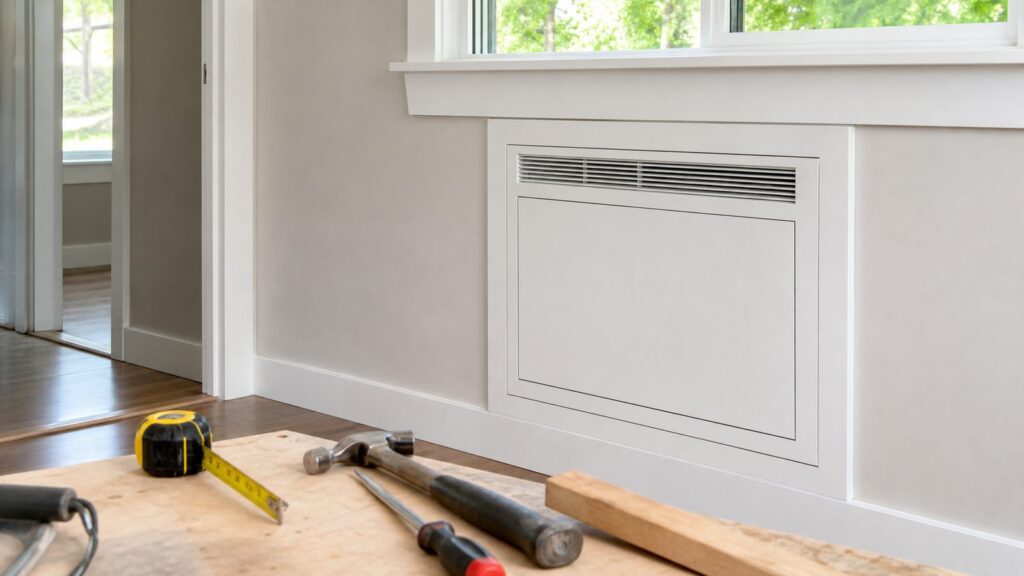
The best wall air conditioner cover is not always the prettiest one or the thickest one. It is the one that matches how your unit is used. For most cooling-only through-the-wall air conditioners, an insulated interior cover is the best choice for winter drafts and a cleaner room appearance. For exterior debris, a breathable mesh or top-style cover is safer than a tight plastic wrap. For a remodeled kitchen, bath, den, or bedroom, a removable custom panel can make the unit look intentional while still allowing service access.
The wrong cover can create real problems. A sealed exterior wrap can trap moisture against metal and speed up rust or mildew. A decorative cabinet with too little clearance can choke airflow. A cover left on a heat-pump or PTAC-style unit can cause overheating or equipment damage. On our job sites, we treat wall AC covers as a small building-envelope detail, not just a seasonal accessory.
There is a reason this matters. ENERGY STAR notes that an improperly installed room air conditioner can leak as much air as a 6-square-inch hole. If your wall unit whistles on a windy day, leaves the room cold in January, or shows daylight around the sleeve, a cover may help. But the cover should be paired with a quick inspection of the sleeve, grille, slope, caulk, and interior trim so you are not hiding a water or air leak that needs repair.
PC Slower Than It Used to Be?
A free scan shows the junk files, broken settings and background clutter dragging Windows down - then fixes them in one click.Free scan · Windows 10 & 11Outdated Drivers Are Slowing You Down
One free scan finds every outdated or missing driver and matches the right update for your exact hardware.Free scan · exact hardware matchAs an Amazon Associate I earn from qualifying purchases.
Start With the Type of Wall AC You Have
Before buying any cover, identify the equipment. Most homeowner mistakes happen because people treat all wall air conditioners the same.
Cooling-only through-the-wall air conditioner
This is the common unit installed through an exterior wall sleeve. It cools during warm months and sits idle in winter. For this setup, a removable indoor insulated cover usually makes the most sense. It reduces drafts, hides the front grille, and keeps dust off the face of the unit while the AC is off.
#1 Best Overall

- 【Thickened Sheet Metal】Our newly upgraded through the wall air conditioner sleeve is durable, and not easy to deformation. The sheet metal is thickened, and the metal plate will not bend when handled to prevent damage in the process of use. Our AC wall sleeve has a longer life.
- 【High Quality Material】Powder coated on the wall ac sleeve protects your air conditioner from UV rays, will not fade and rust, quality galvanized steel construction will not deformation. Our wall sleeve for air conditioner can easily cope with all kinds of inclement weather.
- 【 Multifunctional 】AC sleeve for wall unit is used to prevent rain, snow, prevent rust and corrosion of your air conditioner. The through the wall ac sleeve minimizes heat loss and reduces outdoor noise entering the room, which helps to extend the service life of the through-the-wall air conditioner.
- 【Easy to Install】Install wall air conditioner sleeve in pre-cast concrete or masonary walls - 26 inch air conditioner wall sleeve to be securely fastened to wall opening before installing air conditioner. Equipped with the necessary screw components for installation (60pcs), and equipped with a 7mm small wrench and a Phillips screwdriver for easy installation. We have also assembled a 25.5 * 17.5 * 0.2 inch pearl cotton, which can be used for shock absorption in through-the-wall air conditioner to reduce noise for you.
- 【Universal Design】Our ac wall sleeve size are 25.5*17.5*15.25in, fits all standard 26-inch thru-the-wall air conditioner units. Please confirm the size of your air conditioner before purchasing. Any questions please contact us via "Order History" - "Contact Seller", we will solve your problem responsibly and give you a satisfactory answer.
Typical indoor covers are soft fabric, quilted vinyl, rigid insulated panels, or custom wood/MDF panels. Basic soft covers often run about $15 to $40. Better insulated universal covers usually land around $40 to $90. Custom decorative covers can range from $150 to $600 or more when a carpenter is matching trim, paint, cabinetry, or wall paneling.
PTAC or heat-pump wall unit
Packaged terminal air conditioners and wall-mounted heat-pump units are common in apartments, additions, guest suites, and converted spaces. If the unit provides heat, ventilation, or year-round conditioning, do not cover it unless the manufacturer specifically says it is safe and the unit is turned off and locked out. A cover can block intake and exhaust airflow, causing poor performance, overheating, or equipment damage.
Window AC installed through a wall
Some homes have a window air conditioner installed in a wall opening. This is not always correct. Through-wall units and window units handle side and rear ventilation differently. If the side louvers are buried inside a wall cavity, the unit may overheat or fail early. A cover will not fix that. In this case, have the installation reviewed before spending money on trim or a decorative panel.
The Best Wall AC Cover by Use Case
There is no single best wall air conditioner cover for every house. The right answer depends on what problem you are solving.
| Goal | Best cover type | Typical 2026 cost | Best for | Watch out for |
|---|---|---|---|---|
| Stop winter drafts | Insulated interior removable cover | $40-$90 | Cooling-only wall ACs in cold climates | Must be removed before operating the unit |
| Basic dust protection | Soft indoor fabric cover | $15-$40 | Bedrooms, offices, rentals, seasonal use | Thin covers may not stop much air leakage |
| Keep leaves and debris out | Breathable outdoor mesh or top cover | $11-$35 | Exterior grilles exposed to trees or wind-blown debris | Avoid airtight full wraps unless approved by the manufacturer |
| Improve room appearance | Custom removable decorative panel | $150-$600+ | Kitchens, baths, living rooms, finished basements | Needs service access and proper clearance |
| Low-cost utility solution | DIY rigid foam interior cover | $25-$75 materials | Garages, laundry rooms, workshops | Edges must seal cleanly without trapping water or blocking service |
Best for winter drafts: insulated interior cover
If the room feels cold around the AC in winter, start inside. An insulated cover over the room-facing side reduces convective drafts and hides the metal grille. Look for a cover with a snug perimeter, a removable design, and enough depth to clear knobs, trim, and the face of the unit.
Recommended Free Tools
Some universal indoor covers fit units up to roughly 27 3/4 inches wide by 19 inches tall by 6 inches deep and include about R-5 insulation. That is a useful benchmark, but do not buy by category name alone. Measure your actual installation.
Best for exterior debris: breathable mesh or top cover
If the exterior grille collects leaves, seeds, or wind-blown debris, use a breathable material. Full plastic or vinyl wraps can trap condensation and create a damp pocket around metal parts. That can encourage rust, mildew, mold, and pest nesting. A breathable top cover or mesh cover can reduce debris while letting the unit dry.
For a wall AC, the exterior cover also needs to respect the rear grille and sleeve. Through-the-wall units depend on the sleeve, rear grille, slope, support, baffles, and seals. Do not strap on anything that pulls the grille loose, blocks drainage, or changes the way water sheds off the wall.
Best for appearance: removable decorative panel
In kitchens, baths, and finished rooms, we usually prefer a removable panel aligned with nearby trim lines. A cover that lines up with casing, wainscot, vanity panels, cabinet rails, or built-in shelving looks more deliberate than a box stuck on the wall.
What’s actually slowing this PC down?
Pick the symptom - the matching free tool is one click away.
The key word is removable. You still need access to the unit, sleeve, filter, outlet or disconnect, and surrounding wall. A decorative cover should come off with simple fasteners, magnetic catches, a lift-off cleat, or concealed clips. Permanent adhesive is the wrong move for anything that may need cleaning or service.
How to Measure for a Wall Air Conditioner Cover
Measure the installed unit, not the model number on a website. Nominal AC sizes are not precise enough for covers, especially when older sleeves, trim rings, and wall repairs are involved.
Rank #2

- All-Weather Protection: Our heavy-duty outdoor window AC cover is designed to protect your air conditioning unit from harsh weather conditions. It helps to prevent cold air from entering and warm air from escaping the house, ensuring the indoor temperature remains comfortable.
- Triple-Layer Construction: This window air conditioner cover boasts a black waterproof outer layer, an aluminum foil mid-layer for heat reflection, and an insulating pearl cotton inner layer, offering robust protection and energy efficiency in a compact design.
- Adjustable Fit: The outside ac unit cover includes two straps with adjustable metal buckles to secure the fit, offering additional protection against wind and potential damages.
- Customizable Fit for Unique Designs: If your unit has a support bracket underneath, you can easily cut the bottom of outdoor ac cover to accommodate it.
- Perfect Size: With dimensions of 21"width x 15"high x 16"deep, please measure your AC unit before purchasing to ensure the best fit.
Use a tape measure and record five dimensions:
- Width: Measure the widest visible point, including the front grille or trim frame.
- Height: Measure from the top of the visible face to the bottom edge, including any trim lip.
- Depth: Measure how far the unit or trim projects from the finished wall surface.
- Perimeter condition: Note gaps, uneven plaster, loose caulk, or out-of-square trim.
- Clearance: Check nearby curtains, countertops, shelves, doors, towel bars, and cabinet pulls.
Add enough tolerance so the cover slides on and off without scraping paint. For soft covers, 1/2 inch of extra width and height is usually workable if the elastic or drawstring is tight. For rigid panels, we typically allow about 1/8 to 1/4 inch reveal around the trim when the panel is meant to look built in. For foam-board utility covers, cut slightly oversized, then use compressible weatherstripping to close small gaps.
Depth is where many covers fail. A cover listed as 3 inches deep will not fit a grille that projects 4 1/2 inches from the wall. Knobs, louvers, old trim rings, and sleeve flanges all count. If the cover presses hard on movable louvers or control buttons, size up or choose a custom panel.
Materials That Work, and Materials to Avoid
Quilted or insulated fabric
Quilted indoor covers are affordable, light, and easy to remove. They are a good choice for bedrooms and living areas when the main goal is draft reduction during the off-season. In kitchens and baths, choose washable fabric and avoid anything that absorbs humidity and stays damp against cold metal.
Rigid insulated panels
Rigid covers usually seal better and look cleaner than thin fabric. Foam-backed or rigid insulated products cost more, but they are useful in cold climates where drafts are obvious. They also resist sagging, which matters on wider through-wall units.
A DIY version can be made from rigid foam board, foil HVAC tape, weatherstripping, and a finished face material. Materials commonly run $25 to $75. This is practical in a laundry room, workshop, or basement. In a remodeled kitchen or bath, exposed foam board looks temporary unless it is wrapped, painted, trimmed, or hidden behind a finish panel.
Wood, MDF, PVC, or metal decorative panels
For finished rooms, a carpenter-built cover can be the best-looking option. We use moisture-resistant materials in baths and kitchens: PVC trim, sealed MDF, painted plywood, powder-coated metal, or properly primed and painted hardwood. A simple painted panel with a small reveal can disappear into the wall. A louvered or perforated panel can look like intentional millwork.
The Tool Desk
Outbyte Driver Updater FREEFix the driver behind crashes, sound loss and screen glitchesFind Drivers →Outbyte PC Repair FREEClear out junk files and repair common Windows errorsFree Scan →If the AC will ever operate with the decorative cover in place, the panel must preserve the manufacturer’s required free area and clearance. Do not guess. Decorative slots that look generous may still restrict airflow. For cooling-only units, the safer approach is to make the cover seasonal and add a visible reminder to remove it before use.
Plastic and vinyl exterior wraps
Use caution with tight exterior wraps. They may keep rain or snow off in the short term, but they can also trap moisture, block drying, and create shelter for insects or rodents. For exterior exposure, breathable, UV-resistant material is generally safer than airtight plastic. If the manufacturer of your specific unit says not to cover it, follow that instruction.
What a Cover Cannot Fix
A wall AC cover can reduce drafts, dust, and visual clutter. It cannot correct a failing sleeve, bad flashing, improper slope, rotten framing, or a unit installed against the manufacturer’s instructions.
Before covering the unit for the season, inspect the installation. On our remodel jobs, we look for:
- Failed caulk at the exterior sleeve or interior trim.
- Rust on the sleeve, chassis, or rear grille.
- Water stains below the unit or bubbling paint near the opening.
- Daylight visible around the chassis or sleeve.
- A loose exterior grille.
- A unit pitched the wrong way, sending water toward the room.
- Foam, tape, or filler that blocks drainage or service removal.
- Missing baffles or seals around the unit.
If you see water stains, active leaks, soft drywall, swollen trim, moldy odor, or rust flakes, pause the cover purchase. The wall assembly may need repair. Covers manage comfort and appearance; they are not flashing systems.
Kitchen and Bath Considerations
Wall AC covers in kitchens and baths need more care because humidity, grease, cleaning chemicals, and tight layouts change the material choice.
Rank #3

- 【Thermal Locking Trilayer Construction】Amerbro's professional air conditioner covers for outside units feature an advanced triple-layer design. The 600D Oxford outer layer is waterproof and windproof; the 2mm high-density pearl cotton provides thermal insulation; and the inner aluminum foil lining reflects heat for better temperature regulation. Together, they deliver robust defense against harsh weather — easily handling heavy snow while blocking dust, dirt, and debris to keep your AC fully protected. Outperforms standard single-layer AC covers.
- 【Find Your Perfect Fit】Designed to fit standard AC units with outside dimensions up to 20.5"W x 14.5"H x 15.5"D. The ac unit cover's interior space measures 21"W x 15"H x 16"D, providing a 0.5" clearance for easy installation. Always measure your actual unit before ordering!
- 【Easy-Fit Design Works with Mounting Brackets】No need to disassemble your AC — simply slip the cover on and tighten the straps. The sewing threads at the bottom of the window air conditioner cover is designed for easy trimming to accommodate units with support brackets. If your unit has no bracket, simply slip the ac cover for outside unit on directly
- 【Two Rust-Proof Metal Buckle and Premium-Grade Strap】While competitors compromise with brittle plastic components, we insist on military-spec metal buckles and abrasion-resistant reinforced webbing that combines extreme durability with user-friendly installation, When the straps are securely tightened, the cover stays firmly in place even in blizzard winds of 32–38 mph.
- 【StormArmor Protection】Our waterproof heavy-duty air conditioner covers for window units are designed to protect your air conditioning unit from harsh weather conditions — featuring tear-resistant fabric, UPF 50+ UV protection, and long-lasting durability. Care: wipe with a damp cloth. Do not hand wash or machine wash — gentle wiping preserves the insulation layer
In a kitchen, avoid fabric covers near cooking zones unless they are removable and washable. Grease-laden dust will collect on soft surfaces. A painted rigid panel, PVC trim surround, or powder-coated metal face is easier to wipe down. If the AC sits near cabinetry, align the cover with cabinet rails or adjacent trim so it reads as part of the room instead of an afterthought.
In a bathroom, moisture resistance matters more than texture. Fabric against a cold metal unit can hold dampness. For bath remodels, we prefer sealed edges, washable paint, PVC or composite trim, and small clearances that allow the cover to dry between uses. Do not bury an AC sleeve behind tile or permanent wall panels. The unit still needs to be removable.
For both rooms, think about service paths. Can the filter come out? Can the cover be removed without taking down a shelf? Is the outlet accessible if the unit plugs in? Can someone see the reminder tag before turning the unit on in spring? These small details prevent expensive mistakes.
Installation Tips From the Field
Use weatherstripping, not permanent adhesive
For seasonal covers, a compressible foam or rubber weatherstrip around the perimeter works better than caulk or aggressive tape. It seals drafts but lets the cover come off cleanly. Permanent adhesive often tears paint, leaves residue, or makes service harder.
Add a spring reminder
Every covered AC should have a reminder tag. Put it on the cover, thermostat, breaker, or plug: remove cover before operating AC. This is especially important in rentals, guest rooms, second homes, and houses where more than one person controls the equipment.
Keep the cover dry
Do not install a damp cover and do not store a fabric cover in a wet basement. Washable covers should be fully dry before they go back on. If you remove a cover and smell mildew, clean the cover and inspect the unit and sleeve for condensation or leakage.
Free tools Windows power users keep installed
One-click scans. No signup required.
Do not block drainage
Through-wall units shed water through the sleeve and rear side of the system. Exterior covers should not block weep paths or force water back toward the wall. If you are not sure where the unit drains, check the manual or have an HVAC technician look at it.
Cost Guide: What You Should Expect to Spend in 2026
For a simple cover, this is a small project. For a polished built-in look or sleeve repair, it can become a carpentry and HVAC job quickly.
| Project scope | Typical cost | Time required | Who should do it |
|---|---|---|---|
| Basic soft indoor cover | $15-$40 | 10-20 minutes | Homeowner or handyman |
| Insulated universal interior cover | $40-$90 | 15-30 minutes | Homeowner or handyman |
| Exterior breathable mesh/top cover | $11-$35 | 15-30 minutes | Homeowner, if safely accessible |
| DIY rigid foam interior cover | $25-$75 materials | 1-3 hours | Capable DIYer |
| Custom removable decorative panel or trim surround | $150-$600+ | Half day to 2 days | Carpenter or remodeler |
| Sleeve repair, wall repair, or water-intrusion correction | Varies widely | Half day to several days | Contractor and/or HVAC pro |
| New sleeve and through-wall AC installation | About $1,900-$4,150 | 1-3 days typical | HVAC pro and contractor |
The big cost drivers are size, indoor versus outdoor access, climate exposure, custom paint or stain matching, masonry versus framed wall construction, electrical work, sleeve condition, water damage, and whether the unit is cooling-only or a heat pump used year-round.
For comparison, simpler window AC installation data commonly ranges from about $75 to $1,200 including unit and labor. Through-wall work costs more because it involves the building envelope: wall opening, sleeve, support, slope, insulation, sealing, exterior finish, and sometimes electrical changes.
Do these 3 things before closing this tab:
1Fix the driver behind crashes, sound loss and screen glitches2Clear out junk files and repair common Windows errors3Scan for outdated or missing drivers - takes under a minuteWhen to DIY vs. When to Hire a Pro
Good DIY candidates
You can usually handle the project yourself if the unit is cooling-only, the sleeve is dry and secure, the cover is interior-only, and you are using a soft or ready-made insulated cover. A careful homeowner can measure, order, install weatherstripping, and add a reminder tag in less than an hour.
Rank #4

- 【Three Layers of Insulation for Draft Blocking】Unlike other single-layer AC covers, TOHONFOO's air conditioner covers for outside units features a three-layer structure: 600D waterproof and windproof heavy duty oxford fabric, 2mm thickened pearl cotton, and insulated aluminum foil — Heavy snow? No problem. Dust and debris? Blocked. Your AC unit stays clean, safe, season after season.
- 【Please Choose the Right Size】The inner dimensions of the ac unit covers outdoor are 21"W x 15"H x 16"D, fitting most AC units with outer dimensions of ≤20.5"Wx 14.5"H x 15.5"D . Note: Please measure your unit's width, height, and depth (including any protruding parts) before purchasing to ensure a proper fit
- 【Bottom-cut Design for Bracket Compatibility】No need to disassemble your AC — simply slip the cover on, tighten the straps, and your window air conditioner cover is ready to go. The sewing threads at the bottom form several cuttable sections, so if your unit has a support bracket underneath, you can easily cut the cover to accommodate it
- 【2 x Rust-Proof Metal Buckle & 106.5"Adjustable Strap】Compared to the breakable plastic buckles and flimsy straps used in others, we use durable metal buckles that won't break and reinforced straps that can withstand harsh weather while being easier to install, When the cover is snugly fitted and the straps are securely tightened, it holds strong against winds of 32–38 mph
- 【All Weather Protection】 Our waterproof heavy-duty air conditioner covers for window units are designed to protect your air conditioning unit from harsh weather conditions — rain, snow, wind, and even harsh UV rays (UPF 50+). Built with anti-aging, tear-resistant fabric for lasting durability. Care: wipe with a damp cloth. Do not hand wash or machine wash — gentle wiping preserves the insulation layer
A DIY rigid foam cover is also reasonable for utility spaces. Use clean cuts, foil HVAC tape on exposed foam edges, and compressible weatherstripping. Avoid sealing the unit so tightly that it cannot be removed or inspected.
Call a pro when the wall is part of the problem
Hire a contractor, HVAC technician, or both if you see water stains, rust, loose exterior components, missing support, damaged drywall, masonry cracks, electrical concerns, or evidence that the unit is pitched toward the room. Also hire help if the cover needs to be integrated into cabinetry, tile, built-ins, or finished millwork.
Exterior work above the first floor is another pro situation. A $25 cover is not worth a ladder injury or a damaged exterior grille. In condos, apartments, HOAs, and historic districts, check building rules before changing the exterior appearance. Some jurisdictions and buildings restrict window and wall AC installations, brackets, exterior projections, or facade changes.
Safety, Code, and Permit Notes
A simple removable indoor cover usually does not require a permit. You are not changing the structure, electrical system, refrigerant circuit, or exterior wall assembly. Still, the cover must not create a fire, airflow, or service-access hazard.
Permits and code questions come into play when the project expands beyond a cover. Cutting a new wall opening, replacing a sleeve, altering masonry, adding electrical circuits, changing exterior supports, or installing a new through-wall AC is construction work. The International Residential Code includes requirements for heating and cooling equipment and appliances, and manufacturer instructions are part of a compliant installation. In practical terms, that means the sleeve must be sound, the grille secure, clearances maintained, and the equipment installed as listed.
For apartments and multifamily buildings, also check lease terms, building management rules, and local requirements. Some cities have rules for safely supporting window or wall units. If the exterior face is visible from the street, your HOA or historic district may care about the color, grille, projection, or cover.
Our Practical Buying Checklist
Use this checklist before you buy:
- Confirm the unit is off-season cooling-only, not a heat pump or PTAC that may run.
- Measure width, height, projection depth, and trim irregularities.
- Choose indoor insulation for drafts and exterior breathability for debris.
- Avoid airtight exterior plastic unless the manufacturer approves it.
- Use moisture-resistant materials in kitchens and baths.
- Keep the cover removable for cleaning, filter access, and service.
- Inspect sleeve caulk, grille, rust, slope, and water staining before covering.
- Add a visible reminder to remove the cover before using the AC.
If you want the best overall answer for most homes, choose a fitted insulated interior cover for a cooling-only through-wall AC, then inspect and seal the sleeve perimeter properly. If the room is being remodeled, upgrade from a generic soft cover to a removable finish panel that aligns with the surrounding trim. That gives you comfort, service access, and a finished look without compromising the equipment.
Frequently Asked Questions
Should you cover a through-the-wall air conditioner in winter?
Yes, if it is a cooling-only unit that will stay off for the season. An insulated interior cover can reduce drafts, dust, and heat loss. Do not cover a heat-pump or PTAC unit that may run in winter.
Is an indoor or outdoor wall AC cover better?
For drafts and room appearance, an indoor insulated cover is usually better. For leaves and exterior debris, use a breathable outdoor mesh or top cover. Avoid tight exterior plastic wraps that trap moisture.
Can a wall air conditioner run with a cover on it?
No. A cover can block intake, exhaust, or heat transfer and may damage the equipment. Remove the cover before operating the AC, and add a reminder tag where it will be seen.
How do I measure for a wall air conditioner cover?
Measure the visible width, height, and projection depth of the installed unit, including trim, grille, knobs, and sleeve flanges. Do not rely only on the nominal AC size or model category.
Do air conditioner covers cause mold or rust?
They can if they trap moisture. Tight exterior vinyl or plastic covers are the common concern. Breathable exterior covers and removable indoor covers are safer when the unit and sleeve are dry.
Do I need a permit to install a wall AC cover?
A removable indoor cover usually does not need a permit. A new sleeve, new wall opening, electrical work, exterior support change, or through-wall AC installation may require permits and code-compliant installation.
Quick Recap
Product prices and availability are accurate as of the date/time indicated and are subject to change. Any price and availability information displayed on Amazon at the time of purchase will apply.

