The Tool Desk
Outbyte PC Repair FREERepair Windows errors before they cause bigger problemsFix Now →Outbyte Driver Updater FREEScan for outdated or missing drivers - takes under a minuteDriver Scan →Some links on this page are affiliate links: if you buy through them we may earn a commission, at no extra cost to you.
The best air freshener for a basement is not a lavender plug-in, a candle, or a spray can. In most musty basements, the real fix is a moisture-control setup: a $10 to $25 hygrometer, a properly sized dehumidifier set around 45% to 50% relative humidity, activated carbon for odor polishing, and repair of whatever is letting water or damp air into the space.
On our job sites, a musty basement smell usually points to damp concrete, wet framing, old carpet, cardboard storage, crawlspace air, foundation seepage, or a hidden wall cavity that has stayed above safe humidity for too long. Fragrance can cover that smell for a few hours. It does not dry the sill plate, stop vapor drive through a slab, clean moldy drywall, or fix a downspout dumping water beside the foundation.
As an Amazon Associate I earn from qualifying purchases.
If your basement smells musty, buy in this order: humidity meter first, dehumidifier second, odor absorber or HEPA/carbon purifier third. If the smell returns after rain, follows a leak, or comes from finished walls or flooring, treat it as a building problem before treating it as an air-freshener problem.
Best Basement Odor Solution: A Ranked System, Not Just a Product
Basement odors need a source-control approach. A shopping list alone can waste money because the same smell can come from four different problems: damp air, wet materials, active water entry, or sewer/soil gas. Each calls for a different fix.
#1 Best Overall

- Semiconductor dehumidifiers use thermoelectric cooling to remove moisture from the air. They create a drier, more comfortable environment by reducing humidity and improving air quality.
- Our home dehumidifier features intelligent auto-shutoff, automatically powering down when the water tank is full. Set it and forget it, knowing your dehumidifier is working efficiently and safely, giving you true peace of mind.
- Our dehumidifier features a captivating 7-color ambient light, allowing you to bathe your room in a spectrum of soothing hues. Choose from a calming blue, energizing green, romantic red, and more – easily select the perfect color to create your desired atmosphere and enhance your living space. Dehumidify in style and set the perfect mood, every time.
- Sleep Mode creates the perfect sleep sanctuary. The dehumidifier's atmosphere lights automatically turn off, and noise fades to a whisper. Experience truly undisturbed dehumidification for a night of perfect rest.
- Elevate your home's comfort and style with our sleek and compact dehumidifier. Designed to seamlessly blend into any space, from the living room and bedroom to the bathroom, basement, and even your RV. Its modern aesthetics and space-saving footprint make it the perfect dehumidification solution for every corner of your home.
Best Overall: ENERGY STAR Dehumidifier With Continuous Drain
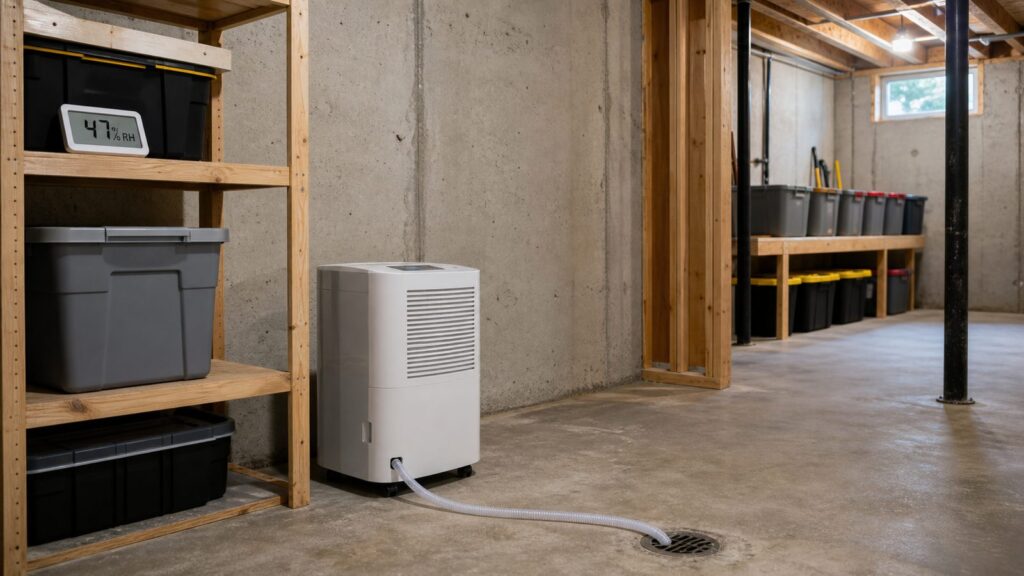
For most damp basements, the best “air freshener” is a 35- to 50-pint dehumidifier with a continuous drain hose. In 2026, common 50-pint consumer basement units run about $180 to $300 at national retailers. Pump models cost more, but they solve a common layout problem: no nearby floor drain. A pump can lift condensate to a laundry standpipe, utility sink, or approved drain point.
Set the unit around 45% to 50% relative humidity. Lower settings often waste electricity and can over-dry wood trim or stored furniture. Higher settings may allow mildew in cool corners, behind boxes, or along north-facing foundation walls. If the basement is often below about 65 degrees Fahrenheit, choose a model rated for low-temperature operation with auto-defrost so the coil does not ice up.
Place the dehumidifier where air can move freely around it, not tight against a wall or buried behind storage. Clean the filter on schedule. If using a hose, keep a continuous slope to the drain so water does not sit in the line and create a new odor source.
Best Low-Cost Add-On: Activated Charcoal or Calcium Chloride Tubs
Odor absorber tubs and bags are useful in closets, under-stair storage, utility rooms, and small basement zones. Basic odor absorbers usually cost about $5 to $15 per tub or bag. DampRid-style 18-ounce activated-charcoal buckets are commonly marketed for roughly 300 square feet and up to about 60 days.
That math matters. One bucket might help a small storage room. It will not control a 900-square-foot damp basement with foundation seepage. In an actively damp basement, these products fill quickly and become an ongoing operating cost. We use them as a finishing step, not as the main fix.
Best for Finished Basements: HEPA Air Purifier With Real Carbon
A portable HEPA air purifier with activated carbon can reduce airborne particles and help polish odors after moisture is under control. In 2026, portable air purifiers range widely from about $40 to $700+, with many basement-capable units landing around $100 to $260. Commercial HEPA scrubbers can cost $500 or more.
Recommended Free Tools
For odor work, look for real activated-carbon media, not a thin token carbon sheet. Carbon quantity matters. A purifier can improve the air, but it cannot dry damp carpet pad, insulation, drywall paper, wood framing, or concrete. If the basement still runs above 50% relative humidity most of the time, a purifier is supporting equipment, not the solution.
Best for Persistent Odor: Contractor Moisture Inspection
If the smell returns after cleaning, gets worse after rain, or seems strongest near finished walls, baseboards, carpet, sump pits, or mechanical equipment, bring in a qualified contractor or remediation professional. Hidden moisture behind drywall and under flooring is where homeowners lose the most money by waiting.
A good inspection should include exterior drainage, gutters, downspouts, grading, sump discharge, foundation cracks, slab moisture, crawlspace connections, HVAC condensate lines, plumbing leaks, and finished-wall cavities. Replacing carpet or repainting drywall before finding the moisture source often means paying twice.
Basement Odor Product Comparison and 2026 Costs
The right purchase depends on the size of the basement, the measured humidity, and whether materials are already wet. Use this table as a practical starting point.
Quick wins for a faster PC:
Clear out junk files and repair common Windows errorsFree Scan →Scan for outdated or missing drivers - takes under a minuteDriver Scan →Repair Windows errors before they cause bigger problemsFix Now →| Solution | Typical 2026 Cost | Best Use | Limitations |
|---|---|---|---|
| Digital hygrometer | $10-$25 | Measuring relative humidity before and after changes | Does not fix odor by itself |
| Activated charcoal or moisture absorber tub | $5-$15 each | Small storage rooms, closets, mild residual odors | Not enough for a damp basement or water intrusion |
| 35- to 50-pint dehumidifier | $180-$300 | Most damp residential basements | Needs drainage, maintenance, and correct sizing |
| Dehumidifier with pump | Often near the upper end of consumer pricing | Basements without a nearby floor drain | More parts to maintain; pump failure can stop drainage |
| Large basement or crawlspace dehumidifier | $500-$1,200+ | Large areas, crawlspace connections, high moisture load | May need ducting, dedicated power, or pro installation |
| HEPA/carbon air purifier | $100-$260 common; $500+ commercial | Finished basements, dust, odor polishing | Does not dry wet materials or stop mold growth |
| Mold remediation | Often $1,223-$3,756; severe basements can exceed $6,000 | Visible mold, recurring odor, contaminated porous materials | Must be paired with moisture correction |
| Basement waterproofing | Commonly $1,500-$7,000; larger systems higher | Recurring seepage, wet walls, groundwater issues | Cost varies sharply by access, depth, drainage, and finishes |
Start With a 72-Hour Humidity Check
Before buying a big appliance, put a digital hygrometer in the basement for 48 to 72 hours. Check it morning and evening. If the basement has rooms or finished areas, move the meter around: near the foundation wall, beside stored boxes, near the sump pit, and in the center of the room.
If relative humidity stays above 50% most of the time, fragrance is the wrong first purchase. Basements often feel “cool” rather than wet, but cool air can still hold enough moisture to support mildew on paper, wood, dust, and fabric. Many construction pros target 40% to 50% relative humidity in basements, with 45% to 50% being a practical balance for comfort, mold prevention, and energy use.
After installing a dehumidifier, keep measuring. A good setup should pull the basement down into the target range within a few days under normal conditions. If it cannot, the unit may be undersized, the drain may be blocked, outdoor air may be leaking in, or water may still be entering through the foundation.
Rank #2
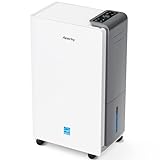
- 【ENERGY STAR 25 ≠ ENERGY STAR Most Efficient 2025】Don't fall for competitors' word games. With only 2.6% of ENERGY STAR models earning "Most Efficient 2025" title, these options are exceptionally rare on the market. RHEA-001 is one of the few to truly hold this top-tier certification. Many brands use misleading phrases like "Energy Star Efficient 25" or "Energy Star 25" to imply a standard they haven't met. Choosing them is a risk.With AEOCKY, you get verified performance and the peace of mind of authentic, top-tier efficiency.
- 【True ENERGY STAR Most Efficient 2025 Compressor Dehumidifier for homes (5500 sq.ft)】80 pint/day in the humid Mid-summer (95℉, 95%RH); 56 pint/day in the warm, damp basement (86℉, 80%RH)! Among all ENERGY STAR dehumidifiers, only an elite 2.6% earn the ENERGY STAR "Most Efficient 2025" certification. It is this top-tier capability that allows the RHEA-001 to completely outperform its competitors in both performance and energy efficiency.(Dehumidification capacity≠Water Tank Volume)
- 【Top-Rated Efficiency - Save More Energy】Breaking industry barriers, one of the first brands to achieve ENERGY STAR Most Efficient 2025. Compared to non-Energy Star inefficient products,RHEA-001 efficiency is increased by ≤50%, saving ≤1000 on electricity bills annually (running 24/7 year-round). Energy efficiency is the domain of absolute dominance for our RHEA-001. This relentless pursuit of technological innovation in efficiency is the ironclad moat that has established AEOCKY as the leading dehumidifier brand.
- 【Powered by Exceptional Core Components】AEOCKY utilizes Cutting-Edge High-Efficiency Rotor Compressor Pro+ to RHEA-001, whose core components evaporator and condenser adopt“3+2”structure with one more row than others. Never use aluminum tubes, we unswervingly use 7mm diameter high-tooth internal thread pure copper pipes.We also equipped with advanced blue hydrophilic aluminum foil, achieving breakthrough heat exchange efficiency meeting the most rigorous energy efficiency standards in history.
- 【Cutting-Edge Smart Humidity Control for Unprecedented Precision】Newly designed architecture breaks industry's decade-long lack of innovation, enabling it have high-performance chip. Millisecond-level dynamic detection keep humidity within ideal range,with full-stack proprietary humidity compensation algorithm ensuring RHEA-001 exceeds industry standard for humidity accuracy.Exclusive power-off memory function can be used with smart socket, automatically resuming function after power restoration, suitable for smart home or special area like RV.
Why Musty Basements Smell Bad
That classic basement smell is usually not “old house smell.” It is often microbial volatile organic compounds from damp materials, mold, mildew, soil gas, wet carpet, cardboard, wood framing, stagnant air, or a mix of several sources. The smell can remain even when visible mold is limited because odors often come from hidden surfaces and porous materials.
Common sources include:
- Wet carpet pad or area rugs over concrete
- Cardboard boxes stored against foundation walls
- Wood shelving with poor airflow behind it
- Drywall or insulation in contact with damp masonry
- Condensation on cold ducts, pipes, or foundation surfaces
- Disconnected or poorly routed HVAC condensate lines
- Sump pits without tight covers
- Crawlspace air moving into the basement
- Downspouts discharging too close to the foundation
- Negative grading that sends rainwater toward the house
The EPA’s mold guidance is direct on the larger point: moisture problems need to be fixed, and moldy odors should not remain after proper cleanup. If the smell keeps returning, the cleanup or the moisture correction is incomplete.
Decision Tree: Match the Product to the Odor Pattern
If the Basement Is Dry but Stale
If humidity is consistently below 50%, no materials are wet, and the smell is mild, start with cleaning and airflow. Remove cardboard, vacuum dust, clean hard surfaces, and run the HVAC fan or a basement-rated air purifier. Add activated charcoal in closets or storage zones.
This is the one case where odor absorbers may be enough. Still, avoid scented sprays as the main strategy. They add fragrance without telling you whether the building is actually dry.
If the Basement Is Humid but Not Leaking
If relative humidity sits above 50% but you do not see active water, buy a dehumidifier before buying fragrance. For many homes, a 35- to 50-pint unit with continuous drain is the right range. Keep doors open between basement rooms when possible so the unit can treat the whole area.
Do these 3 things before closing this tab:
1Clear out junk files and repair common Windows errors2Scan for outdated or missing drivers - takes under a minute3Repair Windows errors before they cause bigger problemsIf the basement is large, divided into rooms, connected to a crawlspace, or used as finished living space, you may need a larger unit, better return-air pathways, or a dedicated crawlspace/basement dehumidifier. Commercial and crawlspace units commonly run $500 to $1,200+.
If the Smell Gets Worse After Rain
Rain-related odor is a drainage clue. Check gutters, downspouts, grading, window wells, stairwell drains, sump discharge, foundation cracks, and the joint where the wall meets the slab. A dehumidifier can help the air recover after a storm, but it should not be asked to solve active water entry by itself.
Many basement waterproofing projects fall between $1,500 and $7,000, with full perimeter systems running higher. A standard sump pump installation often lands around $600 to $2,500, with many jobs near $1,200. More complex excavation and drainage integration can reach $3,500 to $4,000+.
If the Odor Is Sharp, Sewery, or Chemical
Do not treat sewer-like odors with air freshener. Check floor drains, traps, ejector pits, sump covers, plumbing vents, and any abandoned drain lines. Dry traps can let sewer gas enter the basement. Soil gas and sewer gas problems need diagnosis, not perfume.
Crashes, No Sound, or Screen Glitches?
Random freezes, missing sound and display glitches usually trace back to one bad driver. Find and replace yours safely.Free scan · under a minuteWindows Errors? Fix Them Before They Spread
Repair common Windows errors and clear accumulated junk for a smoother, more stable PC - no reinstall needed.Free scan · no reinstallIf the smell is chemical or fuel-like, leave the area and call the appropriate utility, HVAC technician, plumber, or emergency service. A “musty basement” article should not be used to troubleshoot gas, fuel oil, solvent, or combustion odors.
What We Would Buy First
For a typical 700- to 1,200-square-foot basement with a musty smell and no active flooding, our first purchase would be a digital hygrometer and a 50-pint ENERGY STAR dehumidifier with continuous drain capability. If no gravity drain is available, we would choose a pump model. That setup usually costs about $200 to $325 before any hoses, fittings, or electrical work.
Next, we would add activated charcoal in storage zones and remove paper-based storage from the floor. Plastic bins with lids are better than cardboard, but even plastic bins need air space around them. Leave several inches between stored items and foundation walls so corners can dry.
Rank #3

- 【80 Pint Capacity for Up to 5,000 Sq.Ft Spaces】Quickly removes excess moisture from basements, bathrooms, bedrooms, RVs, and other large living areas, delivering 80 pints per day (95°F, 90% RH).conditions. Designed as a powerful dehumidifier for basement, home, and large spaces, it helps eliminate damp air, condensation—and pet-related odors caused by excess humidity. Even during humid seasons, it works continuously to maintain a dry, comfortable, and healthier indoor environment.
- 【90° Auto Swing Airflow for Even Coverage】Distributes dry air evenly across the room, helping cover every corner and reduce uneven humidity levels. The 90° auto swing function enhances air circulation and drying efficiency, bringing a level of airflow distribution typically not available in standard models. It delivers balanced airflow without direct drafts, creating a more comfortable indoor environment.
- 【30%–80% Smart Humidity Control for Flexibility】 Unlike many standard dehumidifiers limited to a minimum of 40% RH, this unit can reach as low as 30%, offering a wider and more flexible control range. Engineered with advanced technology, it adapts to real-world conditions and maintains a stable, comfortable humidity level across different environments—including basements, bathrooms, bedrooms, closets, RVs, and other high-humidity areas.
- 【Energy Star Certified for Efficient Operation】Engineered for consistent, real-world performance, this ENERGY STAR certified dehumidifier delivers reliable results across everyday conditions—not just controlled test settings. It helps minimize unnecessary energy use while maintaining strong dehumidification efficiency, supporting lower operating costs over time.
- 【AI-Smart Protection System for Reliable Performance】Equipped with intelligent sensing technology, this dehumidifier detects frost buildup and abnormal operation in real time. It automatically activates auto defrost and overload protection to maintain stable performance and help prevent potential damage. With AI-assisted monitoring, it optimizes operation to reduce unnecessary energy use while ensuring reliable performance in low-temperature and extended-use environments.
For a finished basement used as a family room, bedroom, office, or gym, we would add a HEPA/carbon air purifier after confirming humidity control. Choose capacity based on the actual room size and replacement filter cost. A cheaper purifier with expensive filters can cost more over two years than a better unit with reasonable maintenance costs.
Free tools Windows power users keep installed
One-click scans. No signup required.
Products to Avoid or Use Carefully
Scented Sprays, Plug-Ins, and Candles
These can mask odors temporarily, but they do not remove moisture or contaminated materials. In a basement, they can also make diagnosis harder because they cover the pattern of the smell. If you use fragrance, use it only after the basement is dry, clean, and stable.
Ozone Generators
Do not use ozone generators as a routine basement odor solution. EPA guidance warns that ozone at levels meeting health standards is not effective at removing many odor-causing chemicals, while higher ozone levels create health risks. Ozone also does not fix wet drywall, damp framing, foundation seepage, or mold growth.
Small Moisture Absorbers in Large Damp Basements
A $10 tub that claims up to 300 square feet can be helpful in a closet. In a wet basement, it becomes a consumable bandage. If you are replacing tubs constantly, the basement needs powered dehumidification or water-source correction.
Cleanup Steps That Actually Reduce Odor
Start by removing odor reservoirs. Cardboard, paper, fabric, old rugs, and upholstered furniture can hold musty smells even after the air improves. Move storage off the floor, leave air gaps around walls, and discard items that stayed wet and cannot be cleaned.
For hard surfaces, clean dust and residue before applying any cleaner. Mold on small hard-surface areas can often be handled by homeowners using appropriate protective gear and ventilation. If porous materials such as carpet pad, ceiling tiles, insulation, or drywall are moldy or stayed wet, removal is often the more reliable path.
After a clean-water leak, dry materials quickly. Use fans, dehumidification, and documentation. Take photos and record moisture conditions before disposing of damaged items for insurance purposes. If the water came from sewage, floodwater, or a contaminated source, treat the cleanup as a higher-risk job and bring in a qualified remediation crew.
When to DIY vs. When to Hire a Pro
DIY is reasonable when the basement has mild musty odor, no visible mold beyond a small isolated area, no active water entry, and humidity can be brought below 50% with a consumer dehumidifier. A homeowner can measure humidity, clean hard surfaces, remove cardboard, improve storage layout, install odor absorbers, and run a portable dehumidifier.
Hire a pro when visible mold covers more than about 10 square feet, the smell follows flooding or sewage backup, the odor keeps returning, or the problem involves HVAC equipment, finished walls, carpet, insulation, or recurring water entry. Also call a contractor if basement odor appears after remodeling. New flooring, tight wall finishes, and poor vapor control can trap moisture that used to dry to the room.
What’s actually slowing this PC down?
Pick the symptom - the matching free tool is one click away.
Professional mold remediation costs vary. 2026 national figures commonly put typical jobs around $1,223 to $3,756, with averages near $2,368. Basement-specific ranges can run about $480 to $2,995 for smaller jobs, while partial-basement mold may reach $1,500 to $6,000. Severe whole-basement infestations can exceed $6,000 to $15,000.
Independent reader supportYour contribution helps us test, update, and keep practical guides available for everyone.Construction Details That Decide Whether the Smell Comes Back
Basement odor control is construction work when water is entering the building assembly. We look outside first because many basement problems start at grade. Downspouts should discharge well away from the foundation, gutters should be clear, soil should slope away from the house, and paved surfaces should not pitch water toward the wall.
Inside, we check the sump pit, perimeter drain performance, wall cracks, slab cracks, pipe penetrations, and the cove joint at the base of the wall. In finished basements, we pay close attention to baseboards, lower drywall, flooring transitions, exterior corners, and closets. Those areas can stay cool and still, which makes them good odor traps.
Rank #4

- 【Reduce humidity - Enhance comfort】:Massive Capacity + Wide Coverage. This dehumidifier has dehumidification capacity ranging 45- 80 pints—outperforming standard units while covering 4,500 sq. ft. of living space. Great dehumidifier for basements, large house, garages, bedroom, bathroom and gyms where excess humidity triggers cause unpleasant odors and discomfort. The result? A noticeably drier, fresher, and more comfortable environment for your entire family.
- 【90° Adjustable Airflow for Targeted Drying】:Dehumidifier 90° adjustable outlet gives you precise control over where dry air goes—direct it into stuffy corners to eliminate trapped moisture, angle it upward to avoid direct skin contact, or point it straight at wet laundry for faster drying. With drying mode activated, this dehumidifier for bathroom becomes a powerful clothes‑After each shower or watering, it can effectively dry the towels and solve the problem of slippery floors.
- 【Library‑Level Quiet Operation】:At just 40 dB—quieter than a library—this unit lets you work, rest, or sleep without distraction. Great ideal choice among dehumidifiers for home use. The self‑developed rotary compressor saves 55% internal space for smoother airflow, while upgraded ventilation ducts minimize operational noise. One‑tap sleep mode further reduces sound to near‑silent levels, ensuring uninterrupted rest throughout the night.
- 【Smart Sensors with Auto Defrost & Overload Protection】: Dehumidifier built-in intelligence monitors coil frosting and system stress in real time. When risks are detected, the unit automatically activates defrost cycles and overload cutoffs—preventing breakdowns and extending component life. This makes it a reliable dehumidifier for basement, garages, and other high-humidity zones where continuous run-time is common.
- 【Energy Star Certified for Maximum Savings】: Meeting strict Energy Star standards, this efficient dehumidifier with drain hose option delivers powerful dehumidify while consuming minimal electricity. Reduced energy usage lowers your monthly bills and reduces wear on internal components—giving you long-term durability and immediate cost savings.
Vapor control matters too. Building code requirements vary by jurisdiction and assembly type, but basement and crawlspace work can trigger rules for vapor retarders, insulation, ignition barriers, drainage, ventilation, egress, electrical work, and permits. If you are opening walls, installing a sump pump, adding interior drainage, changing electrical circuits, or finishing a basement, check local requirements before work begins.
Simple Basement Odor Plan for Homeowners
Use this sequence before spending money on decorative fragrance:
- Measure relative humidity for 48 to 72 hours with a $10 to $25 hygrometer.
- Remove cardboard, damp rugs, fabric storage, and items touching foundation walls.
- Clean dust and residue from hard surfaces.
- Install a 35- to 50-pint dehumidifier if humidity is above 50% most of the time.
- Route the drain hose with continuous slope or use a pump model where gravity drainage is not available.
- Set the dehumidifier to about 45% to 50% relative humidity.
- Add activated charcoal in small storage zones.
- Add a HEPA/carbon purifier for finished rooms or lingering airborne odor.
- Recheck humidity after 72 hours and again after the next heavy rain.
- Call a pro if odor returns, visible mold is larger than about 10 square feet, or water entry is active.
That sequence gives you useful information at every step. If the smell disappears and humidity stays stable, you solved the right problem. If the smell returns after rain or humidity will not drop, the basement is telling you the issue is bigger than air freshener.
Bottom Line
The best air freshener for a musty basement is a dry basement. Start with measurement, control humidity below 50%, remove odor-holding materials, and use activated carbon or HEPA/carbon filtration as finishing tools. Avoid ozone generators and do not rely on scented products to hide a moisture problem.
For a mild stale odor, a hygrometer, cleaning, charcoal, and better airflow may be enough. For a true musty basement, a properly drained dehumidifier is usually the core purchase. For odor that returns after rain, appears in finished walls, follows a water event, or comes with visible mold, the best next step is professional moisture diagnosis before the repair bill grows.
Frequently Asked Questions
What is the best air freshener for a musty basement?
For most musty basements, the best solution is a dehumidifier set around 45% to 50% relative humidity, followed by activated charcoal or a HEPA/carbon air purifier. Scented sprays only mask the smell.
Will an air purifier remove basement musty smell?
A HEPA air purifier with real activated carbon can reduce airborne particles and some odors, but it will not dry damp walls, carpet, insulation, or concrete. Fix humidity and water entry first.
Is DampRid enough for a basement?
DampRid-style tubs can help small closets or storage zones, but they are not a substitute for a powered dehumidifier in a damp basement. One 18-ounce bucket is commonly marketed for about 300 square feet and up to about 60 days.
What humidity level helps stop basement mold and mildew smell?
Keep basement relative humidity below 50%. Many pros target 40% to 50%, with 45% to 50% being a practical setting for most basements.
The Tool Desk
Outbyte PC Repair FREERepair Windows errors before they cause bigger problemsFix Now →Outbyte Driver Updater FREEFix the driver behind crashes, sound loss and screen glitchesFind Drivers →Why does my basement smell musty after rain?
A rain-related smell usually points to water entry or drainage problems, such as poor grading, clogged gutters, short downspouts, foundation cracks, window wells, sump issues, or moisture moving through the slab or wall.
Should I use an ozone generator for basement odors?
No. Ozone generators are a poor routine recommendation for basement odors. They do not fix moisture or moldy materials, and higher ozone levels can create health risks.
Quick Recap
Product prices and availability are accurate as of the date/time indicated and are subject to change. Any price and availability information displayed on Amazon at the time of purchase will apply.

