Some links on this page are affiliate links: if you buy through them we may earn a commission, at no extra cost to you.
The best under-deck storage idea is not simply the biggest box you can fit below the joists. It is the storage plan that keeps rain out, lets damp air escape, gives you a wide enough opening to use the space, and still leaves the deck structure visible enough to inspect and maintain.
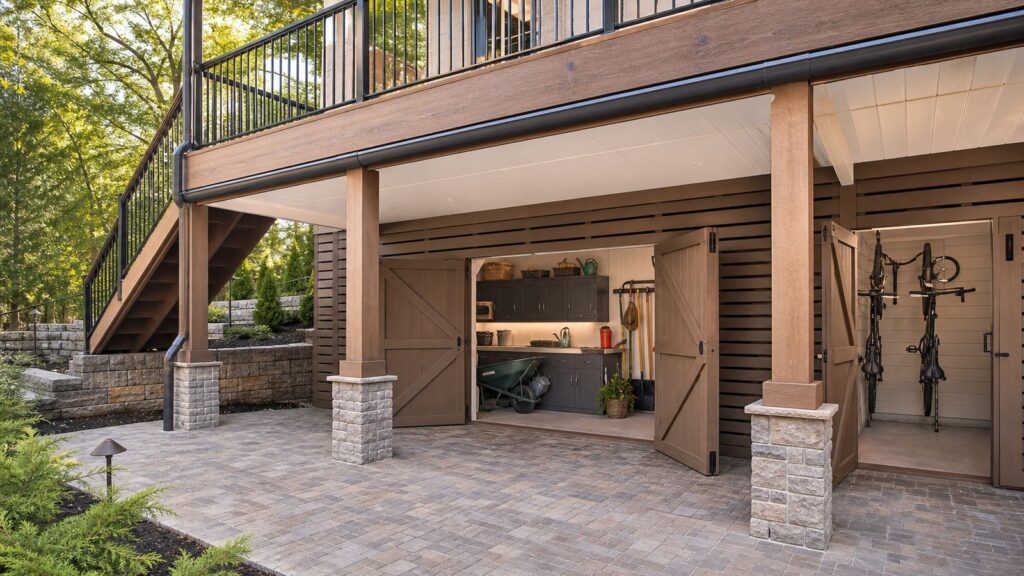
On our job sites, we usually treat under-deck storage as a layered system: first the ground surface, then overhead water management, then ventilation, then pest control, then the actual cabinets, bins, racks, or drawers. Skip those first layers and the space quickly becomes a wet catchall for mildew, rust, and leaves.
As an Amazon Associate I earn from qualifying purchases.
What’s actually slowing this PC down?
Pick the symptom - the matching free tool is one click away.
Here is the fast decision framework. If your deck is less than about 30 inches high, think shallow pull-out drawers, rolling totes, or low bins. If it is 30 to 60 inches high, ventilated skirting with properly sized access doors usually makes the most sense. If it is tall enough to walk under, start with an under-deck drainage system or ceiling, then add cabinets, racks, or a small shed-style storage zone. In wet climates, drainage comes first. In hot, dry, wildfire-prone, coastal, or termite-heavy regions, material choice and ventilation matter just as much as looks.
Start With the Under-Deck Conditions, Not the Storage Product
Before choosing between lattice, drawers, cabinets, or deck boxes, measure the space and look at how water currently moves. A good under-deck storage area should have a stable floor, a drainage path, airflow around framing, and access to structural and mechanical components.
#1 Best Overall

- Deck drainage system: Recommend Installing Muzata deck water drain membrane M081 with gutter downspout M078 to funnel rain and liquid into the gutter. By effectively managing water, helps in maintaining the structural and aesthetic quality of your deck for years to come
- High quality HDPE: Muzata M081 is made of 0.5mm thickness HDPE, is wear resistant, solid and durability, withstands prolonged exposure to a wide range of temperatures and environmental conditions without deteriorating. The completely waterproof material feature is ideal for keeping the underneath deck area dry easier
- Increased deck longevity: Its contribution to extending the lifespan of the deck by preventing water leakage and accumulation, safeguards the deck substructure from moisture, prevent structural instable issues caused by wood rot, reducing maintenance costs and the need for repairs
- Easy installation: Muzata HDPE Water drain membrane is lightweight, flexible, easier to install and fit into various configurations of deck designs. One pack membrane is 20'' width, 50ft length, it suitable for 16'' joist spacing deck system, detailed installation steps are shown in the chart
- Complete deck and pergolar system accessories: Muzata provide different functions deck accessories, help you install deck system easier. Adjustable Deck Foundation Base Support M031 and M059, suitable for floating deck project. Deck Starter Clips M028 and Hidden Fasteners M029 is sepecial deck nails for seamless deck installation
Measure the clear height from finished grade to the lowest obstruction, not just to the bottom of the joists. Pipes, beams, diagonal bracing, lighting, hose bibs, and low girders can reduce the usable height. For width, measure between posts and note where stairs, downspouts, utilities, and grade changes interrupt the area.
For most storage projects, the floor should be compacted gravel, pavers, concrete, or a well-drained slab. Bare soil raises humidity, tracks mud, grows weeds, and invites pests. A 3- to 4-inch compacted gravel base is often enough for bins, bikes, and garden tools. For cabinets, rolling equipment, or a small shed, pavers or concrete usually perform better.
The Tool Desk
Outbyte PC Repair FREEClear out junk files and repair common Windows errorsFree Scan →Outbyte Driver Updater FREEFix the driver behind crashes, sound loss and screen glitchesFind Drivers →Do not block deck posts, beams, ledger flashing, crawlspace vents, dryer vents, HVAC clearances, gas meters, plumbing cleanouts, hose bibs, downspouts, or yard drainage. If the deck attaches to the house, keep future access to the ledger area in mind. A beautiful enclosure that hides a leak or makes repairs impossible is a bad storage upgrade.
1. Waterproof Drainage Ceiling With a True Dry Storage Zone
For a second-story deck or any deck tall enough to stand under, a waterproof under-deck drainage system is usually the strongest storage upgrade. It collects rainwater that falls through the deck boards and directs it to gutters and downspouts instead of letting it drip onto cushions, tools, bikes, or cabinets.
There are two common approaches. Above-joist drainage membranes are installed before the deck boards go down, so they are best during new deck construction or a full deck-board replacement. They protect the framing more directly because the water is moved away before it sits on top of the joists. Under-joist systems attach below an existing deck and are usually easier to retrofit, though the framing above may still see moisture.
For storage, the key details are slope, cleanouts, and edge control. The drainage system needs a consistent pitch toward a gutter. Leaves, shingle grit, pine needles, and seed pods need a way out. At the house, the system must work with the ledger flashing instead of pushing water toward it. At the outside edge, the gutter needs a clean route to a downspout that does not dump water back under the storage area.
In 2026, installed under-deck drainage commonly runs about $21 to $43 per square foot for materials and labor. For a 300-square-foot deck, that puts a full installed range near $6,300 to $12,900, depending on deck height, access, system type, trim level, and whether boards must be removed. Contractor-published ranges for drainage-only retrofits often land around $1,500 to $4,000 for 200 to 300 square feet. Drainage plus basic ceiling panels may run about $5,000 to $9,000 for 300 to 400 square feet, while premium drainage and ceiling packages with lighting, fans, heaters, or screens can reach $10,000 to $18,000 for 400 to 600 square feet.
Material-only numbers are lower, but they do not tell the whole story. Some drainage systems list DIY material costs around $6 to $8 per square foot, and some membrane-style approaches can be around $2 per square foot before labor, fasteners, trim, gutters, and project-specific parts. Vinyl ceiling panels may run roughly $2.75 to $3.75 per square foot for materials only. Installed pricing climbs once you include framing, trim, gutter work, electrical, and finish details.
Best uses include patio cushions in sealed bins, seasonal decor in plastic totes, garden tools, pool equipment, bikes, and outdoor furniture covers. Keep stored items several inches below ceiling panels and away from framing so airflow is not choked off. If you add lighting, outlets, ceiling fans, or heaters, expect electrical permits and weather-rated fixtures.
2. Ventilated Deck Skirting With Oversized Access Doors
Deck skirting is the most common way to make under-deck storage look intentional. It hides bins and equipment, blocks larger animals, and cleans up the view from the yard. The mistake is treating skirting as waterproofing. Lattice, composite slats, cedar boards, and PVC panels screen the space, but they do not stop wind-driven rain unless paired with drainage above.
Good storage skirting has three traits: airflow, pest resistance, and access. We like removable panels or hinged doors near posts, ledgers, hose bibs, drain cleanouts, and utilities. For the main storage opening, size the door around the largest object you will actually move, not the pattern of the skirting. A push mower often needs a clear opening of 36 inches or more. Bikes are easier through a 42- to 48-inch opening. Large cushion bins, trash cans, and snow tools can need more width than homeowners expect.
Solid skirting can look clean, but it can also trap humidity around wood framing. If you want a more finished look, use vented panels, spaced boards, hardware cloth behind decorative openings, or screened vents near the top and bottom of the enclosure. In wet or coastal areas, use stainless or hot-dipped galvanized fasteners and hinges. In termite-prone regions, avoid burying wood skirting into soil and keep inspection visibility around posts and foundation areas.
Rank #2

- Effective protection: This downspout suits deck systems with 12 "or 16" joist spacing. Water from the deck is diverted by an under-deck drainage system, preventing the deck timbers from being affected by moisture
- High-quality material: Our downspout is made of PE with strong weather resistance. It can withstand severe weather and is used in environments ranging from -50 ℃ ~ 110 ℃. The completely waterproof material feature keeps the deck dry even in heavy rain
- Easy installation: Gutter Downspout is designed to be easy to cut to the great length for your deck, measure, cut, and install for seamless drainage solutions. The cutting port is designed with cutlines, and a knife is used to make easy cuts along the cutlines. Also, tear the cutlines directly by using your hands
- Under deck drainage system: Complete underdeck drainage requires Muzata Deck Membrane M059 and Deck Downspout M078, allowing you to add a ceiling system/deck roof without worrying about waterproofing, doubling the number of outdoor living spaces you have
- Complete deck accessories: Muzata provides different deck accessories with different functions, helping you save time and effort on deck projects. Pls search: Adjustable Deck Support M031 M065, Deck Starter Clips M028 and Hidden Fasteners M029, Water Drain Membrane M059 and Gutter Downspout M078
In 2026, installed deck skirting averages around $3,000, with many projects falling between $1,600 and $4,500. Linear-foot pricing commonly ranges from about $2 to $60 depending on material, height, framing, doors, trim, terrain, and labor. Basic pressure-treated lattice is at the low end. Composite, PVC, cedar, custom doors, concealed hinges, and metal mesh details push the cost higher.
This idea works best for medium-height decks where you want to store bins, garden tools, folded furniture, pool gear, or trash and recycling cans without exposing everything to view. It is also a strong choice when curb appeal matters. Just remember that skirting controls access and visibility; drainage controls water.
3. Built-In Sliding Drawers or Pull-Out Bins for Low Decks
Low decks are hard to use because you cannot comfortably walk under them. That is where drawers, pull-out bins, and rolling storage trays earn their keep. Instead of crawling into a dark space, you bring the storage out to yourself.
This approach works best when the underside of the deck is roughly 18 to 36 inches above the finished surface. Below that, storage capacity drops quickly and ventilation becomes harder. A shallow drawer can hold small garden tools, outdoor toys, hose attachments, furniture covers, irrigation parts, or sealed seasonal bins. For anything that absorbs water, use waterproof containers with gasketed lids rather than open baskets.
The floor surface matters. Pull-out storage needs a predictable track or rolling surface. Compacted gravel can work for simple rolling totes, but pavers or a concrete strip make drawers and wheeled trays much easier to use. If the grade slopes, build the drawer box to follow the deck line while the rolling surface stays stable and drains away from the house.
For custom drawers, we typically think in modular widths: 24 inches for small tools, 30 to 36 inches for general storage, and 42 to 48 inches for wider cushions or folded furniture pieces. Use exterior-rated plywood only if it is protected and detailed properly; PVC trim boards, composite boards, aluminum framing, and pressure-treated lumber often hold up better in damp conditions. Hardware should be exterior-rated, and drawer faces should include gaps or vents so the cavity can breathe.
Do these 3 things before closing this tab:
1Clear out junk files and repair common Windows errors2Scan for outdated or missing drivers - takes under a minute3Repair Windows errors before they cause bigger problemsCosts vary widely because this is often custom carpentry. A simple DIY pull-out bin setup may cost $100 to $500 in totes, gravel, pavers, and hardware. A professionally built drawer bay with framed openings, exterior-rated slides or rollers, trim, doors, and pest screening can easily land in the $800 to $3,000 range depending on size and finish. If drainage has not been handled above, budget separately for bins that are truly weatherproof.
The biggest caution is load. Do not hang heavy drawers from deck joists without checking the framing and fastener plan. Most low-deck drawers should bear on the ground or a separate support frame, not depend on aging deck framing to carry extra storage loads.
4. Lockable Outdoor Cabinets or Shed-Style Storage Under Tall Decks
If your deck has walk-in height below it, lockable cabinets or a small shed-style storage zone can turn dead space into one of the most useful outdoor storage areas on the property. This is the right idea for power tools, pool equipment, garden supplies, sports gear, grills, folding chairs, and higher-value items that should not sit loose behind lattice.
Start with the base. A cabinet on bare dirt will settle, wick moisture, and make doors go out of alignment. Use a compacted gravel pad, pavers, or concrete. For tall resin or metal cabinets, keep the floor level within about 1/4 inch across the cabinet footprint if possible. For a walk-in shed, follow the manufacturer’s foundation requirements and check snow rating, wind anchoring, and ventilation.
Recommended Free Tools
Basic outdoor resin or metal cabinets often start around $150 to $400. Larger walk-in resin sheds can exceed $1,000 to $1,500 before foundation work, anchoring, shelving, locks, or lighting. Deck boxes are less expensive, with many consumer models ranging from about $30 to $400. Common 30- to 150-gallon resin boxes often cost roughly $25 to $200, while large lockable boxes and storage benches can run $80 to $400 or more.
Security is where many under-deck storage plans are weak. A thin plastic lock tab on a deck box is not the same as a secure storage room. For high-value items, combine lockable doors, concealed hinges, anchored cabinets, motion lighting, and hardware that cannot be removed from the outside. If tools, bikes, or power equipment are visible from the street or alley, consider solid but ventilated skirting or a lockable framed enclosure.
Rank #3

- 【Create A Dry Outdoor Space】Transform the unused area beneath your deck into a cleaner, more functional space for storage, relaxing, or outdoor activities. This under deck drainage system redirects rainwater away to help keep the area dry and comfortable
- 【Protect Against Water Damage & Wood Rot】Helps prevent moisture buildup by directing rainwater away from deck joists and beams. Reduce the risk of wood rot, decay, and costly structural repairs caused by long-term water exposure
- 【DIY-Friendly Installation With Pre-Marked Cut Lines】Designed with clear cutting guides for fast and accurate fitting. The flexible PE material can be trimmed easily with common tools, allowing homeowners to complete installation without professional equipment
- 【Fits Standard 12" & 16" Joist Spacing】Compatible with common residential deck structures. Designed to provide a flexible drainage solution for most DIY under deck projects
- 【Durable PE Material For Year-Round Outdoor Use】Made from high-density PE material, this under deck drainage system is built to withstand changing outdoor conditions. Designed for long-term performance in temperatures from -58°F to 230°F (-50°C to 110°C), it helps resist cracking, deformation, and weather-related damage
Do not store gasoline, propane cylinders, paint, solvents, fertilizers, pool chemicals, or lithium batteries in a sealed hot space without confirming safe storage conditions. Many products are sensitive to heat, freezing, ignition sources, and ventilation. If you add receptacles, chargers, lights, or a dehumidifier, use exterior-rated equipment and have the electrical work permitted where required.
5. Open Rack Systems for Bikes, Ladders, Firewood, and Garden Tools
Not everything belongs in a sealed box. Some items last longer with airflow. Bikes, ladders, rakes, shovels, hoses, kayaks, firewood, and wet garden tools often do better on open racks than in enclosed cabinets.
Quick wins for a faster PC:
Clear out junk files and repair common Windows errorsFree Scan →Fix the driver behind crashes, sound loss and screen glitchesFind Drivers →The best rack systems are simple and serviceable. Use wall-mounted tool rails on a framed backer, freestanding metal shelving on pavers, vertical bike racks anchored to blocking, or ladder hooks fastened into solid framing. For firewood, keep the rack raised off the ground, open on the sides, and located where it will not trap moisture against posts or siding. Do not stack firewood tight against the house or deck framing, especially in termite-prone areas.
Fasteners matter. Use galvanized or stainless hardware outdoors, especially in wet or coastal climates. Do not screw heavy hooks randomly into deck boards or thin trim. Hit structural framing only when the load path makes sense, and remember that a row of bikes, ladders, and loaded shelves can add real weight. If the deck framing is older, sagging, cracked, or already overloaded, use freestanding racks that bear on the ground instead.
Costs are usually manageable. A basic tool rail or wall rack may cost $25 to $150. Freestanding outdoor shelving often falls in the $80 to $400 range. A stronger custom framed rack bay with pavers, treated blocking, corrosion-resistant hardware, and skirting doors may run several hundred to a few thousand dollars depending on finish. The value is in keeping awkward items upright, dry enough, and easy to grab without turning the under-deck area into a pile.
Under-Deck Storage Cost Comparison for 2026
Actual cost depends on deck height, access, square footage, local labor, materials, drainage, electrical work, slope correction, pest exclusion, and whether repairs are discovered during installation. Still, these ranges are useful for early budgeting.
Windows Errors? Fix Them Before They Spread
Repair common Windows errors and clear accumulated junk for a smoother, more stable PC - no reinstall needed.Free scan · no reinstallCrashes, No Sound, or Screen Glitches?
Random freezes, missing sound and display glitches usually trace back to one bad driver. Find and replace yours safely.Free scan · under a minute| Storage idea | Best for | Typical 2026 cost range | Key cost drivers |
|---|---|---|---|
| Waterproof drainage ceiling | Tall decks, dry storage, finished outdoor rooms | About $21-$43 per sq ft installed; roughly $6,300-$12,900 for 300 sq ft | System type, deck-board removal, ceiling panels, gutters, lighting, access height |
| Ventilated deck skirting with doors | Medium-height decks, curb appeal, animal control | Commonly $1,600-$4,500; about $2-$60 per linear ft | Material, height, custom doors, terrain, pest mesh, trim details |
| Sliding drawers or pull-out bins | Low decks, shallow storage, small tools | DIY about $100-$500; custom work often $800-$3,000+ | Drawer size, rolling surface, hardware, drainage, custom carpentry |
| Lockable cabinets or shed-style storage | Tools, pool gear, sports equipment, higher-value items | Deck boxes about $30-$400; cabinets $150-$400+; large sheds $1,000-$1,500+ | Foundation, lock quality, size, ventilation, anchoring, weather rating |
| Open racks and shelving | Bikes, ladders, firewood, garden tools | About $25-$400 for basic racks; more for custom framed bays | Anchoring, corrosion-resistant hardware, pavers, load capacity, skirting integration |
What Not to Store Under a Deck
Even a well-built under-deck storage area is not a climate-controlled room. Avoid storing paper goods, cardboard boxes, indoor furniture, mattresses, unprotected upholstered cushions, electronics, photographs, documents, and anything that can mold, swell, or corrode in high humidity.
Be cautious with paint, stains, adhesives, pool chemicals, fertilizers, pesticides, gasoline, propane, and batteries. Heat, freezing temperatures, fumes, and ignition sources can create safety problems. If a product label calls for indoor storage, temperature control, or special ventilation, do not assume an enclosed under-deck bay is acceptable.
Also avoid storing anything directly against soil, posts, beams, siding, or drainage outlets. Leave several inches of clearance around framing and vents. Keep cleanouts, hose bibs, meters, electrical panels, HVAC equipment, dryer vents, and downspouts accessible. Storage that blocks maintenance access costs more later than it saves today.
Independent reader supportYour contribution helps us test, update, and keep practical guides available for everyone.Permits, Codes, and Safety Notes
Rules vary by city, county, HOA, wildfire zone, flood zone, and property type, so check locally before enclosing the area under a deck. In many jurisdictions, ordinary storage boxes or freestanding racks do not trigger a permit. Structural changes, new walls, electrical work, plumbing changes, gas line work, enclosed rooms, roofed or finished spaces, and work affecting guardrails, stairs, footings, posts, beams, or ledgers often can.
Many residential deck handouts also focus on safe attachment, footing size, guard height, stair geometry, lateral bracing, corrosion-resistant connectors, and ledger flashing. Under-deck storage should not compromise any of those. Do not cut posts, notch beams, remove bracing, bury structural wood, or fasten heavy systems into questionable framing. If the deck has rot, movement, loose ledgers, undersized posts, or failing footings, repair the structure before investing in storage finishes.
Electrical additions deserve special attention. Outdoor lights, outlets, fans, heaters, and low-voltage systems may need weather-rated boxes, GFCI protection, proper conduit, wet-location fixtures, and permits. If water management is part of the project, coordinate drainage before wiring so fixtures are not placed in leak paths.
Rank #4

- 【OUTSTANDING AFTER-SALES SERVICE】All of our products have passed our strict inspection before any shipments. If any problems occur when comes to using under deck drainage system, 𝗰𝗼𝗻𝘁𝗮𝗰𝘁 𝘂𝘀, you can get a 𝗳𝘂𝗹𝗹 𝗿𝗲𝗳𝘂𝗻𝗱 or 𝗮 𝗻𝗲𝘄 𝗼𝗻𝗲 𝗳𝗼𝗿 𝗳𝗿𝗲𝗲! If you have any questions about our deck drainage system, 𝐩𝐥𝐞𝐚𝐬𝐞 𝐞𝐦𝐚𝐢𝐥 𝐮𝐬, 𝐰𝐞 𝐰𝐢𝐥𝐥 𝐫𝐞𝐩𝐥𝐲 𝐲𝐨𝐮 𝐰𝐢𝐭𝐡𝐢𝐧 𝟏𝟐 𝐡𝐨𝐮𝐫𝐬
- 【20 PACK - CREATE DRY OUTDOOR LIVING SPACE】 Stop letting rain ruin your outdoor plans. This 20-pack under-deck drainage system transforms the damp, unused area beneath your deck into a 100% dry, functional living zone. Perfect for creating a new patio lounge, a protected storage area, or an all-weather entertainment space, it effectively doubles your usable footprint while keeping your family comfortable, rain or shine.
- 【MAXIMUM DECK PROTECTION & DURABILITY】 Moisture is the primary cause of structural rot. Our professional downspouts act as a shield, diverting corrosive rainwater away from your wooden beams, joists, and metal fasteners. Crafted from high-density PE material, it stays structurally sound in extreme environments, withstanding temperatures from -50°C to 110°C (-58°F to 230°F) while preventing long-term water damage.
- 【UNIVERSAL FIT & FLEXIBLE INSTALLATION】 Specifically engineered to fit both standard 12-inch and 16-inch joist spacings, ensuring a seamless fit for most residential deck projects. Featuring precision pre-marked cutting lines, the flexible PE material allows you to easily trim to size with a utility knife or even tear by hand along the built-in guides—no specialized professional tools required for a fast, intuitive setup.
- 【COMPLETE SYSTEM INTEGRATION & AESTHETICS】 These black downspouts are essential components for a professional-grade under-deck ceiling. They integrate perfectly with drainage membranes and standard gutter systems to ensure controlled water flow away from your home's foundation. The sleek black, UV-resistant finish provides a clean, modern aesthetic that blends into your deck architecture while delivering heavy-duty performance.
When to DIY and When to Hire a Pro
A homeowner with basic tools can often handle freestanding deck boxes, simple shelves, gravel refreshes, paver pads, small tool racks, and removable lattice panels. A realistic DIY timeline for those smaller upgrades is one weekend, assuming the site is already dry and level. Budget another day if you need to remove weeds, compact gravel, or correct minor slope issues.
Consider hiring a professional when the project involves overhead drainage, ceiling panels, gutters tied into existing drainage, electrical work, large custom doors, built-in drawers, structural fastening, major grading, concrete, or signs of rot. A pro should also be involved if the deck is high, difficult to access, attached to a house with questionable flashing, or located in a coastal, high-snow, high-wind, wildfire, termite, or flood-prone area.
Free tools Windows power users keep installed
One-click scans. No signup required.
The main reason is sequencing. On a properly run project, we verify the framing condition, plan water movement, choose materials for the climate, leave inspection access, and then build the storage. If you install cabinets and skirting first, then discover water is running toward the house or a ledger needs repair, you may have to dismantle your new storage to fix the real problem.
The Best Under-Deck Storage Plan by Deck Type
For a low deck, use ground-supported pull-out bins or drawers, keep the enclosure ventilated, and choose waterproof containers. For a medium-height deck, use ventilated skirting with at least one large access door and removable service panels. For a tall deck, install drainage first, then use lockable cabinets, racks, or a shed-style layout on a dry, stable base.
If you live in a wet climate, prioritize drainage, corrosion-resistant hardware, and mold-resistant materials such as PVC, composite, aluminum, resin, and properly detailed treated lumber. In coastal areas, upgrade fasteners and hinges. In wildfire-prone regions, reduce debris traps and consider ember-resistant screening and noncombustible or ignition-resistant materials where local rules call for them. In termite-prone areas, avoid wood-to-soil contact and keep inspection paths open.
The most useful under-deck storage does not look like an afterthought. It has a floor you can stand on, a door wide enough for the real items you own, water moving away from the house, air moving through the enclosure, and hardware that can handle outdoor conditions. Get those fundamentals right and the space below your deck can become clean, accessible storage instead of a damp hiding place for things you forgot you owned.
Free tools Windows power users keep installed
One-click scans. No signup required.
Frequently Asked Questions
What is the best way to waterproof under-deck storage?
The best method is an under-deck drainage system that collects rainwater between or below the deck boards and routes it to gutters and downspouts. For new decks, above-joist membrane systems can protect framing more directly. For existing decks, under-joist systems are often easier to retrofit.
How much does under-deck storage cost in 2026?
Simple deck boxes can cost about $30 to $400. Deck skirting commonly runs $1,600 to $4,500 installed. A full under-deck drainage system is often about $21 to $43 per square foot installed, or roughly $6,300 to $12,900 for a 300-square-foot deck.
Do I need a permit to enclose the area under my deck?
Sometimes. Freestanding bins and racks usually do not need a permit, but structural changes, enclosed rooms, electrical work, plumbing, gas work, or changes affecting posts, beams, stairs, guards, footings, or ledger connections often do. Check your local building department and HOA before starting.
What can I safely store under a deck?
Good candidates include patio cushions in waterproof bins, garden tools, bikes, pool equipment, hoses, outdoor furniture covers, sports gear, and seasonal outdoor items. Avoid paper goods, indoor furniture, electronics, unprotected cushions, paint, chemicals, gasoline, propane, and anything that blocks ventilation or drainage.
How do I keep animals out of under-deck storage?
Use ventilated skirting with tight gaps, corrosion-resistant hardware cloth behind openings, secure access doors, and a stable base that does not leave burrowing gaps. Keep food, birdseed, trash, and nesting materials out of the space.
Can I add an under-deck drainage system to an existing deck?
Yes. Existing decks are commonly retrofitted with under-joist drainage systems because they can be installed below the deck boards. If the deck boards are being replaced, an above-joist membrane system may be worth considering because it manages water before it reaches the framing.
Quick Recap
Product prices and availability are accurate as of the date/time indicated and are subject to change. Any price and availability information displayed on Amazon at the time of purchase will apply.

