What’s actually slowing this PC down?
Pick the symptom - the matching free tool is one click away.
For most U.S. homeowners designing a new, high-output solar-and-storage system, the Tesla Powerwall 3 is the strongest default choice. It combines 13.5 kWh of nominal battery energy, configurable continuous output up to 11.5 kW, integrated solar inputs, and seamless backup. The FranklinWH aPower 2 is the better fit for some high-load whole-home systems because each unit provides 15 kWh of usable AC energy and up to 10 kW of continuous output. Enphase IQ Battery 5P, Generac PWRcell 2, and SolarEdge Home Battery 400V become more compelling when the home already uses that manufacturer’s inverter ecosystem.
There is no universally best solar battery. The right choice depends on usable energy, continuous and surge output, inverter architecture, backup equipment, solar compatibility, warranty conditions, installation location, local approvals, and the loads you expect to run during an outage. This comparison focuses on U.S. residential systems and manufacturer-published specifications available for 2026; it does not rank products by installed price or independent field reliability because those vary substantially by location and installer.
As an Amazon Associate I earn from qualifying purchases.
The six best solar batteries of 2026
| Battery | Best for | Published energy and output | Architecture and important caveat |
|---|---|---|---|
| Tesla Powerwall 3 | High-output whole-home backup | 13.5 kWh nominal; 5.8, 7.6, 10, or 11.5 kW continuous AC output in U.S. installations | Integrated solar inputs and Tesla ecosystem; permanently installed and professionally commissioned |
| FranklinWH aPower 2 | High-capacity, high-load backup | 15 kWh usable AC; 10 kW continuous; 15 kW for 10 seconds; 25 kW for 1 second | AC-coupled system that depends on the FranklinWH aGate and appropriate electrical design |
| Enphase IQ Battery 5P | Enphase homes and modular installations | 5.0 kWh usable; 3.84 kVA continuous; 7.68 kW for 3 seconds; 6.14 kW for 10 seconds | Embedded grid-forming microinverters; multiple units are usually needed for large loads |
| Generac PWRcell 2 | Generator integration and load management | 9–18 kWh usable in standard configurations; 5.2–10.5 kW continuous depending on M3–M6 configuration | Modular cabinet; do not confuse standard PWRcell 2 figures with PWRcell 2 MAX figures |
| SolarEdge Home Battery 400V | Compatible SolarEdge systems | 9.7 kWh; up to 94.5% round-trip system efficiency as described by SolarEdge | DC-coupled and designed for compatible SolarEdge single-phase inverter systems |
| Anker SOLIX X1 | Large modular expansion potential | Configurations marketed from 5–180 kWh and 3–36 kW, depending on design | Emerging option; verify U.S. availability, certification, installers, warranty, and utility approval |
Specifications are manufacturer-published figures supplied for this comparison. Energy, power, peak duration, efficiency, warranty, and compatibility figures are not measured under one common test. Confirm the exact configuration in a proposal.
1. Tesla Powerwall 3: best overall for high-output integrated backup
The Powerwall 3 is the broadest default recommendation when the priority is strong instantaneous output in a new solar-plus-storage installation. Tesla specifies 13.5 kWh of nominal battery energy and U.S. continuous AC output configurations of 5.8, 7.6, 10, or 11.5 kW. The selected output configuration matters: it can affect the system design, electrical requirements, and which household loads can operate together during an outage.
#1 Best Overall
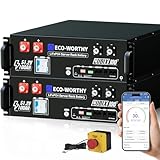
- UL9540 | UL1973 | CEC LISTED - Completed comprehensive testing by Intertek and has officially earned three key North American safety certifications.And has met the standards set by the California Energy Commission.The outstanding performance in design, electrical safety, and thermal runaway management,providing users with greater quality assurance.
- Home Energy Storage System: Built with high-quality Grade A LiFePO4 cells for reliable power, exceptional cycle life, and consistent safety. Designed for multiple uses: emergency backup during outages, daily home backup, and with solar panels, continuous power for off-grid cabins.
- Closed-Loop Communication Battery: ECO-WORTHY 48V (51.2V) server rack battery features integrated CAN/RS485 interfaces and multiple communication protocols, enabling communication with leading integrated solar inverters for more intelligent system operation. Built-in Bluetooth and WiFi functionality allow you to easily monitor battery status via ECO-WORTHY APP.
- Space-Saving Rack Design: This 48V 100AH lithium battery is perfectly compatible with server racks and supports vertical mounting for maximum space efficiency. By paralleling up to 32 units (up to 163.8kWh), you can expand power capacity to meet any need.
- Tip: Our batteries enjoy 10-year limited warranty, we will help with any issues within 24h. Return or replacement is applicable if there's any verified tech issue within 30 days, even though Amazon marks this item as non-returnable. Feel free to contact us should you have any questions.
Tesla also specifies 89% solar-to-battery-to-home/grid round-trip efficiency and 97.5% solar-to-home/grid efficiency. Those are different measurement paths, so they should not be treated as interchangeable with another manufacturer’s single round-trip figure. Powerwall 3 supports up to three expansion units per Powerwall 3. A system consisting of one Powerwall 3 and three expansion units can reach 54 kWh of nominal energy, subject to the design, installation, and local electrical constraints.
For homes with compressors or other motor loads, Tesla publishes a 185 LRA motor-start capability and describes seamless backup transition. That does not mean every central air conditioner will start successfully: the installer still needs to check the equipment’s locked-rotor current, starting behavior, other simultaneous loads, and the selected Powerwall output configuration.
Why choose it
- High continuous output compared with small modular batteries.
- Integrated solar inputs can simplify a new Tesla-centered solar-and-storage design.
- Suitable for homeowners targeting whole-home backup rather than only a few low-power circuits.
- Expansion can provide substantial additional energy when the electrical design permits it.
What to watch
Powerwall 3 is not a plug-in or ordinary DIY battery. It is a permanently installed electrical system requiring permitted work, compatible backup equipment, and professional commissioning. The system’s full 10-year warranty also has an important connectivity condition: Tesla states that the warranty may be limited to four years if the system is not reliably connected to the internet well enough for Tesla to contact it and perform firmware updates. Ask the installer how the system will remain connected if the home network changes or goes offline for extended periods.
PC Slower Than It Used to Be?
A free scan shows the junk files, broken settings and background clutter dragging Windows down - then fixes them in one click.Free scan · Windows 10 & 11Outdated Drivers Are Slowing You Down
One free scan finds every outdated or missing driver and matches the right update for your exact hardware.Free scan · exact hardware matchBest match: a new solar installation, a home with significant HVAC or motor loads, or a homeowner who wants one integrated high-output ecosystem.
2. FranklinWH aPower 2: best for high-capacity, high-load whole-home backup
The FranklinWH aPower 2 is the strongest alternative for a large home that values energy capacity and high-load operation. FranklinWH lists 15 kWh of usable AC energy per battery, 10 kW of continuous discharge power, 15 kW of peak output for 10 seconds, 25 kW of transient output for one second, and up to 185 A of load-start capability.
It uses lithium iron phosphate chemistry and supports up to 15 units per aGate, for a stated maximum of 225 kWh. FranklinWH’s documentation also specifies a 15-year or 60 MWh throughput warranty, subject to the warranty terms. That long stated coverage is attractive, but buyers should still ask about minimum retained capacity, throughput limits, labor, operating temperature, communications, and any exclusions.
The aPower 2’s AC-coupled design can make it useful in some retrofit situations, particularly where the existing solar inverter is not being replaced. It is not a battery-only purchase, however. The system depends on the FranklinWH aGate and a suitable electrical design. FranklinWH also states that aPower 2 can operate in parallel with aPower S batteries, which may create flexibility for an existing system but makes the exact compatibility and design review more important.
Why choose it
- 15 kWh of usable AC energy per unit is substantial for a residential battery.
- 10 kW continuous output and published load-start capability suit larger homes and demanding loads.
- Multiple units can provide very large system capacity when the site and budget support it.
- The stated 15-year or 60 MWh warranty is longer than many conventional 10-year offerings.
What to watch
A high output rating does not guarantee that the battery will operate every appliance simultaneously. Central air conditioning, electric water heating, well pumps, induction cooking, and electric vehicle charging can quickly consume available power. The aGate, transfer equipment, backup load arrangement, and service-panel design are part of the system and its cost.
Best match: a high-load home seeking whole-home backup, especially where a larger capacity per battery and long stated warranty are more important than a compact retrofit.
3. Enphase IQ Battery 5P: best for Enphase systems and modular sizing
The Enphase IQ Battery 5P is the ecosystem-first choice. It provides 5.0 kWh of usable capacity, 3.84 kVA of continuous output at 240 V, 7.68 kW of peak output for three seconds, and 6.14 kW of peak output for 10 seconds. It uses lithium iron phosphate chemistry, includes embedded grid-forming microinverters, and reports 90% AC round-trip efficiency.
Enphase provides a limited warranty of up to 15 years or 6,000 cycles, subject to the warranty conditions. The modular 5 kWh increments can be useful when the homeowner wants to size storage gradually around an existing Enphase solar system. Backup operation integrates with Enphase IQ System Controller equipment, and Enphase requires certified commissioning.
The Tool Desk
Outbyte PC Repair FREERepair Windows errors before they cause bigger problemsFix Now →Outbyte Driver Updater FREEFix the driver behind crashes, sound loss and screen glitchesFind Drivers →One IQ Battery 5P has much less energy and continuous output than a Powerwall 3 or aPower 2. That is not necessarily a weakness: a smaller modular unit can be a better fit for essential-load backup, a constrained installation area, or a home already built around Enphase microinverters. But whole-home systems commonly require several units, and the price, wall space, wiring, and backup equipment for those units should be compared with a larger single-battery platform.
Why choose it
- Strong fit for a home that already uses Enphase microinverters.
- Lithium iron phosphate chemistry and a stated warranty of up to 15 years or 6,000 cycles.
- Embedded microinverters simplify the battery’s role within the Enphase architecture.
- Modular sizing avoids automatically buying a very large battery for a modest essential-load profile.
What to watch
Do not compare the IQ Battery 5P’s three-second or 10-second peak figure directly with a competitor’s one-second transient rating or locked-rotor-amp claim. These describe different conditions. Have the installer model motor-start loads and confirm how many 5P units are required for the intended backup panel or whole-home design.
Best match: an existing or planned Enphase solar system, a homeowner who wants modular expansion, or a home where LFP chemistry and long stated warranty coverage are priorities.
4. Generac PWRcell 2: best for generator integration and load management
Generac PWRcell 2 is a modular cabinet system built around 3 kWh battery modules. In standard PWRcell 2 configurations, Generac lists 9 to 18 kWh of usable energy and maximum continuous power of 5.2 kW for M3, 7 kW for M4, 8.7 kW for M5, and 10.5 kW for M6. The configuration must be named in any comparison; saying simply that a PWRcell 2 delivers one generic power figure can be materially misleading.
Rank #2
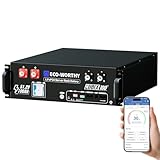
- UL9540 | UL1973 | CEC LISTED - Completed comprehensive testing by Intertek and has officially earned three key North American safety certifications.And has met the standards set by the California Energy Commission.The outstanding performance in design, electrical safety, and thermal runaway management,providing users with greater quality assurance.
- Home Energy Storage System: Built with high-quality Grade A LiFePO4 cells for reliable power, exceptional cycle life, and consistent safety. Designed for multiple uses: emergency backup during outages, daily home backup, and with solar panels, continuous power for off-grid cabins.
- Closed-Loop Communication Battery: ECO-WORTHY 48V (51.2V) server rack battery features integrated CAN/RS485 interfaces and multiple communication protocols, enabling communication with leading integrated solar inverters for more intelligent system operation. Built-in Bluetooth and WiFi functionality allow you to easily monitor battery status via ECO-WORTHY APP.
- Space-Saving Rack Design: This 48V 100AH lithium battery is perfectly compatible with server racks and supports vertical mounting for maximum space efficiency. By paralleling up to 32 units (up to 163.8kWh), you can expand power capacity to meet any need.
- Complete Plug-and-Play Kit: We include every accessory you need: parallel cables, communication cables, grounding wires, protective terminal covers, screws, and a user manual. Unbox, install, and start enjoying clean power—it's that easy.
Generac lists 88% round-trip efficiency for the standard system, a 10-year warranty, compatibility with Generac PWRmicro and Enphase IQ8 solar inverters, and support for up to 200 A of backup service. Those features can be useful for a homeowner who wants load management and is already considering a broader Generac electrical system.
PWRcell 2 is not the same as PWRcell 2 MAX
Generac’s PWRcell 2 MAX documentation describes a separate configuration with up to 18 kWh per cabinet and up to 36 kWh with two cabinets. It lists 11.5 kW maximum continuous power for an M6-by-two configuration, 91% round-trip efficiency, and integration with a Generac Guardian generator. These MAX figures should not be substituted for standard PWRcell 2 specifications.
If long outages are common in your area, ask the installer to explain the proposed Generac PWRcell generator integration, including generator start behavior, fuel supply, load management, transfer equipment, maintenance, and which loads are prioritized. A battery-plus-generator design can address longer outages than a battery sized only for a single night, but it also adds equipment, controls, maintenance, and installation cost.
Why choose it
- Modular 3 kWh architecture and configuration-specific power options.
- Good fit for a home already considering Generac equipment.
- Generator integration and load-management options can improve resilience during extended outages.
- Generac documents compatibility with PWRmicro and Enphase IQ8 solar inverter systems.
What to watch
Insist that the proposal identify standard PWRcell 2 or PWRcell 2 MAX, the M configuration, usable energy, continuous output, and the number of cabinets. The distinction changes the relevant energy, efficiency, and generator-integration claims.
Do these 3 things before closing this tab:
1Repair Windows errors before they cause bigger problems2Scan for outdated or missing drivers - takes under a minute3Clear out junk files and repair common Windows errorsBest match: homeowners who want a coordinated battery, generator, and load-management system, particularly in areas with extended outages.
5. SolarEdge Home Battery 400V: best for compatible SolarEdge systems
The SolarEdge Home Battery 400V is a DC-coupled battery designed for compatible SolarEdge single-phase inverter systems. SolarEdge describes 9.7 kWh of storage and up to 94.5% round-trip system efficiency using direct DC coupling. By reducing conversion steps within a compatible solar architecture, the system can be compelling for a new SolarEdge installation or a home already committed to that ecosystem.
Multiple batteries and inverters can be combined for more energy and power capacity, but the battery is not a universal replacement for an AC-coupled retrofit battery. The specific SolarEdge inverter, backup interface, service equipment, and operating configuration must be confirmed before purchase.
SolarEdge’s warranty documentation specifies a 10-year warranty period subject to energy-retention and throughput provisions. Ask for those provisions in writing rather than evaluating the product only by its 10-year headline.
Best match: an existing or planned compatible SolarEdge system where ecosystem integration and minimizing conversion losses are priorities.
6. Anker SOLIX X1: an emerging modular alternative
Anker markets the SOLIX X1 as a modular residential energy-storage platform with configurations ranging from 3 to 36 kW and 5 to 180 kWh, depending on system design. Anker’s U.S. materials describe one X1 power module with six batteries as a 30 kWh configuration. The company also emphasizes temperature-related power management and parallel system expansion.
The X1 is worth monitoring for homeowners who want unusually large modular expansion potential. It should not be selected from a headline capacity range alone, however. Before signing a contract, verify U.S. availability in your area, the exact configuration’s certification, the installer network, warranty terms, service process, and whether the local utility will approve the system.
Best match: a homeowner with a large storage requirement who has confirmed local support and wants a scalable system rather than a fixed-capacity battery.
Recommended Free Tools
How to compare solar batteries correctly
1. Start with usable energy, not the nameplate number
Usable kilowatt-hours (kWh) represent the energy the system is designed to make available to household loads under its operating controls. Nominal or nameplate capacity can be higher or described differently. Even a published usable figure does not mean every watt-hour will reach your appliances: reserve settings, conversion losses, temperature controls, battery-management limits, and backup priorities affect delivered energy.
A rough planning relationship is:
Approximate runtime in hours = usable energy in kWh ÷ average load in kW
For example, a battery delivering 12 kWh to loads while the home averages 1.5 kW would provide a theoretical eight hours before accounting for reserves, conversion losses, changing loads, and battery controls. That is a sizing illustration, not a runtime promise. A home averaging 3 kW can use the same energy in roughly half the time.
Rank #3

- UL9540 | UL1973 | CEC LISTED - Completed comprehensive testing by Intertek and has officially earned two key North American safety certifications.And has met the standards set by the California Energy Commission.The outstanding performance in design, electrical safety, and thermal runaway management,providing users with greater quality assurance
- Whole-Home Off-Grid Power: The 6-pack 51.2V 100Ah system delivers up to 30.72kWh of capacity, enough to cover an entire household’s daily electricity needs. It helps reduce reliance on rising electricity costs and serves as a reliable solution for achieving true off-grid living and energy independence.This package only includes 6 batteries and one RSD button. The rack is not included.
- Closed-Loop Communication Battery: ECO-WORTHY 48V (51.2V) server rack battery features integrated CAN/RS485 interfaces and multiple communication protocols, enabling communication with leading integrated solar inverters for more intelligent system operation. Built-in Bluetooth and WiFi functionality allow you to easily monitor battery status via ECO-WORTHY APP.
- Powerful Expansion Capability: Designed for server rack compatibility with vertical mounting support, this 48V 100Ah battery maximizes space efficiency. It allows paralleling of up to 32 units (up to 163.8kWh), enabling flexible capacity expansion to meet a wide range of needs. Built with Grade A LiFePO₄ cells, it delivers reliable power output, exceptional cycle life, and stable safety performance.
- Complete Plug-and-Play Kit: We include every accessory you need: parallel cables, communication cables, grounding wires, protective terminal covers, screws, and a user manual. Unbox, install, and start enjoying clean power—it's that easy.
2. Match continuous output to simultaneous loads
Continuous power, measured in kilowatts or kVA, determines how much load the battery can support at one time. A refrigerator, internet equipment, lights, and a gas furnace blower may fit comfortably within a modest output rating. Central air conditioning, a well pump, electric resistance water heating, an induction range, a large air-source heat pump, or EV charging can dominate the calculation.
Free tools Windows power users keep installed
One-click scans. No signup required.
Energy capacity answers “how long?” Continuous output answers “how much at once?” A large battery with insufficient inverter output can still shut down or shed loads when too many appliances run together.
3. Treat surge figures as condition-specific
Motors draw more current when starting than when running. Manufacturers describe that capability in different ways:
- Tesla specifies 185 LRA motor-start capability for Powerwall 3.
- FranklinWH lists 15 kW for 10 seconds, 25 kW for one second, and up to 185 A of load-start capability for aPower 2.
- Enphase lists 7.68 kW for three seconds and 6.14 kW for 10 seconds for IQ Battery 5P.
- Generac publishes configuration-specific continuous power for PWRcell 2 rather than one universal figure.
These are not interchangeable measurements. A locked-rotor-amp figure, a one-second transient, a three-second peak, and a 10-second peak describe different test conditions. Your installer should use the actual nameplate and starting characteristics of the HVAC compressor, pump, or other motor rather than choosing a battery from the largest-looking number.
4. Choose AC- or DC-coupling based on the solar system
AC-coupled batteries connect on the alternating-current side of the solar inverter. They are often more flexible for retrofits because the existing solar inverter can remain part of the system, although the complete design still requires compatible controls and transfer equipment.
Quick wins for a faster PC:
Fix the driver behind crashes, sound loss and screen glitchesFind Drivers →Repair Windows errors before they cause bigger problemsFix Now →DC-coupled batteries connect on the direct-current side of a compatible solar inverter. In a new, matched system, this can reduce conversion steps and improve system-level efficiency. The trade-off is narrower compatibility: the battery, inverter, backup interface, and controls must work together.
Do not assume that a DC-coupled battery can replace any AC-coupled product, or that an AC-coupled battery will integrate with every existing solar inverter. Give the installer your solar inverter model, array size, service-panel details, and whether the goal is retrofit or new construction.
5. Price the complete backup architecture
A battery pack alone is not a whole-home backup system. Depending on the brand and design, the installation may require a gateway, system controller, transfer equipment, backup load center, smart disconnect, additional inverter hardware, communications, and panel or wiring modifications.
Ask whether the proposal includes:
- The battery and expansion units.
- The inverter or integrated inverter hardware.
- A gateway, aGate, IQ System Controller, backup interface, or equivalent transfer equipment.
- Backup-panel or whole-home service equipment.
- Critical-load subpanel wiring and load-shedding controls.
- Permits, inspection, utility interconnection, commissioning, and monitoring setup.
- Labor, structural work, trenching, disconnects, surge protection, and any required electrical-service upgrade.
Because these are installed electrical systems rather than ordinary retail products, it is sensible to get a solar battery quote that includes a one-line diagram, the exact model and configuration, expected backed-up loads, and the total installed price. A second proposal can reveal whether a lower equipment price is being offset by missing balance-of-system work.
6. Check expansion carefully
Expansion does not always add energy and power in the same proportion. Confirm whether adding a unit increases usable kWh, continuous kW, surge capability, or only some of those. Also ask whether expansion must be installed at the original commissioning date, whether the manufacturer permits later additions, whether battery age must be matched, and whether the inverter, gateway, service, and utility approval can handle the final size.
7. Read the warranty beyond the number of years
Compare at least these terms:
- Warranty duration.
- Cycle or throughput limit.
- Minimum retained capacity at the end of the term.
- Temperature and installation-location assumptions.
- Communication or internet requirements.
- Whether parts, labor, removal, shipping, and replacement installation are covered.
- Whether the warranty changes when batteries are expanded or mixed with older units.
A 15-year headline is not automatically better than a 10-year warranty if its throughput limit, retained-capacity threshold, or labor coverage is less favorable for your use. Conversely, a 10-year warranty may be adequate for a lightly cycled backup system. Tesla’s stated internet-connectivity condition demonstrates why the complete warranty document matters.
8. Verify temperature and enclosure conditions
Battery performance and charging availability can be affected by temperature. Enphase, Generac, and FranklinWH publish temperature and enclosure specifications that should be checked against the proposed location. An outdoor installation may need clearance, weather protection, shade, or other environmental controls. A garage, basement, utility room, or exterior wall can each create different code, access, ventilation, and service considerations.
Do not approve a location solely because there is empty wall space. Ask for the manufacturer’s permitted temperature range, clearances, flood and weather limitations, noise information where available, and the installer’s plan for inspection and replacement access.
Crashes, No Sound, or Screen Glitches?
Random freezes, missing sound and display glitches usually trace back to one bad driver. Find and replace yours safely.Free scan · under a minutePC Slower Than It Used to Be?
A free scan shows the junk files, broken settings and background clutter dragging Windows down - then fixes them in one click.Free scan · Windows 10 & 11A practical battery-sizing worksheet
Use this worksheet before requesting proposals. The values in the example are illustrative planning placeholders, not a performance test or a substitute for appliance nameplates.
- List must-run loads. Separate medical equipment, refrigeration, communications, heating, water systems, and lighting from optional loads such as EV charging, laundry, pool equipment, or electric cooking.
- Record running watts and starting watts. Use equipment labels or electrician measurements. For HVAC and pumps, ask for locked-rotor or starting-current information.
- Calculate the simultaneous peak. Identify which loads may operate together, rather than adding every appliance in the house.
- Estimate outage energy. Multiply the expected average load by the number of hours you want covered, then have the installer account for reserve and system losses.
- Decide how solar will recharge the battery. A battery may need compatible solar and controls to recharge while the grid is down; do not assume that an outage automatically prevents or enables solar charging.
| Example load | Illustrative running demand | Why it matters |
|---|---|---|
| Router, modem, and security equipment | Low | Small continuous load but important for communications and monitoring |
| Refrigerator and freezer | Low to moderate running demand; higher startup demand | Motor-start capability can matter more than average energy use |
| Lighting and electronics | Low to moderate | Usually easy to support, but numerous circuits add up |
| Gas-furnace blower | Moderate | Requires power even when the heating fuel is gas |
| Well or sump pump | Moderate running demand; potentially high startup demand | Check pump motor data and whether it must start while HVAC is operating |
| Central air conditioner or heat pump | Moderate to high running demand; potentially high startup demand | Often determines inverter output and motor-start requirements |
| Electric water heater, range, dryer, or EV charger | High | May need load shedding or exclusion from the backup panel |
For an illustrative calculation, suppose the selected outage loads average 2 kW and the homeowner wants eight hours of coverage. That requires approximately 16 kWh delivered to the loads before accounting for reserve settings, conversion losses, temperature, and changing demand. The installer should then model whether the selected battery configuration can deliver that energy and whether its inverter can start the largest motor while other loads are operating.
Rank #4
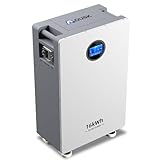
- Advanced Safety & Long-Lasting Reliability: Engineered for total peace of mind, this 48V 314Ah LiFePO4 battery features a heavy-duty 200A BMS with six-layer protection and dual breakers on both positive and negative poles—guarding against overloads and short circuits. Built with premium Grade A battery cells, it delivers up to 6,000 cycles at 80% state of health, ensuring years of stable, worry-free performance
- Real-Time Monitoring via Display & App: Stay in control with multiple monitoring options: check real-time stats on the bright full-color display, or connect remotely via Bluetooth/Wi-Fi using the dedicated app. An RS232 port also allows for easy PC connectivity with professional software, so you’re always informed, whether you’re at home or away
- High Capacity, Space-Saving Design: With a massive 16.07 kWh of storage in a compact form, this battery powers your essential systems without taking up extra space. Need more energy? Connect up to 15 units in parallel for up to 241 kWh—ideal for whole-home backup, solar storage, or off-grid setups.
- Universal Inverter Compatibility: Equipped with RS485 and CAN communication interfaces, this battery seamlessly integrates with most major inverters (such as Victron, Schneider, Growatt, etc.) for closed-loop control, ensuring smooth system operation and enhanced efficiency.
- Easy to Move & Install: Designed for hassle-free setup, the built-in handles and heavy-duty wheels allow you to smoothly position the battery wherever needed. Installation is straightforward, secure, and requires minimal effort—getting your power system up and running has never been simpler.
Which battery is best for your situation?
- You want the strongest general-purpose, high-output choice
- Start with Tesla Powerwall 3. Confirm the selected continuous-output configuration, solar-input design, expansion plan, backup equipment, and internet-dependent warranty condition.
- You have a large home with demanding loads
- Compare FranklinWH aPower 2 with Powerwall 3. FranklinWH’s 15 kWh usable energy and 10 kW continuous output per unit are compelling, but the aGate and full electrical design must be included.
- You already have Enphase microinverters
- Enphase IQ Battery 5P is the natural first comparison. Size multiple units against the home’s simultaneous output and energy requirements rather than assuming one 5P can provide whole-home backup.
- You are considering a Generac generator
- Evaluate standard PWRcell 2 and PWRcell 2 MAX separately, then ask for a complete generator, battery, and load-management design. Confirm the exact M configuration and cabinet count.
- You already use SolarEdge
- Check SolarEdge Home Battery 400V compatibility with the exact single-phase inverter and backup interface. Its DC-coupled design is most attractive inside a compatible SolarEdge architecture.
- You want very large modular expansion
- Consider Anker SOLIX X1 only after confirming the exact U.S. configuration, local installer support, certification, warranty, and utility approval.
- You only need a few essential circuits
- A smaller modular system may be more economical than a whole-home battery. The right choice depends on the actual critical-load energy and starting-current requirements, not on maximum advertised capacity.
Installer and utility questions to ask before signing
Battery availability, permitting, interconnection rules, and service quality are local. A technically impressive battery can be a poor project choice if qualified installers cannot support it in your area.
- What exact battery model, configuration, and number of units are included?
- What is the usable energy at commissioning, and what reserve will remain unavailable?
- What continuous output is available, and at what voltage?
- What are the surge or motor-start conditions, and for how long?
- Will the system back up the entire service or only a critical-load panel?
- Which appliances are excluded or automatically shed?
- Can the solar array recharge the battery during a grid outage?
- What gateway, controller, transfer equipment, or backup interface is required?
- Can the system be expanded later, and does expansion add power as well as energy?
- What temperature, clearance, flood, fire, and enclosure requirements apply at the proposed location?
- Who handles permits, inspection, utility approval, commissioning, firmware, and warranty service?
- What internet connection is required, and what happens to monitoring or warranty administration if connectivity fails?
- What portion of the quoted price covers labor, panel changes, trenching, service upgrades, and other balance-of-system work?
- Is the installer certified or authorized for the specific brand? If not, ask why and how warranty support will work.
When comparing proposals, find a certified battery installer for each brand under consideration rather than assuming that a contractor experienced with one ecosystem can commission every other system. Brand-specific equipment, software, backup interfaces, and warranty procedures can materially affect the installation.
2026 tax-credit note for U.S. homeowners
The federal residential tax treatment changed at the end of 2025. The IRS states that the Residential Clean Energy Credit under Section 25D was available at 30% for qualifying property installed from 2022 through December 31, 2025, and is not available for property placed in service after December 31, 2025. The IRS also identifies battery storage technology with at least 3 kWh of capacity as qualifying property during the eligible period.
For a residential battery placed in service in 2026, do not assume that the former 30% Section 25D credit applies. Confirm the current law, placed-in-service date, ownership structure, and your tax situation with a qualified tax professional. This article is general information, not individualized tax advice.
Commercial, multifamily, and other eligible projects can involve different rules, including Section 48E-related treatment for energy-storage technology and possible domestic-content, prohibited-foreign-entity, and bonus-credit conditions. Those rules are project-specific and should be reviewed before a builder, developer, or commercial owner treats a tax incentive as part of the project economics.
Solar-battery economics: what actually determines value
Manufacturer efficiency and capacity figures do not establish payback. Battery value can come from several different services:
- Outage protection: the value of keeping refrigeration, heat, communications, pumps, medical equipment, or business operations running.
- Time-of-use shifting: charging when electricity is cheaper and discharging during expensive periods, where the utility tariff permits and the battery’s controls support it.
- Solar self-consumption: using more of the home’s solar generation instead of exporting it at a low compensation rate.
- Demand management: reducing peaks where the tariff or project structure makes demand charges relevant.
- Grid programs: participating in a utility or aggregator program if one is available, compatible, and financially worthwhile.
Ask the installer or utility to model battery time-of-use savings using your actual tariff, export compensation, seasonal load, battery degradation assumptions, and financing cost. A battery that looks attractive under one rate plan may have little arbitrage value under another. Conversely, a system with a long financial payback may still be reasonable if outage protection is the primary objective.
Compare total installed cost, not just battery hardware. Include the gateway or controller, inverter changes, electrical-panel work, permits, inspection, utility fees, labor, financing, monitoring, and any generator or solar-array modifications.
Bottom line
Tesla Powerwall 3 is the best broad default for a U.S. homeowner who wants high-output integrated backup. FranklinWH aPower 2 is the strongest high-capacity, high-load alternative. Enphase IQ Battery 5P is the best ecosystem-first modular choice for Enphase homes. Generac PWRcell 2 stands out when generator integration and load management matter, provided the standard and MAX configurations are kept separate. SolarEdge Home Battery 400V is compelling inside a compatible SolarEdge design, while Anker SOLIX X1 is an emerging option for buyers who can verify unusually large expansion plans and strong local support.
The final decision should come from a load calculation and complete system proposal—not from the largest kWh number, the highest surge figure, or the longest warranty headline. Confirm compatibility, backup architecture, temperature limits, utility approval, installer capability, and the warranty’s actual conditions before signing.
What’s actually slowing this PC down?
Pick the symptom - the matching free tool is one click away.
Frequently Asked Questions
Can one solar battery power an entire house during an outage?
Sometimes, but not automatically. Whole-home backup depends on the battery’s continuous output, motor-start capability, usable energy, service-panel design, transfer equipment, and the loads operating at the same time. High-demand appliances such as central HVAC, electric water heaters, ranges, pumps, and EV chargers may need load management or exclusion.
Is a larger solar battery always better?
No. A larger battery stores more energy, but the inverter must also provide enough continuous and surge output for the loads you want to run. A large battery may be unnecessary for a small essential-load panel, while a smaller battery may run out quickly in a high-consumption home.
Should I choose an AC-coupled or DC-coupled battery?
AC-coupled systems are often more flexible for retrofits because they can work alongside an existing solar inverter. DC-coupled systems can reduce conversion steps in a compatible new solar installation. The correct choice depends on the existing inverter, planned solar equipment, backup interface, and utility requirements.
Can solar panels recharge a battery during a grid outage?
It depends on the battery, inverter, controller, solar architecture, and operating settings. Some systems can form a backup microgrid and manage solar charging, while others require different equipment or may limit solar production during an outage. Require the installer to describe the exact outage-recharging behavior in the proposal.
Do these 3 things before closing this tab:
1Scan for outdated or missing drivers - takes under a minute2Repair Windows errors before they cause bigger problems3Fix the driver behind crashes, sound loss and screen glitchesIs there a 30% federal residential battery tax credit in 2026?
The IRS states that the residential Section 25D credit was available at 30% for qualifying property installed through December 31, 2025, and is not available for property placed in service after that date. Do not assume a 2026 residential battery qualifies for the former credit; verify current law and your circumstances with a tax professional.
The Bottom Line
Choose the battery that fits the complete electrical design. Powerwall 3 is the strongest general high-output pick; aPower 2 favors capacity and demanding loads; IQ Battery 5P favors Enphase modularity; PWRcell 2 favors Generac integration; SolarEdge 400V favors compatible SolarEdge systems; and Anker X1 is an expansion-focused alternative that requires especially careful local verification.
Quick Recap
Product prices and availability are accurate as of the date/time indicated and are subject to change. Any price and availability information displayed on Amazon at the time of purchase will apply.

