Quick wins for a faster PC:
Repair Windows errors before they cause bigger problemsFix Now →Scan for outdated or missing drivers - takes under a minuteDriver Scan →Yes, Epsom salt can melt some ice—but usually not well enough to serve as a practical substitute for ice melt. Epsom salt is magnesium sulfate, not magnesium chloride or ordinary rock salt. When it dissolves in the thin layer of water on ice, it can lower that water’s freezing point and create brine. However, published magnesium sulfate–water data place its eutectic temperature at about −3.9°C, or 25°F. Below that point, it cannot keep melting ice through the ordinary salt-brine process.
For a walkway, driveway, or construction-site access route, remove snow and bonded ice mechanically first. If chemical treatment is still necessary, use a labeled household deicer sparingly rather than relying on Epsom salt.
What is Epsom salt?
Epsom salt is commonly magnesium sulfate heptahydrate, written as MgSO4·7H2O. PubChem lists “Epsom salt” and “magnesium sulfate heptahydrate” as synonyms and gives the compound a molecular weight of 246.48 g/mol.
As an Amazon Associate I earn from qualifying purchases.
Outdated Drivers Are Slowing You Down
One free scan finds every outdated or missing driver and matches the right update for your exact hardware.Free scan · exact hardware matchWindows Errors? Fix Them Before They Spread
Repair common Windows errors and clear accumulated junk for a smoother, more stable PC - no reinstall needed.Free scan · no reinstallThat chemical identity matters. Magnesium sulfate is not magnesium chloride. Both contain magnesium, but they are different compounds with different phase behavior, applications, and practical performance in winter conditions. Magnesium chloride is formulated and sold for deicing; Epsom salt is more commonly marketed for bathing, household, agricultural, or similar uses.
What it is—and what it is not
Epsom salt is a soluble magnesium sulfate product that may melt limited ice in favorable conditions. It is not automatically a purpose-made driveway or sidewalk deicer, and a product sold for bathing or other household uses should not be assumed to have been tested, formulated, or labeled for pavement treatment.
#1 Best Overall

- SHIPMENT CONTAINS: One 3-pound resealable bag of fragrance free epsom salt for relaxing baths and soaks
- RELAXING SOAK: Dissolves easily in warm water to create a soothing bath experience that helps relax muscles and reduce tension
- VERSATILE USES: Perfect for full baths, foot soaks, and gardening applications to provide magnesium to plants
- EASY APPLICATION: For a relaxing bath, generously pour into warm running water; for foot soaks, dissolve in a small basin and soak for 15-20 minutes
- PURE FORMULA: Contains pure magnesium sulfate with no added fragrances, dyes, or fillers for a natural soaking experience
How Epsom salt could melt ice
Pure water freezes at 32°F (0°C). When a soluble salt dissolves in the very thin liquid layer on an ice surface, it produces a brine with a lower freezing point than pure water. If the surrounding temperature is above that brine’s freezing point, some additional ice can melt into the solution.
This is the same general principle behind deicing salts. The U.S. Environmental Protection Agency describes deicing salts as materials that lower ice’s melting point, while the University of Minnesota Extension explains that deicing salts lower water’s melting point and can help prevent ice from forming.
But the fact that a material is “a salt” does not tell you how well it will work. The useful temperature range depends on the particular chemical, its concentration, the amount of liquid water available, and how cold the pavement and ice actually are.
The temperature limit is the biggest problem
Published phase-equilibrium data place the magnesium sulfate–water eutectic at approximately 17–18% magnesium sulfate and about −3.9°C (roughly 25°F). The eutectic is the lowest temperature at which that salt-water system can remain liquid at the relevant equilibrium composition.
In practical terms, Epsom salt may have some effect on a relatively thin, damp layer of ice when temperatures are near or above 25°F. As temperatures fall below that range, the salt-brine mechanism becomes increasingly ineffective. A small amount sprinkled over a thick, very cold ice sheet is also diluted by meltwater, which may prevent the solution from reaching a concentration where it works efficiently.
Rank #2

- PURE EPSOM SALT (Magnesium Sulfate USP): Soothe your aching muscles with this unique blend
- ESSENTIAL OIL BLEND: Curated with lavender to calm body and mind
- SELF-CARE RITUAL: A great addition to your self-care routine
- RELAXING TREATMENT: Mix with warm bath water and soak
- NO HARSH INGREDIENTS: Paraben and phthalate free
This is why “it can melt ice” and “it is a good ice melt” are different claims. Epsom salt can work under limited conditions, but its documented low-temperature ceiling is relatively high for serious winter deicing.
How does it compare with purpose-made deicers?
Purpose-made deicers are selected partly for their lower effective temperature ranges. For comparison, a Texas Department of Transportation manual gives magnesium chloride an approximate eutectic temperature of −28°F at a specified 21.6% concentration. That figure is not a controlled head-to-head test of every retail product, and actual performance varies with formulation and application. It does, however, illustrate why magnesium chloride and other commercial deicers are generally chosen over magnesium sulfate for colder conditions.
| Material | What it means for ice treatment |
|---|---|
| Epsom salt (magnesium sulfate) | Can create a melting brine, but published data put its eutectic near 25°F. |
| Magnesium chloride | A purpose-used deicer with a substantially lower reported eutectic temperature under a specified concentration. |
| Sand or grit | Improves traction but does not melt or remove ice. |
Do not treat these figures as a promise that a bag of any particular product will perform at exactly those temperatures. Product concentration, pavement temperature, moisture, snow depth, traffic, and application rate all matter. Follow the product label.
Why Epsom salt is usually a poor choice for a walkway or driveway
1. It may fail when you need it most
Winter ice is often thick, shaded, compacted, and colder than the surrounding air. Those conditions are unfavorable for a salt with a relatively high eutectic temperature. Epsom salt may soften or melt a thin patch in mild weather, but it is not a dependable solution for deeply frozen surfaces or prolonged subfreezing conditions.
2. It is not generally labeled as a deicer
Retail Epsom salt is commonly sold for purposes other than snow and ice control. Consumers should not assume that a bath or garden product has been tested for pavement performance, safe application rates, surface compatibility, or runoff concerns. The EPA advises consumers to follow the label directions for ice-melt products; using a product outside its labeling creates avoidable uncertainty.
Rank #3
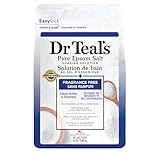
- PURE EPSOM SALT: Made with pharmacy-grade magnesium sulfate to help ease aches and soreness from muscle pains
- FRAGRANCE FREE: Fragrance-free and fast dissolving, ultra-fine crystals dissolve quickly in water
- HOW TO USE: At bedtime, pour 2 cups under warm, running bath water and soak for 20 minutes
- FREE FROM WORRY: Paraben free, phthalate free, and never tested on animals
3. “Natural” and “chloride-free” do not mean harmless
Epsom salt contains sulfate rather than chloride, so its environmental behavior is not identical to that of sodium chloride road salt. That does not make unlimited application safe. Penn State Extension warns that Epsom salt can create nutrient imbalances in soil and interfere with calcium and potassium uptake.
More broadly, the EPA and University of Minnesota Extension note that soluble deicing salts can move with stormwater into soil, groundwater, and surface water. They can damage plants, affect aquatic organisms, and contribute to water-quality problems. Applying large quantities of Epsom salt to garden beds, planted areas, storm drains, or waterways is poor practice even if it does not contain chloride.
The better sequence for construction sites and home access routes
For most sidewalks, driveways, entrances, and small work areas, physical removal should come before chemical treatment. This reduces the amount of deicer required and avoids depending on a chemical that may not work at the site’s actual temperature.
- Remove loose snow early. Shovel before foot traffic, vehicle traffic, and repeated freeze-thaw cycles compact it into ice. A snow shovel can be especially useful for clearing access routes before they harden.
- Break the bond. Use an ice scraper or a shovel designed for hard surfaces to lift bonded ice. Work carefully around concrete edges, pavers, coatings, thresholds, and other surfaces that can be damaged by aggressive impact.
- Treat only the remaining hazardous patches. If scraping cannot make the area safe, apply a household ice melt or sidewalk ice melt that is specifically labeled for the surface and conditions. Use the smallest effective amount rather than covering the entire area indiscriminately.
- Protect drainage and planted areas. Keep deicer away from garden beds, tree pits, storm drains, streams, and other surface water. Sweep up leftover residue after the ice event when conditions permit.
- Use traction material when melting is not the goal. Traction sand or grit can improve footing on a cold surface, but it does not melt ice. Use it sparingly because excess material can be tracked indoors or enter drainage systems.
On a construction site, also account for pedestrian routing, equipment access, temporary stairs, ramps, loading zones, and areas where runoff may reach fresh concrete or drainage infrastructure. Keep treated routes visibly identified and inspect them again after refreezing or additional precipitation.
What’s actually slowing this PC down?
Pick the symptom - the matching free tool is one click away.
Can you sprinkle Epsom salt directly on ice?
You can physically sprinkle it on ice, and it may produce limited melting when temperatures are favorable and enough moisture is present. That does not make it an efficient or recommended general-purpose treatment.
Rank #4

- SHIPMENT CONTAINS: One 3-pound resealable bag of epsom salt crystals for bath or soaking tub
- RELAXING SOAK: Lavender scented epsom salt helps soothe sore muscles and aids in relaxation
- EASY TO USE: Simply add to warm bath or foot soak for a calming, therapeutic experience
- VERSATILE USES: Ideal for relaxing baths, foot soaks, and muscle recovery after physical activity
- PREVIOUSLY AMAZON BASICS: Previously Amazon Basics, now Amazon Essentials. Packaging may vary but item and quality remain the same
Do not assume that adding more Epsom salt will solve the problem. Once the solution reaches its relevant concentration and temperature limit, extra material does not create unlimited melting. Overapplication increases residue and runoff without guaranteeing a safer surface.
Independent reader supportYour contribution helps us test, update, and keep practical guides available for everyone.What about pets, plants, concrete, and water?
Pets
“Pet-safe” is not a universal scientific guarantee. Any deicer can be irritating if it is tracked indoors, licked from paws, or left in concentrated residue. Follow the product label, remove visible residue where practical, and prevent animals from consuming the material.
Plants and soil
Keep all soluble salts off planting beds and minimize runoff toward roots. Epsom salt can alter soil nutrient balance and interfere with calcium and potassium uptake, according to Penn State Extension. If a treated area borders landscaping, physical removal and careful sweeping are preferable to repeated salt application.
Concrete and other surfaces
No deicer should be assumed safe for every surface. Fresh or weak concrete, decorative finishes, pavers, stone, metal, coatings, and adjacent vegetation may have different compatibility requirements. Check the product label and, where appropriate, test an inconspicuous area. Mechanical removal is the least chemically complicated option.
Water and drainage
Salt runoff can enter stormwater systems and nearby water bodies. Avoid pushing contaminated slush into drains, streams, or planted areas. Collect and sweep residue when conditions allow, while recognizing that cleanup does not eliminate salt that has already dissolved.
Best Value
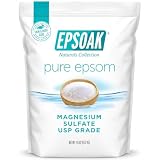
- 100% PURE EPSOM SALT (MAGNESIUM SULFATE USP): Unscented Epsom salt made with magnesium sulfate USP for a clean, simple soak with no added fragrance.
- AT-HOME BATH & FOOT SPA: Add to warm bath water or dissolve in a foot soak to relax after long days, workouts, or time on your feet.
- QUICK-DISSOLVING MEDIUM GRAIN: Naturally translucent crystals dissolve fast in warm water for an easy, no-hassle bath routine—add your favorite scent if desired.
- RESEALABLE 19. LB BAG: Easy to store and refill—ideal for frequent bath soaks, foot tubs, and everyday home use.
- MADE IN THE USA + CRUELTY-FREE CERTIFIED: Proudly made in the USA and cruelty-free certified for a product you can feel good about using.
Safety note: Epsom salt is not automatically safe to ingest
Do not ingest a product simply because it is called Epsom salt. Magnesium sulfate products intended for medical use have specific formulations, directions, contraindications, and warnings. MedlinePlus advises following product directions and consulting a clinician or pharmacist when appropriate. A product intended for external or household use should never be repurposed as a medicine.
Quick decision guide
- Thin ice and temperatures near or above 25°F: Epsom salt may melt a limited amount, but scraping is still the better first step.
- Thick ice, shaded pavement, or temperatures below about 25°F: Do not rely on Epsom salt. Remove the ice mechanically and use a labeled low-temperature deicer if necessary.
- You only need better footing: Use sand or grit; it provides traction but does not melt ice.
- The area drains toward plants or water: Minimize or avoid soluble salts and prioritize removal, rerouting, and traction control.
- You are treating a worksite route: Clear and inspect the route, choose a labeled product appropriate for the surface, and recheck after refreezing.
Frequently Asked Questions
Does Epsom salt melt ice faster than rock salt?
Not generally. Epsom salt is magnesium sulfate and has a documented eutectic near 25°F, while ordinary rock salt is sodium chloride and purpose-made deicers may be formulated for different temperature ranges. Actual performance depends on concentration, temperature, moisture, and the product, but Epsom salt is not the preferred general-purpose ice melt.
Recommended Free Tools
Is Epsom salt better for concrete than regular ice melt?
There is no general basis for assuming that. Epsom salt is not automatically harmless to concrete, landscaping, or drainage systems. Check the deicer label for surface compatibility and use mechanical removal whenever possible.
Will Epsom salt melt ice below 25°F?
Its ordinary salt-brine melting action becomes ineffective below the published magnesium sulfate–water eutectic of approximately 25°F. It should not be relied upon for colder conditions.
Does sand melt ice?
No. Sand and grit improve traction but do not lower the freezing point or remove the ice. They should be used as traction aids, not as chemical deicers.
Can Epsom salt hurt plants?
Yes, excessive application or runoff can create soil nutrient imbalances and interfere with calcium and potassium uptake. Keep it and other soluble salts away from planting areas and water.
The Bottom Line
Epsom salt can melt a limited amount of ice, but it is not an efficient all-purpose ice melt. Its magnesium sulfate brine has a relatively high practical temperature limit—about 25°F at the published eutectic—so it is a poor choice for colder or heavily iced surfaces. Shovel and scrape first, then use a labeled deicer sparingly when chemical treatment is necessary. Use sand or grit when the immediate need is traction rather than melting, and keep all salt products away from plants, storm drains, and waterways.
Quick Recap
Product prices and availability are accurate as of the date/time indicated and are subject to change. Any price and availability information displayed on Amazon at the time of purchase will apply.

