The most reliable way to get rid of fungus gnats is to treat both the wet growing medium and the flying adults. Let the soil surface dry as far as the plant can safely tolerate, improve drainage, place yellow sticky traps near the soil, and use a labeled larval treatment such as Bti or Steinernema feltiae nematodes if gnats continue. Traps alone will not remove larvae already living in the pot.
Fungus gnats rarely disappear overnight because eggs, larvae, pupae, and adults can be present at the same time. Continue moisture control and monitoring for several weeks, and inspect nearby plants because the breeding site may be in more than one container.
First, make sure they are fungus gnats
Adult fungus gnats are tiny, dark, mosquito-like flies about 1/16 to 1/8 inch long. They commonly hover around houseplants, crawl across the potting mix, or fly up when a container is disturbed. The larvae are legless and worm-like, usually with noticeable dark heads, and live in the growing medium.
As an Amazon Associate I earn from qualifying purchases.
What’s actually slowing this PC down?
Pick the symptom - the matching free tool is one click away.
They are easily confused with fruit flies and other small indoor flies. Fungus gnats are most likely when the flies are concentrated around plant pots and the potting mix stays consistently damp. Adults do not bite people. In most homes they are primarily a nuisance, although large larval populations can injure roots—especially in seedlings, cuttings, and plants already weakened by poor drainage or root problems.
To check for larvae, place a small slice of raw potato on the surface of the potting mix. Check it periodically and discard it if larvae gather underneath or around it. This is a diagnostic aid, not a complete treatment.
#1 Best Overall
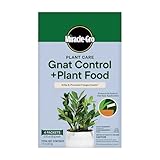
- Fungus Gnat Control and Plant Food: Miracle-Gro Plant Care Gnat Control + Plant Food kills and prevents pesky fungus gnats (kills existing eggs and larvae in soil) while also providing your plants with the vital nutrients they need to thrive
- Plant Pest Control: This plant care product also kills and controls nematodes and suppresses thrips, spidermites, aphids, scales, and mealybugs
- For Indoor Potted Plants: Use this gnat control product on all indoor potted plants, including houseplants, tropicals, succulents, cacti, indoor vegetables like tomatoes and peppers, and indoor herbs like rosemary, basil, sage and mint
- Easy to Use: At the first sign of plant distress or fungus gnat presence, simply open the packet and sprinkle the granules evenly around the soil surface; lightly water in for best results
- Plant Protection: Further protect plants with Miracle-Gro Plant Care Flying Insect Traps to get rid of flying pests, and Miracle-Gro Leaf Shine and Protect, a 4-in-1 miticide, insecticide, fungicide, and leaf shine
The best first-line plan
- Inspect and isolate. Move the affected plant away from other plants if practical. Check the pot, saucer, drainage holes, and neighboring containers. Remove dead leaves and other decomposing material from the soil surface.
- Correct the moisture problem. Allow the top 1 to 2 inches of growing medium to dry between waterings when the plant can tolerate that level of drying. Do not apply this rule mechanically to plants that need consistently moist soil, newly planted seedlings, or a plant already showing drought stress. Water according to the plant’s needs, not according to a fixed calendar.
- Improve drainage. Empty standing water from saucers and cachepots. Confirm that the container has a drainage hole and that the potting mix is not compacted or broken down. A decorative cover pot can hide water that remains around the roots.
- Catch the adults. Put yellow sticky traps at or just above the soil surface and add another near the plant canopy if needed. Replace them when they become covered with insects or debris.
- Target larvae if the infestation persists. If adult numbers remain high after moisture changes, or if larvae are confirmed, use a properly labeled Bti product or Steinernema feltiae beneficial nematodes according to the product directions.
Fungus gnat traps are useful for catching adults, measuring whether the population is declining, and reducing the number of females available to lay eggs. Position them close to the growing medium rather than relying on a trap placed across the room. Remember that a trap catches flying adults; it does not kill larvae in the soil.
Why wet soil is usually the central problem
Fungus gnat larvae feed mainly on fungi, algae, decaying organic material, and, in some circumstances, plant roots. Continuously moist, organic-rich potting mix provides a favorable place for eggs and larvae. Frequent small sips of water can keep the surface perpetually damp even when the plant does not need more water.
Drying the appropriate surface layer makes the container less attractive for egg-laying and less favorable for developing larvae. It is not a reason to let every plant become severely dry. Tropical plants, seedlings, ferns, and other moisture-dependent plants may need a different threshold. The goal is to interrupt excessive moisture while keeping the root system healthy.
Also remove the conditions that keep a pot wet:
- Do not leave the container standing in water.
- Use a pot with an open drainage hole.
- Check whether the saucer or outer cachepot is holding runoff.
- Remove fallen leaves and other organic debris from the soil surface.
- Do not use a rigid watering schedule when the plant’s light, temperature, season, and pot size have changed.
Adult control: what sticky traps can and cannot do
Yellow sticky cards are a low-risk way to reduce adult fungus gnats and monitor progress. They can catch females before they lay more eggs, but they cannot reach the larval stage below the soil surface. A plant may still produce new adults for a while even after traps are installed because existing larvae continue their development.
Use traps as part of an integrated plan:
- Place one at soil level or just above the potting mix.
- Use additional traps around a group of plants when several containers are affected.
- Record roughly how many adults are caught after several days rather than judging success from one inspection.
- Keep traps away from children and pets that might contact the adhesive.
- Continue checking neighboring plants, since catching adults in one pot does not prove that pot is the only breeding site.
Larval treatment option 1: Bti
Bacillus thuringiensis subspecies israelensis, commonly called Bti, is a biological larvicide used against fungus gnat larvae in the growing medium. Use only a product whose label permits the intended plant and site, and apply it exactly as directed. Product concentrations, formulations, permitted uses, application rates, protective equipment, and repeat intervals can differ.
A Bti soil treatment is appropriate only when the label supports use against fungus gnat larvae and the intended application method. Some labeled formulations use a soil drench, and one EPA label specifies that repeated weekly applications may be needed when multiple life stages are present. That does not mean every Bti product has the same schedule.
Bti does not control adult gnats. Keep using sticky traps and continue correcting the moisture problem. Never assume that a Bti product sold for mosquitoes or caterpillars is interchangeable with a product labeled for fungus gnat larvae. The subspecies and target pests differ; a caterpillar-control Bt product is not automatically the correct treatment for fungus gnats.
Before applying any pesticide or biological pesticide, read the complete label for the specific product. Follow its directions for mixing, application, ventilation, protective equipment, storage, plant restrictions, and disposal. The label is legally controlling.
Rank #2

- GNAT CONTROL FOR INDOOR PLANTS: This bundle includes our natural plant bug spray and 12 gnat sticky traps for plants; this powerful gnat spray for indoor plants kills fungus gnats, spider mites, and fruit flies; use it with our sticky traps for enhanced pest control, ensuring thorough coverage and effective elimination of bugs and pests in your home and garden; it's the perfect solution for getting rid of fruit fly and fungus gnats (please contact us if the traps are missing and we will send a replacement)
- GNAT SPRAY FOR INDOOR PLANTS: This gnat spray is effective for getting rid of gnats in plants; ideal use as an outdoor or indoor plant bug spray for insects to control and eliminate pests (please contact us if the traps are missing and we will send a replacement)
- FUNGUS GNAT KILLER INDOOR: Made with natural ingredients in the USA; our indoor insect & pest control spray for killing gnats contains peppermint and rosemary oil, a natural and safe solution that works just as well as neem oil spray for houseplant insect control, indoor plants and outdoor gardens
- NON-TOXIC PLANT GNAT TREATMENT: This peppermint oil spray for bugs is safe for use around children and pets when used as directed; it effectively repels flying pests, small mites, and get rid of gnat infestation, keeping your plants and home pest-free
- EASY TO USE PLANT BUG SPRAY: Shake the plant spray bottle well before use; test spray on 1-2 leaves and wait 6 hours before spraying the entire plant, avoiding new leaf growth; apply liberally on soil to target pests, eggs, and larvae; for best results, use this gnat killer for indoor plants & outdoor gardens once a week or as needed; this 16oz peppermint spray for plant insects has up to 1,500 sprays; if the sprayer is broken or if the traps are missing, please contact us for a replacement
Larval treatment option 2: beneficial nematodes
Steinernema feltiae is a beneficial nematode used as a soil drench and is identified by extension guidance as particularly effective against fungus gnats. After infecting larvae, the nematodes can kill them within several days under suitable conditions.
Beneficial nematodes for fungus gnats are a more specialized option than traps. They need moisture to move through the growing medium and are sensitive to temperature and handling conditions. Keep the medium appropriately moist during treatment, follow the supplier’s application instructions, and pay attention to storage and use-by requirements. Allowing the pot to become completely dry immediately after application can reduce the chance of success.
Free tools Windows power users keep installed
One-click scans. No signup required.
Nematodes target larvae, not flying adults. Use sticky traps and moisture management alongside them, and verify that the product is intended for S. feltiae and fungus gnat control.
When repotting makes sense
Repotting is not necessary for every minor infestation. It becomes more reasonable when the medium stays wet for an unusually long time, has broken down or compacted, drains poorly, smells unhealthy, or appears heavily infested. Use fresh, appropriate potting medium and a clean container with adequate drainage.
Sterile indoor potting mix and clean nursery pots can be useful when a plant needs a genuine reset, but repotting also stresses roots. Work carefully, avoid damaging healthy roots, and do not move a severely stressed plant into a much larger container that will retain even more moisture. Washing old medium from the roots may remove soil-borne pests, but it can increase transplant shock and is not required for every plant.
After repotting, do not immediately return to the watering pattern that caused the problem. Check moisture at the root zone and allow the surface to dry as appropriate for the species.
Do these 3 things before closing this tab:
1Repair Windows errors before they cause bigger problems2Scan for outdated or missing drivers - takes under a minute3Clear out junk files and repair common Windows errorsA practical treatment schedule
Day 1
- Inspect the plant and every nearby container.
- Isolate the affected plant if possible.
- Check the potting mix, saucer, drainage hole, and outer cachepot for excess water.
- Remove dead leaves and organic debris from the soil surface.
- Install yellow sticky traps at or just above the soil.
- Use a potato slice if you need to confirm larvae.
Days 3–7
- Allow the appropriate surface layer to dry between waterings.
- Do not let moisture-sensitive plants wilt severely.
- Inspect traps and compare the number of captured adults over time.
- Check the potato slice periodically and discard it after inspection.
Week 1 onward
If adults continue appearing or larvae are confirmed, apply either a properly labeled Bti product or S. feltiae nematodes. Follow the product’s exact directions. Some Bti labels call for three weekly applications for established infestations, but the instructions on the product in your possession take priority.
Rank #3

- [Easy to Use] 1. Either insert the trap into the soil with the little shovel, or hang it up with a string 2. Then peel off both sides of the white cover on the trap to prevent sticky hands.
- [Product Effect] Using the Top-Grade extremely sticky glue, to make sure to have up to 99% trapped rate while Insects touch the sticky trap.
- [Protect Plants & Stop the Bothering] Protect your plants from harmful insects, while also getting rid of those annoying flies that keep on bothering you.
- [Non-Toxic, No smells and Disposable] Non-Toxic and safe for children and pets. No odors or smells, and is easily disposable after use. It is also Waterproof and UV resistant.
- [5 Natural Designs + Extra Little Shovel] Comes with 40 traps of 5 natural designs that are in the shapes of birds x8 pcs, kitty face x8 pcs, butterflies x8 pcs, sunflowers x8 pcs and roses x8 pcs, to fit in place with your garden. We also provide an extra little shovel for digging inside pots to put the trap in. 24/7 US Customer Service, free return or refund.
After treatment
Keep managing moisture, replace traps as necessary, and inspect all nearby plants. A larval treatment without correcting chronically wet conditions can be followed by reinfestation. Continue monitoring until trap counts remain low and no new adults appear.
Independent reader supportYour contribution helps us test, update, and keep practical guides available for everyone.What about neem, peroxide, soap, oil, or pyrethrin?
Neem, insecticidal soaps, horticultural oils, and pyrethrins may affect exposed adult insects, but they are not dependable stand-alone solutions for larvae living deeper in the growing medium. They may require repeated applications and can injure plants if used incorrectly. Follow the label for the exact product, especially regarding dilution, sensitive plant species, light, temperature, and repeat applications.
There is no universal household hydrogen-peroxide mixture that can be presented as a consistently safe, reliable treatment for every houseplant. Home-mixed remedies vary in concentration and can damage roots or foliage. Do not substitute an internet recipe for a product label or for correcting the watering problem.
PC Slower Than It Used to Be?
A free scan shows the junk files, broken settings and background clutter dragging Windows down - then fixes them in one click.Free scan · Windows 10 & 11Crashes, No Sound, or Screen Glitches?
Random freezes, missing sound and display glitches usually trace back to one bad driver. Find and replace yours safely.Free scan · under a minuteBroad-spectrum insecticides are also usually unnecessary when moisture management, traps, Bti, or nematodes are suitable. They can harm beneficial organisms and do not remove the underlying conditions that support fungus gnats.
Rank #4

- 【Non-toxic and Odorless】Our double-sided sticky sheets are made of environmentally friendly materials and coated with a safe, odorless, non-toxic adhesive that does not contain any chemicals, which is not only harmless to humans and pets, but also effectively controls pests and breaks their breeding cycle.
- 【Long-Lasting and Durable】Our sticky fly traps use double-sided thickened adhesive, UV-resistant and waterproof. No need to replace until the bugs are completely covered.
- 【Easy to Use】Just uncover the covers on both sides of the trap, insert it into the soil, and it's ready to work. This is a fungus gnat trap suitable for indoor and outdoor use thar protects your plants from insects.
- 【Usage scenarios】The sticky insect trap is suitable for greenhouses, orchards, tea gardens and backyard gardens.
- 【Package Includes】Containing 100pcs yellow fruit fly sticky traps, absolutely enough for you to use
Common mistakes that keep fungus gnats coming back
- Using traps alone: Adults are removed, but larvae and pupae remain in the pot.
- Watering on a calendar: The plant may receive water before the surface has dried enough.
- Ignoring saucers and cachepots: Hidden standing water keeps the root zone wet.
- Treating only the plant where adults are visible: Gnats may be breeding in another container nearby.
- Expecting immediate eradication: Existing immature stages can emerge after the first treatment.
- Using the wrong Bt product: Bti for fly larvae is not the same as Bt products intended for caterpillars.
- Repotting every plant automatically: Unnecessary root disturbance can create more stress than the infestation.
- Overcorrecting by letting the plant become bone-dry: Drying must be compatible with the species and the plant’s condition.
When to seek additional help
Consider a more detailed root and drainage assessment if the plant remains wet for many days, develops yellowing or wilting despite moist soil, has a sour odor, or declines after watering changes. Those symptoms can indicate root damage or another problem in addition to fungus gnats.
For a collection, greenhouse, nursery, or commercial growing area, inspect the entire growing operation rather than treating individual pots at random. A recurring infestation may reflect irrigation practices, contaminated media, standing water, or poor sanitation. Use products only in accordance with the label and any local requirements that apply to the site.
Frequently Asked Questions
How long does it take to get rid of fungus gnats?
Usually several weeks rather than a single day. Drying the appropriate soil surface and trapping adults starts immediately, but existing eggs, larvae, and pupae may mature after treatment. Continue monitoring and follow any labeled repeat schedule for Bti or nematodes.
Quick wins for a faster PC:
Clear out junk files and repair common Windows errorsFree Scan →Scan for outdated or missing drivers - takes under a minuteDriver Scan →Will letting the soil dry kill fungus gnats?
Drying the surface makes the medium less suitable for eggs and larvae and is one of the most important control steps, but it may not kill every existing life stage. Dry only as far as the plant can safely tolerate, and combine moisture control with traps and, when needed, a larval treatment.
Do sticky traps kill fungus gnat larvae?
No. Yellow sticky traps catch flying adults and help monitor or reduce egg-laying, but larvae remain in the growing medium. Use traps together with moisture management and a labeled larval control when necessary.
Are fungus gnats harmful to people?
Adult fungus gnats do not bite and are generally a nuisance indoors. Heavy larval populations can damage roots, particularly in seedlings or plants already stressed by poor root conditions.
Can I use Mosquito Bits or another Bti product for fungus gnats?
Only if the specific product label permits the intended use against fungus gnat larvae and gives directions for your plant or site. Bti products are not automatically interchangeable, and Bti controls larvae—not adult gnats. Follow the complete label.
Quick Recap
The Bottom Line
For most houseplants, start with three actions: let the suitable soil surface dry between waterings, remove standing water and decomposing debris, and place yellow sticky traps near the pot. If larvae are confirmed or adults continue emerging, add a properly labeled Bti soil treatment or Steinernema feltiae nematodes. Keep monitoring and correct the wet conditions, or the infestation is likely to return.
Product prices and availability are accurate as of the date/time indicated and are subject to change. Any price and availability information displayed on Amazon at the time of purchase will apply.

