For two independent HVAC systems, the best upgrade is usually two compatible smart thermostats—one for each system—not a single thermostat. A matched pair lets you control both floors or areas from one app while preserving separate temperature settings. For most homes, the ecobee Smart Thermostat Premium is the strongest overall choice because of its room sensors and broad smart-home compatibility. Google households should consider the fourth-generation Nest Learning Thermostat.
Before buying, determine whether you have two separate HVAC systems or one HVAC system divided into two zones. The wiring, controls, installation method, and compatible thermostats can be completely different.
As an Amazon Associate I earn from qualifying purchases.
Quick picks
| Thermostat | Best for | Typical two-unit hardware cost* | Main caution |
|---|---|---|---|
| ecobee Smart Thermostat Premium | Best overall for sensor-rich comfort | $519.98 | Expensive if you do not need sensors or advanced features |
| Google Nest Learning Thermostat, 4th gen | Google Home households | $559.98 | Check power and zoning compatibility carefully |
| Honeywell Home T9 | Prioritizing specific rooms | Check current retailer pricing | Complex systems may require professional installation |
| ecobee Enhanced | Midrange matched pair | $399.98 | Account for separately purchased sensors |
| ecobee Essential | Budget matched pair | $279.98 | Best for straightforward conventional systems |
| Sensi Smart or Sensi Touch 2 | Traditional-looking replacement | Check current retailer pricing | Features vary by exact model |
*Manufacturer-listed prices observed August 16, 2026, before installation, tax, accessories, sensors, rebates, or retailer promotions. Prices and availability can change.
First: identify your HVAC arrangement
Two independent HVAC systems
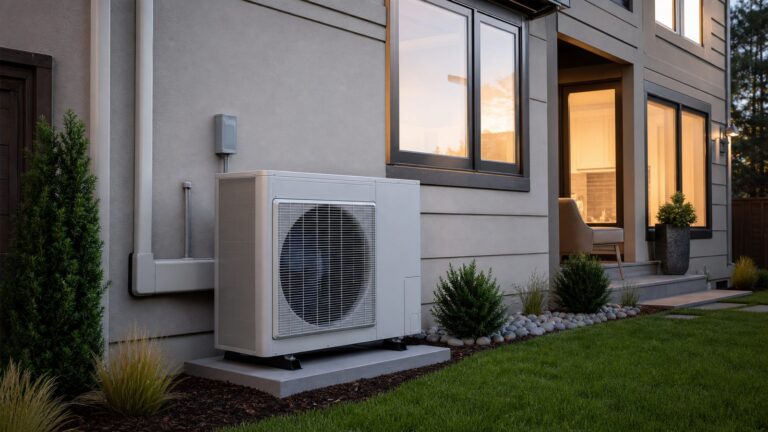
You likely have two independent systems if each area has its own furnace, air handler, or heat pump. Other clues include two outdoor condenser units, separate equipment closets, separate service disconnects, or thermostats with independent wiring. Calling for heating upstairs, for example, does not necessarily start the downstairs equipment.
#1 Best Overall

- ENERGY STAR certified smart thermostat for home that helps you save energy and stay comfortable.Connectivity : Wi-Fi - 802.11b/g/n 2.4 GHz, 802.11a/n 5 GHz Wi-Fi., Wireless interconnect : Bluetooth Low Energy Please refer to the product description section below for all applicable legal disclaimers.Product note: You can also check your system’s compatibility before purchasing a Nest thermostat with our online Nest Compatibility Checker on the Google Nest support page
- The Nest Thermostat is designed to work without a C wire in most homes, but for some systems, including heating only, cooling only, zone controlled, and heat pump systems, you’ll need a C wire or other compatible power accessory
- Nest Thermostat turns itself down when you leave, so you don’t waste energy heating or cooling an empty home. Lock feature: No
- Programmable thermostat that lets you create an energy efficient schedule in the Google Home app on your Android or iPhone
- Remote control lets family members change the thermostat temperature from anywhere on a phone, laptop, or tablet[1]
Buying implication: install one compatible smart thermostat per system. The thermostats may appear in one manufacturer app, but they remain separate controllers with separate equipment calls.
One HVAC system with two zones
A zoned system normally has one furnace or air handler, motorized duct dampers, and a zone-control panel. Multiple thermostats communicate with that panel, which directs conditioned air to different parts of the home.
A thermostat designed for a conventional standalone furnace may not work with the zone panel. The panel’s power supply, relay design, damper controls, and communication method must be checked first. Google explains the distinction between zoned systems, multiple thermostats, and multistage systems in its Nest zoning and compatibility guidance.
Recommended Free Tools
Do not confuse zoning with multistage equipment
A multistage HVAC system can have multiple heating or cooling stages while still serving one zone. It is not automatically a two-zone system. Conversely, two thermostats may control one shared system through a zone panel or two completely separate systems.
Best smart thermostats for two independent systems
1. ecobee Smart Thermostat Premium: best overall
The ecobee Premium is the best general recommendation when comfort balancing and room sensors matter. In a multilevel home, remote temperature and occupancy sensors can help prevent a thermostat in a hallway from representing the rooms people actually use. It also supports major smart-home platforms, including Apple HomeKit, Amazon Alexa, Google Assistant, and SmartThings, according to ecobee’s product information.
Two Premium thermostats are especially useful when upstairs and downstairs have different schedules, solar exposure, or occupancy patterns. Use each thermostat to control its own system, then add sensors where the measured temperature is more representative of the occupied rooms.
Price observed: $259.99 per thermostat, or approximately $519.98 for two before installation and accessories.
Limitations: Sensors improve measurement and room prioritization; they do not create a new HVAC zone or independently operate a second system. Sensor averaging can also make one room more comfortable while making another less comfortable, so placement and configuration matter.
2. Google Nest Learning Thermostat, fourth generation: best for Google Home
The fourth-generation Nest Learning Thermostat is a natural choice for a Google-centered household. Google lists it at $279.99 and includes one Nest Temperature Sensor. The model supports many conventional, heat-pump, staged, auxiliary-heat, emergency-heat, humidification, dehumidification, and ventilation configurations, subject to the exact wiring and equipment.
It also supports Matter-compatible smart-home control. Two Nest thermostats can be managed through Google Home, but app visibility should not be mistaken for true master-and-slave zoning.
Rank #2

- An Alexa thermostat - Amazon Smart Thermostat is an easy way to switch from a traditional thermostats for homes and help reduce energy usage.
- Create comfort zones throughout your home by connecting to select Alexa devices to automatically adjust heating and cooling based on temperature readings or presence detection.
- Save money and energy - After purchase, Amazon will send you an email with details about home thermostat rebates that may be available from energy providers in your area.
- Save energy - According to EPA estimates, ENERGY STAR certified thermostats save an average of $90 on yearly energy bills.
- Programmable thermostat and automatic control - Create your own home, away and sleep schedules, or have Alexa automatically control the temperature with Alexa+ advanced features.
Price observed: $279.99 per thermostat, or approximately $559.98 for two.
Limitations: Google warns that some zone panels do not provide enough power, some installations require a C wire or Nest Power Connector, and certain systems in which one thermostat controls others may be incompatible. Use Google’s compatibility process for each system, especially in a zoned installation.
3. Honeywell Home T9: best for room prioritization
The Honeywell Home T9 is a strong option when the main goal is to prioritize bedrooms, living areas, or other frequently occupied rooms. Resideo describes the T9’s remote sensors as supporting multi-room temperature management and occupancy-based room prioritization. See the official product information from Resideo and Honeywell Home.
The T9 can be a good fit for two floors where comfort depends more on occupied rooms than on the thermostat’s wall location. Confirm whether the package includes the sensors you need and whether the exact model supports your equipment.
Price: No dependable current official price was available in the supplied product information.
What’s actually slowing this PC down?
Pick the symptom - the matching free tool is one click away.
Limitations: Honeywell Home advises professional help for line-voltage, dual-fuel, fan-coil, two-wire heat-only, humidity-control, and ventilation installations.
4. ecobee Smart Thermostat Enhanced: best middle ground
The Enhanced offers the core ecobee experience at a lower price than Premium. It is a practical choice when you want two matching thermostats and room-sensor capability without paying for every Premium feature.
Price observed: $199.99 each, or approximately $399.98 for two.
Calculate the cost of additional sensors before assuming the Enhanced is the least expensive sensor-based option. Confirm current package contents and sensor compatibility before ordering.
Free tools Windows power users keep installed
One-click scans. No signup required.
5. ecobee Smart Thermostat Essential: best budget matched pair
For two conventional systems with uncomplicated 24-volt wiring, the Essential provides a lower-cost route to app control, scheduling, and smart-home integration.
Rank #3

- Save up to 23% every year on heating and cooling costs, adjusts to your set schedule to save energy when you’re gone and optimize comfort when you’re home. Compared to a hold of 72
- Compatible with 85% of systems, check your system’s compatibility with our online ecobee Compatibility Checker on the ecobee support page
- Change your temperature by easily tapping the color touchscreen or using the ecobee app. Plus, free software upgrades ensure you get the best out of your Smart Thermostat Essential, for years to come
- Automatically adjusts to your set schedule to save energy when you’re gone and optimize comfort when you’re home. Keep track of your energy consumption when you're on the go on the ecobee app
- Easy DIY install. No C Wire, no problem. Get the ecobee Power Extender Kit (PEK) for homes without a C-Wire and keep your walls looking nice with our trim kit – both sold separately
Price observed: $139.99 each, or approximately $279.98 for two.
It is not automatically suitable for communicating equipment, unusual accessory wiring, complex zoning, or systems requiring advanced controls. Verify the current Essential specifications before relying on remote sensors or accessories.
6. Sensi Smart or Sensi Touch 2: best conventional replacement
Sensi is worth considering when you want a familiar thermostat layout and a product that can occupy roughly the same wall footprint as a traditional thermostat. Sensi lists compatibility with Amazon Alexa, Google Assistant, and Samsung SmartThings on its official product page.
Do these 3 things before closing this tab:
1Repair Windows errors before they cause bigger problems2Fix the driver behind crashes, sound loss and screen glitches3Clear out junk files and repair common Windows errorsBest fit: two conventional systems where straightforward app control matters more than learning algorithms or extensive sensor features.
Limitations: Sensi models differ in wiring, staging, accessory support, sensor features, and C-wire requirements. Select the exact model only after checking its compatibility documentation. No dependable current official price was available in the supplied information.
How to choose: compatibility comes before features
- HVAC architecture: independent systems, shared zoned system, or multistage single-zone equipment.
- Voltage: standard low-voltage 24-volt controls or line-voltage electric heat such as 120/240 volts.
- Equipment type: conventional furnace and air conditioner, heat pump, boiler, fan coil, radiant system, dual fuel, or proprietary communicating equipment.
- Stages: heating stages, cooling stages, compressor stages, auxiliary heat, and emergency heat.
- Accessories: humidifier, dehumidifier, ventilator, or other equipment connected at the thermostat.
- Power: presence and continuity of a C wire or a manufacturer-approved alternative.
- Zone controls: zone panel, dampers, relay modules, or a thermostat that controls other thermostats.
- Ecosystem: Apple HomeKit, Google Home, Alexa, SmartThings, Matter, or a mixed platform.
- Sensor behavior: whether the thermostat averages readings, prioritizes rooms, or uses occupancy data.
- Total cost: two thermostats, sensors, power accessories, installation, and potential rebates.
C wire and power requirements
A C wire supplies continuous common power. Some smart thermostats can operate without one, but power-stealing designs can be unreliable with certain furnaces, zone panels, valves, or low-power systems.
A missing C wire does not always rule out a smart thermostat. An unused conductor may be available in the wall, or a manufacturer-approved power accessory may solve a power-supply problem. However, an adapter cannot fix incompatible zoning protocols, missing equipment terminals, incorrect staging, or a proprietary communicating system. Google’s C-wire guidance explains why power requirements vary.
The Tool Desk
Outbyte Driver Updater FREEScan for outdated or missing drivers - takes under a minuteDriver Scan →Outbyte PC Repair FREERepair Windows errors before they cause bigger problemsFix Now →Remote sensors versus a second thermostat
A remote sensor measures temperature—and, on some models, occupancy—in another room. It does not independently call for heat or cooling, open a damper, or operate separate equipment.
Use two thermostats when:
- Each area has its own furnace, air handler, or heat pump.
- Each area needs independent heating and cooling calls.
- You want separate setpoints and schedules.
Use remote sensors when:
- One thermostat controls the relevant equipment.
- The wall thermostat is poorly located.
- You want to prioritize bedrooms or occupied living spaces.
- Your zone panel and thermostat officially support that sensor strategy.
Schedules and coordinated control
Two thermostats in one ecosystem can often be viewed and adjusted from one app, but shared app access does not guarantee shared schedules, synchronized away mode, averaged readings, or prevention of conflicting calls. Check the exact model and app behavior.
Independent schedules are usually better when the floors have different occupancy patterns, one receives more sunlight, bedrooms are used only at night, or the systems use different technologies such as a heat pump and a furnace. A unified schedule is convenient when both areas are occupied and unoccupied at the same times and respond similarly.
Rank #4

- EASY DIY INSTALLATION: Do it yourself fast with a built-in level and simple step-by-step instructions. Works with the HVAC equipment found in most homes
- COMMON WIRE REQUIREMENTS: Common wire(C-Wire) required for heat pump and heat/cool only systems. C-wire not required on most systems
- SAVE ABOUT 23% ON HVAC ENERGY: ENERGY STAR-certified and packed with features that help you save money, including flexible scheduling, geofencing, remote access and usage reports
- PRIVACY PROTECTION: Sensi won’t sell your personal information to third parties or leverage your thermostat activity data for targeting or advertising purposes
- CONTROL FROM ANYWHERE: The top-rated mobile app for Android and iOS devices makes it easy to control your comfort from a smartphone or tablet
Start by operating both systems independently. Then coordinate sleep or away periods if appropriate. Avoid extreme opposing setpoints, and watch for one system heating while the other cools—particularly when the systems share return-air paths or have thermostats in very different locations.
PC Slower Than It Used to Be?
A free scan shows the junk files, broken settings and background clutter dragging Windows down - then fixes them in one click.Free scan · Windows 10 & 11Outdated Drivers Are Slowing You Down
One free scan finds every outdated or missing driver and matches the right update for your exact hardware.Free scan · exact hardware matchHeat pumps and communicating systems require extra care
Heat pumps may require correct O/B reversing-valve configuration, compressor staging, auxiliary heat, emergency heat, balance-point settings, or dual-fuel coordination. A product’s general statement that it “supports heat pumps” is not proof that it supports your exact sequence.
Also look for terms such as communicating thermostat, equipment interface module, proprietary bus, or variable-capacity system. Replacing a manufacturer-specific controller with a general-purpose smart thermostat can disable variable-speed operation, staging, humidity control, diagnostics, or other equipment-management features.
Installation checklist
Before purchasing
- Photograph both thermostats and every connected wire.
- Record the terminal label for each wire; do not rely on wire color.
- Check whether a C wire is present at both the thermostat and indoor equipment.
- Identify conventional versus heat-pump equipment and count heating and cooling stages.
- Look for O/B, AUX, E, W2, Y2, HUM, DEHUM, or ventilation terminals.
- Photograph furnace, air-handler, and zone-panel labels.
- Determine whether either thermostat controls dampers or another thermostat.
- Run the manufacturer’s compatibility checker for each system separately.
- Confirm country, voltage, included sensors, and current package contents.
During installation
Turn off HVAC power at the appropriate breaker or service switch; a blank thermostat does not prove the equipment is de-energized. Label wires before removal and follow the manufacturer’s wiring diagram. Install a power accessory only when the manufacturer specifically supports the configuration. Photograph the finished wiring before closing the thermostat.
After installation
- Call for heat and confirm the correct indoor unit starts.
- Call for cooling and verify the correct outdoor equipment and fan behavior.
- Test auxiliary or emergency heat when safe and appropriate.
- Test humidifier, dehumidifier, or ventilation accessories.
- Confirm the second system remains off when only the first is calling.
- Test app control, alerts, schedules, away mode, and sensor prioritization.
Restore the original thermostat if the new installation behaves unexpectedly and the original wiring is documented and safe. Check the HVAC breaker, service switch, low-voltage fuse, and C-wire connections. Repeated fuse failures, transformer noise, short cycling, heat-pump staging problems, or accessory failures require an HVAC professional.
Quick wins for a faster PC:
Fix the driver behind crashes, sound loss and screen glitchesFind Drivers →Clear out junk files and repair common Windows errorsFree Scan →When professional installation is the better choice
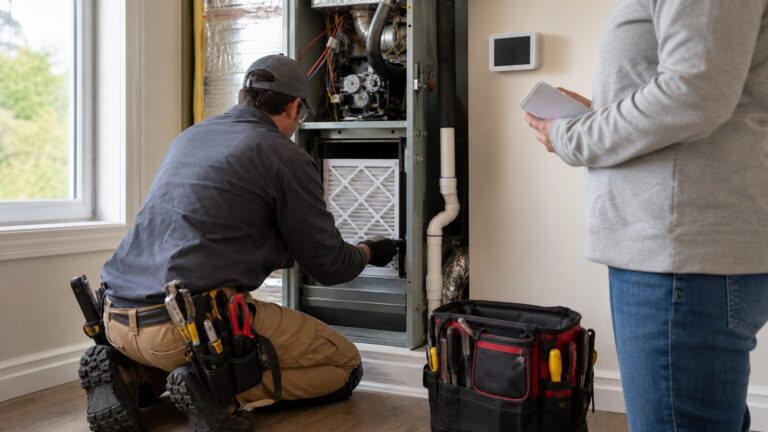
Book an HVAC professional before purchasing—or ask the installer to verify compatibility first—if you have a zone-control panel, heat pump with auxiliary heat, dual-fuel equipment, line-voltage heat, two-wire heat-only wiring, fan-coil equipment, communicating controls, or humidification, dehumidification, or ventilation accessories.
Professional help is also worthwhile when the two thermostats control overlapping areas, the wiring is undocumented, the equipment labels are unclear, or preserving variable-capacity and manufacturer-specific features is important.
What will the upgrade cost?
For two independent systems, multiply the single-thermostat price by two before adding labor and accessories. Based on manufacturer-listed prices observed August 16, 2026, two ecobee Essential units cost about $279.98, two Enhanced units about $399.98, two Premium units about $519.98, and two fourth-generation Nest Learning Thermostats about $559.98.
Your installed cost may also include remote sensors, a C-wire adapter or power kit, wall plates, rewiring, compatibility work, professional installation, tax, and applicable utility rebates. Manufacturer energy-savings figures are not guarantees: ecobee advertises potential savings of up to 26% for some models and up to 23% for Essential, but actual results depend on climate, insulation, occupancy, existing schedules, HVAC efficiency, setpoint changes, utility rates, and system type.
Final recommendations
- Choose two ecobee Premium thermostats for the broadest sensor-based comfort strategy and broad smart-home compatibility.
- Choose two fourth-generation Nest Learning Thermostats if your household is centered on Google Home and both systems pass Google’s compatibility check.
- Choose Honeywell Home T9 when room prioritization and occupancy-aware sensor control are the main goals.
- Choose two ecobee Enhanced units for a sensor-capable middle ground.
- Choose two ecobee Essential units for the lowest-cost matched-pair approach to straightforward conventional systems.
- Choose Sensi when you want a simpler, traditional-looking replacement and common voice-assistant integrations.
If your home has one shared HVAC system with dampers, do not buy based on this matched-pair logic alone. Identify the zone panel and verify compatibility with the thermostat manufacturer or an HVAC professional first.
Quick Recap
Product prices and availability are accurate as of the date/time indicated and are subject to change. Any price and availability information displayed on Amazon at the time of purchase will apply.