Some links on this page are affiliate links: if you buy through them we may earn a commission, at no extra cost to you.
The best sealer for a shed floor is not one product. It depends on whether the floor is plywood, OSB, pressure-treated lumber, or concrete, and it depends even more on moisture. On our job sites, most shed floor failures are not caused by a bad brand of coating. They come from sealing wet wood too soon, ignoring exposed panel edges, coating a damp concrete slab, or trapping moisture in a shed that has poor drainage underneath.
For most wood shed floors, a breathable exterior porch and floor enamel or a water-based polyurethane system is the most forgiving choice. For OSB, the priority is sealing edges, seams, fastener holes, and the doorway before coating the field. For concrete, a penetrating silane/siloxane sealer or acrylic sealer handles basic water and dust control, while epoxy or polyaspartic coatings are best reserved for dry, properly prepped slabs that will see mower tires, fuel, oil, tools, and heavy wear.
As an Amazon Associate I earn from qualifying purchases.
The Tool Desk
Outbyte Driver Updater FREEScan for outdated or missing drivers - takes under a minuteDriver Scan →Outbyte PC Repair FREERepair Windows errors before they cause bigger problemsFix Now →If you want the short version, use this decision table before buying anything.
| Floor type or use | Best practical sealer | Why it works | Typical 2026 DIY material cost |
|---|---|---|---|
| Plywood shed floor | Exterior porch/floor enamel or water-based polyurethane | Durable, easier to touch up, less risky than hard epoxy when underside moisture is possible | $0.35-$2.50 per sq ft |
| OSB shed floor | Primer plus porch/floor enamel, with careful edge and seam sealing | OSB swells fastest at edges; coating details matter more than gloss | $0.50-$2.50 per sq ft |
| Pressure-treated plywood | Breathable exterior floor coating after the wood dries | Fresh treated lumber often carries too much moisture for immediate coating | $0.35-$2.50 per sq ft |
| Concrete slab, light storage | Penetrating silane/siloxane or acrylic concrete sealer | Reduces water absorption, dusting, and staining without garage-level cost | $0.50-$2.00 per sq ft |
| Mower or workshop shed | Concrete epoxy, polyaspartic, or 2-part polyurethane system | Better abrasion and chemical resistance when prep and cure are done correctly | $1.50-$5.00 per sq ft DIY materials; $4-$12+ per sq ft installed |
| High-moisture or coastal shed | Breathable wood coating or penetrating concrete sealer | Handles vapor movement better than thick film coatings in damp conditions | $0.50-$2.50 per sq ft |
Start With the Floor, Not the Product Label
A shed floor lives a harder life than many homeowners expect. It gets wet mower tires, wind-driven rain at the doorway, spilled fuel, fertilizer dust, damp cardboard boxes, and temperature swings. A 10×12 shed has only 120 square feet of floor, but that small area may see more abuse than a spare room inside the house.
Popular on Amazon

- PORCH and PATIO PAINT: KILZ Porch and Patio Floor Paint is a 100% acrylic latex product providing a durable, long-lasting finish that is ideal for both interior and exterior applications.
- ADVANCED FORMULA: This Acrylic paint offers a low-lustre enamel surface that is formulated to endure on deck, porch, and patio siding and floors through variable weather conditions. This product will create a moisture resistant finish that resists scuffing, fading, cracking and peeling.
- MULTIPLE USES: Ideal for porches, floors, decks, basements, patios, siding, trim, furniture and trellises. May be applied over properly prepared, previously-painted or primed surfaces. Not for use on areas subject to automotive tires. For residential applications only. CAUTION. Sealed surfaces may become slippery when wet. Use caution when walking on surface when moisture is present.
- SUPERIOR COVERAGE: This 1 Gallon can of KILZ Enamel Porch and Patio latex paint covers 300-400 square feet on smooth surfaces and 200-300 square feet on rough surfaces. Dries to touch in 1 hour and can be recoated in 4-6 hours.
- KILZ has been making premium primers and paints for 40 years and leverage this experience in every gallon of KILZ Paint. Named Paint Brand of the Year in 2015 in the Harris Poll EquiTrend Rankings. Lifetime Limited Warranty (see label for details).
Before choosing a sealer, identify the floor assembly. Plywood, OSB, pressure-treated plywood, plank decking, and concrete all move and absorb moisture differently. The coating has to match that behavior. A hard, glossy coating can look impressive on day one and still fail early if the floor underneath is moving, wet, dirty, or poorly ventilated.
For wood floors, the big risk is moisture cycling. Water wicks into panel edges, end grain, fastener holes, and seams. Wet lawn equipment parked near the door can keep the threshold damp for days. If the shed sits low to the ground with weak airflow underneath, the underside of the floor may stay damp even when the top looks dry. Coating only the walking surface does not solve that.
Recommended Free Tools
For concrete floors, the big risk is vapor drive. Concrete can look dry and still pass moisture from the ground upward. If you install a film-forming acrylic, epoxy, or polyaspartic coating over active moisture, it can blush, peel, bubble, or trap salts. Concrete coatings are usually more sensitive to surface preparation than to the product name on the bucket.
Best Sealer for a Wood Shed Floor
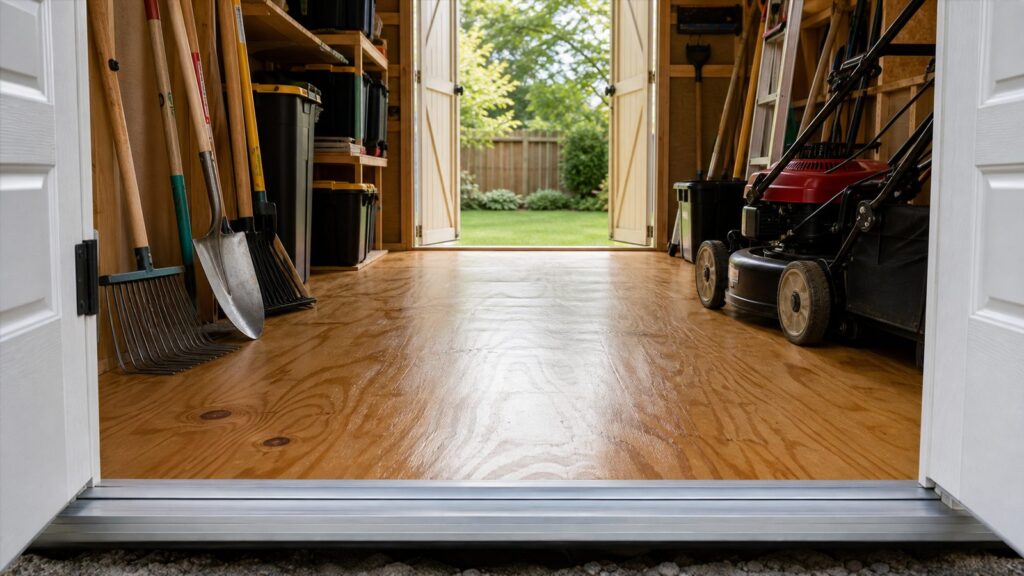
For a typical plywood shed floor, our default recommendation is a quality exterior porch and floor enamel, floor paint, or water-based polyurethane system. These products are designed for foot traffic, moderate abrasion, and outdoor temperature swings. They are also repairable. That matters because shed floors are working surfaces, not showroom floors.
A good wood shed floor coating should do four things: slow water absorption, protect the wear surface, seal vulnerable edges, and remain serviceable when the doorway area gets beat up. In most backyard sheds, that points toward a practical coating system rather than a thick epoxy film.
What We Use First on Wood Floors
On wood shed floors, we seal the weak points before we coat the field. That means seams, fastener holes, exposed plywood edges, end grain, and the door threshold. The threshold is usually the first area to fail because rain blows in, mower decks drip there, and tires grind grit into the coating.
For plywood, a common system is one coat of exterior wood primer where required by the coating manufacturer, followed by two coats of porch and floor enamel. For a tougher clear or semi-clear finish, use a compatible exterior polyurethane or spar urethane system. If the shed will be used as a workshop, a premium 2-part polyurethane or 2K moisture-cured polyurethane can add wear resistance, but it needs tighter prep, mixing, ventilation, and cure control.
For a 10×12 shed, common DIY wood floor sealing costs run about $45-$300 in materials. That includes primer or coating, brushes or rollers, sandpaper, exterior-grade sealant for gaps, and traction additive. A premium 2-part polyurethane or specialty wood floor coating can push material cost to about $1.50-$5.00 per square foot once primer, activator, thinner, multiple coats, and anti-slip material are included.
Why Epoxy Is Not Always Best for Wood
Epoxy can work on plywood in controlled conditions, but it is not our first choice for most backyard sheds. The problem is not epoxy strength. The problem is moisture. If the top of the wood is encapsulated with a hard film while the underside and edges still absorb damp air, moisture can get trapped. As the panels expand and contract, the coating can crack, peel, or separate.
If a shed is elevated, well ventilated underneath, dry, and built with stable plywood, a properly specified epoxy or 2-part system may be reasonable. If the shed sits close to grade, has damp skids, lacks airflow, or shows swelling at the door, choose a more breathable and repairable exterior floor coating instead.
Free tools Windows power users keep installed
One-click scans. No signup required.
Best Sealer for OSB Shed Flooring
OSB can be used successfully in sheds, but it needs more careful protection than plywood. OSB is especially vulnerable at cut edges and seams. Once the edges swell, the surface becomes rough, fasteners loosen, and coatings tend to fail because the substrate has changed shape.
The best sealer for OSB shed flooring is usually a primer-plus-floor-enamel system or a compatible exterior-rated polyurethane system. The key is to seal the edges aggressively. If the OSB edges at the doorway are exposed, we treat that as a repair detail, not just a painting task.
Start by sanding raised fibers and vacuuming the surface thoroughly. Replace any soft or delaminated panels. Seal gaps and seams with a compatible exterior sealant where movement is limited and water entry is likely. Coat exposed edges, penetrations, and fastener holes first. After those areas dry, coat the entire floor with the full system recommended by the manufacturer.
Use anti-slip additive in the final coat. Smooth enamel or polyurethane can become slick when wet, and shed floors often get wet from rain, snow, grass clippings, and garden tools. We usually add heavier texture near the doorway and where equipment parks, then use a lighter broadcast across the general walking area.
Pressure-Treated Plywood Needs Drying Time
Pressure-treated plywood is common in shed floors because it resists decay better than untreated panels. That does not mean it is ready to seal the day it is installed. Fresh pressure-treated lumber can hold significant treatment moisture. If you coat it too soon, the finish may peel, haze, stay soft, or trap water inside the panel.
There is no single drying time that fits every board. Weather, treatment level, storage, sun exposure, airflow, and board thickness all matter. In practical terms, wait until the wood is dry enough for the coating manufacturer’s requirements. A basic field check is to sprinkle a few drops of water on the surface. If water beads strongly and sits there, the wood may not be ready for a penetrating or bonding finish. If it absorbs after a short period and the surface moisture meter reading is within the coating’s stated range, you can proceed.
Do not rush this step because the floor is new. New pressure-treated plywood can be one of the worst candidates for immediate film coating. If schedule matters, use a product specifically approved for damp or treated wood and follow the technical data sheet closely. Otherwise, let the floor dry, keep it clean, and coat when conditions are right.
Best Sealer for a Concrete Shed Floor
For a concrete shed slab, the best sealer depends on how dry the slab is and how the shed will be used. For simple storage, a penetrating concrete sealer is often enough. For a cleaner, slightly richer surface, acrylic can work. For a mower bay, hobby shop, or chemical-prone floor, epoxy or polyaspartic systems offer the best wear and chemical resistance, but only when the slab is dry and properly prepared.
PC Slower Than It Used to Be?
A free scan shows the junk files, broken settings and background clutter dragging Windows down - then fixes them in one click.Free scan · Windows 10 & 11Outdated Drivers Are Slowing You Down
One free scan finds every outdated or missing driver and matches the right update for your exact hardware.Free scan · exact hardware matchPenetrating Concrete Sealer
Penetrating silane/siloxane sealers are a good choice for basic shed slabs. They reduce water absorption and help control dusting without creating a thick surface film. That makes them more forgiving when the slab has mild vapor movement. They usually do not create a glossy finish, so they are a practical option when you care more about protection than appearance.
Also popular on Amazon

- PORCH and PATIO PAINT: KILZ Porch and Patio Floor Paint is a 100% acrylic latex product providing a durable, long-lasting finish that is ideal for both interior and exterior applications.
- ADVANCED FORMULA: This Acrylic paint offers a low-lustre enamel surface that is formulated to endure on deck, porch, and patio siding and floors through variable weather conditions. This product will create a moisture resistant finish that resists scuffing, fading, cracking and peeling.
- MULTIPLE USES: Ideal for porches, floors, decks, basements, patios, siding, trim, furniture and trellises. May be applied over properly prepared, previously-painted or primed surfaces. Not for use on areas subject to automotive tires. For residential applications only. CAUTION. Sealed surfaces may become slippery when wet. Use caution when walking on surface when moisture is present.
- SUPERIOR COVERAGE: This 1 Gallon can of KILZ Enamel Porch and Patio latex paint covers 300-400 square feet on smooth surfaces and 200-300 square feet on rough surfaces. Dries to touch in 1 hour and can be recoated in 4-6 hours.
- KILZ has been making premium primers and paints for 40 years and leverage this experience in every gallon of KILZ Paint. Named Paint Brand of the Year in 2015 in the Harris Poll EquiTrend Rankings. Lifetime Limited Warranty (see label for details).
DIY penetrating or acrylic concrete sealer materials typically cost about $0.50-$2.00 per square foot. Concrete sealer is commonly about $30-$80 per gallon, depending on chemistry and solids content. Coverage rates vary widely, so calculate based on the specific product label and the porosity of your slab.
Acrylic Concrete Sealer
Acrylic sealer adds a film and can give the floor a modest sheen. It is useful for light storage sheds where the slab is dry, clean, and not exposed to hot tires or regular chemical spills. Acrylic is usually easier and cheaper than epoxy, but it is not as durable under abrasion.
If you choose acrylic, avoid making the floor too slick. Use a manufacturer-approved traction additive, especially near the door. UV exposure at the threshold can also age some coatings faster, so expect that area to need maintenance before the middle of the floor.
Quick wins for a faster PC:
Clear out junk files and repair common Windows errorsFree Scan →Fix the driver behind crashes, sound loss and screen glitchesFind Drivers →Epoxy and Polyaspartic Coatings
Epoxy and polyaspartic coatings are the heavy-duty options for concrete shed floors. They make sense when the shed functions like a small garage, equipment bay, or workshop. They resist abrasion better than basic sealers, and the right system can handle oil, fuel, and solvents better than paint.
The tradeoff is prep and cost. Professional epoxy garage-style coating projects commonly run $1,649-$3,492 total in 2026, with other national project data around $1,703-$3,280 and an average near $2,370. Per-square-foot epoxy estimates can run about $7.78-$12.71 when labor, prep, and options are included. For small outbuildings, a broad installed epoxy or polyaspartic range of $4-$12+ per square foot is realistic because minimum charges, diamond grinding, crack repair, moisture mitigation, flake systems, UV-stable topcoats, and travel time can dominate a small job.
Moisture Tests Before Sealing Concrete
Before sealing concrete, do two simple checks. First, use a water-drop absorption test. Put a few drops of water on the slab. If the water absorbs quickly, the concrete is porous and likely able to accept a penetrating sealer or properly specified coating after cleaning and prep. If it beads for a long time, there may be an existing sealer, curing compound, oil contamination, or a dense surface that needs mechanical prep.
Second, run a plastic-sheet moisture check. Tape a clear plastic sheet tightly to the slab, usually a square about 18 by 18 inches or larger, and leave it for about 24 hours under normal conditions. If condensation forms under the plastic or the concrete darkens noticeably, avoid film-forming coatings unless a pro evaluates moisture mitigation. A penetrating sealer may still be appropriate, but epoxy or acrylic can fail when moisture is active.
Do these 3 things before closing this tab:
1Scan for outdated or missing drivers - takes under a minute2Clear out junk files and repair common Windows errors3Fix the driver behind crashes, sound loss and screen glitchesFor any film coating, the slab should be clean, dry, sound, and properly profiled. Typical prep includes degreasing, crack repair, grinding or etching when specified, dust removal, primer if required, and application inside the manufacturer’s temperature and humidity limits. No rain, wet equipment, or heavy condensation should hit the coating during cure.
How to Prep a Shed Floor for Sealer
Prep is where the floor is won or lost. A premium coating over dirt, wet wood, loose fibers, or damp concrete is still a weak system. On our projects, we budget real time for cleaning and drying because it is cheaper than redoing a failed coating.
Wood Floor Prep
Empty the shed and inspect the floor from above and below if possible. Look for soft panels, dark staining, swelling at seams, loose fasteners, rot at the threshold, and poor airflow under the shed. If framing is rotted or the shed sits directly in wet soil, fix that before coating.
Sweep and vacuum thoroughly. Scrape loose coating. Sand raised fibers and glossy failed paint until the surface is sound. Drive or replace proud fasteners. Fill small gaps and fastener holes only with products compatible with the coating system. Seal exposed edges and end grain first, especially at the door. Then apply primer and finish coats according to the label.
Most wood systems need at least two finish coats. Many products allow recoat in 4-24 hours, but full cure can take several days. Do not drag mower decks, tool chests, or shelving back across the floor before the coating has reached its service cure.
Concrete Floor Prep
For concrete, remove everything from the slab and clean it aggressively. Oil and fuel contamination must be treated before coating. Patch cracks and spalls with compatible repair materials. If the slab has a hard troweled surface, existing sealer, or laitance, mechanical grinding is often more reliable than light acid etching.
After prep, vacuum dust thoroughly. Dust left in the pores can act like a bond breaker. Follow the product’s profile requirement, which is often listed in the technical data sheet. Epoxy and polyaspartic systems are not forgiving of guesswork here.
Slip Resistance Is Required, Not Optional
A shed floor coating that gets slick when wet is a bad floor, even if it looks perfect. Smooth polyurethane, acrylic, epoxy, and polyaspartic coatings can become slippery with rainwater, snow melt, damp leaves, grass clippings, or fine dust. Add traction while the final coat is wet, using the manufacturer’s approved additive.
Common traction materials include polymer grit, silica, and aluminum oxide. Aluminum oxide is aggressive and durable, but it can be harder to clean and rough on knees. Fine polymer grit is easier to live with in a storage shed. For mower sheds, we prefer more texture at the ramp, doorway, and parking zone, with moderate texture in walking areas.
Do not broadcast random sand into every coating. Some sand is too coarse, too dirty, or incompatible with the resin. Use a product the coating manufacturer approves, and keep the texture even so the floor does not look patched together.
Cost to Seal a Shed Floor in 2026
Most shed floors are small enough for DIY work, but small jobs can still vary widely in cost. The biggest drivers are substrate, floor size, existing coating removal, moisture damage, concrete repairs, oil contamination, number of coats, anti-slip broadcast, and whether you hire a professional.
| Project type | Typical 2026 cost | What affects the price |
|---|---|---|
| DIY wood floor sealing | $0.35-$2.50 per sq ft | Primer, enamel or polyurethane quality, sanding supplies, caulk, rollers, traction additive |
| 10×12 wood shed materials | $45-$300 total | Basic paint system vs premium coating, number of coats, repairs at threshold |
| Premium 2-part wood coating | $1.50-$5.00 per sq ft | Activator, primer, thinner, coat count, failed coating removal, anti-slip additive |
| DIY concrete penetrating/acrylic sealer | $0.50-$2.00 per sq ft | Slab porosity, cleaning, crack repair, product solids, coverage rate |
| Professional concrete cleaning and sealing | $1-$3 per sq ft | Cleaning level, access, minimum service fees, repairs, sealer type |
| Professional epoxy/polyaspartic | $4-$12+ per sq ft | Grinding, moisture mitigation, flake systems, topcoats, small-job minimums |
Professional concrete cleaning and sealing often carries $150-$300 minimum service fees. That matters for a 10×12 or 12×16 shed because the contractor still has travel, setup, prep, and cleanup time even though the square footage is small.
What’s actually slowing this PC down?
Pick the symptom - the matching free tool is one click away.
Also popular on Amazon

- ENAMEL FLOOR PAINT: Provide your floors with an extremely durable and long-lasting finish using California Paint ALLFLOR Porch, Patio and Floor Enamel Paint.
- EXTREME DURABILITY: Formulated for maximum performance, this enamel paint offers excellent alkali, water and blister resistance. The fade-resistant colors remain bright through heavy use.
- VERSATILE APPLICATIONS: Porch, Patio and Floor Enamel adheres to a variety of surfaces. It makes an ideal basement, porch, playroom, pool deck or patio paint.
- EASY TO APPLY: Ensure your surface is clean and free of defects and apply with a brush or roller. Follow all directions on label for application.
- LIFE IN COLOR: Known as the paint industry's historic color authority, California paints offers the highest quality coatings in more than 1,500 distinct colors. Find yourself a timeless classic or start a new trend.
When to DIY vs When to Hire a Pro
DIY makes sense when the floor is structurally sound, dry, accessible, and lightly worn. A homeowner can usually handle a plywood or OSB floor with sanding, edge sealing, primer, and porch/floor enamel. A homeowner can also apply many penetrating concrete sealers after cleaning and moisture checks.
Hire a pro when the slab needs grinding, has oil contamination, shows active moisture, or will receive epoxy or polyaspartic coating. Also bring in help if the floor has rot, sagging framing, termite damage, major panel swelling, or a door threshold that needs rebuilding. Coating over structural damage only hides the problem for a short time.
For sheds storing mowers, motorcycles, gas cans, fertilizers, or solvents, be more selective. Choose chemical-resistant coatings and allow full cure before exposing the floor to hot tires, gasoline, oil, or solvents. A coating that is dry to the touch is not always ready for service. Cure schedules commonly range from 24 hours for light foot traffic to several days before heavy equipment, depending on the product and temperature.
When Not to Seal a Shed Floor
Do not seal a shed floor when the structure or moisture problem has not been solved. If the shed sits directly in wet soil, water flows under it during rain, skids are rotting, or the floor framing is soft, coating the top surface will not stop failure. Improve drainage, raise the shed if needed, repair framing, and restore airflow first.
The Tool Desk
Outbyte Driver Updater FREEFix the driver behind crashes, sound loss and screen glitchesFind Drivers →Outbyte PC Repair FREEClear out junk files and repair common Windows errorsFree Scan →Do not coat wet pressure-treated plywood just because the weekend is open. Let it dry to the coating manufacturer’s requirements. Do not install acrylic, epoxy, or polyaspartic over a concrete slab that shows moisture under taped plastic unless a professional specifies a mitigation system. Do not seal over loose paint, oily concrete, moldy wood, or swollen OSB and expect the coating to bond.
There are times when replacement is the better value. If OSB edges have swelled badly, plywood has delaminated, or the threshold is soft enough to dent with a screwdriver, replace the damaged material before finishing. A gallon of coating cannot restore lost structure.
Safety, VOC, and Permit Notes
Read the technical data sheet before buying, especially for solvent-based sealers, 2-part polyurethanes, epoxies, and polyaspartics. Current VOC rules affect coating availability in the United States. The EPA’s national Architectural and Industrial Maintenance coatings rule applies to architectural coatings sold in the U.S., and states such as California and regions following stricter OTC or LADCO standards may limit certain solvent-based products. Check local VOC compliance and the product label before ordering online.
Ventilation matters. Many shed coatings require open doors, cross ventilation, gloves, eye protection, and organic vapor protection where specified. Keep ignition sources away from solvent vapors. Store rags and coating waste according to the label, especially with oil-based products.
Sealing an existing shed floor usually does not require a permit. Replacing structural floor framing, pouring a new slab, changing the foundation, adding electrical work, or building a new shed may trigger local permit or zoning rules. Shed requirements vary by city and county, including size thresholds, setbacks, anchoring, slab rules, and storm requirements. Before building a new slab or replacing structural components, check your local building department.
Maintenance After Sealing
A sealed shed floor still needs basic care. Sweep grit regularly so it does not act like sandpaper under mower tires and boots. Wipe up gasoline, oil, fertilizer, pesticides, and solvents quickly. Avoid storing wet cardboard directly on the floor because it traps moisture against the coating.
Inspect the doorway, seams, and equipment parking areas every season. These are the first places to wear. Painted wood shed floors commonly need touch-ups every 2-5 years depending on use, water exposure, and traffic. Concrete penetrating sealers may need reapplication based on absorption and manufacturer guidance. Film coatings should be cleaned with compatible products, not harsh solvents unless the coating manufacturer allows them.
The best long-term protection is a system: good drainage around the shed, airflow below the floor, a dry and sound substrate, careful edge sealing, a compatible coating, traction in the final coat, and regular touch-ups. Get those basics right and a shed floor can stay serviceable for many years instead of failing at the doorway after one wet season.
PC Slower Than It Used to Be?
A free scan shows the junk files, broken settings and background clutter dragging Windows down - then fixes them in one click.Free scan · Windows 10 & 11Crashes, No Sound, or Screen Glitches?
Random freezes, missing sound and display glitches usually trace back to one bad driver. Find and replace yours safely.Free scan · under a minuteBottom Line
For most wood shed floors, use a breathable exterior porch/floor enamel or polyurethane system and spend extra time on edges, seams, fasteners, and the threshold. For OSB, edge sealing is the job. For pressure-treated plywood, wait until the wood is dry enough to coat. For concrete, use a penetrating or acrylic sealer for basic storage and reserve epoxy or polyaspartic for dry, mechanically prepared slabs that need garage-level durability.
The best sealer is the one that matches the floor and the moisture conditions. If you diagnose those first, the product choice becomes much easier and the floor lasts longer.
Frequently Asked Questions
What is the best sealer for a wood shed floor?
For most wood shed floors, the best choice is an exterior porch and floor enamel, floor paint, or water-based polyurethane system. These coatings protect against foot traffic and moisture while remaining easier to touch up than thick epoxy films.
Can you use epoxy on a plywood shed floor?
Yes, but only in the right conditions. Epoxy can work on dry, stable plywood with good underside ventilation and careful prep. It is risky in damp sheds because it can trap moisture and peel as the wood expands and contracts.
Recommended Free Tools
Should I seal OSB shed flooring?
Yes. OSB shed flooring should be sealed, especially at cut edges, seams, fastener holes, and the doorway. OSB swells quickly when water reaches exposed edges, so detailed prep matters more than using the thickest coating.
What is the best sealer for a concrete shed floor?
For light storage, use a penetrating silane/siloxane sealer or acrylic concrete sealer. For mower storage, workshops, fuel exposure, or heavy abrasion, use a 2-part epoxy or polyaspartic system only after moisture testing and proper surface preparation.
How much does it cost to seal a shed floor in 2026?
DIY wood shed floor sealing typically costs $0.35-$2.50 per square foot, or about $45-$300 for a 10×12 shed. DIY concrete sealing usually costs $0.50-$2.00 per square foot. Professional epoxy or polyaspartic coating can run $4-$12+ per square foot.
Do I need a permit to seal or replace a shed floor?
Sealing an existing shed floor usually does not require a permit. Replacing structural framing, pouring a new slab, changing the foundation, adding utilities, or building a new shed may require local approval, depending on your city or county rules.
Quick Recap
Product prices and availability are accurate as of the date/time indicated and are subject to change. Any price and availability information displayed on Amazon at the time of purchase will apply.

