What’s actually slowing this PC down?
Pick the symptom - the matching free tool is one click away.
Some links on this page are affiliate links: if you buy through them we may earn a commission, at no extra cost to you.
The best sealer for slate tile is usually a high-quality penetrating or impregnating sealer, not a glossy surface coating. For most US homes in 2026, our first recommendation is a premium penetrating sealer such as Miracle Sealants 511 Impregnator, Aqua Mix Sealer’s Choice Gold, or Miracle 511 Porous Plus when the slate is especially absorbent. These products soak into the stone and grout, reduce staining, and keep the floor closer to its natural slip resistance.
The right choice depends on what you want the slate to look like. If you want a natural, no-sheen finish, use a penetrating sealer. If you want the colors to look richer and darker, use an enhancing penetrating sealer. If you want a wet-look or gloss finish, understand that you are moving into a higher-maintenance category that can show scratches, turn cloudy, and become slick if used in the wrong place.
On our job sites, we do not pick slate sealer by brand alone. We test the actual tile. Slate varies widely by quarry, density, cleft texture, finish, and mineral content. A dense honed black slate in a powder room may behave nothing like a rough multicolor slate in a mudroom. Start with a water-drop test, then do a hidden sample patch before sealing the whole floor.
Quick wins for a faster PC:
Clear out junk files and repair common Windows errorsFree Scan →Fix the driver behind crashes, sound loss and screen glitchesFind Drivers →As an Amazon Associate I earn from qualifying purchases.
Quick Decision Guide: Which Slate Sealer Should You Use?
Use this first-pass guide before you spend money on product. It will prevent most of the common mistakes: buying a gloss coating for a wet entry, using a low-performance sealer in a kitchen, or applying an enhancer when the homeowner wanted the slate to stay light and natural.
| Goal | Best sealer type | Typical look | Best areas | Main caution |
|---|---|---|---|---|
| Natural slate appearance | Penetrating/impregnating sealer | No sheen or very low sheen | Foyers, kitchens, halls, mudrooms, living areas | Must wipe off all surface residue before it dries |
| Richer color without a plastic film | Enhancing penetrating sealer | Darker, color-enriched, usually low sheen | Interior floors, feature walls, some covered exterior slate | Can make patchy slate look more uneven if applied poorly |
| Wet look or gloss | Topical acrylic or wet-look sealer | Noticeable sheen or gloss | Decorative low-slip-risk areas only | Higher slip, peeling, scratching, whitening, and maintenance risk |
| Grout stain protection only | Grout sealer | No major change to tile | Ceramic/porcelain jobs with cement grout | Usually not enough for porous natural slate |
| Showers or exterior assemblies | Penetrating sealer plus proper waterproofing below | Natural or enhanced | Slate showers, patios, porches | Sealer is not a waterproof membrane |
For a typical interior slate floor, we want breathable protection against water, cooking oil, tracked-in dirt, pet messes, and salt residue. That is why penetrating sealers are the practical default. They protect the pores of the stone and the grout without creating a wear layer on top of the tile.
Popular on Amazon

- On very porous surfaces like Travertine, use 511 Porous Plus.
- Formula is oil and water resistant that creates an invisible barrier for protection
- Covers up to 500 square feet per pint
- Offers superior coverage, formulated to provide stain protection that is UV transparent and resists weather elements
- Easy application and will not yellow, safe to use around food prep areas
Our Top Slate Tile Sealer Picks for 2026
These are the slate sealer categories we would consider first for a homeowner, property manager, or light commercial client. Product prices vary by store and region, but the 2026 retail examples below give you a realistic planning range.
Best Overall for Most Slate Floors: Miracle Sealants 511 Impregnator
Miracle Sealants 511 Impregnator is a strong all-around choice for medium-density slate, honed slate, gauged slate, and many interior floors where the homeowner wants protection without changing the look much. It is an impregnating sealer, meaning it is designed to enter the pores rather than sit as a coating on the surface.
Use it for kitchens, entries, hallways, laundry rooms, and other areas where oil and water resistance both matter. A 2026 Home Depot retail example listed Miracle 511 16 oz at about $28.47, with gallon-size options commonly landing much higher depending on packaging and retailer. For a 200 sq ft foyer, one quart may be enough on dense slate, but rough cleft slate can consume more.
Where we like it: durable natural-look protection, broad availability, and a long track record in stone and tile work. Where we slow down: very porous slate may need a heavier-duty porous-stone product, and excess sealer must be buffed off before it dries.
Best for Very Porous Cleft Slate: Miracle 511 Porous Plus
For rough, open-textured, thirsty slate, Miracle 511 Porous Plus is often a better match than a standard penetrating sealer. Cleft slate has more surface area and deeper texture, so it can absorb more product and hold more residue in the high-low surface pattern. A 2026 retail example listed Miracle 511 Porous Plus 1 qt at about $54.99.
This is the kind of sealer we consider for rustic mudroom slate, older unsealed stone, multicolor slate, and textured floors that darken almost immediately during a water-drop test. It is also useful where grout joints are wide, because grout often stains faster than the slate itself.
Budget extra product and labor for this type of floor. Manufacturer coverage claims are usually based on controlled conditions. A rough, unsealed slate floor may fall toward the low end of coverage, especially on the first coat.
Best Low-Odor Premium Water-Based Option: Aqua Mix Sealer’s Choice Gold
Aqua Mix Sealer’s Choice Gold is a premium water-based penetrating sealer with indoor/outdoor use cases and lower odor than many solvent-heavy products. It is a good fit when the house is occupied, when ventilation is limited, or when the owner wants a premium natural-look sealer without a strong solvent smell.
Aqua Mix lists coverage around 50 to 250 sq ft per 24 oz depending on tile texture and porosity. That wide range matters. Smooth, dense slate may be near the higher end. Rough cleft slate may be near the lower end. In 2026, quart-size listings from specialty retailers were around $56.95 to $57.65.
The Tool Desk
Outbyte PC Repair FREEClear out junk files and repair common Windows errorsFree Scan →Outbyte Driver Updater FREEFix the driver behind crashes, sound loss and screen glitchesFind Drivers →We like this category for interior floors, kitchens, baths, and covered exterior slate where a natural look is the goal. It is not a shortcut around prep. The floor still needs to be clean, rinsed, dry, and tested.
Best Budget Natural-Look Option: TileLab Penetrating Sealer
TileLab Penetrating Sealer is a budget-friendly option for homeowners who need basic stain resistance without paying premium sealer prices. 2026 Home Depot examples listed TileLab 1 qt Penetrating Sealer at $19.97 and TileLab 4 qt at $60.97. That makes it attractive for larger areas or lower-risk floors.
We would not put it ahead of a premium stone sealer for a high-use kitchen, commercial lobby, or heavily textured expensive slate. But for a lightly used slate floor that is already in good condition, it can be a reasonable choice when the budget is tight and expectations are realistic.
Also popular on Amazon
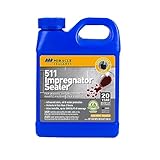
- SCS Certified INDOOR ADVANTAGE GOLD
- Interior & Exterior Use
- Weather Resistant
- Superior Coverage
- Safe for Food Areas
If the floor is porous, dark, high-value, or exposed to oil and salt, step up to a premium impregnating sealer. The cost difference on a 100 to 300 sq ft floor is usually small compared with the cost of correcting stained stone.
Best Enhancing Sealer: Miracle 511 Seal & Enhance or TileLab Stone Sealer & Enhancer
Enhancing sealers are for homeowners who want slate to look richer, darker, and more saturated. They are useful when a slate floor looks dusty or washed out after cleaning, or when multicolor slate needs more depth. Miracle 511 Seal & Enhance and TileLab Stone Sealer & Enhancer are common examples in this category. A 2026 Home Depot example listed TileLab Stone Sealer & Enhancer 24 oz at $60.48.
Do not use an enhancer casually. It intentionally changes the appearance. On uneven slate, it can exaggerate mineral variation, old sealer marks, scratches, and lippage shadows. Always test it in a closet, under an appliance, or on spare tile. Let the test cure fully before approving the look.
For best results, apply enhancing sealer in thin, controlled coats. Heavy application can leave sticky residue, blotchy shine, or dark lap marks, especially on cleft stone.
Best Wet-Look Option: Use Only with Clear Expectations
Wet-look sealers can make slate appear glossy, dark, and freshly washed. Products in this category, such as Black Diamond Stoneworks Wet Look, are sometimes listed with coverage around 500 sq ft per gallon, but that number can drop on porous or textured slate. A wet-look finish can be attractive on decorative stone, but it is not our first choice for most working floors.
Windows Errors? Fix Them Before They Spread
Repair common Windows errors and clear accumulated junk for a smoother, more stable PC - no reinstall needed.Free scan · no reinstallCrashes, No Sound, or Screen Glitches?
Random freezes, missing sound and display glitches usually trace back to one bad driver. Find and replace yours safely.Free scan · under a minuteThe reason is simple: a topical finish becomes the wear surface. It can scratch, peel, trap moisture, turn cloudy, or become slippery when wet. On an exterior walkway, shower floor, or busy mudroom, that risk matters. If a client insists on this look, we test traction, confirm maintenance expectations, and avoid areas where wet slip performance is critical.
Penetrating vs Enhancing vs Topical Sealers
Most slate sealer confusion comes from mixing up three different jobs: stain protection, color change, and surface gloss. A penetrating sealer is built mainly for stain protection. An enhancing sealer adds stain protection while darkening the slate. A topical sealer creates a surface film, usually to add gloss or a wet look.
Penetrating sealers are the most forgiving for floors. They usually preserve the natural texture of the slate, which helps with traction. They also avoid the peeling and scuffing problems that come with a film. If the floor gets heavy use, you can often clean and reapply after testing absorption instead of stripping a coating.
Enhancing sealers are useful, but the sample patch is non-negotiable. Some slate gets beautifully richer. Some gets too dark. Some turns blotchy because the tile itself has inconsistent density. If the homeowner wants the slate to stay gray, charcoal, green, or rust-toned exactly as it is, do not use an enhancer.
Topical sealers should be treated like a finish system, not just a sealer. They need cleaner prep, stricter drying time, and more future maintenance. They can also change the coefficient of friction. In plain terms, a glossy slate floor can be slicker, especially with water, socks, pets, or tracked-in dust.
How to Test Slate Before Sealing
Two tests will tell you more than any label on the bottle: a water-drop absorption test and a hidden sample patch. We do both before sealing client floors, especially on natural slate.
Water-Drop Test
Clean a small area and let it dry. Place a tablespoon of water on the slate and another on the grout. Watch for 5, 10, and 15 minutes. If the water darkens the stone quickly or disappears into the grout, the surface is absorbent and needs sealer. If the water still beads after 15 minutes, the floor may already be sealed or the slate may be dense.
Do this in several places: near the exterior door, under a rug, next to the range, and in a low-traffic corner. A floor can wear unevenly. Doorways and kitchen work zones often fail the test before the rest of the floor.
Free tools Windows power users keep installed
One-click scans. No signup required.
Hidden Sample Patch
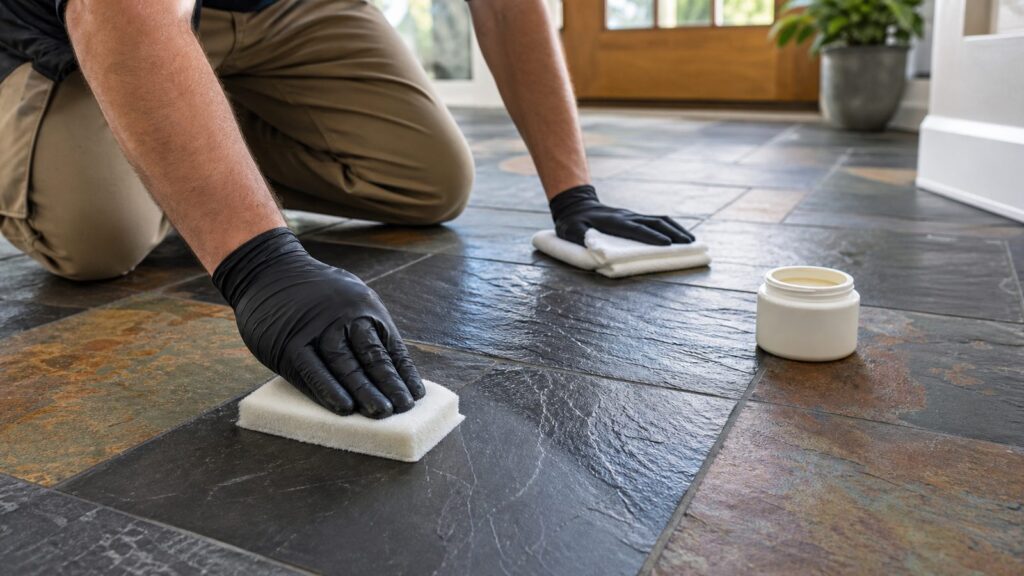
Pick a spot under a cabinet toe kick, in a closet, behind a door, or on spare tile. Apply the sealer exactly as directed: thin coat, correct dwell time, and full buff-off. Let it cure according to the product label. Check color, sheen, residue, odor, and traction.
Also popular on Amazon
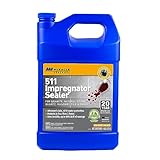
- For use inside or out on a variety of surfaces including sanded grout, ceramic tile, porcelain tile, glazed tile, stucco, travertine, marble, slate, granite, terrazzo and more to protect against water, stains and slippage
- Formula is oil and water resistant that creates an invisible barrier for protection
- Covers up to 4,000 square feet per gallon
- Offers superior coverage, formulated to provide stain protection that is UV transparent and resists weather elements
- Easy application and will not yellow, safe to use around food prep areas
If the test area feels tacky, looks cloudy, or shows shiny lap marks, do not continue. The issue is usually too much product, poor absorption, old coating residue, or insufficient buffing.
Cost to Seal Slate Tile in 2026
DIY slate sealing is usually affordable, but the real cost is not just the bottle. You need cleaner, applicators, towels, tape, gloves, knee pads, and sometimes a wet/dry vacuum. For a 200 sq ft slate foyer, a realistic DIY materials-only range is about $60 to $180 for sealer plus $30 to $100 for supplies.
Professional cleaning and sealing commonly runs about $0.75 to $5.00 per sq ft in national consumer cost guides. Slate can land higher when the contractor has to deep clean cleft texture, remove old topical finish, treat stains, repair grout, or apply multiple coats. That puts a 200 sq ft floor around $150 to $1,000 depending on condition and scope.
Do these 3 things before closing this tab:
1Repair Windows errors before they cause bigger problems2Fix the driver behind crashes, sound loss and screen glitches3Clear out junk files and repair common Windows errors| Project size | DIY sealer and supplies | Typical pro clean-and-seal range | Notes |
|---|---|---|---|
| 50 sq ft powder room | $50-$120 | $100-$250 minimum charge likely | Small jobs often carry a minimum trip charge |
| 200 sq ft foyer or kitchen | $90-$280 | $150-$1,000 | Texture, soil, and number of coats drive the spread |
| 500 sq ft main floor area | $180-$500+ | $375-$2,500 | Old topical coating removal can raise cost sharply |
| Exterior slate patio | $150-$600+ | $500-$3,000+ | Cleaning, drying weather, drainage, and freeze-thaw exposure matter |
Keep the cost in perspective. Installed natural stone tile commonly runs around $15 to $30+ per sq ft, and slate-specific projects can run about $10 to $35 per sq ft including tile, materials, and labor. Spending another dollar or two per square foot to protect the floor is usually sensible if the slate is worth keeping.
How to Apply Slate Tile Sealer the Right Way
Most sealer failures are application failures. Haze, sticky spots, blotchy shine, and streaks usually come from sealing over dirt, leaving detergent in the cleft texture, applying too much product, or letting excess dry on the face of the stone.
1. Clean the Slate Thoroughly
Use a neutral stone cleaner, not vinegar, bleach, ammonia, or acidic bathroom cleaner. Scrub grout lines and cleft texture with a nylon brush. Rinse with clean water. On rough slate, a wet/dry vacuum helps pull dirty rinse water out of low spots and grout joints.
If there is an old topical coating, wax, acrylic shine, or unknown finish, a simple reseal may not work. The old film may need to be stripped by a pro. Do not trap dirt or moisture under a new coating.
Recommended Free Tools
2. Let the Floor Dry
Slate and grout must be dry before sealing. A minimum of 24 hours is common after cleaning, but dense grout joints, cool rooms, and rough exterior slate can need longer. For exterior work, check the forecast. Avoid sealing before rain, during high humidity, or under hot direct sun that flashes the product too fast.
3. Protect Adjacent Surfaces
Tape baseboards, cabinet toe kicks, metal thresholds, carpet edges, and painted trim. Some sealers can stain or leave a sheen on materials you did not intend to coat. Wear gloves and follow the label for ventilation and personal protection.
4. Apply Thin, Even Coats
Work in small sections, often 10 to 25 sq ft at a time depending on texture and temperature. Use a clean applicator pad, sponge, brush, or sealer-compatible sprayer where the label allows it. Keep a wet edge. Do not flood the floor.
Let the sealer dwell for the label’s recommended time, then buff off all excess with clean white lint-free towels. This buff-off step matters as much as the product choice. Penetrating sealer left on the face can dry into haze or sticky residue.
5. Add a Second Coat Only When Needed
Very porous slate or grout may need two coats. Dense slate may not. Apply the second coat within the product’s recommended window. More coats are not automatically better. Once the stone stops absorbing, extra sealer sits on the surface and causes problems.
6. Allow Proper Cure Time
Light foot traffic may be allowed after several hours on some products, but full cure can take 24 to 72 hours or longer depending on chemistry, temperature, and humidity. Keep the floor dry during cure. Do not put rugs, mats, or furniture back too soon.
Best Sealer by Location
Kitchen Slate Floors
Prioritize oil repellency. Water resistance alone is not enough around ranges, islands, pet bowls, and trash pullouts. Use a premium penetrating sealer and seal the grout at the same time. Clean spills quickly, especially cooking oil, wine, coffee, tomato sauce, and pet accidents.
Also popular on Amazon

- SCS Certified INDOOR ADVANTAGE GOLD
- Superior Stain Protection
- Interior & Exterior Use
- Odorless
- Grout Release
Mudrooms and Entryways
Use a penetrating sealer that handles water, salt, grit, and soil. Avoid high-gloss topical coatings where wet shoes enter the house. Add walk-off mats at exterior doors, but choose breathable mats after the sealer cures. Rubber-backed mats can trap moisture and may discolor some stone or sealer systems.
Do these 3 things before closing this tab:
1Scan for outdated or missing drivers - takes under a minute2Clear out junk files and repair common Windows errors3Fix the driver behind crashes, sound loss and screen glitchesBathrooms and Showers
Sealer helps reduce staining and absorption at the surface, but it does not waterproof a shower. A properly built shower still needs a code-compliant waterproofing system, proper slope, suitable drain detailing, and correct tile installation. ANSI A118.10 waterproof membranes are used for waterproofing tile assemblies; sealer is not a substitute.
On shower floors, slip resistance matters. Be very careful with enhancers and avoid glossy topical coatings unless the product and tile combination has been tested for wet traction.
Exterior Slate Patios and Porches
For exterior slate, prioritize breathability, UV resistance, freeze-thaw suitability, and traction. The sealer should allow vapor to escape. Trapped moisture can contribute to whitening, flaking, and failure, especially in freeze-thaw climates.
Exterior slate also needs proper slope and drainage. No sealer fixes standing water, failed grout, poor substrate prep, or movement cracks.
When to DIY and When to Hire a Pro
DIY is reasonable when the slate is newer, clean, uncoated, lightly soiled, and under about 300 sq ft. A careful homeowner can clean, test, seal, and buff a foyer or kitchen over a weekend. Plan on several hours for cleaning and prep, 24 hours or more for drying, 1 to 3 hours for sealing a 200 sq ft area, and 24 to 72 hours of cure management.
Hire a pro when the slate has an old glossy coating, wax buildup, white haze, deep oil stains, loose grout, cracked tiles, moisture problems, or exterior freeze-thaw damage. Also hire out large commercial floors, restaurants, rental turnovers with unknown cleaning history, and any project where downtime is expensive.
Stripping old topical sealer is not the same as routine cleaning. It may involve strong chemicals, machine scrubbing, slurry recovery, ventilation controls, and careful disposal. That is where professional equipment earns its keep.
Safety, VOC, and Job-Site Notes
Read the sealer label and safety data sheet before opening the container. Some sealers are water-based and lower odor. Others are solvent-based and require stronger ventilation, ignition control, respirator consideration, and stricter handling. The EPA regulates architectural coating VOC categories, and local air districts can have additional limits, especially in parts of California and other regulated markets.
Wear chemical-resistant gloves, eye protection, and knee protection. Keep children and pets out of the work area until the floor is safe for traffic. If you are mechanically grinding, cutting, or removing tile or mortar, OSHA’s construction silica rules may apply. Wet methods, dust collection, and respiratory protection are not optional details when silica dust is generated.
Permits are usually not required for cleaning and sealing an existing slate floor. Permits may be involved if you are rebuilding a shower, changing plumbing, replacing structural substrate, or doing larger renovation work. In wet areas, follow tile industry standards and local code requirements rather than relying on sealer to solve assembly problems.
How Often Should Slate Be Resealed?
Do not reseal on a blind annual schedule. Test it. Many residential slate floors should be checked every 1 to 3 years, but the actual interval depends on traffic, cleaners, UV exposure, moisture, grit, pets, and the original sealer type. A kitchen may need attention before a guest room. A sunny exterior porch may weather faster than a shaded interior hall.
Also popular on Amazon

- SCS Certified INDOOR ADVANTAGE GOLD
- Superior Stain Protection
- Superior Coverage
- Interior & Exterior Use
- Weather Resistant
Use the water-drop test again. If water beads for 10 to 15 minutes, the sealer may still be doing its job. If water darkens the stone or grout quickly, clean and reseal. Avoid piling new sealer over old residue. If the floor looks hazy or sticky, solve that problem before adding more product.
Document the product name, lot number, application date, number of coats, test area, and cure notes. For property managers and commercial clients, this record saves time later and prevents incompatible products from being layered over each other.
Common Mistakes to Avoid
The biggest mistake is treating slate like porcelain. Porcelain is dense and manufactured. Slate is natural stone. Its porosity and texture can change from tile to tile, especially with cleft and multicolor material.
The second mistake is skipping the grout. Cement grout is often more absorbent than the stone, and it is where dirty mop water, oil, and soil collect. Seal the slate and grout together unless the product label says otherwise.
The third mistake is using a wet-look coating in a wet or high-traffic area because it looked good on a sample photo. Gloss adds maintenance. On a floor, especially near water, traction and wear matter more than shine.
The fourth mistake is leaving excess sealer on the surface. Penetrating sealer needs time to enter the pores, but the leftover material on the face must be removed. Clean white towels, small work areas, and good lighting are cheap insurance.
Bottom Line: The Best Sealer for Slate Tile
For most slate tile floors, choose a premium penetrating sealer with water and oil repellency. Miracle 511 Impregnator is a strong overall pick, Miracle 511 Porous Plus is better for very absorbent cleft slate, and Aqua Mix Sealer’s Choice Gold is a good premium water-based choice where low odor matters. Use an enhancing sealer only when you want the slate darker and richer. Treat wet-look topical sealers as a decorative finish with added slip and maintenance concerns.
The product matters, but the process matters more. Test first, clean thoroughly, rinse well, let the slate dry, apply thin coats, and buff off every bit of excess before it dries. Done that way, a good slate sealer protects the stone and grout without making the floor look artificial or harder to live with.
Frequently Asked Questions
What is the best sealer for slate tile floors?
For most slate tile floors, the best choice is a breathable penetrating or impregnating sealer with water and oil repellency. It protects the slate and grout without creating a glossy surface film.
Should slate tile be sealed before or after grouting?
Porous slate is often sealed before grouting to reduce grout staining, then sealed again after the grout cures if the product and installation call for it. Always follow the grout and sealer manufacturer’s timing.
Will sealer make slate tile waterproof?
No. Sealer reduces surface absorption and staining, but it does not waterproof a shower, patio, or floor assembly. Wet areas still need proper waterproofing, slope, drainage, and code-compliant installation.
How often should slate tile be resealed?
Test every 1 to 3 years in most homes. Reseal when water no longer beads or when the stone and grout darken quickly during a water-drop test.
Can I use a wet-look sealer on slate?
Yes, but only where the gloss, traction change, and maintenance burden are acceptable. Wet-look topical sealers can scratch, peel, turn cloudy, or become slippery in wet areas.
Free tools Windows power users keep installed
One-click scans. No signup required.
How much does it cost to seal slate tile?
A 200 sq ft DIY slate sealing project commonly costs about $90 to $280 for sealer and supplies. Professional cleaning and sealing often ranges from about $0.75 to $5.00 per sq ft, depending on condition and scope.
Quick Recap
Product prices and availability are accurate as of the date/time indicated and are subject to change. Any price and availability information displayed on Amazon at the time of purchase will apply.

