The Tool Desk
Outbyte PC Repair FREEClear out junk files and repair common Windows errorsFree Scan →Outbyte Driver Updater FREEScan for outdated or missing drivers - takes under a minuteDriver Scan →Some links on this page are affiliate links: if you buy through them we may earn a commission, at no extra cost to you.
The best As Seen on TV food storage containers are not always the ones with the loudest claim, the biggest piece count, or the most dramatic before-and-after shot. For a real kitchen, the winner is the container system that fits your pantry shelves, cabinet interiors, refrigerator zones, dishwasher, microwave habits, and the way your family actually eats.
On our kitchen and pantry projects, we see the same pattern over and over: homeowners buy a 24-piece or 40-piece matching set first, then discover the tall cereal container hits the upper shelf, the glass leftovers are too heavy for a high cabinet, the lids take over a drawer, or the pull-out pantry cannot close because the containers are too deep. A good container system starts with measurements, not marketing.
As an Amazon Associate I earn from qualifying purchases.
For 2026, most mainstream airtight pantry sets land around $20 to $50, depending on piece count and plastic quality. Better name-brand plastic or glass food-storage sets commonly run $30 to $75, while larger premium sets can reach $75 to $130 or more. Those costs are reasonable if the containers solve a real storage problem. They are wasted money if they create a new one.
What “As Seen on TV” Food Storage Really Means
“As Seen on TV” food storage products usually fall into familiar categories: airtight plastic canisters, stackable leftover containers, silicone stretch lids, produce keepers, specialty trays, vacuum-style lids, and multi-piece pantry sets. The TV version is often sold as a fast fix for stale cereal, messy cabinets, or mismatched leftovers.
Popular on Amazon
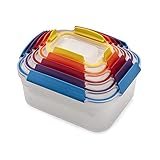
- Easy-find, color-coded nesting food storage container set with lockable snap-together lids
- Innovative space-saving design; access any size container or lid easily
- All containers feature lockable, airtight, and leak-proof lids
- All products in the nest lock range fit together so you can build your own collection to suit your needs, BPA Free
- Freezer, microwaver and dishwasher safe (top-rack only)
Some of those products are useful. Some are just a standard container with a better demonstration. The practical question is simple: does it fit the space and the food you need to store?
For most homeowners, the strongest choices in 2026 are not limited to TV-only brands. Reliable container systems often come from mainstream categories such as clear modular pantry containers, glass leftover containers with locking lids, BPA-free plastic meal-prep containers, stainless steel containers for dry or cold storage, and silicone lids or bags for flexible storage.
Look past the pitch and evaluate five things: dimensions, seal quality, material, cleaning requirements, and storage behavior when the container is empty. A container that stacks neatly when full but becomes a lid-management problem when empty is not a complete system.
Start With the Kitchen, Not the Container Set
Before buying any full set, measure the kitchen. This takes 20 to 30 minutes and prevents most of the expensive mistakes we see during cabinet and pantry work.
Measure shelf depth, shelf width, vertical clearance, door-swing clearance, drawer interior width, drawer interior height, pull-out basket height, and refrigerator shelf height. Do not assume a “standard” cabinet will accept a standard organizer. A nominal 24-inch-deep base cabinet may have a drawer box closer to 19 to 21 inches deep inside. A 12-inch-deep wall cabinet may give you less usable depth once hinges, face frames, and door clearance are considered.
Then measure the food packages you actually buy: cereal boxes, flour bags, sugar bags, rice bags, oats, coffee, snacks, pet food, pasta, crackers, spices, and lunch containers. If your family buys 5-pound bags of flour, oversized cereal, and bulk rice, a small decorative canister set will not solve the problem. If you cook for two and shop weekly, a smaller modular system may be better than a large pantry overhaul.
Crashes, No Sound, or Screen Glitches?
Random freezes, missing sound and display glitches usually trace back to one bad driver. Find and replace yours safely.Free scan · under a minuteWindows Errors? Fix Them Before They Spread
Repair common Windows errors and clear accumulated junk for a smoother, more stable PC - no reinstall needed.Free scan · no reinstallUseful Kitchen Storage Measurements
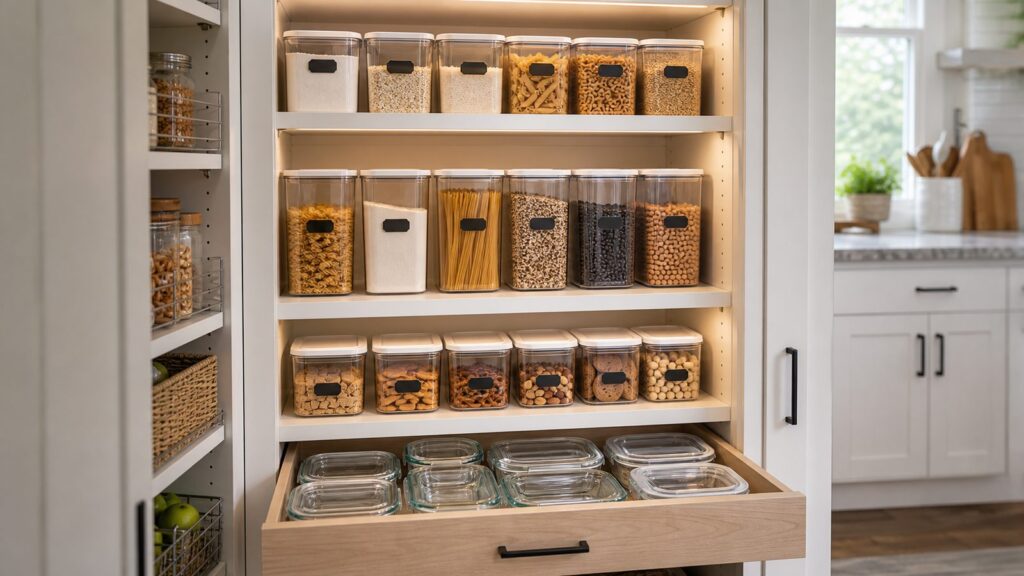
For pantry shelves, 12 to 16 inches deep is usually the sweet spot for visibility. You can see what is in the back without moving half the shelf. Once shelves get deeper than about 18 inches, we prefer roll-out trays, drawers, or pull-out baskets because fixed deep shelves hide inventory and lead to expired food.
For upper cabinets, containers taller than 10 to 11 inches often become awkward unless the shelf spacing is adjustable. For base cabinet drawers, check interior height carefully. Many lidded glass containers need 3 to 4 inches of height individually, and stacked sets may need 6 to 8 inches.
For refrigerators, rectangular containers usually perform better than round containers. They line up against the shelf edge, waste less corner space, and make it easier to keep raw, cooked, and ready-to-eat foods separated.
Best Container Types for Real Kitchens
There is no single best material for every use. A good kitchen normally uses two or three container types: rectangular airtight containers for dry goods, glass containers for reheated leftovers, and shallow bins or trays for snacks, packets, and small items.
What’s actually slowing this PC down?
Pick the symptom - the matching free tool is one click away.
Clear Plastic Pantry Canisters
Clear square or rectangular plastic canisters are the most space-efficient choice for dry goods. They are light, affordable, easy to label, and usually available in multiple heights. Budget airtight pantry sets commonly cost about $20 to $35 for 12- to 24-piece sets, though many brands count lids, scoops, labels, or markers as “pieces.” Always count actual containers before comparing prices.
Also popular on Amazon

- Complete 14-Piece Set for Every Need – Includes 7 containers (0.93, 1.63, 2.87, 4.86, 8.37, 14.12, 24.01 oz / 0.12–3 cups) and 7 lids, perfect for meal prep, portion control, snacks, and leftovers. Spend less time organizing and more time enjoying your meals.
- Easy Open Lids Made for Seniors – Specially designed lids open smoothly with minimal effort, making it easier for elderly family members or anyone with limited hand strength to access their food without struggling.
- BPA-Free & Safe for Healthy Eating – Made from premium, non-toxic plastic, these containers protect your food and family from harmful chemicals, giving you peace of mind with every meal.
- Rainbow Color Design for Easy Organization – Bright, Color Coded nesting food storage container set help you quickly identify foods, reduce kitchen clutter, and make meal prep more enjoyable for seniors and families alike.
- Stackable & Space-Saving – Stack neatly in your fridge, freezer, or pantry, saving valuable space and keeping your kitchen clean and organized. Ideal for small kitchens or busy households.
Use plastic canisters for cereal, rice, pasta, crackers, snacks, oats, and baking staples that are not reheated in the container. Look for gasketed lids, sturdy latches, straight sides, and containers that nest or stack without wobbling. Replace plastic when it becomes cloudy, cracked, warped, badly stained, scratched, or no longer seals tightly.
Glass Leftover Containers
Glass containers are heavier and more breakable, but they resist stains and odors better than plastic. They are also the better choice for foods that are reheated often, such as soups, sauces, casseroles, rice bowls, and meal-prep portions.
In 2026, individual glass leftover containers commonly run about $9 to $21, while quality sets often land in the $31 to $75 range. Large premium glass sets can reach $75 to $130 or more. For most households, a practical set includes several 2-cup, 4-cup, and 6- to 8-cup containers rather than a huge assortment of odd sizes.
Recommended Free Tools
Because glass is heavy, store it in a base drawer, lower cabinet, or pantry zone between waist and shoulder height. Avoid loading heavy glass containers on weak wire shelving or high shelves where they are hard to lift safely.
Silicone Lids, Bags, and Stretch Covers
Silicone can be useful for partial produce, bowls, and flexible storage. It is not usually the backbone of a pantry system, but it can reduce disposable wrap and help with irregular leftovers. Confirm the manufacturer’s dishwasher, freezer, and microwave claims before using silicone with heat.
Stainless Steel Containers
Stainless steel is durable, light compared with glass, and good for cold storage, snacks, lunches, and dry goods. The tradeoff is visibility. If you cannot see what is inside, labeling becomes mandatory. Stainless is not microwave-safe, so it is not a good fit for households that reheat directly from the fridge.
Food Storage Container Cost Guide for 2026
The right budget depends on whether you are buying a few containers, reorganizing a pantry, or tying storage into a kitchen remodel. For many homes, $75 to $200 is enough to create a serious container system. If you are adding built-ins, pull-outs, lighting, or new cabinetry, the storage containers become a small part of the total project.
| Project or Product | Typical 2026 Cost | Best Use |
|---|---|---|
| Budget airtight pantry set | $20-$35 | Dry goods, snacks, cereal, pasta, basic pantry reset |
| Mid-range plastic or glass set | $30-$75 | Everyday leftovers, meal prep, mixed pantry and fridge storage |
| Premium large family set | $75-$130+ | Large households, batch cooking, more durable lids and modular stacking |
| Individual square pantry canister | $7-$23 | Filling specific shelf gaps without buying a full set |
| Individual glass leftover container | $9-$21 | Replacing the most-used sizes one at a time |
| Simple pantry shelving upgrade | $400-$750 | Replacing poor shelf spacing or weak wire shelving |
| Cabinet-based pantry remodel | $100-$300 per linear foot | Built-in pantry cabinets, pull-outs, drawer storage |
| Pantry lighting | $500-$2,000+ | Walk-in pantries, dark cabinet pantries, switched or motion lighting |
Cost drivers are straightforward: glass costs more than basic plastic, locking lids cost more than snap lids, thicker plastic costs more than thin plastic, and modular systems cost more when they are designed to stack cleanly across several sizes. In remodeling, the big cost drivers are cabinetry, drawer boxes, pull-out hardware, electrical work, finish carpentry, and local labor rates.
How to Match Containers to Cabinets, Drawers, and Pantries
A container system should be designed like any other kitchen storage system: by zone. We typically divide the kitchen into dry goods, leftovers, snacks, baking, bulk storage, lunch prep, and lid storage.
Dry Pantry Zone
Use rectangular containers with straight sides. Round containers waste shelf space because square shelves and cabinets leave dead corners around them. For standard shelves, group containers by height: short containers for pasta, snacks, nuts, and baking chips; medium containers for sugar, oats, rice, and crackers; tall containers for cereal and spaghetti only where shelf clearance allows.
Adjustable shelf holes are worth having. If you build or remodel a pantry around one container line, that line may change or disappear in a few years. Adjustable shelves let the kitchen adapt without another carpentry project.
Also popular on Amazon

- Easy-find, color-coded nesting food storage container set with lockable snap-together lids
- Innovative space-saving design; access any size container or lid easily
- All containers feature lockable, airtight, and leak-proof lids
- Freezer, microwave and dishwasher safe (top rack only)
- Set includes 1 of each: 8 fl. oz (1 cups), 18 fl. oz (2.2 cups), 37 fl. oz (4.6 cups), 63 fl. oz (7.7 cups), 101 fl. oz (12.5 cups). Dimensions of nested set: 7.75 x 9.5 x 6.5 inches. Containers and lids: freezer-safe and microwave-safe
Leftover and Meal-Prep Zone
Glass works well here, especially if the containers move from refrigerator to microwave or oven according to the manufacturer’s rating. Use fewer sizes than you think. Three or four repeatable sizes stack better than twelve unique shapes.
For families that meal prep, a drawer near the refrigerator or range is often better than an upper cabinet. A deep drawer with containers in one row and lids in a vertical divider is faster to use and easier to maintain.
Snack and Kid-Friendly Zone
For snacks, do not decant everything into tall canisters. Shallow clear bins are often better for bars, pouches, fruit cups, crackers, and lunch items. Place them at a reachable height for the people who use them. A snack zone that requires a step stool will not stay organized.
Bulk Storage Zone
Bulk rice, flour, pet food, and large snack boxes belong low, preferably in deep lower pull-outs or sturdy base cabinets. Heavy containers should sit between knee and waist height when possible. If you store heavy food above shoulder height, the risk of dropping it goes up, especially with glass or large plastic bins.
Free tools Windows power users keep installed
One-click scans. No signup required.
Safety, Materials, and Food-Contact Basics
Food-contact materials sold in the United States are regulated when they meet the definition of food-contact substances, but homeowners still need to read product-specific instructions. Do not assume every plastic container is microwave-safe, freezer-safe, dishwasher-safe, or safe for hot foods.
For plastic containers, look for clear use ratings from the manufacturer. If the container is not rated for the microwave, do not microwave it. If it is top-rack dishwasher only, keep it out of the heating element zone. Replace plastic that is cracked, warped, cloudy, deeply scratched, stained, or loose at the lid. A container that no longer seals is not an airtight container.
For glass, check whether it is tempered or borosilicate and follow the thermal shock instructions. Do not move cold glass directly into high heat unless the manufacturer says it is safe. Lids often have different rules than the glass base, especially when they include silicone gaskets or plastic locking tabs.
For decanted dry goods, labels should include the item name and expiration date. For baking mixes, allergens, specialty flours, or anything with cooking instructions, keep the package panel or transfer the key information to the label. Lot numbers matter during recalls, so do not throw away every trace of the original packaging unless you have a tracking method.
Quick wins for a faster PC:
Scan for outdated or missing drivers - takes under a minuteDriver Scan →Repair Windows errors before they cause bigger problemsFix Now →Construction Details Most Container Guides Miss
This is where a contractor’s view matters. Food storage is not just a product decision. It affects shelf spacing, cabinet layout, drawer hardware, lighting, electrical planning, and sometimes permits.
Shelf Strength and Deflection
Wire shelving is common in older pantries, but it is not ideal for small containers, glass sets, or heavy dry goods. Narrow container bases can tip on wire shelves, and overloaded spans can sag. Solid shelves with a durable, wipeable surface are better for container systems.
For a simple pantry upgrade, homeowners often spend around $400 to $750 for shelving. That can be a better investment than buying more organizers to compensate for bad shelf spacing. A clean shelf layout with 12- to 16-inch depths, adjustable holes, and a few taller openings will outperform a cluttered set of mismatched accessories.
Also popular on Amazon

- Space-saving, nesting design
- Easy-find, snap-together lids and colour-coded bases
- Airtight, leakproof and stackable lids
- Freezer, microwave and dishwasher safe (top rack only)
- BPA free
Pull-Out Hardware
If pantry depth exceeds about 18 inches, fixed shelves become less useful. We usually recommend roll-out trays, drawers, or tall pull-out units. They cost more than fixed shelves, but they prevent the common problem of food disappearing in the back.
For cabinet-based pantry remodels, cabinetry commonly runs about $100 to $300 per linear foot before you account for major custom upgrades. Pull-out hardware, heavy-duty slides, finished drawer boxes, and custom fronts can raise the price, but they also make the storage usable every day.
Lighting and Outlets
Walk-in pantries and deep cabinet pantries benefit from switched or motion lighting. Lighting can run $500 to $2,000 or more depending on wiring access, fixture type, controls, and finish repair. Treat pantry lighting as electrical work, not an afterthought.
Kitchen and pantry electrical work must comply with applicable code and local enforcement. Adding receptacles, relocating outlets, or changing lighting circuits can trigger permit requirements. Island and peninsula receptacle rules have also changed over time, so do not rely on old assumptions during a remodel.
Cabinet Materials
If you are adding pantry cabinetry, confirm that composite wood products comply with TSCA Title VI formaldehyde emission standards. Also specify durable, wipeable interiors. Pantry shelves deal with sugar, flour, oils, crumbs, sticky containers, and cleaning products. A surface that looks good on installation day but absorbs spills will age poorly.
Do these 3 things before closing this tab:
1Clear out junk files and repair common Windows errors2Fix the driver behind crashes, sound loss and screen glitches3Repair Windows errors before they cause bigger problemsWhen to DIY and When to Hire a Pro
Most container organization is a good DIY project. Measuring shelves, buying containers, labeling dry goods, sorting lids, and replacing worn plastic can be handled over a weekend. A typical pantry reset takes 3 to 6 hours for a small kitchen and 1 to 2 days for a larger pantry if you are sorting every item and building labels.
DIY is appropriate when you are only buying containers, adding removable bins, using freestanding shelf risers, adjusting existing shelf pins, or installing simple non-electrical organizers that do not alter cabinets or walls.
Hire a pro when the storage problem is really a construction problem. That includes sagging shelves, deep unusable pantry cabinets, custom roll-outs, new pantry cabinetry, electrical lighting, outlet relocation, wall changes, flooring changes, or any work that may require a permit. Larger pantry remodel line items can add up quickly: countertops around $1,850 to $4,350, backsplash at about $15 to $40 per square foot, flooring around $12.50 per square foot, painting around $2.75 per square foot, and lighting at $500 to $2,000 or more.
Permit rules vary by jurisdiction. Cosmetic organizer-only projects often need no permit. Electrical work, wall changes, plumbing changes, and significant kitchen remodel work often do. Some California-area kitchen remodel guides cite permit ranges around $500 to $1,500, but local rules and fees vary heavily. Before starting construction, check with your building department or have your contractor verify the requirement.
Quick wins for a faster PC:
Repair Windows errors before they cause bigger problemsFix Now →Fix the driver behind crashes, sound loss and screen glitchesFind Drivers →Clear out junk files and repair common Windows errorsFree Scan →Common Mistakes to Avoid
The biggest mistake is buying a large matching set before measuring. A close second is misunderstanding piece count. A “24-piece” set may mean 12 containers and 12 lids, not 24 usable containers.
Another common mistake is choosing round containers for square storage. Round containers may look clean on a counter, but they waste pantry and refrigerator space. Straight-sided rectangular containers make better use of shelves and stack more predictably.
Lid storage is the failure point of many systems. Plan a lid zone with vertical dividers, a dedicated drawer, or a shallow bin. Do not expect loose lids to behave in a deep cabinet.
Also popular on Amazon

- Food Container Set:Our 40 pcs food storage containers Includes 20 containers and 20 lids, and 16 reusable labels and marker pen. This set includes 6 rectangular containers (1*50.7oz, 1*33.8oz, 2*16.9oz, 2*8.1oz), 4 square containers (1*40.6oz, 1*23.7oz, 1*13.5oz, 1*5.7oz), 4 round containers (1*40.6oz, 1*23.7oz, 1*13.5oz, 1*6oz), and 6 round sauce boxes(3*2oz, 3*1oz).
- BPA-Free & Food Grade Materials: Our food storage containers with lids are made of high quality plastic materials that are durable and BPA-Free. This food containers with lids are made of transparent material(Not like glass,Slightly white), but you can also clearly see the food inside. Our meal prep containers reusable are great choices for storing leftovers, fruits, vegetables, cooked meals, dry food and sauce.
- Leak-Proof & Keep Fresh: Each lid of our plastic storage containers features silicone sealing strips and 4-sided latches designed to ensure an airtight and leak-proof. You will never have to worry about food or liquid spills again when you use this containers for food. Keep your fridge clean and say goodbye to fridge odors.
- Safe and Easy to Use: Our plastic food storage containers with lids can be heated in the microwave, washed in the dishwasher, and stored in the freezer. (Note: Please do not put the lid into the microwave and dishwasher, high temperature will lead to deformation of the sealing ring affecting the closure of the lid and container).
- Kitchen Storage & Space-Saving: The plastic containers with lids are designed to be stacked and nested. You can easily store these food containers to save space in your kitchen when not in use. Kitchen storage containers help to categorize storage and placement to keep your kitchen organized.
Do not over-decant. Some foods need instructions, allergen information, expiration dates, or lot numbers. Also leave flexible space for seasonal items, party supplies, bulk purchases, and odd packages. A pantry packed wall to wall with specialty containers can become less useful than the messy pantry it replaced.
Do these 3 things before closing this tab:
1Repair Windows errors before they cause bigger problems2Scan for outdated or missing drivers - takes under a minute3Clear out junk files and repair common Windows errorsOur Practical Buying Formula
If you want a container system that works, buy in phases. First, measure and clean out the pantry. Second, buy a small group of containers for your highest-turnover foods: cereal, rice, flour, sugar, oats, pasta, coffee, snacks, and leftovers. Third, live with that setup for two weeks. Only then fill in the gaps.
For a typical family kitchen, a sensible starting package looks like this: four to six medium pantry canisters, two tall cereal containers if shelf height allows, four shallow snack bins, six to ten glass leftover containers in repeatable sizes, one dedicated lid drawer or divider, and labels that include expiration dates. That system may cost $100 to $250 depending on brands and materials, which is usually smarter than buying one oversized set that includes sizes you will not use.
If you are remodeling, choose the cabinet and shelf design before choosing the final container line. Build adjustable shelves, keep everyday containers visible, use pull-outs for deep storage, put heavy goods low, and include lighting where the pantry is enclosed or deep. Good organization is not just about neat containers. It is about a kitchen that makes the right thing easy to reach every day.
Frequently Asked Questions
Are As Seen on TV food storage containers actually worth buying?
Some are worth buying if they fit your shelves, seal well, clean easily, and match your food habits. Do not buy based on the demonstration alone. Measure your pantry, cabinets, refrigerator, and drawers first.
What is the best material for food storage containers?
Use clear rectangular plastic for dry pantry goods, glass for leftovers that are reheated often, silicone for flexible covers or bags, and stainless steel for durable cold or dry storage where microwave use is not needed.
How much should I spend on a complete kitchen container system in 2026?
A practical household setup often costs $100 to $250. Budget pantry sets run about $20 to $35, mid-range glass or plastic sets run $30 to $75, and larger premium sets can cost $75 to $130 or more.
Do I need a permit to add pantry shelving or built-in kitchen storage?
Simple removable organizers and basic shelf adjustments usually do not require a permit. Electrical work, outlet changes, wall changes, plumbing changes, and larger built-in remodels may require one. Local rules control.
What size containers fit best in standard kitchen cabinets?
Rectangular containers with straight sides usually fit best. For upper cabinets, watch for containers over 10 to 11 inches tall. For pantry shelves, 12- to 16-inch depths keep containers visible and reachable.
Free tools Windows power users keep installed
One-click scans. No signup required.
How do I keep food-storage lids organized?
Create a dedicated lid zone. Use a shallow drawer, vertical divider, or small bin near the containers. Limit the number of container shapes so one lid style fits several containers.
Quick Recap
Product prices and availability are accurate as of the date/time indicated and are subject to change. Any price and availability information displayed on Amazon at the time of purchase will apply.

