Do these 3 things before closing this tab:
1Clear out junk files and repair common Windows errors2Fix the driver behind crashes, sound loss and screen glitches3Repair Windows errors before they cause bigger problemsSome links on this page are affiliate links: if you buy through them we may earn a commission, at no extra cost to you.
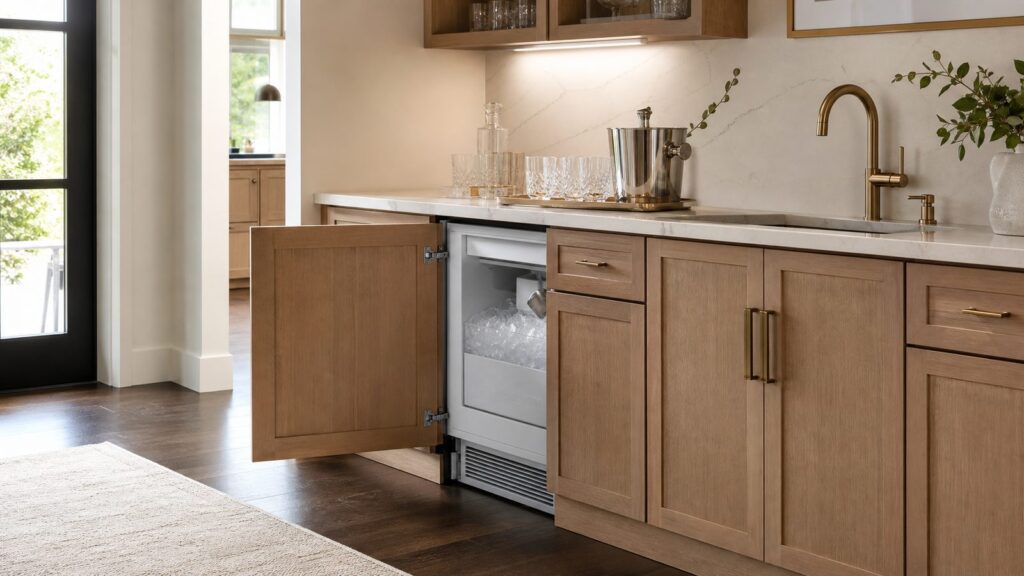
A panel-ready ice maker is a built-in undercounter ice machine that accepts a custom cabinet door panel, so it blends into the kitchen, wet bar, butler pantry, outdoor kitchen, or entertainment room. The best choice is not simply the machine with the biggest daily ice output. For a finished kitchen, the right ice maker is the one that fits the cabinet opening, accepts the correct panel, has a workable drain route, can be serviced without tearing up millwork, and makes the type of ice your household will actually use.
For most homeowners, the sweet spot is a 15-inch-wide undercounter model with roughly 25 pounds of ice storage. In 2026, true panel-ready residential ice makers commonly cost about $3,000 to $5,500 or more before tax, delivery, custom door panel, plumbing, electrical work, and installation. A basic install benchmark starts around $494 to $599 per unit nationally, but a real remodel can run higher when the crew has to add a dedicated receptacle, run a drain, fabricate a finished panel, install a filter, or modify cabinets.
As an Amazon Associate I earn from qualifying purchases.
The Tool Desk
Outbyte PC Repair FREERepair Windows errors before they cause bigger problemsFix Now →Outbyte Driver Updater FREEFix the driver behind crashes, sound loss and screen glitchesFind Drivers →On our kitchen and bar projects, we try to select the exact ice maker before final cabinet drawings are approved. That one decision prevents a long list of problems: wrong opening width, wrong toe-kick depth, a panel that exceeds the hinge weight limit, a handle that conflicts with adjacent drawers, a drain that cannot slope, or a shutoff valve buried behind the appliance. Panel-ready appliances look simple after they are installed. They are not simple if they are planned late.
Best Panel-Ready Ice Maker Choices by Installation Type
The best panel-ready ice maker depends heavily on where it is going and how the house is built. A kitchen island with no nearby drain is a different project from a wet bar backed up to a plumbing wall. A butler pantry next to a powder room is easier than an outdoor kitchen exposed to heat, rain, and winter temperatures. Here is how we would think through the strongest categories for a 2026 remodel.
#1 Best Overall

- 8 Uses Values-Size Bottle: Compare to a 4 pack from other brands! With recommended 4oz per cleaning, you're set for a year or more
- Works with all Ice Makers and Machines: Designed for Countertop, Portable, Built-in, and Commercial Icemaker. Compatible with all brands including Ice-o-matic, Follett, Kitchenaid, Scottsman, Manitowac, Silonn, Profile 2.0, Antarctic Star, Jenn Air, Uline, nu-calgon, Gevi, Affresh Ice Machine Cleaner and more
- Powerful Nickel-Safe Descaling Formula: ACTIVE Ice Machine Descaler is a powerful scale and buildup remover, that's easy on your machine. Compare to harsh formulations that can damage nickle and other metals in your icemachine
- Keep Ice Clear and Tasting Fresh: ACTIVE Ice Maker Cleaner and Descaler is essential for crystal clear ice. Enjoy Great-tasting ice cubes, nugget, crushed ice, and more with regular maintenance
- Made with Care in the United States: ACTIVE Original Version Citric Acid formula is made in the US with only simple ingredients for your trust
Best for a no-drain remodel: U-Line 15-inch integrated crescent ice maker
A no-drain ice maker is often the cleanest solution when the kitchen layout does not provide a practical drain route. U-Line’s 15-inch integrated crescent model is notable because it accepts a custom door panel, stores about 25 pounds of ice, produces up to about 39 pounds per day, and does not require a drain. Its listed MSRP is about $3,129, putting it below many premium clear-ice and nugget machines.
The tradeoff is ice style. Crescent ice is not the same as the hard, clear gourmet cube from a dedicated clear-ice machine. But in construction terms, avoiding a drain can save real money and risk. There is no drain pump to hear, no pump to replace, and no need to find a properly sloped drain connection in an island or finished wall. For a homeowner who wants reliable daily ice behind a matching cabinet panel, this is a practical category to consider first.
Best for a premium integrated kitchen: Sub-Zero 15-inch panel-ready ice maker
Sub-Zero’s 15-inch panel-ready undercounter ice maker is a strong fit for high-end kitchens where the appliance package, cabinet integration, and long-term service support matter. The 2026 trade specification listed 25 pounds of storage, 115 VAC/60 Hz power, a 3-prong grounding receptacle, and a 15 amp dedicated circuit. The listed MSRP was $5,430.
This is not the budget pick. It is the kind of selection we see in full custom kitchens where the refrigerator, freezer columns, wine storage, and undercounter appliances are being coordinated as one package. The key is to get the Sub-Zero specification sheet into the cabinetmaker’s hands early, including panel thickness, panel weight limits, reveal requirements, toe-kick details, hinge swing, and handle placement.
Best for a wet bar with a gravity drain: Scotsman residential cuber
Scotsman residential cuber models are worth looking at when the project has a proper gravity drain nearby. Typical figures include a 15-inch cabinet width, up to about 65 pounds of ice production per day, about 26 pounds of bin storage, 115/60/1 power, and dimensions around 14.875 inches wide by 22 inches deep by 33.375 inches high.
That production number is useful for a wet bar, game room, pool house, or entertainment space where guests are filling glasses all evening. The reason we pair this category with a gravity drain is simple: clear cube machines usually need drainage, and gravity drainage is quieter and simpler than a pump when the building layout allows it. The drain still needs to be designed correctly, with proper slope and an approved air gap where required.
Best nugget option: U-Line integrated nugget ice maker
Nugget ice is popular because it is chewable, easy to scoop, and works well for soft drinks, cocktails, iced coffee, and water bottles. U-Line’s 15-inch integrated nugget model lists around $5,339 and produces up to about 65 pounds per day. That shows the premium for nugget ice in a built-in, panel-ready application.
The caution is maintenance. Nugget machines generally need regular cleaning and good water treatment. If the home has hard water, we want filtration and descaling access planned from the start. We also pay close attention to where the drain pump sits, if one is used, because pump noise can be noticeable in an open-plan kitchen, media room, or bar near bedrooms.
Best for outdoor kitchens: an outdoor-rated panel-ready unit
Do not install an indoor-rated ice maker outside because the opening happens to be covered. Outdoor kitchens create heat, humidity, wind-driven rain, insects, dust, and freeze exposure that indoor machines are not built to handle. The right outdoor unit should be specifically rated for outdoor use, installed in the manufacturer’s required clearances, protected from weather exposure, and coordinated with winterization in colder climates.
Outdoor work also changes the cost picture. Cabinetry may be masonry, powder-coated metal, stainless, PVC, or marine-grade polymer rather than wood. The water line may need freeze protection. The electrical outlet may need weather-rated GFCI protection. The drain route needs to be legal and serviceable. A panel-ready outdoor ice maker can look excellent, but the shell around it matters as much as the appliance.
Quick Comparison: What the Main Types Cost and Require
The table below is not a substitute for the current manufacturer specification sheet, but it gives a realistic planning range for 2026. Prices move, model numbers change, and retailers may package delivery or installation differently. Use this as a construction budgeting tool before you lock the cabinet plan.
| Category | Typical Width | Ice / Storage | Drain Need | 2026 Appliance Cost | Best Use |
|---|---|---|---|---|---|
| Integrated crescent ice maker | 15 in. | Up to about 39 lb/day; 25 lb storage | Some models require no drain | About $3,129 for U-Line HCR115 | No-drain kitchen remodels and daily use |
| Premium clear or gourmet cube | 15 in. | Often 25-65 lb/day; 25-28 lb storage | Usually yes | About $3,599-$5,430+ | High-end kitchens, wet bars, butler pantries |
| Residential cuber | 15 in. | Up to about 65 lb/day; about 26 lb storage | Yes, gravity preferred where possible | Often mid-to-premium range | Entertaining spaces with a nearby drain |
| Integrated nugget ice maker | 15 in. | Up to about 65 lb/day on some models | Usually yes | About $5,339 for U-Line nugget | Homes that strongly prefer chewable ice |
| Outdoor-rated panel-ready unit | Often 15 in. | Varies by model | Usually yes | Often premium | Outdoor kitchens, pool houses, covered bars |
What “Panel-Ready” Really Means
Panel-ready does not mean the cabinet door is included. It means the appliance door is designed to accept a custom finished panel supplied by the homeowner, cabinetmaker, or millwork shop. That panel usually needs to meet the manufacturer’s limits for thickness, height, width, weight, fastener locations, and handle attachment.
Rank #2

- Powerful and Versatile: Use our Ice machine cleaner and descaler in your Nugget Ice Maker, Profile, Igloo, Sonic, Opal Ice Machine, or your ice maker of choice. Our universal ice maker cleaning fluid restores your machines to like new.
- Keep Your Ice Tasting Nice: You won’t find our proprietary formula in just any ice machine cleaner descaler sanitizer — it’s a solution meant to clean a wide variety of machines. Plus, our ice machine cleaner doesn’t leave your ice tasting like cleaning products
- Incredible Value: Our Descaling Solution will bring new life to your ice machine. One 16-ounce bottle works for 4 uses, meaning you get over a year’s worth of Essential Values ice machine cleaner and descaler for a single purchase!
- Compatible with Any Icemaker: Essential Values ice cleaner is suitable for a wide range of residential and commercial ice makers, including countertop ice makers, crushed ice makers, portable ice makers, freestanding ice makers, undercounter ice makers, and built-in ice makers.
- How to Use: Mix 4 oz of Solution with 1 gallon of water and follow manufacturer’s recommended cleaning instructions. We recommend descaling your ice machine every 3–6 months to make the most out of our ice machine cleaner.
This is where many remodels get into trouble. A cabinet shop may build a beautiful door that matches the kitchen, but if it is too heavy, too thick, too tall, or drilled incorrectly, it can interfere with the hinge system or prevent the door from closing properly. Inset cabinetry can be even less forgiving because the reveals are tight. A 1/8-inch miss can look sloppy when the ice maker sits next to high-end drawers.
Most residential undercounter panel-ready ice makers are 15 inches wide, roughly 34 inches high, and about 22 to 24 inches deep. That size is designed to fit under a standard counter, but “standard” still needs field verification. Finished floors, stone thickness, toe-kick depth, appliance leveling legs, adjacent fillers, and panel overlay all affect the final fit.
Recommended Free Tools
Order of decisions we use on job sites
First, select the exact appliance model. Second, confirm whether it needs a gravity drain, pump drain, or no drain. Third, give the specification sheet to the cabinetmaker and plumber before final drawings. Fourth, locate the outlet, water shutoff, filter, and service access. Fifth, approve the custom panel only after checking the latest template.
That sequence may sound fussy, but it prevents expensive rework. A replacement cabinet door can cost $200 to $1,000 or more depending on the cabinet line, species, finish, mitered construction, inset fit, and whether the finish has to be matched after the rest of the kitchen is complete.
Ice Type Matters More Than the Headline Production Number
Daily production numbers can be misleading. A machine that can produce 65 pounds per day sounds better than one that produces 39 pounds per day, but most households will not use 65 pounds of ice every day. Storage capacity is often around 25 to 28 pounds, so the machine is constantly making and melting ice as needed. The better question is what type of ice you want and what maintenance burden comes with it.
Crescent ice
Crescent ice is familiar, relatively simple, and practical. Some crescent machines do not need a drain, which can make them a very good remodel choice. The ice is not as visually refined as clear gourmet cubes, but it works for water, tea, soft drinks, coolers, and everyday entertaining.
Quick wins for a faster PC:
Clear out junk files and repair common Windows errorsFree Scan →Scan for outdated or missing drivers - takes under a minuteDriver Scan →Repair Windows errors before they cause bigger problemsFix Now →Clear cube or gourmet ice
Clear cube machines produce harder, clearer ice that looks better in cocktails and melts more slowly than cloudy refrigerator ice. They usually need drainage because of how they make clear ice. They also tend to need more cleaning and descaling, especially in hard-water areas. For a wet bar with a nearby drain, this is often the best balance of appearance and function.
Nugget ice
Nugget ice is a preference-driven upgrade. People who like it tend to really like it. It is excellent for soft drinks, iced coffee, and casual entertaining. The machines cost more, often need a drain, and should be cleaned on schedule. If you are building a beverage center around daily use, the premium can make sense. If the ice maker will only be used a few times a month, it may be overkill.
Craft ice
Some specialty machines make large cubes or spheres, but production can be much lower than standard cubers. That can be fine for a cocktail-focused bar, but it is not the right machine for filling coolers or serving a crowd. Always compare the actual number of cubes per day, not just the appliance width or price.
Drain Planning: Gravity Drain, Drain Pump, or No Drain
Drain planning is the construction issue that gets underexplained in most appliance shopping. Many clear-ice and nugget machines create meltwater or reject water that has to go somewhere. If the drain is wrong, the result can be noise, odors, leaks, service calls, or a finished cabinet bay that has to be opened back up.
Gravity drain
A gravity drain is the cleanest option when the layout allows it. The drain line slopes continuously from the ice maker to an approved drain point. There is no pump motor, no pump reservoir, and no pump float switch. It is quiet and mechanically simple.
The limitation is slope. If the drain connection is too high, too far away, or blocked by framing, a gravity drain may not work. In a remodel, this is why we want the plumber involved before cabinets are ordered. A wet bar on the same wall as a sink is usually easier. A kitchen island with a slab floor can be much harder.
Rank #3

- Effective Cleaning: Specially formulated to remove hard water and mineral buildup, ensuring great-tasting ice
- Universal Compatibility: Designed to clean inside all freestanding ice machine makes and models
- Nickel-Safe Formula: Gentle yet effective, safe for use in all ice machine types
- Regular Maintenance: Use every nine months or as needed for optimal machine performance
Drain pump
A drain pump moves water uphill or across a longer route when gravity drainage is not practical. It can solve a real layout problem, but it adds noise and another part that can fail. In open-plan kitchens, bars near bedrooms, and media rooms, the pump location matters. We also want access to the pump for service without damaging the cabinet panel or floor.
No-drain models
No-drain models can be excellent for remodels where a drain would be expensive or risky. They are not automatically better; they simply remove one major construction variable. If the homeowner is satisfied with crescent ice, a no-drain integrated model can be the most sensible choice.
Free tools Windows power users keep installed
One-click scans. No signup required.
Electrical, Water Supply, Filtration, and Leak Protection
A built-in ice maker is a small appliance, but it is still a plumbing and electrical installation inside finished cabinetry. Treat it that way.
Electrical requirements
Many residential undercounter ice makers use 115-volt power. Sub-Zero’s 15-inch panel-ready model, for example, lists 115 VAC/60 Hz, a 3-prong grounding receptacle, and a 15 amp dedicated circuit. Do not assume the nearest outlet is acceptable. A remodel is the right time to install a properly located receptacle that meets the manufacturer’s requirements and local code.
Depending on location, GFCI protection may be required or strongly advisable, especially near wet bars, sinks, garages, basements, and outdoor kitchens. The outlet should not be buried where the appliance has to be removed just to unplug it. We prefer access from an adjacent cabinet or a removable panel.
Water supply
The water line should have an accessible shutoff valve. That sounds obvious until a leak happens and the only valve is behind a 100-pound appliance with a custom panel attached. In our work, we try to place the shutoff where a homeowner or service tech can reach it quickly, usually in the neighboring sink base or cabinet.
What’s actually slowing this PC down?
Pick the symptom - the matching free tool is one click away.
Use the line size and connection type required by the appliance manufacturer. Do not improvise with mismatched fittings. A slow drip behind an integrated appliance can damage floors, cabinets, drywall, and finished ceilings below before anyone notices.
Filtration and hard water
Water filtration can improve taste and reduce scale buildup. It is especially important for clear ice and nugget machines in hard-water areas. The filter must be accessible for cartridge changes. If it is hidden behind the ice maker, it will be neglected, and the machine will suffer.
For high-mineral water, plan for regular descaling. Hard water can reduce ice quality, slow production, shorten equipment life, and increase service calls. The cost of filters and cleaning solution is minor compared with replacing a pump, water valve, or scaled-up machine.
Leak detection
In expensive finished kitchens, we like leak detectors or automatic shutoff devices, especially when the ice maker sits on hardwood, above finished living space, or inside custom cabinetry. The added cost is small compared with cabinet and flooring repairs after a hidden leak.
Windows Errors? Fix Them Before They Spread
Repair common Windows errors and clear accumulated junk for a smoother, more stable PC - no reinstall needed.Free scan · no reinstallOutdated Drivers Are Slowing You Down
One free scan finds every outdated or missing driver and matches the right update for your exact hardware.Free scan · exact hardware matchCabinetry Details That Make or Break the Finished Look
The appliance may be 15 inches wide, but the finished cabinet detail is more than a 15-inch hole. The cabinetmaker needs the manufacturer’s cutout dimensions, panel template, reveal requirements, toe-kick configuration, hinge clearances, handle location limits, and ventilation requirements.
Ventilation is particularly important. Some undercounter appliances vent at the front toe-kick. Others have specific clearance requirements. If a decorative toe-kick, plinth, or flush inset detail blocks airflow, the machine may run hot, make less ice, or fail early. A fully integrated look still has to respect the mechanical design.
Panel weight and thickness
Custom panels are not interchangeable across brands. A thick painted maple inset door with a heavy appliance pull may exceed what a smaller hinge system is designed to carry. If the panel droops, rubs, or will not close cleanly, the finished kitchen looks wrong even if the appliance works.
Rank #4

- 【Works with all Ice Makers and Machines】Designed for countertop, portable, and commercial icemaker. compatible with major brands.(not for built in refigerator ice makers)
- 【Nickel-Safe Descaling】Machine Cleaner and Descaler is made from Food Grade Citric Acid and other Simple Ingredients that won't harm metals such as nickel, stainless steel, and aluminum plated components inside your self cleaning ice maker! Tablets are specially formulated to target the hard water, calcium buildup, and limescale that build up in your machine.
- 【Cleaning & Deodorizing】These ice machine cleaner tablets eliminate limescale, calcium deposits, and unpleasant odors. Enjoy fresh, odor-free ice cubes, nuggets, or crushed ice after every cleaning cycle.
- 【24 Tablets Bulk Supply】Each package includes 24 Tablets of descaling tablets.Compare to packets and liquids with 2-4 uses per container.
- 【Better-Tasting Ice】Designed for Countertop, Portable, and Commercial ice maker cleaner needs, our tablets ensure pure, clear ice with no off-flavors—perfect for drinks, commercial use, or home kitchens.
Door swing and handle conflicts
Check the swing before ordering hardware. A panel-ready ice maker near a wall, dishwasher, refrigerator column, or inside corner may need a filler so the door can open far enough for the bin to be removed. Appliance pulls should align with the kitchen design, but they also need to clear adjacent doors and drawers.
Service access
Every built-in ice maker eventually needs cleaning, filter changes, inspection, or service. We do not like installations that require removing baseboard, damaging caulk lines, or pulling stone trim just to access the unit. A service-friendly installation has reachable shutoffs, a reachable outlet, a removable panel where needed, and enough slack in the water and drain connections to pull the appliance without stressing fittings.
What a Panel-Ready Ice Maker Costs in 2026
For budgeting, separate the appliance from the work required to install it. A homeowner may see a $3,599 appliance online and assume the installed cost will be close to that. In a remodel, the finished number can be very different.
| Cost Item | Typical 2026 Range | Notes |
|---|---|---|
| Panel-ready appliance | About $3,000-$5,500+ | Budget/non-integrated units can be under $1,000, but true integrated residential models usually cost more. |
| Premium examples | $3,129-$5,430 | U-Line crescent about $3,129; JennAir around $3,599-$3,999; U-Line nugget about $5,339; Sub-Zero about $5,430. |
| Basic installation | About $494-$599 starting benchmark | Homewyse’s May 2026 estimate starts in this range for installing an ice maker. |
| Simple retailer hookup | As low as about $120 | Some appliance-store pricing assumes compatible site conditions and required accessories. |
| Complex or commercial-style installation | About $500-$1,500 | Applies when plumbing, drainage, electrical setup, and placement are more involved. |
| Custom cabinet panel and handle | About $200-$1,000+ | Depends on cabinet line, finish, species, inset construction, and whether a remake is needed. |
| Electrical upgrade | Varies by scope | A dedicated 15 amp circuit or GFCI-protected receptacle can add cost if not already present. |
| Filtration and leak protection | Varies by system | Plan for filter access, replacement cartridges, and optional automatic shutoff. |
The biggest cost drivers are drain feasibility, distance to potable water, electrical access, cabinet modifications, custom panel fabrication, outdoor-rated equipment, water treatment, and service access constraints. If we are already opening walls during a remodel, the incremental cost to rough in water, drain, and power is usually far lower than adding them after cabinets and counters are installed.
Independent reader supportYour contribution helps us test, update, and keep practical guides available for everyone.Permits and Code: What Homeowners Should Expect
Permit requirements vary by city and scope. Some municipalities allow simple appliance replacement without a building permit. Others may require permits when new plumbing, electrical circuits, gas, structural work, exterior penetrations, or drainage changes are involved. For example, local appliance-installation guidance from different US cities distinguishes between simple replacements and work that changes building systems.
Do these 3 things before closing this tab:
1Repair Windows errors before they cause bigger problems2Fix the driver behind crashes, sound loss and screen glitches3Clear out junk files and repair common Windows errorsFor a built-in ice maker, the permit question usually turns on what is being added. Swapping an existing undercounter ice maker with the same water, drain, and electrical setup may be treated differently than adding a new machine in a kitchen island with a new water line, new drain pump circuit, and new receptacle. Outdoor kitchens can add more code issues because of weather-rated electrical work, drainage, freeze protection, and exterior construction.
Our practical advice is to ask the local building department or have the licensed trade contractor confirm the requirement before rough-in. It is cheaper to permit correctly than to open finished cabinets later because an inspector, buyer, or insurance adjuster questions hidden plumbing or electrical work.
When to DIY vs. When to Hire a Pro
A homeowner with basic tools can handle some parts of the process, but a panel-ready ice maker is rarely a pure DIY appliance when it is part of a finished kitchen. The risk is not that the machine is impossible to connect. The risk is that a small mistake damages expensive work around it.
Reasonable DIY tasks
Homeowners can compare models, measure the available space, confirm ice preferences, order replacement filters, clean and descale the machine according to the manual, and monitor for leaks. If an existing ice maker is being replaced with the same drain type, same electrical setup, and same cabinet conditions, a skilled homeowner may be able to manage the swap after reading the installation manual carefully.
Free tools Windows power users keep installed
One-click scans. No signup required.
Hire a pro when the work affects systems or finished cabinetry
Bring in a plumber when adding or modifying a water line, shutoff valve, filter, air gap, drain, or pump discharge. Bring in an electrician when a new receptacle, dedicated circuit, GFCI protection, or outdoor-rated connection is needed. Use the cabinetmaker for the custom panel, especially with inset or premium painted cabinetry. Use an appliance installer or contractor when the unit must be leveled, secured, paneled, and tested without damaging floors or millwork.
In a full remodel, the best result comes from coordination. The cabinetmaker, plumber, electrician, appliance supplier, and general contractor should all be working from the same model number and current specification sheet.
Common Installation Mistakes We See
The most common mistake is ordering cabinets before selecting the ice maker. A 15-inch appliance is not a universal 15-inch appliance. Cutout height, depth, panel size, hinge geometry, toe-kick design, and ventilation can all vary.
Best Value

- This ice machine cleaner is better than ice machine cleaning tablets. The ice maker cleaner will improve ice machine performance. Aquia ice machine cleaner and descaler is better than ice machine cleaner tablets. The best descaler for ice machine.
- Aquia icemaker cleaner solution flows smoothly through your machine. It doesn't clog the machine like ice maker cleaner tablets. An effective countertop ice maker cleaner and nickel safe ice machine cleaner for commercial ice machines.
- Compatible with all ice machine brands: Scotsman, GE Opal, Manitowoc, Kitchenaid, Hoshizaki, Affresh, Nu Calgon, Gevi, etc.. Stronger and lasts longer than Affresh ice machine cleaner.
- This ice maker cleaner and descaler is formulated using 100% active ice machine cleaner ingredients. Using 100% active cleaning products makes this ice machine descaler more effective than ice maker cleaning tablets.
- Aquia ice maker descaler and cleaner is even stronger than 100% active ice machine cleaner tablets.
The second mistake is assuming every panel-ready unit uses the same cabinet door. It does not. Panel thickness, weight, fastener locations, and handle placement must match the appliance.
The third mistake is forgetting the drain. Clear-ice and nugget machines often need one. Gravity drains need slope. Pump drains need power, access, and a path that will not create noise or maintenance problems.
We also see overloaded circuits, inaccessible shutoff valves, filters hidden where nobody can change them, blocked toe-kick ventilation, and outdoor installations using indoor-rated machines. Each one is preventable if the appliance is treated as part of the construction plan instead of a late appliance purchase.
Maintenance and Ownership Reality
Undercounter ice makers need maintenance. The bin should be cleaned. The machine should be descaled on the manufacturer’s schedule. Filters should be replaced before taste and scale problems show up. The exact interval depends on the model, water quality, and usage, but many homeowners should expect cleaning several times per year, with harder water requiring more attention.
Drain pumps, where used, are wear items. They can clog, get noisy, or fail. That does not mean pumps should be avoided in every case, but it does mean they should be accessible. A pump buried behind finished millwork with no service plan is a future headache.
What’s actually slowing this PC down?
Pick the symptom - the matching free tool is one click away.
Ice quality is also tied to water quality and cleaning. If the ice tastes stale, looks cloudy, or production slows, the issue may not be the appliance brand. It may be scale, a neglected filter, poor ventilation, a dirty condenser area, or a drain problem.
Our Bottom-Line Recommendation
For most kitchen remodels, start with a 15-inch panel-ready ice maker with about 25 pounds of storage, then choose by installation condition. If there is no practical drain, a no-drain integrated crescent model is often the smartest choice. If there is a good gravity drain and the homeowner wants better cocktail ice, look at clear cube or residential cuber models. If the household strongly prefers chewable ice and accepts the higher cost and maintenance, choose an integrated nugget model. For outdoor kitchens, use only an outdoor-rated unit.
The best panel-ready ice maker is the one that disappears visually but remains easy to own. That means the cabinet panel fits, the door swings cleanly, the drain is right, the outlet and shutoff are accessible, the filter can be changed, and the machine can be pulled for service without damaging the kitchen. Get those details right before cabinetry is ordered, and the finished appliance will feel like it was always meant to be there.
Frequently Asked Questions
Are panel-ready ice makers worth it for a kitchen remodel?
Yes, if the kitchen, bar, pantry, or entertainment space is being designed around custom cabinetry. They cost more than freestanding or basic undercounter units, but they preserve the finished cabinet look and add convenient ice storage where people actually gather.
How much does a panel-ready undercounter ice maker cost in 2026?
Most true panel-ready residential models run about $3,000 to $5,500 or more before tax, delivery, custom panel, and installation. Examples include U-Line around $3,129, JennAir around $3,599 to $3,999, U-Line nugget around $5,339, and Sub-Zero around $5,430.
Do panel-ready ice makers need a drain?
Many clear-ice and nugget machines need a drain, but some crescent ice models do not. Confirm the exact model before cabinet and plumbing rough-in because drain requirements can change the layout, cost, and installation difficulty.
Is a gravity drain better than a drain pump?
A gravity drain is usually better when the layout allows proper slope to an approved drain point. It is quieter and has fewer mechanical parts. A drain pump is useful when water must be moved uphill or across a longer route, but it adds noise, maintenance, and a possible failure point.
Do I need a permit to install a built-in ice maker?
Permit rules vary by local jurisdiction. A like-for-like appliance replacement may not need a permit in some areas, but new plumbing, drainage, electrical circuits, outdoor work, or cabinet changes can trigger permit requirements. Check locally before rough-in.
The Tool Desk
Outbyte Driver Updater FREEScan for outdated or missing drivers - takes under a minuteDriver Scan →Outbyte PC Repair FREERepair Windows errors before they cause bigger problemsFix Now →Can any cabinet door be used on a panel-ready ice maker?
No. The custom panel must meet the appliance manufacturer’s limits for size, thickness, weight, fastener locations, hinge operation, and handle placement. The cabinetmaker should work from the exact model’s current panel template.
Quick Recap
Product prices and availability are accurate as of the date/time indicated and are subject to change. Any price and availability information displayed on Amazon at the time of purchase will apply.

