Do these 3 things before closing this tab:
1Repair Windows errors before they cause bigger problems2Fix the driver behind crashes, sound loss and screen glitches3Clear out junk files and repair common Windows errorsSome links on this page are affiliate links: if you buy through them we may earn a commission, at no extra cost to you.
The best outlet electrical box for a home upgrade is not simply the strongest box or the cheapest one on the shelf. It is the box that matches the wall condition, wiring method, outlet type, device depth, local code requirements, and the way the space will actually be used.
For most interior remodels where NM cable is allowed, a listed 1-gang PVC old-work box with enough cubic-inch capacity is the practical all-around choice. For open-wall work, new-work nail-on or adjustable-depth boxes are usually better. For garages, shops, exposed conduit, metal-clad cable, and high-abuse areas, galvanized steel boxes are often the more durable and serviceable option. For GFCI, USB, smart, dimmer, or other bulky devices, deeper boxes or 4-inch square boxes with a single-gang mud ring are usually worth the small added cost.
On our job sites, the box decision happens before anyone cuts drywall or orders devices. A $3 box can create a $300 problem if it is too shallow, set at the wrong depth, incompatible with the wiring method, or inaccessible after finishes go in. The right choice keeps the outlet flush, serviceable, code-compliant, and easier to troubleshoot ten years later.
As an Amazon Associate I earn from qualifying purchases.
Start With the Wall, Not the Box
The first question is not plastic or metal. The first question is: what kind of wall are we working in?
Finished drywall, open studs, plaster and lath, tile backsplash, masonry, shiplap, exterior siding, and exposed basement framing all point to different box choices. A standard plastic old-work box can be fine in clean half-inch drywall. The same box may be a poor choice in brittle plaster, thick tile, damaged drywall, or a wall where the clamps cannot bite evenly.
Popular on Amazon

- 【 Easy to use 】 By using the box's built-in fixing ears and screwing them onto the wall, old work box is very suitable for adding new sockets to existing walls. It has a rotatable buckle and can prevent them from falling off
- 【Problem Solving】Solve common problems encountered during decoration, such as "digging holes affects aesthetics, wiring is time-consuming and laborious, and switch disassembly is inconvenient". Repair is easy, and small electrical outlet box solve big problems
- 【Product Installation】 The size of this electric switch box is 4-1/3-Inch Length By 2-1/5-Inch Width By 2-3/4-Inch Depth, it weighs 88 grams,AWG for 7/14,6/12,5/10,with a snap on connection to avoid loosening and reinstallation.
- 【Excellent Material】Newly upgraded flame retardant PVC material with light weight, safe and reliable, integrated injection molding, not easily deformed, and pvc outlet box has long service life.
- 【 Diverse Scenarios 】 Old house renovation and upgrading,old work wall box is suitable for various decoration styles, easy to solve decoration sequelae, DIY renovation
For a finished interior wall, old-work boxes are designed to slip into a cut opening and clamp against the backside of the wall surface. Common single-gang remodel boxes run around 14 to 20 cubic inches. A common 20-cubic-inch PVC old-work box is inexpensive, often around $4, and works well for many single receptacle installations when the wiring method and box-fill calculation allow it.
Quick wins for a faster PC:
Scan for outdated or missing drivers - takes under a minuteDriver Scan →Repair Windows errors before they cause bigger problemsFix Now →For open framing during a renovation, addition, basement finish, or kitchen gut remodel, new-work boxes are cleaner. They fasten directly to studs before drywall. Nail-on boxes are fast. Screw-on boxes give the installer more control. Adjustable-depth boxes are especially helpful where the final wall surface may change, such as tile, stone veneer, shiplap, cabinet panels, or a thick backsplash.
For masonry, use boxes made for masonry or surface-mounted raceway systems designed for the wall type. For exposed conduit in garages, basements, and workshops, steel boxes with proper connectors are usually the better choice. The box must match the raceway and must maintain grounding continuity where required.
Quick Selection Guide
If you are choosing boxes for a real project, this is the practical short list we use during planning.
| Upgrade Type | Best Box Choice | Why It Works | Typical Material Cost |
|---|---|---|---|
| Adding an outlet to finished drywall | 1-gang PVC old-work box, properly sized | Installs without opening the whole wall and clamps to drywall | $3-$6 |
| Open-wall remodel or addition | new-work nail-on or screw-on box | Fastens directly to framing before drywall | $2-$5 |
| Tile backsplash or variable wall thickness | Adjustable-depth box | Lets the electrician set the finished face correctly | $4-$10 |
| USB, GFCI, smart outlet, dimmer, or pigtails | Deep 1-gang box or 4-inch square box with mud ring | Provides more room for conductors and device depth | $4-$8 for many common boxes |
| Garage, shop, basement, exposed conduit | Galvanized steel box | Durable and compatible with metal raceway systems | $2-$5 for many standard boxes |
| Exterior outlet | weatherproof box, WR receptacle, GFCI protection, in-use cover | Protects the device and cord connection in damp or wet locations | $10-$38 for many covers, plus box and device |
| Floor outlet | listed floor box assembly | Designed for foot traffic, covers, debris, and finished flooring | Often $40-$150+ depending on finish |
| Low-voltage cable only | low-voltage mounting bracket or box | Keeps communication wiring organized without mixing line voltage | $2-$10 |
The main point: choose the box around the project conditions. A garage outlet on surface conduit, a kitchen backsplash GFCI, and a bedroom outlet added to drywall are not the same installation even if all three end with a duplex receptacle.
Plastic Outlet Boxes: Best for Many Interior Remodels
Plastic electrical boxes are common for residential work because they are inexpensive, nonconductive, light, rust-resistant, and fast to install. In a typical interior wall with NM cable and normal use, a listed PVC or thermoplastic box is often the most efficient choice.
For adding a receptacle in finished drywall, a 1-gang old-work box is usually the first product homeowners encounter. The box slides into a cut opening, then side wings or clamps tighten against the backside of the drywall. When the wall is sound and the box is correctly sized, this is a clean solution that avoids opening a large section of wall.
Plastic boxes are not universal. They are not the right match for every wiring method. If the project uses metal conduit or certain metal-clad wiring systems, the box and connectors must be compatible with that system. Plastic boxes also do not add much physical protection in high-abuse locations. In a garage where lumber, bicycles, ladders, and tools may hit the wall, a steel box can outlast plastic.
We are also careful with old plaster, tile, and layered wall finishes. Old-work clamp boxes depend on the wall surface holding firm. If the wall crumbles, flexes, or is too thick for the clamp range, the outlet may loosen over time. In those cases, a screw-mounted retrofit box, wood blocking, a surface-mounted raceway box, or a different repair strategy is usually better.
The Tool Desk
Outbyte Driver Updater FREEFix the driver behind crashes, sound loss and screen glitchesFind Drivers →Outbyte PC Repair FREEClear out junk files and repair common Windows errorsFree Scan →Metal Outlet Boxes: Best for Durability, Conduit, and Exposed Areas
Metal boxes are the better choice when the wiring method or location calls for strength and grounding continuity. Galvanized steel boxes are common in garages, workshops, unfinished basements, utility rooms, commercial-style interiors, and exposed conduit runs. Standard steel square boxes are often only a few dollars. Common 4-inch square steel boxes may be around $2 to $4, with deeper versions around $4 in many retail examples.
The advantage is physical durability and flexibility. A 4-inch square box can accept different covers and mud rings, handle conduit entries, and provide more cubic-inch capacity than many small single-gang boxes. For bulky devices, pigtails, and multiple cables, that extra space matters.
The tradeoff is that metal boxes must be bonded and grounded correctly. The installer cannot treat the box as a passive container. Grounding screws, approved clips, listed connectors, and continuity through metal raceway systems all matter. A metal box installed poorly can create a serious hazard. A metal box installed correctly is tough, serviceable, and inspection-friendly.
In finished living areas, metal boxes are still used when the wiring method requires them or when a deeper 4-inch square box with a mud ring solves a box-fill problem. We do this often behind GFCI devices, smart controls, and dense kitchen layouts where the device and pigtails would crowd a standard shallow box.
Recommended Free Tools
Deep Boxes Are Usually Worth It
One of the simplest ways to avoid electrical box trouble is to use a deeper box when the wall allows it. The material cost difference is small. The labor cost of fixing a crowded box later is not.
Modern devices are bulkier than older duplex receptacles. GFCI outlets, USB receptacles, smart outlets, dimmers, timers, sensors, and connected switches take up more room inside the box. Add pigtails, wire nuts or lever connectors, equipment grounds, clamps, and multiple cables, and a shallow box gets crowded quickly.
Crowded boxes are harder to install cleanly. Devices may not sit flush. Wires can be forced into sharp bends. Future service becomes frustrating. More importantly, box fill is not a guess. The National Electrical Code uses volume allowances in Article 314.16. As a practical reference, 14 AWG conductors count at 2.00 cubic inches each, and 12 AWG conductors count at 2.25 cubic inches each. Devices, internal clamps, and grounding conductors also count under the box-fill rules.
Also popular on Amazon

- Dual-Mount Retrofit Design – Stud or No-Stud Compatible: The only retrofit wall box that installs easily in stud or no-stud walls, ideal for remodels, upgrades, and smart home device installs.
- Snap-In 1-1/2" Toggles for Reliable Fit: SmarToggle’s 1-1/2" snap toggles lock firmly in place, ensuring a secure, flush installation without dropped boxes or uneven mounting.
- 4 Wiring Ports: Spacious single gang electrical wall box supports multiple conductors with four wiring ports and clean wire management.
- Single-Screw Mounting Block – Easy Adjustments: The removable block makes changes quick and convenient. Compatible with ST2W/ST3/4W dividers for low-voltage separation.
- Durable PC Build – Rated for 50 lbs Wall Load: Crafted from impact-resistant polycarbonate (PC) to support heavy devices like smart switches or outlets with long-lasting reliability.
That means a box that looks large enough may not be legal once every conductor and device allowance is counted. A common single-gang box in the 14 to 20 cubic inch range may be fine for a simple device with one cable, but it may not be enough for a feed-through receptacle, GFCI, or smart device. When we see multiple cables or a deep device, we move up in capacity instead of trying to make a tight box work.
New-Work vs Old-Work Boxes
New-work boxes are installed before drywall or finished wall material. They fasten to framing, blocking, masonry, or another structural surface. Old-work boxes are installed after the wall is finished and are held by clamps, wings, screws, or retrofit brackets.
Use New-Work Boxes When the Wall Is Open
If studs are exposed, choose new-work boxes. They are stronger, easier to align, and easier to inspect before drywall. During additions and larger remodels, this is also the right time to coordinate outlet height, stud bay conflicts, cabinet layouts, appliances, insulation, and low-voltage wiring.
A common residential receptacle height is often around 12 to 16 inches to the box center above the finished floor, but project drawings, accessibility needs, backsplash heights, countertops, garage layouts, and local practice may change that. Kitchen countertop outlets, laundry equipment, wall-mounted TVs, workbenches, and exterior outlets all need deliberate placement.
Before drywall, we photograph open-wall wiring and box locations. It takes minutes and pays off later when someone needs to hang cabinets, repair drywall, or add another circuit.
Outdated Drivers Are Slowing You Down
One free scan finds every outdated or missing driver and matches the right update for your exact hardware.Free scan · exact hardware matchWindows Errors? Fix Them Before They Spread
Repair common Windows errors and clear accumulated junk for a smoother, more stable PC - no reinstall needed.Free scan · no reinstallUse Old-Work Boxes for Finished Walls
Old-work boxes are useful when the wall is closed and the project is limited. A bedroom outlet added near an existing circuit, a TV receptacle added behind a wall mount, or a small office upgrade may all use remodel boxes.
Still, the wall has to be suitable. Drywall must be solid enough to hold the clamps. The box must not rock. The cutout must be clean and correctly sized. If the box moves when a plug is pulled, it is not a good installation.
Old-work boxes also do not solve circuit capacity. Before adding an outlet, verify the existing circuit load, breaker type, conductor size, grounding path, and whether the new location triggers GFCI, AFCI, tamper-resistant, or weather-resistant requirements.
Outlet Boxes for Kitchens, Baths, Laundry, and Garages
Wet and utility areas deserve more planning than ordinary bedroom outlets. The box is only one part of a compliant assembly. Kitchens, bathrooms, laundry rooms, garages, basements, exterior areas, and utility spaces commonly involve GFCI protection. Many dwelling areas also involve AFCI requirements depending on the local adopted code cycle. Tamper-resistant receptacles are standard in many residential locations.
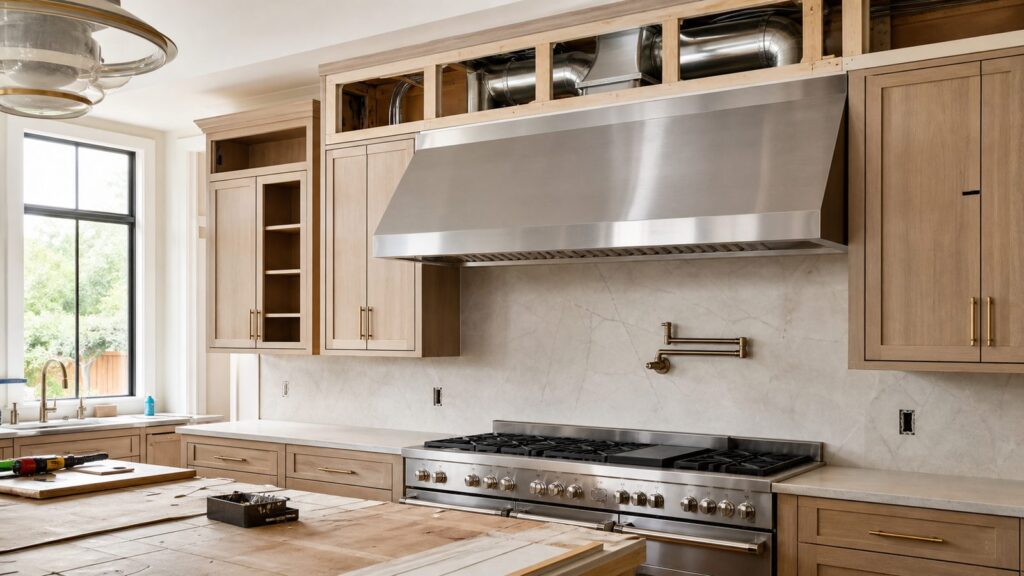
For kitchen backsplash work, adjustable-depth boxes are usually worth using. Tile thickness, mortar bed, backer board, shiplap, and decorative panels can leave a standard box too far recessed or proud of the surface. A box that is set too far back may require a listed box extender. A box that sticks out too far can interfere with the cover plate and finished look.
For bathrooms and laundry rooms, we prefer deeper boxes where GFCI devices are involved. GFCI receptacles are deeper than standard duplex devices, and tight boxes make the final install harder than it needs to be.
For garages and unfinished basements, metal boxes and conduit often make sense because they tolerate impact and remain serviceable. If the wiring is exposed, protect it appropriately. Where bored holes or cable runs are too close to the face of framing, install nail plates before drywall or finishes cover the work.
Exterior Outlet Boxes and Weatherproof Covers
Outdoor outlets need a weatherproof assembly, not just an indoor outlet in a box. A typical exterior upgrade includes a weatherproof box, a listed weather-resistant receptacle, GFCI protection, proper sealing at the wall penetration, and a while-in-use cover where required for wet locations.
Outdoor cover costs vary. Flat weatherproof covers may run around $6. Extra-duty nonmetallic in-use covers are commonly around $10 to $12. Deeper extra-duty covers may be around $19, and multi-configuration kits can reach about $38. Those parts are not expensive compared with the labor of opening a wall, fishing cable, or returning after water has damaged a poor installation.
Orientation matters. The cover hinge must open fully. The cord path should not crush the gasket. The cover should close with the plug inserted if it is a while-in-use cover. On siding, the mounting surface needs to be stable and properly flashed or sealed. On masonry, use anchors and boxes designed for the substrate.
Exterior outlets can also trigger bigger cost questions. If a new circuit is needed for outdoor equipment, a shed, landscape transformer, hot tub support equipment, or a workshop load, the project is no longer just a box and receptacle. Panel capacity, trenching, conduit, GFCI protection, inspection, and local rules may drive the budget.
How Much Outlet Box Upgrades Cost in 2026
The box itself is cheap. The installed project is not always cheap because labor, access, protection devices, permits, and finish repair control the real cost.
Free tools Windows power users keep installed
One-click scans. No signup required.
For 2026 US budgeting, national installed outlet pricing commonly lands in the $130 to $320 range for many standard projects, with several cost references clustering around the low-to-mid $200s. Homewyse-style estimating for May 2026 puts outlet installation around $297 to $360 per outlet in many cases. Broader marketplace project pricing can run about $253 to $711, with averages around $424, because many requests include new wiring, travel, troubleshooting, or added complexity.
Also popular on Amazon

- EASY OLD WORK INSTALLATION: Designed for retrofit applications, this old work box uses mounting ears and swing clamps to support quick and secure installation in existing walls
- CODE COMPLIANT DESIGN: Listed for use with non-metallic sheathed cable in accordance with Article 314 of the National Electrical Code for safe residential wiring applications
- DURABLE CONSTRUCTION: The high-quality blue pvc material offers superior performance and is ideal for those who want a corrosion-resistant and non-conductive housing for electrical components
- SPACIOUS INTERIOR: With 14 cubic inches of capacity, this single gang box offers practical space for switches, outlets and wire management in standard wall depths
- CERTIFIED QUALITY: UL Listed (E11461) to ensure every installation is code-compliant and secure when used with non-metallic cable in home or commercial renovation projects
A simple replacement outlet may be closer to $65 to $125 when the existing box, wiring, and protection are already correct. Adding a new outlet is different. Moving an outlet is different. Adding a new circuit is very different.
| Project | Reasonable 2026 Budget Range | What Usually Drives the Cost |
|---|---|---|
| Buy a common interior box only | $2-$6 | Plastic vs steel, depth, gang count |
| Outdoor in-use cover only | $10-$38 | Depth, extra-duty rating, configurations |
| Replace an existing receptacle | $65-$125 | Device type, condition of existing box, service minimums |
| Install a typical new outlet | $130-$320, often around $229 | Labor, access, fishing wire, device type |
| Higher-complexity outlet project | $300-$700+ | New wiring, dedicated circuit, difficult access, wall repair |
| Junction box installation | $100-$300 typical, around $200 average | Access, box size, location, wiring corrections |
| Complex electrical box work | $500-$1,200 possible | Panel distance, masonry, exterior work, outdated wiring |
Permits vary by jurisdiction. A typical electrical permit for outlet work may be around $50 to $100, but local rules decide what is required. Some areas require permits for adding receptacles or replacing plugs. Others exempt limited like-for-like replacement. Do not assume the rule from one city applies in another county.
Cost multipliers include fishing cable through finished walls, attic or crawlspace access, long panel distance, masonry or tile, exterior penetrations, dedicated circuits, GFCI or AFCI protection, permit and inspection fees, drywall repair, regional labor rates, emergency scheduling, and old wiring such as aluminum branch circuits or knob-and-tube.
What’s actually slowing this PC down?
Pick the symptom - the matching free tool is one click away.
Box Fill: The Detail That Separates a Good Install From a Crowded One
Box fill is where many DIY installations and rushed remodels go wrong. The code does not allow installers to pack unlimited conductors into a small box because heat, insulation damage, device stress, and serviceability all matter.
Under NEC box-fill concepts, each conductor volume depends on wire size. A 14 AWG conductor uses 2.00 cubic inches. A 12 AWG conductor uses 2.25 cubic inches. The device yoke, internal clamps, and grounding conductors also count according to the rule structure. The box must have enough marked volume for the actual contents.
Here is the practical field version: if the box has more than one cable entering it, or if the device is bulky, do the math before choosing the box. A feed-through receptacle, a GFCI, and pigtails can consume capacity fast. A deep box or 4-inch square steel box with a single-gang mud ring often solves the problem cleanly.
We do not like forcing devices into tight boxes. If an installer has to lean on the receptacle hard to get the screws started, that is a warning sign. Wires should fold into the box in controlled bends, the device should sit flat, and the cover plate should install without pulling the device out of alignment.
Crashes, No Sound, or Screen Glitches?
Random freezes, missing sound and display glitches usually trace back to one bad driver. Find and replace yours safely.Free scan · under a minutePC Slower Than It Used to Be?
A free scan shows the junk files, broken settings and background clutter dragging Windows down - then fixes them in one click.Free scan · Windows 10 & 11Junction Boxes Must Stay Accessible
Any box used for splices must remain accessible. Burying a splice behind drywall, cabinets, tile, built-ins, or permanent finishes is an unsafe shortcut and a common inspection failure.
If a cable is too short during a remodel, the fix is not to hide a splice in the wall. Use an accessible junction box, reroute the cable, or replace the cable run as appropriate. Access can be through a blank cover plate, an unfinished area, an attic location that remains reachable, or another approved accessible location. The exact approach depends on the structure and local code interpretation.
This is also why outlet planning before drywall matters. Moving boxes after finishes are installed creates patching, repainting, tile work, cabinet conflicts, and inspection delays. Coordinating outlet locations before insulation and drywall is one of the easiest ways to control cost.
Independent reader supportYour contribution helps us test, update, and keep practical guides available for everyone.When to DIY and When to Hire a Pro
A capable homeowner may be able to replace a cover plate, install a listed box extender on a box that is set too far back, or swap a damaged low-voltage mounting bracket if no line-voltage wiring is involved. Some homeowners can replace a like-for-like receptacle where local rules allow it, power is verified off, the circuit is modern and grounded, and the existing box is in good condition.
The Tool Desk
Outbyte Driver Updater FREEFix the driver behind crashes, sound loss and screen glitchesFind Drivers →Outbyte PC Repair FREEClear out junk files and repair common Windows errorsFree Scan →Adding a new outlet is a higher bar. That work can involve cutting walls, fishing cable, calculating box fill, confirming circuit capacity, selecting breaker protection, handling grounding and bonding, installing GFCI or AFCI protection, and getting a permit. If any of those items are uncertain, hire a licensed electrician.
Hire a pro for exterior outlets, kitchen and bath circuits, laundry and garage upgrades, dedicated circuits, aluminum wiring, knob-and-tube wiring, missing grounds, warm or scorched devices, nuisance tripping, panel work, multiwire branch circuits, masonry penetrations, and any project requiring new cable from the panel. Also hire a pro when the wall finish is expensive, such as tile, stone, finished millwork, or custom cabinetry. The cost of a mistake can exceed the electrician’s labor quickly.
On our projects, the general rule is simple: if the work changes the circuit, extends wiring, enters the panel, or affects a wet or exterior location, we plan it as permitted electrical work and coordinate it before finishes.
Our Job-Site Recommendations by Upgrade
Best All-Around Interior Remodel Box
Use a listed 1-gang PVC old-work box with adequate cubic-inch capacity when the wall is sound drywall, the wiring method is compatible, and the device is not overly crowded. For common single-device uses, boxes in the 14 to 20 cubic inch range are typical, but the actual box-fill calculation decides whether it is enough.
Best Box for Open-Wall Renovations
Use new-work nail-on, screw-on, or adjustable-depth boxes. If the finish thickness is uncertain, adjustable-depth boxes save time and reduce the chance of needing extenders later. This is especially useful in kitchens, baths, mudrooms, and paneled rooms.
Best Box for Bulky Devices
Use deep boxes or 4-inch square boxes with a single-gang mud ring. This is our preferred direction for GFCI outlets, USB receptacles, smart outlets, dimmers, timers, and locations with multiple cables or pigtails.
Also popular on Amazon

- UL LISTED & 2-HOUR FIRE RATED: Rigorously tested and certified by UL to meet US electrical safety standards. This non-metallic electrical box provides a full 2-hour fire rating for maximum protection in residential and commercial wiring installations — giving electricians and homeowners complete confidence in every connection
- 14 CU-IN DEEP SINGLE GANG BOX: 2-3/4" deep with 14 cubic inch capacity provides ample wiring space for 7x14 AWG, 6x12 AWG, or 5x10 AWG configurations. Built-in cable clamps securely grip non-metallic sheathed cables (NM-B) — no additional connectors needed. The deep design accommodates complex wiring with room to spare
- QUICK OLD WORK & RETROFIT INSTALLATION: Designed for existing walls — simply cut an opening, insert the box, and the adjustable mounting tabs grip the drywall securely. Tool-free installation with no brackets or screws required. Live hinges allow easy cable insertion and provide additional strain relief. Perfect for remodeling, retrofit, and renovation projects
- DURABLE PVC NON-METALLIC CONSTRUCTION: Made from high-grade PVC that is inherently non-conductive — no grounding required, reducing installation time and cost. Corrosion-resistant and impact-resistant plastic junction box that maintains structural integrity in demanding environments. The grey finish blends seamlessly with concrete, drywall, and conduit for a clean, professional installation
- VERSATILE SWITCH & OUTLET BOX: Compatible with standard switches, duplex outlets, GFCIs, dimmers, and decorator-style devices. Ideal wall box for residential remodeling, commercial retrofit, home improvement, and electrical upgrades. Whether you're adding a light switch, replacing an outlet, or installing a GFCI in a kitchen or bathroom — this junction box handles it all
Best Box for Garages and Shops
Use galvanized steel boxes with approved connectors, especially with exposed conduit or where the outlet may get bumped. They are durable, adaptable, and easy to service.
Best Box for Exterior Outlets
Use a weatherproof box with a weather-resistant receptacle, GFCI protection, and an extra-duty while-in-use cover where required. Plan the cover orientation before drilling the wall so cords can exit cleanly.
Free tools Windows power users keep installed
One-click scans. No signup required.
Best Box for Future Flexibility
Use deeper boxes and document locations before drywall. The extra few dollars in material cost is cheap insurance against future device changes, service calls, and finish repairs.
Common Mistakes to Avoid
The most common mistake is choosing a box by price instead of capacity and application. A $2 box is not a bargain if it is too shallow for the device or wrong for the wiring method.
Another mistake is using old-work clamp boxes in wall materials that cannot support them. Plaster-lath, brittle drywall, tile, shiplap, paneling, and damaged wall sections often need a stronger mounting approach.
We also see recessed boxes after new finishes are added. If tile, paneling, or another finish leaves the box set too far back, use a listed box extender. Do not rely on long device screws and an oversized cover plate to hide the problem.
Outdoor installations fail when the cover is wrong, the receptacle is not weather-resistant, the gasket is crushed, the box is not sealed correctly, or GFCI protection is missing. For exterior work, every part of the assembly has to match the exposure.
Finally, never bury junctions. If there is a splice, there must be an accessible box. Future homeowners, electricians, and inspectors need to be able to find and service it.
Bottom Line
For a typical home upgrade, the best outlet box is the one with enough volume, proper mounting, correct material, compatible wiring connections, and a finished depth that matches the wall. Most interior remodels can use a properly sized PVC old-work box. Open-wall projects should use new-work or adjustable boxes. Garages, shops, basements, conduit runs, and high-abuse areas often call for steel. Exterior outlets need a weatherproof system with the right receptacle, GFCI protection, and while-in-use cover.
The box may cost $2 to $20, but the installed upgrade often costs $150 to $400 or more once labor, access, code protection, permits, and finish work are included. Spending a few extra dollars on the right box is one of the cheapest ways to avoid rework, failed inspections, loose outlets, and cramped wiring.
Frequently Asked Questions
What is the best electrical box for adding an outlet to an existing wall?
For sound finished drywall, a listed 1-gang PVC old-work box with enough cubic-inch capacity is usually the best choice. If the wall is plaster, tile, shiplap, paneling, damaged drywall, or unusually thick, a screw-mounted retrofit box or another stronger mounting method may be better.
Should I use a plastic or metal electrical box for a home outlet?
Use plastic boxes for many standard interior NM-cable remodels where local code allows them. Use metal boxes for conduit, armored cable, garages, workshops, unfinished basements, exposed locations, and higher-abuse areas. Metal boxes must be bonded and grounded correctly.
How deep should an outlet box be?
Use the deepest box that fits the wall and meets the installation conditions. Common single-gang boxes are often 14 to 20 cubic inches, but GFCI, USB, smart devices, dimmers, pigtails, and multiple cables may require more volume. Box fill must be calculated under NEC rules.
How much does it cost to install a new outlet in 2026?
A typical installed outlet often costs about $130 to $320, with many projects around the low-to-mid $200s. More complex work can run $300 to $700 or more if it requires new wiring, a dedicated circuit, difficult access, exterior work, wall repair, or permit fees.
What’s actually slowing this PC down?
Pick the symptom - the matching free tool is one click away.
Can a junction box be hidden behind drywall?
No. Junction boxes and splice boxes must remain accessible. A splice buried behind drywall, cabinets, tile, or permanent finishes is unsafe and commonly noncompliant.
What outlet box should I use outside?
Use a weatherproof exterior box with a listed weather-resistant receptacle, GFCI protection, and an extra-duty while-in-use cover where required for wet locations. The cover should be oriented so it opens fully and the cord exits without crushing the gasket.
Quick Recap
Product prices and availability are accurate as of the date/time indicated and are subject to change. Any price and availability information displayed on Amazon at the time of purchase will apply.

