Free tools Windows power users keep installed
One-click scans. No signup required.
Some links on this page are affiliate links: if you buy through them we may earn a commission, at no extra cost to you.
A good outdoor kitchen ice maker is not just a convenience appliance. It changes how the space works. Instead of running inside with a cooler, guests can grab clean ice at the bar, mix drinks at the counter, and keep the indoor kitchen out of the party traffic.
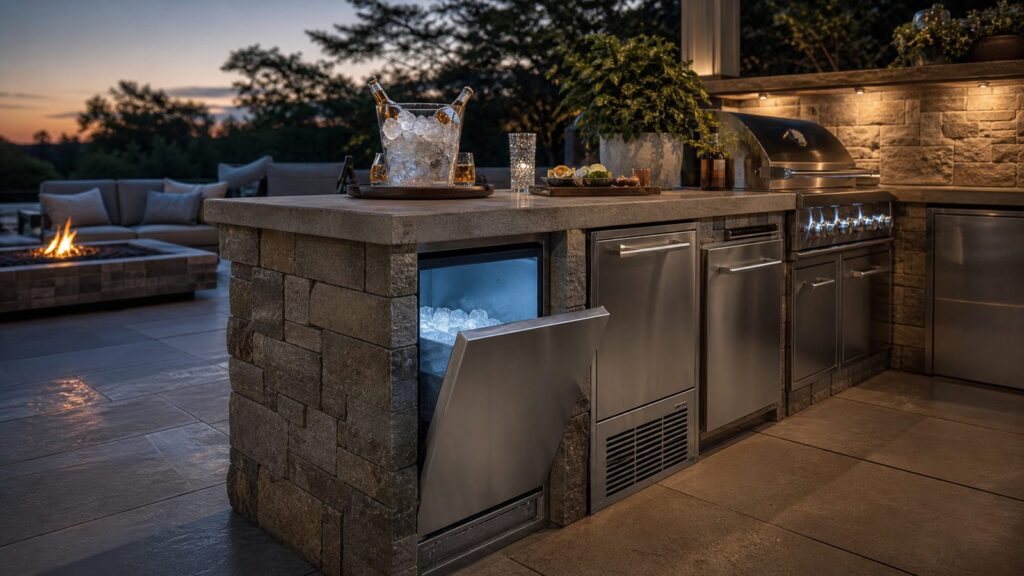
For most permanent outdoor kitchens, the best choice is a true outdoor-rated, front-venting, undercounter ice maker. The common size is a 15-inch cabinet opening, with daily production around 50 to 85 pounds and storage around 20 to 30 pounds, depending on the model. Portable countertop units can work for occasional use, but they are usually not the right answer for a built-in island exposed to heat, rain, humidity, dust, or pool chemicals.
As an Amazon Associate I earn from qualifying purchases.
On our job sites, the appliance itself is only half the decision. The real success comes from planning the cabinet opening, electrical circuit, water line, drain route, filter access, ventilation, winterization point, and service clearance before the island is built. If those details are handled late, a simple ice maker can turn into concrete cutting, trenching, pump retrofits, and expensive rework.
Best Outdoor Kitchen Ice Maker Types
There is no single best ice maker for every outdoor kitchen. The right type depends on how often you entertain, what kind of drinks you serve, where the unit will sit, and how difficult it is to run utilities to the island.
Popular on Amazon

- Advanced & Fast Ice Making: Our commercial under counter ice maker machine can produce 90 lbs of ice in 24 hours, providing 40 clear ice cubes every 11-20 minutes for you and your family. The 24 lb storage container ensures a constant supply of ice, meeting all your daily ice needs for your home, restaurant, bar, or hotel.
- Compact Design: The built-in design with dimensions of 14.96 x 18.47 x 33.99 inches (including adjustable feet) makes it perfect for any standard height kitchen or bar counter, while also allowing the ice maker to be used as a standalone unit.
- Reversible Door & Cold Insulation: The stainless steel ice maker machine door with a handle can be installed with left or right hinges, allowing you to choose the opening direction according to your needs. The 3-layer housing material ensures longer-lasting ice cubes, preventing them from melting quickly.
- Smart LCD Control Panel & Customizable Ice Thickness: The multifunctional control panel displays the ambient temperature and allows you to adjust the ice cube size by changing the ice-making time. The 24-hour timer function lets you set the machine to start or stop running at your convenience.
- Easy-to-Clean & Prolonged Life: The self-cleaning function, activated by pressing the "Timer Clean" button for 5 seconds, helps maintain the ice maker's efficiency and longevity. We recommend cleaning the machine regularly according to usage. The ice maker requires a water supply . Be sure to keep the machine upright for at least 24 hours before using it.
Outdoor-Rated Undercounter Ice Makers
This is the standard choice for a built-in outdoor kitchen or patio bar. Most units are designed for a 15-inch-wide opening, roughly 24 inches deep, and counter height around 34 to 35 inches. Many produce 50 pounds of ice per day, while higher-output models can reach 80 to 85 pounds per day.
Look for manufacturer approval for outdoor use, not just stainless steel on the door. A true outdoor model should have corrosion-resistant construction, sealed or protected electrical components, front ventilation, weather-tolerant materials, and published outdoor installation instructions. Indoor-rated machines may be cheaper, but installing one outside can shorten its life and may void the warranty.
Recommended Free Tools
Clear Ice Machines
Clear ice makers produce dense, attractive cubes that melt more slowly than soft bullet ice. They are the best fit for cocktails, whiskey, sparkling water, and outdoor bars where presentation matters. They usually cost more than basic cube machines and need regular cleaning because the freezing process leaves minerals behind.
If the home has hard water, we strongly recommend filtration and a realistic descaling schedule. Cloudy ice, reduced output, and noisy operation are often water-quality problems before they are appliance problems.
Nugget Ice Makers
Nugget ice is soft, chewable, and popular for soda, iced tea, lemonade, and casual poolside drinks. Outdoor-rated nugget machines are available, but they often cost more than standard cube machines. They also have more moving parts than simple cube units, so service access matters.
For families that use the outdoor kitchen every weekend, nugget ice can be worth it. For a rarely used patio bar, the price and maintenance may not pencil out.
Outdated Drivers Are Slowing You Down
One free scan finds every outdated or missing driver and matches the right update for your exact hardware.Free scan · exact hardware matchWindows Errors? Fix Them Before They Spread
Repair common Windows errors and clear accumulated junk for a smoother, more stable PC - no reinstall needed.Free scan · no reinstallPortable Countertop Ice Makers
Portable units commonly advertise 26 to 30 pounds of ice per day and first batches in less than 10 minutes. Many cost $80 to $600, with basic bullet-ice machines often under $200 and countertop nugget or clear-ice units often in the $300 to $700 range.
They are useful for tailgates, temporary bars, and occasional patio use. They are not usually built-in appliances. Most require manual filling, manual draining, and protection from weather. Many do not keep ice frozen long term; they make ice, let it melt, and recycle the water.
Outdoor Ice Maker Comparison Table
| Type | Typical 2026 Cost | Daily Output | Best Use | Watchouts |
|---|---|---|---|---|
| Portable countertop | $80-$600, with premium countertop nugget or clear ice often $300-$700 | About 26-30 lb/day | Occasional patio use, temporary bars, renters | Usually not weather-rated, manual fill/drain, limited storage |
| Outdoor undercounter cube | About $1,000-$4,000; premium outdoor-rated units often $2,000-$5,000+ | About 50-85 lb/day | Permanent outdoor kitchens and bars | Requires water, drain, GFCI-protected power, ventilation |
| Outdoor clear ice | Commonly $2,000-$5,000+ | Often 50-85 lb/day | Cocktails, entertaining, upscale bars | More sensitive to water quality and cleaning schedule |
| Outdoor nugget ice | Often $3,000-$5,000+ | Varies by model, commonly around 50 lb/day or more | Soft drinks, pool houses, high-use family spaces | Higher cost, more maintenance, local service support matters |
| Commercial-grade undercounter | Small units about $1,500-$2,500; larger machines $5,000-$10,000 before integration | Often 80 lb/day and up | Large parties, guest houses, club-style outdoor bars | May need more space, stronger utility planning, and commercial-style maintenance |
How Much Ice Do You Actually Need?
Do not size the machine by the biggest number on the brochure. Ice production ratings are usually measured under favorable conditions. Real outdoor performance drops when the unit sits in 95-degree heat, receives warm incoming water, gets direct afternoon sun, or has poor airflow inside the island.
For a family outdoor kitchen, a 50-pound-per-day unit is usually enough. That covers a typical weekend cookout, a few coolers, and regular drink service. For a pool house, outdoor bar, or frequent parties of 20 to 40 people, we would look harder at 80 pounds per day or more, especially if guests are filling tumblers, pitchers, and coolers from the same machine.
What’s actually slowing this PC down?
Pick the symptom - the matching free tool is one click away.
Storage is separate from production. A machine may produce 50 pounds per day but only hold 25 pounds at one time. If guests empty the bin in the first hour, the machine will continue producing ice, but it will not instantly refill. For heavy use, storage capacity and production rate both matter.
Drainage: The Detail That Makes or Breaks the Installation
Every serious built-in ice maker needs a way to handle meltwater. This is one of the first questions we settle during layout because the drain decision affects cabinet design, slab penetrations, utility trenching, and appliance choice.
Gravity Drain
A gravity-drain ice maker is the simpler and more durable option when the site allows it. The appliance drain outlet must sit above the receiving drain, and the drain line needs continuous slope. There is no pump motor, less noise, and one fewer wear component.
Also popular on Amazon

- High Efficiency Ice Making and Storage: This 15 inch wide stainless steel under counter ice maker can produce an astonishing 80 pounds of ice per day and store up to 30 pounds. It can be installed both indoors and outdoors. With its front vented design and forced air refrigeration system, it offers an efficient and stable ice making experience. Ideal for fridge owners, entertainers, bartenders, connoisseurs, or those looking to save space.
- Customizable Ice Cube Sizes: Choose from three ice cube sizes to meet various needs. Whether it's for making cocktails, filling coolers, or entertaining the family during Thanksgiving, this built - in ice maker is an excellent choice. Its slim design, measuring only 15''W × 21''D × 33''H, fits easily into narrow spaces. The 3 - layer housing material keeps ice cubes from melting quickly.
- User Friendly LCD Digital Control Panel: Operate this ice maker effortlessly via the user friendly control panel. The bright LED lights allow you to check the ice making status at any time. An ice scoop is included for easy ice serving to guests or personal use. Remember to keep the machine upright for at least 24 hours before use.
- Direct Drainage, No Leaking: A gravity drain.Your selection of one will be based on the installation location. You’ll need to connect the water line to the kitchen water supply and run the drain hose into the floor drain before plugging the machine in. If you need to use an external pump to drain water, please purchase the pump yourself and make sure the pump is below the floor level of the ice machine.
- Water Filtration and Self Cleaning Function: This commercial under counter ice maker comes with an inline filter that removes sediment from water before freezing, enhancing the taste and smell of ice. Combined with the self cleaning function, it ensures that the ice remains crisp and clear. Special cleaners are also provided. To maintain optimal performance, clean the ice maker at least once every six months. Certified by ETL and DOE.
Gravity drain works best when the outdoor kitchen is close to an approved drain location and the cabinet base can be planned around the required slope. It is harder to add after the island is finished.
Drain Pump
A pump-drain model can move water upward or farther away when gravity slope is not possible. That flexibility helps on patios where the appliance sits on a slab and the nearest drain is not conveniently below the unit.
The tradeoff is cost, noise, and serviceability. Pumps fail eventually. If we specify one, we keep it accessible. Burying a pump behind masonry or locking it inside a cabinet with no service panel is asking for a future headache.
Outdoor Rating, Ventilation, and Placement
Outdoor kitchens are rougher environments than indoor kitchens. Heat from grills, wind-driven rain, humidity, pollen, insects, salt air, and pool chemicals all shorten appliance life. The best ice maker for this setting is the one designed to survive those conditions, not the one with the highest production number.
We prefer placing the ice maker in a shaded, ventilated section of the island, away from grills, side burners, pizza ovens, and west-facing sun. Heat separation matters. An ice maker fighting a grill firebox on one side and direct sun on the door will work harder, make less ice, and likely need service sooner.
Most undercounter units vent from the front. That does not mean clearances can be ignored. The manufacturer may still require side, rear, or top clearance, and the base must be level and stable. Blocking the toe-kick grille or boxing in the appliance can cause overheating and reduced production.
In coastal areas or pool environments, we look for stronger corrosion resistance, quality stainless, covered placement, and a brand with real parts availability. Stainless is not magic. Salt air and chlorinated splash zones can damage hardware, fasteners, hinges, and internal components over time.
Water Quality and Ice Taste
If the water tastes bad, the ice will taste bad. If the water is hard, the machine will scale faster. Filtration is one of the cheapest ways to protect the appliance and improve the finished ice.
NSF/ANSI 42 filters are commonly used for taste, odor, and chlorine reduction. Other NSF/ANSI standards may apply if the home has health-related water concerns such as lead, cysts, or other specific contaminants. The right filter depends on the water issue, so it is worth starting with a local water report or water test rather than guessing.
Do these 3 things before closing this tab:
1Clear out junk files and repair common Windows errors2Fix the driver behind crashes, sound loss and screen glitches3Repair Windows errors before they cause bigger problemsWe like filter locations that a homeowner can actually reach. If changing the filter requires unloading a cabinet, removing panels, or lying on wet patio stone, it will not happen on schedule. Plan a shutoff valve and filter access before the cabinet is fabricated.
Electrical, Plumbing, Permits, and Code Notes
An outdoor ice maker is an appliance, but installing one usually touches electrical and plumbing work. That means code requirements and permits may apply, especially when adding a new circuit, extending water lines, tying into drainage, cutting a slab, or modifying an outdoor kitchen island.
Outdoor receptacles should be properly rated for the location and GFCI protected. The National Electrical Code has continued to expand and clarify GFCI protection requirements, and outdoor kitchen appliances sit in an environment where water and electricity meet. Do not run an ice maker on an extension cord. Do not tuck an indoor power strip inside a cabinet. Use a properly installed receptacle in the right location.
Some manufacturers call for a dedicated circuit, while others allow a shared small-appliance circuit if the load and local code permit it. The installation manual controls the appliance requirement, and the local authority having jurisdiction controls the code requirement. On our projects, we confirm both before rough-in.
The Tool Desk
Outbyte PC Repair FREEClear out junk files and repair common Windows errorsFree Scan →Outbyte Driver Updater FREEScan for outdated or missing drivers - takes under a minuteDriver Scan →Also popular on Amazon

- PLEASE NOTE: Ice is produced in sheets (NOT individual cubes) - 25 lbs of ice storage (While it is well insulated, this ice maker is not a freezer); Up to 50 lbs of ice production/day
- Commercial-grade stainless steel door; Removable ice bin; Computerized controls; Dimensions 32.8" H x 15" W x 23.6" D
- For freestanding or built-in applications; Reversible door; Adjustable leveling legs; Ice scoop included
- Produces restaurant quality clear, cubed ice; Internal drain pump (Drain required); Ice comes out in sheets and will have to be broken apart
- NOTE: Installation by a licensed plumber is strongly recommended. Drain hose length: 4.5 ft; Unit must be located within 4.5 ft of drain location
Plumbing requirements vary by municipality. A simple replacement in an existing outdoor bar may not trigger the same review as a new island with water, drain, gas, and electrical. When in doubt, ask the local building department before construction starts. It is much cheaper to move a drain line on paper than after the patio is finished.
Installed Cost: Appliance Price Is Not the Whole Budget
In 2026, a portable ice maker may cost less than a nice dinner out, while a premium outdoor-rated undercounter model can cost several thousand dollars before installation. The installed number depends on how much infrastructure already exists.
A simple replacement in an existing 15-inch cabinet bay may only add a few hundred dollars in labor if the electrical, water, drain, and clearances are already correct. A new installation can land in the $2,500 to $7,500+ range for the appliance scope alone when it includes water lines, drain routing, GFCI-protected electrical, trenching, cabinet modification, slab cuts, or island reconstruction.
The biggest cost drivers are outdoor rating, stainless quality, ice type, daily production, storage capacity, gravity drain versus pump drain, filtration, Energy Star certification, warranty, local service network, and distance to utilities. Nugget and clear-ice technology usually cost more than basic cube production.
Quick wins for a faster PC:
Repair Windows errors before they cause bigger problemsFix Now →Scan for outdated or missing drivers - takes under a minuteDriver Scan →Clear out junk files and repair common Windows errorsFree Scan →ENERGY STAR-certified batch-type commercial ice makers are about 10% more energy efficient and 20% more water efficient than standard models. Continuous-type models are about 16% more energy efficient. For a residential outdoor kitchen, that may not decide the purchase by itself, but it is worth considering for high-use pool houses, guest spaces, or commercial-style entertaining areas.
Brands and Models Worth Considering in 2026
We avoid choosing appliances by brand name alone, but certain categories consistently show up in serious outdoor kitchen planning. Examples homeowners often compare include Blaze 50-pound outdoor-rated units, True 85-pound outdoor-rated units, RCS 55-pound outdoor nugget machines, Summit 50- to 77-pound commercial and outdoor-style models, and Ice-O-Matic 85-pound outdoor-rated machines.
The right short list depends on the project. A compact family patio may only need a 50-pound cube machine. A pool house with a sink, beverage center, and full bar may justify an 80- to 85-pound unit. A cocktail-focused bar should look at clear ice first. A soft-drink-heavy family space may get more daily satisfaction from nugget ice.
Before ordering, confirm four things in writing: the model is approved for outdoor use, the drain style matches the site, the cabinet opening matches the specification sheet, and local service is available. A hard-to-service machine can turn a minor part failure into weeks without ice.
Maintenance and Winterization
Ice makers are wet appliances. They need cleaning, descaling, and seasonal attention. Commercial-style maintenance guidance commonly points back to the manufacturer’s procedure and at least twice-yearly cleaning and sanitizing. In hard-water areas or heavy-use outdoor bars, more frequent descaling may be necessary.
A practical homeowner schedule is simple: clean and sanitize before the main outdoor season, change filters on the manufacturer’s interval, inspect the drain and pump if equipped, descale as needed, and clean again before shutdown or winterization. If the bin smells stale or the cubes look cloudy, do not ignore it.
In cold climates, winterization is not optional. Water left in supply lines, valves, pumps, reservoirs, or drain traps can freeze and crack components. The exact process depends on the model and plumbing layout, but it usually involves shutting off water, draining lines, cleaning the unit, and protecting exposed plumbing. If the outdoor kitchen is in a freeze zone, include a winterization point during construction.
Independent reader supportYour contribution helps us test, update, and keep practical guides available for everyone.When to DIY vs. When to Hire a Pro
A homeowner can usually handle a portable countertop machine, basic cleaning, filter changes, and routine bin sanitation. A skilled DIYer may be able to replace an existing undercounter unit if the opening, water connection, drain, and electrical receptacle are already correct and the new model matches the old requirements.
Hire a pro when you are adding a new undercounter ice maker, running a new water line, adding or relocating a drain, installing a pump, adding an outdoor receptacle, cutting concrete, modifying masonry, changing cabinet dimensions, or tying the appliance into a larger outdoor kitchen build.
Also popular on Amazon

- High-Capacity Ice Production: This commercial ice maker produces up to 120 pounds of ice daily and features a 30-pound storage capacity with a large removable ice bin, ideal for busy households, large events, or commercial spaces like bars and offices. Whether you’re chilling iced tea, displaying fresh seafood, or blending smoothies, it delivers a steady supply of slow-melting, odorless ice that keeps drinks cold and refreshing without dilution
- Space-Saving & Flexible Installation: Designed to fit seamlessly into a 15-inch cabinet, this undercounter ice machine integrates smoothly into any kitchen layout. Its versatile installation options, including under counter, freestanding, or built-in setups, offer the flexibility to adapt to your space requirements while adding a sleek, modern touch to your kitchen
- Simple Upkeep and Durability: Enjoy simple maintenance with the one-click self-cleaning function, which thoroughly cleans the unit effortlessly, ensuring the clear ice cube maker operates at peak efficiency for longer. Enhanced thickened insulation technology keeps ice frozen solid for up to 8 hours, preserving its optimal chill and freshness while reducing energy consumption
- Easy Accessibility: Equipped with an intuitive control panel for simple operation, along with water shortage and ice full alerts to prompt you to check the water source in time. A convenient ice scoop is included for effortless ice retrieval, helping keep your ice clean and protected from contamination. You can also customize ice thickness with adjustable settings (thin/medium/thick) ideal for cocktails, whiskey, or milkshakes
- Versatile and Reliable Safety: ETL-certified for both reliability and safety, this under counter ice machine comes with a removable filter system that enhances the taste and clarity of ice cubes. It operates quietly, features a built-in water inlet and outlet, and includes the necessary hoses for easy installation, making it a great fit for your patio, poolside bar, or outdoor kitchen
The best time to involve the contractor, electrician, and plumber is before the island is framed or fabricated. On our job sites, we mark the appliance opening, toe-kick vent path, water shutoff, drain route, filter location, receptacle location, and service access during rough-in. That coordination is what keeps the finished kitchen clean and reliable.
Common Mistakes to Avoid
The most expensive mistake is buying an indoor-rated ice maker because it is cheaper and then installing it outside. Heat, rain, humidity, and salt air are not minor details. If the manufacturer does not approve outdoor use, pick another unit.
The second mistake is ignoring drainage until the island is built. A gravity drain needs slope. A pump needs power, space, and access. Either way, the decision belongs in the design phase.
Other common problems include placing the unit beside a grill, skipping filtration in hard-water areas, assuming rated production equals real summer output, using an extension cord, blocking ventilation, forgetting winterization, and choosing a brand that local technicians cannot service.
Bottom Line
For a permanent outdoor kitchen, the best ice maker is usually a 15-inch outdoor-rated undercounter unit sized around 50 pounds per day for normal family entertaining or 80 pounds per day and up for larger bars, pool houses, and frequent parties. Clear ice is the premium cocktail choice. Nugget ice is the crowd-pleaser for soft drinks. Portable machines are fine for occasional use but should not be treated like built-in outdoor appliances.
Choose the machine after you confirm the site conditions: shade, ventilation, water quality, drain path, electrical requirements, winter exposure, and service access. That is how you get chilled drinks without turning the outdoor kitchen into a maintenance project.
Frequently Asked Questions
Do I need an outdoor-rated ice maker for an outdoor kitchen?
Yes, for a permanent installation. Outdoor-rated models are built for heat, humidity, covered exterior conditions, corrosion resistance, and proper ventilation. An indoor-rated unit may fail early outdoors and may not be covered by warranty.
How much does an outdoor kitchen ice maker cost in 2026?
Portable countertop units often cost $80-$600. Built-in residential undercounter ice makers generally run $1,000-$4,000, while premium outdoor-rated models commonly land around $2,000-$5,000+. With new water, drain, electrical, trenching, or cabinet work, the installed appliance scope can reach $2,500-$7,500+.
Does an outdoor ice maker need a drain?
Most built-in outdoor ice makers need a drain for meltwater. Some use gravity drainage, while others use a drain pump. The drain style should be chosen before cabinet fabrication because it affects slope, access, and appliance selection.
Is a gravity drain or drain pump better?
A gravity drain is usually simpler, quieter, and more durable when the site allows proper slope. A drain pump is useful when water must move uphill or farther away, but it adds cost, noise, and a service part that must remain accessible.
How many pounds of ice per day do I need?
A 50-pound-per-day outdoor ice maker is usually enough for family gatherings and typical patio use. Large parties, pool houses, and full outdoor bars may justify 80 pounds per day or more, especially in hot weather.
Can an outdoor ice maker stay outside during winter?
It can stay installed outside if the model and enclosure are appropriate, but it must be winterized in freezing climates. Water should be shut off and drained according to the manufacturer’s instructions to prevent cracked valves, lines, pumps, and reservoirs.
Quick Recap
Product prices and availability are accurate as of the date/time indicated and are subject to change. Any price and availability information displayed on Amazon at the time of purchase will apply.

