Recommended Free Tools
Some links on this page are affiliate links: if you buy through them we may earn a commission, at no extra cost to you.
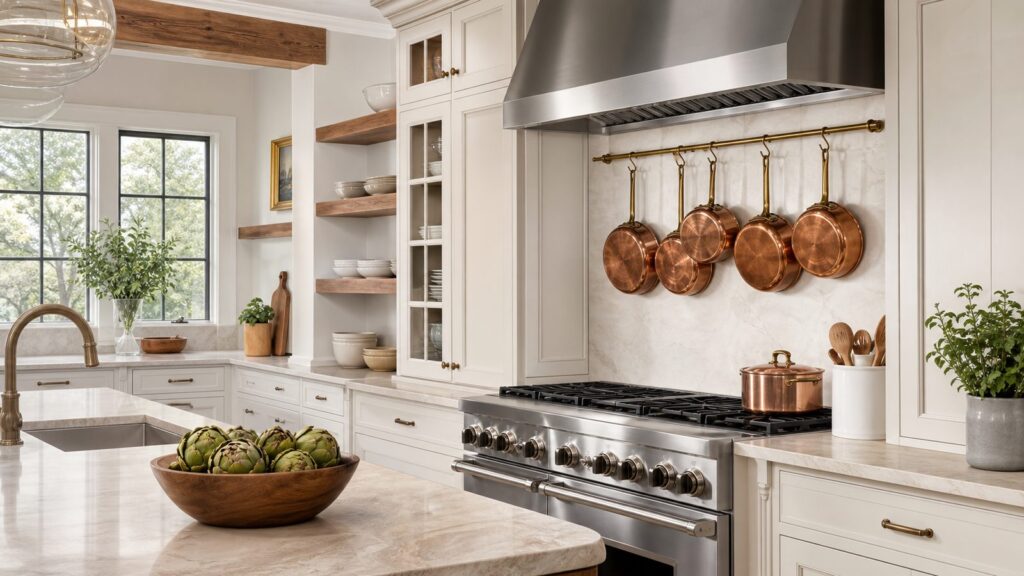
Old Dutch International pans are best approached as a kitchen upgrade with two parts: the pan itself and the kitchen around it. The brand has long been associated with copper kitchenware, decorative accessories, and traditional cookware styling, with roots commonly traced to 1950. But not every copper-colored Old Dutch pan should be treated like a professional heavy copper workhorse. Some pieces are excellent for display, some are light-duty cooking pans, and some need careful inspection before they ever touch a burner.
For homeowners, the useful question is not simply, “Which Old Dutch pan is best?” The better question is, “Which Old Dutch pan fits how I cook, and is my kitchen designed to support it?” A copper saucepan, stainless stockpot, or vintage wall-hung pan set performs very differently depending on cooktop type, ventilation, landing space, drawer hardware, and storage layout.
On our kitchen projects, we see this all the time. A client buys heavier cookware, then realizes the old base cabinet has a weak half-depth shelf. Another upgrades to induction, then finds out half the pans are not magnetic. Someone else starts searing in a beautiful pan, but the underpowered recirculating microwave hood cannot keep up. The pan purchase is small. The kitchen infrastructure decides whether it becomes a pleasure or a daily frustration.
Do these 3 things before closing this tab:
1Clear out junk files and repair common Windows errors2Scan for outdated or missing drivers - takes under a minute3Repair Windows errors before they cause bigger problemsAs an Amazon Associate I earn from qualifying purchases.
What Old Dutch International Pans Are Best For
Old Dutch International is best known in many U.S. homes for copper-look kitchen pieces, hanging pot racks, decorative accessories, and traditional cookware forms. Current retail visibility is mixed. New stainless cookware sets appear through marketplace and retailer listings, while many Old Dutch copper pans seen by homeowners are vintage or resale pieces found through secondhand listings, estate sales, and collector forums.
That split matters. A new stainless set with Old Dutch branding may be intended for everyday cooking and may advertise compatibility with multiple stovetops. A vintage copper pot, by contrast, may have been made for cooking, serving, display, or occasional use. Its actual condition matters more than the logo on the bottom.
Popular on Amazon

- Long-Lasting Shine - The finest ingredients keep copper, bronze & brass beautiful for many years to come
- Easy - It takes just seconds to effortlessly polish, rinse & dry for a brilliant, mirror-like shine
- Effective - Helps bring your copper back to its original beauty by erasing the discoloration
- Protect - Anti-tarnish formula leaves behind a protective coating that delays tarnish from reforming
- Use On - Tarnished copper mugs, pots, pans, sinks, doorknobs & other copper pieces around your home
In practical terms, the best Old Dutch pans usually fall into four categories:
- Best for display: thin copper or copper-plated pans with attractive brass handles, wall-hung sets, and lacquered decorative pieces.
- Best for light cooking: lined copper saucepans or small pots with intact interiors and stable handles.
- Best for everyday utility: stainless Old Dutch sets or stainless-lined pieces verified for your cooktop.
- Best as part of a kitchen design: copper collections used with a pot rack, open shelf, or glass-front cabinet where appearance is part of the room.
If you are buying strictly for performance, inspect first and buy slowly. If you are buying for a warm, traditional kitchen look, Old Dutch copper can be a strong design element, especially in kitchens with natural stone, painted cabinets, unlacquered brass, walnut, or white oak.
Best Old Dutch Pan Types by Use
Vintage Copper Saucepans
A small Old Dutch copper saucepan is often the most useful vintage piece, provided it is actually lined and the lining is intact. A 1- to 2.5-quart saucepan can handle sauces, butter, reductions, oatmeal, or reheating small portions. On the resale market in 2026, single small vintage ODI copper saucepans or pots commonly appear around $25 to $75, depending on condition, size, lid, country stamp, polish, and shipping.
Before cooking in one, check three things. First, is the interior lined with tin, stainless, or another food-safe surface? Second, is that lining intact, without exposed copper where acidic food could contact it? Third, does the pan seem built for heat, or is it a thin decorative shell? A magnet, flashlight, and straightedge can tell you more than a listing headline.
Old Dutch Copper Pots With Brass Handles
Copper pots with brass handles are the pieces most homeowners notice first. They look substantial on a rack and bring an old-world kitchen character that polished stainless cannot match. But brass handles get hot, rivets can loosen, and thin walls can scorch food quickly. These are best for homeowners who enjoy careful, hands-on cooking rather than set-and-forget heat.
The Tool Desk
Outbyte Driver Updater FREEFix the driver behind crashes, sound loss and screen glitchesFind Drivers →Outbyte PC Repair FREEClear out junk files and repair common Windows errorsFree Scan →If you plan to cook with one, look for a stable flat base, no wobble on the cooktop, firm handle attachments, and an interior lining with no pitting or flaking. A 2.5-quart copper pot can be practical for sauces and small batches, but it should not be assumed safe just because it looks clean in photos.
Old Dutch Stainless Cookware Sets
For most busy kitchens, stainless cookware is the safer everyday choice. Stainless is easier to maintain, less reactive, and more likely to work across gas, electric, radiant, and induction cooktops if the base is magnetic. Some Old Dutch-branded stainless sets may advertise all-stovetop compatibility, but verify the exact listing and test the base before relying on it for induction.
For remodel planning, stainless sets are also easier to store. They can stack more predictably, tolerate heavier use, and usually do not require the same polishing routine as copper. If a homeowner wants a practical kitchen first and a decorative kitchen second, stainless should be the daily driver while vintage copper becomes the accent.
Decorative Copper and Copper-Plated Pieces
Many copper-looking Old Dutch pieces should be treated as decorative until proven otherwise. Thin copper, copper-plated steel, lacquered finishes, and unlined interiors are common concerns in vintage kitchenware. A lacquer coating may look beautiful on a wall, but it is not something you want against high heat or food contact unless the manufacturer’s use instructions confirm it.
Decorative does not mean low value. In the right kitchen, a well-arranged copper collection can finish the room better than another generic wall print. Just be honest about its role. If the pan is for the wall, design the wall storage properly. If it is for the burner, inspect it like equipment.
Old Dutch Copper vs Stainless vs Copper-Core Cookware
Homeowners often use “copper pan” to describe several very different products. The differences matter for safety, price, performance, and kitchen planning.
| Type | What It Means | Best Use | 2026 Cost Range | Watch For |
|---|---|---|---|---|
| Decorative copper | Thin copper or copper-look pan, often intended for display | Wall racks, shelves, traditional kitchen styling | Often $25-$75 per small piece resale | Lacquer, unlined interiors, thin walls, loose handles |
| Copper-plated cookware | A thin copper layer over another metal | Light use or display, depending on construction | Varies widely; often inexpensive resale | Scratched plating, exposed base metal, poor heat control |
| Tin-lined copper | Copper body with traditional tin cooking surface | Sauces and controlled heat cooking | Vintage ODI pieces often lower than premium brands | Worn tin, overheating risk, need for retinning |
| Stainless-lined copper | Copper body with stainless interior | More durable cooking surface | Often higher than basic resale copper | Actual copper thickness and base flatness |
| Copper-core stainless | Stainless pan with copper layer inside the bonded structure | Everyday high-performance cooking | Comparable premium sets can run about $1,600-$1,900 | Price, weight, cabinet storage capacity |
The key homeowner takeaway is simple: copper color does not equal copper performance. Heavy copper cookware responds quickly to heat changes. Thin decorative copper mostly provides the look. Stainless is usually easier to live with. Copper-core stainless is often the performance compromise, but at a much higher price than most vintage Old Dutch resale pieces.
How to Tell If a Vintage Old Dutch Pan Is Safe to Cook With
Use a vintage Old Dutch pan only after a basic safety inspection. If there is uncertainty, treat it as decorative until a cookware repair specialist or knowledgeable metalworker can inspect it.
Outdated Drivers Are Slowing You Down
One free scan finds every outdated or missing driver and matches the right update for your exact hardware.Free scan · exact hardware matchPC Slower Than It Used to Be?
A free scan shows the junk files, broken settings and background clutter dragging Windows down - then fixes them in one click.Free scan · Windows 10 & 11Start with the interior. Bare copper should not be used for acidic foods such as tomato sauce, vinegar reductions, lemon, wine sauces, or fruit preserves. If the pan has a silver-gray interior, it may be tin or stainless. Tin is softer and can wear through; stainless is harder and more durable. Any copper showing through the cooking surface is a reason to stop using the pan for food.
Next, check the body. Look for wall thickness, dents at the base, delamination, cracks, and wobble. A pan that rocks on a glass or induction cooktop will heat poorly and may scratch the surface. Then check the handles. Brass handles are traditional and attractive, but they transfer heat. Rivets should be tight, with no movement when the pan is lifted empty and gently loaded.
Finally, look for coatings. A bright, glossy finish on the exterior may be lacquer. Lacquered copper is common for display because it slows tarnish. It is not ideal near high heat unless it is specifically rated for cooking. When we design kitchens around visible copper, we ask whether the pieces are working pans or display pieces before we choose pot racks, clearances, and lighting. That decision affects where they belong.
Do Old Dutch Pans Work on Induction?
Some may, many will not. Induction cooktops require magnetic cookware. Traditional copper does not work on induction unless the pan has a magnetic stainless base or another induction-compatible layer. A simple magnet test is a useful first screen: if a magnet sticks firmly to the bottom, the pan may work on induction. If it does not stick, the pan will not work directly on an induction burner.
Quick wins for a faster PC:
Fix the driver behind crashes, sound loss and screen glitchesFind Drivers →Clear out junk files and repair common Windows errorsFree Scan →That magnet test is not a full inspection. It does not prove the pan is safe, flat, well bonded, or efficient. It only tells you whether the base has magnetic material. For glass induction tops, also check that the bottom is smooth and flat. A warped vintage pan can vibrate, heat unevenly, or scratch the surface.
Also popular on Amazon
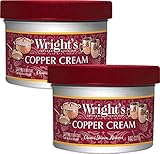
- Restore - Best for bringing your copper back to its original beauty by erasing the discoloration
- Protect - Leave behind a protective coating which prevents tarnish
- Safe - Mild formula allows safe use on jewelry with diamonds or gemstones
- Long-Lasting Shine - Formulated with the finest ingredients that keeps your copper and other metals beautiful for years to come
- Use On - Cups, jewelry, Moscow mule mugs, pots, pans, sinks, doorknobs and other copper pieces around your home
If you are remodeling and switching from gas to induction, test your cookware before ordering cabinets or appliances. We like to confirm the cooktop model, electrical requirements, pan sizes, and ventilation plan early, before cabinet production. A typical induction range or cooktop may require a dedicated 240-volt circuit, and some homes need panel work before the appliance can be installed correctly. That is not a cookware problem, but the cookware decision often exposes it.
The Kitchen Features That Help Better Pans Perform
Ventilation That Matches Real Cooking
Good pans encourage higher-heat cooking. Searing, stir-frying, browning, and reducing sauces all put more heat, grease, odor, and moisture into the room. A weak hood can make a premium pan feel like a mistake.
For many residential kitchens, homeowners compare hoods in the 300 to 600 CFM range, while high-output ranges or frequent searing may need more careful sizing. The right answer depends on the appliance, duct route, local code, makeup-air requirements, and how the family cooks. A short, straight duct run performs better than a long route with several elbows. Recirculating hoods are easier to install, but they do not remove heat and moisture the way a ducted hood does.
When our crews frame or open a kitchen wall, we verify the hood path before finishes go in. A beautiful range wall with no practical duct route is expensive to correct later. If you are buying heavier pans because you want better cooking, include the hood in the plan.
Landing Space Around the Cooktop
Heavy pans need safe landing zones. A full 12-inch skillet, copper pot, or Dutch oven can be awkward when hot. Where possible, plan for 15 to 24 inches of usable landing space near the cooktop. That may be countertop on both sides of the range, an adjacent island, or a protected section of stone or quartz surface.
Landing space should be heat-tolerant, uncluttered, and not blocked by tall appliance garages or decorative objects. For kitchens where clients cook with cast iron, copper, or heavy stainless, we avoid fragile edge details next to the range and specify durable backsplash materials that can handle cleaning.
Burner and Pan Sizing
A pan performs best when the burner fits the base. A small burner under a wide copper pan creates hot spots. A large gas flame licking up the side of a small pan overheats handles and wastes energy. During remodel planning, measure your most-used pans, including the base diameter, not just the rim.
This is especially important for islands and compact galley kitchens. A 30-inch range, 36-inch cooktop, or 48-inch pro-style range changes the cabinet, hood, landing space, and electrical or gas plan. Cookware is part of that sizing conversation.
Storage: Where Old Dutch Pans Usually Fail or Shine
Storage is the most overlooked part of a cookware upgrade. Vintage copper and stainless sets are heavier than basic nonstick pans, and they damage each other when crammed into a shallow cabinet. We plan storage before cabinet ordering because pot dimensions affect drawer width, shelf height, pullout choices, and island layout.
Deep drawers are usually the best answer for everyday pans. For heavy cookware, use quality drawer slides rated for the expected load. Many premium cabinet systems offer heavy-duty slides in the 75- to 100-pound range or higher, depending on the line. If a drawer will hold cast iron, copper, lids, and stainless stockpots, do not treat it like a utensil drawer.
Pot racks can work well for Old Dutch copper, especially when the cookware is part of the room’s style. But they need structure. A ceiling rack should be fastened into framing, not just drywall. Wall rails need solid blocking or studs. If we are opening walls during a remodel, adding blocking for future rails is inexpensive compared with trying to anchor a loaded rack after tile and drywall are complete.
For display copper, leave breathing room. A crowded wall of pans looks cluttered and makes cleaning harder. For working pans, store lids separately or use vertical lid dividers in a base cabinet. A 24- to 36-inch wide drawer stack near the range is often more useful than a narrow pullout that looks good on a cabinet plan but cannot hold the actual cookware.
What to Pay for Old Dutch International Pans in 2026
Old Dutch pricing is fragmented because so many copper pieces are resale items. Condition controls value. A polished set with lids, tight handles, clear stamps, and usable lining should cost more than a scratched, unlined, or lacquered display piece.
| Purchase | Typical 2026 Budget | Best For | Contractor’s Note |
|---|---|---|---|
| Single vintage ODI copper saucepan or small pot | $25-$75 plus shipping | Display or light cooking after inspection | Check lining, wobble, lacquer, and handle stability |
| Vintage ODI copper set | $100-$250 common for many resale examples | Decorative kitchen feature or mixed-use set | Piece count and condition matter more than shine |
| New Old Dutch-branded stainless set | Varies by current marketplace stock | Everyday cooking | Verify induction compatibility by exact product |
| Premium copper-core stainless set for comparison | About $1,600-$1,900 for some 10-piece sets | High-performance daily cooking | Plan deep drawers and durable storage |
| Kitchen storage refresh | A few thousand dollars to $15,000+ | Better drawers, inserts, backsplash, hardware | Good middle ground if layout stays put |
| Full kitchen remodel | Broadly $15,000-$65,000 nationally | Layout, cabinets, counters, appliances | Costs rise quickly with trades and layout changes |
| High-cost market remodel | $45,000-$85,000 mid-range; $100,000+ high-end | Major upgrades, open concept, custom finishes | Local labor, cabinets, and inspections drive cost |
Permit costs should also be part of the budget when the work moves beyond cosmetics. In 2026, common building-permit ranges reported for remodel work often run from a few hundred dollars to a few thousand dollars. Small-job permits may be around $50 to $300, while larger remodel permits may land around $500 to $2,000 or roughly 0.5% to 2% of construction cost. Averages around $460 to $2,770 are common in consumer cost data, but local fees vary by city and county.
Independent reader supportYour contribution helps us test, update, and keep practical guides available for everyone.When Cookware Becomes a Remodel Decision
A pan purchase does not require a contractor. But the moment the cookware upgrade changes how the kitchen is used, it can become a remodel decision.
Free tools Windows power users keep installed
One-click scans. No signup required.
Common triggers include switching to induction, adding a gas line, moving a cooktop to an island, installing a ducted range hood, adding a pot filler, replacing cabinets around a larger range, removing a wall, or building proper pan storage. These are not cosmetic changes. They can involve electrical, plumbing, gas, mechanical ventilation, framing, and inspections.
National kitchen remodel costs in 2026 commonly fall around $15,000 to $65,000 for broad full-renovation ranges, with full remodels often estimated around $150 to $250 per square foot. In high-cost coastal markets, cosmetic refreshes may run about $20,000 to $40,000, mid-range remodels about $45,000 to $85,000, and large or high-end kitchens can exceed $100,000. Structural changes are a major swing factor. Removing a load-bearing wall can often add roughly $3,000 to $10,000 when engineering, permits, temporary support, and finish repairs are included.
The biggest cost drivers are cabinet quality, countertop material, appliance changes, moving plumbing or gas, new circuits, panel capacity, wall removal, duct routing, local labor, finish level, and permit requirements. Cookware does not drive the whole remodel, but it can reveal whether the current kitchen is underbuilt for the way the homeowner actually wants to cook.
Also popular on Amazon

- Bar Keepers Friend Cookware Cleanser & Polish is a stainless steel cleaner and degreaser for pots, pans, and bakeware; This product's powerful grease remover cuts through oil, baked on food, mineral deposits, and rust stains; Safe for use on all stainless steel cookware, including All-Clad stainless steel pots and pans, and glass lids; This versatile cleaner is also safe to use for cleaning stainless steel sinks, porcelain sinks, steel grills, and other surfaces
- Remove stains, tarnish, rust & lime
- BKF products clean without bleach- better for stainless steel
- Clean cookware, kitchen & bathroom surfaces
Safety, Electrical, and Permit Notes
Most freestanding cookware purchases do not need a permit. Minor cosmetic work such as painting, changing cabinet pulls, or adding a freestanding pot rack usually does not need one either, provided you are not touching wiring, structure, plumbing, gas, or mechanical systems. But kitchen remodels often require permits when work involves electrical circuits, plumbing, gas lines, structural framing, mechanical ventilation, or layout changes.
What’s actually slowing this PC down?
Pick the symptom - the matching free tool is one click away.
Electrical planning matters in modern kitchens. Small-appliance circuits, GFCI protection, AFCI requirements, island and peninsula power rules, and appliance loads should be reviewed against the code adopted by your local authority. Island receptacle rules have changed in recent code cycles, and enforcement depends on what your city or county has adopted. That is why we avoid guessing during construction. We verify with the local authority having jurisdiction before rough-in.
Ventilation can also trigger code questions. A larger hood may require makeup air depending on its capacity and local rules. Gas appliance changes may require pressure checks, shutoff access, and inspection. Induction upgrades may require a dedicated circuit or panel evaluation. Pot fillers require plumbing, shutoff planning, backsplash coordination, and leak-risk judgment. None of these should be handled casually after cabinets and tile are installed.
When to DIY vs When to Hire a Pro
Good DIY Projects
Buying and inspecting Old Dutch pans can be DIY work if you stay conservative. You can do a magnet test for induction screening, inspect lining with a flashlight, check for wobble on a flat counter, tighten only hardware designed to be tightened, and decide whether a piece belongs on the wall instead of the stove.
Simple storage upgrades may also be DIY-friendly. Drawer dividers, lid organizers, shelf liners, wall-mounted rails into known studs, and non-structural open shelving can be manageable for careful homeowners. Keep loads realistic. A copper pan collection is heavier than it looks, and drywall anchors are not a substitute for framing.
Free tools Windows power users keep installed
One-click scans. No signup required.
Hire a Pro
Hire a contractor or licensed trade when the project touches electrical, plumbing, gas, structure, ventilation, cabinetry modifications around appliances, stone countertops, or anything overhead carrying real weight. That includes moving a range, adding a hood duct, upgrading for induction, installing a pot filler, cutting stone for a larger cooktop, adding island power, changing cabinet layout, or hanging a large ceiling pot rack where framing must be verified.
On our job sites, the best results come when appliance specs, cookware habits, storage needs, and ventilation are discussed before cabinet drawings are finalized. That timing prevents expensive field changes. A 36-inch drawer base, a deeper hood cabinet, or added wall blocking is easy to include on paper. It is much harder after the countertop template is complete.
Our Practical Buying Recommendations
If you want the look of Old Dutch copper, buy the cleanest vintage pieces you can find and treat questionable pans as display. Budget $25 to $75 for many single small pieces and $100 to $250 for many vintage sets, with the understanding that exceptional condition, lids, polish, stamps, and completeness can push prices higher.
If you want daily cooking performance, prioritize verified stainless or properly lined copper over appearance. For induction, use the magnet test first, then confirm the product details. For glass cooktops, reject warped bases. For gas, check that handles are stable and that flame will not wrap up the sides of small pans.
If you are planning a kitchen remodel, decide how you cook before you order cabinets. Frequent searing calls for better ventilation and durable adjacent surfaces. Heavy cookware calls for deep drawers with strong slides. A visible copper collection calls for blocking, lighting, and enough wall or ceiling space to look intentional. An induction switch calls for electrical verification. A pot filler calls for plumbing planning and a clear understanding of leak risk.
The best Old Dutch International pan is the one that fits both the recipe and the room. A vintage copper pot can be a beautiful part of a kitchen, but timeless quality comes from more than shine. It comes from safe materials, the right cooktop, enough landing space, proper exhaust, strong storage, and a kitchen built around the way you actually cook.
Frequently Asked Questions
Are Old Dutch International copper pans good for cooking or mostly decorative?
Some are usable for light cooking, but many vintage copper-looking Old Dutch pieces are better treated as decorative until inspected. Verify the interior lining, wall thickness, handle stability, lacquer coating, and base condition before cooking with one.
How can I tell if a vintage Old Dutch copper pan is safe to use?
Check whether the interior is lined, whether the lining is intact, whether any copper is exposed inside, whether the base sits flat, and whether the handles are tight. If the pan is unlined, lacquered, badly worn, or uncertain, use it for display instead of food.
What’s actually slowing this PC down?
Pick the symptom - the matching free tool is one click away.
Do Old Dutch International pans work on induction cooktops?
Traditional copper does not work on induction unless it has a magnetic stainless base or compatible bonded layer. A magnet test is a good first screen: if the magnet sticks firmly to the bottom, it may work. Still verify the exact pan and make sure the base is flat and safe for glass cooktops.
What is a fair 2026 price for vintage Old Dutch copper pans?
Many single small vintage ODI copper saucepans or pots list around $25 to $75, while grouped vintage sets often appear around $100 to $250 depending on condition, lids, piece count, markings, polish, and whether the set is decorative or usable.
Do I need a permit to upgrade pans or add cookware storage?
Buying pans does not require a permit. Simple organizers usually do not either. Permits are often required when the work touches electrical, plumbing, gas, structural framing, mechanical ventilation, appliance relocation, or major layout changes. Local rules vary by city and county.
What kitchen upgrades pair best with heavier copper or stainless pans?
The most useful upgrades are deep drawers with heavy-duty slides, 15 to 24 inches of landing space near the cooktop where possible, a properly sized hood, durable backsplash and counter surfaces, correct burner sizing, and electrical planning if switching to induction.
Quick Recap
Product prices and availability are accurate as of the date/time indicated and are subject to change. Any price and availability information displayed on Amazon at the time of purchase will apply.

