Recommended Free Tools
Some links on this page are affiliate links: if you buy through them we may earn a commission, at no extra cost to you.
A good kitchen timer is not just a gadget. It is a low-cost cooking safety tool that helps you stay on task when the oven is running, the skillet is hot, the range hood is loud, or the household is pulling your attention in five directions.
For most homeowners, the best kitchen timer with a loud alarm is a big-digit digital timer with adjustable volume, a strong magnetic back, a fold-out stand, one-touch start/stop, and an alarm you can hear from the next room. In 2026, a solid single timer usually costs about $12 to $30. Budget magnetic timers often run $6 to $15, extra-loud or flashing-alert timers are commonly $15 to $35, and multi-channel chef-style timers can range from $25 to $80 or more.
As an Amazon Associate I earn from qualifying purchases.
Free tools Windows power users keep installed
One-click scans. No signup required.
The short answer: if you cook daily, buy one dedicated physical timer that lives in the kitchen, then use your oven timer, phone, or smart speaker as a backup. Phones are convenient, but they get muted, left upstairs, connected to earbuds, buried under alerts, or dead right when dinner needs attention.
On our kitchen and bath projects, we think about timers the same way we think about lighting, ventilation, outlets, and landing space. The homeowner has to be able to see, hear, reach, and remember what is happening at the range, oven, grill, or island. A $20 timer will not fix a poor kitchen layout, but it can make a well-designed kitchen safer and easier to live with.
Popular on Amazon

- HIGH-QUALITY MATERIAL: Our kitchen timer is constructed from premium 304 stainless steel, renowned for its exceptional durability and resistance to corrosion. The stainless steel exterior of this oven timer for baking not only lends a contemporary aesthetic appeal but also ensures robust protection against water and corrosion, making it ideal for use in the bustling kitchen environment. This saucer-shaped design desktop timer further enhances its visual appeal, adding elegance to your culinary space while providing a stable base for reliable functionality. From its durable construction to its sleek design, Our Cooking timers for kitchen with alarm embodies both style and substance
- FEATURING A MAGNETIC BACK: Our wind up timer for cooking offer unparalleled convenience by easily adhering to any metal surface, whether it's fridge, refrigerator, or microwave oven. This magnetic timer feature ensures effortless placement and accessibility, allows you to keep track of cooking times with ease, right where you need it most in the kitchen. Our timer for kids isn't just limited to culinary applications. It serves as the perfect companion for a diverse range of users, makes it ideal for kids, moms, parents, teachers, office professionals, and for students as a study timer. our magnetic kitchen timer provides reliable functionality and convenience for all your timing needs.
- With Its 85dB Mechanical LOUD ALARM: Our Mechanical workout timer ensures that you stay on track with your fitness routine without missing a beat. Unlike battery-powered timers, This dial timer desk timer for productivity operates without the need for batteries, showcasing its commitment to energy efficiency and environmental sustainability. The alarm's robust design emits a powerful sound, easily reaching a radius of approximately 10 meters even in low noise conditions. This means you can confidently tackle your workout regimen, knowing that you'll never miss a cue, even if you're in another room. Enjoy peace of mind and stay focused on your goals with our reliable and effective work timer.
- Achieve Optimal Time Management With Our Smart Focus Timer: This cute timer designed to keep you on track with your tasks and activities. Unlike other manual timers, this charming egg timer is meticulously crafted to deliver unparalleled accuracy, ensuring your timing needs are met with precision and reliability. Whether you're cooking, baking, reading, doing homework, jogging, tackling assignments, or catering to special needs, this versatile classroom timer is your go-to solution. With its user-friendly design and precise timing capabilities, This small timer empowers you to maximize productivity and efficiency in every aspect of your daily routine.
- Quality & Service Satisfaction: We always take quality and service as our business philosophy, we believe you will like our products, if you have any questions please contact us, we will give you a satisfactory compensation within 24 hours!
Why a Loud Kitchen Timer Belongs in a Safer Kitchen
Cooking is one of the leading fire risks in American homes. The National Fire Protection Association identifies cooking as a major source of home fires, and unattended equipment is involved in one quarter of reported home cooking fires and half of associated deaths. That is the practical reason a timer matters: it interrupts distraction before a pan, sheet tray, or burner gets away from you.
A timer is not permission to leave frying oil, a broiler, or a gas burner unattended. It is a reminder system. For higher-risk cooking, especially frying, boiling, grilling, or broiling, the safest practice is still to stay nearby. A timer simply adds a second layer when a child asks a question, a delivery arrives, or you step into the pantry and lose track of three minutes.
We see the need most clearly in open-plan kitchens. A modern kitchen may have a 900 CFM range hood, a dishwasher running at the island, a television in the living room, and people moving between spaces. A quiet mechanical timer on the counter can disappear into that noise. In that kind of home, alarm volume, tone, duration, and placement all matter.
What to Look For in a Loud Kitchen Timer
Most timers look simple online, but the differences show up fast in real kitchens. A timer that works well on a quiet Tuesday morning may be useless during Thanksgiving prep, a baking day, or a summer cookout.
Alarm volume and tone
Many standard digital kitchen timers advertise alarms around 80 dB. That can be enough in a compact kitchen or apartment, especially if the timer is close to the cook. Extra-loud models are often advertised around 110 dB, which is more appropriate for noisy kitchens, seniors, garages, outdoor cooking, and homes with strong range hoods.
Do not buy on decibels alone. A harsh 110 dB alarm in a 10-by-10-foot kitchen can be unpleasant if it has no volume control. The best choice is usually an adjustable alarm with at least two or three volume settings, plus a tone that is distinct from your microwave, oven, dishwasher, and phone.
Alarm duration
A timer that beeps for 5 seconds is easy to miss. For real cooking, look for a timer that rings for at least 30 to 60 seconds or continues until you stop it. This matters in larger homes, open layouts, outdoor kitchens, and situations where you may be in a laundry room, garage, patio, or basement when the alarm starts.
Display readability
Large digits are not just for seniors. They help when your hands are covered in flour, steam is rising from a pot, or the timer is sitting 6 to 10 feet away on a refrigerator or backsplash shelf. Look for high contrast, a backlight if the timer lives under cabinets, and a display large enough to read at arm’s length without leaning in.
Button usability
Small multi-function buttons are a bad tradeoff for many households. For everyday use, the best controls are simple: minutes, seconds, start/stop, and clear. A memory recall function is useful for repeated cooking times, such as 12-minute pasta, 18-minute rice, 30-minute roasted vegetables, or 8-minute resting time.
Placement options
A good timer should have at least two placement methods. The most useful combination is a magnetic back plus a fold-out kickstand. A clip or lanyard can also help if you move between the grill, garage, pantry, or outdoor kitchen. The magnet needs to be strong enough that the timer does not slide when you press a button.
Also popular on Amazon

- “Great Little Timer” 2026 Model: Elegant Digital Kitchen Timer Stainless Steel - Strong Magnetic Back - Kickstand - Loud Alarm - Large Display - Auto Memory - Auto Shut-Off - Model eT-23 by eTradewinds. We eliminated the annoying little button beeps every time buttons are pressed. New lanyard attachment feature for hanging timer around neck belt or wrist. Adjustable angle fold-out countertop kickstand. Counts up/down 99 min/59 sec w/ Auto-Memory for repeated tasks. Auto-Memory holds previous setting for the next event. Want 3 min eggs every morning? Set time once and only press start every morning. 3 min. will stay in memory until reset & new time is entered.
- Simplified Operation: Press 2 left buttons simultaneously for a reset to 0000. Press & hold Min. or Sec. buttons for 2 sec. to fast forward your numbers. Just press and hold. Can also be paused and restarted to count up/down incrementally if you wish. Large, Bright, Easy-To-Read LCD Display: Can effortlessly be seen from across the room. Pleasant, loud, mellow 80dB+ beep can easily be heard in other rooms & will sound for 62 seconds, or can be shut-off manually.
- Strongest Timer Magnet Listed Anywhere: Powerful Neodymium earth magnet & anti-scratch appliance saver foam. Our timers won't slide down your fridge or scratch appliances. Anti-Wobble Stabilizing Anchor Points: Designed on all 4 corners eliminating wobble, pivot, or movement when buttons are pressed while magnet secured. What good is a timer you can’t use while attached? This timer won't pop off your range hood and backflip into your boiling soup because you hit the off button. "No soup fer yu"
- Convenient Battery Saving Auto Shut-Off Feature: Engages when magnetic timer is idle and not being used for 3 minutes. Pressing any button will turn these durable kitchen timers for cooking on. (1) AAA Battery included. A Favorite: medical, dental, therapy, & productivity timer. Perfect cute egg timer for boiling eggs, kitchen timer, 2nd oven timer, cooking timer, kids timer, study timer, classroom timer, workout timer, visual timer, & are nice loud kitchen timers for seniors.
- USA-Based Company: Buy with confidence. We believe 100% in the quality of our timers. If it should EVER fail to function properly in residential use due to component failure (Excluding Battery), we will replace it free and pay for shipping in the USA. No expired time limits. Just contact us via Amazon or use our included email or phone number, and our cheerful support team will quickly respond. This is the last digital timer you will ever need to buy, promise.
Cleanability
Kitchens are hard on small electronics. Grease, steam, flour, and wet hands ruin cheap buttons and fog unreadable displays. Choose a timer with a smooth face, sealed-feeling buttons, and minimal grooves. Do not mount it directly above a burner, beside a steaming kettle, or where sink splash can reach it.
Best Kitchen Timer Types by Household
There is no single best timer for every kitchen. The right choice depends on who cooks, how noisy the room is, how many dishes are usually active, and whether the kitchen is being remodeled for accessibility or aging in place.
| Household or Kitchen Type | Best Timer Choice | Typical 2026 Cost | What to Prioritize |
|---|---|---|---|
| Busy family kitchen | Big-digit digital magnetic timer | $12-$30 | Durable buttons, loud adjustable alarm, one-touch start/stop |
| Senior or aging-in-place kitchen | Extra-loud timer with visual alert | $15-$35 | Large display, large buttons, flashing cue, simple reset |
| Baker or meal prep cook | Three- or four-channel timer | $25-$80+ | Multiple labeled timers, distinct tones, memory settings |
| Outdoor griller | Clip, lanyard, or extra-loud portable timer | $15-$35 | High volume, long alarm, portability, readable display |
| Small apartment | Compact magnetic digital timer | $6-$20 | Clear display, moderate volume, strong magnet |
| Open-plan remodel | Adjustable 80-110 dB digital timer | $15-$35 | Published decibel rating, placement visibility, backup timer |
| Commercial-style home kitchen | Pro multi-channel timer | $40-$80+ | Four channels, loud tones, labels, durable housing |
Our Default Recommendation for Most Homes
If a homeowner asks us what to buy without overthinking it, we recommend a digital kitchen timer with these minimum features: large numbers, adjustable loud alarm, magnetic back, fold-out stand, one-touch start/stop, easy reset, and batteries that are simple to replace.
That type of timer fits most households because it works in several locations. It can live on the refrigerator, sit on the counter during baking, move near the coffee station, or travel to the grill. It is inexpensive enough to replace, but useful enough that it becomes part of the kitchen routine.
For a typical kitchen, 80 dB may be enough if the room is compact and the cook stays nearby. In an open-plan home, a house with hearing challenges, or a kitchen with a powerful hood, look for an adjustable model advertised closer to 100 to 110 dB. Test it with the hood running on high, water boiling, and the television at normal volume. If you cannot hear it from the living room, patio door, and main work zones, it is not loud enough for that home.
Digital vs Mechanical Kitchen Timers
Mechanical timers still have a place. They do not need batteries, they are simple, and many people like the physical twist-and-go motion. For short tasks in a quiet kitchen, a mechanical timer can be perfectly serviceable.
Digital timers are usually better for safety and accessibility. They are easier to read, more precise, often louder, and more likely to include memory recall, count-up mode, magnets, backlights, or multiple channels. If someone in the home has vision, dexterity, memory, or hearing concerns, a large-button digital timer is usually the better choice.
The weak point with cheap digital timers is build quality. We have seen inexpensive timers with weak magnets, mushy buttons, faint alarms, and battery doors that loosen after a few drops. That is why the $12 to $30 range is usually a better value than the cheapest possible timer. You are paying for stronger magnets, better buttons, a clearer display, louder adjustable volume, and often a better warranty.
The Tool Desk
Outbyte PC Repair FREERepair Windows errors before they cause bigger problemsFix Now →Outbyte Driver Updater FREEScan for outdated or missing drivers - takes under a minuteDriver Scan →How Loud Should a Kitchen Timer Be?
For a quiet compact kitchen, a standard timer around 80 dB can work. For a louder kitchen, open floor plan, outdoor cooking area, or homeowner with hearing difficulty, look for an extra-loud model advertised around 100 to 110 dB.
Decibels are not the whole story. The pitch of the alarm matters because some tones cut through range-hood noise better than others. The alarm length matters because a short beep can be missed. Placement matters because a timer stuck to the side of a refrigerator facing a wall will not sound the same as one facing the cooking area.
Also popular on Amazon

- 【No Battery Required & Easy to Use】 The mechanical kitchen timer doesn’t require any batteries, it is energy saving and eco-friendly. Just wind it up and set time, it will work. It is small and compact, you can carry it with you anywhere.
- 【Mechanical Timer Working Principle】 Visual mechanical timer is powered by a mechanical movement with spring, just like an old spring toy, you need to wind up first to make it work. So when you hold this timer, you must turn to 55 every time to activate the spring and then turn back to the time you want to set.
- 【Why Not Ring?】If the timer you received doesnot ring, that’s because this is a mechanical timer, you didn’t wind up firstly. Please follow the two important steps, it will ring: Step 1: "Wind Up". You MUST wind the timer from 0,5,10, 15... to 55 ; Step 2: "Set Time". Wind the timer from 55 back to the time you want to set.
- 【Wide Application】This 60 minute wind up timer can be applied on different occasions. Such as you use at home, in the kitchen, at school, in the classroom, and at work. It will be a nice kitchen timer, classroom timer, work timer and study timer.
- 【Notice】There is no back cover for this timer, so the alarm sound is very loud. If for any reason, you are not satisfied with it, please contact us via Amazon, we will solve the problem.
Here is a practical field test. Set the timer for one minute. Turn the range hood to the speed you actually use. Run the sink or dishwasher if that is normal in your kitchen. Walk to the farthest spot where you might reasonably be during cooking, such as the living room sofa, dining table, pantry, patio door, or laundry room. If the alarm does not clearly pull your attention, move the timer or buy a louder model.
Best Features for Seniors and Hearing-Challenged Homeowners
For aging-in-place kitchens, we care less about fancy features and more about clarity. The timer should be visible, obvious, and forgiving. The best models have a large high-contrast display, large buttons, adjustable extra-loud volume, flashing visual alert, and a reset method that does not require reading tiny labels.
PC Slower Than It Used to Be?
A free scan shows the junk files, broken settings and background clutter dragging Windows down - then fixes them in one click.Free scan · Windows 10 & 11Crashes, No Sound, or Screen Glitches?
Random freezes, missing sound and display glitches usually trace back to one bad driver. Find and replace yours safely.Free scan · under a minuteA visual cue is helpful in noisy homes and for some hearing-impaired users. That may be a flashing light, blinking screen, or bright backlit display. For serious hearing loss, however, a kitchen timer is not a substitute for proper alerting equipment. Smoke alarms, carbon monoxide alarms, and connected hearing-alert devices should be selected and installed for the person’s actual needs.
We also avoid placing the timer where it requires reaching across a hot range or bending into a dark corner. In a remodel, a good timer location is typically 48 to 60 inches above the floor, visible from the range, away from sink splash, and not directly above heat or steam. If grandchildren are in the home often, place it where adults can see and reach it without making it a toy at counter height.
Multi-Channel Timers for Serious Cooks
If you cook one dish at a time, one timer is fine. If you roast vegetables, simmer sauce, bake bread, rest meat, and manage a grill at the same time, one timer can become confusing fast. The common mistake is hearing an alarm and forgetting whether it belongs to the oven, stovetop, second rack, or resting period.
That is where a three- or four-channel timer earns its cost. A good multi-channel timer should have separate labeled channels, distinct tones, and enough display space that you can read all active timers quickly. Expect to spend about $25 to $80 or more. The higher price makes sense for bakers, meal-prep households, holiday cooks, and commercial-style kitchens where several cooking tasks overlap.
For home kitchens, we like labels such as oven, stove, grill, and rest. Even if the timer does not have printed labels, use painter’s tape or a small label strip. The point is to reduce mental load. At 5:45 p.m., when guests are talking and the hood is running, the timer should tell you exactly what needs attention.
Where to Put a Timer in a Remodeled Kitchen
Timer placement is a design detail, not an afterthought. During kitchen remodels, we often create a small command zone for charging, notes, keys, and everyday tools. A timer can live there if the spot is visible from the cooking zone and not buried behind mail, phones, and school papers.
A good timer location should meet five conditions. It should be visible from the range or main prep area. It should be reachable without crossing a hot burner. It should be away from splatter, steam, sink water, and high heat. It should face the room so the alarm is not muffled. It should have a home, so it does not vanish into a junk drawer.
Common good locations include the side of a refrigerator facing the work triangle, a dry section of backsplash shelf, a shallow wall niche, a message center near the pantry, or a protected counter area 3 to 6 feet from the range. Common bad locations include the range face, the wall directly behind a kettle, the windowsill behind a sink, the top of a microwave that vents steam, or a drawer where nobody hears it.
Do these 3 things before closing this tab:
1Fix the driver behind crashes, sound loss and screen glitches2Repair Windows errors before they cause bigger problems3Scan for outdated or missing drivers - takes under a minuteAlso popular on Amazon

- 【2 in 1 Timer Clock】Compared with those ordinary digital timers, this digital kitchen timer can be switched to calendar/clock mode, with 12/24 hour & Month-Date-Year display, meet your different needs in kitchen, studying, working, kids bathroom
- 【Dual Countdown Timers】Simultaneously set 2 alarms for separate events, th cooking timer can be programmed for durations up to 23 hours 59 minutes, suitable for a variety of uses such as cooking, exercise, kids' activities and meetings
- 【Premium Stainless Steel Design】Unlike those minute timers made of plastic, this digital kitchen timer is built with premium stainless steel jacket design, make it more chic and durable as homeschool essentials
- 【4 Adjustable Alarm Volume with Silent Mode】Supporting with high/medium/low volume alarm (70-105DB) to suit your needs under diffrerent condition uses, our kids timer with silent mode also alerts you without making noise, perfect teacher essentials for classroom
- 【Automatic Memory Function】The shower timer will restore the last timer date after the countdown finishes, convenient operation for multiple sets of the same countdown situation, ideal for routine work
If you are adding a smart display or charging area during a remodel, keep electrical work code-compliant. Kitchen receptacle rules, GFCI protection, AFCI requirements, island outlet planning, and appliance circuits are not places to improvise. Requirements vary by jurisdiction and adopted code cycle, and a permitted electrician should handle new or modified kitchen wiring.
Smart Speakers, Phones, and Appliance Timers
Smart speakers and phones are useful backup timers. They are especially good for long simmering, baking, proofing, or reminders that do not require standing at the stove. If you already own a smart speaker, the incremental cost is $0. If buying one for the kitchen, typical devices range from about $30 to $130 depending on model and screen size.
We still do not like smart speakers as the only timer. Wi-Fi can fail. Voice recognition can mishear. Volume can be turned down. A smart display may be on the wrong screen. A phone may be muted, charging elsewhere, connected to earbuds, or buried under notifications.
The strongest system is layered. Use a physical loud timer for the active cooking task. Use the oven or appliance timer when it has a shutoff or built-in reminder. Use a phone or smart speaker as a backup for long cooking windows. For example, set the physical timer for 12 minutes on pasta, the oven timer for a 35-minute casserole, and a smart speaker reminder to check a 2-hour braise.
Quick wins for a faster PC:
Scan for outdated or missing drivers - takes under a minuteDriver Scan →Clear out junk files and repair common Windows errorsFree Scan →Fix the driver behind crashes, sound loss and screen glitchesFind Drivers →Cost Guide: What You Should Expect to Spend
A standalone kitchen timer has no installation labor, no permit cost, and no contractor involvement. That is part of the appeal. The cost changes only when timer planning is tied to broader kitchen work, such as adding a charging station, moving receptacles, installing a smart display, upgrading ventilation, or changing appliance circuits.
| Timer or Related Upgrade | Typical 2026 Cost | Best Use | Cost Drivers |
|---|---|---|---|
| Budget magnetic digital timer | $6-$15 | Small kitchens, backup timer, simple daily use | Display size, magnet strength, button quality, batteries |
| Mainstream branded digital timer | $12-$30 | Most homes | Adjustable volume, stronger housing, backlight, warranty |
| Extra-loud or flashing timer | $15-$35 | Seniors, loud hoods, open plans, outdoor cooking | Speaker output, visual alert, alarm duration, controls |
| Mechanical analog timer | $8-$25 | Simple cooking, no batteries, decorative kitchens | Materials, spring quality, brand, volume consistency |
| Multi-channel pro timer | $25-$80+ | Baking, meal prep, holiday cooking, serious home cooks | Number of channels, labels, tones, durability |
| Smart speaker or display | $30-$130 if not already owned | Backup reminders, long cooking tasks, voice control | Screen size, speaker quality, ecosystem, mounting |
If your only problem is missed timers, start with a $15 to $35 physical timer. If your smoke alarms constantly nuisance-trip, do not solve that by removing batteries or ignoring alarms. Review range-hood capture, ducting, makeup air, cooking habits, and smoke-alarm placement. Ventilation problems are design and mechanical issues, not timer issues.
When to DIY vs When to Hire a Pro
Buying and using a standalone timer is always a DIY task. So is testing alarm audibility, replacing batteries, labeling multi-channel buttons, and choosing a better countertop or magnetic location.
Hire a pro when the timer conversation exposes a larger kitchen problem. If you need new receptacles, a relocated outlet for a smart display, undercabinet lighting changes, a range-hood upgrade, makeup air, appliance circuit work, or smoke-alarm relocation, bring in the right licensed trades. Kitchen electrical work often involves GFCI and AFCI protection, countertop receptacle spacing, dedicated appliance circuits, and local permit requirements.
What’s actually slowing this PC down?
Pick the symptom - the matching free tool is one click away.
For remodels, the best time to plan this is before drywall and tile. A dedicated charging/drop zone, clean sightlines to the range, better task lighting, and correct hood placement are much easier to build into the plan than to patch later. The timer itself costs less than a dinner out; the kitchen infrastructure around it should be planned like permanent safety equipment.
Common Mistakes to Avoid
The first mistake is buying the loudest timer without checking control. A 110 dB alarm can be useful, but it should have lower settings for small kitchens, early mornings, and households sensitive to sharp sounds.
Also popular on Amazon
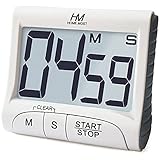
- LARGE Display & BIG Digits & LOUD Alarm & SLEEK Design - Three desirable features as a handy kitchen timer: Large LCD Display (3" screen); Big Digits (1.5" bold fonts); Loud Beeper Alarm (loud & clear but not deafening). - The Sleek Design outlooks competitors: 3 big no show function buttons on the front bulge of the battery case, leaving more space for LCD screen and looking much nicer than ugly buttons-on competitors; matte white exterior textures well with your kitchen, bedroom, office, etc.
- COUNT DOWN OR UP & ONE-THUMBED OPERATION & VISION FRIENDLY - Can both count down as a timer and count up as a stopwatch in a range from 1 second to 99 minutes - 3 big no show function buttons aligned on the front bulge allow simple and reliable one-thumbed operation, no frills features - Ever-on technology consumes almost no power while the timer stands by not in use, no need for switching it off - Two separate digital timings: MINUTE in larger display; SECOND in large display, easy to read.
- SLEEK DESIGN AS A VERSATILE TIMER - Designed not to be just an ugly kitchen utensil, Home Most timer looks much nicer than competitors so that you want to use it in many other occasions. - 3 big no show function buttons seamlessly aligned on the front bulge for one-thumbed simple controls, outlooking those ugly buttons-wearing competitors; the matte white exterior textures well with your kitchen, bedroom, office, etc. for meetings, homework, exercise, meditation sessions, games, laboratory, etc.
- THREE Placements: Magnetic Back, Retractable Stand, Foldable Hook - There are 3 different options for you to place the kitchen timer - Stick the kitchen timer to the fridge door with its magnet - Place the unit on the flat surface with its retractable stand for table-top use - Pull out the foldable hook and hang it on a wall hook or around your neck if you are on the go as it is battery operated (1 AAA battery included).
- DEVOTED CUSTOMER SERVICE - This product comes with 1-MONTH trial period and LIFE-TIME customer service - Genuine HOME MOST Design House Trademarked Product - Certified under UL588 and Complies with 16 CFR 1120.3(c) - TRADEMARK filed in U.S.A. - In business since 2006.
The second mistake is relying only on a phone. Phones are excellent secondary timers but unreliable as the only reminder in a working kitchen.
The third mistake is placing the timer in the wrong spot. Do not put it on a hot range surface, behind a countertop appliance, where steam hits it every day, or where grease coats the buttons. Do not hide it in a drawer between uses if the whole point is to make cooking reminders obvious.
What’s actually slowing this PC down?
Pick the symptom - the matching free tool is one click away.
The fourth mistake is choosing a tiny, complicated timer for someone who needs accessibility. If a homeowner has vision, dexterity, or memory challenges, simple beats clever. Large display, large buttons, clear sound, obvious reset.
The fifth mistake is using one unlabeled timer for multiple dishes. If you regularly cook more than one timed item, get a multi-channel timer or use separate timers with clear labels.
Bottom Line
For most homes, the best loud kitchen timer is a $12 to $30 digital model with big digits, adjustable alarm volume, a strong magnet, a kickstand, and simple buttons. For seniors, hearing challenges, loud range hoods, outdoor kitchens, and open-plan layouts, step up to an extra-loud model with visual alerts in the $15 to $35 range. For serious cooks, a $25 to $80+ multi-channel timer can prevent confusion when several dishes are moving at once.
The right timer will not replace staying near the stove, maintaining smoke alarms, or designing a kitchen with good ventilation and safe electrical work. But as part of a layered kitchen safety setup, it is one of the cheapest and most practical upgrades you can make.
Frequently Asked Questions
What is the loudest kitchen timer for home cooking?
Extra-loud kitchen timers are commonly advertised around 100 to 110 dB. For most homes, choose one with adjustable volume so it can be loud enough for range-hood noise without being unpleasant in a small kitchen.
How many decibels should a kitchen timer be?
A standard 80 dB timer may work in a compact kitchen. For open-plan homes, seniors, outdoor cooking, or powerful range hoods, look for a timer closer to 100 to 110 dB with a long alarm duration.
Are digital kitchen timers better than mechanical timers?
Digital timers are usually better for readability, precision, volume, and accessibility. Mechanical timers are simple and battery-free, but they are often quieter, less precise, and harder to read.
What is the best kitchen timer for seniors or hearing-impaired users?
Choose a large-button digital timer with a high-contrast display, adjustable extra-loud alarm, flashing visual alert, and an obvious reset button. For serious hearing loss, pair it with proper smoke-alarm alert devices.
Do these 3 things before closing this tab:
1Fix the driver behind crashes, sound loss and screen glitches2Repair Windows errors before they cause bigger problems3Scan for outdated or missing drivers - takes under a minuteCan a kitchen timer help prevent kitchen fires?
Yes, as a reminder. Cooking is a major home-fire risk, and unattended equipment is involved in one quarter of reported home cooking fires. A timer helps reduce distraction, but it does not replace staying nearby when frying, boiling, broiling, or grilling.
Do kitchen timers, smart displays, or appliance upgrades require permits?
A standalone timer requires no permit or installation. Electrical changes for receptacles, smart displays, appliance circuits, range hoods, or lighting may require permits depending on local code and project scope.
Quick Recap
Product prices and availability are accurate as of the date/time indicated and are subject to change. Any price and availability information displayed on Amazon at the time of purchase will apply.

