Some links on this page are affiliate links: if you buy through them we may earn a commission, at no extra cost to you.
Custom wall storage can be as simple as a run of adjustable shelves or as involved as a floor-to-ceiling built-in with cabinets, drawers, lighting, appliance garages, charging outlets, and trim matched to the house. The right design depends less on the photo you saved and more on what you need to store, how much it weighs, where you can safely anchor it, and what the room will do to the materials over time.
On our job sites, the storage projects that hold up best start with practical questions: What gets used every day? What is heavy? What needs to be hidden? What needs ventilation? Where are the studs, outlets, vents, shutoffs, and access panels? Those answers shape shelf depth, cabinet mix, fastening, lighting, and budget.
As an Amazon Associate I earn from qualifying purchases.
For 2026 budgeting, basic installed wall shelving can run about $21.67 to $33.48 per linear foot. Premade built-in-style units commonly land around $150 to $300 per linear foot installed. Fully custom built-ins often run $300 to $1,200 per linear foot, depending on cabinet construction, finish, drawers, lighting, trim, and site conditions. A full wall unit with cabinets and media features can easily reach $8,000 to $15,000 or more.
Start With a Storage Audit, Not a Sketch
Before choosing shelves, cabinets, or cubbies, list what will actually live on the wall. Group items into daily-use, weekly-use, seasonal, heavy, fragile, display, wet, dirty, and hazardous categories. This step sounds basic, but it prevents most bad storage layouts.
Popular on Amazon

- Elegant Design: Enhance your living spaces with delta's black 5-tier, set of 10 wall shelf brackets, offering a clean and minimalistic design that seamlessly fits into any decor style. Add your own wood shelf for a sophisticated, modern shelving system.
- Adjustable Heights, Customizable Charm: Modern shelf brackets are fully adjustable by 1.5 inch increments, allowing you to change the height of each 12 inch shelf brackets for a truly custom floating shelves solution. Holds up to 800 lbs. (160 lbs. per tier).
- Unmatched Value: Create your own floating bookshelf without breaking the bank. Delta's shelving kits can be combined using included connectors, providing a scalable system at a fraction of the cost of other alternatives.
- Easy, Stylish, and Strong: Eliminate the frustrations of complex installations. We've taken the guesswork out of track shelving systems, offering an all-in-one box solution. Enjoy easy DIY installation with included hardware, clear instructions, and an installation video.
- Maximize Space with Confidence: Each shelf holds up to 80 lbs, providing ample support for decor, books, and more. Say goodbye to clutter and hello to unique shelving solutions tailored to your style.
Heavy everyday items belong in the strongest, easiest-to-reach zones. In a kitchen, that usually means base cabinets, lower wall shelves, pull-outs, or appliance garages rather than high open shelves. Dishes, canned goods, mixers, Dutch ovens, detergent, books, tools, and paint cans are much heavier than decor. A pretty open shelf that works for pottery may be wrong for dinner plates.
Use these working dimensions as a starting point:
- Spice and small pantry shelves: 4 to 6 inches deep.
- Mugs, glasses, and small dishes: 8 to 10 inches deep.
- Books and folded linens: 10 to 12 inches deep.
- Upper wall cabinets: typically 12 inches deep in kitchens, sometimes 13 to 15 inches for specialty storage.
- Base cabinets and deeper built-ins: usually 18 to 24 inches deep.
- Mudroom cubbies: often 15 to 18 inches deep for shoes, bags, and baskets.
- Garage shelving: commonly 16 to 24 inches deep, with heavier-duty framing and published load ratings.
Reach height matters. For most adults, the best everyday storage zone is roughly between knee and shoulder height. High shelves are fine for seasonal serving pieces, extra towels, or display items. They are poor choices for heavy cookware, bulk pantry goods, or anything used every morning.
What’s actually slowing this PC down?
Pick the symptom - the matching free tool is one click away.
Choose the Right Type of Wall Storage
There is no single best wall storage system. The right option depends on the room, the load, and how finished the installation needs to look.
Open Shelving
Open shelving works well for attractive, frequently used items: dishes used daily, cookbooks, baskets, towels, plants, or display pieces. It improves visibility and can make a small room feel lighter. The tradeoff is maintenance. In kitchens, open shelves collect dust and grease. In bathrooms, humidity can make open storage look cluttered and harder to keep clean.
For open shelves, we usually keep depths modest. Shelves that are too deep invite items to disappear in the back. A 10- to 12-inch shelf is useful in many kitchens and baths. In living rooms, 11 to 13 inches handles most books and display items. For heavy loads or long spans, shelf thickness, bracket spacing, and attachment method matter more than appearance.
Closed Cabinets
Closed cabinets are better for visual clutter, medicine, cleaning supplies, pantry overflow, bulk goods, and anything that should be protected from dust or moisture. Doors also help a room feel calmer. In kitchens and baths, closed storage often performs better than large areas of open shelving because surfaces are easier to wipe down and contents stay cleaner.
The Tool Desk
Outbyte PC Repair FREERepair Windows errors before they cause bigger problemsFix Now →Outbyte Driver Updater FREEFix the driver behind crashes, sound loss and screen glitchesFind Drivers →Soft-close hinges, adjustable shelves, quality drawer slides, and durable interiors are worth paying for. A cabinet that looks good for six months but sags, chips, or swells at the edges is not a good investment.
Floor-to-Ceiling Built-Ins
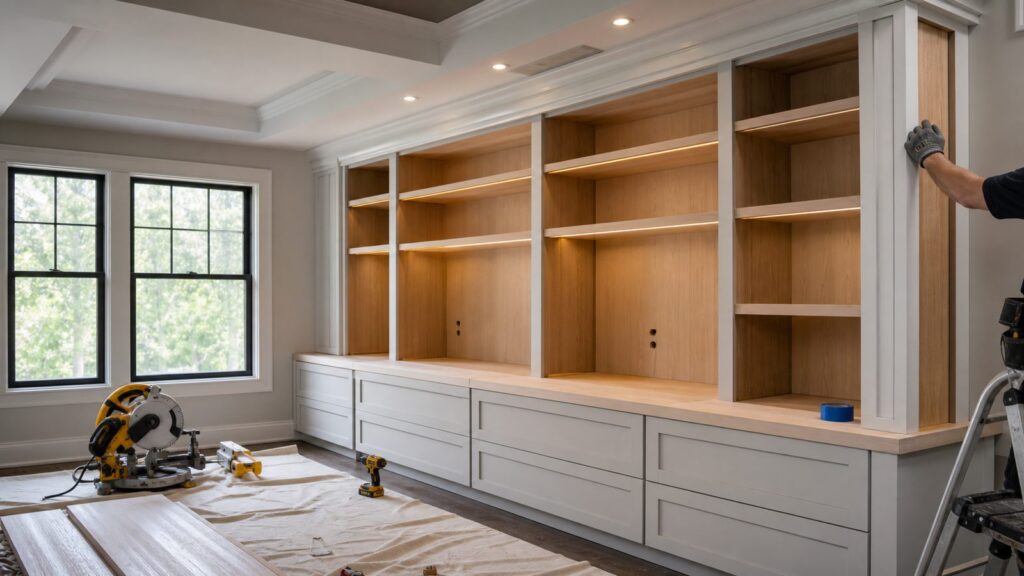
Built-ins are the strongest choice when the storage should look architectural. They can combine base cabinets, drawers, open shelves, appliance garages, a desk niche, a media area, or display lighting. To look right, they need to align with existing trim, door profiles, crown, baseboards, window casing, and ceiling conditions.
The main cost drivers are linear footage, depth, ceiling height, drawer count, inset versus overlay doors, finish level, trim matching, lighting, electrical work, and how uneven the walls and floors are. A custom built-in must be scribed to the room. If it is installed square against walls that are not square, the gaps will make expensive work look cheap.
Slatwall, Pegboard, and Utility Systems
For garages, workshops, laundry zones, and mudrooms, utility systems can outperform fine cabinetry. Slatwall, pegboard, rail systems, and adjustable metal shelving let the homeowner change the layout as needs change. The key is load rating. A garage system should state how much weight each shelf, hook, rail, and cabinet can carry and how it must be fastened.
Free tools Windows power users keep installed
One-click scans. No signup required.
2026 Cost Guide for Custom Wall Storage
Wall storage pricing varies widely because the phrase covers everything from a few shelves to a cabinet-grade built-in. Use linear-foot pricing for early planning, then expect a contractor or cabinet shop to price the actual design after measuring the room.
| Storage Type | Typical 2026 Cost | Best For | Cost Drivers |
|---|---|---|---|
| Basic installed wall shelving | $21.67-$33.48 per linear foot | Simple closets, laundry shelves, utility rooms | Bracket type, shelf material, wall condition, number of shelves |
| Premade built-in-style shelving | $150-$300 per linear foot installed | Living rooms, offices, simple display walls | Unit quality, installation labor, trim, paint touch-up |
| Custom built-in storage | $300-$1,200 per linear foot | Kitchens, baths, dens, mudrooms, high-finish rooms | Plywood vs MDF, doors, drawers, hardware, finish, scribing |
| Built-in bookcase or storage wall | $2,000-$7,500 average; many projects $3,300-$14,500 | Libraries, family rooms, offices | Wall length, ceiling height, base cabinets, paint or stain |
| Media wall with cabinets | $8,000-$15,000+ | Living rooms, entertainment rooms | Electrical, cable routing, lighting, fireplace integration, cabinetry |
| Garage wall storage | $300-$1,500 for many mid-range systems; $10,000+ for full custom systems | Garages, shops, storage rooms | Load rating, wall rails, ceiling racks, cabinets, flooring coordination |
For custom cabinet components, some shops price pieces separately. A common example is base cabinets with doors around $495 per linear foot, upper bookshelf units around $495 per linear foot, drawers around $330 each, crown molding around $275 per 8-foot unit, and installation around $220 per cabinet unit. Those numbers are not universal, but they show why drawers, trim, and specialty details change the total quickly.
For any custom project, carry a 10% to 20% contingency. Use the higher end if the work involves opening walls, moving outlets, adding lighting, matching older millwork, or installing in an older home with uneven framing.
Structural Planning: Studs, Blocking, Spans, and Load
The most serious mistake with wall storage is treating the wall like decoration instead of structure. Drywall is not the load path. The load should transfer into studs, blocking, masonry, or another approved structural substrate.
For new remodel work, we like to add solid blocking while walls are open. It is inexpensive compared with returning later, cutting finished drywall, and trying to hit limited stud locations. Blocking gives the installer freedom to place shelves, rails, cabinets, and cleats exactly where the layout requires.
For existing walls, locate studs before finalizing the design. Most residential studs are spaced 16 inches on center, though 24 inches on center and irregular framing are common enough that you should verify. Heavy floating shelves, wall cabinets, garage rails, and tall built-ins should be fastened into studs or blocking with appropriate screws, not light-duty drywall anchors.
Also popular on Amazon
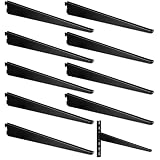
- Comprehensive Package: our package consists of 10 adjustable shelving brackets, easy installation without tools, designed to cater to your extensive storage or display needs, ensuring you have adequate brackets for multiple shelves
- Robust Construction: wire shelving brackets are constructed using steel, ensuring robustness and longevity; The use of powder coated steel with epoxy coating not only adds to its durability but also effectively prevents rust, chipping, peeling, or cracking, providing enduring performance that withstands time and use
- Efficient Size: measuring approximately 11.5 inches, track brackets are compact yet efficient; This size ensures they do not occupy too much space, while providing ample support and strength for your shelving needs
- Versatile Functionality: closet shelf brackets are designed for use with double track columns, allowing you to move them vertically up or down; This versatility meets varied storage or display needs, making them an ideal choice for a wide range of applications, such as homes, offices, retail stores, and more
- Broad Application: whether you intend to use them in residential, commercial, or industrial settings, 11.5 inch shelf bracket has a wide application; Their robust construction and versatile functionality make them suitable for holding a variety of items, ranging from decorative pieces to storage boxes
Shelf Span and Deflection
Shelves fail in two ways: they pull off the wall or they sag. A shelf can be securely anchored and still bow if the span is too long for the material and load. Long open shelves need thicker material, front edging, intermediate supports, or fixed dividers.
As a practical rule, avoid wide unsupported spans for heavy storage. Books, dishes, and canned goods need shorter spans than decor. Fixed vertical dividers can stiffen a built-in while creating better organization. Adjustable shelves are useful inside cabinets, but fixed shelves are often better where the unit needs rigidity.
Do these 3 things before closing this tab:
1Clear out junk files and repair common Windows errors2Scan for outdated or missing drivers - takes under a minute3Repair Windows errors before they cause bigger problemsAnti-Tip and Climbing Risk
Tall storage, mudroom cubbies, garage cabinets, and bookcase walls should be secured against tipping. This matters in homes with children, in garages where loads change, and in areas where seismic movement is a concern. Open cubbies can look like a ladder to a child. The taller and heavier the unit, the more seriously anchoring should be treated.
Room-by-Room Design Advice
Kitchen Wall Storage
Kitchens need storage that handles grease, steam, weight, and daily repetition. Open shelves can work beautifully when limited to frequently used dishes or display items, but they should not replace all upper cabinets unless the household is disciplined about cleaning and organization.
Use closed cabinets for bulk pantry goods, small appliances, cleaning supplies, and anything visually messy. Consider appliance garages for coffee makers, mixers, toasters, and charging stations. Plan outlets before the cabinet shop builds the boxes. Retrofitting power after installation can mean exposed cords, cut panels, or expensive rework.
For accessibility, place daily-use items between shoulder and knee height when possible. Pull-down shelves, pull-outs, D-shaped pulls, contrasting cabinet interiors, and task lighting make storage easier to use for more people. These choices support aging-in-place without making the kitchen look institutional.
Quick wins for a faster PC:
Clear out junk files and repair common Windows errorsFree Scan →Fix the driver behind crashes, sound loss and screen glitchesFind Drivers →Repair Windows errors before they cause bigger problemsFix Now →Bathroom Wall Storage
Bathrooms punish the wrong materials. Use sealed finishes, moisture-resistant plywood where appropriate, washable surfaces, and good ventilation. Raw wood aesthetics can look warm, but unsealed edges, cheap particleboard, and poorly finished MDF are vulnerable around humidity and splashing.
Medicine, cleaning products, razors, and personal items usually belong behind doors or in drawers. Open shelves are best for towels, baskets, and a few daily-use items. Leave access to plumbing shutoffs, cleanouts, fans, and electrical devices. A built-in that blocks service access creates a future repair problem.
Laundry Room Storage
Laundry rooms need practical clearances. Doors and drawers must clear washer lids, front-load door swings, hampers, and hanging rods. Detergent and cleaning supplies are heavy, so shelves above machines should be properly fastened. If the room has a sink, choose moisture-resistant materials and sealed edges near splash zones.
A strong laundry layout often combines upper cabinets, one open shelf for active supplies, a hanging rod, and a vertical slot for brooms or ironing boards. Deep shelves above eye level tend to become forgotten storage.
Mudroom Storage
Mudrooms deal with wet gear, dirt, backpacks, shoes, and repeated impact. Durable paint, washable panels, hooks fastened into blocking, and bench tops that can take abuse matter more than delicate details. Cubbies should be sized for real bags and shoes, not just styled baskets.
For families, assign zones. A 12- to 18-inch-wide vertical locker per person can work in tight spaces. Bench height is commonly around 18 inches. Shoe shelves often work at 7 to 9 inches of vertical clearance per tier, with taller space for boots.
Garage and Utility Storage
Garage storage should be designed around weight and safety first. Ask for published load ratings. A wall rail for bicycles, ladders, tools, and bins is not the same as a decorative shelf. Heavy storage should be fastened into framing or masonry with hardware suited to the substrate.
Keep hazardous materials out of reach of children, avoid storing heavy bins overhead unless the system is rated for it, and maintain clear access to electrical panels, water heaters, mechanical equipment, attic access, and garage door hardware.
Recommended Free Tools
Electrical, Lighting, and Code Notes
Custom wall storage often affects electrical work. Do not cover junction boxes, required receptacles, switches, GFCI devices, or access panels. Junction boxes must remain accessible. In kitchens, islands, peninsulas, counters, and appliance locations have specific receptacle rules under modern electrical codes, and local adoption varies by jurisdiction.
If you add lighting, charging drawers, appliance garages, or outlets inside cabinetry, involve a licensed electrician early. LED tape lights need drivers, switching, dimming, wire routes, and service access. Recessed puck lights need planned locations before shelves are built. A beautiful cabinet layout can become frustrating if lighting is treated as an afterthought.
Also popular on Amazon

- Reliable Support for Closet and Storage Systems: This closet brackets option provides dependable support for closet shelf brackets and adjustable shelving brackets. As a metal shelf bracket, it offers sturdy construction for organizing clothing, shoes, or household items. The shelf support bracket design works well with shelf rails for shelves in pantries, garages, or walk-in closets
- Clean White Finish for Any Decor: The white finish of this wood shelf brackets alternative helps it blend with most interior color schemes. Use it as a floating shelf brackets solution for living rooms, kitchens, or bedrooms. The neutral appearance makes this heavy duty shelf brackets option suitable for visible storage areas where aesthetics matter
- Easy Installation with Standard Shelftrack Systems: This shelf bracket is designed for straightforward installation with standard shelftrack configurations. The adjustable feature allows you to modify shelf height as needed. Whether you're using brackets for shelves for a new adjustable wall shelves setup or updating existing storage, this track shelf bracket offers flexible positioning
- Sturdy Metal Construction for Reliable Performance: Made from quality materials, this metal shelf bracket provides dependable holding strength for your storage needs. Use it as a shelf bracket for closetmaid for organizing or as a general shelf support bracket. This closet brackets option is suitable for wire shelving, heavy duty shelf brackets applications, and adjustable shelving brackets projects
- Versatile 11.5 Inch Adjustable Shelf Bracket for Multiple Applications: Wuyituart's 11.5 inch white shelf bracket works as a shelf bracket for closetmaid or as general brackets for shelves. This track shelf bracket is compatible with shelftrack systems including single track shelf bracket and double track shelf bracket configurations. Use it for wire shelving, wire shelves, or adjustable wall shelves projects
Permit requirements vary by location. Simple surface-mounted shelves may not need a permit. Electrical additions, relocated outlets, structural changes, plumbing changes, some garage rack installations, and commercial-style storage loads may trigger permits or inspections. When in doubt, check with the local building department before work starts.
Independent reader supportYour contribution helps us test, update, and keep practical guides available for everyone.Materials and Finishes That Hold Up
Material choice should follow the room. Paint-grade MDF can be excellent for flat panels, trim details, and built-ins in dry areas when properly finished. Cabinet-grade plywood is a better choice for many cabinet boxes, wet-adjacent rooms, and storage that needs more screw-holding strength. Hardwood and hardwood veneer raise the cost but can be the right choice for stain-grade work.
PC Slower Than It Used to Be?
A free scan shows the junk files, broken settings and background clutter dragging Windows down - then fixes them in one click.Free scan · Windows 10 & 11Outdated Drivers Are Slowing You Down
One free scan finds every outdated or missing driver and matches the right update for your exact hardware.Free scan · exact hardware matchIn kitchens, baths, and laundry rooms, prioritize sealed edges, durable paint, quality primers, washable finishes, and hardware that can handle daily use. Soft-close hinges and full-extension drawer slides are not luxury details when the storage is used every day.
For paint-grade built-ins, expect the best results when panels are smooth, seams are controlled, nail holes are filled cleanly, and finish coats are sprayed or carefully brushed and rolled. For stain-grade work, material selection and grain matching become much more important, and cost rises accordingly.
Open Shelving vs Closed Cabinets
| Choice | Advantages | Tradeoffs | Best Use |
|---|---|---|---|
| Open shelves | Easy visibility, lighter look, quick access, lower material cost | Dust, grease, clutter, lower privacy | Daily dishes, towels, display, cookbooks |
| Closed cabinets | Hides clutter, protects contents, cleaner appearance | Higher cost, more hardware, contents less visible | Pantry goods, medicine, cleaning supplies, appliances |
| Drawers | Excellent access, full view from above, strong organization | Cost rises quickly, needs quality slides | Kitchen tools, bath items, office supplies, small parts |
| Adjustable systems | Flexible, easier to change, good for utility areas | Less built-in appearance, visible tracks or rails | Garages, closets, laundry rooms, kids’ zones |
Most successful projects use a mix. Open shelves where visibility helps. Doors where clutter hurts. Drawers where access matters. Fixed dividers where strength matters. That balance is what makes custom storage feel designed instead of merely filled in.
When to DIY and When to Hire a Pro
DIY can make sense for simple shelves, lightweight closet storage, pegboard, small laundry shelves, and basic garage organization where the manufacturer provides clear load ratings and fastening instructions. A careful homeowner with a stud finder, level, drill, appropriate fasteners, and patience can handle many small projects.
Hire a carpenter, cabinet installer, cabinet shop, or remodeling contractor when the project involves heavy loads, tall units, scribing to uneven walls, integrated doors and drawers, matching existing trim, electrical work, lighting, plumbing access, or a high-visibility room like a kitchen, bath, or living room. Hire an electrician for new outlets, appliance garages, lighting circuits, or concealed wiring.
A good pro will measure the room, verify framing, discuss load and access, plan around outlets and vents, and provide a drawing before fabrication. For complex built-ins, expect design, ordering, fabrication, finishing, and installation to take several weeks. Simple shelving may be completed in a day. Custom cabinet-grade work often takes 4 to 10 weeks from field measurements to installation, depending on shop workload and finish complexity.
Common Mistakes to Avoid
- Designing from inspiration photos instead of a real inventory.
- Using drywall anchors for loads that belong in studs or blocking.
- Making shelves too deep, too high, or too widely spaced.
- Blocking outlets, switches, vents, shutoffs, cleanouts, or access panels.
- Waiting until after fabrication to plan lighting and outlets.
- Using unsealed MDF or vulnerable edges in humid rooms.
- Choosing too much open shelving in grease-prone kitchens.
- Ignoring door swings, appliance clearances, drawer pulls, and trim transitions.
- Skipping scribing, which leaves uneven gaps at walls, floors, and ceilings.
- Forgetting that children may climb open cubbies or shelves.
A Practical Planning Checklist
Before pricing custom wall storage, gather the information a contractor or cabinet shop needs. Measure wall length, ceiling height, baseboard height, outlet locations, switch locations, vents, windows, doors, plumbing access, and any floor slope or wall irregularity you can see. Photograph the wall straight on and from both sides.
Then decide what must be open, what must be closed, what needs drawers, what needs lighting, and what needs to be reachable every day. Mark heavy items clearly. If the project is in a kitchen, bath, laundry room, garage, or mudroom, identify moisture, heat, grease, impact, and cleaning requirements.
The best custom wall storage is not just more storage. It is storage that fits the room, carries the load, respects the code, cleans easily, and still looks like it belongs to the house five years later.
Frequently Asked Questions
How much does custom wall storage cost in 2026?
Basic installed wall shelving can run about $21.67 to $33.48 per linear foot. Premade built-in-style units are commonly $150 to $300 per linear foot installed. Fully custom built-ins often cost $300 to $1,200 per linear foot, with large cabinet or media walls reaching $8,000 to $15,000 or more.
Do I need a permit to add built-in wall storage?
Simple surface-mounted shelves often do not need a permit, but electrical additions, relocated outlets, plumbing changes, structural changes, and some heavy garage storage systems may. Local rules vary, so check with your building department before work begins.
What is the best material for kitchen or bathroom wall storage?
For kitchens and baths, use durable cabinet-grade materials with sealed edges and washable finishes. Cabinet-grade plywood is often better than low-grade particleboard in moisture-prone areas. MDF can work for paint-grade panels in dry locations when properly sealed and finished.
Recommended Free Tools
How much weight can wall-mounted shelves hold?
It depends on the shelf material, span, brackets, fasteners, and wall structure. Heavy shelves should be fastened into studs, blocking, masonry, or another approved structural substrate. Do not rely on light-duty drywall anchors for dishes, books, tools, or garage loads.
Should I choose open shelving or closed cabinets?
Use open shelving for attractive items you use often and can keep clean. Use closed cabinets or drawers for bulk goods, medicine, cleaning supplies, small appliances, and visual clutter. Most strong designs use a mix of both.
Can I add outlets or lighting inside custom storage?
Yes, but plan it before fabrication. Cabinet lighting, charging drawers, appliance garages, and concealed outlets need proper wiring, switching, drivers, GFCI protection where required, and accessible electrical boxes. Use a licensed electrician.
Quick Recap
Product prices and availability are accurate as of the date/time indicated and are subject to change. Any price and availability information displayed on Amazon at the time of purchase will apply.
Quick wins for a faster PC:
Clear out junk files and repair common Windows errorsFree Scan →Fix the driver behind crashes, sound loss and screen glitchesFind Drivers →
