What’s actually slowing this PC down?
Pick the symptom - the matching free tool is one click away.
Some links on this page are affiliate links: if you buy through them we may earn a commission, at no extra cost to you.
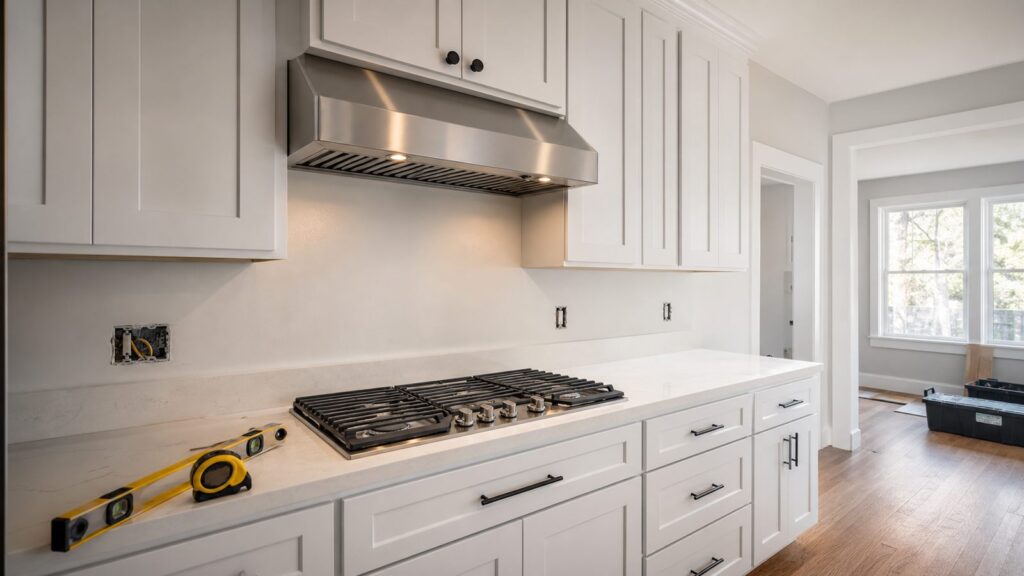
A non-vented range hood, also called a ductless or recirculating range hood, is best used when running a duct to the outdoors is impractical, too expensive, or not allowed by the building. It can help trap grease and reduce some cooking odors, but it does not remove heat, steam, smoke, carbon monoxide, nitrogen dioxide, or fine particles from the house.
That distinction matters. On our kitchen remodels, we treat a ductless hood as a compromise appliance, not a full ventilation system. It can be a smart fit for a condo, apartment, interior-wall kitchen, slab-on-grade remodel, light-use electric range, or budget refresh. If the project already opens walls, cabinets, soffits, an attic, or an exterior route, a ducted hood is usually the better long-term investment.
As an Amazon Associate I earn from qualifying purchases.
For most homeowners, the right choice comes down to five things: whether ducting is possible, what kind of range you cook on, how much capture area the hood provides, how easy the filters are to maintain, and whether the fan is quiet enough that you will actually use it.
What a Non-Vented Range Hood Does and Does Not Do
A ductless hood pulls cooking air through a metal grease filter and a charcoal or carbon filter, then sends that same air back into the kitchen. The metal filter catches airborne grease mist. The charcoal filter adsorbs some odors. That is useful, especially compared with no hood at all, but it is not the same as exhausting air outside.
Popular on Amazon

- GREAT SUCTION AND ULTRA QUIET: Powerful and convertible venting system with 450 CFM motor and 3-speeds fan ensures adequate amount of suction for removing odors, smoke, and grease.Ultra quiet operation, less than 54dB at high speed.Ductless range hood convertible for ventless installations with included carbon filter kit (Model: CC110)
- SUPERIOR QUALITY VENT HOOD: Wall mount range hood 30 inch constructed with 430 grade stainless steel for exceptional resistance to corrosion and rust, handcrafted brushed satin finish to prevent dents and scratches for long lasting use in your busy kitchen
- RANGE HOOD WORK EFFICIENTLY: Vent hoods 30 inches with 2 superior multi-layer aluminum mesh filters to trap grease and oils from escaping into kitchen and are washable. Kitchen exhaust fan with 5-button controls, simple operate and sensitive reaction. Easy to turn on and off,Low/ Medium/ High Speed suitable for different cooking method. 2 x 1.5W LED offer enough brightness to meet your cooking need
- ADJUSTABLE KITCHEN HOOD CHIMNEY: The adjustable and telescoping chimney can fit 7.5 to 8.5 Ft. ceiling. If you have a high ceiling, add extra extension chimney (FGS-TD24S-ZST, sold seperately) which can extend 9-10 ft. ceiling. Stove hood dimensions: 30 in. (W) x 19 in. (D) x adjustable 15.7 in. - 30.7 in. (H), Electrical: 120V/60Hz, 3-prong plug, 6 inch round top vent
- 1-YEAR LIMITED PARTS WARRANTY: This wall mount range hood is backed by a 1-year limited parts warranty. Our support team is available to assist with installation, operation, and maintenance questions
The clearest way to evaluate a hood is to separate the jobs people expect it to do:
- Grease capture: A good ductless hood can help keep cabinets, backsplash tile, and ceilings cleaner if the filters are maintained.
- Odor reduction: Charcoal filters can reduce lingering food smells, but performance drops as the filter loads up.
- Moisture removal: Ductless hoods do not remove moisture from boiling, steaming, or simmering. They recirculate humid air back into the room.
- Heat removal: A ductless hood does not move cooking heat outdoors.
- Combustion pollutant removal: A ductless hood does not exhaust gas-stove byproducts such as nitrogen dioxide or carbon monoxide.
That is why we are much more comfortable specifying ductless hoods over electric or induction cooking than over gas. Gas and propane burners add combustion byproducts to the air. Public health research has consistently connected gas-stove use with nitrogen dioxide exposure, and recent Stanford reporting found that pollution from gas and propane stoves can spread beyond the kitchen and linger for hours. If a client cooks heavily on gas, we look hard for a way to vent outside or we discuss induction as part of a larger remodel.
Do these 3 things before closing this tab:
1Repair Windows errors before they cause bigger problems2Scan for outdated or missing drivers - takes under a minute3Clear out junk files and repair common Windows errorsBest Uses for a Ductless Range Hood
A non-vented hood is most appropriate when the kitchen cannot reasonably be ducted without major demolition or exterior work. Common examples include condos with HOA restrictions, apartment kitchens, townhomes with shared walls, kitchens on interior walls, finished attic or second-floor conditions above the stove, and slab-on-grade homes where rerouting is limited.
It also makes sense in lighter-duty kitchens. If you mostly boil pasta, make eggs, warm leftovers, saute vegetables, and use an electric or induction range, a quality ductless hood can be adequate. If you regularly sear steaks, deep fry, cook with a wok, blacken fish, or run a gas range several nights a week, ductless performance will feel limited.
There are also project-timing reasons to choose ductless temporarily. A homeowner may install a $100 to $250 under-cabinet non-ducted hood during a short-term refresh, then plan a ducted upgrade when cabinets, soffits, roofing, or siding are being replaced. That can be a reasonable phased approach as long as expectations are clear.
Ductless vs Ducted vs Other Kitchen Ventilation Options
Product roundups often compare range hoods by finish, controls, and fan speed. In the field, we start with the ventilation strategy. A beautiful hood that cannot capture cooking plume or meet the project requirements is the wrong hood.
| Option | Typical 2026 Installed Cost | Air Quality Performance | Code Risk | Best Use Case |
|---|---|---|---|---|
| Ductless under-cabinet hood | Often a few hundred dollars for a simple swap; basic units commonly $80-$250 before labor | Captures grease and some odors only | May not satisfy local exhaust requirements for new homes or major remodels | Condos, rentals, light cooking, electric or induction ranges |
| Ducted under-cabinet or wall hood | Common national project ranges run about $650-$2,500 depending on ducting, electrical, and finish work | Best practical option for removing heat, moisture, smoke, grease, and pollutants outdoors | Usually easier to align with kitchen exhaust requirements when properly installed | Most remodels where an exterior route is available |
| Convertible hood | About $200-$700 for many midrange units, plus labor and any recirculation kit | Good if ducted; limited when used in recirculating mode | Depends on final installation method | Homeowners planning a future ducted upgrade |
| Microwave hood combo | Varies widely; often less cabinet disruption but weaker capture geometry | Fair for light cooking, especially when ducted; often weak for front burners | Depends on ducting and local requirements | Small kitchens where counter and cabinet space matter |
| Downdraft | Often expensive once cabinetry, electrical, and duct paths are included | Mixed performance because it fights rising heat and steam | Project-specific | Island cooktops where overhead ventilation is not acceptable |
When a client tells us, “I think ductless is my only option,” we verify that before ordering. Many kitchens that look difficult can still be vented through a short exterior wall run, an upper cabinet, a soffit, an attic chase, or a roof penetration. Sometimes the cost is higher. Sometimes it is surprisingly reasonable because the framing and cabinet layout cooperate.
How to Size a Non-Vented Range Hood
For a standard 30-inch range, use at least a 30-inch hood. If the cabinet layout allows a 36-inch hood over a 30-inch cooktop, the extra width often improves capture more than chasing a higher advertised airflow number. Cooking plume spreads as it rises, and a wider capture area catches more of it before it rolls into the room.
For under-cabinet hoods, the most common residential widths are 24, 30, 36, and 42 inches. A 30-inch range under a 24-inch hood is a poor match unless there is no other practical option. For open-plan kitchens, frequent frying, or front-burner cooking, matching width is the minimum. Slight overhang is better.
Mounting Height Matters
Mounting height is not a guess. Always follow the manufacturer’s installation instructions and the range manufacturer’s clearance requirements. As a practical reference, common Broan ductless under-cabinet installation guidance calls for roughly 18 to 24 inches above the cooking surface for capture. Broan support guidance has also stated minimums around 18 inches over electric, 26 inches over gas, and about 30 inches maximum, depending on the specific product instructions.
Outdated Drivers Are Slowing You Down
One free scan finds every outdated or missing driver and matches the right update for your exact hardware.Free scan · exact hardware matchPC Slower Than It Used to Be?
A free scan shows the junk files, broken settings and background clutter dragging Windows down - then fixes them in one click.Free scan · Windows 10 & 11Too low can violate clearance requirements, interfere with tall pots, or create a heat hazard. Too high reduces capture. In remodel work, we check the cabinet bottom height, range height, backsplash layout, and the hood’s required clearances before the electrician or cabinet installer finalizes anything.
CFM Is Less Useful on Ductless Hoods
With ducted hoods, airflow ratings are a major part of the design. With ductless hoods, CFM numbers can be less meaningful because the air is filtered and recirculated, and real performance depends heavily on hood shape, filter condition, fan design, and how close the hood is to the cooking surface.
A convertible hood may advertise a strong CFM rating when ducted, but recirculating mode can be less effective. Do not buy on the biggest number alone. Look for capture area, accessible filters, a fan you will use, and a replacement filter supply that will still be available two or three years from now.
What the Best Ductless Range Hoods Have in Common
The best non-vented range hood is not always the most expensive one. It is the one that fits the cooking surface, mounts at the right height, gives the air a clear path through the filters, and is easy enough to maintain that the homeowner does not give up on it.
Quick wins for a faster PC:
Fix the driver behind crashes, sound loss and screen glitchesFind Drivers →Repair Windows errors before they cause bigger problemsFix Now →1. Accessible Metal Grease Filters
Metal grease filters should come out easily without tools. Aluminum mesh filters are common on lower-cost units. Baffle-style filters are more common on heavier-duty hoods, though many baffle hoods are designed primarily for ducted operation. For frequent cooking, plan to clean metal filters about once a month. If you fry often, clean them more often.
Also popular on Amazon

- WORK EFFICIENTLY 30 INCH RANGE HOOD: Range hood insert 30 inch with 600 CFM,3 speed exhaust fan are suitable for all kinds of cooking style,efficiently removing oil fumes and harmful carcinogens,reduce the damage to your skin and health.Ductless range hood can be convertible to ductless with included carbon Filter(CC170).
- POWERFUL BUT REALLY QUIET RANGE HOODS: Exhaust hoods fits 6 inch round duct,which is capable of vent-less or recirculation operation,great for ductless kitchen.Ultra quiet operation,noise of 30 inch vent hood less than 57dB at high speed.The range hood insert with 2pcs LED lamps would illuminate your kitchen workspace with warm and attractive lamps.
- VERY SLEEK AND EASY TO CLEAN: The stainless steel range hood made with food-grade,durable,non-rusting brushed high-quality 430 stainless-steel that resists grease, stains or rusts which material thickness is better than others.2pcs dishwasher-safe and easy removable stainless steel baffle filters that captures grease from cooking use.
- EASY TO INSTALL AND OPERATION: Easy to install with the instruction manual and the installation guide video.Built in range hood are easy to turn on and off,Low/ Medium/ High Speed button suitable for different cooking method.Keeping the kitchen cleaner and fresher with kitchen range hood.
- UPSCALE LUXURY FEELS DESIGN: Remodel your entire kitchen with insert range hood.Product Dimensions:27.8 in.(W) x 11.5 in.(D) x 10.3 in.(H),Electrical:120V/60Hz,3-prong plug,5.9 inch round top vent.
Most metal filters can be washed with hot water and degreasing dish soap; some are dishwasher safe if the manufacturer allows it. A clogged grease filter reduces airflow, increases noise, and makes the hood less useful.
2. Replaceable Charcoal Filters You Can Actually Buy
Charcoal filters are the ongoing cost of ductless ventilation. They are not washable. In a regularly used kitchen, replacement every 3 to 6 months is a realistic schedule. Heavy frying, wok cooking, or persistent odors may shorten that interval.
Budget about $25 to $100 per year for filters. Some common replacement filters sell around $13 each, while brand-specific two-packs may run around $38 or more. Specialty filters can cost $15 to $50 per set. Before we recommend a hood, we check whether the replacement filters are sold by the manufacturer, Home Depot, Lowe’s, or another stable supplier. Obscure filters can turn a working hood into a disposable appliance.
Recommended Free Tools
3. Noise Levels People Will Tolerate
A loud hood is a hood people stop using. Many affordable ductless under-cabinet units are basic two-speed models and can be noticeably loud, often listed around 4 sones or higher. That may be acceptable for short cooking sessions, but it becomes irritating in an open kitchen or when the fan needs to run after cooking.
If the budget allows, prioritize a quieter motor and useful speed range over touch controls, decorative lighting, or smart features. A simple rocker switch on a quieter fan is better than a flashy hood nobody turns on.
4. Sensible Lighting and Controls
Good cooktop lighting matters. LED lighting is preferable because it runs cooler and lasts longer. Controls should be easy to operate with damp or busy hands. For rental units and practical remodels, mechanical switches can be more durable than glass touch panels.
5. A Body That Fits the Cabinet Plan
Most basic ductless hoods are under-cabinet units. Wall-mount chimney hoods and island hoods can also be used in recirculating mode if the model supports it and the correct kit is installed. Verify that the kit is included or available before purchase. Some hoods are sold as convertible, but the charcoal filters, deflector, or recirculation kit are separate parts.
Realistic 2026 Cost Expectations
National installed range hood pricing varies because a “range hood install” can mean anything from swapping a basic under-cabinet unit to cutting a roof penetration, adding electrical, modifying cabinets, patching drywall, and installing makeup air. Current 2026 benchmarks show that spread clearly. Angi and HomeAdvisor both report installed range hood ranges around $650 to $2,500, with Angi showing an average around $1,750. HomeGuide reports about $300 to $850 for replacement and about $650 to $2,100 for a new install with outlet and ductwork. Homewyse’s May 2026 estimate is about $564 to $1,030 per hood for vent hood installation.
For a simple ductless swap, the number can be lower because there is no exterior duct run. A basic 24- to 30-inch under-cabinet non-ducted hood commonly costs about $80 to $250 for the unit. Midrange stainless or convertible under-cabinet and wall-mount units often run about $200 to $700. Premium designer inserts, island hoods, smart units, and quieter models can exceed $800 to $1,500, especially when the recirculation kit is extra.
Labor for a straightforward ductless replacement may be only a few hundred dollars if the cabinet opening, electrical connection, and mounting surface are already suitable. Costs rise when the installer has to add an outlet, convert hardwiring, cut cabinet panels, adjust crown or light rail, modify backsplash tile, reinforce a wall-mount hood, or troubleshoot old wiring.
| Cost Item | Typical 2026 Range | Notes |
|---|---|---|
| Basic ductless under-cabinet hood | $80-$250 | Often 24-30 inches, simple fan speeds, basic light |
| Midrange convertible hood | $200-$700 | May need separate charcoal filters or recirculation kit |
| Premium ductless-capable hood | $800-$1,500+ | Designer finish, island format, quieter motor, advanced controls |
| Replacement charcoal filters | $25-$100 per year | Assumes replacement every 3-6 months in regular use |
| Simple ductless labor | A few hundred dollars | Most realistic when replacing a similar hood with usable electrical |
| Broader installed hood project | $650-$2,500 | Applies when electrical, carpentry, ductwork, or finish repair is involved |
The lifetime cost is where ductless hoods can surprise homeowners. A $150 hood may look inexpensive, but if it is too loud to use, needs filters twice a year, and still leaves moisture and gas pollutants indoors, it may not be a good value. In a larger remodel, spending more to duct properly can be the better investment.
The Tool Desk
Outbyte PC Repair FREEClear out junk files and repair common Windows errorsFree Scan →Outbyte Driver Updater FREEScan for outdated or missing drivers - takes under a minuteDriver Scan →Code, Permits, and Safety Notes
Codes vary by jurisdiction, project type, and adopted code cycle. The 2024 International Residential Code includes kitchen exhaust provisions, and many local amendments, energy codes, and green-building programs add their own requirements. In some areas, a recirculating hood may not satisfy kitchen local-exhaust requirements for new homes, ADUs, or major remodels that require outdoor exhaust.
That does not mean every hood replacement needs a permit. A like-for-like ductless swap may be treated differently from a new kitchen, an added dwelling unit, or a full permitted remodel. The correct answer depends on the local building department and the scope of work.
Electrical work is another line to respect. Some hoods plug into a cabinet outlet. Others are hardwired. If there is no proper power source, if the existing wiring is old or damaged, or if the circuit needs modification, bring in a qualified electrician. Do not bury junctions behind a new hood or cabinet panel in a way that violates access requirements.
Gas cooking deserves extra caution. A ductless hood does not remove combustion gases outdoors. It should not be presented as a complete solution for indoor air quality over a gas range. If anyone in the home has asthma, respiratory concerns, or strong sensitivity to cooking fumes, we recommend discussing outdoor exhaust and range type early in the design process.
Also popular on Amazon
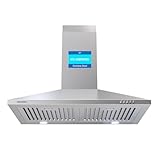
- 𝟯𝟬" 𝗣𝗢𝗪𝗘𝗥 𝗧𝗢𝗪𝗘𝗥 𝗥𝗔𝗡𝗚𝗘 𝗛𝗢𝗢𝗗𝗦: Pyramid design maximizes space efficiency with 450CFM suction, powered by a high-efficiency 70W motor. ETL certified for safety
- 𝟭𝟮𝟬𝟬𝟬𝗞 𝗩𝗘𝗡𝗧 𝗛𝗢𝗢𝗗 𝗟𝗜𝗚𝗛𝗧𝗜𝗡𝗚: Forget dim, shadowy cooking. Dual LEDs cast chef-grade light directly on cooktop, revealing every cooking detail at 12000K optimal spectrum for hood vents for kitchen
- 𝗦𝗧𝗘𝗘𝗟𝗙𝗢𝗥𝗖𝗘 𝗗𝗨𝗥𝗔𝗕𝗟𝗘 𝗙𝗜𝗟𝗧𝗥𝗔𝗧𝗜𝗢𝗡: Why settle for flimsy aluminum? 2-layer steel baffle filters resist denting (VS aluminum filters), feature straight-groove design for 1-wipe cleaning, and eliminate odor retention
- 𝗪𝗛𝗜𝗦𝗣𝗘𝗥 𝗤𝗨𝗜𝗘𝗧 𝗗𝗨𝗖𝗧𝗟𝗘𝗦𝗦 𝗢𝗣𝗘𝗥𝗔𝗧𝗜𝗢𝗡: Factory-tested ≤55dB across 3 speeds. Converts between ducted/ductless range hood modes with included charcoal filters (no extra purchases!)
- 𝗣𝗥𝗘𝗖𝗜𝗦𝗜𝗢𝗡 𝗜𝗡𝗦𝗧𝗔𝗟𝗟𝗔𝗧𝗜𝗢𝗡 𝗦𝗬𝗦𝗧𝗘𝗠: Provided drilling template enables accurate mounting for all stove hood types. Measure→Mark→Drill process completes in 15 minutes. Easy-tear protective film ensures scratch-free setup
When to DIY and When to Hire a Pro
A capable homeowner may be able to replace a lightweight under-cabinet ductless hood if the new unit is the same size, the mounting surface is sound, the electrical connection is already correct, and the manufacturer’s instructions are straightforward. Plan on basic hand tools, a helper to hold the hood, careful measuring, and enough time to test the fan and light before tightening everything down. A simple swap often takes 1 to 3 hours for someone comfortable with small appliance work.
Hire a pro when the hood is wider or heavier than the old unit, the cabinet bottom needs modification, the backsplash tile must be cut, the unit is hardwired, the wall needs blocking, or the installation involves a gas range with tight clearances. Also hire help if you are changing from ductless to ducted. Exterior penetrations through siding, brick, stucco, roofing, or fire-rated assemblies are not the place for guesswork.
On our jobs, we confirm four things before closing up trim: fan operation on every speed, light operation, filter seating, and the correct recirculation path. On convertible hoods, we also verify that any internal damper, diverter, or recirculation setting matches the installation mode. A convertible hood accidentally left in ducted mode without a duct can perform badly and make unnecessary noise.
When to Upgrade From Ductless to Ducted
A ductless hood may be acceptable today and still be the wrong long-term answer. The best time to upgrade is when another project gives the contractor access. Cabinet replacement, soffit removal, roof work, siding work, attic improvements, and backsplash demolition can all lower the marginal cost of adding ductwork.
Free tools Windows power users keep installed
One-click scans. No signup required.
Consider moving to a ducted hood if you have any of these conditions:
- You cook with gas or propane several times per week.
- You frequently fry, sear, wok cook, or cook at high heat.
- The kitchen is open to the living area and odors spread through the house.
- You see moisture on windows, cabinets, or nearby walls after cooking.
- Someone in the home has asthma or respiratory concerns.
- You are already replacing upper cabinets, exterior siding, roofing, or drywall near the kitchen.
- You avoid using the current hood because it is too loud or ineffective.
For high-CFM ducted upgrades, the hood should be coordinated with HVAC and combustion-appliance safety. Very strong exhaust can depressurize a tight house if makeup air is not addressed. That is less of an issue with ductless hoods because they recirculate air, but it becomes important when the design changes to outdoor exhaust.
Our Practical Buying Checklist
Before buying a non-vented range hood, measure the cooktop width, cabinet opening, height above the cooking surface, available power, and depth of the upper cabinet. Confirm whether the hood is truly ductless or convertible, and whether the charcoal filters are included. If they are not included, price them before ordering the hood.
For a 30-inch range, choose a 30-inch hood at minimum. If a 36-inch hood fits cleanly, consider it for better capture. Keep the mounting height inside the appliance instructions. Choose the quietest model your budget allows. Avoid oddball filter systems unless you are comfortable stocking spare filters now.
For most homes, a good ductless hood is a practical improvement over no hood, especially for light to moderate electric or induction cooking. It is not a substitute for a properly ducted hood when the cooking load, gas appliance, code requirement, or remodel scope calls for real exhaust. The best decision is not “ductless or nothing.” It is checking whether ducting is truly impractical before accepting the limitations of recirculation.
Frequently Asked Questions
Are ductless range hoods worth it?
Yes, when exterior ducting is impractical and the cooking load is light to moderate. They help capture grease and reduce some odors, but they do not remove moisture, heat, smoke, or gas-stove pollutants outdoors.
How often should charcoal filters be replaced?
Most charcoal filters should be replaced every 3 to 6 months in a regularly used kitchen. Frying, wok cooking, and persistent odors may require more frequent replacement.
What size ductless hood do I need for a 30-inch range?
Use at least a 30-inch hood over a 30-inch range. If cabinetry allows, a 36-inch hood can improve capture because it gives the cooking plume more room to enter the hood.
Can I use a ductless hood over a gas stove?
You can install one if the manufacturer allows it and clearances are met, but it is not ideal. A ductless hood does not exhaust combustion pollutants such as nitrogen dioxide or carbon monoxide, so outdoor ventilation is better for gas cooking.
How much does a ductless range hood cost in 2026?
Basic ductless under-cabinet units commonly cost about $80 to $250 before labor. Midrange convertible models often run $200 to $700, while premium units can exceed $800 to $1,500. Budget another $25 to $100 per year for filters.
Do ductless range hoods meet code?
Sometimes, but not always. Local codes, energy programs, new-home rules, ADU requirements, and major remodel permits may require outdoor kitchen exhaust. Check the local building department before relying on a recirculating hood.
Quick Recap
Product prices and availability are accurate as of the date/time indicated and are subject to change. Any price and availability information displayed on Amazon at the time of purchase will apply.

