Outdated Drivers Are Slowing You Down
One free scan finds every outdated or missing driver and matches the right update for your exact hardware.Free scan · exact hardware matchPC Slower Than It Used to Be?
A free scan shows the junk files, broken settings and background clutter dragging Windows down - then fixes them in one click.Free scan · Windows 10 & 11Some links on this page are affiliate links: if you buy through them we may earn a commission, at no extra cost to you.
The best finish for kitchen cabinets is not one single product. For new custom cabinets or doors finished in a controlled shop, a catalyzed conversion varnish or 2K polyurethane is usually the durability leader. For repainting cabinets in an occupied home, a high-quality waterborne alkyd or urethane cabinet enamel is often the best practical choice because it balances hardness, cleanability, odor, repairability, and jobsite constraints.
That distinction matters. A finish that performs beautifully in a spray booth may be a poor choice to spray inside a lived-in kitchen without the right ventilation, masking, personal protection, and local VOC compliance. On our job sites, the cabinet finish decision starts with three questions: what are the cabinets made of, how much abuse will the kitchen see, and are we finishing in a shop or inside the home?
As an Amazon Associate I earn from qualifying purchases.
The Tool Desk
Outbyte Driver Updater FREEScan for outdated or missing drivers - takes under a minuteDriver Scan →Outbyte PC Repair FREEClear out junk files and repair common Windows errorsFree Scan →If your cabinet boxes are solid, the layout works, and the doors are worth keeping, refinishing can save thousands compared with replacement. If the boxes are swollen, delaminating, badly laid out, or built with worn-out hardware, no finish will turn them into high-quality cabinets. The coating is the last layer of the job, not a cure for failed construction.
Best Cabinet Finish by Situation
Here is the short, contractor-grade answer.
| Situation | Best finish choice | Why it works | Watch-outs |
|---|---|---|---|
| New custom cabinets or shop-finished replacement doors | Conversion varnish or 2K polyurethane | Hard, chemical-resistant, moisture-resistant, and suited to controlled spray conditions | Requires professional equipment, catalyst handling, and proper ventilation |
| Existing painted or paint-grade cabinets in an occupied home | Waterborne alkyd/urethane cabinet enamel | Good hardness, lower odor, available in many colors, repairable, and practical for residential work | Prep and cure time matter; ordinary wall paint is not enough |
| Natural wood cabinets in good condition | Clear waterborne polyurethane or professional catalyzed clear coat | Protects wood while keeping grain visible | Color matching and sanding through veneer are common risks |
| Oak cabinets being painted smooth | Grain filler, stain-blocking primer, then cabinet enamel or shop coating | Fills open grain and reduces telegraphing through the paint | Extra labor; skipping filler leaves visible grain texture |
| Laminate, melamine, or thermofoil | Specialty bonding primer plus enamel, only after adhesion testing | Can work on stable surfaces | Peeling thermofoil or damaged laminate may not be worth painting |
| Rental, quick sale, or budget refresh | Durable cabinet enamel with modest prep and new pulls | Improves appearance without a full remodel budget | Do not overspend if boxes and hardware are near failure |
For most homeowners asking this question, the real decision is between professional cabinet enamel, lacquer, conversion varnish, polyurethane, stain, or refacing. Each has a place. The wrong choice usually happens when the product is selected by appearance alone instead of by the cabinet material, application environment, and expected wear.
#1 Best Overall

- Instant Color Matching (3-Color Shades Kit): This Sundaze 3-pack touch-up paint kit includes 1 fluid ounce bottles of Semi-Gloss White paint in color shades: Pure White, Ivory White, and Winter White. Premium paint formulated for use alone or mixed to achieve a perfect, seamless color match on almost any surface. Instantly eliminate color-chart guesswork and perfectly repair scratches, chips, and stains.
- No Primer, No Mess: Featuring a powerful, self-priming formulation, our premium acrylic paint repairs chips and scuffs instantly. The all-in-one applicator brush is built right into the lid, providing everything needed for quick, professional-looking touch-ups on cabinets, walls, doors, furniture, baseboards, floors, appliances, and many other surfaces that require restoration.
- Instantly Repairs and Restores: Designed with a quick-drying, durable semi-gloss finish that blends seamlessly to make damage disappear. Quickly fix accidental marks from family, pets, movers, or general wear and tear, instantly restoring your home's original look for yourself, resale, or rental property turnover. For optimal adhesion, sand the semi-gloss paint repair surfaces first before applying the touch-up paint.
- Safe and Easy to Use: Our ultra-low-odor, non-toxic, water-based acrylic paint fully dries quickly, so your home furnishings appear like new in a fraction of the time. It is a safe choice for use in all rooms and is safe for adults, families, and pets after it has dried.
- Multi-Surface: Use this versatile kit to maintain and restore a variety of interior and exterior home surfaces, including wood, laminate, painted drywall, cabinets, baseboards, and metal. The durable semi-gloss finish resists future scuffing, chipping, and fading, ensuring long-lasting, professional results.
What Makes a Cabinet Finish Durable?
Kitchen cabinets take a specific kind of abuse. They are touched with wet hands, cleaned around the range, bumped by cookware, exposed to steam near dishwashers, and grabbed thousands of times around pulls and drawer fronts. A good cabinet finish needs more than color. It needs adhesion, hardness, chemical resistance, moisture resistance, flexibility, and enough cure time before the kitchen goes back into service.
Factory cabinet performance is often discussed around ANSI/KCMA A161.1, a recognized cabinet standard that evaluates cabinet construction and finish resistance. The finish portion includes exposure to common household substances and high-humidity conditions. That does not mean every cabinet in a showroom is equal, but it gives homeowners a useful benchmark: cabinets should be judged by performance, not just by how smooth they look under showroom lighting.
Recommended Free Tools
On repaint jobs, the biggest failures we see are not because the homeowner chose satin instead of semi-gloss. They come from grease contamination, poor sanding, no bonding primer, paint applied too thick, doors reinstalled before cure, or using standard latex wall paint. Wall paint can remain soft on cabinet doors, block where surfaces touch, chip around handles, and break down under repeated cleaning.
Conversion Varnish and 2K Polyurethane: Best for Shop-Finished Durability
If the cabinets are new, custom-built, or the doors and drawer fronts can be professionally sprayed in a controlled environment, conversion varnish and 2K polyurethane sit at the top of the durability list.
Conversion varnish is a catalyzed coating. The catalyst starts a chemical cure that produces a harder, more resistant film than ordinary lacquer or basic one-component clear coats. It is commonly used by cabinet shops because it sprays smooth, builds a durable film, and resists moisture, grease, and household cleaners well when applied correctly.
2K polyurethane is also a catalyzed professional finish. The “2K” means two-component: the coating and a hardener. It is used where high resistance matters. On cabinets, it can provide excellent abrasion, chemical, and moisture resistance. It is a premium option and usually belongs in a professional shop or a tightly controlled site setup.
These finishes are not magic. They require correct mixing, pot life management, film thickness, sanding schedules, temperature control, humidity control, and spray safety. They also are not as easy for a homeowner to touch up later as a cabinet enamel. If a door is damaged, the best repair may be removing and respraying the entire door.
For high-end remodels, busy family kitchens, and new custom cabinetry, we generally prefer a shop-applied catalyzed finish when the budget allows. It gives the smoothest, hardest result and reduces dust problems because the doors are not being finished in the middle of the house.
Waterborne Alkyd or Urethane Cabinet Enamel: Best Practical Repaint Finish
For an existing kitchen where the homeowner wants painted cabinets without replacing doors and boxes, a waterborne alkyd or urethane cabinet enamel is usually the best value. This is not the same thing as basic latex wall paint. Cabinet enamels are formulated to dry harder, level better, resist blocking, and handle cleaning better than ordinary interior paint.
Modern waterborne cabinet enamels are popular because they are easier to use in occupied homes. They have lower odor than many solvent-heavy systems, clean up more easily, and are easier to source through professional paint suppliers. Many can be brushed, rolled, or sprayed, although sprayed doors generally look more uniform.
The tradeoff is cure time. A cabinet enamel may be dry to the touch in hours, ready for another coat the same day or next day depending on the product, but not fully cured for days or even weeks. During that cure period, doors should not be slammed, scrubbed aggressively, or packed tightly with bumpers pressed into fresh paint. We tell homeowners to use the kitchen gently for the first 7 to 14 days and avoid harsh cleaning until the coating reaches its stated cure window.
Rank #2

- Wood Furniture Repair Kit: These furniture touch up filler are made of high-quality materials, featuring strong adhesion that firmly bonds to the surface of wooden items. The repair effect is long-lasting, resistant to peeling and cracking, and quickly restores the beauty and texture of the wooden furniture.
- Multiple Colors & Mixable: This wood repair kit features 10 unique colors, including white, yellow maple, oak, natural, ivory, black, walnut, red oak, mahogany, and tan, catering to the repair needs of various wood furniture colors. You can also freely mix colors as needed to match the original color of various wooden furniture.
- Wide Application: The wood repair filler is suitable for various wood finishes, floors, tables, chairs, cabinets, doors, windows, and wooden crafts. The wooden furniture filler quickly fixes small holes, scratches, cracks, dents, stains, paint chips, and other small-area damages. For large holes or extensive damage, apply wood putty first, let it dry, then use the wood repair paste for restoration.
- Quick Repair Wood Scratch Repair Kit: You can easily and quickly repair without professional skills. First, test the color on white paper, and compare after drying. Once the color matches, squeeze an appropriate amount of wood filler and apply it to the damaged area, scrape it flat, wipe off excess filler, and let it dry naturally.
- Wood Touch up Filler Color Mixing Tips: When mixing colors according to the color chart, start with a light-colored repair paste as the base, then gradually add dark-colored paste in small amounts multiple times. Observe color changes to match your desired color. (Note: The color chart is for reference only. Due to monitor and printing variations, the actual color may differ. The final color is subject to the effect after the wood paint filler dries.)
The best enamel job follows the manufacturer’s complete system: degreaser, sanding grit, primer, topcoat, recoat window, temperature range, humidity range, and cure schedule. Mixing brands and guessing dry times is where good products turn into bad results.
Lacquer: Smooth, Fast, but Not Always the Toughest Choice
Lacquer has a long history in cabinet work because it sprays beautifully and dries fast. Traditional nitrocellulose lacquer is not our first choice for kitchen cabinets that will see heavy use. It can be more vulnerable to moisture, heat, and chemicals than modern catalyzed systems.
Pre-catalyzed lacquer is a better middle-tier option. It is tougher than old-school lacquer and can produce a smooth, professional finish quickly. For some cabinet shops, it remains a practical production finish. But when the goal is maximum resistance to grease, moisture, repeated cleaning, and sink-area wear, conversion varnish or 2K polyurethane generally performs better.
For a homeowner comparing lacquer to paint, the question should be “where is it being applied?” A lacquer sprayed in a properly equipped shop is a different animal from a quick spray job in a kitchen with poor dust control. Application conditions affect the finished cabinet almost as much as the coating chemistry.
Paint, Stain, and Clear Coat: Which Look Should You Choose?
Painted Cabinets
Paint is the most flexible choice if you want a major visual change. It can take dated cherry, maple, oak, or builder-grade cabinets into a cleaner, more current direction. It also hides mixed wood tones and patched areas better than stain.
The downside is that paint is a film finish. It can chip if hit hard, especially on sharp corners, around pulls, and on lower doors near trash pullouts. Dark-to-light color changes may need a stain-blocking primer, especially over oak, cherry, mahogany, or older unknown coatings. White paint over tannin-rich wood is where shortcuts show up as yellow or brown bleed-through.
Stained Cabinets
Stain is best when the wood itself is attractive and consistent. It does not hide heavy grain, water staining, veneer damage, or mismatched repairs. A stained cabinet still needs a protective topcoat, usually a clear polyurethane, varnish, or catalyzed clear finish.
Stain changes are limited. Going darker is usually easier than going lighter. Taking a dark stained kitchen to a pale natural wood look can require aggressive sanding, veneer risk, and professional color correction. In many cases, replacement doors or refacing make more sense than trying to bleach a kitchen back to a lighter tone.
Clear Coats
Clear waterborne polyurethane can be a good choice for natural wood refreshes, especially where odor and yellowing are concerns. Oil-based polyurethane can add warmth but may amber over time. Professional catalyzed clear coats offer higher durability but require the same controlled application standards as other catalyzed finishes.
Best Sheen for Kitchen Cabinets
For most kitchens, satin or semi-gloss is the right sheen. Satin has a softer look, hides minor surface waviness better, and still cleans well when the coating is a true cabinet-grade product. Semi-gloss reflects more light and can be easier to wipe down, but it also shows door imperfections, brush marks, dust nibs, and uneven prep more clearly.
Matte finishes can look excellent in a showroom, but they are less forgiving in a hard-working kitchen. They can burnish where hands touch the doors and may show cleaning marks. High-gloss is even more demanding. It highlights every dent, sanding scratch, and panel ripple. Unless the doors are very flat, the prep is meticulous, and the job is being sprayed in a controlled setting, high-gloss is rarely the practical choice.
Quick wins for a faster PC:
Scan for outdated or missing drivers - takes under a minuteDriver Scan →Clear out junk files and repair common Windows errorsFree Scan →Rank #3

- Instant Color Matching (3-Color Shades Kit): This Sundaze 3-pack touch-up paint kit includes 1 fluid ounce bottles of Matte White (Flat Finish) paint in color shades: Pure White, Ivory White, and Winter White. Premium paint formulated for use alone or mixed to achieve a perfect, seamless color match on almost any surface. Instantly eliminate color-chart guesswork and perfectly repair scratches, chips, and stains.
- No Sanding, No Primer, No Mess: Featuring a powerful, self-priming formulation, our premium acrylic paint repairs chips and scuffs instantly without any pre-process. The all-in-one applicator brush is built right into the lid, providing everything needed for quick, professional-looking touch-ups on cabinets, walls, doors, furniture, baseboards, floors, appliances, and many other surfaces that require restoration.
- Instantly Repairs and Restores: Designed with a quick-drying, durable matte finish that blends seamlessly to make damage disappear. Quickly fix accidental marks from family, pets, movers, or general wear and tear, instantly restoring your home's original look for yourself, resale, or rental property turnover.
- Safe and Easy to Use: Our ultra-low-odor, non-toxic water-based acrylic paint fully dries quickly, so your home furnishings appear like new in a fraction of the time. It is a safe choice for use in all rooms and is safe for adults, families, and pets after it has dried.
- Multi-Surface: Use this versatile kit to maintain and restore a variety of interior and exterior home surfaces, including wood, laminate, painted drywall, cabinets, baseboards, and metal. The durable matte finish resists future scuffing, chipping, and fading, ensuring long-lasting, professional results.
Our default recommendation is satin for older or imperfect cabinets and semi-gloss for newer, flatter doors where the homeowner wants a brighter, more wipeable surface. Around ranges, sinks, trash cabinets, and kids’ snack drawers, installing pulls or knobs matters too. Hardware reduces hand-oil wear and keeps people from grabbing painted edges all day.
Cabinet Material Changes the Finish Decision
Solid wood and paint-grade maple are forgiving. They sand well, accept primer, and can be refinished multiple times if enough material remains. Maple is common for painted doors because it has a tight grain and finishes smoothly.
Oak is different. Oak has open grain. If you paint oak without grain filler, the grain pattern will usually show through the finish. Some homeowners like that texture because it still reads as wood. If you want a furniture-smooth painted finish, plan for grain filler, extra sanding, and more labor. That can add meaningful cost to the project.
MDF center panels can finish very smoothly, but MDF edges need sealing. Raw or damaged MDF edges drink primer and can swell if exposed to moisture. Veneered plywood boxes can be refinished, but aggressive sanding can cut through the veneer. Laminate and melamine need specialty bonding primer and an adhesion test before the whole kitchen is committed.
Thermofoil is the big caution category. If the vinyl film is tight and stable, some surfaces can be prepared and painted with the right primer. If it is peeling near the oven, dishwasher, or door edges, painting over it is usually a short-term patch. Once the film releases, the coating comes with it.
What Proper Cabinet Prep Looks Like
The finish is only as good as the prep. On our cabinet refinishing jobs, we remove and label every door and drawer front. We photograph hinge locations, reveals, and hardware positions before disassembly. That saves time during reinstall and helps avoid door alignment surprises.
A proper prep sequence usually includes degreasing, removing hardware, scuff sanding, vacuuming, tack wiping or dust removal, spot repairs, primer, sanding between coats, and controlled topcoats. The kitchen also needs masking and dust control. Floors, countertops, appliances, backsplash, wall openings, and adjacent rooms all need protection.
Grease is the enemy. Cabinets near the cooktop can look clean and still have residue that prevents adhesion. We pay special attention to upper doors near ranges, the cabinet above the microwave, trash pullouts, and sink-base doors. Any silicone contamination, wax cleaner, furniture polish, or old oil residue can cause fisheyes or peeling.
Do these 3 things before closing this tab:
1Clear out junk files and repair common Windows errors2Scan for outdated or missing drivers - takes under a minute3Repair Windows errors before they cause bigger problemsTemperature and humidity also matter. A good working range for many coatings is roughly 60 to 80 degrees Fahrenheit with moderate humidity, but the product label controls. Cold rooms slow curing. High humidity can affect dry time and film formation. Poor lighting hides defects until the doors are back in place.
Cost to Paint, Refinish, Reface, or Replace Cabinets in 2026
Cabinet finish costs vary because different estimates define the job differently. A small hand-painted refresh is not the same as removing 35 doors and drawer fronts, spraying them off-site, filling oak grain, repairing veneer, priming twice, upgrading hinges, and reinstalling after cure.
| Project type | Typical 2026 U.S. cost range | What affects the price |
|---|---|---|
| DIY cabinet painting | A few hundred dollars for cleaner, sandpaper, primer, enamel, masking, rollers, brushes, and supplies | Kitchen size, primer quality, number of coats, whether you buy a sprayer, and how much repair is needed |
| Professional cabinet painting by area | About $3 to $10 per sq. ft.; some estimates run $5.40 to $10.79 per sq. ft. | Door count, local labor, sanding, grain filling, spray setup, and site protection |
| Professional cabinet painting by project | Common published averages range from about $941 to $4,000, with broader full-service ranges around $2,500 to $6,500 | Definitions vary: small repaint, full sprayed finish, shop work, repairs, and premium coatings |
| Cabinet refacing | Ranges can run from about $1,500 to $12,500, with some installed service models around $15,000 | New doors, veneer or laminate skins, hardware, drawer fronts, end panels, crown, and installer model |
| Full cabinet replacement | Can reach tens of thousands of dollars | Custom cabinets, layout changes, countertops, electrical, plumbing, flooring, drywall, and trim |
Material costs are only one part of the number. Cabinet enamels commonly run roughly $50 to $120 per gallon. Single-component water-based polyurethane may be roughly $30 to $70 per gallon. 2K polyurethane systems can run roughly $80 to $150 or more per gallon before catalyst, reducers, strainers, masking, spray equipment, booth time, and shop consumables.
Rank #4

- All-in-One Professional Wood Repair Kit: 12-Color Fillers(25g/tube), 8 precision touch-up markers matching 95% of wood tones, 3 brushes, 1 mixing palette, 1 sponge, 2 sandpapers, instantly fixes scratches, scuffs and small holes in wood
- Repair Virtually Any Wood: Wood scratch repair kit can be used to fix scratches, chips, cracks, holes, and discoloration on hardwood floors, laminate floors, wooden doors, musical instruments, and furniture (e.g. desks, chairs, beds, armoires, shelves, cabinets, wood crafts)
- Expert Color Match & Mixing: Our furniture repair kit includes essential wood tones (light, medium, dark shades) in both fillers and markers. Easily blend fillers on the palette to achieve the exact match needed for seamless, invisible repairs
- Easy Operation: Choose or mix filler to match furniture color; Apply to damaged areas and smooth with the tail pipe; For tiny scratches, use matching markers. Allow repairs to dry completely
- Safe Raw Materials: Our hardwood floor scratch repair kit is made of high quality resin material that meets the safety standards, which protects your health while you are using it, if you encounter any problems during use, please feel free to contact us
Major cost drivers include number of doors and drawers, door profile complexity, oak grain filling, veneer or MDF repairs, changing from dark stain to light paint, lead-safe work in pre-1978 homes, hardware changes, soft-close hinge upgrades, whether spraying happens on-site or in a shop, and local labor rates.
Free tools Windows power users keep installed
One-click scans. No signup required.
There is also a 2026 market reality: imported kitchen cabinets and vanities have faced new U.S. tariffs that began in 2025 and rose as high as 50% by January 2026. That does not make every refinish a good investment, but it can make refinishing or refacing more attractive when the existing cabinet boxes are structurally sound.
Independent reader supportYour contribution helps us test, update, and keep practical guides available for everyone.When to DIY and When to Hire a Pro
DIY cabinet painting can make sense when the cabinets are simple, the budget is tight, the household can live with a slower process, and the homeowner accepts a more hand-finished result. A careful DIYer can clean, sand, prime, and brush or roll cabinet enamel for a few hundred dollars in materials. The tradeoff is time, dust, consistency, and cure management.
For a typical kitchen with 20 to 40 doors and drawer fronts, DIY can easily consume several weekends. Doors need space to dry flat. Each side needs time. Sanding between coats creates dust. Reinstallation takes patience. If the kitchen is the only cooking space in the house, the disruption is real.
Hire a pro when the cabinets are expensive, the color change is dramatic, the wood is oak and you want a smooth finish, the doors need spraying, the old coating is unknown, the home was built before 1978, or the job includes laminate, thermofoil, veneer repairs, or soft-close hardware upgrades. Professional sprayed cabinet repainting often costs more than hand painting because the process is more involved: doors and drawer fronts are removed, labeled, staged or transported, sprayed with HVLP or airless equipment, sanded between coats, cured, and reinstalled.
What’s actually slowing this PC down?
Pick the symptom - the matching free tool is one click away.
A good contractor should be able to explain the coating system, primer, number of coats, where spraying occurs, cure expectations, masking plan, ventilation plan, and what is excluded. Be cautious with any bid that simply says “paint cabinets” with no prep steps, no product system, and no cure schedule.
Safety, VOC, and Permit Notes
Most cabinet painting and refinishing projects do not require a building permit when you are only changing the finish and not moving walls, plumbing, electrical, or gas lines. If the project includes a larger kitchen remodel, new lighting circuits, plumbing relocation, structural changes, or ventilation changes, permits may apply. Local rules control, so verify before work starts.
Safety is a separate issue from permits. Coatings contain chemicals, and spraying creates airborne particles. Federal VOC rules apply to architectural coatings, and some regions have stricter local limits. California air districts, for example, can have more restrictive VOC requirements than many other areas. A product that is available in one state may not be legal or practical in another.
Professional spray work also brings ventilation and fire-safety considerations. OSHA standards for spray finishing address issues such as flammable vapors, ventilation, and spray areas. That is one reason catalyzed solvent-heavy systems belong with trained crews and controlled setups.
Quick wins for a faster PC:
Fix the driver behind crashes, sound loss and screen glitchesFind Drivers →Clear out junk files and repair common Windows errorsFree Scan →Homes built before 1978 need special attention because old coatings may contain lead. Disturbing lead paint through sanding or scraping can create hazardous dust. Lead-safe work practices, containment, testing, and certified contractors may be required depending on the scope. Do not dry-sand suspect coatings without testing.
Maintenance: How to Make the Finish Last
A good cabinet finish still needs reasonable care. Use mild soap and water for routine cleaning. Avoid abrasive pads, magic-style erasers used aggressively, ammonia cleaners, solvent cleaners, and degreasers unless the coating manufacturer approves them. Wipe moisture quickly around the sink, dishwasher, coffee station, and trash cabinet.
Best Value
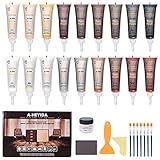
- Wood Vinyl Floor Repair Kit: 31 piece laminate floor repair kit includes 18 unique colors of resin wood repair fillers, 1 sandpaper, 1 wood putty, 7 brushes, 2 plastic scrapers and 1 disposable glove. According to the instructions provided, you can repair floors and furniture by yourself, no need to hire a professional, saving you time and money. This is an easy solution to repair scratches and stains on wooden furniture and floors in your home
- Ideal for Wood Floor Scratch Remover Repair: The wood furniture repair kit was designed to improve the scratches, stains or cracks on your furniture, floor, laminate floor, hardwood floor, vinyl floor repair kit, restores scratches, nicks, scuffs, discoloration on wood, veneer, desk, wood floor, cabinet, table, bed, frame, door, musical instruments and so on. (Waiting for 48 hours to dry completely after repairing, and keep away from water)
- 18 Unique Colors Furniture Repair Kit: The hardwood floor repair kit comes with 18 distinctive colors* 0.7 OZ / 20 ml: White, Black, Maple, Walnut, Cherry, White Maple, Ivory, Bamboo Yellow, Teak, Cedar, Dark Walnut, Auspicious Wood, Red Sandalwood, Red Walnuts, Light Gray, and French Gray. You can also mix colors to achieve the perfect match. You don't need to worry about can’t find the right color to match your furniture with this wood floor filler
- Easy to Use and Perfect Touch up: Take off the lid, squeeze the wood filler into the repaired area and then smooth the filler with tube tail or the plastic scraper, wipe off the excess and let it dry. For large holes or cracks, please apply wood putty first, dry it and then apply wood filler to repair. The furniture scratch repair paste no glue, pens, markers, waxes, crayons, paints, etc. and are more reliable and durable than furniture pens for scratches
- Warm Tips: You can make the color you want according to the color chart. When mixing colors, add lighter colors first, then add dark colors intermittently, and watch the color change to match the color you want. If you find that the color is too dark, please do not apply too much force, gently apply and wipe off
Let fresh coatings cure before hard use. Dry does not mean cured. During the first couple of weeks, avoid hanging wet towels over doors, slamming drawers, installing tight bumpers that press into soft paint, or scrubbing sticky spots with harsh cleaners.
Install pulls or knobs if the cabinets do not already have them. Finger oils around door edges are one of the fastest ways to wear down a finish. Keep hinges adjusted so doors do not rub face frames or neighboring doors. Small alignment problems can become chipped edges in a few months.
Our Bottom-Line Recommendation
If you are ordering new custom cabinets or having doors professionally shop-finished, choose conversion varnish or 2K polyurethane when durability is the priority and the budget supports it. Those finishes are the strongest performers for moisture, grease, cleaners, and daily abrasion.
If you are repainting existing cabinets in a lived-in home, choose a premium waterborne alkyd or urethane cabinet enamel over ordinary paint. Spend the money on prep, primer, dust control, and cure time. That is where the finish earns its keep.
For sheen, choose satin for most older kitchens and semi-gloss for newer, flatter doors where easy wipe-down matters more than hiding imperfections. Skip high-gloss unless the doors and prep are truly ready for it. Avoid basic latex wall paint altogether.
The best cabinet finish is the one matched to the cabinet material, applied under the right conditions, and maintained like a working surface. When those pieces line up, a refinished kitchen can look sharp and hold up for years without the cost and disruption of a full cabinet replacement.
Windows Errors? Fix Them Before They Spread
Repair common Windows errors and clear accumulated junk for a smoother, more stable PC - no reinstall needed.Free scan · no reinstallOutdated Drivers Are Slowing You Down
One free scan finds every outdated or missing driver and matches the right update for your exact hardware.Free scan · exact hardware matchFrequently Asked Questions
What is the most durable finish for kitchen cabinets?
For shop-finished cabinets, catalyzed conversion varnish and 2K polyurethane are usually the most durable choices. They resist moisture, grease, abrasion, and household cleaners better than standard lacquer or basic polyurethane when applied correctly.
Is lacquer or paint better for kitchen cabinets?
It depends on the job. Pre-catalyzed lacquer can produce a very smooth professional finish in a shop, but a premium waterborne alkyd or urethane cabinet enamel is often more practical for repainting cabinets inside an occupied home. Basic latex wall paint is not a good cabinet finish.
What sheen is best for kitchen cabinets?
Satin and semi-gloss are the most practical cabinet sheens. Satin hides minor flaws better and still cleans well. Semi-gloss is a little brighter and easier to wipe down, but it shows dents, brush marks, and surface imperfections more clearly.
How much does it cost to paint kitchen cabinets in 2026?
Professional cabinet painting commonly ranges from about $3 to $10 per square foot, with project averages varying widely from under $1,500 for smaller jobs to $2,500-$6,500 for more complete refinishing. Door count, prep, spraying, grain filling, repairs, and local labor drive the final price.
Can laminate or thermofoil cabinets be painted?
Stable laminate or melamine can sometimes be painted with thorough cleaning, scuff sanding, and a specialty bonding primer. Peeling thermofoil is a poor candidate because the coating will fail when the vinyl film continues to release.
How long should painted cabinets cure before normal use?
Many cabinet enamels dry within hours, but full cure can take days or weeks depending on the product and conditions. Use the kitchen gently for the first 7 to 14 days, avoid harsh cleaners, and follow the coating manufacturer’s cure schedule.
Quick Recap
Product prices and availability are accurate as of the date/time indicated and are subject to change. Any price and availability information displayed on Amazon at the time of purchase will apply.

