Some links on this page are affiliate links: if you buy through them we may earn a commission, at no extra cost to you.
A good voice-controlled ceiling fan should do more than respond to Alexa or Google. It should move the right amount of air for the room, mount safely to the structure, work with your switches, survive the moisture conditions in the space, and keep functioning when the app or Wi-Fi has a bad day.
For most smart homes in 2026, the best voice ceiling fan is an integrated Wi-Fi or app-enabled fan with a quiet DC motor, clear Alexa and Google Assistant support, a reliable wall control or handheld remote, and the correct damp or wet rating for the room. For existing remote-controlled fans, a bridge such as Bond Bridge can be a cost-effective retrofit at about $129 before labor, but integrated smart fans usually give better scheduling, scenes, app feedback, and device-state awareness.
On our remodel and finish-out jobs, the fan itself is rarely the hard part. The real difference comes from planning the ceiling box, blocking, switch wiring, neutral conductor, downrod length, Wi-Fi coverage, and control layout before drywall closes. That is especially true in kitchens, bath-adjacent rooms, laundry rooms, covered patios, and open-concept living areas where moisture, heat, ceiling height, and lighting all come into play.
What’s actually slowing this PC down?
Pick the symptom - the matching free tool is one click away.
As an Amazon Associate I earn from qualifying purchases.
What Makes a Voice Ceiling Fan Worth Buying?
A voice ceiling fan is worth buying when it improves daily comfort without making the house harder to use. The basic promise is simple: say “turn on the kitchen fan,” “set the bedroom fan to low,” or “turn off the fan light,” and the fan responds. The better models also support schedules, routines, app control, dimmable LED lighting, seasonal direction changes, and multiple speed settings.
Most mainstream smart ceiling fans support Amazon Alexa and Google Assistant. Apple Home, HomeKit, Matter, SmartThings, Control4, and Josh.ai support are less universal, so verify compatibility before ordering. Do not assume a fan labeled “smart” will fit every smart-home ecosystem in the house.
#1 Best Overall
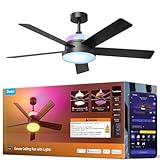
- Dual-Layer Custom Lighting: Features an independent RGBWW main smart ceiling light for daily tasks plus an RGBICWW ambient backlight for an immersive atmosphere. Freely blend colors and brightness to unlock endless personalized combinations for any occasion.
- Powerful Yet Quiet Air Circulation: Govee Fandelier Ceiling Fan with light delivers rapid cooling with powerful airflow up to 5000 CFM. Its ultra-quiet motor operates at as low as 30dB, and 6 adjustable speeds ensure a customized comfort experience day and night.
- More Precise RGBIC Color Expression: Govee Ceiling Fan brings the latest LuminBlend+ technology with 16-bit processing. Compared to traditional RGB Lights, it offers richer colors, smoother gradients, and consistent accuracy, bringing more vivid hues to your space.
- Dimmable Smart Lighting: This ceiling fan with lights delivers up to 2800lm from its main lamp for whole-room illumination. A wide color temperature range (1000K-10000K) shifts from warm candlelight to bright daylight. Ideal for bedrooms, game rooms, and home offices.
- Reversible DC Motor: This bedroom fan's DC motor switches between downdraft cooling in summer and updraft circulation for heating in winter. Enjoy year-round comfort with reduced energy costs and efficient climate control through all four seasons.
The best smart fan setups include four practical features:
Quick wins for a faster PC:
Scan for outdated or missing drivers - takes under a minuteDriver Scan →Clear out junk files and repair common Windows errorsFree Scan →- Voice control: Reliable fan-speed and light commands through Alexa, Google Assistant, or the home’s automation platform.
- Physical control: A wall control or remote that still works if Wi-Fi, the cloud service, or a phone app is unavailable.
- Efficient motor: A DC motor where budget allows, because it is typically quieter, more energy efficient, and better suited to multi-speed control.
- Correct rating: Indoor, damp-rated, or wet-rated construction matched to the actual room conditions.
That last point matters. A bedroom fan is not automatically right for a kitchen, bathroom-adjacent dressing area, laundry room, screened porch, or coastal home. Moisture and corrosion shorten the life of the wrong fan, and they can also create electrical concerns when the controls and fixture are not rated for the environment.
Best Types of Voice-Controlled Ceiling Fans
There is no single best fan for every room. We group smart ceiling fans by how they are controlled and where they make sense in a home.
Integrated Wi-Fi Smart Ceiling Fans
Integrated Wi-Fi fans are the cleanest option for most new installations and remodels. The receiver, app control, light control, and voice support are designed into the fan system from the start. Many models work with Alexa and Google Assistant without needing a separate bridge.
In 2026, entry-level smart ceiling fans commonly start around $200 to $260. More established smart-fan lines often run $350 to $600, with premium designer models and larger spans costing more. Hunter smart fans, for example, can range from clearance pricing near $199.99 to larger ENERGY STAR models around $599.99. Home improvement stores also carry 52-inch Alexa and Google compatible options around the mid-$200 range.
Windows Errors? Fix Them Before They Spread
Repair common Windows errors and clear accumulated junk for a smoother, more stable PC - no reinstall needed.Free scan · no reinstallCrashes, No Sound, or Screen Glitches?
Random freezes, missing sound and display glitches usually trace back to one bad driver. Find and replace yours safely.Free scan · under a minuteChoose this type when you are remodeling, replacing an old fan, or building out a new room and want the fewest workarounds.
Smart Ceiling Fans With Dedicated Wall Controls
Some smart fans include or support a hardwired wall control. This is often the most homeowner-friendly setup because the fan behaves like a normal fixture for guests, kids, and anyone who does not want to open an app.
For kitchens and bedrooms, we prefer a wall control that separates the fan from the light. Voice command naming should match that layout: “kitchen fan” for airflow and “kitchen fan light” or “island fan light” for the fixture. Clear naming prevents the common problem where a voice assistant turns off the light when someone only wanted to reduce the fan speed.
DC-Motor Smart Fans
DC-motor fans are usually the better long-term choice when the budget allows. They tend to run quieter, use less energy, and offer smoother speed control than many older AC-motor designs. This matters in bedrooms, home offices, nurseries, and open kitchens where motor hum is more noticeable.
A DC motor also pairs well with smart routines. For example, a bedroom fan can run at speed 3 between 9 p.m. and midnight, drop to speed 1 overnight, and shut off after the thermostat reaches a set point. You get better comfort without the fan running harder than needed.
Outdoor, Damp-Rated, and Wet-Rated Smart Fans
For covered patios, screened porches, breezeways, pool houses, laundry rooms, and humid bath-adjacent areas, the fan rating is as important as the smart features. An indoor-only fan belongs in dry interior spaces. A damp-rated fan is designed for covered humid locations without direct rain exposure. A wet-rated fan is built for locations where water contact may occur, depending on the manufacturer’s listing.
Rank #2

- 【Voice&APP&Remote Control】52 inch indoor smart ceiling fan supports voice control, easily compatible with Wi-Fi, Alexa and Google assistant, allowing you to adjust the fan light completely free your hands. It also enables APP and remote control(handheld and wall mounted), it is necessary to turn on Bluetooth when operating via the APP. So you can keep track of the status of the fan light in your home at any time, bringing you a comprehensive and convenient control experience.
- 【Dimmable&Color-changing LED Lights】Equipped with a 20W LED light, delivers outstanding lighting performance. It features dimming functionality, allowing stepless brightness adjustment between 10%~100%. With rhythmic RGB ambient lighting, it can present 16 million+ colors variations, easily creating different atmospheres such as romance and vitality. The color temperature can be steplessly switched between 3000K (warm white) and 6000K (cool white), meeting the needs of various scenarios such as daily lighting, reading, and entertainment.
- 【Quiet 6-speeds DC Motor】This flush mount fan light ceiling fixture features 6-speed wind adjustment, paired with a high-performance, energy-efficient DC motor. While generating powerful air flow, it operates at a noise level below 30 decibels, ensuring you a quiet and comfortable experience—making it the ideal choice for living rooms, bedrooms, game room, kitchen and dining room.
- 【Thoughtful Functions, Seasonless Use】The low profile ceiling fan equipped with a reversible motor. It runs forward in summer to bring cool breezes, and reverses in winter to promote indoor air circulation, allowing warm air to be evenly distributed, making it usable all year round. It supports 2H timer, convenient for you to use when sleeping. It also has a light memory function, and when turned on again, it automatically restores the light settings from the last time it was turned off, eliminating the need for re-adjustment.
- 【Sturdy Blades&30-Minute Setup】The smart RGB ceiling fan is built to last, featuring 5 high-quality plywood blades that strike the perfect balance between sturdiness and lightweight performance. What’s more, installation is a breeze—we provide detailed, step-by-step instructions that walk you through every part of the process. Even if you’re new to DIY projects, you can have this fan light up and running in just 30 minutes.
Outdoor and damp-location installs often cost more because the fan assembly, controls, fasteners, and wiring methods must match the environment. Corrosion-resistant hardware, weather-rated controls where applicable, GFCI/AFCI design, and harder mounting locations all add time.
Retrofit Voice Control With a Bridge
If you already own a remote-controlled ceiling fan, a bridge can add voice control without replacing the fan. Bond Bridge is a common example, listed at $129 and compatible with Alexa, Google Home, and SmartThings. It can control many RF remote fans, fireplaces, and shades from one device.
The Tool Desk
Outbyte PC Repair FREERepair Windows errors before they cause bigger problemsFix Now →Outbyte Driver Updater FREEFix the driver behind crashes, sound loss and screen glitchesFind Drivers →The tradeoff is state awareness. If someone changes the fan with the original remote or wall switch, a bridge may not always know the real fan speed or light status. For a guest room or secondary space, that may be acceptable. For a primary bedroom, kitchen, or whole-home automation plan, an integrated smart fan is usually cleaner.
How to Size a Smart Ceiling Fan by Room
Fan size should come before brand, blade count, or voice assistant. A beautiful smart fan that is too small will need to run at higher speeds, make more noise, and still leave the room uncomfortable. An oversized fan can feel drafty, dominate the ceiling, or create clearance problems.
Common retail sizing guidance works well as a starting point:
| Room Size | Typical Fan Span | Where It Fits |
|---|---|---|
| Up to 225 sq. ft. | Up to 51 inches | Bedrooms, breakfast nooks, small kitchens, offices |
| Up to 400 sq. ft. | 52 to 59 inches | Large bedrooms, family rooms, mid-size kitchens |
| Over 400 sq. ft. | 60 to 71 inches | Great rooms, open kitchen/living spaces, large primary suites |
| Commercial or very large spaces | 72 inches and larger | Shops, high-volume rooms, large covered outdoor areas |
For open-concept kitchens and living rooms, do not try to solve everything with one undersized fan spinning at full speed. Two properly spaced fans or one larger 60- to 72-inch model usually feels better and looks more intentional. In long rectangular rooms, multiple moderate-size fans can distribute air more evenly than one large fan in the center.
Also check CFM and CFM per watt. CFM tells you how much air the fan moves. CFM/W tells you how efficiently it moves that air. ENERGY STAR says certified ceiling fans are up to 44% more efficient than conventional fans, and some manufacturers report even higher average savings for their ENERGY STAR certified lines. That efficiency matters most in rooms where the fan will run daily.
Kitchen, Bathroom, and Laundry Room Considerations
Because this topic sits close to kitchen, bath, and room remodeling, moisture and layout deserve special attention. A fan that works well in a dry bedroom may be the wrong choice near steam, cooking heat, or laundry humidity.
Kitchens
In a kitchen, a ceiling fan is for comfort, not ventilation. It does not replace a range hood. Grease, steam, and cooking odors still need proper exhaust. The fan should be placed so it does not interfere with pendant lights, cabinet doors, range hood capture, or smoke detector behavior.
For kitchens with islands, we look at blade clearance around pendant fixtures and the visual centerline of the room. A 52-inch fan may work in a modest kitchen, while an open kitchen and family room may need a 60-inch fan or two smaller fans arranged by zones. Keep fan blades at least 7 feet above the floor as a practical clearance baseline, and use the manufacturer’s downrod chart for sloped or high ceilings.
Recommended Free Tools
Bathrooms and Bath-Adjacent Rooms
In bathrooms, moisture rating is non-negotiable. Many bathrooms are better served by a high-quality exhaust fan than a ceiling fan, especially inside the bathing room itself. In a large primary suite, however, a damp-rated smart fan can make sense in the bedroom, dressing area, or vanity-adjacent space if it is outside direct wet zones and installed according to the fan listing and local code.
Rank #3

- Perfect Size for Rooms: This 52-inch ceiling fan is ideal for cooling and illuminating spacious areas like living rooms, bedrooms, and kitchen, featuring an 20W 2000LM bright light and powerful average 3057 Cubic Feet Per Minute airflow.
- High Configuration: The flush mount fan is equipped with APP & Remote Control, 10~100% Dimmable, Stepless Color Temperature (warm → neutral → cool white, 3000K→6500K), Memory Function (the memory function retains your settings), Energy-efficient LED Light, Pure Copper High-performance DC Motor, High-Quality Tough Plywood.
- Quiet and Efficient Operation: Experience peaceful relaxation with the energy-efficient, quiet, high-RPM motor that provides strong airflow without the noise.
- Stylish and Functional: Enhance your home decor with this modern ceiling fan featuring a sleek design and a built-in light kit. Choose from a variety of finishes to match your style.
- Year-Round Comfort: Enjoy a cool breeze in the summer and improved air circulation in the winter with the reversible blade feature.
Do not install an indoor-only smart fan in a humid bathroom area just because the finish matches the plumbing fixtures. The control electronics, blade material, fasteners, and motor housing need to be listed for the environment.
Laundry Rooms and Mudrooms
Laundry rooms can be warm and humid, especially near exterior doors or stacked appliances in tight closets. A small damp-rated fan may improve comfort in a larger laundry or mudroom, but it should not interfere with appliance clearances, upper cabinets, or access panels. Smart scheduling can be useful here: run the fan during laundry cycles, then shut it off automatically.
What Smart Ceiling Fans Cost in 2026
For budgeting, separate the fan price from installation. The fan is the visible purchase, but the labor depends on what is already in the ceiling.
| Project Type | Typical 2026 Cost | What Is Usually Included |
|---|---|---|
| Basic smart fan unit | $200 to $260+ | Entry-level integrated smart fan, often 52 inches, Alexa/Google support varies |
| Mid-range smart fan unit | $350 to $600 | Better finish options, quieter motor, improved controls, larger sizes, stronger warranty |
| Retrofit bridge | About $129 | Voice/app control for many existing RF remote fans, before any electrical labor |
| Straightforward pro replacement | $146 to $360 labor | Replacing an existing fan where the box, wiring, and controls are suitable |
| Typical all-in replacement | $350 to $800 | $200 to $500 fan plus typical replacement labor |
| New location or remodel rough-in | $700 to $1,500+ per fan | Fan-rated box, blocking, new switch leg, neutral, attic work, drywall repair, permit/inspection if required |
Current national benchmarks put straightforward ceiling fan installation around $146 to $360, with averages near $240 to $253 depending on the data source. Home Depot’s pro referral guidance places labor commonly around $100 to $300 for typical jobs. More complex installations can reach about $600 or more before drywall and finish repair. Some job-cost calculators show much higher totals, such as $669 to $1,118 per fan, because they model broader project assumptions rather than a simple like-for-like swap.
The scope drives the number. A first-floor bedroom with an existing fan-rated box and accessible wiring is a different job than a vaulted kitchen ceiling where we need blocking, a long downrod, a new wall control, attic access, drywall patching, paint touch-up, and inspection.
Electrical, Structural, and Code Details Homeowners Miss
The most common ceiling fan mistake is hanging a fan from a box that was only meant for a light fixture. A ceiling fan creates dynamic load as it spins. It needs a fan-rated outlet box and proper structural support. If the existing box is not fan-rated, the safe answer is not a stronger screw. The box and support need to be corrected.
During rough-in, we want the electrician to plan for:
Free tools Windows power users keep installed
One-click scans. No signup required.
- Fan-rated box and blocking: The fan must be secured to framing or a listed fan support system.
- Neutral availability: Many smart controls need a neutral conductor in the switch box.
- Separate control logic: Fan and light controls should make sense at the wall and in the app.
- Ceiling height: Downrod length should place the blades at the correct operating height while maintaining safe clearance.
- Sloped ceilings: The fan must support the ceiling angle or use an approved adapter.
- Circuit planning: The circuit must be appropriate for the load and local code requirements.
- AFCI/GFCI realities: Kitchens, laundry areas, bathrooms, garages, and outdoor rooms can bring additional protection requirements depending on location and circuit design.
Permit requirements vary by jurisdiction. A simple fan replacement may not require a permit in some areas, while a new fan location, new wiring, panel work, or remodel circuit changes may. On permitted remodels, we prefer to include ceiling fans in the electrical plan from the start so the inspector sees the box rating, wiring method, and switching arrangement before everything is covered.
Voice Assistant Compatibility: Alexa, Google, Apple, and Matter
Alexa and Google Assistant support are the most common. If your home is already built around Amazon Echo or Google Nest speakers, you will have the broadest selection of smart ceiling fans.
Apple Home and Matter support require more careful shopping. Some fans may work with Siri through a workaround, bridge, or third-party automation path, but that is not the same as native support. SmartThings, Control4, and Josh.ai compatibility also varies by product line and sometimes by added hub or bridge.
Before buying, confirm these details:
- The fan supports your exact voice assistant or smart-home platform.
- The fan and app support separate fan and light control.
- The fan works on your home’s Wi-Fi band, often 2.4 GHz.
- The fan can be reset and transferred to a new homeowner or account.
- The wall switch will not cut power in a way that makes the smart features useless.
Many smart fans still rely on 2.4 GHz Wi-Fi. That is not a problem if the network is set up well, but it can create headaches in larger homes, additions, detached garages, and patios. Metal electrical boxes, long hallways, dense framing, masonry, and distance from the router can all weaken signal. We check Wi-Fi coverage before treating a smart fan problem like an electrical problem.
Do these 3 things before closing this tab:
1Repair Windows errors before they cause bigger problems2Fix the driver behind crashes, sound loss and screen glitches3Clear out junk files and repair common Windows errorsRank #4

- Smart Ceiling Fan with Lights and remote: This 52 inch ceiling fan with light features a downrod ceiling fan design, ideal for standard or high ceilings in bedrooms, living rooms, or other indoor spaces, as well as outdoor spaces like patios. (Note: Not to be exposed directly to rain). Its sleek black ceiling fan with light combines stylish lighting and powerful airflow. (ventilador de techo / abanico de techo)
- Perfect Room Fit – With a 52-inch span (about the width of a full-size bed at 54 inches), this fan is ideal for medium to large rooms, helping you choose the right size with confidence.
- 4 Control Options: Our smart ceiling fan is compatible with Smart Life APP, compatible with Alexa, compatible with Google Home, remote or wall switch(not included). Seamless smart integration makes it a reliable ceiling fan. (Tips: After fixed, the remote control can be used as a wall switch) (Note: We have detailed smart tutorial videos. If you have any questions, you can scan the QR code on the instruction manual, watch the video on the listing page, or reach out to us for support.)
- 6-Speed Adjustable: Choose from 6 fan speeds for customized comfort—from gentle breeze to powerful airflow. A versatile and efficient option among modern ceiling fans. Ideal as a fan for bedroom or larger spaces, providing comfort while remaining ultra-quiet.
- Lighting & Ceiling Fans: Switch between cool white, neutral, and warm light with stepless brightness control from 10%–100% and adjustable color temperature ranging from 3000K to 6500K, delivering up to 2500 lumens of bright, comfortable illumination.
Energy Savings and Comfort: What a Fan Can and Cannot Do
A ceiling fan does not lower the room’s air temperature. It cools people by moving air across the skin. That distinction matters because a fan left running in an empty room is mostly using electricity without helping anyone feel cooler.
Used correctly, ceiling fans can reduce air-conditioning demand. DOE-cited guidance commonly says occupants can raise the thermostat about 4 degrees Fahrenheit without reducing comfort when a ceiling fan is running in an occupied room. That is where smart control becomes useful. A routine can turn the fan on when the room is occupied, reduce speed overnight, or shut it off when everyone leaves.
Seasonal direction also matters. In summer, most fans should run counterclockwise to create a downdraft. In winter, many fans can run clockwise on low to help redistribute warm air near the ceiling. Always confirm the direction with the manufacturer’s instructions because control layouts vary.
For efficiency, look for ENERGY STAR certification, DC motors, high CFM/W numbers, and LED lighting. A cheap fan that wobbles, hums, and runs at high speed all summer is not a bargain.
When to DIY vs. When to Hire a Pro
A careful homeowner may be able to replace an existing ceiling fan if the existing box is fan-rated, the wiring is in good condition, the ceiling is standard height, the fan is not unusually heavy, and local rules allow the work. Even then, the power must be shut off at the breaker, the box rating must be confirmed, and the manufacturer’s instructions need to be followed exactly.
Hire a licensed electrician or qualified pro when any of the following apply:
- You are installing a fan where only a light fixture exists now.
- The existing ceiling box is not clearly fan-rated.
- The room needs new wiring, a new switch leg, or a neutral conductor.
- The ceiling is vaulted, sloped, high, plaster, concrete, or difficult to access.
- The fan is going outdoors, into a damp area, or near a bathroom, laundry, garage, or covered porch.
- The installation is part of a permitted kitchen, bath, basement, or addition project.
- You want wall controls, smart controls, and lighting scenes integrated cleanly.
From a construction standpoint, the cheapest time to solve ceiling fan problems is during framing and electrical rough-in. Adding blocking, running the right conductors, and placing switches logically is straightforward before insulation and drywall. After drywall, the same change can involve attic work, access holes, patching, texture, paint, and return trips.
Our Shortlist Criteria for the Best Voice Ceiling Fans
We do not pick smart fans by app screenshots. On job sites, we look for fans that install cleanly, run quietly, and make sense to the homeowner six months later.
Quick wins for a faster PC:
Scan for outdated or missing drivers - takes under a minuteDriver Scan →Repair Windows errors before they cause bigger problemsFix Now →For a primary bedroom, we prioritize quiet DC motors, dimmable warm LED light, a remote or wall control, and reliable low-speed operation. For kitchens, we look at moisture tolerance, blade cleanability, light placement, and whether the fan disrupts range hood performance or pendant lighting. For great rooms, we focus on blade span, downrod length, wobble control, and whether one large fan or two smaller fans will distribute air better. For covered patios, we start with damp or wet rating, corrosion resistance, and weather-appropriate controls.
If you want a practical buying filter, use this order:
- Confirm the room size and ceiling height.
- Choose indoor, damp-rated, or wet-rated construction.
- Check CFM, CFM/W, motor type, and noise expectations.
- Verify Alexa, Google, Apple, Matter, SmartThings, or other platform support.
- Confirm the wall control, remote, and app all control the fan and light logically.
- Review installation requirements before purchase, including box rating and neutral needs.
Common Mistakes to Avoid
The biggest mistake is buying for voice control first. Smart features do not fix poor airflow, bad sizing, weak structure, or the wrong moisture rating. A fan is still a rotating ceiling-mounted appliance before it is a smart device.
Best Value
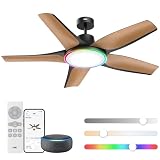
- Redefine Cooling with RGBIC: This low-profile ceiling fanwith RGBIC lights delivers powerful 6490 CFM airflow at less than 25dB. Pick from 6 speeds and 3 modes (Sleep, Natural, or Auto), or set the roommood with vivid RGBIC lightning.
- Customizable lighting at your fingertips: This black ceiling fan offers 6 brightness levels and 5 color temps (2700-6500k). DREO app enables perfect ambiance control, while preset modes like Sunrise, Sunset, Reading, and Working match your activities throughout the day.
- Enhanced light effects with RGBIC: Unlike traditional RGB ceiling fans, this ceiling fan can set multiple colors at once thanks to its RGBIC LED chips, enjoy more vivid lightning effects like Cherry, Blossoms, Party Wave, Christmas, Halloween, Firefly and immerse yourself in a world of color with lighting options that fit every moment.
- Smart features, smarter comfort: DREO's app presets and scheduling simplifiy ceiling fan use. The memory function remembers your last settings, with a 12hr timer for convenience. Control fan and lights via Alexa. Reverse airflow easily with remote or app. Perfect for the living room, game room, and more.
- Runs Smooth and Quiet: DREO's Brushless DC Motor goes quieter than ever, producing only 25dB, you can barely hear it, ideal for uundisturbed sleep or work at home, the advanced DC motor runs with less friction and optimized efficiency, achieving natural wind with noise levels lower than whisper.
Other common mistakes include using an indoor-only fan in a humid space, assuming every smart fan works with Siri or Matter, installing a smart wall control where no neutral exists, and putting the fan on a switch that cuts power to the receiver every time someone leaves the room.
What’s actually slowing this PC down?
Pick the symptom - the matching free tool is one click away.
We also see homeowners forget handoff details. Keep the model number, warranty, app account, Wi-Fi network, reset procedure, and remote pairing instructions with the rest of the home documents. If you sell the home or change routers, that information saves time.
Bottom Line: The Best Fan Is the One Planned Like Part of the House
The best voice-controlled ceiling fan for a smart home is not just the one with the most app features. It is the fan that fits the room, clears the ceiling and fixtures, uses the right box and wiring, survives the moisture conditions, works with the home’s voice assistant, and still has a dependable physical control.
For a simple replacement, plan on roughly $350 to $800 all-in for a smart fan and professional installation if the existing box and wiring are suitable. For a new location or remodel rough-in, $700 to $1,500 or more per fan is a more realistic planning range once structure, wiring, drywall, controls, and inspection are included.
If you are remodeling a kitchen, bath suite, laundry room, bedroom, or covered outdoor space, decide on the fan during design and rough-in. That is when the electrician can install the right support, conductors, controls, and access. Done that way, a voice ceiling fan becomes a quiet comfort upgrade instead of a smart-home workaround hanging from the ceiling.
Free tools Windows power users keep installed
One-click scans. No signup required.
Frequently Asked Questions
What is the best voice-controlled ceiling fan for Alexa or Google Home in 2026?
For most homes, the best choice is an integrated Wi-Fi smart ceiling fan with a quiet DC motor, Alexa and Google Assistant support, separate fan and light control, and a physical wall control or remote. Match the fan size and moisture rating to the room before choosing by brand or style.
How much does it cost to install a smart ceiling fan in 2026?
A straightforward professional replacement commonly runs $146 to $360 for labor, with typical all-in costs around $350 to $800 including a $200 to $500 smart fan. A new location or remodel rough-in often costs $700 to $1,500 or more per fan when wiring, blocking, drywall repair, high ceilings, or permits are involved.
Can I make my existing ceiling fan work with voice control?
Often, yes. If the existing fan uses an RF remote, a bridge such as Bond Bridge, listed around $129, may add app and voice control through Alexa, Google Home, or SmartThings. Integrated smart fans usually provide better feedback, scheduling, and control accuracy.
Do smart ceiling fans need a neutral wire?
Many smart wall controls need a neutral wire, but requirements vary by fan and control type. Check the installation manual before buying. If there is no neutral in the switch box, an electrician may need to rework the wiring or use a different control strategy.
The Tool Desk
Outbyte Driver Updater FREEFix the driver behind crashes, sound loss and screen glitchesFind Drivers →Outbyte PC Repair FREERepair Windows errors before they cause bigger problemsFix Now →Can a ceiling fan be installed where a light fixture is now?
Sometimes, but only if the ceiling box is fan-rated and properly supported. A standard light fixture box is usually not acceptable for a fan because a spinning fan creates dynamic load. The box and framing should be verified before installation.
Are smart ceiling fans worth it compared with regular ceiling fans?
They are worth it when scheduling, voice control, occupancy routines, better speed control, or smart-home integration will actually be used. For daily-use bedrooms, kitchens, and great rooms, a quiet efficient smart fan can improve comfort and help occupants raise the thermostat by about 4 degrees Fahrenheit while the room is occupied.
Quick Recap
Product prices and availability are accurate as of the date/time indicated and are subject to change. Any price and availability information displayed on Amazon at the time of purchase will apply.

