The Tool Desk
Outbyte PC Repair FREEClear out junk files and repair common Windows errorsFree Scan →Outbyte Driver Updater FREEFix the driver behind crashes, sound loss and screen glitchesFind Drivers →The best garden location is the sunniest practical spot with well-drained, fertile soil, reliable nearby water, a manageable slope, protection from damaging wind and easy access from the house. Do not choose by compass direction alone. Watch the site through the day, inspect it after rain, test unfamiliar soil and match plants to the conditions that remain.
A site that looks attractive in spring can become shaded, waterlogged, inaccessible or difficult to irrigate later. The method below lets you compare locations before you spend money on grading, raised beds, irrigation or plants.

As an Amazon Associate I earn from qualifying purchases.
Start with what you want to grow
Location is not a contest to find one universally perfect corner. It is a match between the planting’s needs and the site’s environmental conditions. A vegetable plot, herb bed, orchard, cut-flower border and wildlife garden can have different priorities.
Write down the crops or plants you intend to grow before assessing the property. Then inventory each candidate area for:
#1 Best Overall

- Complete Garden Planner Journal and Log Book – This gardening planner helps gardeners plan layouts, record seeds and plants, track care routines, log harvests, and review each growing season in one organized garden planner and log book
- Designed for Beginner & Everyday Gardeners – A practical garden journal and planner for backyard gardeners, plant lovers, vegetable growers, flower gardeners, and anyone who wants an easy way to stay organized from seed starting to harvest
- Organized Sections for Real Garden Use – Includes garden layout pages, seed starting tracker, seed inventory, plant profile, watering schedule, soil pH tracker, sunlight tracker, pest and disease logs, harvest log, budget pages, monthly planner pages, and notes
- Large A4 Spiral Bound Gardening Journal Notebook – The A4 size gives more writing space for planning, sketching garden beds, tracking plants, and recording notes. Black twin-wire spiral binding helps the garden journal spiral bound notebook lay flat while writing
- Durable Cover & Smooth Writing Paper – Made with a transparent PVC protective cover, black spiral binding, and 100 GSM recyclable paper designed for everyday garden planning. A useful garden log book for home gardens, raised beds, containers, and seasonal planning
- Direct sun and the hours of shade at different times of day
- Wet, dry and seasonally flooded spots
- Soil depth, texture, compaction and visible debris
- Wind direction, exposed corners and possible shelter
- Slope, erosion and the route for people, tools and materials
- Distance to a tap, hose storage, compost and the house
- Dimensions and the space needed for paths, fences or supports
This “right plant, right place” approach, described by UF/IFAS, prevents a common mistake: trying to force a plant into a site that naturally supplies too little light or too much moisture.
Measure sunlight instead of guessing
Most fruits and vegetables need six to eight hours of direct sunlight each day, according to University of Georgia Extension and University of New Hampshire Extension guidance. Direct sunlight means unobstructed light, not the bright ambient light found under a tree canopy or beside a tall building.
How to survey the light
- Mark the boundaries of each possible garden area on a sketch or phone map.
- Visit at breakfast, late morning, midday, mid-afternoon and evening. Note whether the area is in full sun, partial shade or full shade at each time.
- Repeat the observations in more than one season if possible. The sun’s path and deciduous tree canopy change over the year.
- Record shadows cast by houses, fences, sheds, hedges and trees. A shadow that misses the bed in June may cover it in spring or autumn.
- Measure the usable hours of direct sun rather than estimating from a single visit.
Morning sun is generally more useful than an afternoon-only exposure. University of New Hampshire Extension notes that morning light and the drying of overnight moisture can support healthier growth. An area that receives six hours of morning light may outperform one with the same nominal duration late in the day, especially where evening humidity keeps foliage wet.
What compass direction can—and cannot—tell you
Aspect is a starting clue, not a final decision. The Royal Horticultural Society generally describes south- and west-facing aspects as warmer and sunnier, while east- and north-facing aspects tend to be colder and shadier. Buildings, fences, terrain and tree crowns can completely override that broad pattern.
| Aspect or exposure | Typical tendency | What to verify on your property |
|---|---|---|
| South-facing | Often receives strong, long-duration light | Check shade from buildings, walls and mature trees |
| West-facing | Often warmer, with stronger afternoon sun | Check heat, wind and late-day drying |
| East-facing | Usually receives gentler morning light | Confirm the total direct-sun window for your crops |
| North-facing | Often cooler and shadier | Look for seasonal openings and shade-tolerant planting options |
| Southwest exposure | Recommended as a strong garden position in Hawaii guidance | Treat this as local advice, not a universal rule; latitude and local shade matter |
No source establishes one best compass direction for every garden. Latitude, season, climate, nearby structures and the intended plants all change the answer.
Check drainage, soil and the water table
Sunlight cannot compensate for soil that stays saturated or a bed so compacted that roots cannot penetrate. Wisconsin Extension recommends plenty of sunlight and well-drained, level soil. The RHS identifies soil type, compaction and water-table height as key influences on drainage.
Inspect after rain
Walk the candidate sites during or soon after a substantial rain, and again during the wettest season. Look for standing water, slow puddles, muddy access routes, algae, water stains on walls and runoff flowing toward the bed. Low ground beside a ditch, brook or pond can remain wet long after higher ground is workable.
Recommended Free Tools
Compare how quickly water disappears from each area, but do not assume a dry surface means good drainage. A shallow layer over compacted subsoil can drain briefly and then hold water above the hard layer. Digging a small inspection hole can reveal whether the topsoil is deep, whether a dense layer is present and whether roots or rubble restrict the profile.
Test unfamiliar soil
If land has not been tested before, arrange a soil test before adding amendments. A commercially available test kit can assess pH, texture, organic matter and three major plant nutrients, according to the RHS. Use the results to decide whether the site is suitable as-is, needs organic matter, requires decompaction or is better served by raised beds.
Do not spread fertilizer simply because a bed performed poorly. Poor growth can result from shade, saturated roots, compaction or drought rather than a nutrient shortage. Keep the laboratory or kit report with your garden plan so future amendments respond to measured conditions.
Choose between in-ground beds and raised beds
Raised beds can improve control where soil is shallow, compacted or subject to wet-dry swings. They do not eliminate the need to manage water: a raised bed on a poorly drained base can still become saturated, while a bed filled with very free-draining material may dry quickly. If a site repeatedly floods, correcting the underlying drainage or selecting a different location is usually more reliable than simply adding height.
UF/IFAS advises choosing plants adapted to the site’s natural soil moisture. That approach can reduce or eliminate artificial irrigation or drainage.
Plan water before you plant
Water availability is a primary siting consideration. Put productive beds close enough to a tap that watering is practical, but leave room for paths and hose movement. University of Georgia Extension considers a hose run of about 100 feet reasonable; longer runs become a nuisance and are more likely to be abandoned during hot weather.
For planning, the same guidance gives a figure of about 1,000 gallons per week for 1,000 square feet during hot summer conditions. This is a planning estimate from University of Georgia Extension; the page does not state a publication year, and actual demand varies with rainfall, soil, crop stage, mulch, temperature and irrigation efficiency.
Evaluate a proposed water route
- Measure the real hose path, not the straight-line distance.
- Check whether the route crosses steps, gates, vehicle areas or sharp corners.
- Confirm that the tap, fittings and hose can deliver water to the farthest bed without constant repositioning.
- Identify where a timer, filter or irrigation manifold could be protected from weather.
- Plan drainage so irrigation water does not run onto foundations, paths or neighboring property.
A drip or micro-irrigation system can make a distant site manageable when a water source is available, but it adds installation, filtration and maintenance requirements. A nearby tap and short, safe hose route remain the simplest arrangement.
Do these 3 things before closing this tab:
1Repair Windows errors before they cause bigger problems2Fix the driver behind crashes, sound loss and screen glitches3Clear out junk files and repair common Windows errorsPrefer gentle, accessible ground
Level or nearly level ground simplifies bed construction, irrigation, paths and maintenance. University of Georgia Extension describes a practical best-site slope as no more than a one- to two-foot height difference per 100 feet. Steeper land may require soil moving, terracing or retaining walls, and exposed soil is more vulnerable to erosion.
Rank #3
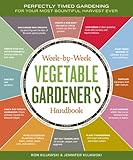
- Storey publishing
- Language: english
- Book - week-by-week vegetable gardener's handbook: perfectly timed gardening for your most bountiful harvest ever
When a slope is still workable
A sloping site is not automatically unusable. First determine whether the finished beds can be placed across the slope on stable terraces, whether access for materials is possible and where stormwater will go. Any cut, fill, wall or drainage work should be designed for the site’s soil and runoff conditions; poorly placed earthworks can redirect water toward a house or undermine a path.
Use level paths and stable steps where needed. Keep wheelbarrow routes wide and direct enough for compost, mulch and harvested produce. A site that can be reached only by carrying every load will receive less care than one with a practical service route.
Check accessibility before committing
- Can you reach every bed without walking through planted soil?
- Can a hose, wheelbarrow or cart reach the garden?
- Is there a safe place for tools, compost and harvested crops?
- Will the route remain usable after rain?
- Can you inspect the garden quickly from the house or a frequently used path?
For community gardens, University of Georgia Extension also emphasizes access for people, vehicles, compost and tools. The same principle applies at home.
Outdated Drivers Are Slowing You Down
One free scan finds every outdated or missing driver and matches the right update for your exact hardware.Free scan · exact hardware matchWindows Errors? Fix Them Before They Spread
Repair common Windows errors and clear accumulated junk for a smoother, more stable PC - no reinstall needed.Free scan · no reinstallAccount for wind and shelter
Wind increases water loss, can break stems and may damage trellises or young plants. The RHS warns that airflow can become turbulent between buildings and beside solid fences. A tall, impermeable barrier may create swirling eddies rather than calm air.
Survey exposure
Stand at the site during windy weather if possible. Note prevailing wind direction, exposed corners, wind funneled between structures and places where leaves or debris accumulate. Consider seasonal winds as well as the direction that feels most common on a calm day.
Use permeable protection
Hedges, shrubs, trellis panels and other partly porous screens can reduce wind speed while allowing some air through. Place shelter far enough from beds to avoid casting excessive shade or competing for water. Secure supports before planting tall crops, and avoid blocking necessary access or creating a damp pocket where foliage cannot dry.
Keep productive beds away from large trees
Trees and shrubs compete with garden plants for sunlight, moisture and nutrients. Wisconsin Extension recommends locating a garden away from trees and shrubs and suggests a distance of 75 to 100 feet where feasible. That is a practical recommendation, not a guarantee: a smaller tree, root barrier or open canopy may change the outcome, while a large mature tree can affect a much greater area.
Free tools Windows power users keep installed
One-click scans. No signup required.
Nearby buildings and trees can also reduce the six-to-eight-hour light window identified by University of Georgia and University of New Hampshire Extension. Check both the present canopy and the likely mature size of new plantings before placing permanent beds.
Rank #4

- Step-by-step advice for success with more than 30 vegetables in any zone|The dirt on soil: why testing is so important—and how to do it|Easy techniques for growing in-ground plus alternatives to traditional raised beds|Seed-starting and -saving methods simplified|Gardeners’ friends and foes: which plants help (or hinder) vegetables|Enlightening (and humorous!) anecdotes from fellow gardeners|Space for noting observations and experiences|More than 150 full-color photos|Essential reference tables and charts|Much much more!
Match crops to the light and moisture you have
When a site cannot provide full sun, change the crop list before undertaking expensive construction. Wisconsin Extension identifies cool-season crops such as lettuce, radishes, carrots and cabbage as options for partial shade. Crops such as sweet corn, snap beans, tomatoes and peppers need full sun for dependable production.
| Site condition | Better candidates from the guidance | Use caution with |
|---|---|---|
| Six to eight or more hours of direct sun, good drainage | Tomatoes, peppers, snap beans, sweet corn and other sun-demanding crops | Plants that prefer consistently cool, shaded conditions |
| Partial shade with usable morning light | Lettuce, radishes, carrots and cabbage | Sweet corn, snap beans, tomatoes and peppers |
| Naturally moist soil | Plants adapted to that moisture regime | Species that require sharply drained soil |
| Dry, exposed soil | Drought-tolerant plants suited to the local climate | High-water crops unless irrigation is dependable |
Plant selection can be the least disruptive solution. Moving a shade-loving crop to a cooler edge may work; trying to grow a sun-loving crop under a tree usually does not.
Compare two possible sites with the same checklist
When two locations seem promising, score both before choosing. Use measured observations rather than impressions.
What’s actually slowing this PC down?
Pick the symptom - the matching free tool is one click away.
| Comparison factor | Site A | Site B |
|---|---|---|
| Direct-sun hours and timing | Record observed hours; note morning or afternoon | Record observed hours; note morning or afternoon |
| Drainage after rain | Record puddles, drying time and low spots | Record puddles, drying time and low spots |
| Soil depth, texture and test results | Enter inspection and test findings | Enter inspection and test findings |
| Distance to tap and practical hose route | Measure route; compare with the roughly 100-foot guidance | Measure route; compare with the roughly 100-foot guidance |
| Slope and access | Compare with the one- to two-foot change per 100 feet guideline | Compare with the one- to two-foot change per 100 feet guideline |
| Wind and shelter | Note prevailing wind and protection options | Note prevailing wind and protection options |
| Tree competition | Record canopy, roots and distance; 75–100 feet is the Wisconsin Extension suggestion where feasible | Record canopy, roots and distance; 75–100 feet is the Wisconsin Extension suggestion where feasible |
| Convenience | Rate visibility, tool storage and route from the house | Rate visibility, tool storage and route from the house |
| Construction required | List grading, walls, drainage or bed work | List grading, walls, drainage or bed work |
Choose the site that meets the crop’s non-negotiable needs with the least corrective work. A slightly smaller area with excellent sun, drainage and access is often more productive than a larger area that needs major earthworks and constant watering.
A step-by-step site-selection process
- Define the purpose. List the crops, planting season, bed area and whether the garden is for food, flowers, herbs or a mixed use.
- Map candidate areas. Include dimensions, structures, trees, paths, taps, storage and existing drainage routes.
- Observe sunlight. Visit at several times of day and record direct-light hours. Keep the six-to-eight-hour requirement for most vegetables in view.
- Observe wet weather. Inspect after rain and during the wet season. Mark puddles, runoff, saturated soil and low areas.
- Inspect the soil. Dig small examination holes, look for compaction or rubble and test land that has not been tested before.
- Measure slope and access. Check elevation change, erosion risk, path conditions and the route for tools and materials.
- Plan water. Measure the actual hose route, locate shutoff points and decide whether hand watering or irrigation is realistic.
- Assess wind and trees. Identify exposed corners, turbulent gaps, shade patterns and root competition.
- Match plants to the remaining conditions. Move the crop list toward shade-tolerant or moisture-adapted choices where necessary.
- Price corrective work. Compare the cost and disruption of grading, terracing, drainage, raised beds, fencing and irrigation with the cost of selecting a better site.
- Recheck before construction. Confirm boundaries, underground services, access and runoff paths before digging, pouring or building permanent structures.
Construction choices for a marginal site
Some sites become practical with targeted work; others remain poor choices. Use the following decision points.
Raised beds
Use raised beds where the native soil is shallow, compacted or contaminated by unknown fill, provided the base drains adequately and imported soil is suitable. Design paths so water, mulch and harvested crops can be moved without stepping on the beds.
Grading and drainage
Minor grading can remove a shallow low spot, but it should not send runoff toward a foundation or neighboring property. Where the water table is high or wetness persists near a ditch, brook or pond, a drainage design may be more appropriate than repeated soil additions.
Terraces and retaining walls
Terracing can make a slope usable when the height change exceeds the practical one- to two-foot-per-100-foot guideline. Retaining walls, footings, drainage layers and overflow routes must suit the soil and water conditions. A wall that holds back saturated soil without an outlet can fail even if the garden itself is well planted.
Best Value

- Complete Gardening Journal Planner and Log Book: This gardening journal planner and log book helps organize your growing season with yearly planning pages, 6 monthly sets, 8 weekly logs, plant profiles, harvest records, and garden review pages
- Durable Spiral Bound Garden Journal: Designed with black twin-wire spiral binding, this garden journal spiral bound notebook lays flat for easy writing while planning, tracking plants, recording harvests, and reviewing garden progress
- Protective PVC Cover & Quality Paper; Features a transparent waterproof PVC protective cover and 100gsm high-quality recyclable paper, made for smooth writing, everyday garden planning, and long-term record keeping
- Plant, Seed, Soil, Pest & Budget Tracking: More than a garden log book, this garden planner journal and log book includes plant profiles, seed records, soil amendment logs, watering schedules, pest notes, budget pages, and expense tracking
- Beautiful Gift for Gardeners: A watercolor garden journal and planner with plant tags, pollinator planner, seed packet photo notes, seasonal review pages, and favorite garden memories, ideal for gardeners and plant lovers
Wind screens and fences
Use permeable screens where possible and keep them from shading the beds or blocking maintenance access. Account for wind loads on trellises and gates, especially on exposed corners.
Common site decisions
A sunny area far from the house
Keep it if the hose route, storage and access are genuinely practical. If watering requires dragging more than about 100 feet of hose or crossing obstacles, install a properly planned irrigation route or choose a closer area.
A convenient area with only partial shade
Use it for lettuce, radishes, carrots, cabbage and other suitable crops rather than expecting reliable production from tomatoes, peppers, sweet corn or snap beans.
A full-sun area that floods
Do not trade drainage for light. Investigate the water table and runoff, consider a designed drainage or raised-bed solution, or relocate the garden to higher ground.
A level area beneath mature trees
Convenience and level ground do not overcome shade and root competition. Look for an opening farther from the canopy; Wisconsin Extension’s suggested 75- to 100-foot separation is a useful target where space allows.
A warm southwest corner
It may be excellent in some climates, including the local Hawaii guidance that favors southwest locations, but heat, reflected radiation, latitude and seasonal shade must be checked on the actual property.
Final pre-planting checklist
- The intended crops have the direct-sun hours they require.
- The site has been observed after rain, not only on a dry day.
- Soil that was previously untested has been tested for pH, texture, organic matter and major nutrients.
- Compaction, shallow soil and the water table have been considered.
- The slope is manageable, or grading, terracing or walls have been designed responsibly.
- A tap and hose route are close enough for regular watering; the roughly 100-foot hose guidance has been considered.
- Seasonal water demand has been planned, including the University of Georgia estimate of about 1,000 gallons per week for 1,000 square feet in hot summer conditions.
- Wind exposure, shelter and trellis stability have been addressed.
- Large trees are distant enough to limit shade and root competition, with 75 to 100 feet used as a feasible target where space permits.
- Paths, tools, compost, harvested crops and maintenance access are practical.
- Plants have been selected for the conditions that remain rather than for an idealized site.
The winning location is the one that consistently supplies the essentials—light, drainage, water and access—without requiring more construction and maintenance than you can sustain. Measure first, then build and plant around the site’s real conditions.
Quick wins for a faster PC:
Repair Windows errors before they cause bigger problemsFix Now →Scan for outdated or missing drivers - takes under a minuteDriver Scan →Quick Recap
Product prices and availability are accurate as of the date/time indicated and are subject to change. Any price and availability information displayed on Amazon at the time of purchase will apply.

