Do these 3 things before closing this tab:
1Scan for outdated or missing drivers - takes under a minute2Repair Windows errors before they cause bigger problems3Fix the driver behind crashes, sound loss and screen glitchesSome links on this page are affiliate links: if you buy through them we may earn a commission, at no extra cost to you.
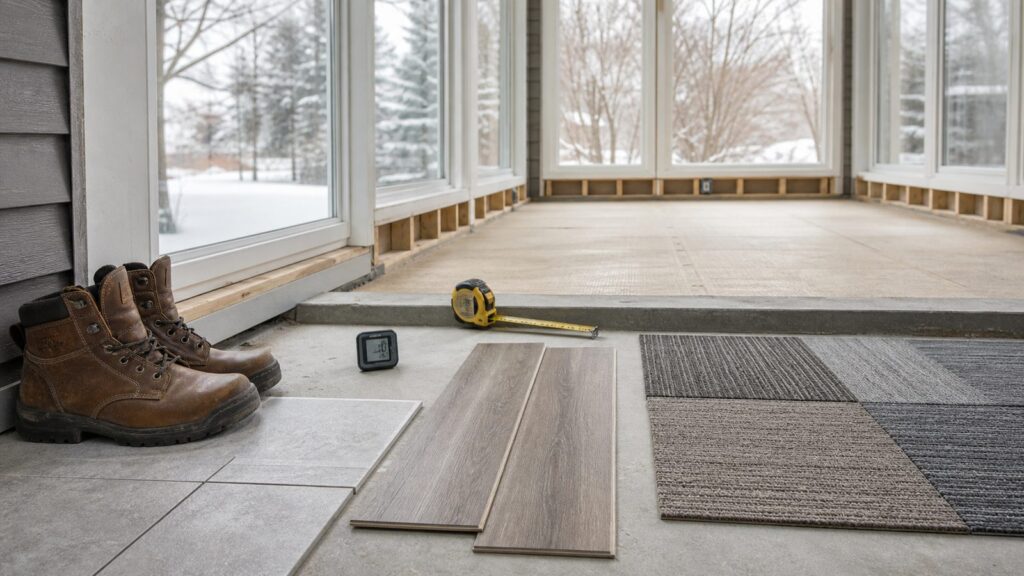
The best flooring for an unheated room is usually not the warmest material by itself. It is the floor assembly that handles cold, moisture, and movement without failing. For most unheated spaces in the U.S., the safest choices are porcelain tile over a properly prepared substrate, sealed concrete with rugs, approved rigid-core LVP or SPC, or carpet tile in rooms that stay reliably dry.
Cold alone rarely ruins a floor. The real problems are temperature cycling, condensation, slab moisture, crawl-space air leaks, UV exposure, and expansion and contraction. On our job sites, the floors that fail in enclosed porches, breezeways, mudrooms, and three-season rooms usually failed because the product was installed outside its warranty limits or because the subfloor was never corrected.
As an Amazon Associate I earn from qualifying purchases.
If you want the short answer: use porcelain tile or sealed concrete where the space may get wet or freeze, approved floating LVP/SPC where the room is dry enough and the product allows the temperature range, and carpet tile where comfort matters and moisture risk is low. Before buying anything, write down three numbers: the lowest expected room temperature, the highest floor temperature in direct sun, and the seasonal relative humidity range.
Quick Decision Matrix: Match the Floor to the Room
Unheated rooms are not all the same. A dry guest room over a vented crawl space has different risks than a slab sunroom with south-facing glass. Use the room condition first, then pick the product.
#1 Best Overall
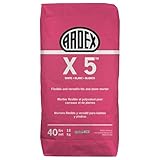
- High-performance polymer formula: Advanced polymer-modified mortar delivers strong adhesion, flexibility and durability for tile and stone installations indoors and outdoors.
- Large format tile ready: Ideal for heavy and large format tile applications up to 3/4" notch trowel, ensuring reliable support and consistent coverage.
- Superior non-sag strength: Excellent sag resistance exceeds standards, allowing secure vertical installations of large tiles without slipping or repositioning issues.
- Versatile surface compatibility: Bonds to concrete, masonry, exterior-grade plywood and prepared substrates, supporting a wide range of installation conditions.
- Water and frost resistant: Designed to withstand water and temperature changes, making it suitable for wet areas, exterior spaces and freeze-thaw environments.
| Room condition | Best flooring choices | Use caution with | What to check first |
|---|---|---|---|
| Dry but cold room | Rigid-core LVP/SPC, carpet tile, approved cork, engineered wood only if manufacturer allows it | Solid hardwood, cheap laminate | Temperature range, humidity swing, subfloor flatness |
| Damp or muddy room | Porcelain tile, sealed concrete, exterior-rated entry systems | Carpet, laminate, cork, peel-and-stick vinyl | Water entry, drainage, vapor control, slip resistance |
| Slab-on-grade room | Porcelain tile, sealed concrete, approved LVP/SPC over moisture-rated underlayment | Wood, carpet, laminate | Concrete moisture, cracks, floor flatness, vapor retarder history |
| Room over crawl space | LVP/SPC, carpet tile, porcelain over proper panel assembly, engineered wood if conditions are controlled | Any premium floor before crawl-space work | Crawl vapor barrier, insulation, air sealing, joist moisture |
| Sunroom with direct UV | Porcelain tile, UV-stable LVP approved for sunrooms, sealed concrete | Dark vinyl, rubber, cork, laminate near glass | Surface temperature, window orientation, warranty language |
| Occasional freezing | Porcelain tile rated for freeze-thaw exposure, sealed concrete | Broadloom carpet, glue-down floors, many laminates and vinyls | Absorption rating, movement joints, moisture path |
A product that works in a heated living room can be a poor choice in an unheated porch. Read the installation guide before buying. Search the PDF for the words “temperature,” “three-season,” “sunroom,” “acclimation,” “radiant,” and “warranty.” If the manufacturer requires continuous climate control and the room drops to 25 degrees in January, that product is not a good fit, even if the sample looks perfect.
Why Unheated Rooms Are Hard on Flooring
Flooring expands and contracts as temperature and humidity change. In a conditioned room, that movement is predictable. In an unheated room, the floor may see below-freezing nights, 95-degree afternoons, wet boots, condensation on a cold slab, and direct sun through glass. Those swings stress joints, adhesives, grout lines, locking systems, and wood fibers.
The biggest failure pattern we see is moisture coming from below or from the air. A concrete slab can look dry and still transmit enough vapor to damage resilient flooring, carpet, laminate, or wood. A crawl space can make the floor cold because outside air leaks through rim joists and poorly insulated joist bays. In both cases, replacing the finish flooring without fixing the moisture or air movement is spending money on the symptom.
Unheated rooms also need expansion space. Floating floors usually need a consistent gap around walls, posts, thresholds, pipes, and built-ins. Tile needs movement joints at perimeters and, in larger rooms or sun-exposed areas, within the field. Skipping those details can cause tenting tile, peaked vinyl seams, buckled laminate, or squeaky wood.
If the room will be converted to heated living space, treat it as more than a flooring job. Insulation, air sealing, vapor control, egress, electrical work, and permits may come into play. Under modern residential energy codes, floors over unconditioned spaces and slab edges often have insulation requirements. Local enforcement varies, so verify with your building department before closing up framing or changing the use of the space.
Best Overall for Damp or Freeze-Prone Rooms: Porcelain Tile
Porcelain tile is our first recommendation when durability matters more than softness underfoot. It is one of the most stable options for unheated mudrooms, enclosed porches, slab sunrooms, laundry entries, and seasonal cabins. In North America, porcelain tile is defined as ceramic tile with water absorption of 0.5 percent or less under ASTM C373 and ANSI A137.1. That low absorption is the key reason it performs well where cold and moisture meet.
The Tool Desk
Outbyte PC Repair FREERepair Windows errors before they cause bigger problemsFix Now →Outbyte Driver Updater FREEScan for outdated or missing drivers - takes under a minuteDriver Scan →The right tile assembly matters as much as the tile. We want a flat, sound substrate, proper mortar coverage, perimeter movement space, and a decoupling or crack-isolation strategy where the substrate calls for it. On concrete slabs, cracks and control joints need to be respected. On wood framing, deflection must be within tile limits, and the underlayment assembly must be built for tile, not improvised over a bouncy subfloor.
Where porcelain tile works best
Use porcelain tile in unheated rooms that may see wet shoes, melting snow, pet traffic, plant watering, or occasional freezing. It is also a strong choice in sunrooms because it handles UV exposure better than most resilient or wood-based floors. For a cold slab, tile will be durable, but it will feel cold unless you add a thermal break, rugs, or radiant heat.
For comfort, we often pair tile with an uncoupling membrane and, where height allows, an insulating underlayment or electric radiant heat. The finished floor still needs transitions that do not create a trip edge. Common tile thickness is about 5/16 to 3/8 inch, but the full assembly can add 1/2 inch to more than 1 inch depending on membrane, mortar, and heat mat.
Cost for porcelain tile in 2026
Expect porcelain tile to cost about $10 to $28 per square foot installed in 2026. A simple 120-square-foot mudroom may land near the lower half of that range if the subfloor is ready. A sunroom with slab crack isolation, large-format tile, heated mat, premium grout, demolition, and detailed transitions can move toward the high end quickly.
The main cost drivers are tile size, rectified edges, layout complexity, floor flatness, demolition, uncoupling membrane, crack isolation, grout type, heated floor mats, and whether the tile needs exterior or freeze-thaw suitability. Large-format tile is less forgiving. If the substrate is wavy by more than the tile allows, flattening work should be priced before installation starts.
Best Practical All-Around Choice: Rigid-Core LVP or SPC
Rigid-core luxury vinyl plank, especially SPC, is often the most practical choice for dry unheated rooms because it is affordable, comfortable enough, and easier to install than tile. It can work well in enclosed porches, workshops, mudrooms, and cabins if the manufacturer approves the expected temperature range.
The phrase “waterproof flooring” can be misleading. The plank itself may resist water, but the room still has a subfloor, wall edges, transitions, fasteners, and trapped moisture risks. Water under a floating floor can sit there long enough to create odor, staining, mold risk, or adhesive problems at adjacent materials. In a cold room, condensation can also form on or under the floor when warm humid air hits a cold surface.
For LVP or SPC in an unheated room, we look for a published service temperature range, a strong locking system, a wear layer appropriate for traffic, and clear language about sunrooms or three-season spaces. Some products require the home to stay within a controlled interior range. Others allow wider seasonal temperatures when installed as specified. Warranty language beats sales-floor promises every time.
Installation details that matter
Most rigid-core floating floors need a flat subfloor, commonly within about 3/16 inch over 10 feet, though each product varies. Do not assume the attached pad solves floor flatness. Low spots can make the locking joints flex; high spots can create rocking and joint failure. Expansion gaps at the perimeter are not optional.
In sunrooms, direct sunlight can heat the floor far above the air temperature. Dark planks near south or west glass can get hot enough to exceed some vinyl limits. That can lead to cupping, gapping, discoloration, or joint stress. If the room has big glass, choose a product that specifically allows sunroom use, use window coverings where needed, and test a sample in place for 24 to 48 hours during cold and sunny conditions.
Cost for LVP and SPC in 2026
In 2026, LVP and SPC commonly run about $4 to $12 per square foot installed. Materials often cost $2 to $10 per square foot, with professional labor around $2 to $6 per square foot. Some localized estimates for vinyl tile installation start around $9.16 to $13.63 per square foot because they include project size, labor assumptions, prep, and options.
For a 150-square-foot unheated room, a realistic installed budget is often $750 to $1,800, but subfloor prep can change that number. Tear-out, disposal, trim removal, door undercutting, stairs, transitions, leveling compound, moisture mitigation, and adhesive requirements can add meaningful cost.
Quick wins for a faster PC:
Repair Windows errors before they cause bigger problemsFix Now →Fix the driver behind crashes, sound loss and screen glitchesFind Drivers →Clear out junk files and repair common Windows errorsFree Scan →Best Low-Maintenance Option: Sealed or Polished Concrete
If the room already has a concrete slab, do not overlook it. A sealed concrete floor is one of the most durable choices for an unheated space. It handles dirt, freeze-prone entry traffic, wet boots, plants, tools, and seasonal temperature swings better than many finish floors. It is also honest: if the slab has moisture problems, you are more likely to see them instead of trapping them below a finished floor.
Sealed concrete is not automatically warm or beautiful. It depends on the slab. A clean, crack-free slab can be ground, patched, stained, sealed, or polished. A rough slab with adhesive residue, paint, oil, cracks, or spalling will need more preparation. In some rooms, a penetrating sealer and washable area rugs are a smarter budget than covering the slab with a floor that may fail.
Concrete usually costs about $4 to $12 per square foot to seal, finish, or polish in 2026, depending heavily on the slab condition and finish level. Basic cleaning and sealing is far less expensive than mechanical grinding, decorative staining, crack repair, and polishing. For comfort, use washable rugs with breathable pads, especially where people stand or sit.
Warmest Underfoot in Dry Rooms: Carpet Tile
Carpet is warm underfoot because it traps air and softens contact with a cold surface. In a dry unheated room, it can be the most comfortable option for the money. We prefer removable carpet tiles over broadloom carpet in marginal spaces because individual tiles can be lifted, dried, cleaned, or replaced if mud, pet accidents, or minor moisture show up.
Free tools Windows power users keep installed
One-click scans. No signup required.
Use carpet only when the room is dry and the subfloor moisture is under control. Avoid it on questionable slabs, damp porches, rooms with water intrusion, and spaces where snow or rain will regularly be tracked in. Carpet over a cold damp slab can hold moisture, smell musty, and create conditions you do not want hidden underfoot.
In 2026, carpet installation commonly ranges from $3 to $11 per square foot. Basic projects may be near $3 to $6 per square foot including material, pad, labor, and disposal. Better fibers, moisture-resistant pad, furniture moving, stairs, old-floor removal, and unusual room shapes increase the price. Carpet tiles vary widely, but the ability to replace damaged pieces can make them cheaper over the life of a mudroom or hobby room.
Rank #2

- Includes 12 Pieces per Case | 5.16 Square Ft. Per Case | Case Weight 34.8 lb |TILE SIZE: 8 in. W x 8 in. L x 0.55 in. T
- Material: Porcelain tile offers strength, moisture resistance, and reliable performance
- Finish: Matte – non-reflective surface with a flat finish and slight variation in tone
- Application: Suitable for floors, walls, showers, backsplashes, fireplaces, and outdoor areas; The tile is approximately 0.55" thick, and it is recommended that a thinset mortar be used for optimal adhesion.
- Water Performance: Waterproof; appropriate for areas exposed to moisture such as kitchens and bathrooms
Good in the Right Conditions: Cork, Engineered Wood, and Laminate
Some materials can work in unheated rooms, but only when the room conditions and manufacturer limits line up. These are not automatic yes-or-no products. They require more careful selection.
Cork flooring
Cork feels warmer and softer than tile or vinyl because it has natural resilience. It can be comfortable in a dry three-season room, office, or enclosed porch that does not see standing water. The caution is moisture, UV exposure, adhesive limits, and finish durability. Some cork products are not suitable for high humidity swings or direct sun. If you use cork, choose a product with clear approval for the space and seal all details exactly as specified.
What’s actually slowing this PC down?
Pick the symptom - the matching free tool is one click away.
Engineered hardwood
Engineered hardwood is more dimensionally stable than solid hardwood, but it is still wood. It should only be used where temperature and relative humidity remain within the manufacturer’s range. In 2026, engineered hardwood commonly costs about $7 to $18 per square foot installed. That is too much money to gamble in a room with condensation, wet boots, or a crawl space that has not been corrected.
We generally avoid solid hardwood in unheated rooms. Solid wood depends on stable humidity and temperature. Seasonal cupping, gapping, checking, and finish problems are common when the room is allowed to swing too far.
Laminate flooring
Laminate can feel warmer than tile and costs less than many wood floors, but it is risky where moisture is likely. The core is usually wood-based, so condensation, wet shoes, slab vapor, or water at seams can cause swelling. Some modern laminate products have improved water resistance, but “water-resistant” is not the same as suitable for a damp unheated porch.
Use laminate only in a dry room, over a verified dry subfloor, with humidity within the product limits. Leave the required expansion space, use the correct underlayment, and avoid installations where the room will freeze while also seeing moisture.
Recommended Free Tools
Do Not Use Unless the Conditions Are Right
Some floors are frequently sold into spaces where they should not go. That does not mean the material is bad. It means the room is asking more from the floor than the product was designed to handle.
Peel-and-stick vinyl: avoid it in cold rooms unless the manufacturer specifically allows the temperature range and substrate. Adhesives can lose bond when cold, damp, dusty, or applied over poorly prepared concrete.
Broadloom carpet: avoid it in damp rooms, slab porches, or mudroom-style entries. If comfort is needed, use removable carpet tiles instead.
Solid hardwood: avoid it in unheated rooms. The seasonal movement risk is too high for most projects.
Windows Errors? Fix Them Before They Spread
Repair common Windows errors and clear accumulated junk for a smoother, more stable PC - no reinstall needed.Free scan · no reinstallOutdated Drivers Are Slowing You Down
One free scan finds every outdated or missing driver and matches the right update for your exact hardware.Free scan · exact hardware matchRubber flooring: use caution in sunrooms and damp spaces. Some rubber floors can discolor, expand, smell, or react with adhesives or finishes. Confirm UV and temperature approval.
Cheap floating floors: low-cost locking systems often fail first. In unheated rooms, weak joints and poor dimensional stability show up quickly.
Cost Comparison for 2026
Prices vary by region, room size, demolition, floor prep, and product grade. Small rooms often cost more per square foot because setup, mobilization, transitions, and trim work do not shrink in proportion to the room.
| Flooring type | Typical 2026 installed cost | Best use | Main risk |
|---|---|---|---|
| Rigid-core LVP/SPC | $4-$12 per sq ft | Dry unheated rooms, light mudrooms, cabins | Warranty limits, sun heat, trapped moisture |
| Carpet or carpet tile | $3-$11 per sq ft | Dry rooms where warmth matters | Moisture, odor, mold risk |
| Engineered hardwood | $7-$18 per sq ft | Controlled dry spaces | Humidity movement, warranty limits |
| Porcelain tile | $10-$28 per sq ft | Damp, muddy, slab, sunroom, freeze-prone areas | Cold underfoot without thermal break |
| Sealed or polished concrete | $4-$12 per sq ft | Existing slabs, utility rooms, porches | Hard and cold without rugs or heat |
| Electric radiant heat add-on | Often $10-$20+ per sq ft for heated area | Tile floors, bathrooms, sunrooms, comfort zones | Electrical work, floor height, operating cost |
For budgeting, separate the finish floor from the prep. A $5 per square foot plank can become a $12 per square foot installed project if the room needs leveling, old adhesive removal, trim work, a moisture-rated underlayment, and new transitions. A tile job can double in price when the substrate needs reinforcement, crack isolation, or radiant heat.
How to Make an Unheated Floor Feel Warmer
If comfort is the goal, start below the finish flooring. The warmest-feeling unheated room usually has a combination of air sealing, insulation, vapor control, underlayment, and rugs. The finish material is only the surface your foot touches.
For rooms over crawl spaces, inspect the crawl space before buying flooring. Look for missing floor insulation, sagging batts, open rim joists, plumbing penetrations, disconnected ducts, standing water, exposed soil, and torn vapor retarder. A 6-mil polyethylene ground vapor barrier is common in basic crawl-space work, but many assemblies call for heavier reinforced liners and sealed seams. The correct approach depends on whether the crawl space is vented or encapsulated and what your local code requires.
For slab rooms, test concrete moisture before installing vinyl, laminate, carpet, cork, or wood. Calcium chloride tests, in-situ relative humidity probes, and manufacturer-required tests may apply. Cold slabs can condense moisture even without a plumbing leak. If warm humid air enters the room and contacts a cold floor, the floor can become wet enough to damage finishes.
For hard floors, use thermal-break underlayments where approved. Under LVP/SPC, that may be a manufacturer-approved insulated underlayment with the correct compressive strength. Under tile, it may be an uncoupling membrane or a tile-rated insulating panel. Do not stack random foam under a floating floor; too much cushion can break locking joints.
Area rugs are the simplest comfort upgrade. Use breathable rug pads on slabs unless the floor manufacturer allows otherwise. Avoid rubber-backed rugs on vinyl or sealed floors unless compatibility is confirmed, because some backings can stain, trap moisture, or react with finishes.
Radiant Heat: When You Want Real Warmth
If the room needs to feel warm barefoot, flooring alone will not do it. Electric radiant floor heat can make tile, stone, and some approved resilient floors much more comfortable. It is common to heat only the walking area, not the entire room under cabinets or built-ins.
Electric radiant systems often add $10 to $20 or more per square foot for the heated area, depending on mat type, thermostat, electrical access, floor prep, and finish material. A 60-square-foot heated zone in a sunroom or mudroom may be manageable. Heating a full 300-square-foot room can become a larger electrical and operating-cost decision.
Radiant heat requires compatible flooring. Tile is the most common pairing. Some LVP, laminate, engineered wood, and cork products allow radiant heat with strict surface-temperature limits, often around the mid-80s Fahrenheit. Follow the floor manufacturer’s limit, not just the heating-system limit.
Electrical work may require a dedicated circuit, GFCI protection, thermostat placement, floor sensor installation, and a permit. In many jurisdictions, a licensed electrician should handle the final connection. If the room is being converted from unheated to conditioned space, the permit conversation gets broader than the floor.
Independent reader supportYour contribution helps us test, update, and keep practical guides available for everyone.Subfloor and Moisture Checklist Before You Buy
Before choosing flooring, check the room as a system. Our crews do this before pricing the finish because it prevents the most expensive callbacks.
Rank #3

- Coverage and Packaging: 10.88 square feet, 16 pieces per case; Case weight is 45.76 lbs
- Quality Grade: Grade 1, first-quality porcelain tile for floor and wall use
- Tile Dimensions: 9.75 in. width x 9.75 in. length x 0.36 in. thick
- Finish Style: Glazed, smooth finish with a medium sheen and uniform appearance in tone
- PEI Rating: PEI Rating IV has high resistance to abrasion and is suitable for heavy-duty residential and commercial kitchens, hotels, exhibition and sales rooms with some dirt conditions
Measure temperature: record the lowest winter temperature the room reaches. If the room can hit 20 degrees, do not buy a floor rated only for normal interior conditions.
Measure humidity: use a simple hygrometer for at least one seasonal swing if possible. Many wood-based products want a controlled relative humidity range, often roughly 35 to 55 percent, though exact limits vary.
Check direct sun: tape a thermometer or infrared reading target near the hottest glass exposure. Floor surface temperature can be much higher than room air.
Test concrete: follow the flooring manufacturer’s required moisture test. A slab that looks dry is not proof enough for resilient, carpet, laminate, cork, or wood.
Inspect crawl spaces: check ground vapor control, insulation contact, rim joist sealing, duct leakage, plumbing leaks, and pests before covering the floor above.
Check flatness: use a 6-foot or 10-foot straightedge. Floating floors and large-format tile both need flatter substrates than many older porch or addition floors provide.
Windows Errors? Fix Them Before They Spread
Repair common Windows errors and clear accumulated junk for a smoother, more stable PC - no reinstall needed.Free scan · no reinstallCrashes, No Sound, or Screen Glitches?
Random freezes, missing sound and display glitches usually trace back to one bad driver. Find and replace yours safely.Free scan · under a minutePlan transitions: account for added floor height at exterior doors, interior thresholds, stair landings, and appliance clearances. A good floor can still create a bad project if the door no longer clears.
When to DIY and When to Hire a Pro
A careful homeowner can install some unheated-room floors, but the room conditions determine whether DIY is sensible.
Reasonable DIY projects
DIY can make sense for carpet tiles in a dry room, floating LVP/SPC over a flat wood subfloor, or sealing a clean concrete slab with a compatible product. These projects still require prep. Plan on at least one full day for a small room after materials are on site, and more if old flooring, trim, or leveling work is involved.
For floating floors, leave the material in the room for the acclimation period required by the manufacturer. Some products need 24 to 48 hours; some specify different conditions. Undercut door casing cleanly, maintain expansion gaps, stagger seams properly, and do not pin the floor with heavy built-ins or tight trim.
Hire a pro when the risk is higher
Hire a qualified flooring contractor for porcelain tile, crack isolation, radiant heat, major slab prep, moisture mitigation, structural subfloor correction, or any installation where a warranty depends on documented testing. Tile over an unheated slab or wood-framed porch is not just sticking tile to a floor. It is substrate evaluation, movement control, mortar selection, layout, waterproofing or uncoupling where needed, and clean transitions.
Bring in a builder or insulation contractor if the floor is cold because of a crawl space, rim joist leakage, missing insulation, or a room conversion. A flooring installer can replace the surface, but they may not correct the building envelope. If the space will become conditioned living area, talk to the local building department before starting. Insulation, electrical, HVAC, tempered glass, egress, and smoke or carbon monoxide alarm rules may be involved depending on the scope.
Warranty Checklist for Unheated Rooms
Read the warranty before you pay for the floor. The most attractive sample in the showroom is the wrong product if the warranty excludes your room.
Look for the allowed temperature range during storage, installation, and service. Confirm whether the product is approved for seasonal homes, sunrooms, cabins, enclosed porches, or three-season rooms. Check the required acclimation period and room conditions during installation. Verify whether radiant heat is allowed and what maximum surface temperature applies.
The Tool Desk
Outbyte PC Repair FREEClear out junk files and repair common Windows errorsFree Scan →Outbyte Driver Updater FREEFix the driver behind crashes, sound loss and screen glitchesFind Drivers →For concrete slabs, check the moisture testing requirements and limits. For floating floors, check flatness tolerances, expansion gap requirements, maximum run length before transitions, and whether heavy cabinets or built-ins can be placed on top. For glue-down products, verify adhesive temperature limits, open time, substrate moisture limits, and whether the adhesive is warranted for the room’s conditions.
Keep product labels, batch numbers, receipts, moisture test results, photos of prep, and installation instructions. If there is a warranty claim later, documentation matters.
Our Bottom Line
For a damp, muddy, slab, or freeze-prone unheated room, choose porcelain tile or sealed concrete first. They are the most forgiving when moisture and temperature swings are part of daily life. Add rugs, thermal-break underlayment, or radiant heat if comfort is a priority.
For a dry unheated room where budget and comfort matter, approved rigid-core LVP/SPC is usually the best balance. Carpet tile is warmer underfoot and often affordable, but only where the room stays dry. Engineered hardwood, cork, laminate, rubber, and peel-and-stick flooring can work in narrow situations, but they need strict product approval and better moisture control than most unheated rooms naturally have.
What’s actually slowing this PC down?
Pick the symptom - the matching free tool is one click away.
The right floor is the one that matches the actual room, not the product display. Measure the temperature, check humidity, test the slab or inspect the crawl space, and read the installation guide before buying. That hour of homework can save a full replacement later.
Frequently Asked Questions
What is the best flooring for an unheated room?
For damp, slab, or freeze-prone rooms, porcelain tile or sealed concrete is usually best. For dry unheated rooms, approved rigid-core LVP/SPC or carpet tile can be more comfortable and budget-friendly.
Can vinyl plank flooring be used in an unheated room?
Yes, but only if the manufacturer allows the expected temperature range. Check the installation guide for temperature limits, sunroom approval, acclimation rules, radiant heat limits, and warranty exclusions.
Is laminate flooring good for an unheated porch?
Usually not if the porch sees moisture, condensation, wet boots, or slab vapor. Laminate can work in a dry, stable unheated room, but it is riskier than porcelain tile, sealed concrete, or approved LVP.
Do these 3 things before closing this tab:
1Repair Windows errors before they cause bigger problems2Fix the driver behind crashes, sound loss and screen glitches3Clear out junk files and repair common Windows errorsHow do I make an unheated floor warmer?
Improve the assembly, not just the surface. Add crawl-space insulation and air sealing where needed, use approved insulated underlayment, place washable area rugs, or install electric radiant heat under compatible flooring.
Should I install carpet in an unheated room?
Carpet is comfortable in a dry unheated room, but it is a poor choice for damp slabs, porches, and muddy entries. Carpet tiles are usually better than broadloom because damaged or wet tiles can be replaced.
Do I need a permit to floor an unheated room?
A simple flooring replacement usually does not require a permit, but adding radiant heat, new electrical work, structural subfloor repairs, or converting the room to conditioned living space may require permits.
Quick Recap
Product prices and availability are accurate as of the date/time indicated and are subject to change. Any price and availability information displayed on Amazon at the time of purchase will apply.
Free tools Windows power users keep installed
One-click scans. No signup required.

